
When I first started this blog, having scrapped any that had gone before, it was mainly as a brain exercise, plus, not a little, nostalgia. I came across the Six on Saturday meme run by Jim Stephens at Garden Ruminations and, through that, organically increased my presence on the web. This has prompted me to re-publish some of my old material some of which is updated. These posts are purely about the plants that I have grown and photographed, mainly in my previous garden, unless otherwise stated.
Tulips Part 1
This is going to be more of a “pretty picture” post which is, after all, what tulips are about. There are two main groups, first the cultivated tulips which, although the original species hailed from the Near East, were developed by the Dutch plant breeders several hundred years ago. This has continued until the present day. Holland is still the tulip capital of the world, the tulip fields visited by thousands every year. Vast resources were put into developing new colours and combinations. This resulted in inflated prices which caused tulips to become almost a form of currency leading to Tulip Mania and the first ever investment crash. The second group in general cultivation are the specie tulips or botanicals which are generally the dwarf, early flowering types seen in most rock gardens and containers. Please remember the pictures, as always, are of plants I have grown and this is by no means a definitive list.
Triumph Tulips


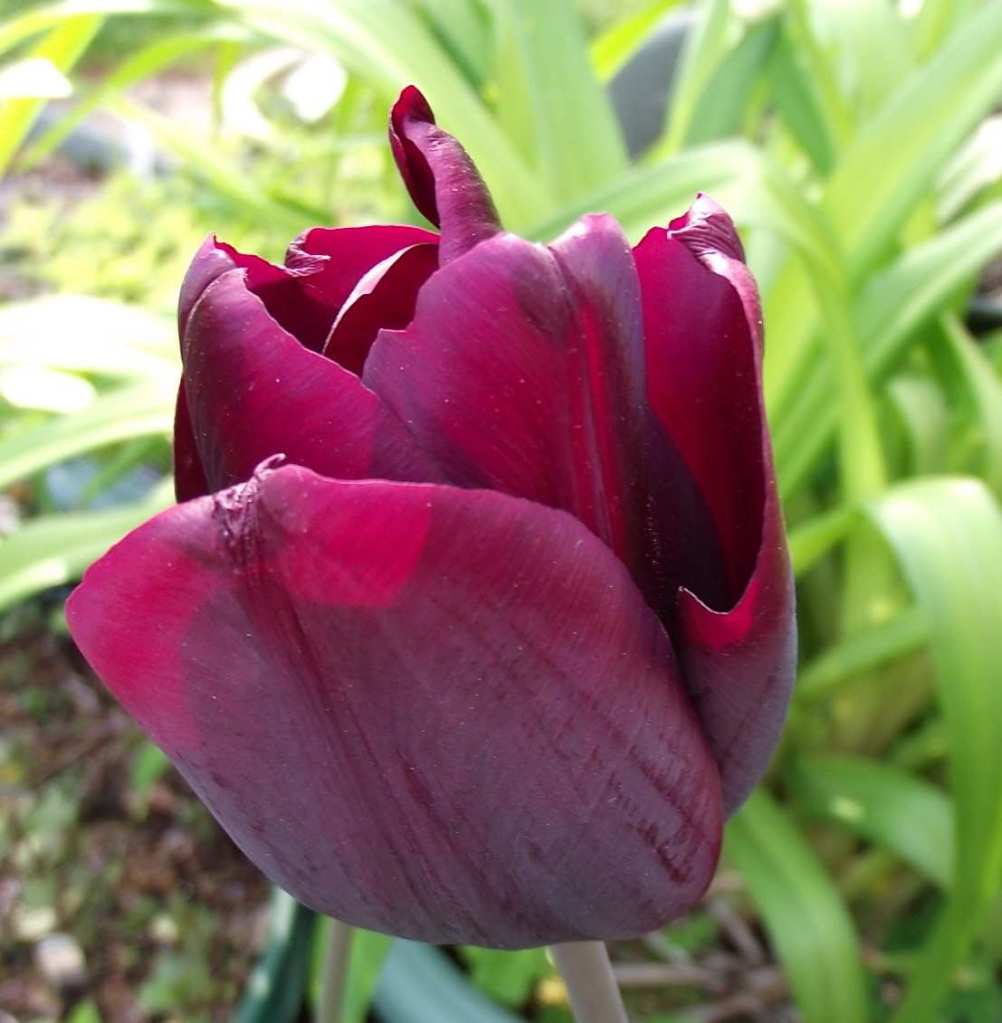

Flowering mid to late spring Triumph tulips are the largest group, and the goblet-shaped flowers are the ones everybody is familiar with. Some gardeners may not like the use of plastic containers from an aesthetical point of view. I had many plants in a variety of containers, so the factors of cost and weight came into consideration. The other factor to take into account is that I am more interested in the plants themselves hence the garden had a semi-wild look at best.
The “Rembrandt” tulips such as T.Washington and Princess Irene are created by careful selective breeding. At the time of Tulip Mania these colourations were caused by viruses, and there were many crazy methods employed to try and induce these effects. The export of virus infected stock was banned many years ago by the Dutch.

 A Plantsman's World