Hardy Perennials (Part 5)

Kirengeshoma

Kirengeshoma palmata or Yellow Wax Bells is a member of the Hydrangea family from Japan and the adjacent Chinese mainland. Needs a shady spot on lime-free moist soil making it an ideal woodland plant.

Lamium

Lamiums or Dead Nettles are found throughout Europe and North Africa. They are robust plants and can tolerate dry and often shady conditions. Lamium maculatum is an excellent ground-cover subject which spreads by throwing down roots from its trailing stems, Lamium orvala however is more upright in its growth.

Leucanthemum

Shasta Daisies sometimes wrongly called Marguerites, are an outstanding border perennial and cottage garden plant. Leucanthemum x superbum has an interesting history in that it is the result of several inter-species crosses resulting in a triple-hybrid that was then crossed with a species from another genus producing an inter-generic hybrid. They thrive in any good garden soil in sun or part-shade, attract bees and other insects and make good cut-flower subjects, what more could one ask from a plant?

Lewisia

One of my favourite plants from my alpine growing days lewisias are actually a tap-rooted succulent from the mountains of California and as such, although winter hardy, will not tolerate damp conditions. I have found they are best planted in a very gritty mix on a slope or in a rock garden crevice. They are very rewarding subject, the flowers coming in a wide range of colours which stand out well against the dark green strap-like leaves and make an excellent plant for the alpine house.

Ligularia

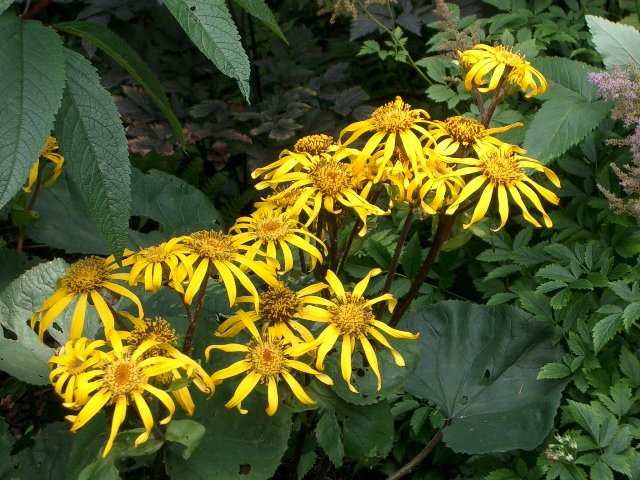
Ligularias are tall hardy herbaceous perennials mainly from China. They make a bold statement in the border with their striking foliage (particularly ‘Desdemona) and bright yellow flowers. They are moisture lovers and as such do well round the pond or stream side.

Lithodora (Lithospermum)

Another favourite from my “alpine days” when it was known as lithospermum. Lithodoras are a widespread genus but come principally from the USA. They make good edging plants particularly around pathways and are a staple of the rock garden. They require acidic, moist but free-draining soil in either sun or partial shade.

Lobelia

Quite different from the lobelia bedding plants which we are all familiar with Lobelia tupa is a woody upright plant growing to around 6′. It is a native of Chile so only truly perennial in warm gardens in the UK where it will tolerate quite dry conditions. I grew my plants from seed and managed to get a couple of winters out of them without protection. Another lobelia of merit is Lobelia cardinalis which is very similar in appearance but much hardier hailing from right through the Americas including Canada.

Lupinus
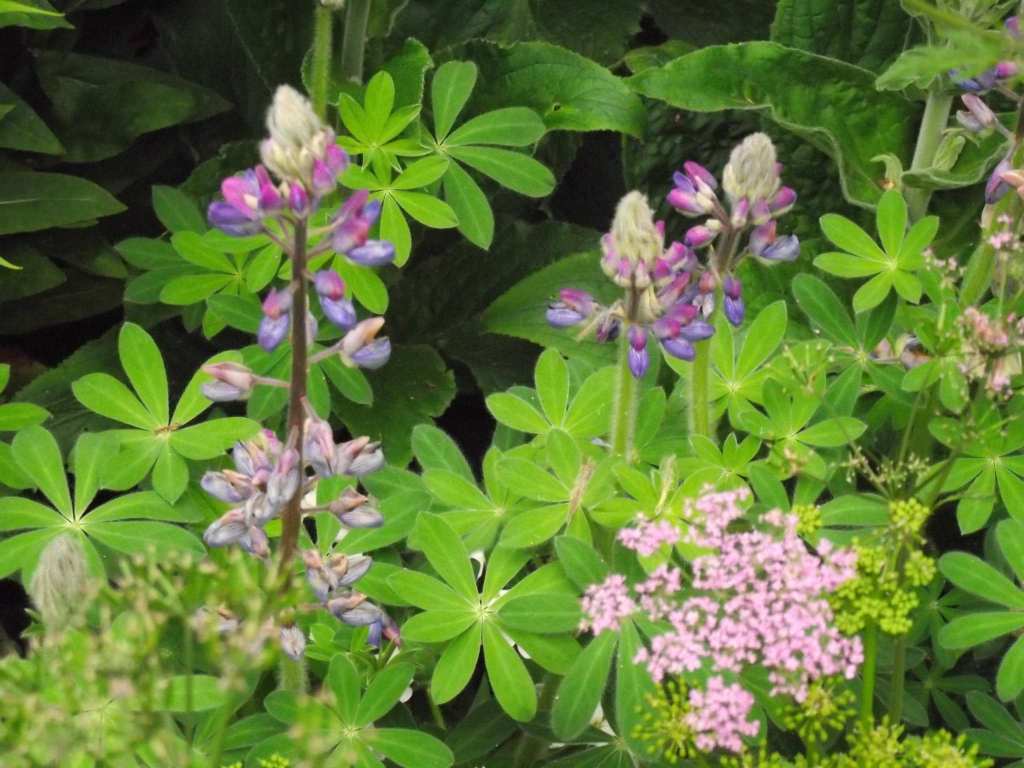
One of the most popular garden plants lupins are particularly associated with the cottage garden. They can easily be propagated from seed or by careful division. ‘Tequila Flame’ is an example of a popular strain of cultivars but I have included L. nootkatensis as a good illustration of the difference between a typical specie plant and its more sophisticated cultivar. L.nootkatensis is quite interesting, a native of N.America where it is found even in Alaska it was introduced into Iceland to help against soil erosion because of its ability to fixate nitrogen but is now listed as an invasive species.

Lysichiton

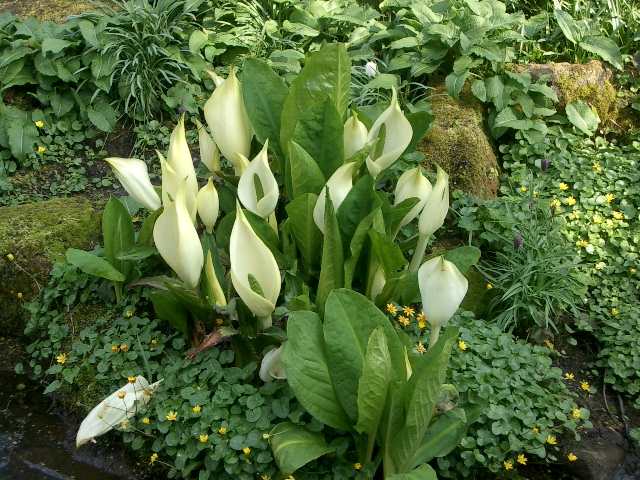
The two different species of Skunk Cabbages shown come from two different locations. L.americanus as the name implies comes from the Pacific Northwest of the USA. whereas L.camtschatcensis, again the clue is in the name, is from Eastern Russia and Japan. Typically found in water meadows in their natural habitat they are often grown in cultivation in large estate gardens as marginals but need a lot of room as they are both rather invasive. A preferred form Lysichiton x hortensis which is a cross between the two is more appropriate for the garden, particularly as the obnoxious scent is not as pronounced. These pictures were taken at Fletcher Moss Botanical Gardens, Manchester.

Lysimachia

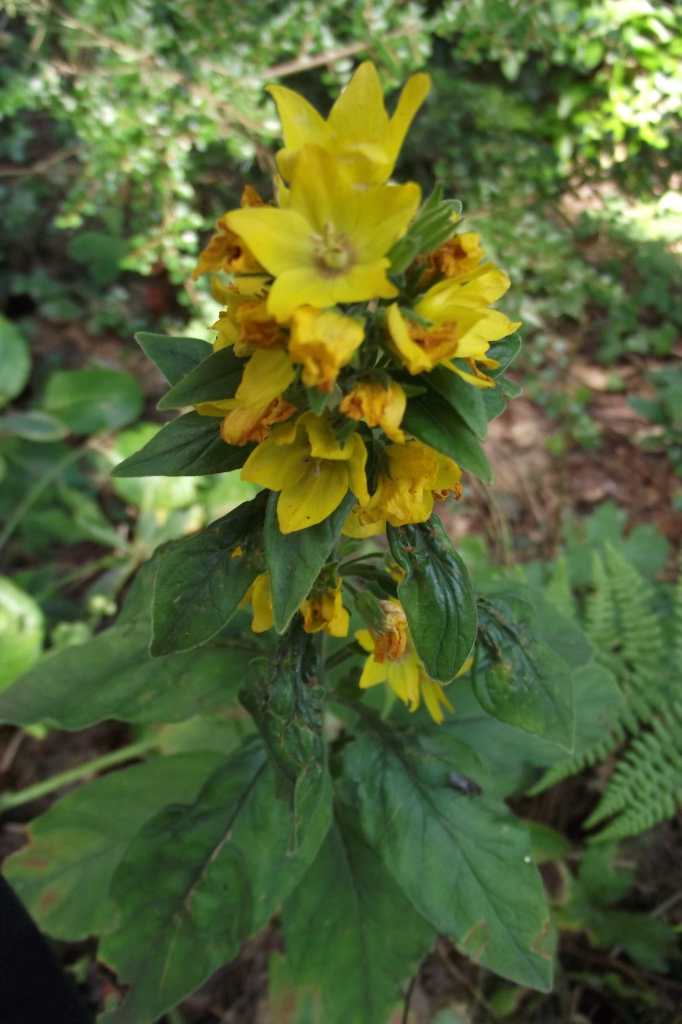
Lysimachias are surprisingly a member of the primula family and are generally to be found in damp areas across the Northern Hemisphere. Some species are known as loosestrifes such as L.punctata the Garden Loosestrife which is a common garden plant. ‘Firecracker’ is quite striking with its yellow flowers contrasting well with the purple foliage but beware it can be quite invasive. L.ephemerum has a rather loose upright habit and is attractive to bees and other insects. ‘Beaujolais’ is a popular addition to the garden with its deep red flower spikes contrasting well with the grey-green foliage but is generally short lived.

Mukdenia

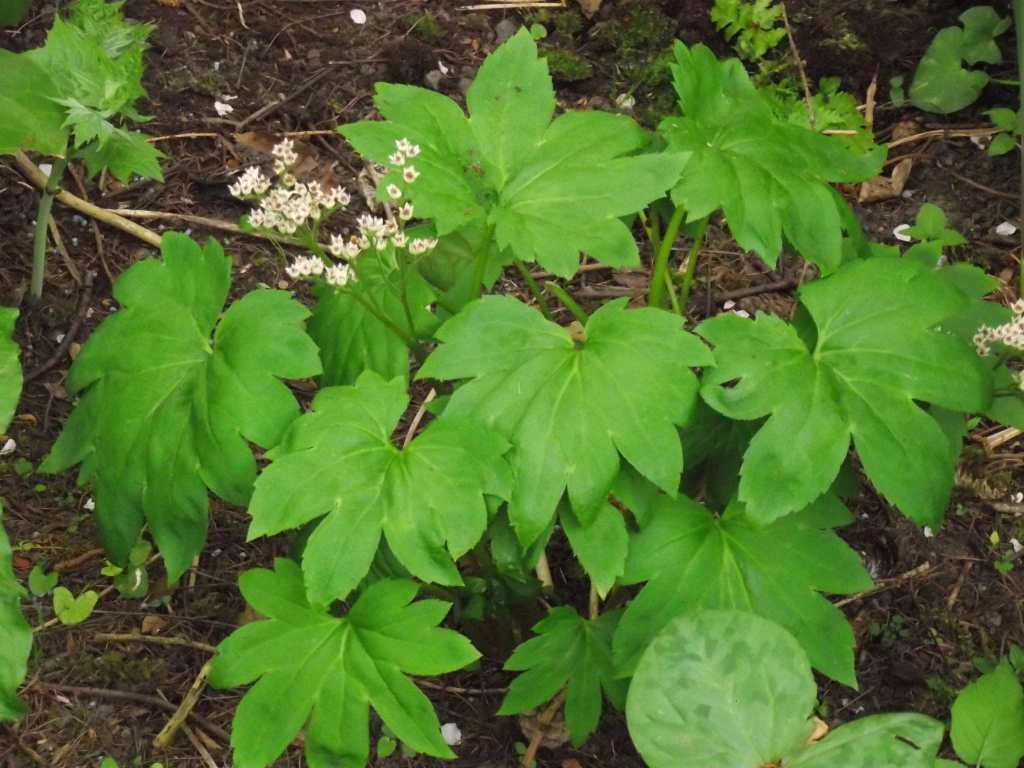
A useful perennial for the woodland planting Mukdenia rossii hails from China. Similar to heucheras in habit its leaves will take on red shades in the autumn.

Myosotis
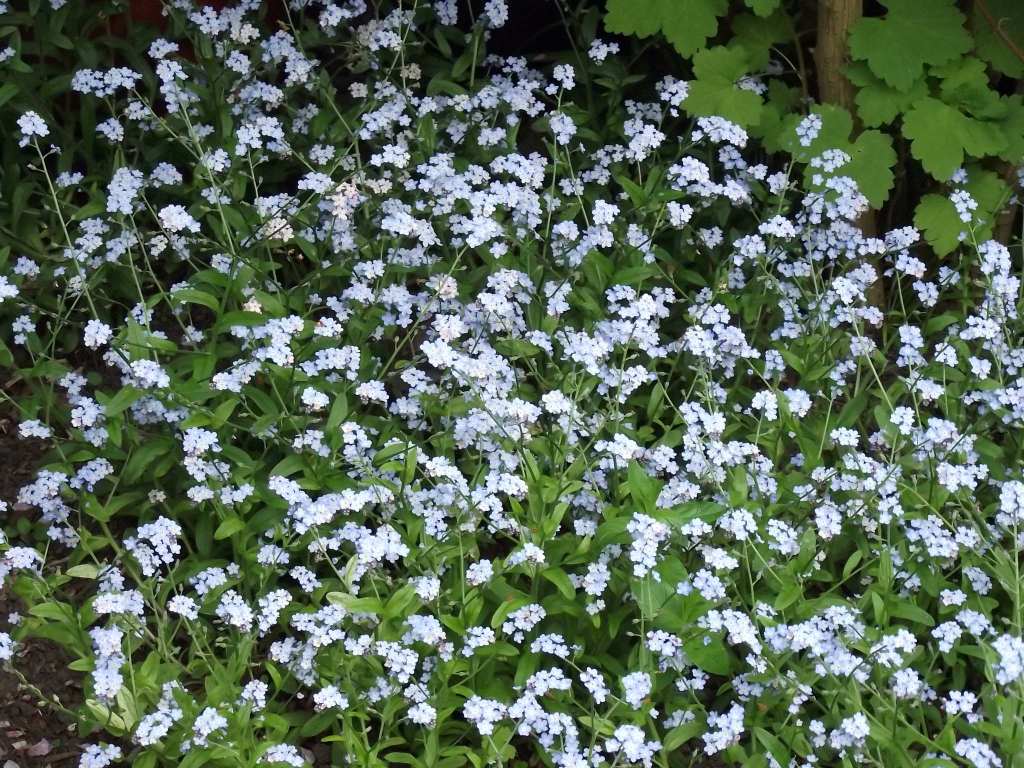
The forget-me-not is a plant well known to everyone, M.sylvatica (the woodland forget-me-not) is cultivated throughout the temperate world and has produced hundreds of cultivars, many of which are used in spring bedding. Although a short-lived perennial it will seed itself everywhere which makes it more of a permanent feature.

The Garden

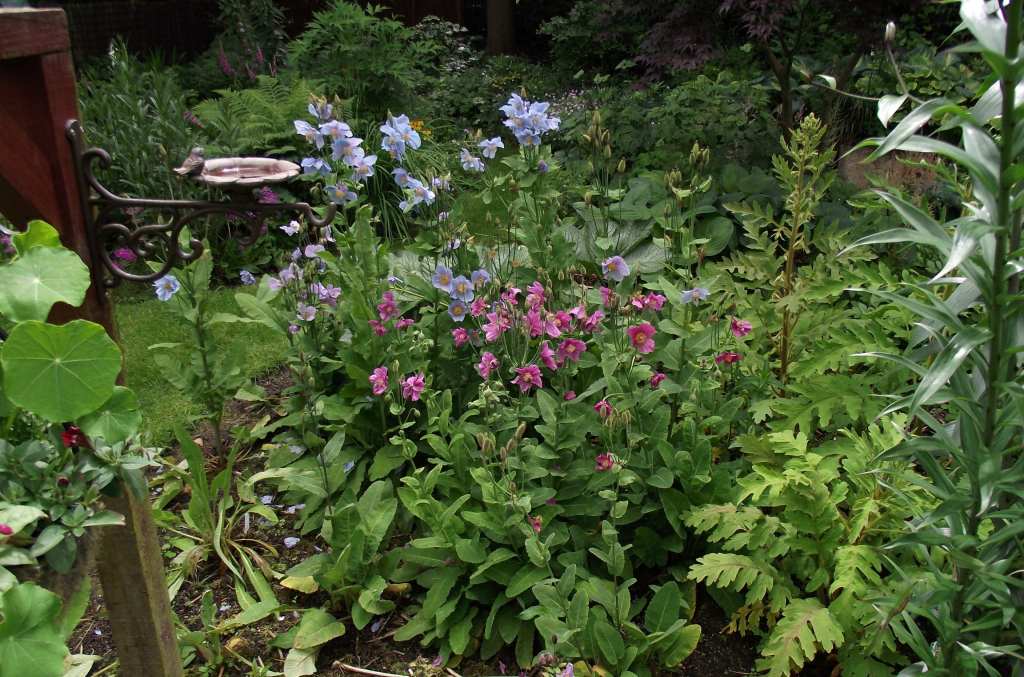
In my descriptions of plants that I have grown I refer to the garden being shaded and generally damp. To put things into context this is a mainly pictorial blog showing the garden at different times of the year from about 2010 onwards.

A quick pictorial trip round my old back garden, hope you enjoyed it.

Hardy Perennials (Part 4)

Francoa

Sometimes known as the Wedding Flower, Francoa is an evergreen hardy perennial from Chile which flowers mainly during late summer. Does best in a light soil in partial shade. In colder areas the foliage may die back during the winter months.

Gallium

Sweet Woodruff, Gallium odoratum, is a useful plant to use for ground-cover under trees and shrubs, in fact any shady spot particularly in wet soil. A British native it bears its small white flowers from late spring.

Gentian

When I used to specialise in alpines gentians were one of my go-to genera, The blue is only rivalled by such as meconopsis, and plants like the popular Gentiana sino-ornata and Gentiana acaulis were a must. In the border Gentiana asclepiadea displays the same striking blue trumpets but born on 12′ arching stems. It is a native of open woodland and meadow in Central Europe so prefers a moist soil with a little shade.

Geum

Avens make ideal plants for the front of the border and are a staple of cottage gardens. Geums are another genus which the plant breeders have exploited to the full developing many attractive strains from the colour palette of shades of yellow, orange, pink and red. Grows in any good border soil in a sunny position. Herb Bennet or Geum urbanum is a pernicious weed and one-time bane of my life, it seeds itself into the garden and is difficult to eradicate once it has established itself in some shady moist corner, does not pull up easily and has to be rooted out.

Gunnera

Gunnera manicata or Giant Rhubarb is typical of the genus, large specimen plants which do well at the waterside. I have seen these following the line of a stream in Southern Ireland and at over 6′ in height they are quite an impressive sight. Just the opposite is Gunnera manicata, a low growing creeping rhizomatous plant with rounded glossy green leaves which hails from the southern countries of South America and the Falklands. Its common name is Devil’s Strawberry from the red fruits it bears , however this never happened for me.

Helianthemum

Helianthemums or Rock Roses are a valuable addition to the front of the border or large rock garden. Helianthemums are in fact low-growing shrubs but I thought I would include them in this section. It is a native of Europe, the specie plant is usually found growing on chalk in full sun where it thrives. An evergreen plant it can be cut back during the growing season if it gets out of hand.

Helianthus

Obviously an annual, but included here because they are excellent border plants, Sunflowers are easy and fun for both children and adults to grow. The ‘Moon Walker’ shown was just under 9′ in height. A bit of trivia, they are a member of the aster family which surprisingly includes the Jerusalem artichoke.

Hellebores

One of the best and most showy plants for under-planting trees and shrubs or any shady spot with moist well-drained soil. The species such as H.argutifolius, the Corsican Hellebore, (syn. Helleborus corsicus) and H.foetidus, the Stinking Hellebore are easily raised from seed and will in fact seed themselves around, however the cultivars of Helleborus orientalis, which result from micro-propagation, must be bought as plugs or plants.

Hemerocallis

Daylilies are east to grow on virtually any soil type in sunshine, flowers are produced from June to September and although they only last a day, follow in quick succession. This is another plant which has been a subject of intensive plant breeding and thousands of cultivars are available.

Hesparis

Hesparis matronalis, Sweet Rocket or Dame’s Violet is a biennial or short-lived perennial member of the brassica family and a useful cottage garden plant. It has scented flowers which are also attractive to bees and insects and will seed itself forming a naturalised drift in an informal setting

Heuchera

Coral Bells or sometimes Alum Root is a valuable semi-evergreen foliage plant for the border and containers. The flowers are largely insignificant but they come in a large range of leaf colours and shapes. They are woodland plants from North America so are best suited to a moist light soil in partial shade, one thing I have discovered is that they do not like being crowded. Their number one pest is vine weevil which seems to find them particularly attractive.

Heucherella

Heucherella is a garden hybrid between two genera, that of Heuchera and Tiarella. They are evergreen and grown for their foliage requiring much the same conditions as Heucheras, moist soil in partial shade.

Hieracium

Hieracium aurantiacum, Hawkweed is fine in poor conditions where its growth can be restricted, I had it in my old garden where it brightened up a shady spot on very poor soil where it was fine, but never, ever, let it loose in a good border! I am currently trying to eradicate it from my front garden where it appeared two years ago, it is not easy! Spreads with runners (stolons), hence another common name fox-and-cubs, and wind-borne seed. Reclassified as Pilosella aurantiaca.

Hosta

Hostas or Plantain Lilies are versatile Asiatics which will grow in shade and damp conditions although most are happy in full sun as long as they are kept moist. They come in a range of colours and sizes from the tiny ‘Mouse Ears’ to the giant ‘Empress Wu’. Hostas rose to popularity during the 2000’s when they caught the attention of the plant breeders and consequently many cultivars are available. Not only do they make an excellent plant for the open garden they are also ideal for growing in large containers. Number one enemy is slugs.

Houttuynia

Houttuynia cordata ‘Chameleon’ is generally the form which is grown, an attractive and unusual low-growing perennial it is ideal for ground-cover in large boggy areas but beware, anywhere else, it becomes an out and out thug!

Hardy Geraniums

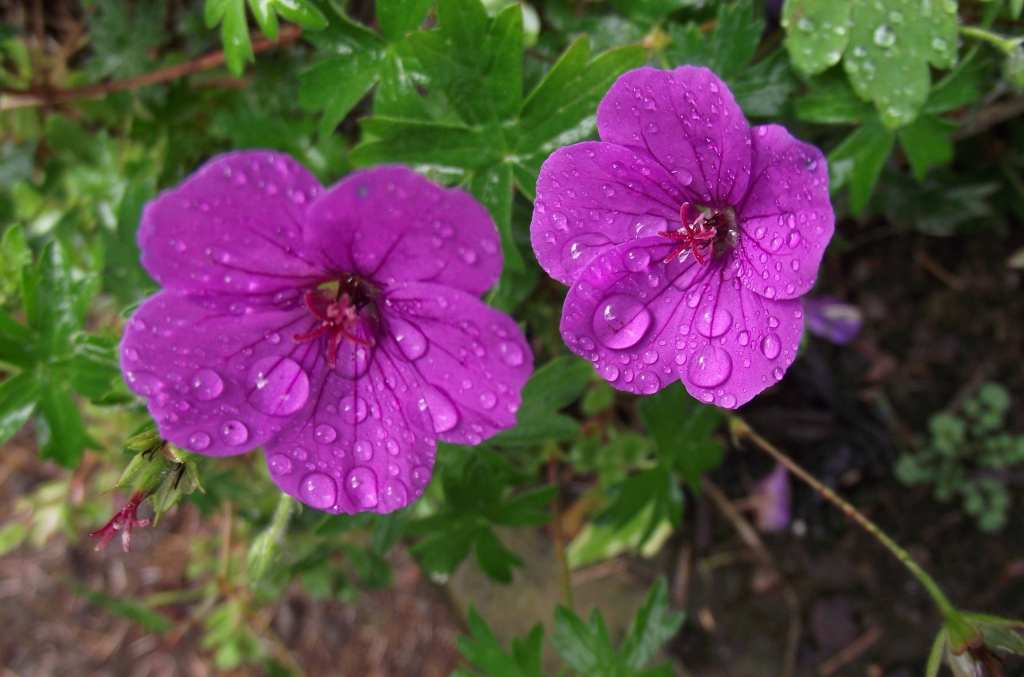
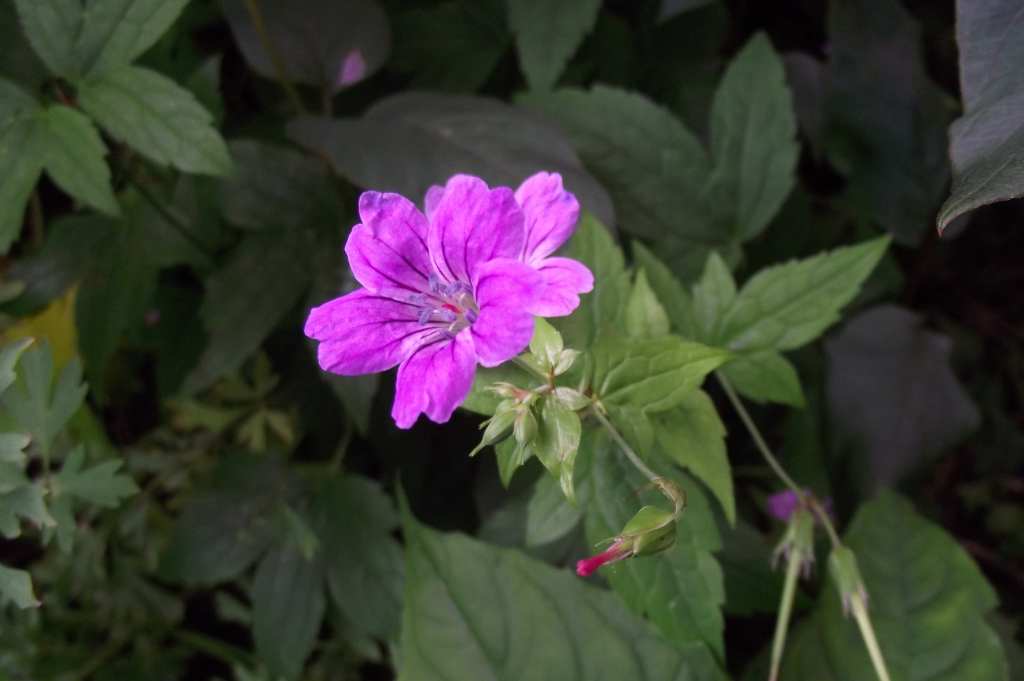
There is always confusion when talking about geraniums, the colourful plants that we use as summer bedding are actually pelargoniums the plants that we are looking at here are from the genus Geranium and are generally hardy perennials ranging from the small “alpine” types to probably the most useful border and ground-cover plants available. There are many species, hybrids and cultivars available but the flowers generally range through shades of blue, purple, pink and red with some white forms thrown in.

The Big Blues.

The thing to remember about geraniums is that they are a promiscuous lot enabling the plant breeders to have a field day when looking for new seedlings, many of the parent plants being British natives or those which have naturalized here. The main aim with border geraniums was to develop plants which will flower for long periods or at least have two flushes and to increase flower size.

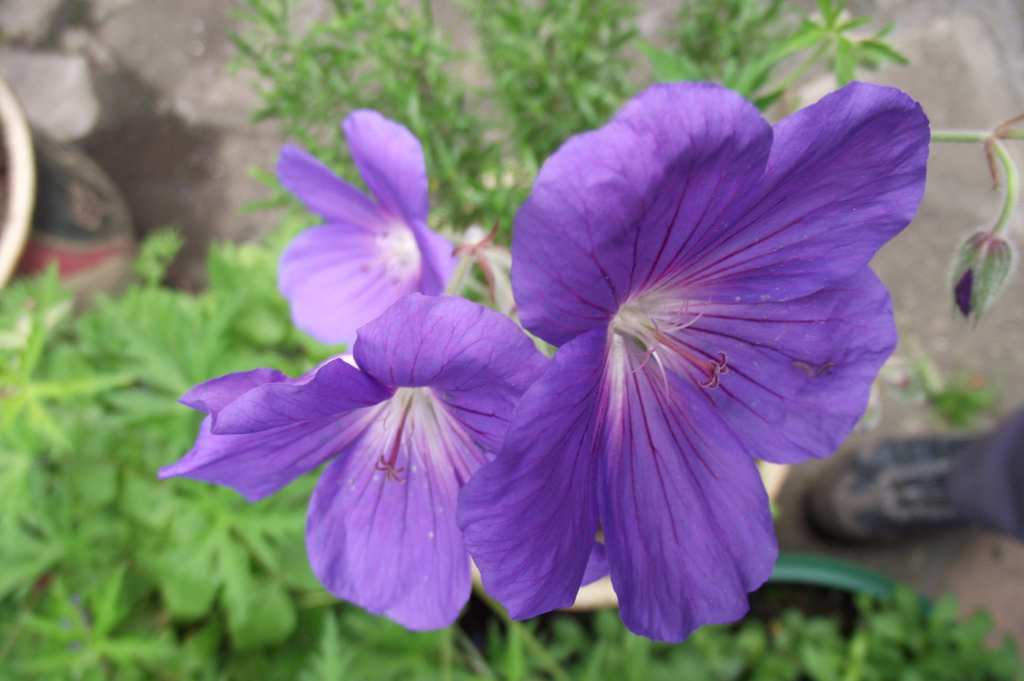
Geranium ‘Rozanne’ illustrates just how random selection can be. Rozanne has won many prestigious awards including the public vote for Chelsea Plant of the Centenary for the decade 1993-2002. It flowers for long periods and is very attractive to bees and other insects, the almost perfect plant and a big commercial success yet it was a garden find that luckily was spotted by keen gardeners and then passed on to professional growers. It is believed that it is a naturally occurring hybrid of G. himalayense, the Himalayan geranium, and a cultivar of G. wallichianum known as ‘Buxton’s Variety.’

G.’Eureka Blue’ is a seedling of G.’Orion’ which in turn was a seedling from G.’Brookside’ which is a hybrid between G. clarkei ‘Kashmir Purple’ and G.pratense.

Johnson’s Blue or G.x johnsonii ‘Johnson’s Blue’ is thought to be a cross between G.himalayense and G.pratense our own Meadow Cranesbill, so you can see how bringing plants together from all over the world goes to produce the hybrids and cultivars that we see today.

Geranium ‘Light Dilys’

‘Light Dilys” parents appear to be lost in the mists of time, however Geranium sanguineum is probably in the mix.

Geranium macrorrhizum

Geranium macrorrhizum is a semi-evergreen perennial growing to about 2′ with attractive fragrant foliage which is useful for under-planting trees and shrubs as it is tolerant of some shade and dry soils. Both these were planted in my “woodland” garden.

Geranium nodosum

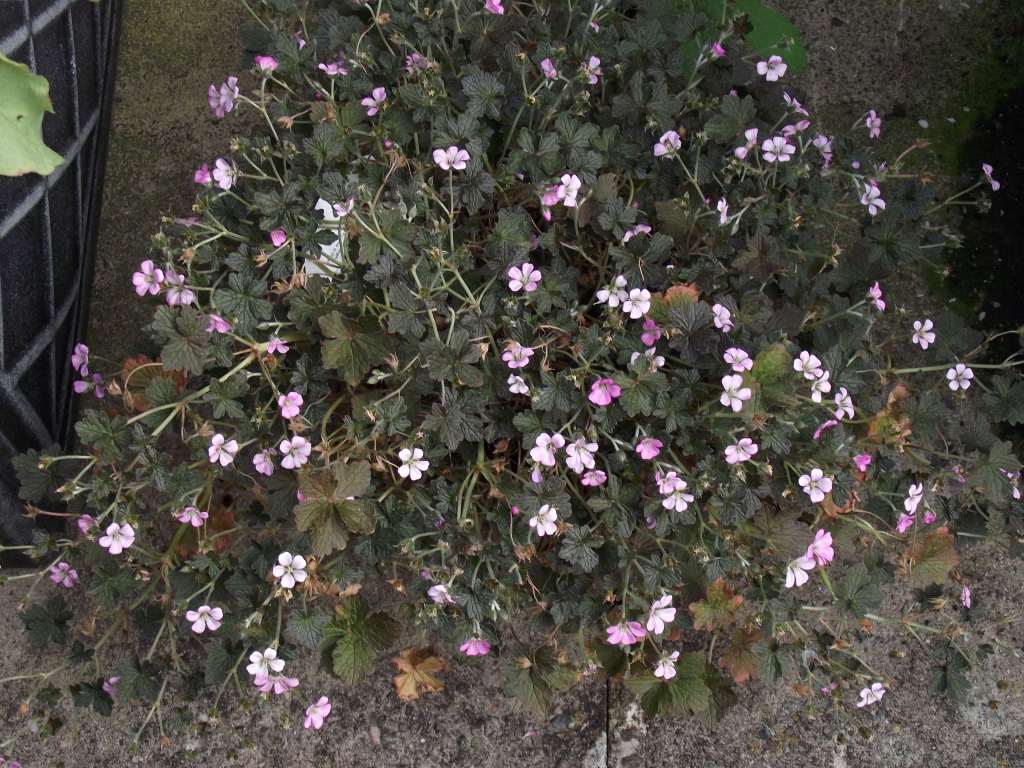
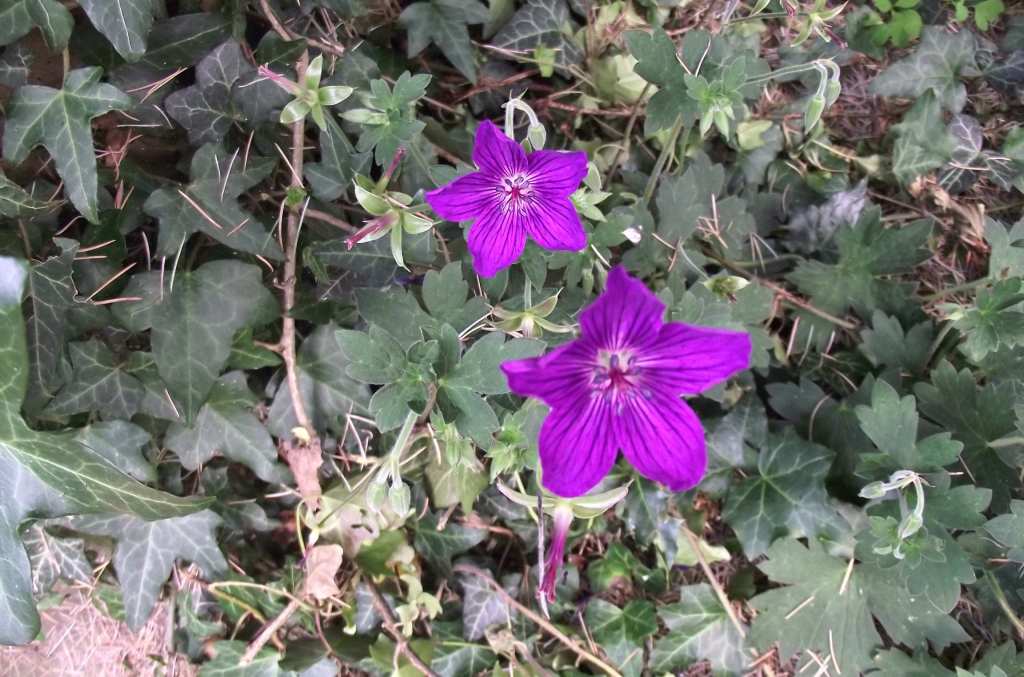
Geranium nodosum has a sprawling habit which makes it ideal for ground-cover particularly in a woodland setting where it will tolerate dry shade.

Geranium ‘Orkney Cherry’

‘Orkney Cherry’ is an outstanding plant from geranium breeder Alan Bremner who has made many contributions to the geranium world. Bred in the Orkneys its deep green foliage turns to bronze as the year goes on contrasting with the delicate pink flowers which are present from early summer onward. Semi-evergreen.

Geranium oxonianum

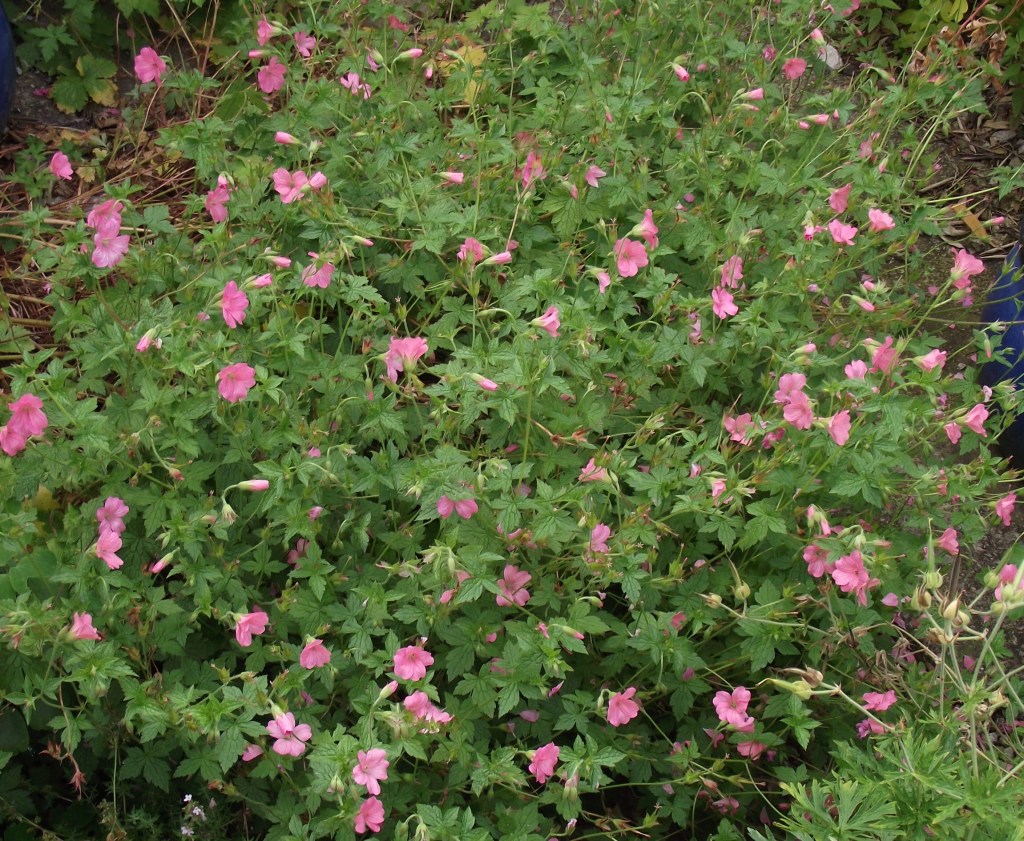
The specie name x oxonianum is given to all crosses between G.endressii and G.versicolor. The parent plants cross-fertilise readily and the resultant hybrids are fertile which allows a myriad of cultivars to be developed. ‘Wargrave Pink’ is probably my favourite geranium, it grows strongly, is tolerant of a wide range of conditions and flowers for at least six months of the year. Another reason I like it is because it is a lovely clear pink and a welcome change from all the blues and purples.

Geranium phaeum

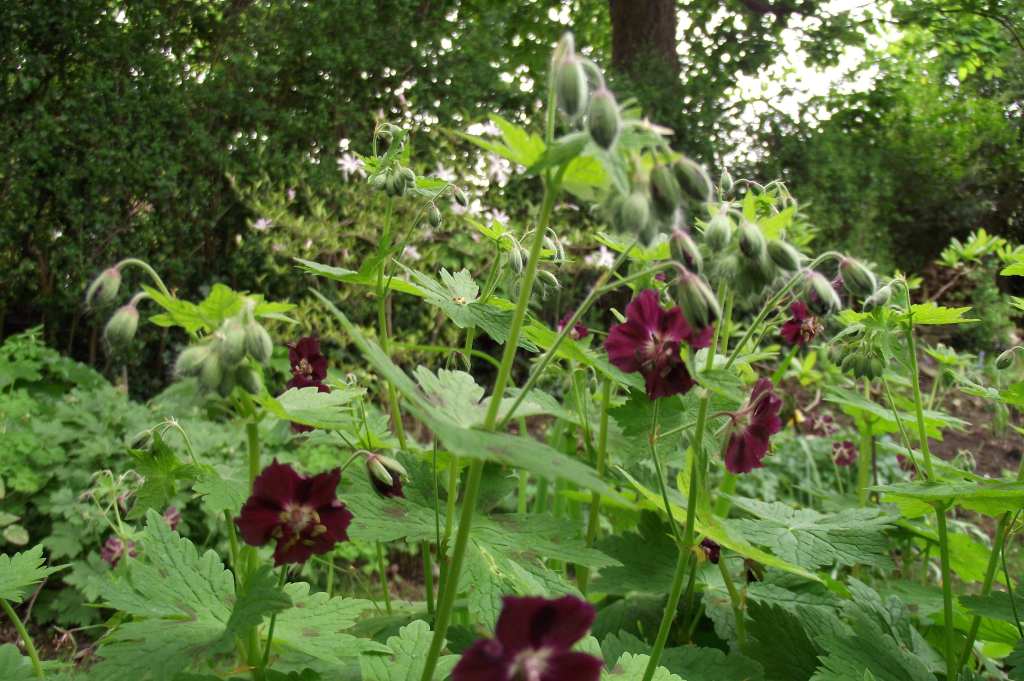
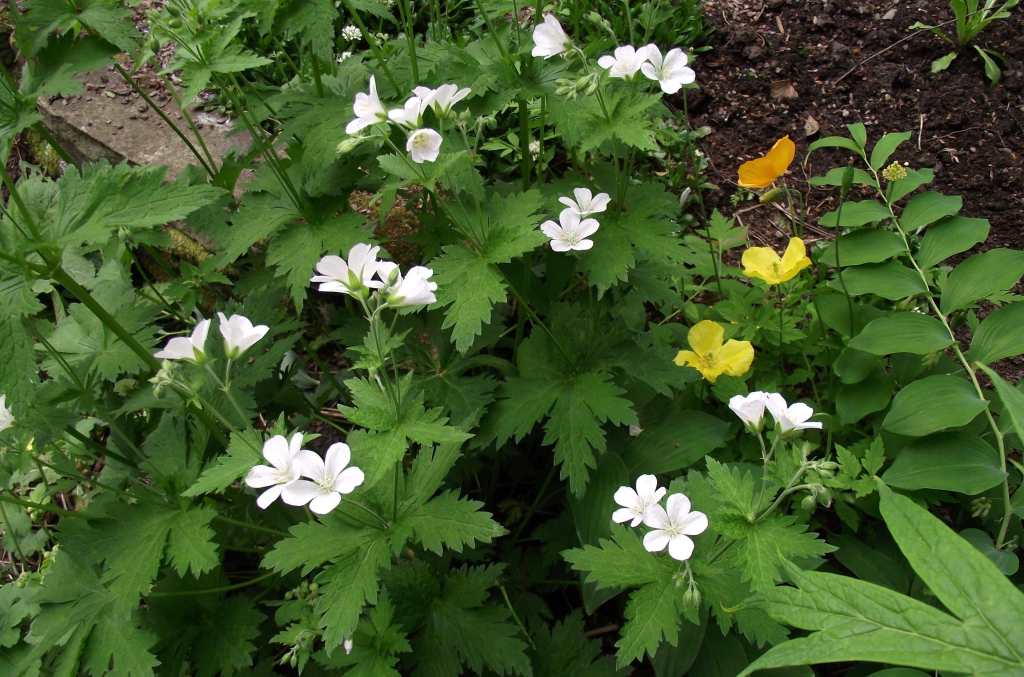
Geranium phaeum is a striking upright perennial which is useful in a woodland setting as ground-cover as it will grow in shade. The deep purple flowers of ‘Samobor’ are particularly attractive but there is a white form which shows up well in a shady spot.

Geranium pratense

Geranium pratense the Meadow Cranesbill is an important contributor to the geranium gene pool and crops up as a parent of many modern hybrids, its upright habit and extreme hardiness are desirable attributes. Along with its roll as a specie to cross with, many cultivars have also been developed from selective breeding.

Geranium pyrenaicum

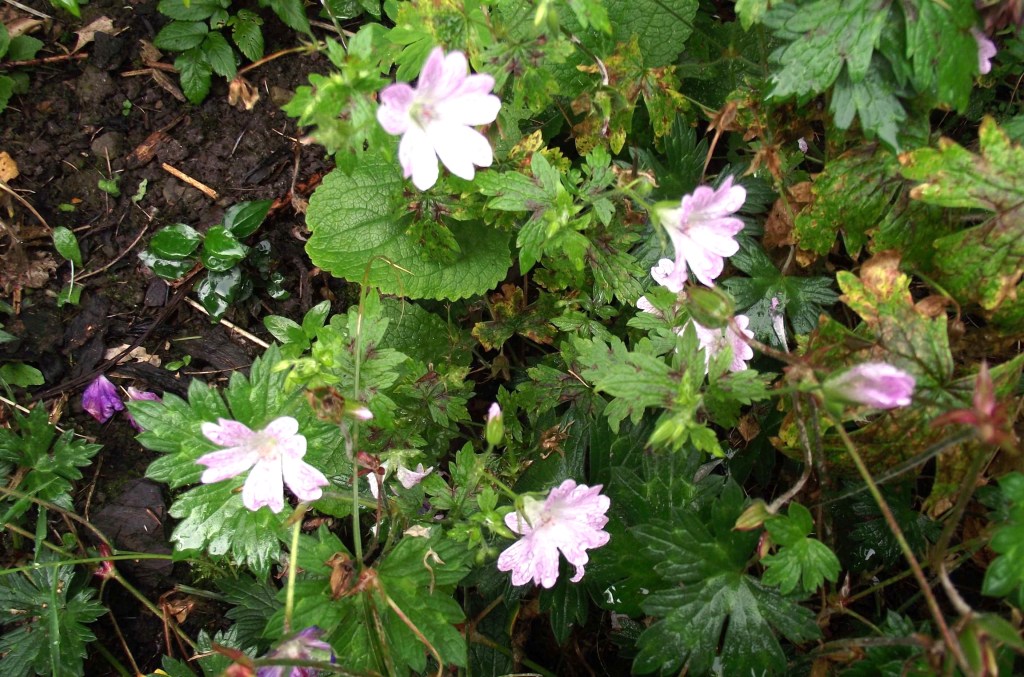
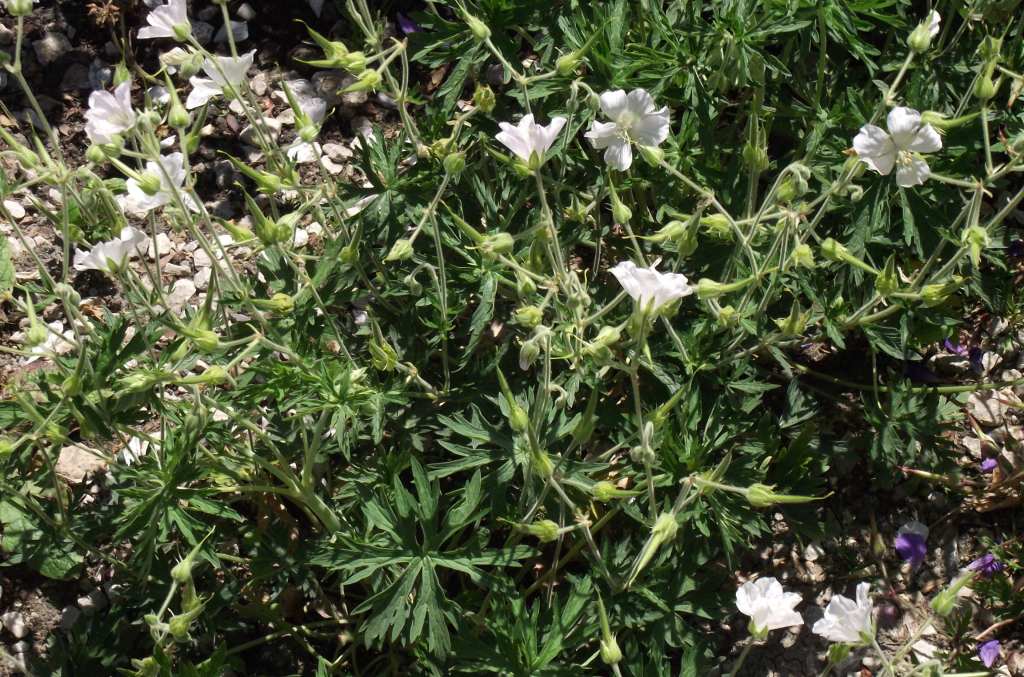
The Hedgerow or sometimes Mountain Cranesbill has flowers which are distinctly different from most geraniums with deeply indented petals giving the illusion of a higher number than normal. It has naturalised itself in the UK where it can be found growing mainly in hedgerows. I have seen it described as coarse but I feel that does this lovely little flowering plant an injustice, it is a prolific seeder and crops up everywhere which, to me, only adds to its charm, probably not so much if you like a nice orderly garden.

Geranium renardii

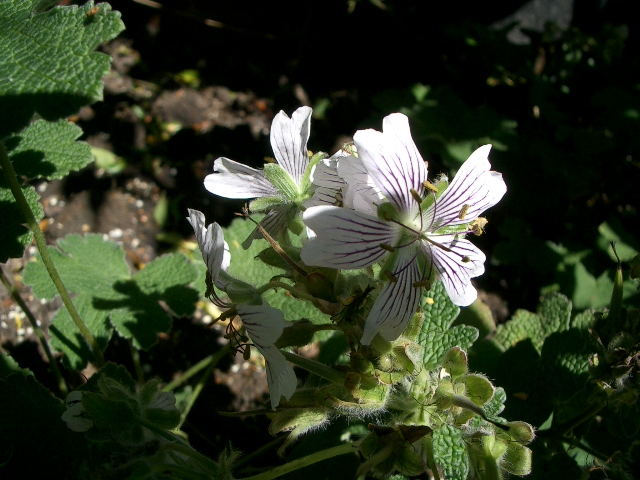
The Caucasian Cranesbill is a little unusual, it forms clumps of velvety, wrinkled, scalloped leaves which change colour as they age, topped by heavily veined flowers. Needs a bit more care than most, a sheltered well-drained sunny site is best.

Geranium sylvaticum

The Woodland Cranesbill is a beautiful little plant ideal for under-planting trees and shrubs, tolerates shade but prefers a moist soil. Found in damp meadows and open woodland in its native habitat, it is also found growing wild in the UK. The name really says it all when it comes to the plant’s growing requirements, the Latin sylvaticum actually means of woodland.

Geranium versicolor

The Pencilled Geranium gets its name from the veined flowers and is one of the parents of the x oxonianum hybrids. This beautiful little plant is semi-evergreen and can tolerate some dryness and shade although it thrives in good moist border soil in a sunny position. Ideal cottage garden plant.

Geranium wlassovianum

Geranium wlassovianum has a long flowering period which in addition has sprawling foliage which changes colour through the year, unfortunately this can’t be seen in the picture. Found in damp grasslands in its native habitat, it grows well in any good loam and can tolerate some shade.

Hardy Geraniums Culture

With such a large genus it is impossible to be specific, however in general terms many are semi-evergreen and have either a clump forming, trailing or creeping habit. The single flush types can be cut down after flowering which hopefully will induce a second flush. With the others I tend to leave the old foliage on over winter and cut down in the spring but this can be done after flowering, in autumn, if one prefers. Pretty much all geraniums are happy in a good moist but well drained loam in a sunny position although some are more shade and slightly arid tolerant than others. Propagation is by seed for those which come true, by cuttings, or more usually division, in the garden. For those plants which have to be vegetatively propagated to come true best to buy online from a specialist nursery unless you are lucky enough to have one near you.

Geraniums for Glass

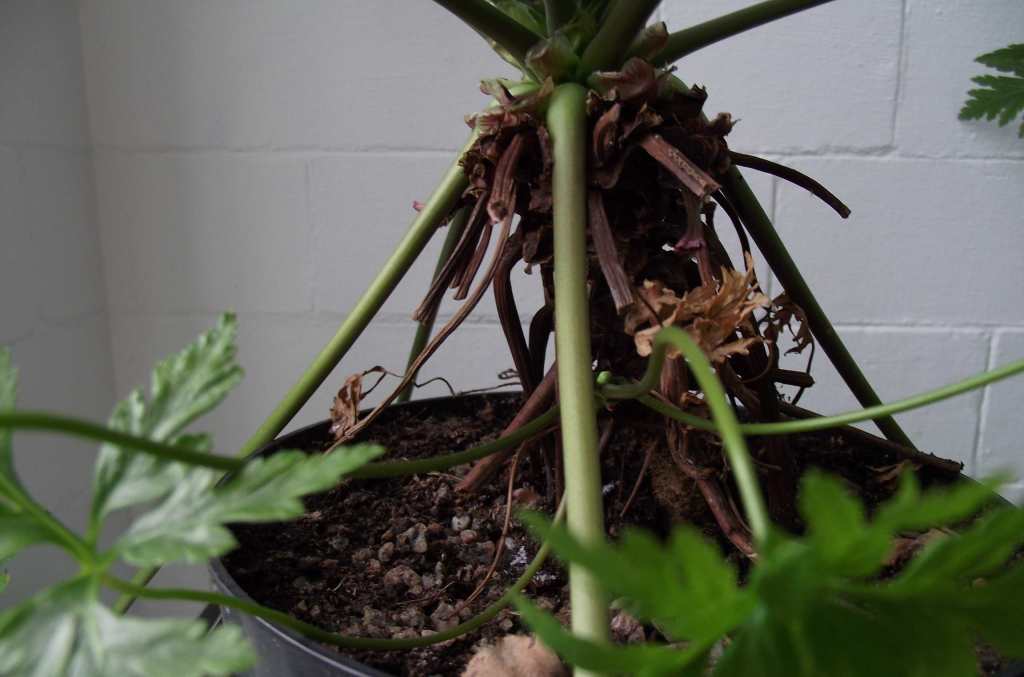
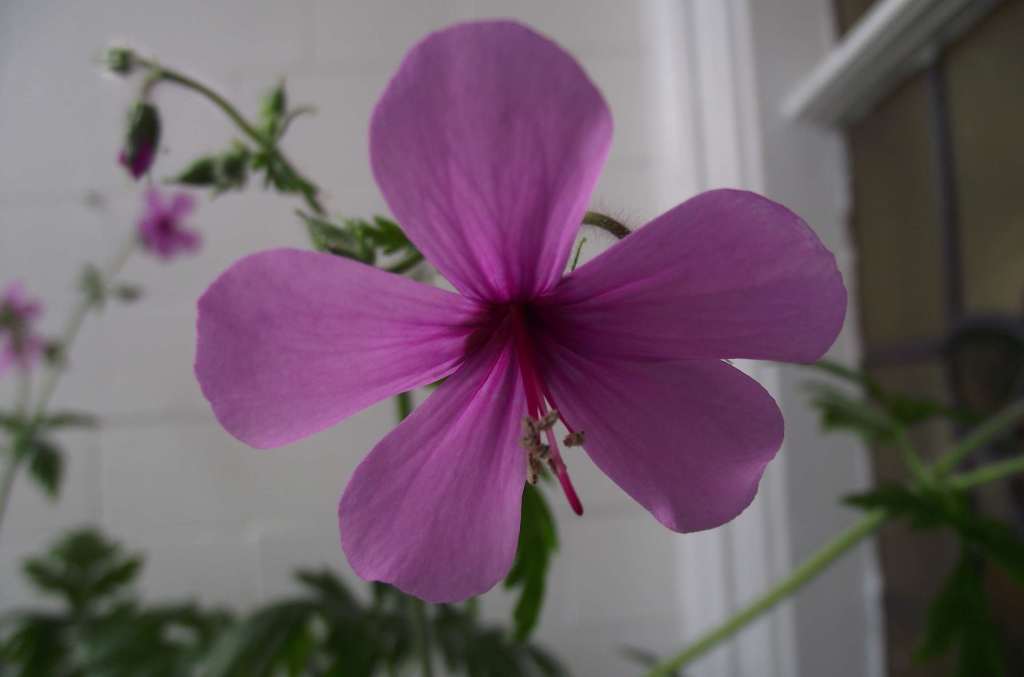
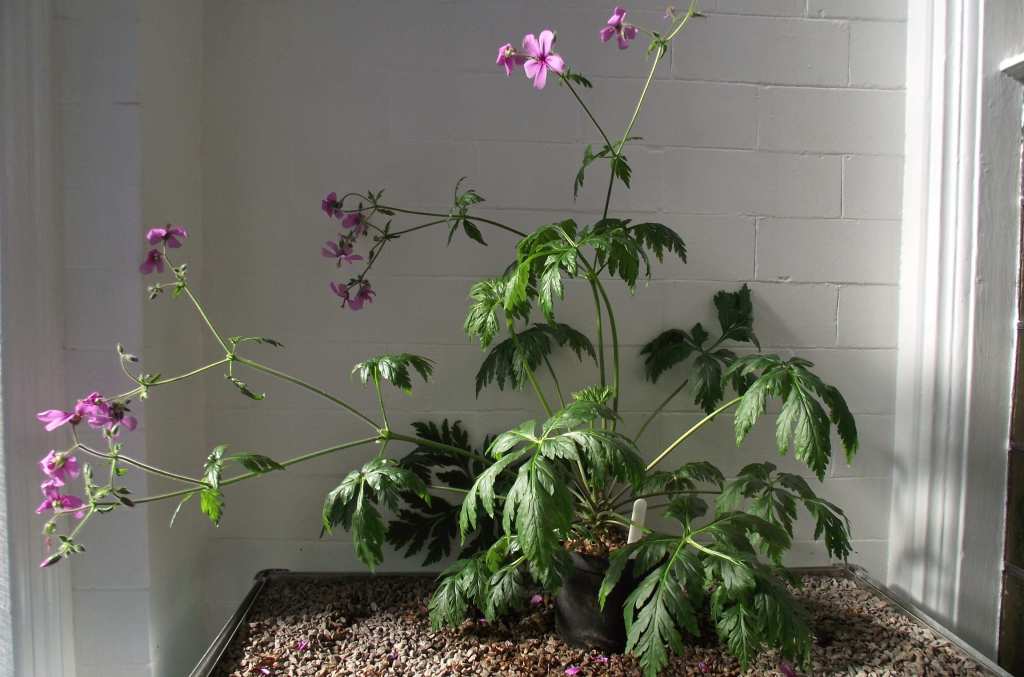
Why bother you might ask, this plant was from a packet of seed I inadvertently bought. The Maderian Cranesbill is the largest of the geraniums, it is biennial and can reach 5′ before flowering in its second year. It may survive in the warmest of gardens but there was absolutely no chance of that happening in the North of England. The plant threw out ariel roots from the crown down the outside of the pot forming a support some of which I, in my ignorance, cut off, however the plant survived and flowered.

The Canary Island Cranesbill is an evergreen perennial which needs a warm garden to survive in the UK. Very similar to G.maderense which, at one time, was thought to be a form of G.palmatum until it was identified as a separate species.

Hardy Perennials (Part 3)

Dicentra

Dicentra spectabilis

Now Lamprocapnos spectabilis, Bleeding Heart has become a popular addition to the cottage garden, its unusual flowers born on arching stems over fern-like foliage make an attractive show in early spring. Although it is one of the first border perennials to show it is worth noting that it is one of the first to die back in early autumn, so tends to look better in an informal setting. Thrives in any good moist soil in sun or partial shade but it does not respond well to being moved. There is a yellow leaved form available.

Dicentra scandens

An unusual member of the Dicentra genus is the climbing D.scandens, a half-hardy climber I grew from seed. Unfortunately the botanists have really done a number on the Dicentra genus which is now split into four different genera. D.scandens is now Dactylicapnos scandens! Why are the new names nearly always more difficult to remember and pronounce than the old ones?

Dierama

Dierama pulcherrimum, Angel’s Fishing Rods are beautiful, evergreen perennials for an informal setting. They have arching flower stems covered in funnel shaped flowers in a range of shades of pink/purple and white over grass-like foliage. They prefer a sunny sheltered spot in moist soil and are another plant that does not like being moved although they actually grow from corms. Personally I have struggled to grow them and have only managed a few flowers at best, probably because my garden was too cold and damp. A member of the Iris family from South Africa there are many species and cultivars in cultivation including the well established Slieve Donard hybrids bred in N.Ireland.

Digitalis

Digitalis or Foxglove is a genus of both biennial and short lived perennial plants. The native Digitalis purpurea is common everywhere and well known, however some of the species and hybrids are less seen. Broadly speaking, being woodlanders, they all prefer a moist soil in dappled shade although D.purpurea seeds itself almost anywhere and I have had an excellent plant growing from a shady rock crevice in the past. Pam’s Choice is a naturally occurring garden hybrid found by a keen amateur gardener.

Draba

Draba cuspidata

Drabas are alpine members of the brassica family and originate from Central Europe and even the UK, they are cushion or mat forming plants, the most common garden specie being Draba aizoides. As with most alpines they like a gritty open soil in a sunny position. The plant pictured above was grown from a “lucky dip” collection of society seed out of curiosity.

Epimediums

Epimedium grandis

Find my post dedicated to Epimediums here.

Epipactis hardy orchid

Epipactis helleborine

I have included this for its novelty value, possibly Epipactis helleborine, I am no expert when it comes to orchids, just seeded itself into my ‘woodland’ garden, flowered and disappeared.

Eryngium

Eryngium giganteum ‘Miss Willmott’s Ghost’

Eryngium giganteum or the Giant Sea Holly is colloquially associated with Miss Willmott of Warley Place, who by all accounts was a formidable lady, because of a story in which she was said to scatter the seed of the eryngium in any garden that she visited that she considered to be dull. Unfortunately the story has been debunked in recent years. Eryngiums are basically thistles and require a sunny spot in well drained but moist light soil to grow well. There are several cultivars available ranging from silvery white to steely dark blue.

Eupatorium

Common name Joe Pye Weed, this is a fantastic plant for adding height and late colour to the border, growing to over 6′ its purple flower heads remain until the first frosts. This is one plant that I have introduced to my new garden, late to surface, its flowers have been covered in butterflies and other insects since the end of June and it is still going strong.

Eupatorium rugosum ‘Chocolate’ is a different plant altogether smaller in stature with dark green/red leaves and contrasting fluffy white flower heads it is rather striking. Now reclassified as Ageratina altissima which just doesn’t have the same ring to it somehow.

Euphorbia

Euphorbia or Spurges are a massive and diverse genus ranging from annual weeds to trees, with shrubs and even succulents in between. The plant above is a typical garden cultivar the many species and cultivars have a range of colours including acid green and even orange. A well known member of the genus is the popular Christmas plant the Poinsettia (Euphorbia pulcherrima). The plant that is getting all my attention at the moment is the annual garden weed Euphorbia peplus, it only appeared a couple of years ago and is proving to be a nightmare! All of them, that we are likely to come in contact with, have a toxic sap which can cause painful blisters on someone who is sensitive.

Hardy Perennials (Part 2)

Bergenia

Common name Elephant’s Ears, bergenias are easy to grow and will thrive in good deep, well drained loam in sun or shade but will also tolerate dry soils, excessive damp can cause them to rot. Basically an evergreen, bergenias are early flowering and can sometimes be damaged by frosts, keep the plant looking its best by removing dead or damaged leaves.

Borage

I love this herb, Borago officianalis is really an annual but I have included it here because it self seeds and generally reappears in the same spot every year. Definitely a plant for a sunny spot, will not perform in shade or on wet soils. Not only are the flowers a striking shade of blue but they are set off by the fine hairs that cover the stems and sepals. The foliage has a cucumber scent and both flowers and leaves are edible and have medicinal and culinary uses. A white form is also available and sometimes crops up among the seedlings.

Brunnera

Brunnera

A plant for cool shady conditions which will grow in moist soils brunneras have very attractive leaves and blue myosotis-like flowers and look well at the front of a shady border.

Bupleurum

A bit of an oddity Bupleurum is an unusual plant for the herbaceous border. Found in Central Europe and even the UK it will grow in virtually any well drained soil in full sun or partial shade. The plant shown was grown from seed, the cultivar normally offered for sale is Bupleurum longifolium ‘Bronze Beauty’.

Caltha

The Marsh Marigold or King Cup is a plant for a boggy place and can be grown as a marginal where it will thrive. It overwinters with its buds just below the soil surface from where both flowers and leaves erupt together early in the spring. A member of the Buttercup family, it is an invaluable plant for early colour.

Campanula

Bellflowers are a popular, generally easy to grow, genus ranging from arctic alpine plants as cushions or scrambling over the ground to tall border perennials. Although relatively easy campanulas are not good with winter wet and some species can be quite invasive such as Campanula poscharskyana from Siberia. Some of the showy border hybrids such as Campanula ‘Sarastro’ can have disproportionately large flowers and will need support. Propagation is from seed for species plants, buying in most cultivars or division in the garden.

Celandine

Celandine

Ficaria verna subsp. verna or Lesser Celandine is my favourite ‘weed’. Growing from persistent bulbils, this native member of the buttercup family is definitely not everyone’s cup of tea. In a damp woodland setting, such as I had, it makes a wonderful very early spring flowering plant, providing an early source of nectar for the bees, however, in a more formal setting, it is definitely to be discouraged.

Chaerophyllum

Chaerophyllum hirsutum roseum

This Central European plant is similar to Cow Parsley but much more delicate in appearance, easy in a moist but not waterlogged soil. Personally I think this is a really useful border plant, the fernlike foliage is apple scented and the umbels of small flowers are a great attraction for pollinators even in late summer.

Chelone

Chelone obliqua or Turtlehead is a cottage garden plant which thrives in any good well drained garden soil. It has dark green leaves which unfortunately do not contrast too well with the purple flowers, however there is a white form available. It is a late flowerer so provides some colour into the autumn. This plant was grown from seed, the white form is probably best obtained from a good nursery.

Convallaria

Convallaria majalis

Lily of the Valley used to be seen in most gardens but has gone out of fashion over time. A plant for shady woodland or spreading under shrubs its distinctive flowers give off a very strong scent which can then be followed by berries. There is a pinkish form available. Although popular for its ease of cultivation and scent I think it is possibly too invasive for today’s way of gardening.

Corydalis

Corydalis or Fumitory are generally shade lovers, ideal for a woodland setting, which flower in varying shades of blue to blue/white with the Yellow Fumitory being a welcome exception. They originate in the Northern Hemisphere primarily from China but are also found in America and the mountains of N.Africa. The nondescript Corydalis ophiocarpa is a good example of growing from seed not being quite what you hoped for! A point of interest Pere David who was a catholic missionary to China was a keen botanist and zoologist, although he collected the corydalis pictured above he also discovered Pere David’s deer. The deer became extinct in China where it had once been plentiful but is now being restored in significant numbers from the herd at Woburn.

Crocosmia

Crocosmia ‘Lucifer’

Formerly known as montbretia Crocosmia should have been included in an earlier post as they are grown from bulb-like corms. Native to South Africa, so best grown in a sheltered spot in a severe climate, the original orange garden plant (Montbretia) was a hybrid Crocosmia x crocosmiiflora but there is now a huge range of vibrant colours available through intensive plant breeding. Easy to grow they will thrive in most situations and soil types other than anything too wet, a little shade may help the flowers to last longer.