Hardy Geraniums Updated

Hardy Geraniums are adding the most colour to my garden at the moment, although some are coming to an end and will be cut down to regenerate growth, and hopefully, a second flush of flowers. All these pictures are of plants I have currently, or have grown, and photographed, in the past.

There is always confusion when talking about geraniums, the colourful plants that we use as summer bedding are actually pelargoniums the plants that we are looking at here are from the genus Geranium and are generally hardy perennials ranging from the small “alpine” types to probably the most useful border and ground-cover plants available. There are many species, hybrids and cultivars available but the flowers generally range through shades of blue, purple, pink and red with some white forms thrown in.

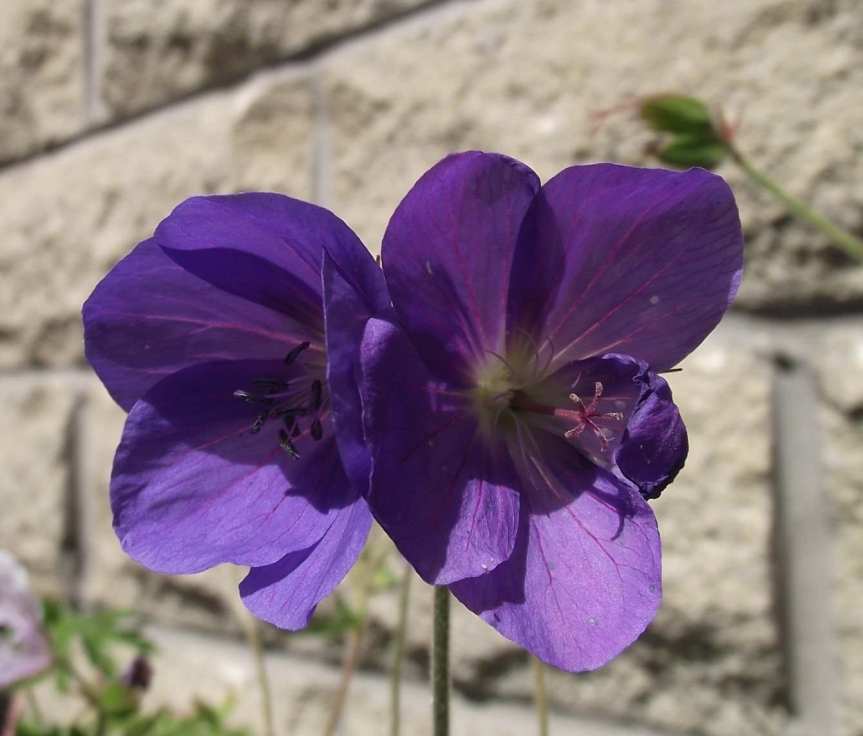
The Big Blues.
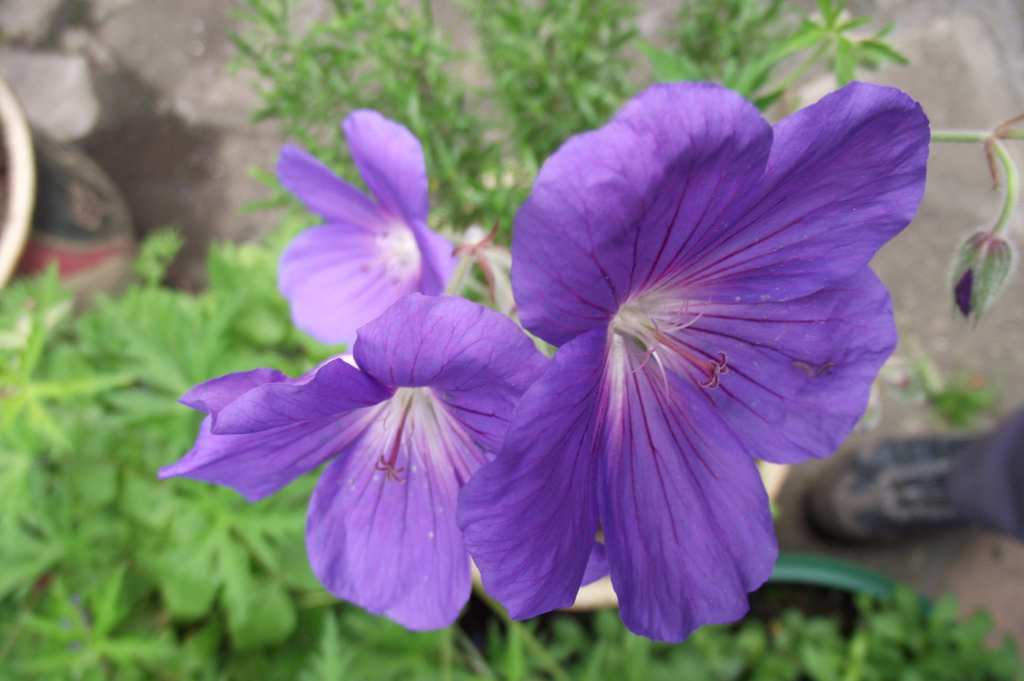
The thing to remember about geraniums is that they are a promiscuous lot enabling the plant breeders to have a field day when looking for new seedlings, many of the parent plants being British natives or those which have naturalized here. The main aim with border geraniums was to develop plants which will flower for long periods or at least have two flushes, and to increase flower size.

Geranium ‘Rozanne’ illustrates just how random selection can be. Rozanne has won many prestigious awards including the public vote for Chelsea Plant of the Centenary for the decade 1993-2002. It flowers for long periods and is very attractive to bees and other insects, the almost perfect plant and a big commercial success yet it was a garden find that luckily was spotted by keen gardeners and then passed on to professional growers. It is believed that it is a naturally occurring hybrid of G. himalayense, the Himalayan geranium, and a cultivar of G. wallichianum‘Buxton’s Variety.’

G.’Eureka Blue’ is a seedling of G.’Orion’ which in turn was a seedling from G.’Brookside‘ which is a hybrid between G. clarkei ‘Kashmir Purple’ and G.pratense.

Johnson’s Blue or G.x johnsonii ‘Johnson’s Blue’ is thought to be a cross between G.himalayense and G.pratense our own Meadow Cranesbill, so you can see how bringing plants together from all over the world goes to produce the hybrids and cultivars that we see today.

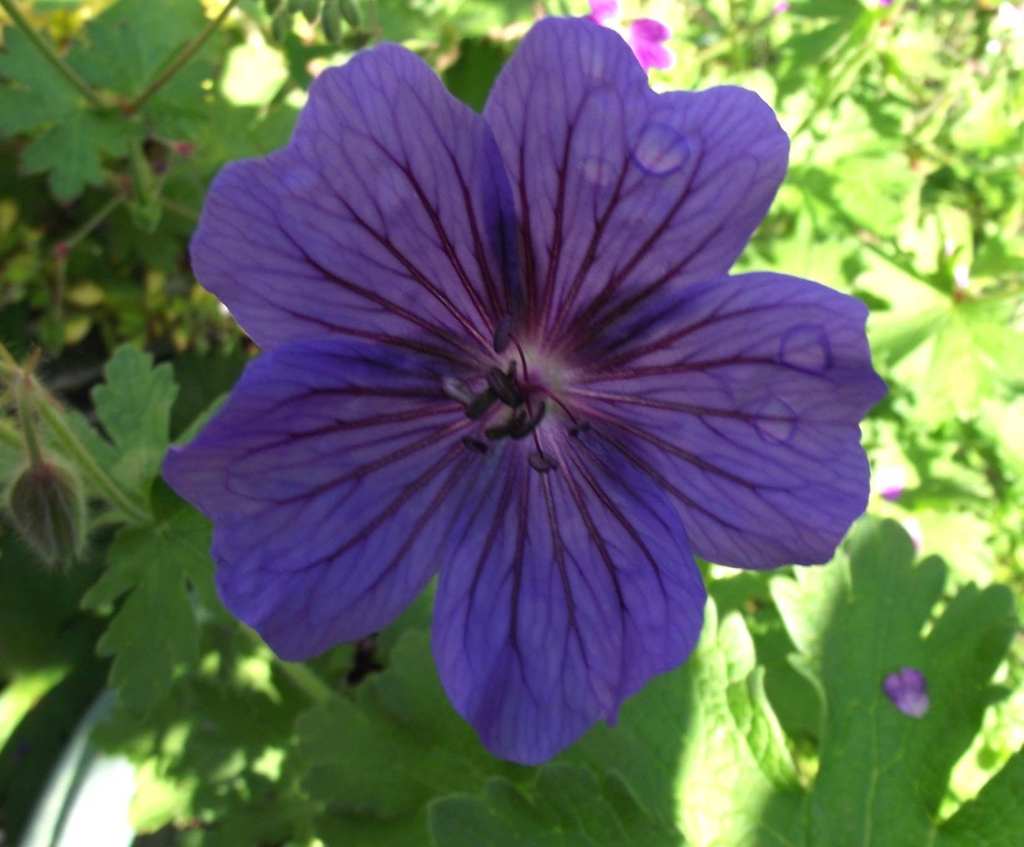
Rather magnificent veining of Geranium x magnificum ‘Blue Blood‘ which is a variant of the original cross: G. ibericum x G. platypetalum.

Geranium ‘Brookside’ is officially violet/blue so I am including it. Another “Big Blue” this is an interspecies cross: G. clarkei ‘Kashmir Purple’ x G. pratense.

Geranium himalayense is a specie geranium and the first to flower with me.

Geranium himalayense ‘Derrick Cook’
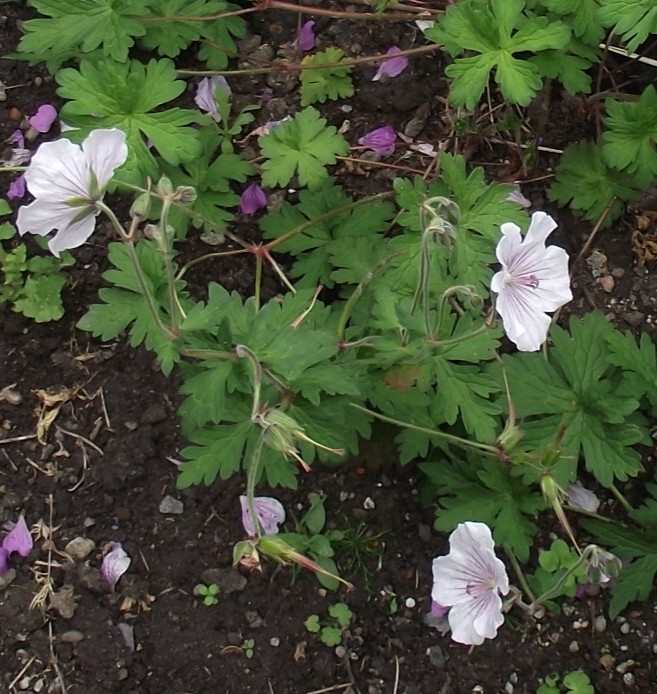
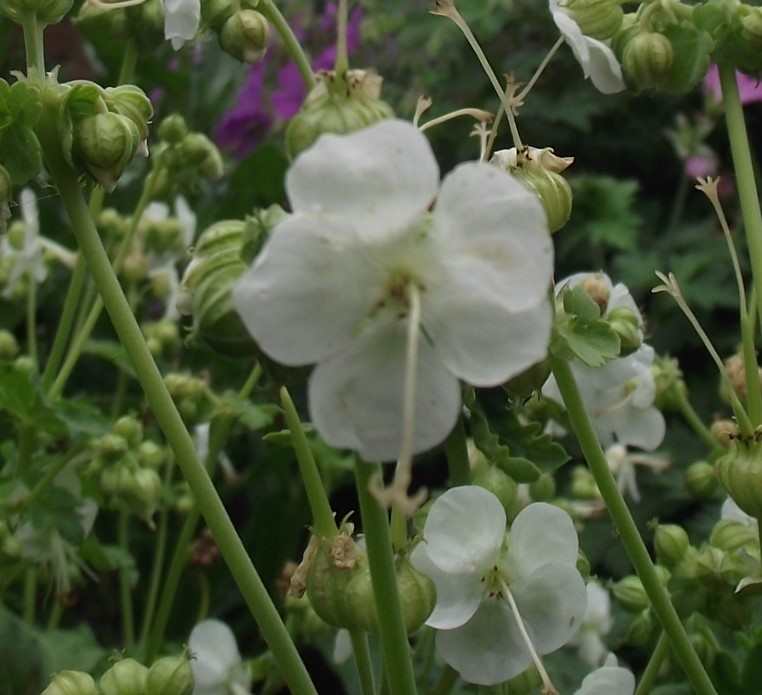
Geranium himalayense ‘Derrick Cook’ is a more unusual white form of G.himalayense.

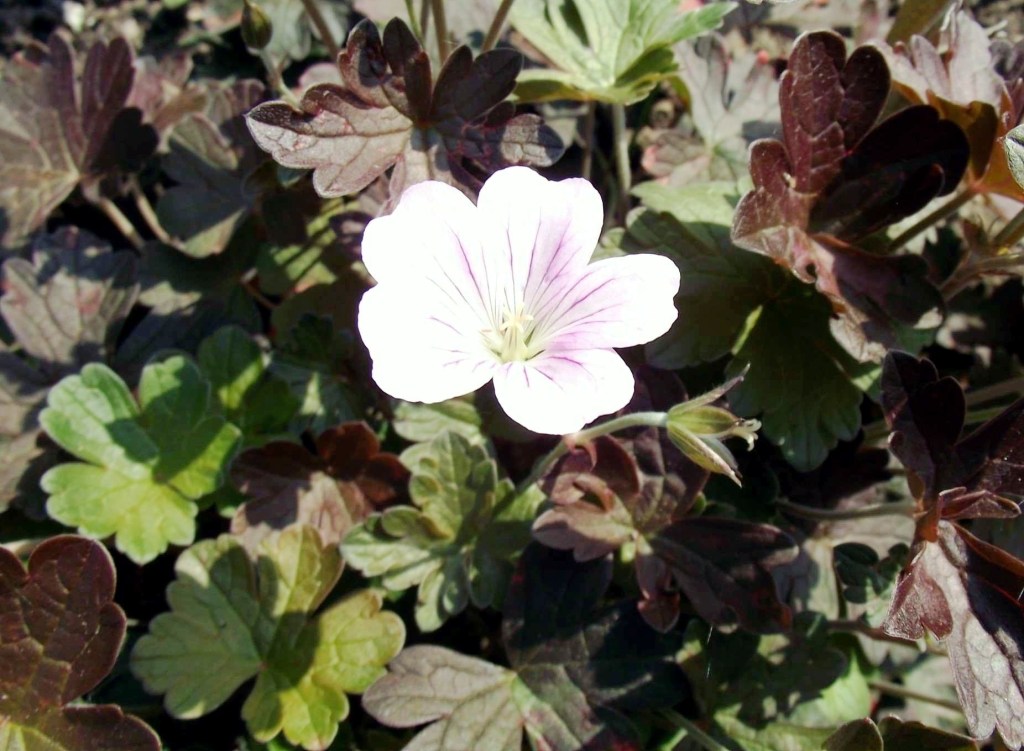
Geranium ‘Light Dilys’
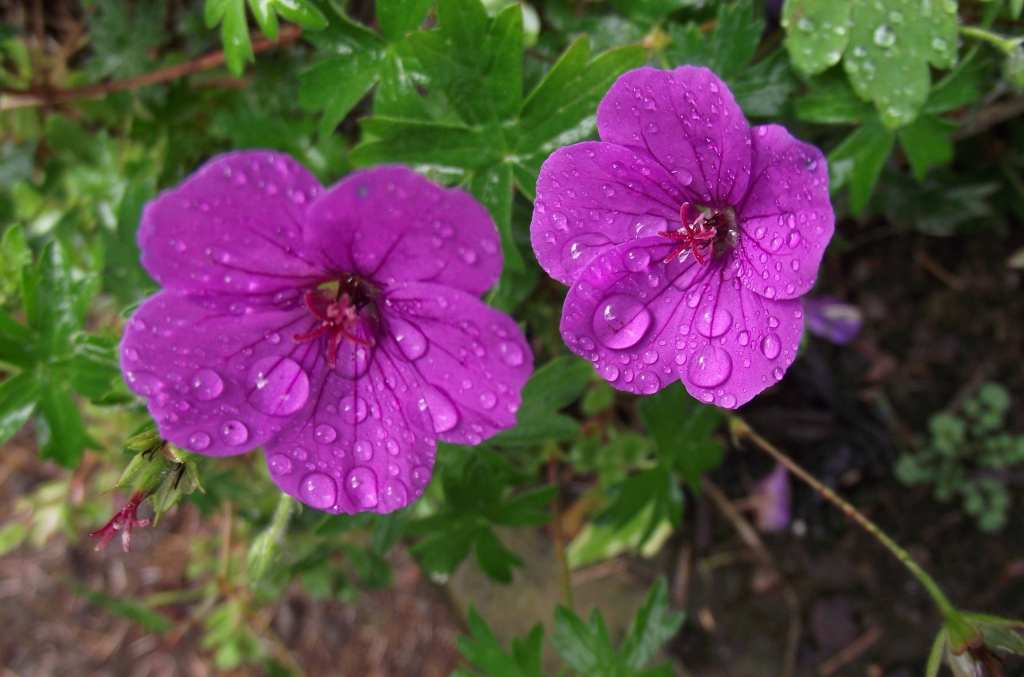
‘Light Dilys” is a sport of Geranium ‘Dilys’ which was an Alan Bremner introduction. It looks like Geranium sanguineum is probably in the mix.

Geranium macrorrhizum
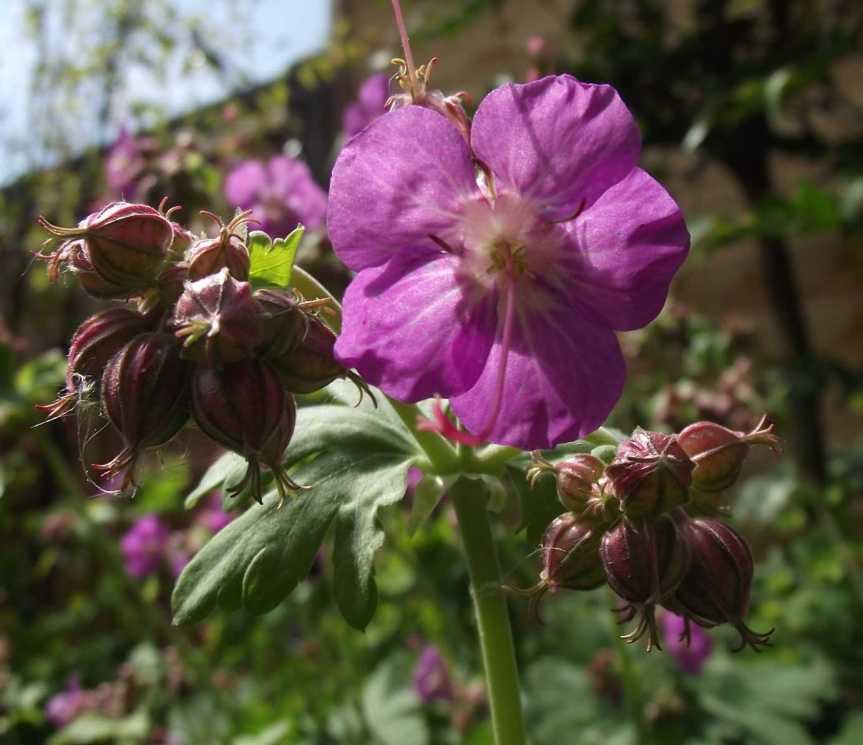
Geranium macrorrhizum is a semi-evergreen perennial growing to about 2′ with attractive fragrant foliage which is useful for under-planting trees and shrubs as it is tolerant of some shade and dry soils.

Geranium nodosum
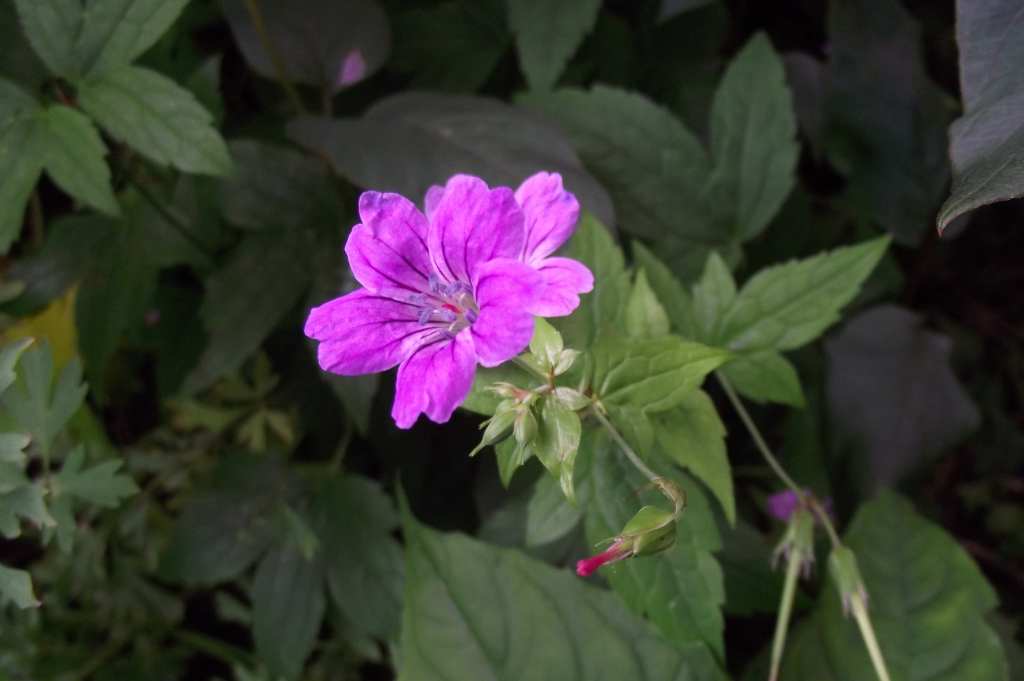
Geranium nodosum has a sprawling habit which makes it ideal for ground-cover particularly in a woodland setting where it will tolerate dry shade.

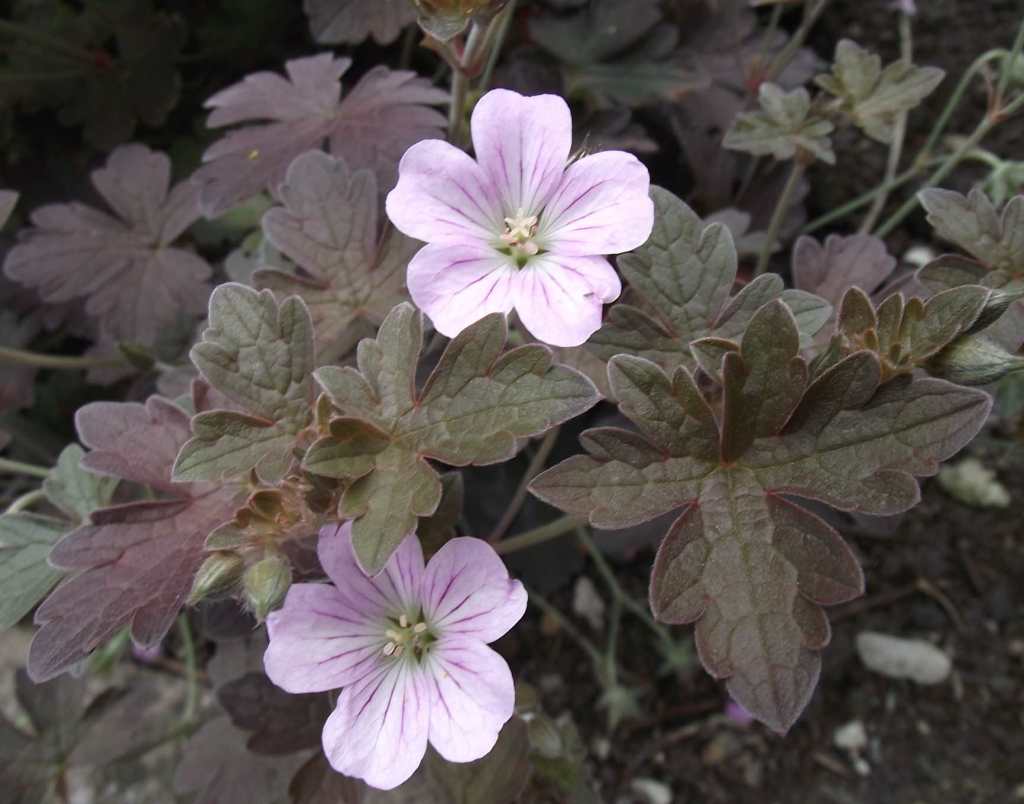
Geranium ‘Orkney Cherry’
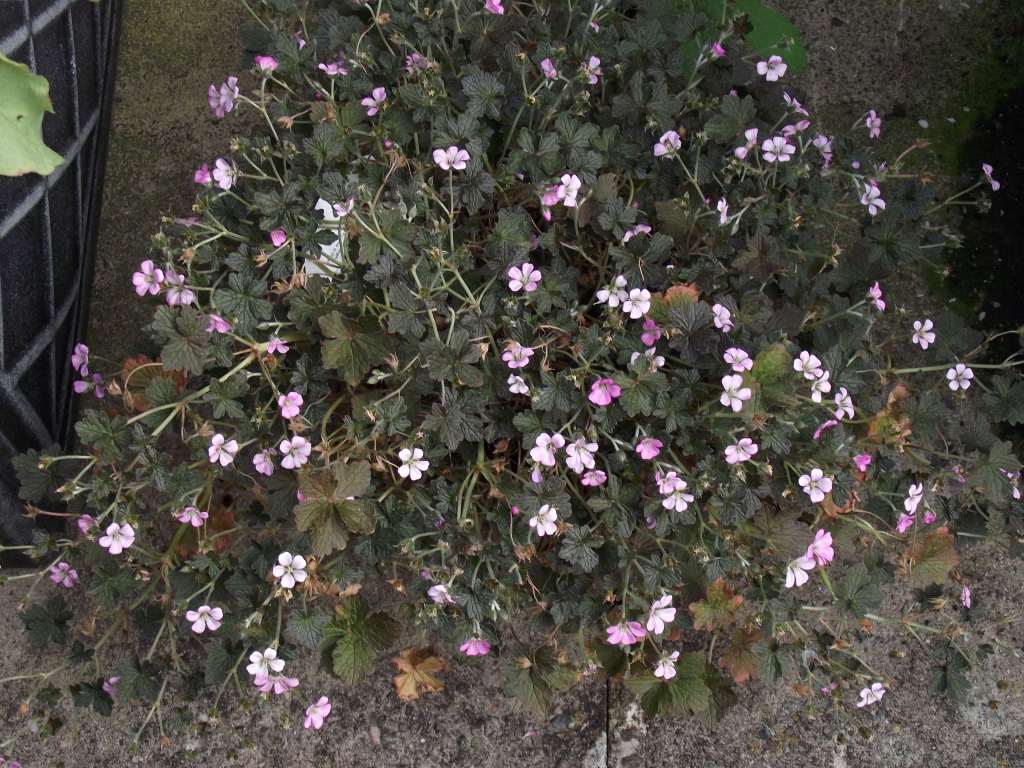
‘Orkney Cherry’ is an outstanding plant from geranium breeder Alan Bremner who has made many contributions to the geranium world. Bred in the Orkneys its deep green foliage turns to bronze as the year goes on contrasting with the delicate pink flowers which are present from early summer onward. Semi-evergreen.

Geranium oxonianum
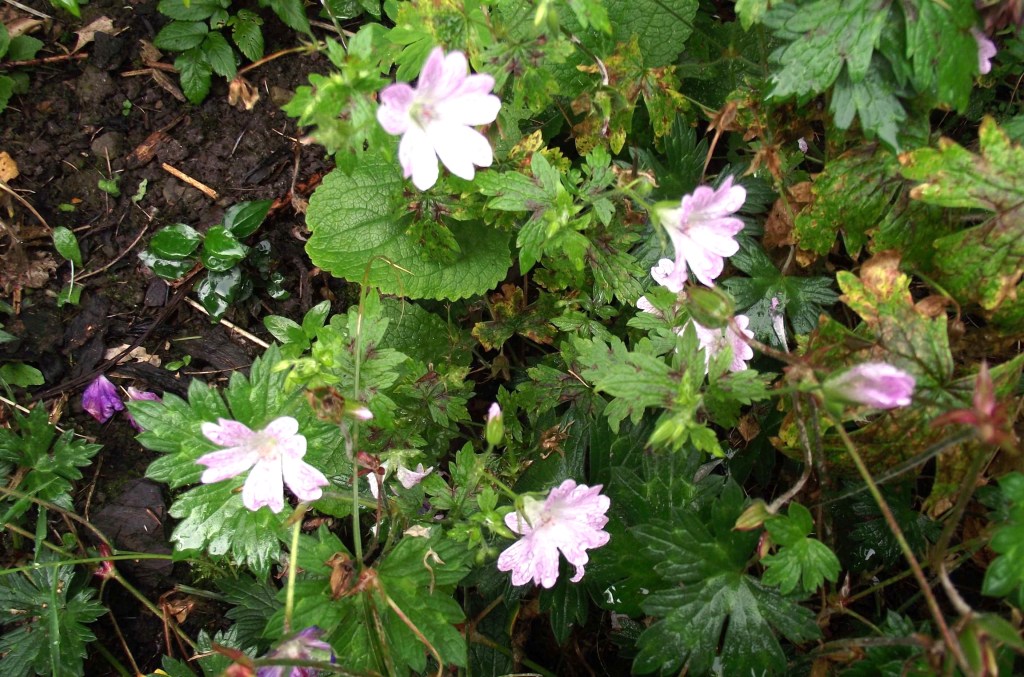
The specie name x oxonianum is given to all crosses between G.endressii and G.versicolor. The parent plants cross-fertilize readily and the resultant hybrids are fertile which allows a myriad of cultivars to be developed.

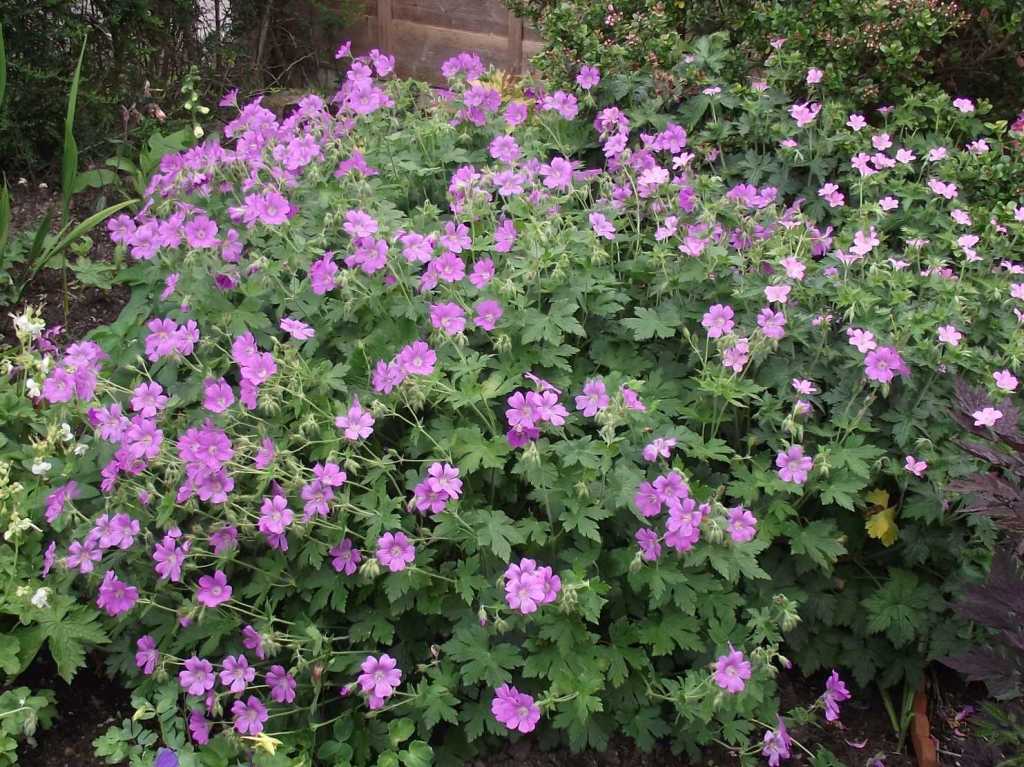
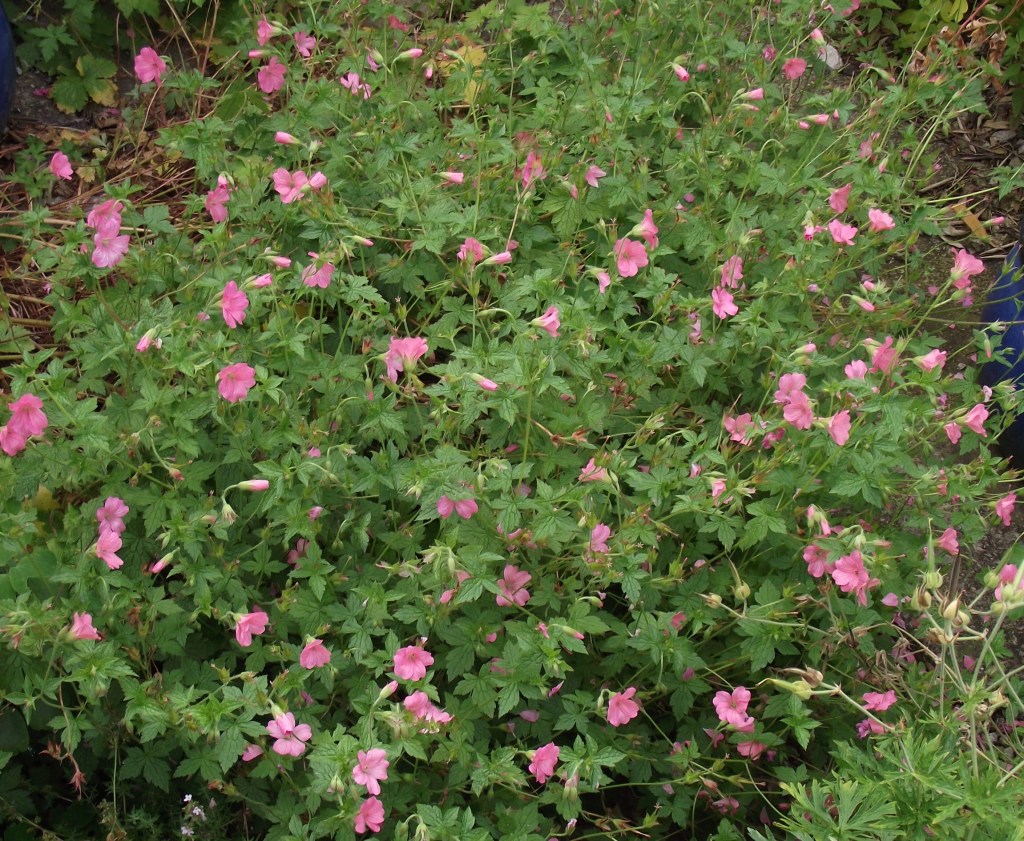
Geranium × oxonianum ‘Wargrave Pink’ is probably my favourite geranium, it grows strongly, is tolerant of a wide range of conditions and flowers for at least six months of the year. Another reason I like it is because it is a lovely clear pink and a welcome change from all the blues and purples.

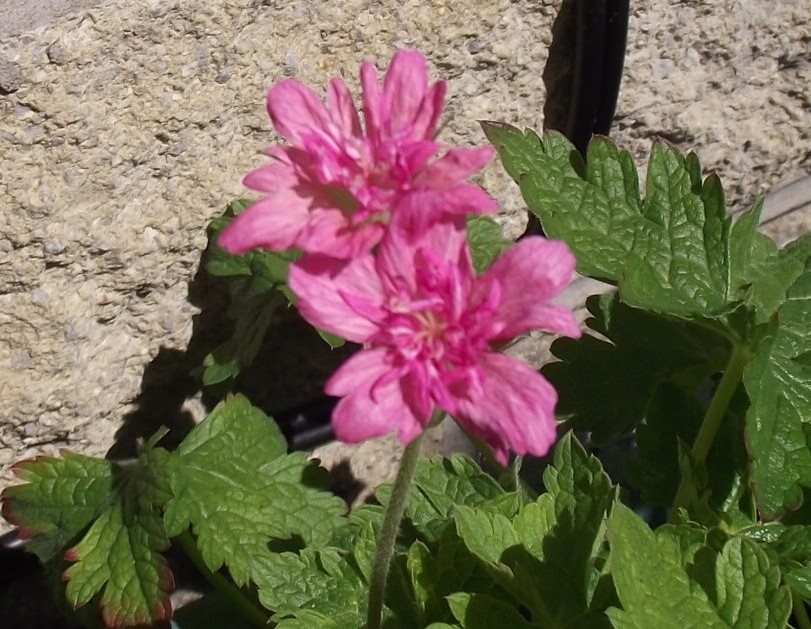
Geranium × oxonianum f. thurstonianum ‘Southcombe Double’ to give it its full title, starts off with nice double flowers at the start of the season but tends to lose this attribute later on. Mine succumbed to the dreaded Vine Weevil grub.

 Geranium x oxonianum ‘Dusky Rose’ is a new. long flowering cultivar, but does not respond well to dry conditions.

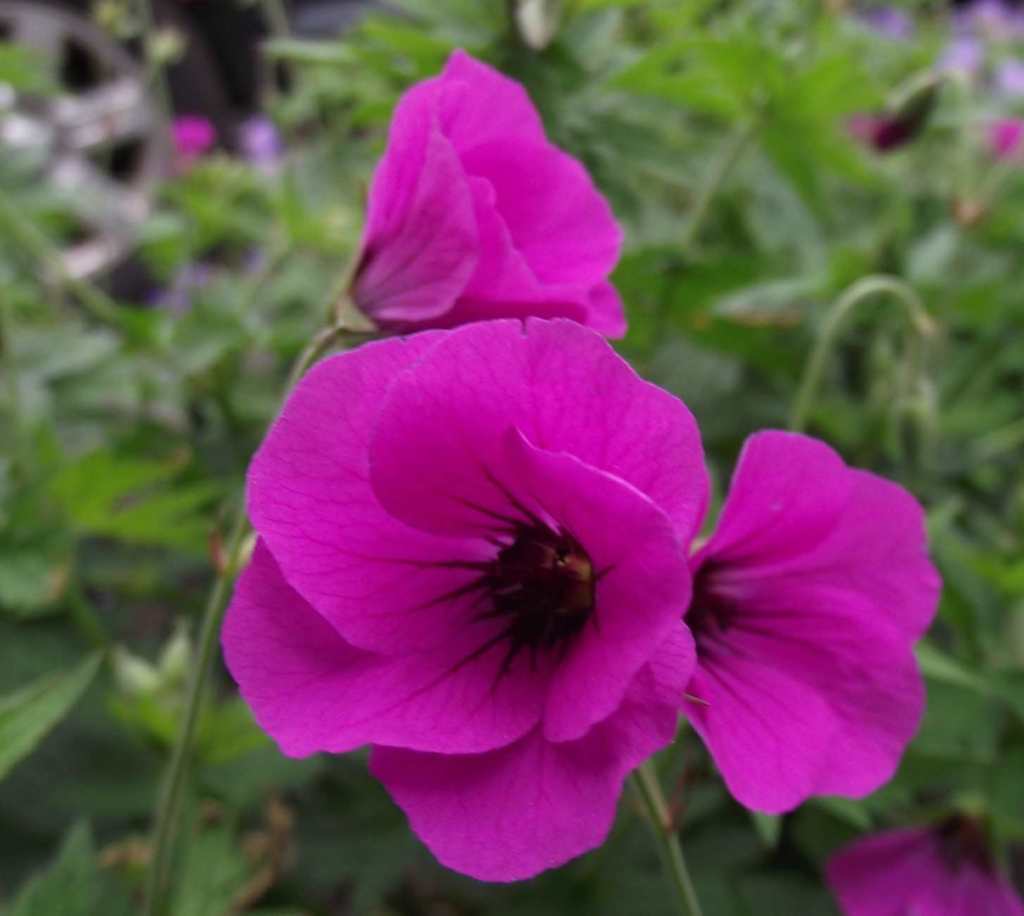
Geranium ‘Patricia’
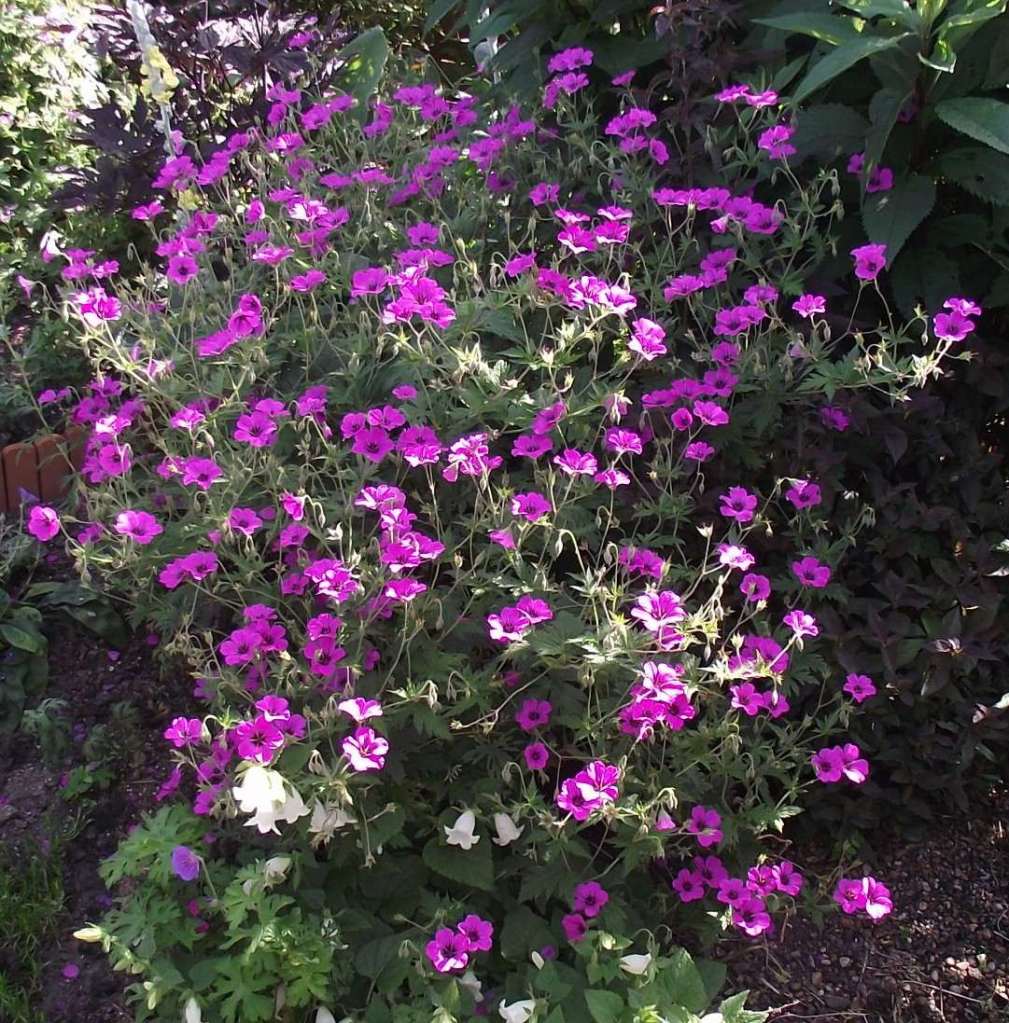
Geranium ‘Patricia‘ is another cultivar from Alan Bremner and is the result of Geranium endressii x Geranium psilostomen. I know this one will produce flowers through the summer. 

Geranium ‘Sirak’

Geranium ‘Sirak’ is a stunning early summer flowering cross between G.gracile and G.ibericum.

Geranium phaeum
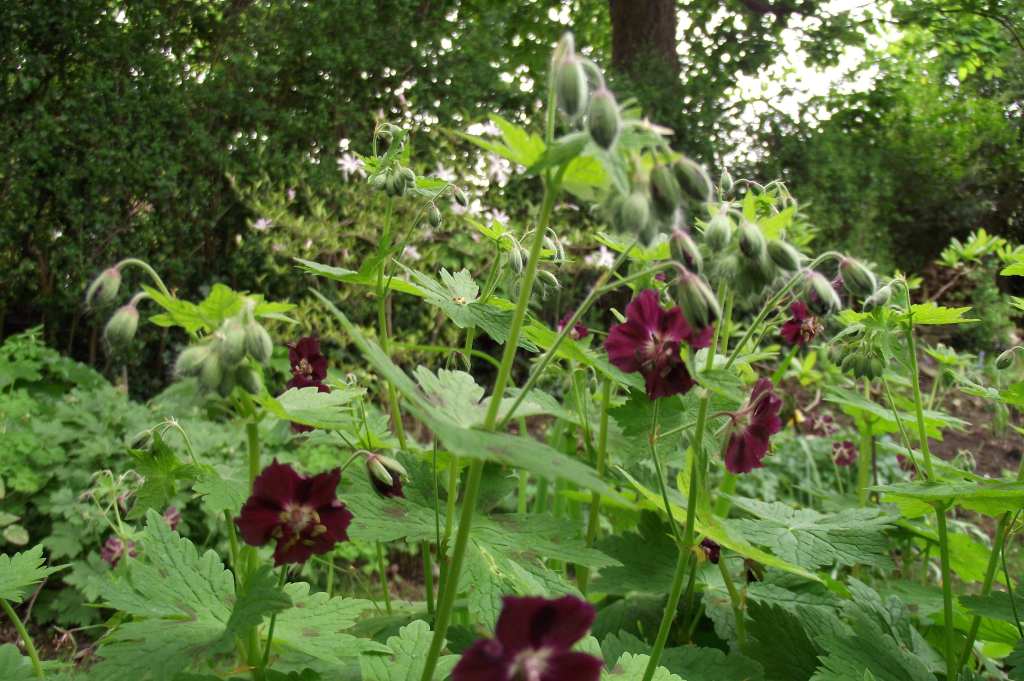
Geranium phaeum is a striking upright perennial which is useful in a woodland setting as ground-cover as it will grow in shade. The deep purple flowers of ‘Samobor’ are particularly attractive but there is a white form which shows up well in a shady spot.

Geranium pratense
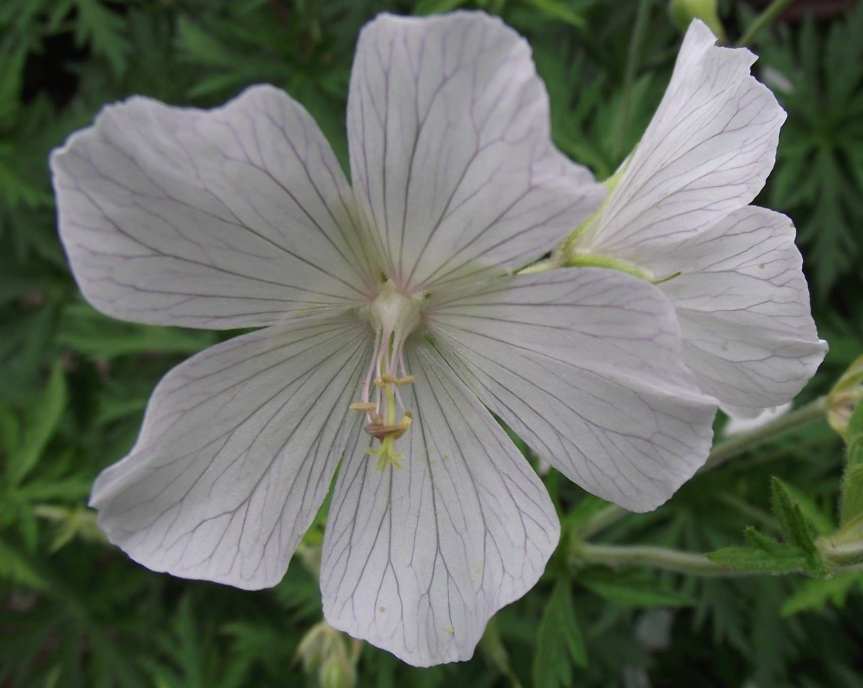
Geranium pratense the Meadow Cranesbill is an important contributor to the geranium gene pool and crops up as a parent of many modern hybrids, its upright habit and extreme hardiness are desirable attributes. Along with its roll as a specie to cross with, many cultivars have also been developed from selective breeding.

Geranium ‘Galactic’ or to give it the full title Geranium pratense var. pratense f. albiflorum ‘Galactic’, poor thing! It sat in the garden unrecognised, until I found an old label that had been disregarded a few years ago. I am always hesitant when identifying geraniums, as the variations are often very slight. This has led to a growing problem of, plants offered for sale, being wrongly labeled. Best left to the specialists.

Geranium pratense ‘Hocus Pocus’ has striking bronze/purple foliage.

Geranium pratense var ‘Striatum’, commonly known as ‘Splish Splash’ has an infinite number of variations in the flower markings. It had a period of being exceptionally popular a few years ago.

Geranium ‘Summer Skies’ resembles G.pratense but is most likely a cross between G.pratense and G.himalayense.

Geranium pyrenaicum

The Hedgerow or sometimes Mountain Cranesbill has flowers which are distinctly different from most geraniums with deeply indented petals giving the illusion of a higher number than normal. It has naturalised itself in the UK where it can be found growing mainly in hedgerows. I have seen it described as coarse but I feel that does this lovely little flowering plant an injustice, it is a prolific seeder and crops up everywhere which, to me, only adds to its charm, probably not so much if you like a nice orderly garden.

Geranium renardii
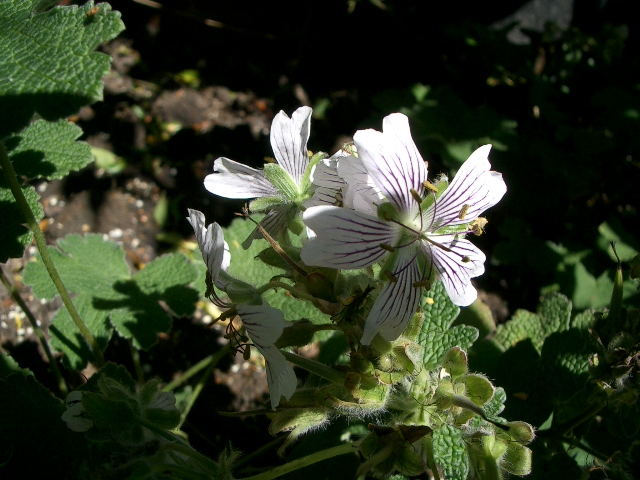
The Caucasian Cranesbill is a little unusual, it forms clumps of velvety, wrinkled, scalloped leaves which change colour as they age, topped by heavily veined flowers. Needs a bit more care than most, a sheltered well-drained sunny site is best.

Geranium sylvaticum
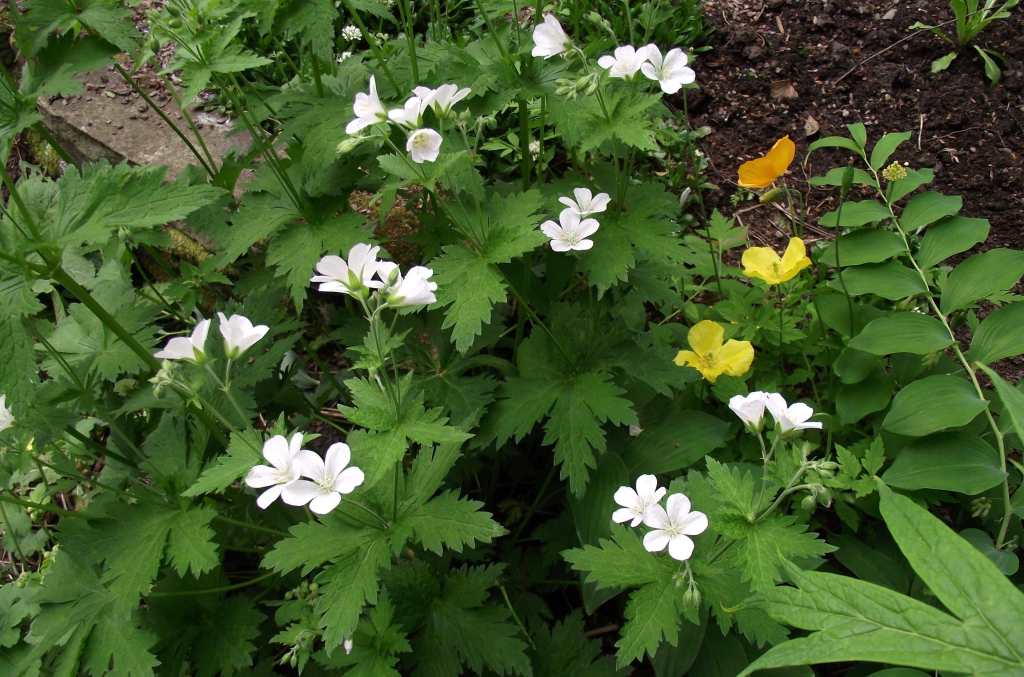
The Woodland Cranesbill is a beautiful little plant ideal for under-planting trees and shrubs, tolerates shade but prefers a moist soil. Found in damp meadows and open woodland in its native habitat, it is also found growing wild in the UK. The name really says it all when it comes to the plant’s growing requirements, the Latin sylvaticum actually means of woodland.

Geranium versicolor

The Pencilled Geranium gets its name from the veined flowers and is one of the parents of the x oxonianum hybrids. This beautiful little plant is semi-evergreen and can tolerate some dryness and shade although it thrives in good moist border soil in a sunny position. Ideal cottage garden plant.

Geranium wlassovianum
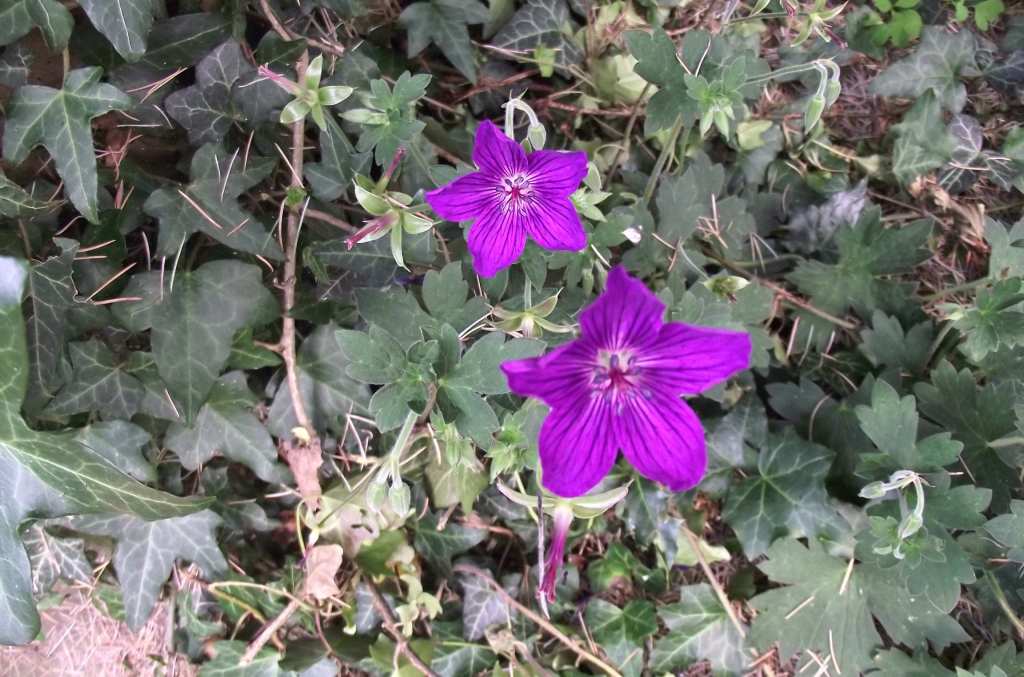
Geranium wlassovianum has a long flowering period which in addition has sprawling foliage which changes colour through the year, unfortunately this can’t be seen in the picture. Found in damp grasslands in its native habitat, it grows well in any good loam and can tolerate some shade.

Hardy Geraniums Culture

With such a large genus it is impossible to be specific, however in general terms many are semi-evergreen and have either a clump forming, trailing or creeping habit. The single flush types can be cut down after flowering which hopefully will induce a second flush. With the others I tend to leave the old foliage on over winter and cut down in the spring but this can be done after flowering, in autumn, if one prefers. Pretty much all geraniums are happy in a good moist but well drained loam in a sunny position although some are more shade and slightly arid tolerant than others. Propagation is by seed for those which come true, by cuttings, or more usually division, in the garden. For those plants which have to be vegetatively propagated to come true best to buy online from a specialist nursery unless you are lucky enough to have one near you.

Geraniums for Glass

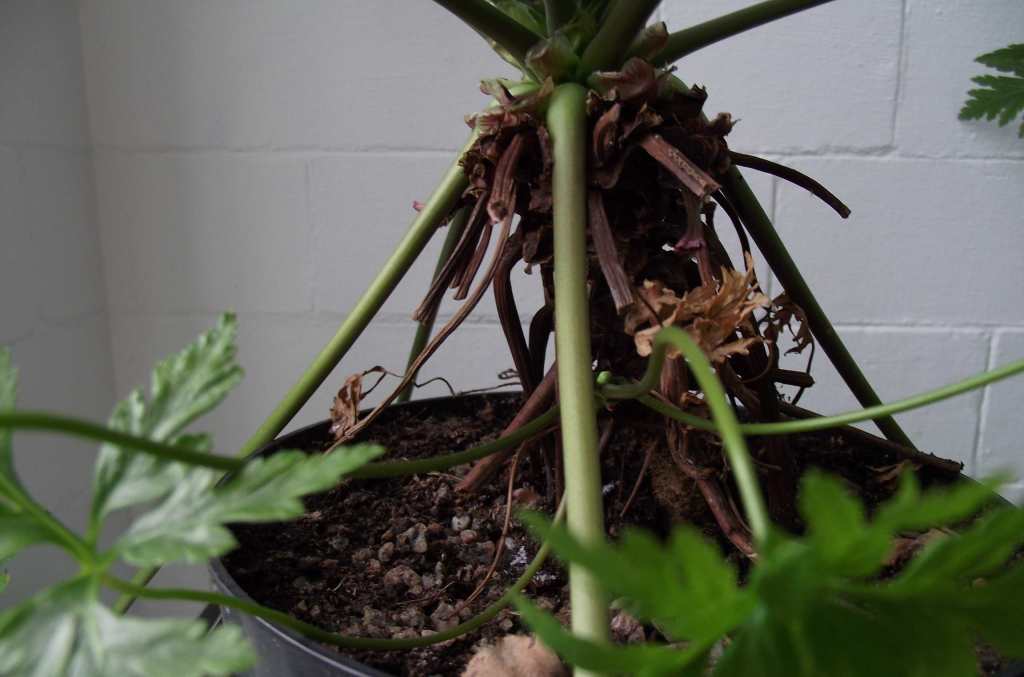
Why bother you might ask, this plant was from a packet of seed I inadvertently bought. The Maderian Cranesbill is the largest of the geraniums, it is biennial and can reach 5′ before flowering in its second year. It may survive in the warmest of gardens but there is little chance of that happening in the North of England. The plant threw out ariel roots from the crown down the outside of the pot forming a support some of which I, in my ignorance, cut off, however the plant survived and flowered.
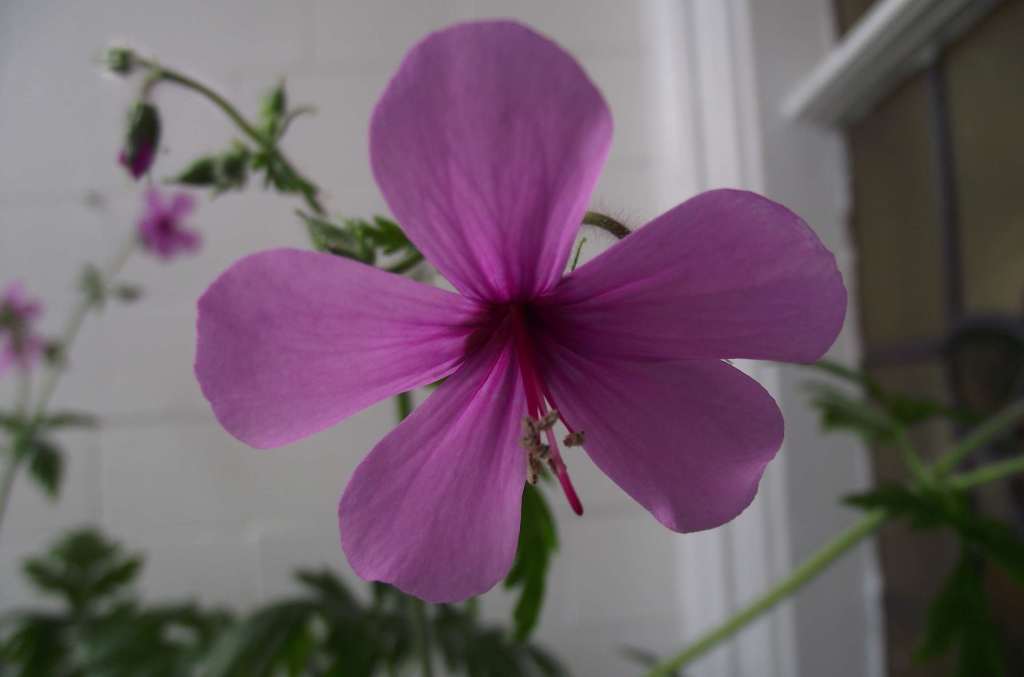
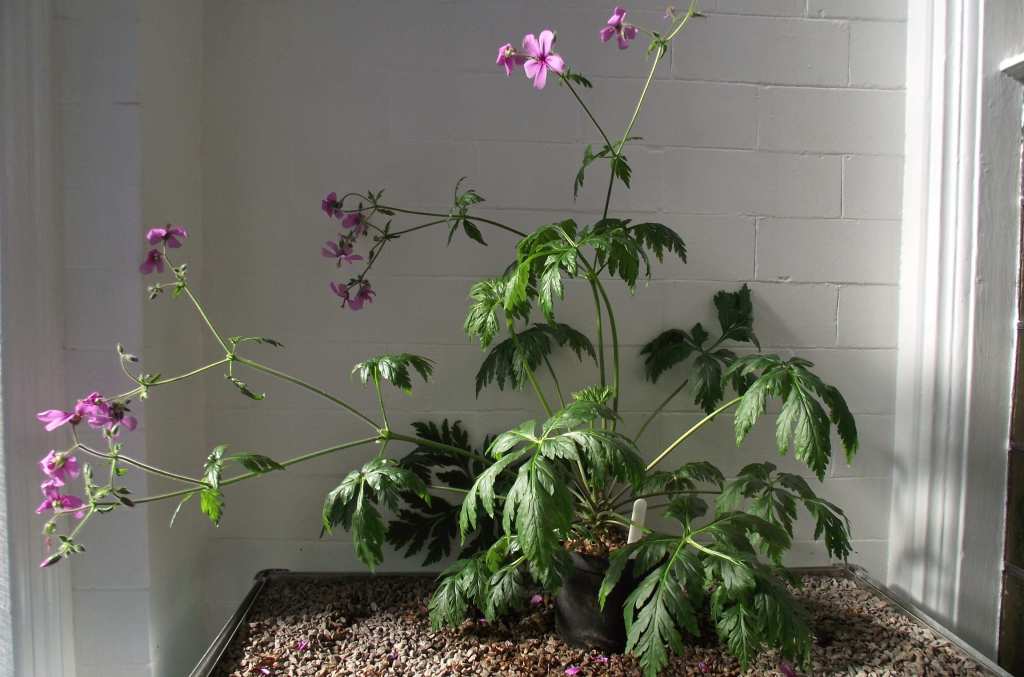
The Canary Island Cranesbill is an evergreen perennial which needs a warm garden to survive in the UK. Very similar to G.maderense which, at one time, was thought to be a form of G.palmatum until it was identified as a separate species.

Six on Saturday 16/8/2025

The weather is holding steady, temperatures as high as 30°C, although 20-25°C is more the norm. The few showers we have experienced have barely dampened the ground. Typically for this time of the year colour is sparse, so the lilies are welcome. Although they do not hold their blooms well in the heat. One thing I have noticed is the lack of butterflies. We were inundated with them earlier, particularly with the Peacocks. Although the eupatorium, now Eutrochium purpureum, is in flower, a tremendous bee and butterfly magnate, there are hardly any to be seen. This is the exact opposite of what happened last year so I am putting it down to the warm spring. For anyone who is interested I have taken the liberty to include a few links to some of my previous posts devoted to lilies that I have grown, with many more pictures.

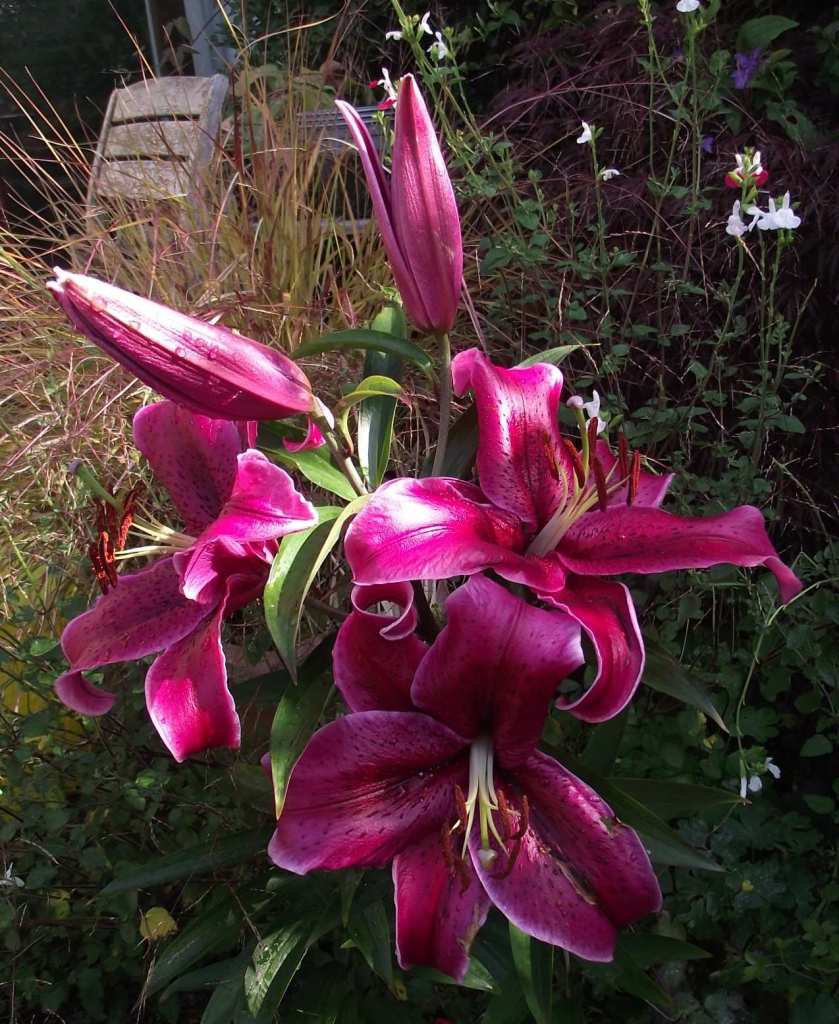
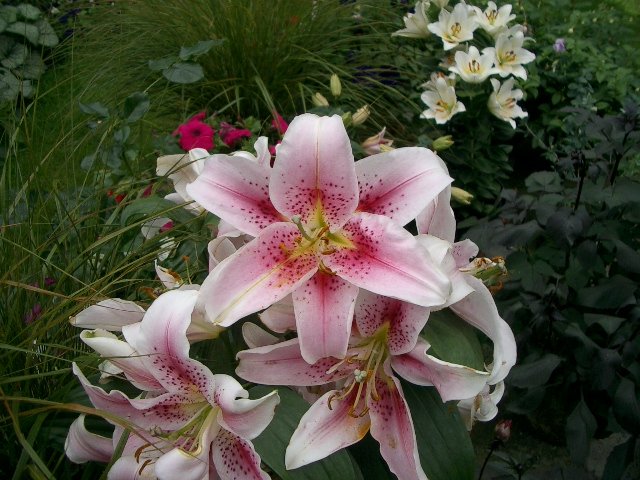
The ever popular Lilium ‘Stargazer’. This is one of the first lilies that I ever grew and remains a favourite even now. I took this picture a couple of days ago but it is already looking worse for ware in the heat. Another Oriental, Lilium ‘Hachi’, which I featured a couple of weeks ago, is very similar with its upturned blooms but the flowers are notably much larger than those of ‘Stargazer’. Here is a link to Lilies Part 1 – Updated for more lily pictures.

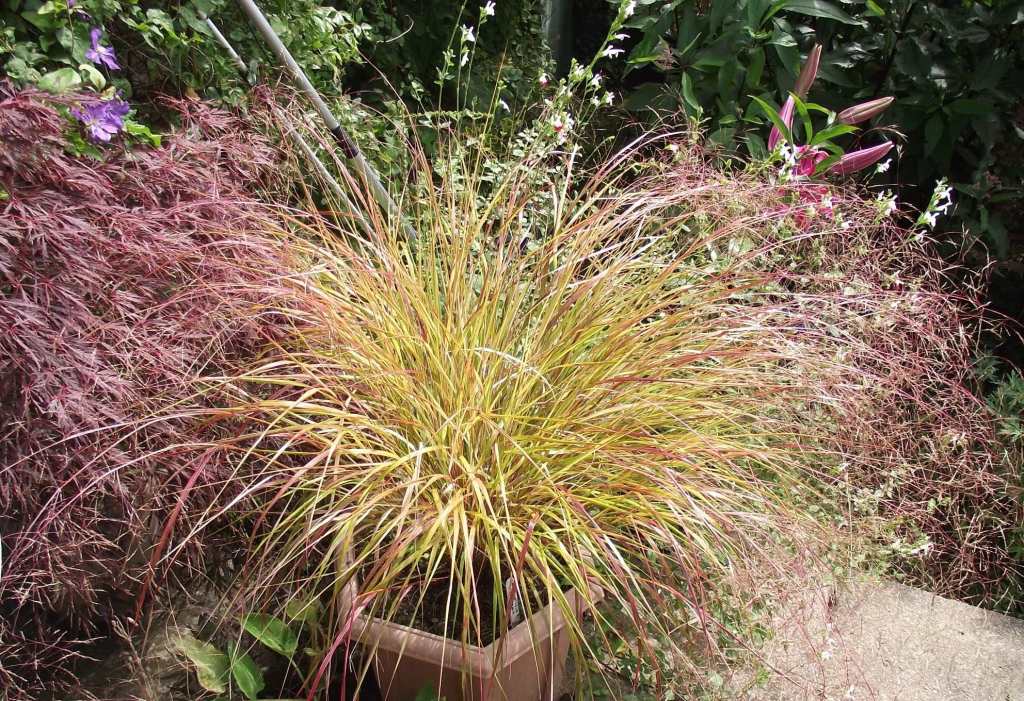
I have shown Anemanthele lessoniana, pheasant tail grass, before but is now at its best. The leaves are taking on some red splashes which are complemented by the airy inflorescences floating in the breeze. I’ll be quoting poetry next!

I have never grown Lilium ‘Red Flash’ before and I am rather enamoured with the strong colour. Unfortunately the bottom bloom is past its best. For even more pictures of lilies that I have grown Lilies Part2 -Updated

A good old standby for late summer/autumn colour Rudbekia fulgida ‘Goldsturm’. I don’t think you can beat these simple “cone-flowers” to add a splash of colour, at this time of the year. I did have some echinaceas but they have decided not to come out to play this year. The splash of blue in the lower right-hand corner is Geranium ‘Johnson’s Blue’ which, in my small garden, is becoming far too invasive. I intend to remove it altogether shortly. Even though I reduced it by half last winter. It is taking up far too much space for one plant, and I have plenty of stuff stuck in pots which can take its place.

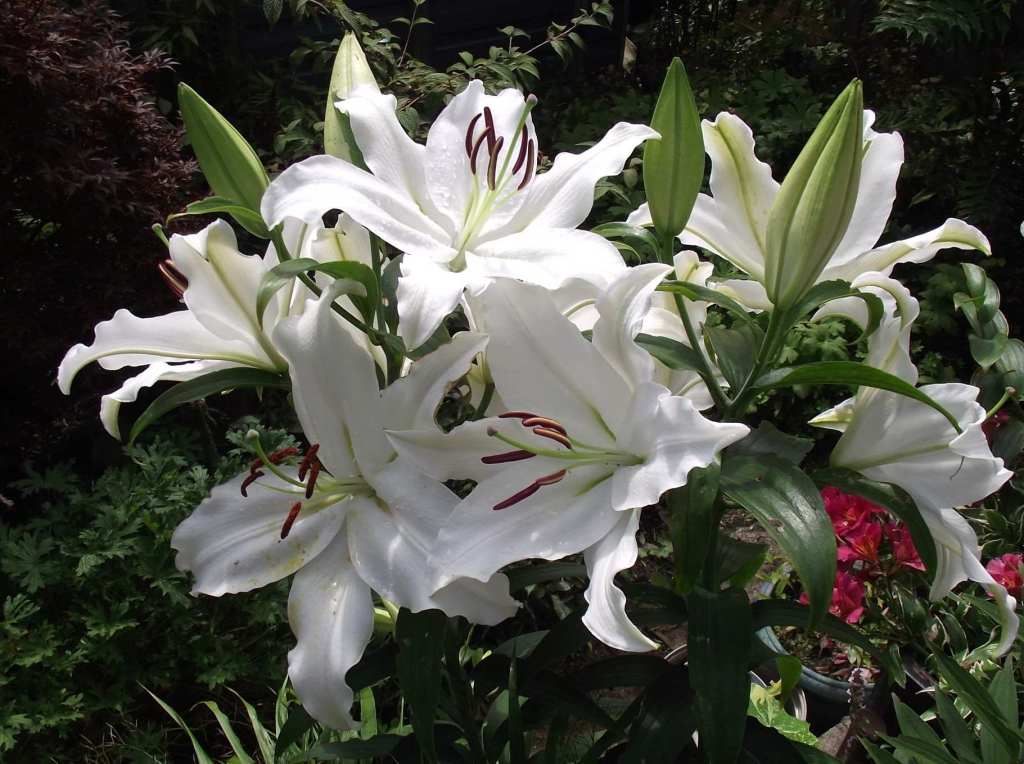
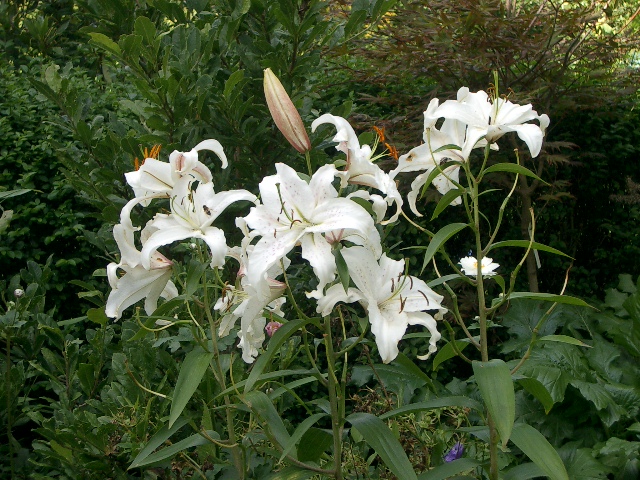
Another strongly scented Oriental. Lilium ‘Casa Blanca’ is another old favourite of mine. I have to admit that I had forgotten it was there until I checked the label before it came into bloom. It is a true pure white and all the better for it. I am in a bit of a quandary at the moment. I have no room to plant the lilies out, so do I keep the pots overwinter and chance that they will come good again next year, which they should do. Or do I buy in some more to guarantee a good show next year. I will probably do both! Here is some more about lilies including Cardiocrinum giganteum. Lilies Part 3-Updated

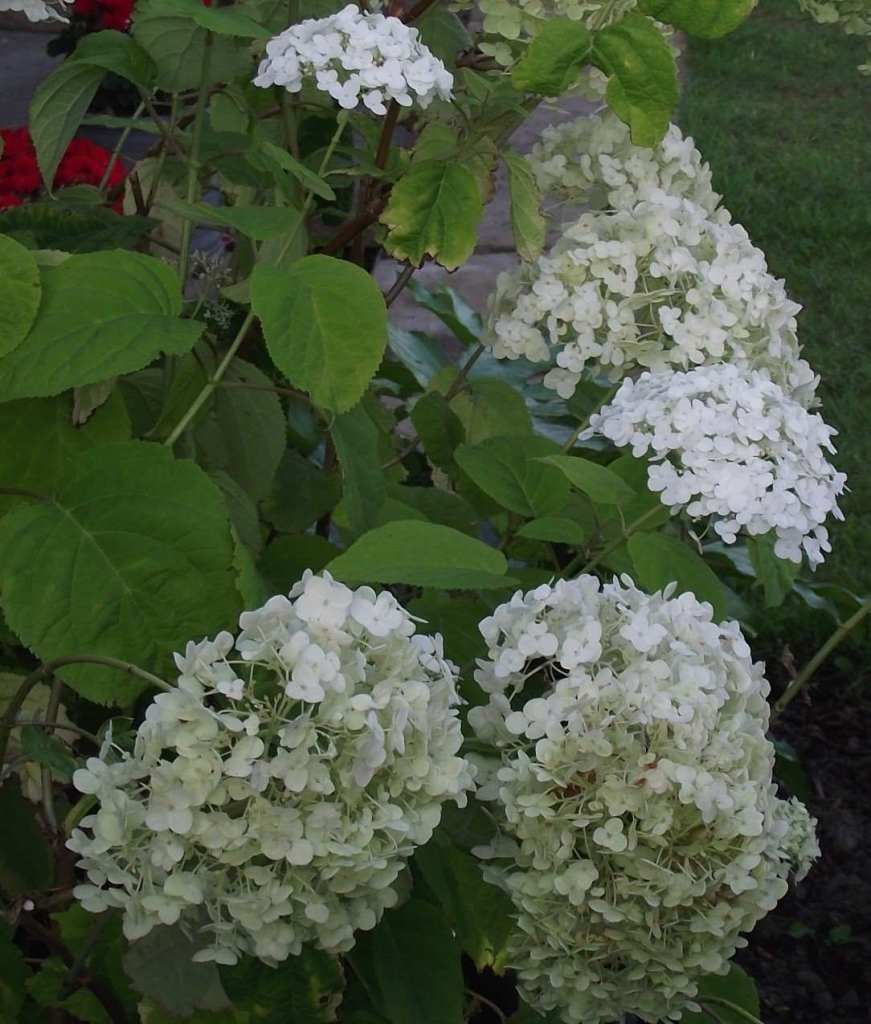
I bought this hydrangea from Thompson and Morgan at least eight years ago when they were selling it as Hydrangea ‘Incrediball’. I think it is now better known as, and is certainly synonymous with, Hydrangea arborescens ‘Strong Annabelle’. My plant is still in a container, and although the blooms aren’t the size that they should be, it still puts on a fairly good display every year. I intended to cut it back hard last winter but forgot. I need to remedy that this year, and put it on a high potash diet to see if I can improve it. Re-potting would be ideal but it is in a very large container so I will continue to nurture it where it is for as long as I can.

This meme is hosted by Jim Stevens who is to be found with all the details and links to plenty of other blogs to enjoy at Garden Ruminations.

Six on Saturday 02/8/2025

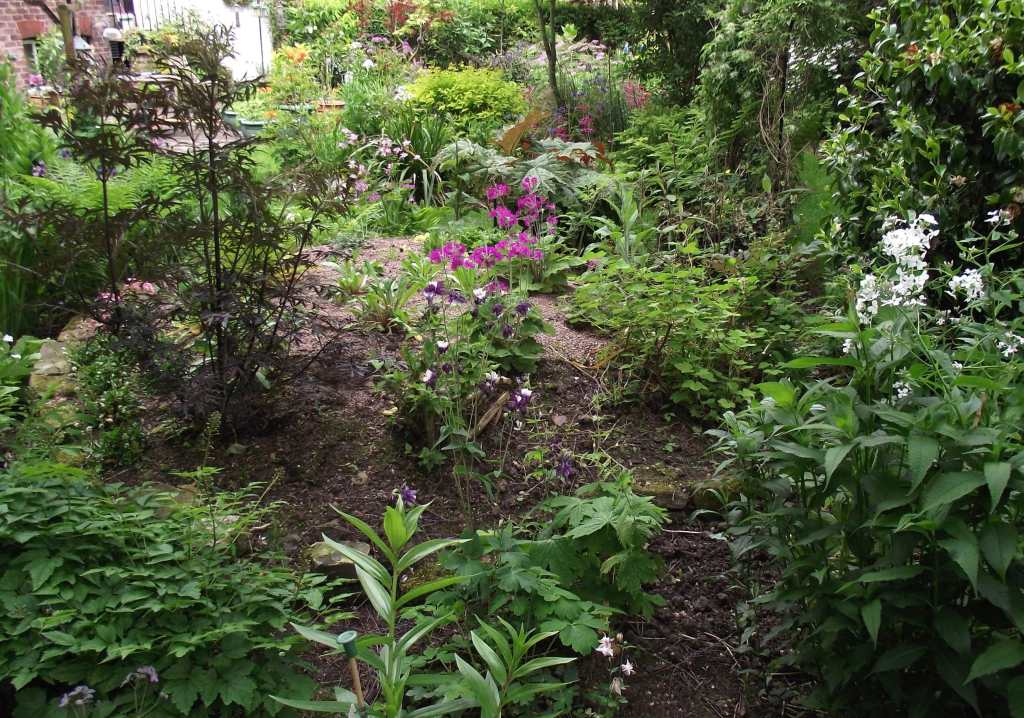
The weather has been very unsettled but rainfall has been sparse. Daytime temperatures remain at 17-20°C. Yet again the worst of the weather has bypassed us in High Peak. I think the valley I live in has its own macroclimate. It can be very annoying to keep getting messages on my phone informing me rain is expected to stop whilst the garden remains bone dry. This Saturday, unusually, there are some pictures of my back garden, warts and all. The garden is very small, the wall you can see is the gable end of the bungalow to the rear of me. This was an old railway yard and considering the initial planting was done with a pick and trenching tool it isn’t turning out too badly. My previous garden was large so this one has proved to be quite a challenge. I did however, have a vision of what I wanted, which was basically cram it full of plants. I am slowly getting there. Currently there is hardly room to move!

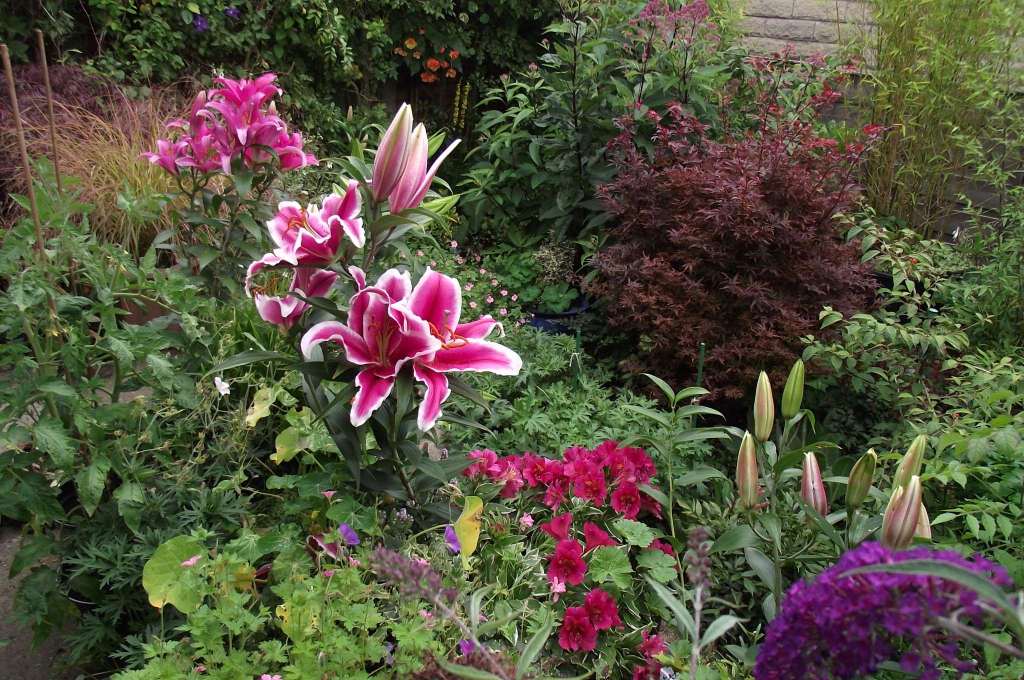
The plants in the foreground, other than the buddleia, are in containers sitting on a six foot wide flagged patio which drops down a couple of feet to the garden below. The oriental lilies are starting to make their display now that the hardy geraniums are mostly leaf. Geranium x oxonianum ‘Wargrave Pink’ is still flowering in the “garden” area along with a few yellow verbascums and some Begonia Illumination Apricot Shades in a basket, hanging under the foliage of Rosa ‘Rambling Rector‘, a rampant honeysuckle, and a purple clematis. The Joe Pye Weed, which I think is now Eutrochium purpureum, is just coming into flower at the top of the picture. This will then become the main attraction for the bees and butterflies as the buddleias finish.

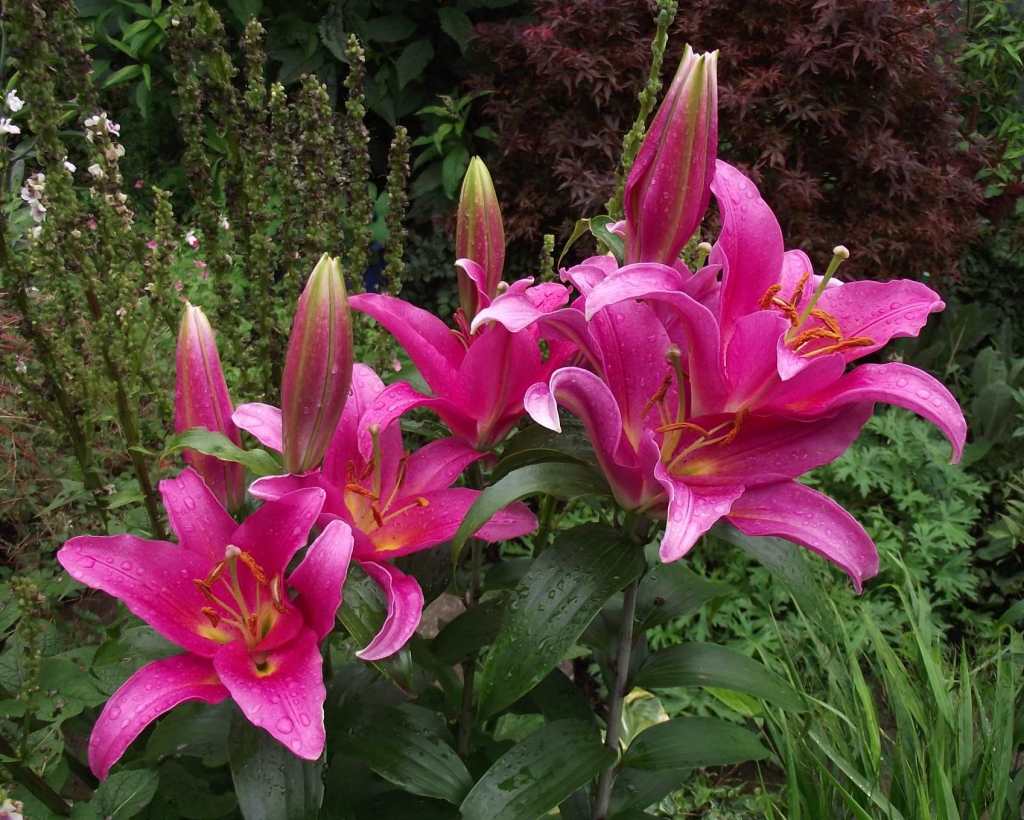
Oriental lily ‘Curly Sue’ is just outside my back door. The scent on a warm day is quite something. I am unhappy to report that I have found my first beetle today!

This is the patio area, I use the term loosely! The sage in the foreground is growing from between the flags which along with the self-seeded plants of Geranium pyrenaicum make every trip an adventure. The staging to the right is a new acquisition, purely to increase the space that I have to grow plants, and has proved a nightmare to keep watered. The older staging is where I initially raised all my plants, but it is now so shaded, that only the top tier is of use. There are even a couple of tomato plants in there somewhere which were foisted on me. If I get one tomato off these it will be a miracle. Phyllostachys nigra is poking its head in top left.

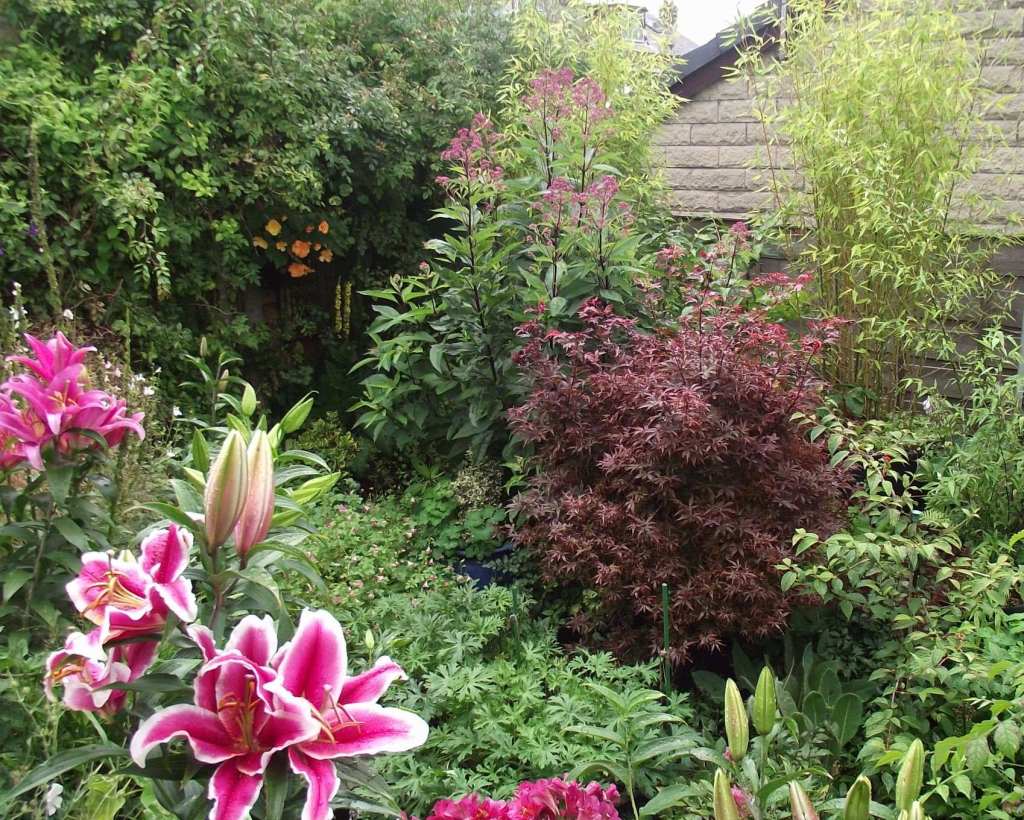
This picture gives a better idea of just how tight room is. The Phyllostachys aureas help to break up the wall behind them, and there is a Viburnum making its way up there in the middle. The Joe Pye weed also makes an efficient screen for the summer, as well as attracting plenty of butterflies and bees. There is a Fatsia japonica in there somewhere also. I think I am going to have a problem keeping the acer in check in the future as it is now beginning to put on quite a bit of growth.

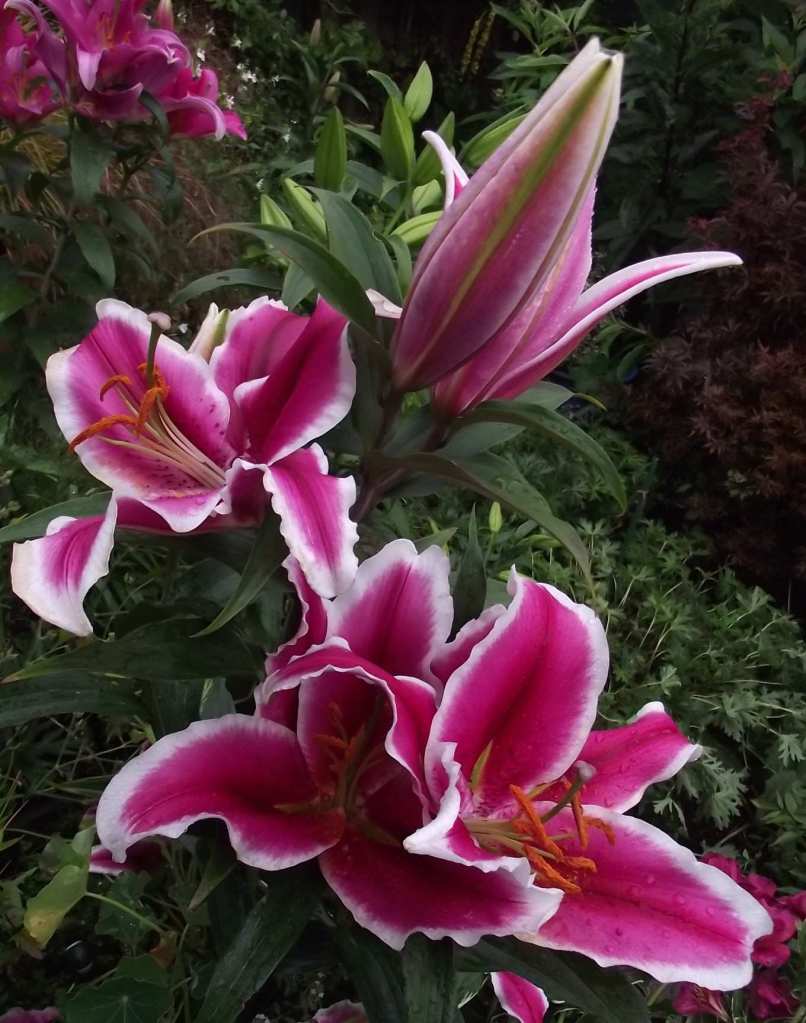
Another Oriental, Lilium ‘Hachi’.

At the other end of the “patio” we have Control Central for the garden, the potting bench! Almost everything is done here. I no longer have the luxury of a covered area, although I have done some potting up on the kitchen draining board. Incidentally, I have to thread my way onto the chair. There are meconopsis plants on the floor on one side and a campanula growing out of the flags on the other!

Reading this post I’m sure that you have surmised that I very much miss my old garden. Unfortunately it was unavoidable that I downsized. At the end of the day, I am lucky not to be fussy about garden design and I am only interested in the plants. I initially filled the space with plants that I knew would survive the far from good conditions. As the ground is improved, I am beginning to replace them with plants I really like to grow such as my meconopsis. I do seem however, to have become keen on hardy geraniums on the way. I might manage a post for the front garden soon, although it’s past its best. It is even smaller!

This meme is hosted by Jim Stevens who is to be found with all the details and links to plenty of other blogs to enjoy at Garden Ruminations.

Lilies Part 3-Updated

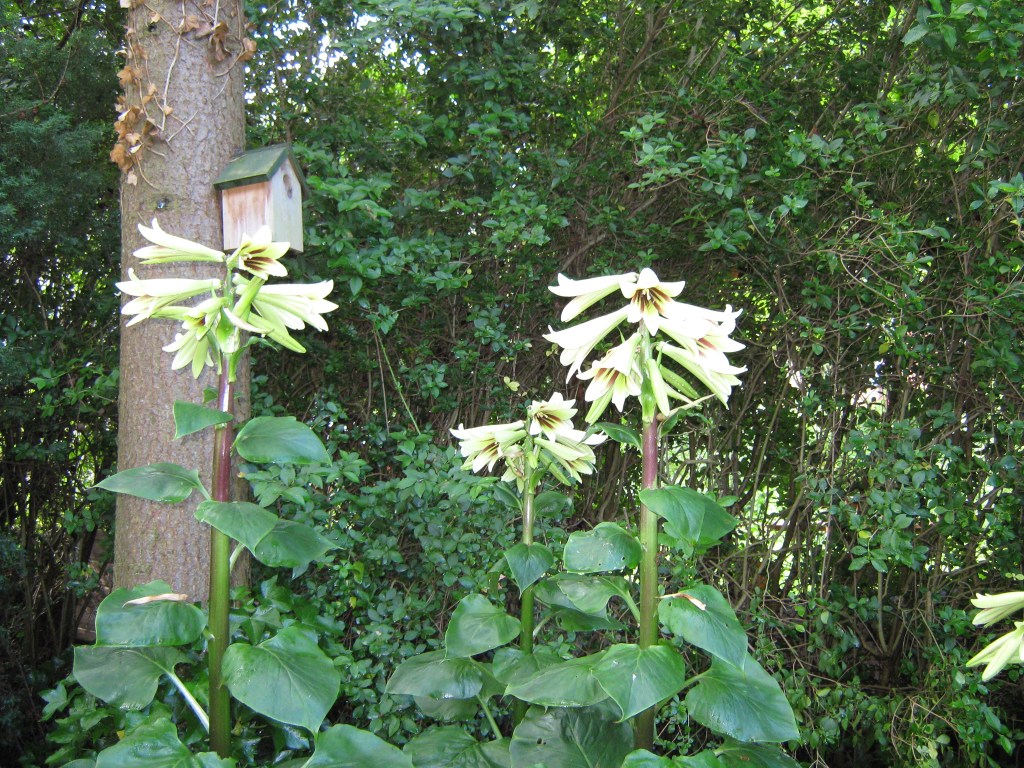
Included here is the giant of them all Cardiocrinum giganteum (Syn. Lilium giganteum), a few Asiatics and pest and disease.

Cardiocrinum giganteum
Cardiocrinum giganteum emerging.
Cardiocrinum ready to open.
Cardiocrinum flower close up.
Cardiocrinum seed-head.

Cardiocrinums or Giant Himalayan Lilies grow up to 10 feet tall and are monocarpic (die after flowering). They take around 5 years to flower from bulbs which develop as offshoots from the original before it dies. If you are extra patient it takes around 7 years from seed. They prefer a rich acid soil with some shade and unlike other lilies are planted with the nose of the bulb at the surface of the soil. The large glossy rosettes of leaves can be 12″ across, so plenty of space needs to be given. The flowers, which are 6″ or more long and highly scented are born very high up on the stem. To stand near a group on a warm humid day is an exceptional experience.

Although I much prefer Oriental Lilies I have a grown a few Asiatics, ‘Night Flyer’ is a favourite.

Lilium ‘Night Flyer’
Lilium ‘Night Flyer’ Close up.
Pure white Asiatic Lily ‘Amazing’

The above are a few “Patio Hybrids” I had as a bonus offer, only 12″ high, very attractive flowers but unfortunately no scent.

The number one pest experienced by lily growers is the Lily Beetle, appearing first on fritillaries and later on lilies. They are capable of great damage in a comparatively short time. The grubs only develop on these genera and are easily recognised by the fact they wrap themselves in their own excrement so if you see any nasty looking dark blobs on your leaves, usually at the axil, you know what they are. The easiest method of control is to be vigilant and pick the adults off as they appear and crush them but be careful they are tricky devils and if allowed to drop on the ground they land on their backs and are virtually invisible.
Host plant Fritillaria meleagris
Lily Beetle

I have come across a virus disease once and it can be devastating, although not fatal, the plant is severely weakened and never performs to the same degree. Spread by aphids, although aphid control and good garden hygiene helps. Once the plant is infected the only way to deal with Mosaic Virus realistically is to uproot and burn it entirely.

Mosaic Virus

Warning: Lily pollen is fatal to felines.

Lilies Part2 -Updated

Lilies generally prefer a slightly acid soil, originally I planted them in pots preferring to have the scent close to the house. As their numbers grew, I started to remove them from the pot intact and planted the whole thing in the border after the first year. This worked quite well as many of the “transplanted groups” gave a good display for years. If planting direct into the garden it is recommended that a layer of grit is placed beneath the bulbs to aid drainage. The thing to avoid is creating pockets in heavy soils which will fill with water during the winter. If planting in heavy ground a thorough cultivation of the planting area adding grit and additional grit under and around the bulb would seem prudent. I usually plant at 100mm which also helps to stabilise the stems as many lilies do actually throw roots out from the stem. Remember using odd numbers in a group always looks better and less artificial.

Oriental lily ‘Nippon’
Lilium ‘Pink Perfection’ Scented Trumpet Lily
Lilium ‘Robert Swanson’ Giant – Tree Lily.
Lilium ‘Salinas’ Highly scented Oriental.
Lilium ‘Salmon Star’
Shorter than most this scented Oriental (sometimes Dwarf Oriental) lends itself to container culture.
Dwarf Oriental Lily ‘Souvenir’
Oriental Lily ‘Starfighter’ Very large upturned flowers.
Lilium ‘Stargazer’ Oriental Lily. A deliberate cross between two species to produce an upturned flower. Traditional lily which has been around for some time.
Lilium ‘Time Out’ Oriental lily.
Oriental Lily ‘Tom Pouce’ Extremely large trumpets.
Lilium ‘Venezuela’ Oriental.
Fragrant Tree Lily ‘Honeymoon’

Watch out for the lily beetle! Next post miscellaneous, plus pest and disease and the giant of them all Cardiocrinum giganteum.

Lilies Part 1 – Updated

I love lilies, there is something about their stature and the majestic blooms that appeals to me although I have to admit, when younger, I shunned them as too artificial looking. I am only growing a few lilies in my new garden by comparison with the numerous ones I have grown before.

Lilies slot into various groups and have distinct characteristics but I am afraid that I only go for the scented ones, principally the Orientals, and ignore the others. Asiatics, as a lily without scent just doesn’t do it for me. The post is probably more pictorial than informative but, this is the nature of the beast. They are reasonably easy to grow and will grow well in plenty of sun or dappled shade, many of the original species, coming from the margins of woodland. I tend to grow them in containers for the first year then plant out the whole contents of the container the following year.

Trumpet lily ‘African Queen’ Lilium longiflorum hybrid.
Lilium ‘Arena’ Very fragrant Oriental.
Lilium Anastasia ‘Oriental Trumpet, Tree Lily or Orienpet Lily growing up to 2.5 mtrs.
Oriental Lily ‘Casa Blanca’
Oriental Lily ‘Dizzy’
Another highly scented Oriental Lily ‘Everest’
Oriental Lily ‘Excelsior’
Lilium ‘Golden Splendour’ Trumpet Lily.
Sweet scented Lilium ‘Josephine’ Oriental Lily
Oriental Lily ‘Kiss Proof’
Tree Lily Lilium ‘Lavon’ These large lilies can take up to three years to attain their final height of approx. 2 Mtrs.
Lilium ‘Mona Lisa’ – Oriental Hybrid
Lilium ‘Muscadet’ – Oriental stunner.

Planting and my preferences coming up in Part 2.

Six on Saturday 5/7/2025

Temperatures are remaining around 20°C which rather suits me. I am writing this on Friday and we are expecting heavy rain later which is much needed. The garden has really filled out now and I can hardly move for plants. Which is making it difficult to get to any weeds without treading on things I’d rather not. A mixed bag this week of plants I can name, and those I can’t.

Update 6.00am Saturday. As always, it seems, the promised heavy rain went north of us. When I looked out this morning everywhere was dry! More heavy rain forecast for early morning tomorrow. Fingers crossed.

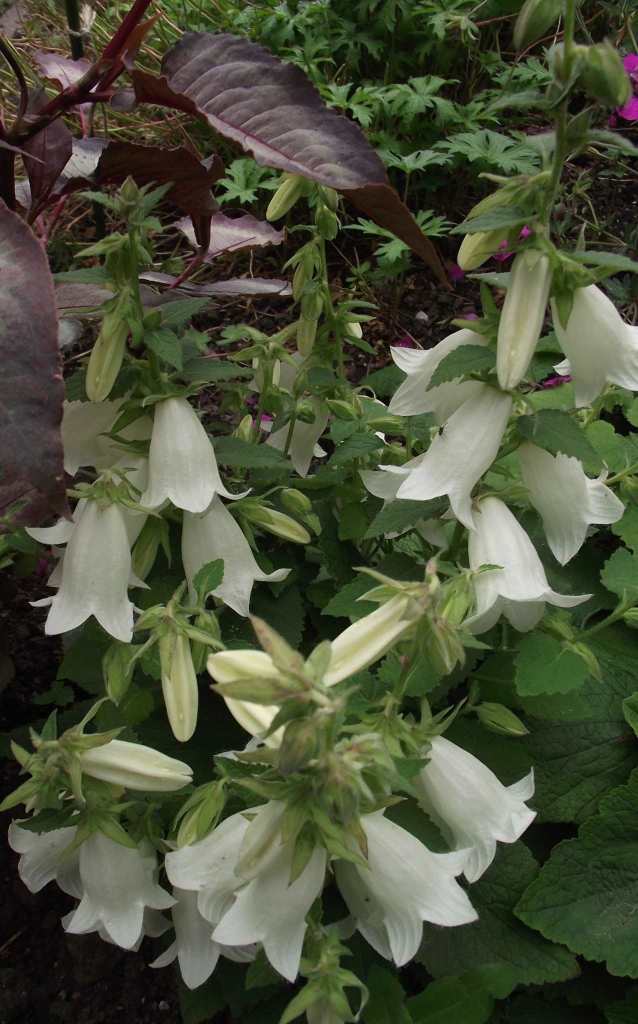
This little campanula is from a packet of seed labeled large white flowered. The flowers are white and also large for the plant, which is typical of campanulas. The plant itself however, is less than a foot tall. It reminds me very much of Symphyandra hoffmannii which I used to grow.

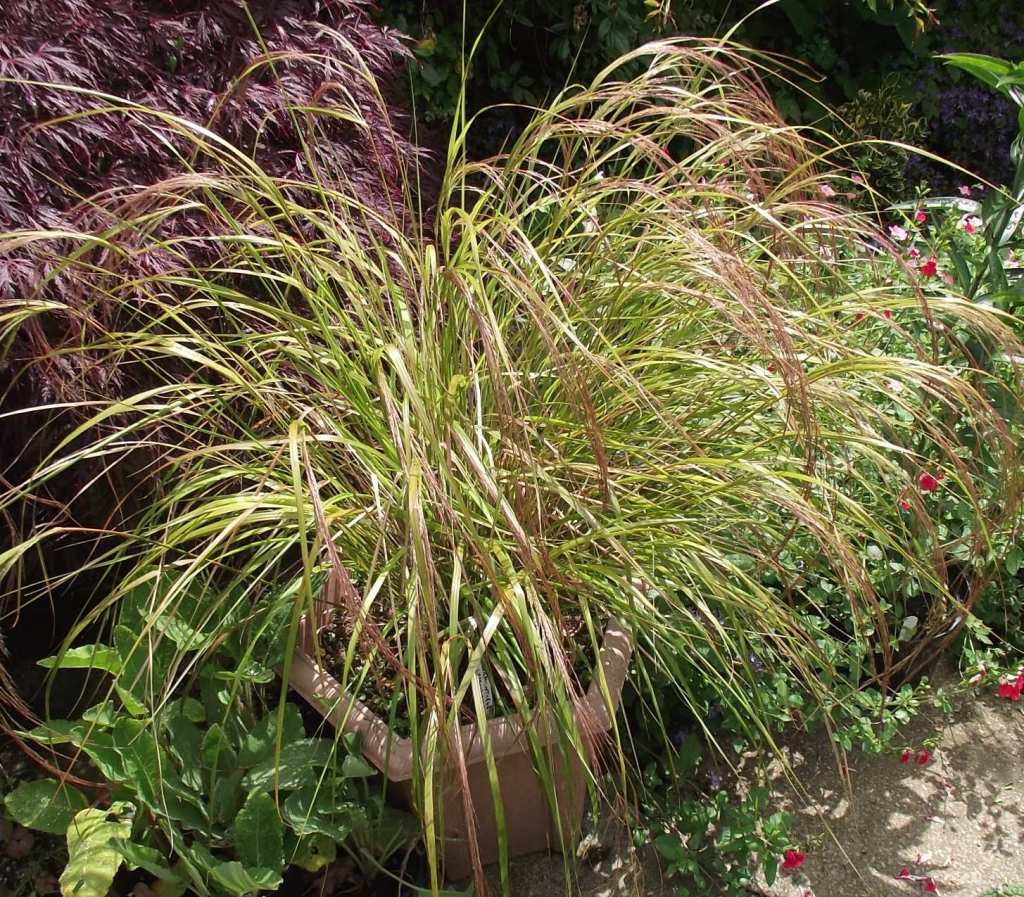
I am not a great fan of grasses but I find Anemanthele lessoniana, the pheasant tail grass outstanding. Unfortunately the picture doesn’t capture the effect of it glinting in the sunlight as it does. It will carry on throughout the year with the leaves taking on yellow, orange and red streaks towards winter.

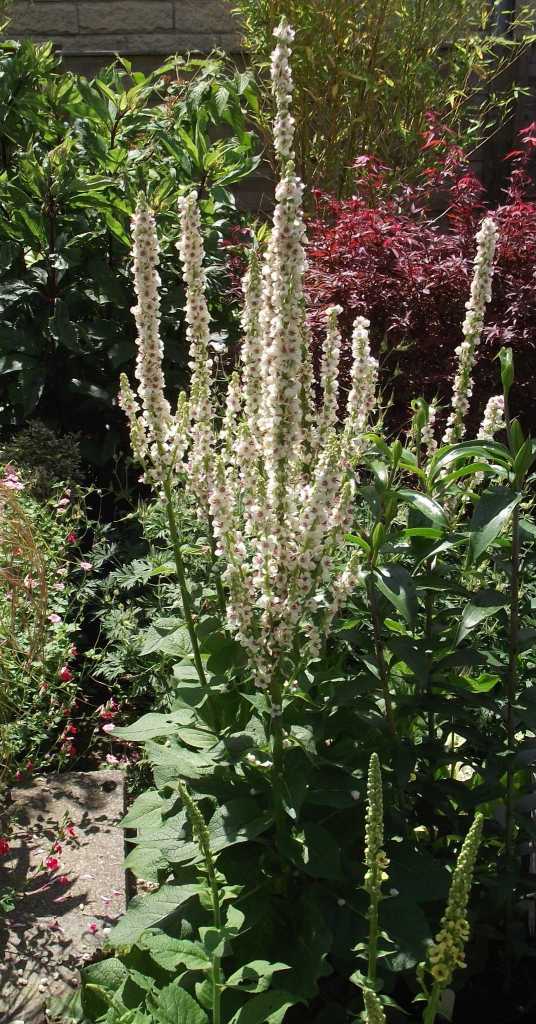
This white, self-seeded verbascum has improved year on year. I know the wild plant is somewhat looked down on as a weed but I find them rather attractive. A big plus is that they are constantly visited by numerous bees. Both the white one, and the smaller yellow one, in the foreground, originated from a packet of mixed verbascum seed, but these plants have seeded themselves, into the paving, from elsewhere in the garden.

Primula x bulleesiana showing fasciation. This is one of the few botanical “coveralls” that I can relate to. x bulleesiana is obviously the combination of bulleyana and beesiana. Fasciation is quite common in primulas, particularly the candelabra types. There seems to be a myriad of things that can cause it from genetic mutation to viral or insect damage, which means, I think, that nobody is really certain.

Another plant that has seeded itself into the garden. This rather neat astrantia has been with me for several years now, and I have just left it alone to do its thing.

The first lily flower this year from a pot I have had for years, so, naturally I have lost the label! At a guess, I think it could be Lilium ‘African Queen’ a Lilium longiflorum hybrid. But please don’t take my word for it!

This meme is hosted by Jim Stevens who is to be found with all the details and links to plenty of other blogs to enjoy at Garden Ruminations.

Six on Saturday 28/6/2025

The welcome rainfall has really boosted everything in the garden, although it is always sad to see the early bloomers finished until next year. My garden is always at its best Mid-April To mid-June. I can now breathe a sigh of relief, as the couple of bamboos that I have, are finally greening up again. I always worry that they aren’t going to recover after their winter battering, because they are so late. I have a Phyllostachys nigra which was badly damaged a couple of years ago, and only partially survived. We are promised another “heatwave” next week. I think it is meant to reach as much as 29°C on one day!

An abundance of geraniums this week. I wanted to get them in before some finish flowering.

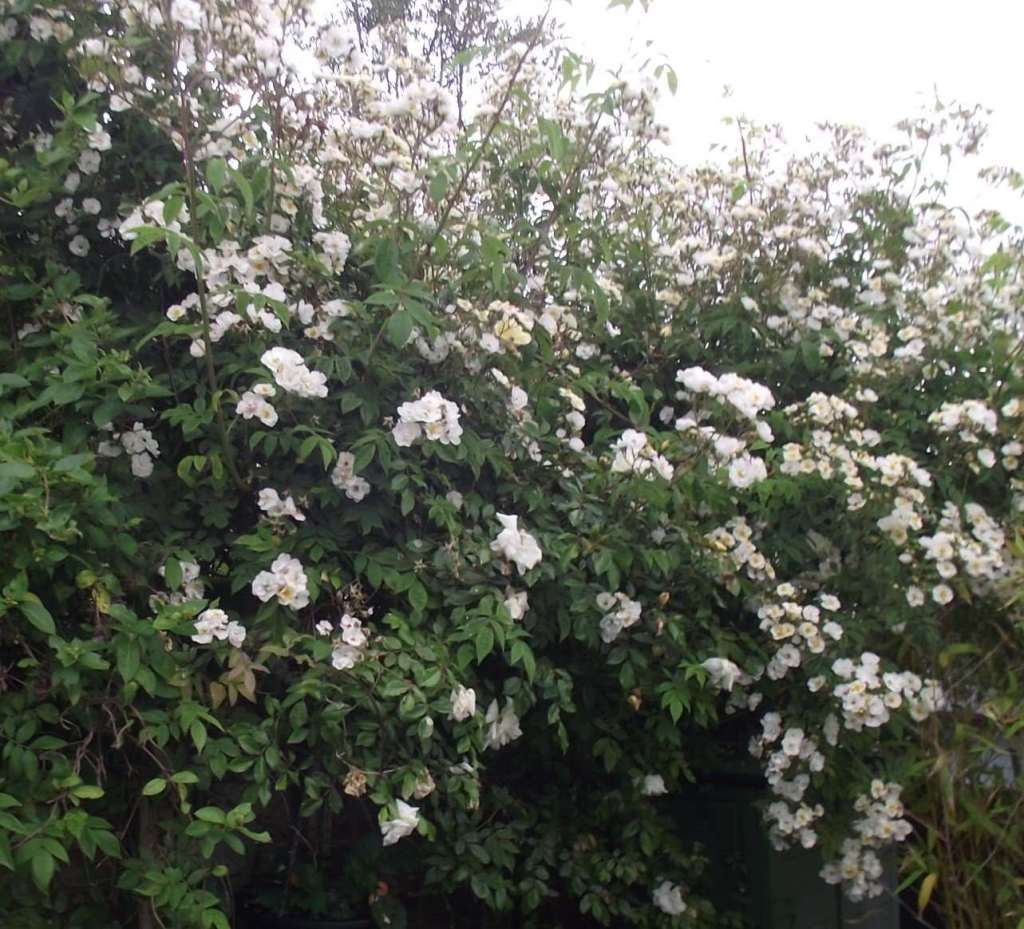
I’m sure Rosa ‘Rambling Rector’ is on steroids. This is only its third year since I planted it, but I never thought this would be the result. Some late pruning, to contain it a little, has certainly helped the flower count. On a warm day it fills my tiny garden with scent, so I won’t complain. A drastic prune is now due!

Geranium ‘Galactic’ or to give it the full title Geranium pratense var. pratense f. albiflorum ‘Galactic’, poor thing! It sat in the garden unrecognised, until I found an old label that had been disregarded a few years ago. I am always hesitant when identifying geraniums, as the variations are often very slight. This has led to a growing problem of, plants offered for sale, being wrongly labeled. Best left to the specialists.

Unfortunately the flower is much pinker than shown, as the name implies. Geranium x oxonianum ‘Dusky Rose’ is a new cultivar which I am hoping should flower right through the summer.

Another low growing geranium (6″). Geranium Orkney Cherry is bred by Alan Bremner in the Orkney Islands so it must be hardy.

Geranium Patricia is another cultivar from Alan Bremner and is the result of Geranium endressii x Geranium psilostomen. I know this one will produce flowers through the summer. Geranium ‘Galactic’ however, I will be cutting back in the next couple of weeks, and hoping for a second flush of flowers.

My favourite pink geranium. I have had Geranium × oxonianum ‘Wargrave Pink’ for many years, even before I made the decision to grow more geraniums. This is another one I know will keep flowering right through the summer.

This meme is hosted by Jim Stevens who is to be found with all the details and links to plenty of other blogs to enjoy at Garden Ruminations.

Popular bulbs, corms, rhizomes etc……… the non-fibrous rooted plants. Part 4.

Tulips Part 2.

Another picture post, dealing with the remaining tulips I have grown and also have pictures of.

Double Earlies

Tulipa ‘Mondial’
Tulipa ‘Monte Orange’
Tulipa ‘Silk Road’
Tulipa ‘Peach Blossom’

Flowering early to mid spring some of these tulips such as T.’Peach Blossom’ have the extra benefit of being scented which, along with the exquisite double flowers really enhances the early part of the year.

Double Lates

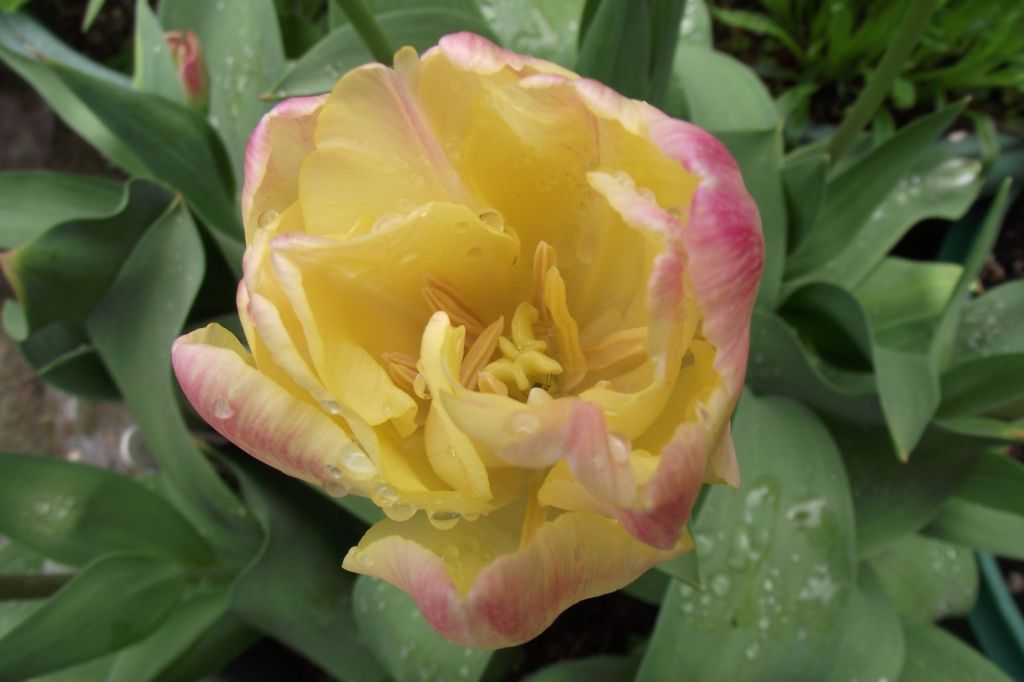
Paeony flowered Tulipa ‘Angelique
Paeony flowered Tulipa ‘Antraciet’
Tulipa ‘Creme Upstar’
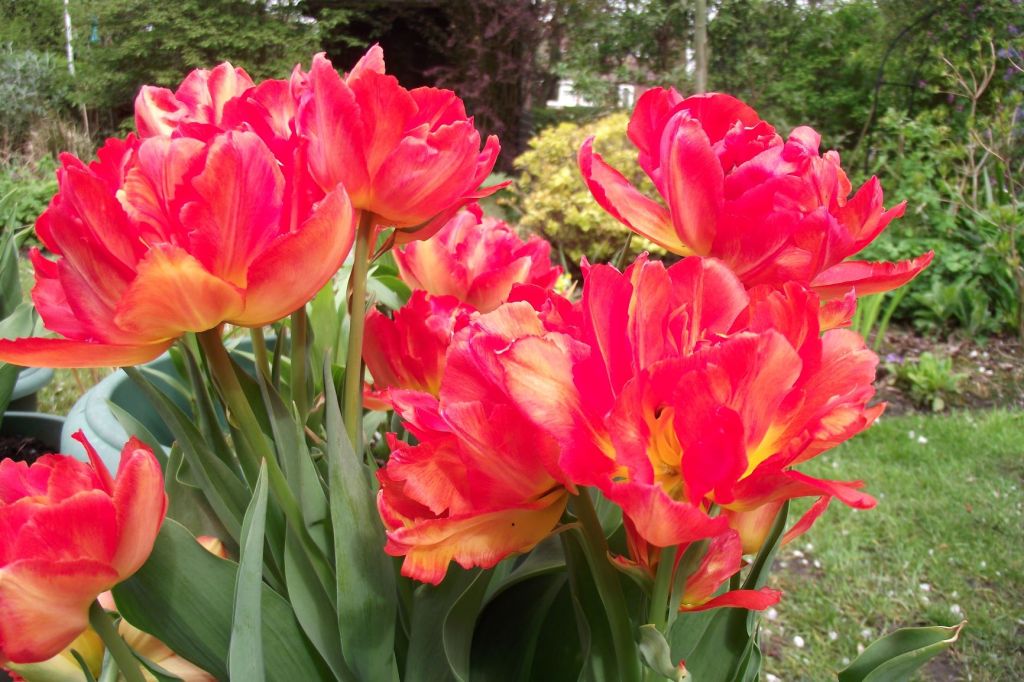
Tulipa ‘Orange Princess’ Paeony flowered.

Following on from the earlies some of the Late Doubles such as T. ‘Angelique’ are also scented.

Miscellaneous.

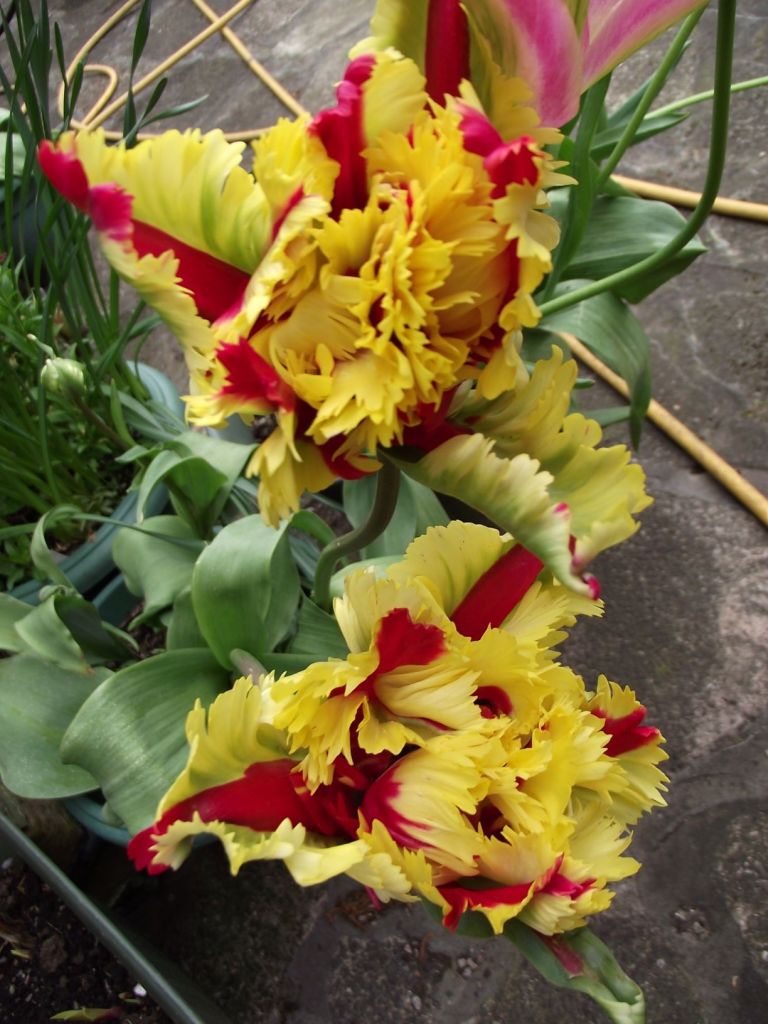
Parrot Tulip ‘Rococo’
Tulipa ‘Flaming Parrot’
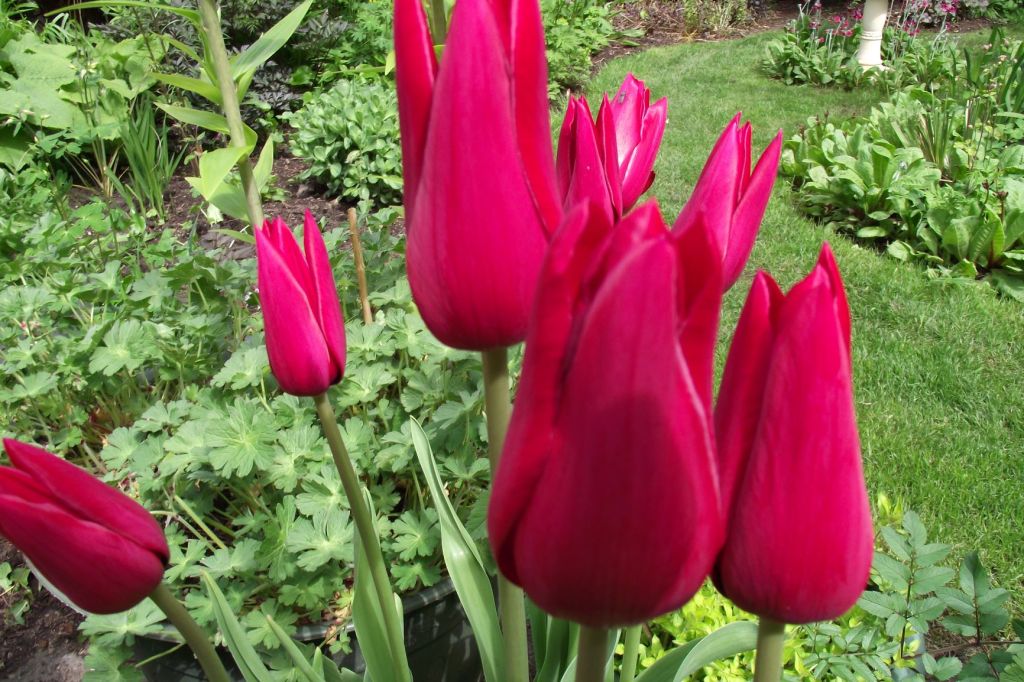
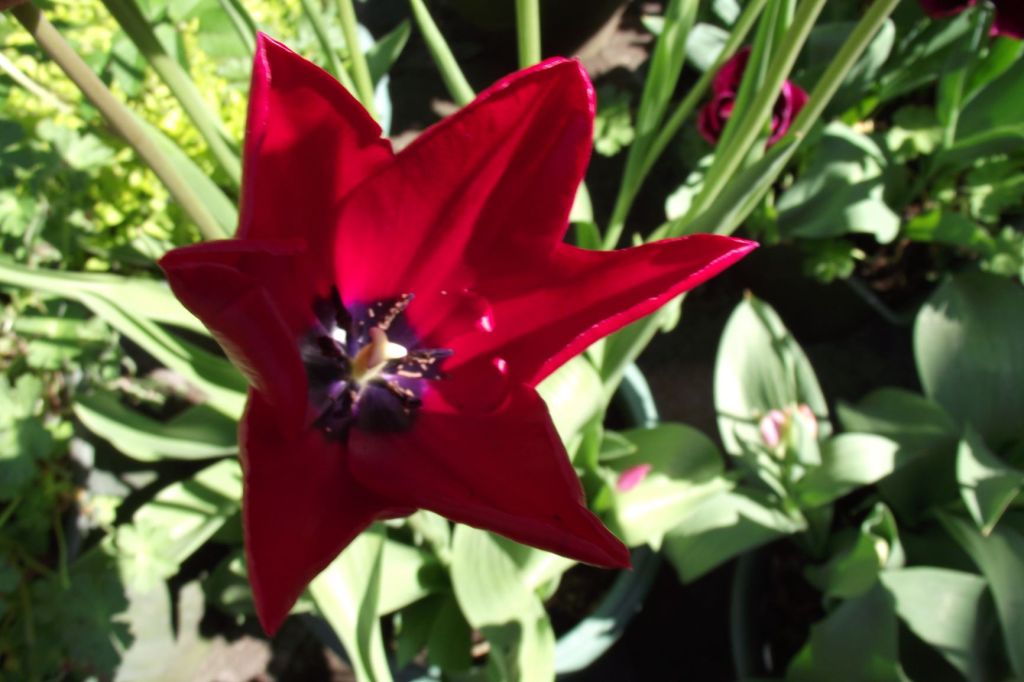
Lily flowered Tulipa ‘Red Shine’
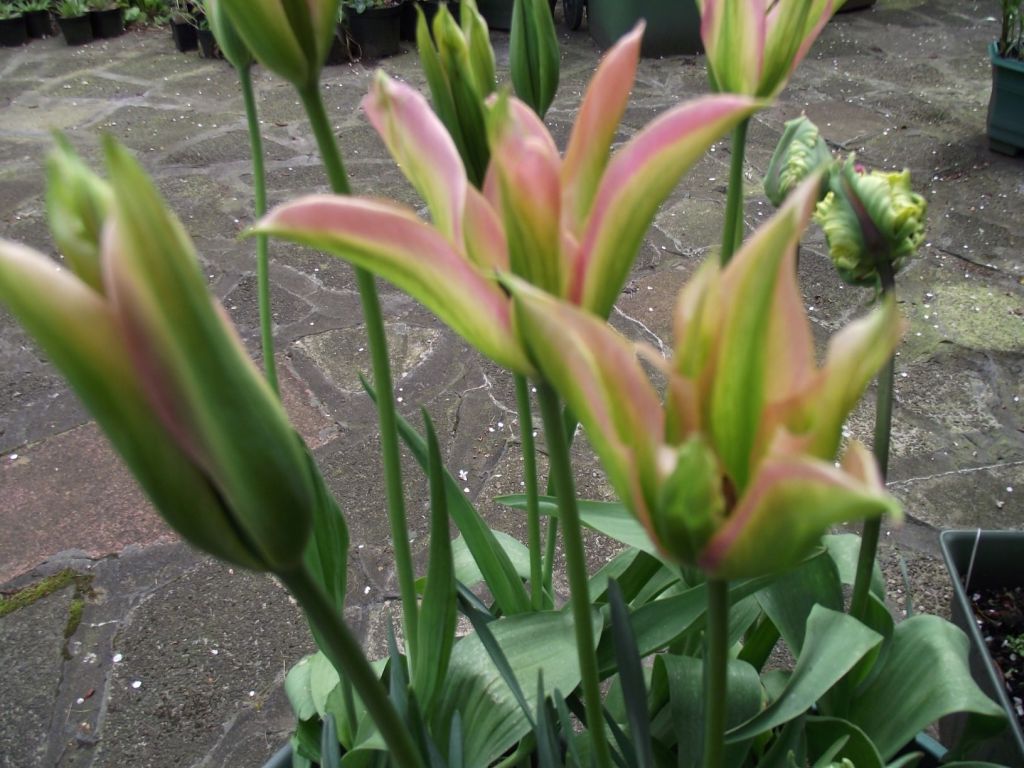
Unusual Lily Flowered Tulipa ‘Virichic’. These are known as Viridiflora Tulips.
Late Single Tulipa ‘Queen of the Night’
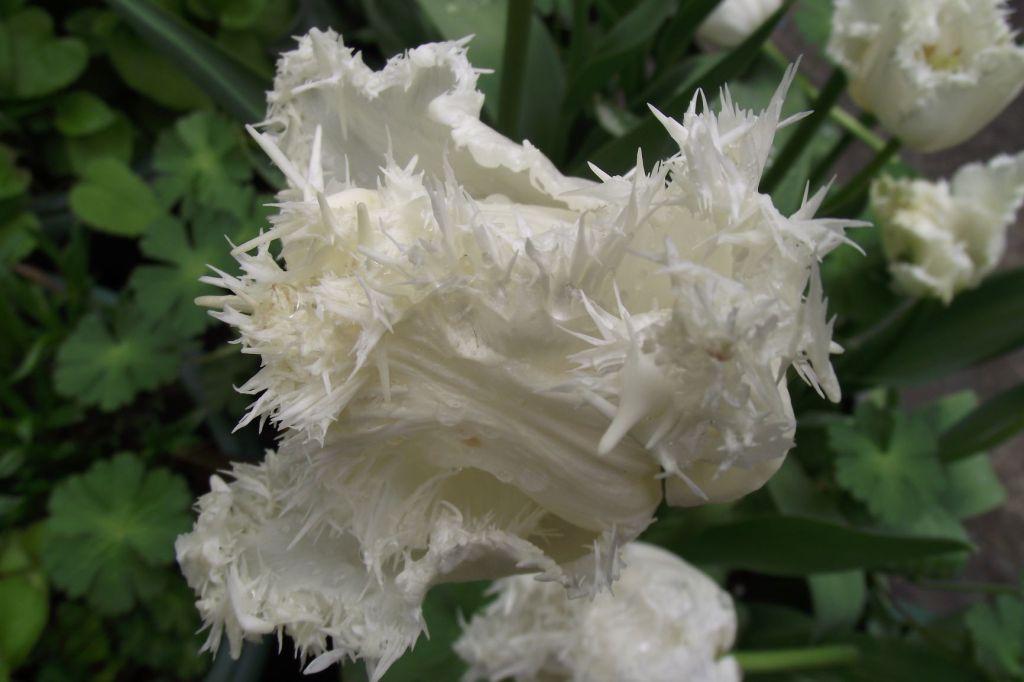
Bit of an oddity, can’t find it listed anymore Tulipa ‘Pirvilla Lady’ a Fringed Tulip.

The main pests and actually my nemesis are grey squirrels, they take absolute delight in rooting out the bulbs, whether in containers or in the ground. One memorable Christmas Day, I spent some time moving my pots into groups and spreading netting over them. The assault of the squirrel army had begun, eventually this led me to stop growing the Dutch tulips. I later hit upon the idea of putting a piece of heavy metal netting about an inch under the surface of the compost until this in turn was dragged out. I don’t find it worthwhile to keep the bulbs for another year, but use tulips like bedding plants, in the past I have kept the bulbs for replanting, but have found the results to be inconsistent. One advantage of using fresh bulbs each year is that it avoids the diseases to which tulips are prone.

Botanicals

Just a quick footnote regarding the botanicals or specie tulips, these are generally the dwarf spring flowering tulips, usually found in a rock garden setting or container, with which everyone is familiar. I have grown many of these such as Tulips kaufmanniana, greigii, praestans and their hybrids and also Tulipa tarda although I don’t have many pictures.

Tulipa praestans ‘Fusilier’ with Anemone blanda.

See more bulbs I have grown on my next post.

Six on Saturday 14/6/2025

The heavy rain seems to have died down and temperatures have risen again. We are promised some thunderstorms in the near future, so we will have to wait and see what is in store for us.

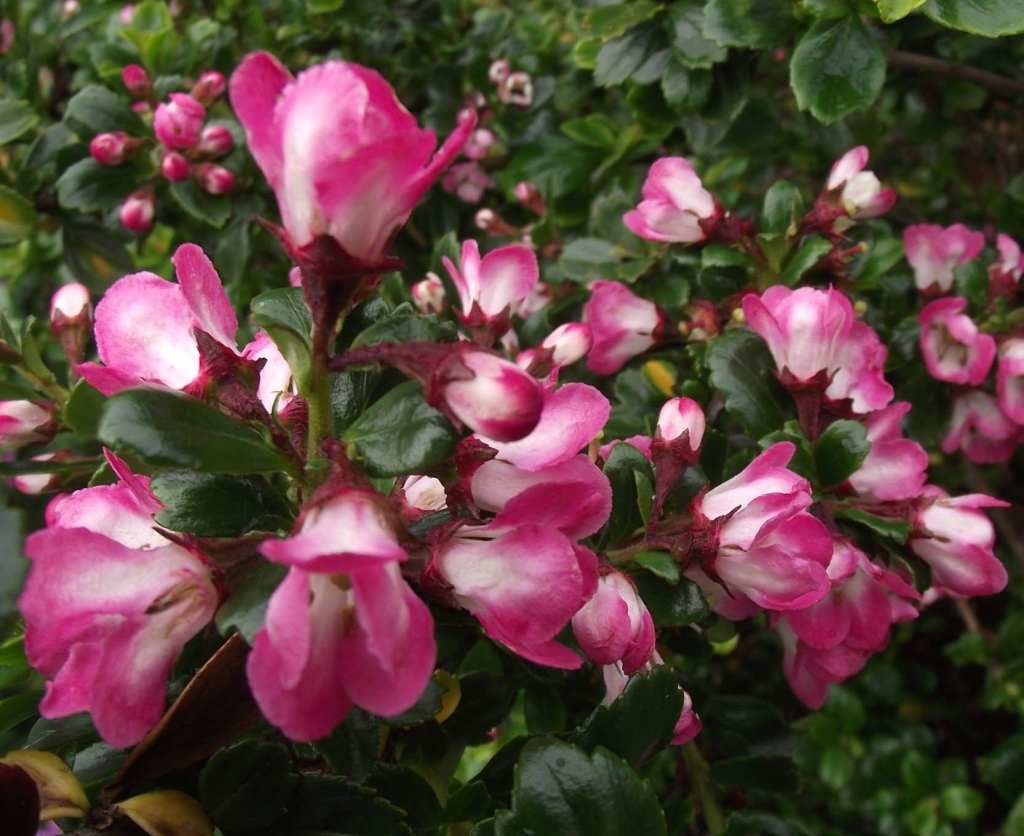
Although escallonias don’t seem to be as popular as they used to be, this one is so aptly named. The dark green, evergreen foliage makes an excellent foil for those plants in front of it.

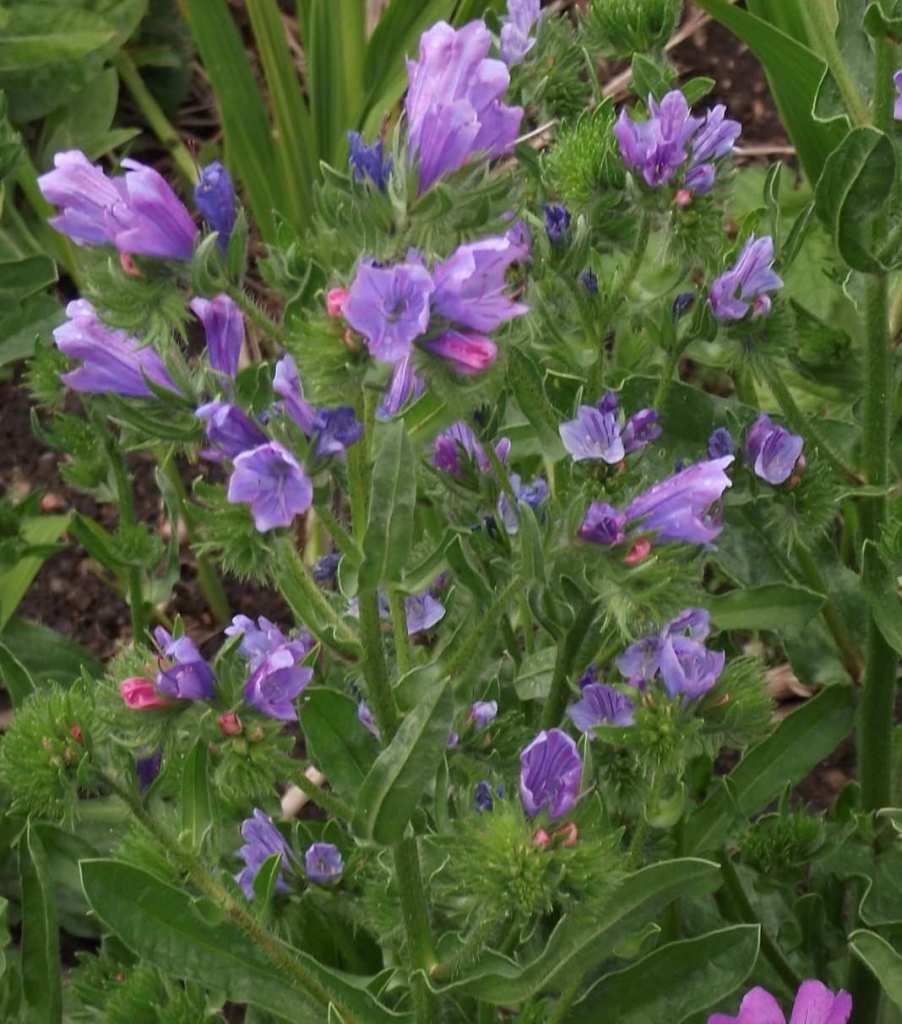
The common viper’s bugloss (Echium vulgare) is a native flower, which I first saw in a garden when I was in my early teens. We had neighbours who had returned from India after serving in the British Raj, which we youngsters found fascinating. Charles was a keen amateur astronomer and my father and I spent a few nights with him gazing at the stars. His wife Effie (Euphemia) was a very keen gardener and an archetypical, indomitable Victorian lady who did much to encourage me in the ways of gardening. One of her favourites was viper’s bugloss, which I have grown in her memory ever since. Echium plantagineum, the purple viper’s bugloss, actually comes from warmer climes, but it is flowering from a February cold sowing.

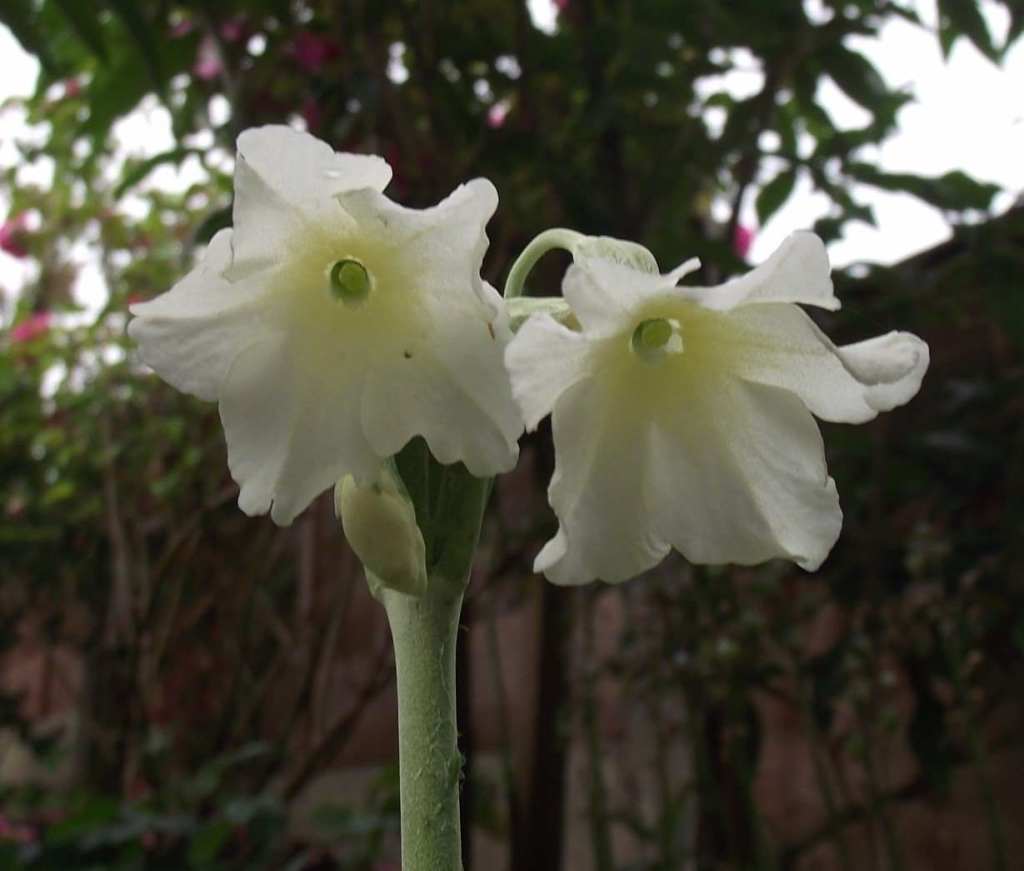
Primula alpicola the moonlight primrose is another little beauty for a damp spot.

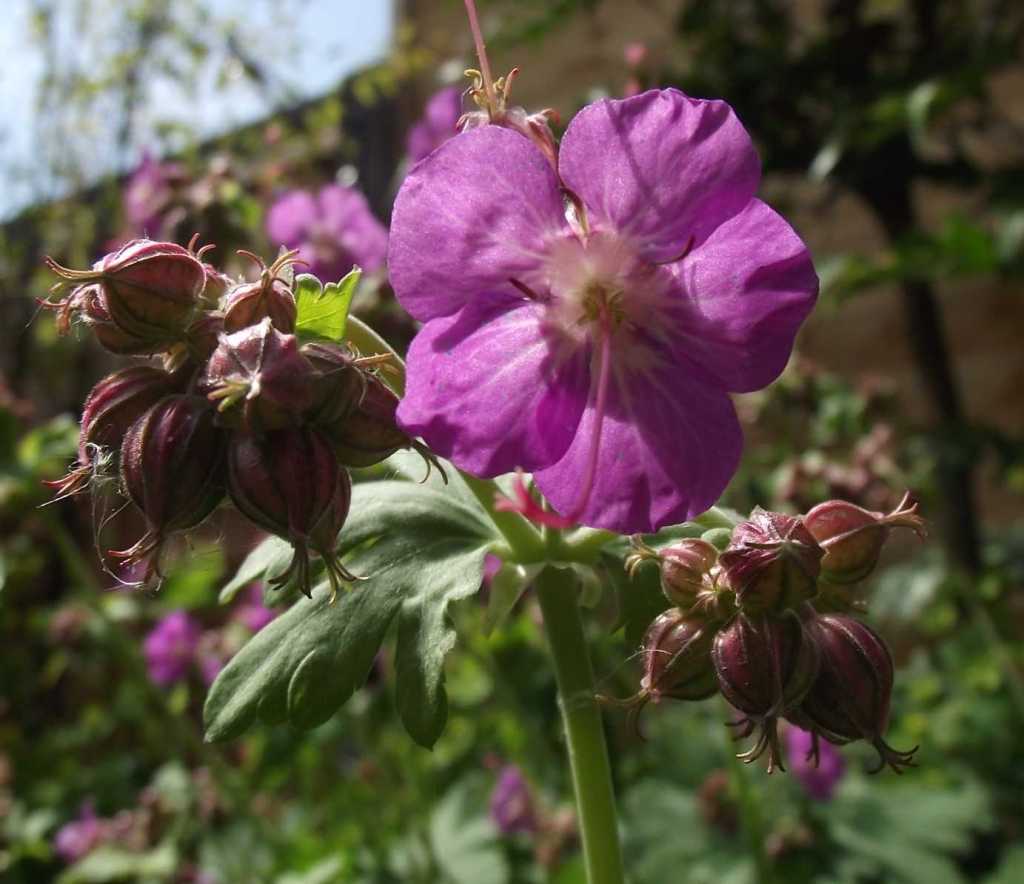
This geranium seems to grow in the poorest of conditions providing excellent ground-cover. Definitely a bee magnate!

Grows virtually anywhere, autumn tints to the leaves, aromatic foliage, bee magnate. What more could anyone want?! Geranium macrorrhizum ‘Bevan’s Variety’ is very similar, in fact, to be honest, I can’t tell them apart.

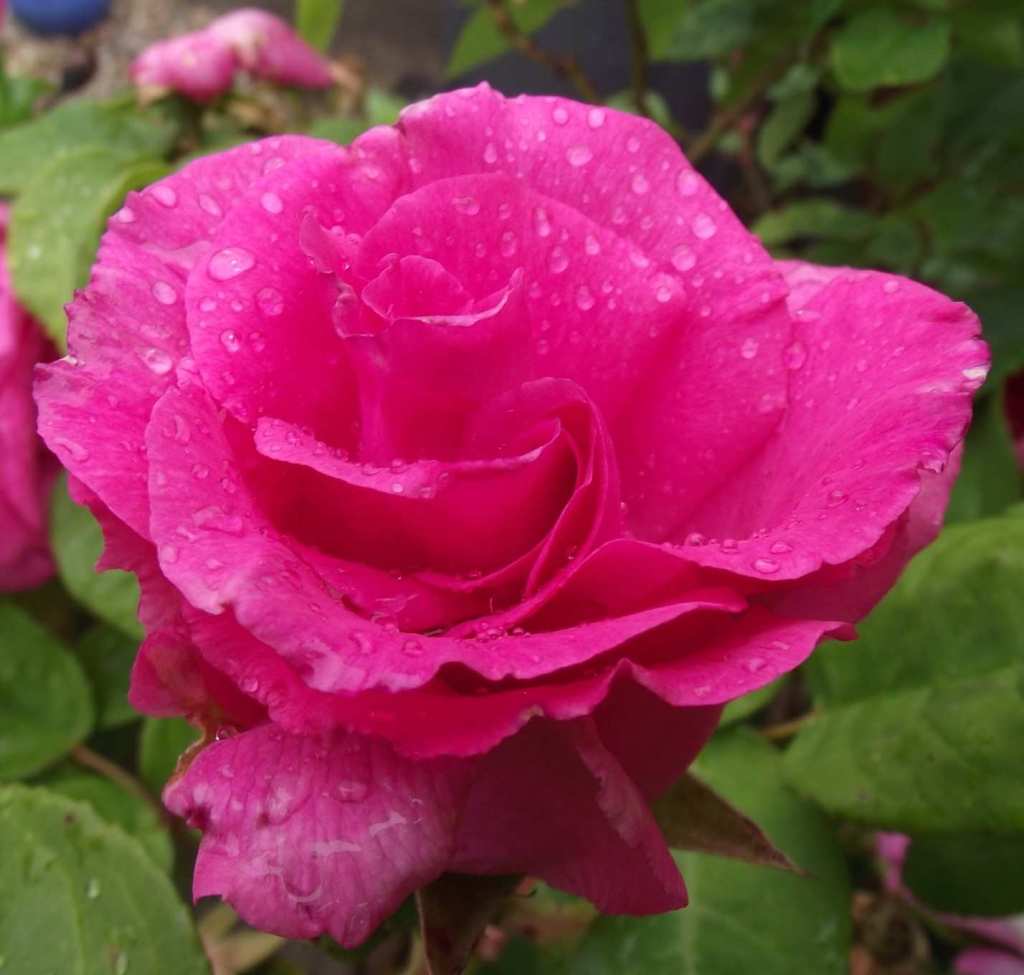
Finally a rose. I am really happy to be able to grow roses here, although I have limited them to the climbers and ramblers. I love ‘Zéphirine Drouhin’, it is the only rose that I managed to grow in my previous, shady, damp garden.

This meme is hosted by Jim Stevens who is to be found with all the details and links to plenty of other blogs to enjoy at Garden Ruminations.