



Cotinus


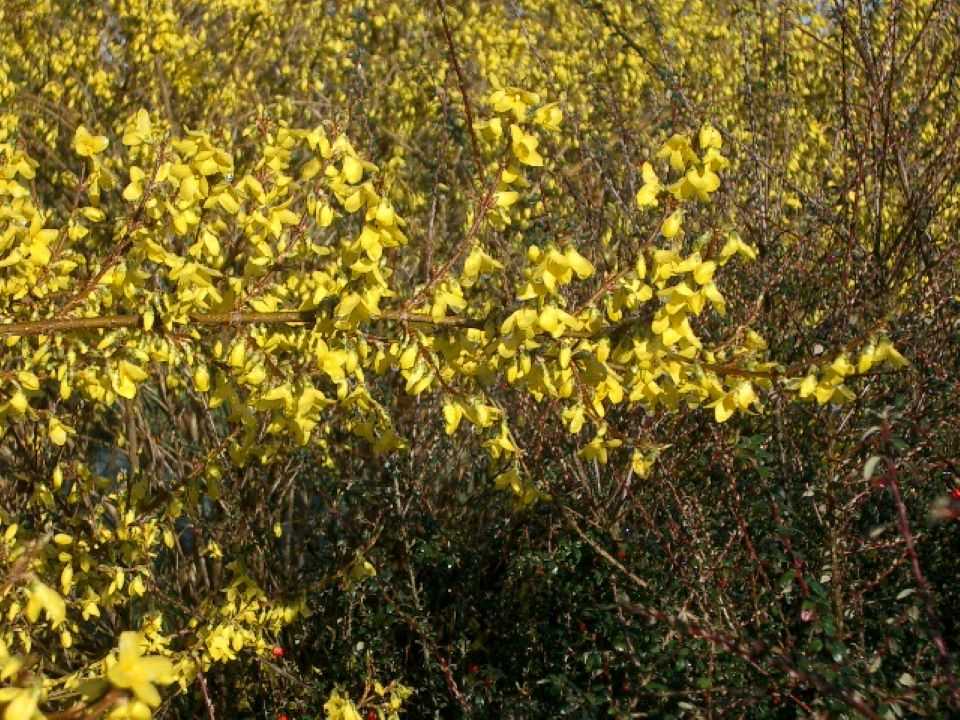
Smoke bushes are grown for their foliage colour and their plumes of flowers in summer which give the appearance of smoke. Although the popular cultivars are grown from C. coggygria they do vary in form quite a bit. Of the two examples shown, I find ‘Grace’ to have a very sprawling habit, whereas ‘Royal Purple’ makes a much neater bush. Both of these have an NHS Award of Garden Merit.
Cotoneaster

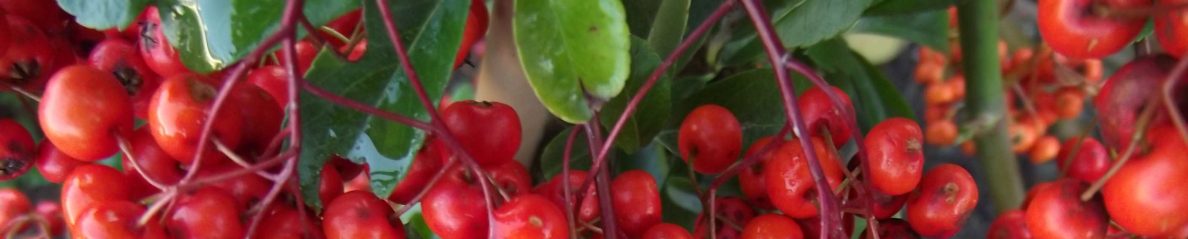
The only picture I have of these versatile shrubs is that of what was described as a”Chinese Hybrid” which was the name given to plants of generally a mixed parentage from the tall growing species in the 1960’s and 70’s. Along with these Cotoneaster horizontalis was very popular at the time. This particular specimen was adjacent to my drive and when the birds descended during the berry season it was not the place to have your car parked!
Datura
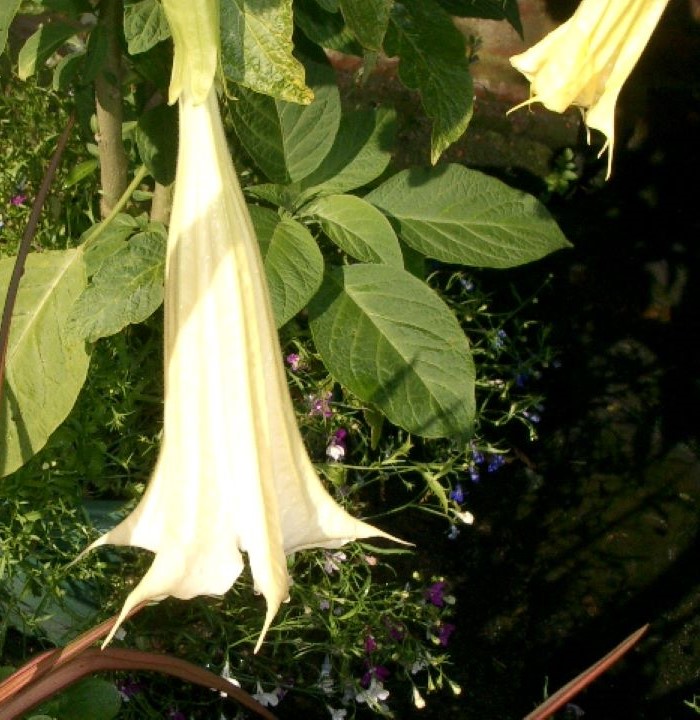
…… or Brugmansia. I wasn’t going to include this plant but it is always intriguing to look at which is which. Ostensibly Daturas are herbaceous plants bearing upright trumpets whereas Brugmansias have woody stems forming shrubs or small trees from which the flowers hang down. This being said, the plant shown is herbaceous, sown as Datura but the flowers hang down? Both are half-hardy at best in a very mild position and generally need moving indoors in the winter.
They may be known as Angel’s Trumpets but they are all VERY POISONOUS and suit one of their other names Devil’s Trumpets much better.
Davidia involucrata

Not pictured in my garden, the paper handkerchief tree, is a medium size deciduous tree originating from China grown principally for its large white flower bracts giving it an almost ethereal look.
Dianthus


……………and now for something completely different, a common or garden pink, backbone of the cottage garden, available in hundreds of varieties and a rather neat biennial Sweet William grown on a whim.
Discentra
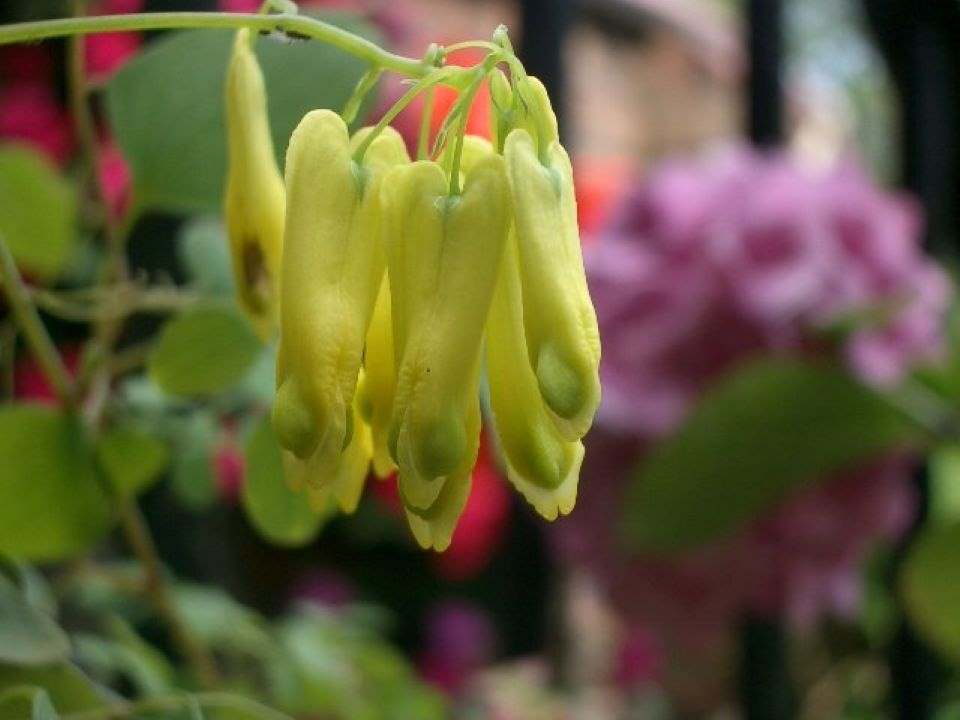
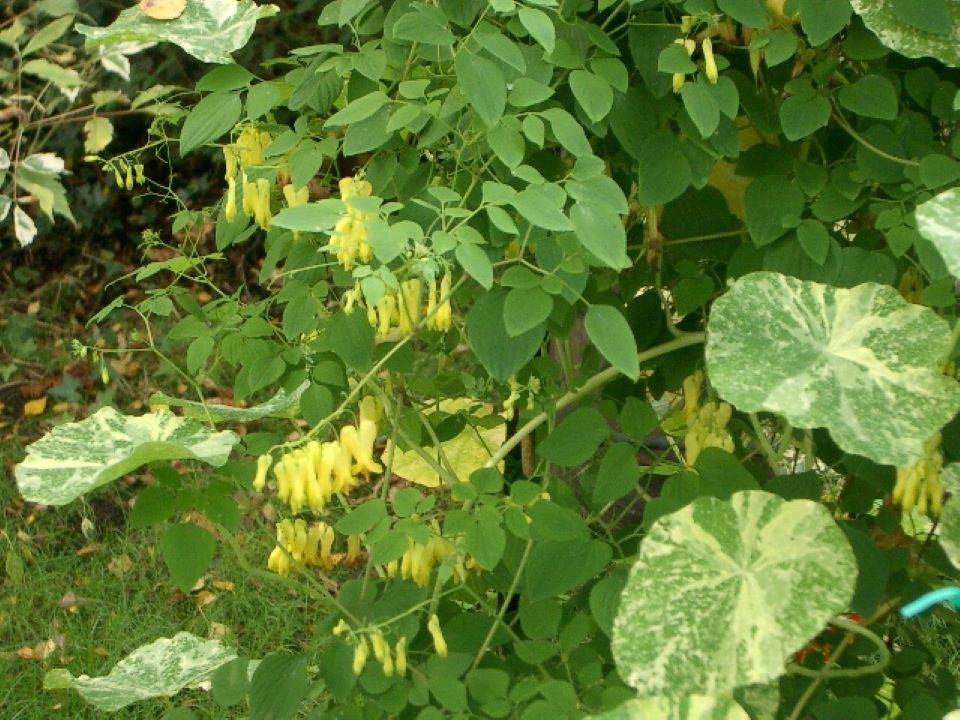
Discentra spectabilis or Bleeding Heart has been dealt with in an earlier chapter but here is a climber which I was fortunate enough to obtain seed of. The genus Discentra has now been turned upside down, sorry revised, so Discentra scandens is now Dactylicapnos scandens and our old familiar bleeding heart is Lamprocapnos spectabilis, when will it end! D.scandens by the way, is not frost hardy.
 A Plantsman's World