We have had a warm, mainly dry, spell with temperatures quite high for this time of the year so far, but have been dogged by a persistent cold wind which we get here. The garden is wakening up and the magnolias and early blossoms are in evidence not far from here but I am still vary wary of any late frosts which may occur.
Anemone blanda
I haven’t any A. nemorosa now unfortunately but I am always pleased to see these lovely spring flowers emerge.
Lamprocapnos spectabilis
The Bleeding Heart is one of the earliest herbaceous perennials to flower, and is always welcome. I think the emerging flower stems have a rather surreal quality about them. Dicentra was a lot easier to remember!
Lysimachia ciliata ‘Fire Cracker’
All lysimachias tend to be garden thugs, but I have never been able to resist the little yellow flowers contrasted against the deep purple of the leaves of ‘Fire Cracker’
Osmanthus burkwoodii
The beautiful clusters of flowers of osmanthus have been out for the last week or so which means I have managed to enjoy their wonderful scent in the warm weather we have been having. All too often the whole of the flowering season is under grey skies. Apologies for the out of focus bit!
Unknown Acer
The buds on this acer are just opening, fingers crossed there is no severe frost now. The winter damaged tip has been taken off.
Primula denticulata
First of the tall primulas to emerge for me. Primula denticulata used to be a common site a few years ago, but not so much now. Shame really I find the powder blue flowers and farinose leaves and flower stems quite attractive and very welcome at this time of the year..
This meme is hosted by Jim Stevens who is to be found with all the details and links to plenty of other blogs to enjoy at Garden Ruminations.
Primula, along with meconopsis, is my favourite genus, the slightly acidic damp soil and the areas of dappled shade present in my previous garden provided an ideal micro-climate for both. These conditions made it possible to grow the mainly Asiatic types along with some European and American species, it did mean however, that the lime loving, mainly European species, were excluded.
The family Primulacae includes cyclamen, androsace and soldanella to name a few. The genus Primula is very large and diverse and because of this was split into 20 sections at the beginning of the twentieth century since when it has been updated into seven sections which are probably more botanically correct, however I will stick to the old classifications as I find them easier to comprehend. I have only included sections where I have grown plants and can provide pictures unless stated.
Section 1 Cortusoides
Primula heucherifoliaPrimula kisoana
These attractive plants have soft velvety leaves which die back to rhizomes in winter, in drier conditions they will tend to go dormant very quickly after flowering which impedes growth. To ensure strong healthy plants a damp spot preferably in light shade is much preferred.
Section 5 Obconica
Once a very popular house plant found everywhere, Primula obconica has now waned in popularity and is rarely seen. Some people had a skin reaction when the plant was handled but I very much doubt this was the only reason for its demise, more probably the advent of orchids being everyone’s favourite was to blame. The picture is not mine and is of a T&M selection.
Section 9 Vernales
The Vernales Section is a large European group containing primroses and polyanthus both of which are very familiar as bedding, in containers and even as house plants. I could only find a couple of pictures of primroses as, to be honest, I have never been a great fan as I have always felt that many primulas, particularly polyanthus, tend to be artificial looking and have consequently been neglected when taking ‘photos. They tend to prefer slightly acid moist soils and can generally be propagated by division or from seed. It is worth noting that most of the primulas that are pictured on this site have been raised from seed.
Section 12 Petiolares
Primula ‘Linnet’Primula tanneri ssps nepalensis
The Petiolaris Section contains around sixty species which are themselves split into several subspecies, however for the sake of sanity, I will not go down this avenue. The whole section is notoriously difficult to grow although there are quite a few species in cultivation. Primula gracilipes minor now named P.’Linnet’ is one of the easiest. Primula tanneri is another that I have grown in a poly tunnel and in the garden. They all like cool conditions in a moist gritty soil. Primula ‘Linnet’ is very close in appearance to P. petiolaris itself which is rarely seen. The plants shown were grown from seed which is the best way, although very careful division is an alternative.
The largest section of the genus, also the most diverse, ranging through Asia, Europe and the Americas including our very own Primula scotica. As the name suggests the prominent characteristic is that they all are covered in farina to varying degrees. Although requiring much the same conditions as all the other primulas that I have grown, I raise many of them under cover as they tend to be small in stature and are best established before planting out. All the primulas shown above are easily raised from seed.
Section 20 Denticulata
Primula denticulata is a plant with which nearly every gardener is familiar, commonly known as the ‘drumstick primula’ it has been an early spring flowering feature in many gardens for years. Easy to grow, you can even propagate it from its fleshy roots. The pictured specimen is not very strong having self-seeded itself into a gap with stone either side but it is the only picture I have unfortunately. There is also a rather nice white form, which I now have, with red and purple pink also being available.
Section 21 Capitatae
Primula capitata ‘Noverna Deep Blue’Primula capitata ‘Noverna Deep Blue’
Primula capitata is a neat little plant from the Himalayas, very definitely a peat lover it tends not to be long-lived.
Section 22 Muscarioides
Primula bellidifoliaPrimula cernuaPrimula deflexa
The best known plant in this section is Primula vialii which is even available as seed and plugs from some of the main online garden companies. The name of the section relates to the flower shape being that of muscari or grape hyacinth. For some reason I have never grown P.vialii, perhaps because it just doesn’t appeal to me. Basically, members of the section need the same treatment as most of the primulas I have described, its smaller relatives are probably safer in a peat bed or alpine house. The primulas in this group that I have grown were all raised and grown in a poly-tunnel as they were a bit too delicate for the main garden. Truth be told the only plant I managed to raise from seed of P. cernua perished before it flowered.
Section 23 Soldanelloides
Primula flaccida (Primula nutans)
Primula flaccida, formerly P.nutans, from Yunnan is the only success I have had with members of this section, three plants came from seed but only one survived to flowering and then died. Very difficult group to grow but contains some of the most beautiful plants which are often scented. The star turn is Primula reidii which is not only probably the most beautiful, but has a particularly strong scent as a bonus. Definitely subjects for careful cultivation in the alpine house.
Section 25 Nivales
Primula handelianaPrimula maximowiczii
Primula chionantha, is the best known of the Nivalids. They are Asiatics which generally are to be found growing on damp meadows and prefer the damper peaty conditions to be found in the north of England and Scotland. The two pictured above, which are both robust species with large strap-shaped leaves, were raised in the poly-tunnel and then planted outside where they were perfectly happy. I have grown P. chionantha but unfortunately I can’t find a picture.
Easy to grow section but needs peaty conditions and plenty of water to thrive. Many people will be more familiar with P.florindae, known as the Giant Cowslip, rather than the eponymous Primula sikkimensis, it comes in other colours ranging from red through orange. Generally easy from seed and division of vigorous clumps.
Hailing from the Himalayas these easy to grow plants with their tiered flowers are what started my interest in all plants from the alpine regions particularly the Asiatics, I was also lucky in that living in North West provided almost ideal conditions for my favourites. I first saw these in any quantity at Fletcher Moss Gardens, Didsbury but large plantings can be seen at Ness Gardens and Harlow Car Gardens. Although they will grow in any good peaty soil they need water to really thrive and make an excellent pond-side planting especially in numbers.
Section 30 Floribunda
Primula x Kewensis
Primula x Kewensis is a remarkable hybrid bred at Kew, as its name suggests, which comes true from seed. It was bred from P verticillata and P floribunda and is not fully hardy as I found out to my cost when I first raised it. If kept under glass it will flower in very early spring.
That completes my review of the genus Primula where I have included all the sections that I have successfully grown. When it comes to my failures with some of the more challenging plants, I can only say a poly-tunnel is really not adequate when compared with a dedicated alpine house however the pleasure and satisfaction I gained from actually raising some of these subjects from seed was very much worth the effort.
In many descriptions I have mentioned peat as being an essential component to the growth of these plants, many of which grow best in a peat bed. In a future post I hope to show the totally illogical approach the government is taking by banning the sale of peat for horticultural use.
Peat for horticultural use is extracted from 4,500 hectares of peatland which is 0.15% of the 3,000,000 hectares in the UK. Why are they banning the sale of peat?
I have not posted since last October when I ran out of subjects in my tiny garden however there are now signs of spring and, with rising temperatures and dry weather forecast for next week, I remain hopeful. Although it may be a few more weeks before I can post again I have managed to scrape together a rather contrived six for this week.
Slight problem with the header, I must have decided I was having my own leap year!Too late to change it now.
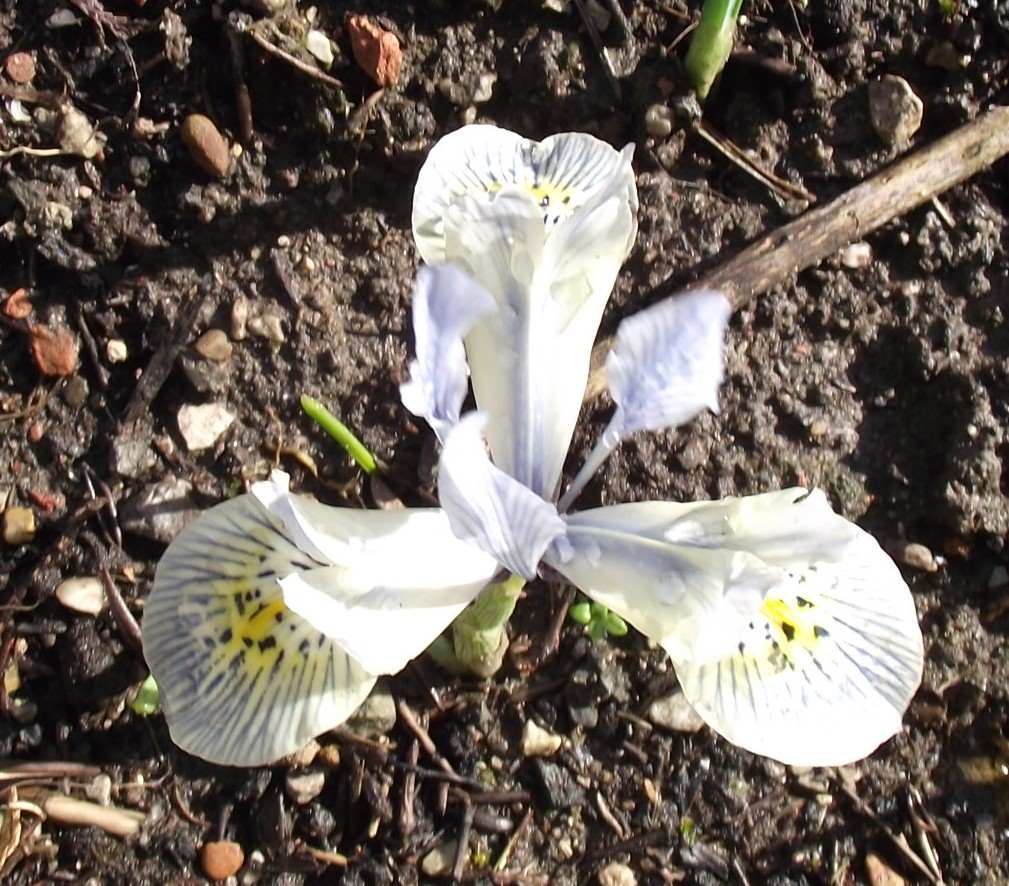
Iris reticulata ‘Katharine Hodgkin’
A real favourite of mine, particularly as it’s such an early flowerer. Unfortunately this one is almost all that is left of a clump I planted about five years ago, time to renew!
Anemanthele lessoniana
I am not a great fan of grasses, although I can appreciate them planted in drifts. I raised Anemanthele lessoniana (syn. Stipa arundinacea) Pheasant’s tail grass, from seed many years ago and had three large containers of it in my previous garden which were spectacular when viewed with the sun behind them. This is a recent acquisition which I hope thrives. Incidently I never cut them back just “combed” them, wearing a stout pair of gloves, in the late spring.
Hedera helix atropurpurea
This leaf caught my attention, unfortunately when I tried to reposition it to get a decent photo I snapped it off! I am guessing at its nomenclature but I think I am correct.
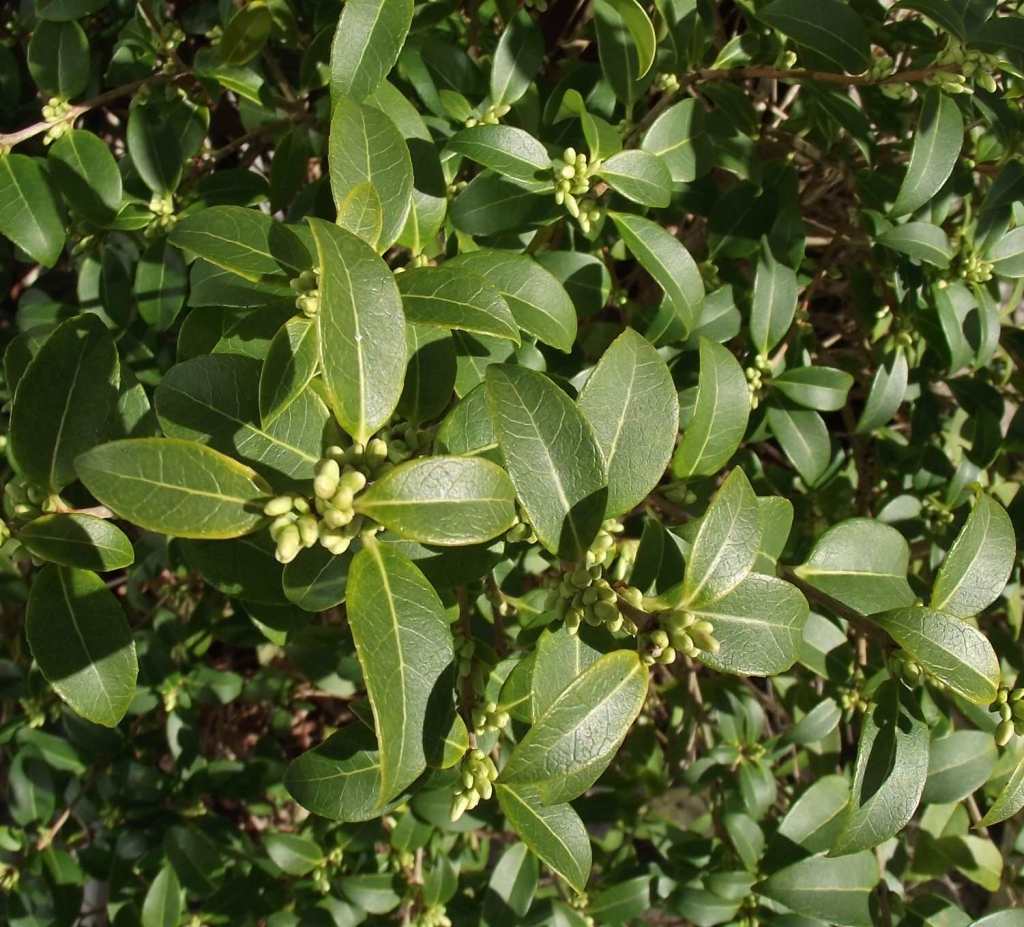
Osmanthus burkwoodii
The osmanthus is growing in a large container next to the door into the garden so I am hoping there are some warm days when it does flower so I can fully appreciate the scent.
Galanthus nivalis
I know snowdrops are everywhere but I just thought they would make up the numbers. I have no idea where the shell in the background came from!
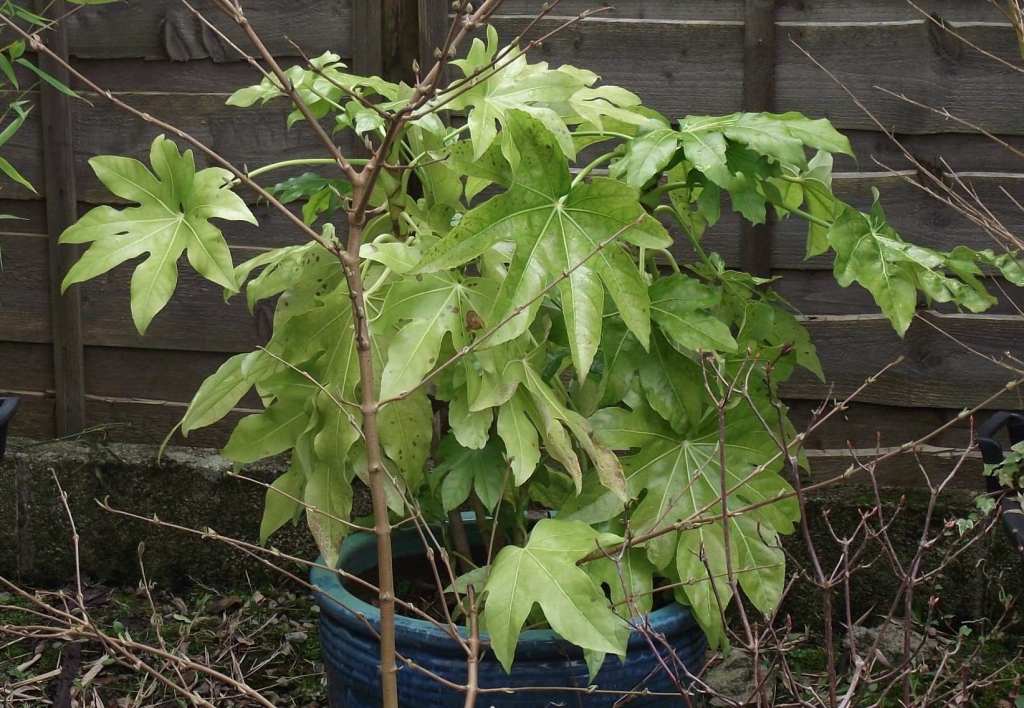
Fatsia japonica
Not everyone’s cup of tea and actually the first time I have grown it, Fatsia japonica just happened to fulfil a purpose and is currently in a container. The thing I did like was to have some healthy green leaves to look at during the grey winter months.
This meme is hosted by Jim Stevens who is to be found with all the details and links to plenty of other blogs to enjoy at Garden Ruminations.
Book reviewer and garden enthusiast. Updates from my Hampshire garden. Usually talking about books and plants. People do not forget books or flowers that touch them or excite them—they recommend them.






 A Plantsman's World