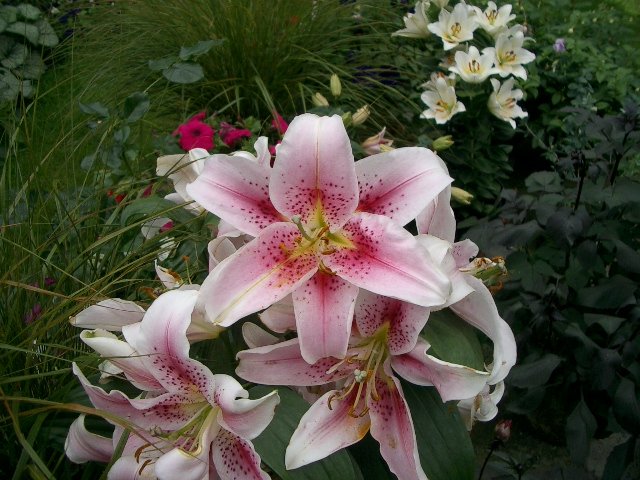
Lilies Part 3-Updated

Included here is the giant of them all Cardiocrinum giganteum (Syn. Lilium giganteum), a few Asiatics and pest and disease.

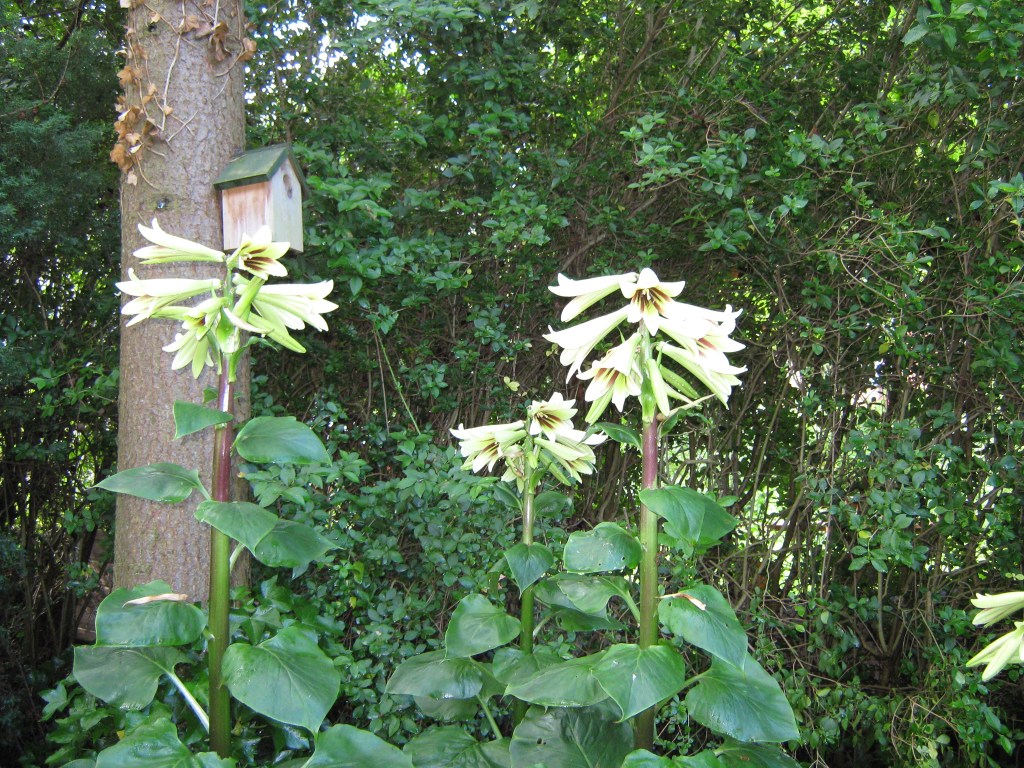
Cardiocrinum giganteum
Cardiocrinum giganteum emerging.
Cardiocrinum ready to open.
Cardiocrinum flower close up.
Cardiocrinum seed-head.

Cardiocrinums or Giant Himalayan Lilies grow up to 10 feet tall and are monocarpic (die after flowering). They take around 5 years to flower from bulbs which develop as offshoots from the original before it dies. If you are extra patient it takes around 7 years from seed. They prefer a rich acid soil with some shade and unlike other lilies are planted with the nose of the bulb at the surface of the soil. The large glossy rosettes of leaves can be 12″ across, so plenty of space needs to be given. The flowers, which are 6″ or more long and highly scented are born very high up on the stem. To stand near a group on a warm humid day is an exceptional experience.

Although I much prefer Oriental Lilies I have a grown a few Asiatics, ‘Night Flyer’ is a favourite.

Lilium ‘Night Flyer’
Lilium ‘Night Flyer’ Close up.
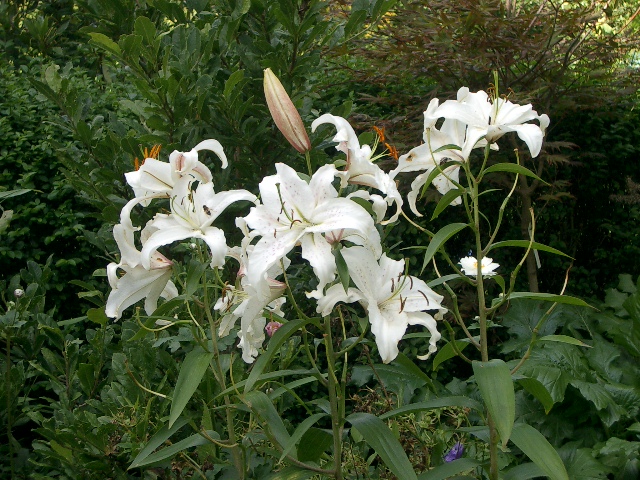
Pure white Asiatic Lily ‘Amazing’

The above are a few “Patio Hybrids” I had as a bonus offer, only 12″ high, very attractive flowers but unfortunately no scent.

The number one pest experienced by lily growers is the Lily Beetle, appearing first on fritillaries and later on lilies. They are capable of great damage in a comparatively short time. The grubs only develop on these genera and are easily recognised by the fact they wrap themselves in their own excrement so if you see any nasty looking dark blobs on your leaves, usually at the axil, you know what they are. The easiest method of control is to be vigilant and pick the adults off as they appear and crush them but be careful they are tricky devils and if allowed to drop on the ground they land on their backs and are virtually invisible.

Host plant Fritillaria meleagris
Lily Beetle

I have come across a virus disease once and it can be devastating, although not fatal, the plant is severely weakened and never performs to the same degree. Spread by aphids, although aphid control and good garden hygiene helps. Once the plant is infected the only way to deal with Mosaic Virus realistically is to uproot and burn it entirely.

Mosaic Virus

Warning: Lily pollen is fatal to felines.

Six on Saturday 19/7/2025

Temperatures are hovering around 20°C which quite suits me. The weather is generally mixed with some rainfall, although the ground remains hard. Some thunderstorms are forecast, starting today, but it will be interesting to see what transpires as they often seem to miss us. I am afraid this post is rather rushed and will consist mainly of just pictures.
This little beauty popped up out of the blue. There have been several years when some poppies have emerged, but so far, none as nice as this one.

I have several astilbes, as they do well in the damp, shadier parts of the garden. I don’t know the name of this one but I think it has a nice balance between the red of the flower, and the dark green foliage.

I felt I had to include Crocosmia ‘Lucifer’ even though it currently must be one of the most commonly seen border plants. I always think if a plant is that popular, it must be good. You certainly can’t miss it!
Peacock butterfly on a buddleia. There have been plenty of butterflies this year I am pleased to say. This one wouldn’t keep still, despite having strong words with it, hence the slightly blurry image for which I apologise. As the buddleias go over, my Joe Pye weed (Eutrochium maculatum) will take over and provide nectar, usually until the first frost.

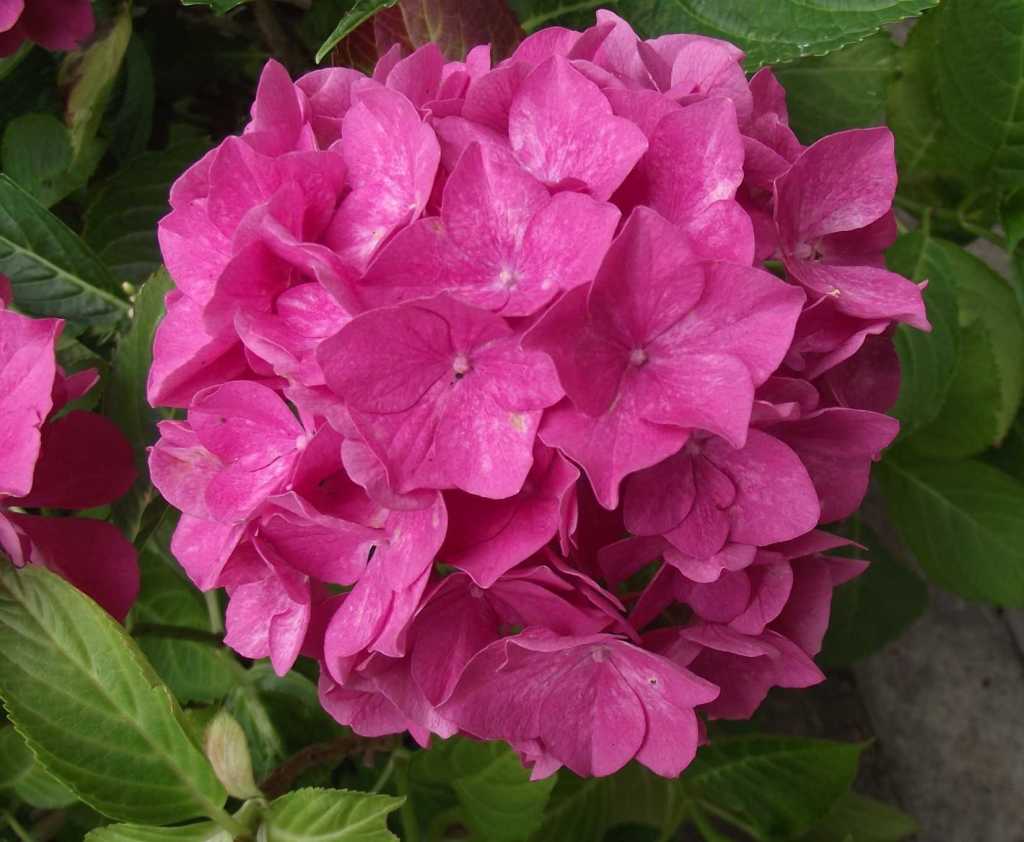
This is a hydrangea that I inherited. At one stage I was going to dig it up but relented as I rather like the colour.

This Alstroemeria is one of the Summer Paradise series ‘River Valley‘ a characteristic of which are the variegated leaves. Unfortunately the flowers are not looking their best, but I think this occurs with most alstroemerias as they don’t seem to wear well.

This meme is hosted by Jim Stevens who is to be found with all the details and links to plenty of other blogs to enjoy at Garden Ruminations.

Lilies Part2 -Updated

Lilies generally prefer a slightly acid soil, originally I planted them in pots preferring to have the scent close to the house. As their numbers grew, I started to remove them from the pot intact and planted the whole thing in the border after the first year. This worked quite well as many of the “transplanted groups” gave a good display for years. If planting direct into the garden it is recommended that a layer of grit is placed beneath the bulbs to aid drainage. The thing to avoid is creating pockets in heavy soils which will fill with water during the winter. If planting in heavy ground a thorough cultivation of the planting area adding grit and additional grit under and around the bulb would seem prudent. I usually plant at 100mm which also helps to stabilise the stems as many lilies do actually throw roots out from the stem. Remember using odd numbers in a group always looks better and less artificial.

Oriental lily ‘Nippon’
Lilium ‘Pink Perfection’ Scented Trumpet Lily
Lilium ‘Robert Swanson’ Giant – Tree Lily.
Lilium ‘Salinas’ Highly scented Oriental.
Lilium ‘Salmon Star’
Shorter than most this scented Oriental (sometimes Dwarf Oriental) lends itself to container culture.
Dwarf Oriental Lily ‘Souvenir’
Oriental Lily ‘Starfighter’ Very large upturned flowers.
Lilium ‘Stargazer’ Oriental Lily. A deliberate cross between two species to produce an upturned flower. Traditional lily which has been around for some time.
Lilium ‘Time Out’ Oriental lily.
Oriental Lily ‘Tom Pouce’ Extremely large trumpets.
Lilium ‘Venezuela’ Oriental.
Fragrant Tree Lily ‘Honeymoon’

Watch out for the lily beetle! Next post miscellaneous, plus pest and disease and the giant of them all Cardiocrinum giganteum.

Lilies Part 1 – Updated

I love lilies, there is something about their stature and the majestic blooms that appeals to me although I have to admit, when younger, I shunned them as too artificial looking. I am only growing a few lilies in my new garden by comparison with the numerous ones I have grown before.

Lilies slot into various groups and have distinct characteristics but I am afraid that I only go for the scented ones, principally the Orientals, and ignore the others. Asiatics, as a lily without scent just doesn’t do it for me. The post is probably more pictorial than informative but, this is the nature of the beast. They are reasonably easy to grow and will grow well in plenty of sun or dappled shade, many of the original species, coming from the margins of woodland. I tend to grow them in containers for the first year then plant out the whole contents of the container the following year.

Trumpet lily ‘African Queen’ Lilium longiflorum hybrid.
Lilium ‘Arena’ Very fragrant Oriental.
Lilium Anastasia ‘Oriental Trumpet, Tree Lily or Orienpet Lily growing up to 2.5 mtrs.
Oriental Lily ‘Casa Blanca’
Oriental Lily ‘Dizzy’
Another highly scented Oriental Lily ‘Everest’
Oriental Lily ‘Excelsior’
Lilium ‘Golden Splendour’ Trumpet Lily.
Sweet scented Lilium ‘Josephine’ Oriental Lily
Oriental Lily ‘Kiss Proof’
Tree Lily Lilium ‘Lavon’ These large lilies can take up to three years to attain their final height of approx. 2 Mtrs.
Lilium ‘Mona Lisa’ – Oriental Hybrid
Lilium ‘Muscadet’ – Oriental stunner.

Planting and my preferences coming up in Part 2.

Six on Saturday 5/7/2025

Temperatures are remaining around 20°C which rather suits me. I am writing this on Friday and we are expecting heavy rain later which is much needed. The garden has really filled out now and I can hardly move for plants. Which is making it difficult to get to any weeds without treading on things I’d rather not. A mixed bag this week of plants I can name, and those I can’t.

Update 6.00am Saturday. As always, it seems, the promised heavy rain went north of us. When I looked out this morning everywhere was dry! More heavy rain forecast for early morning tomorrow. Fingers crossed.

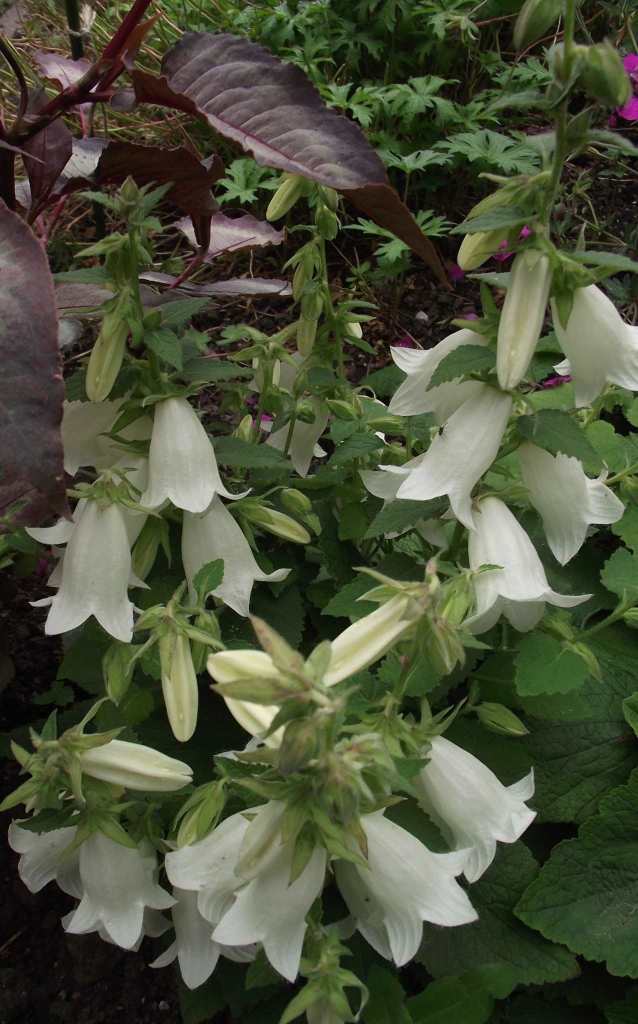
This little campanula is from a packet of seed labeled large white flowered. The flowers are white and also large for the plant, which is typical of campanulas. The plant itself however, is less than a foot tall. It reminds me very much of Symphyandra hoffmannii which I used to grow.

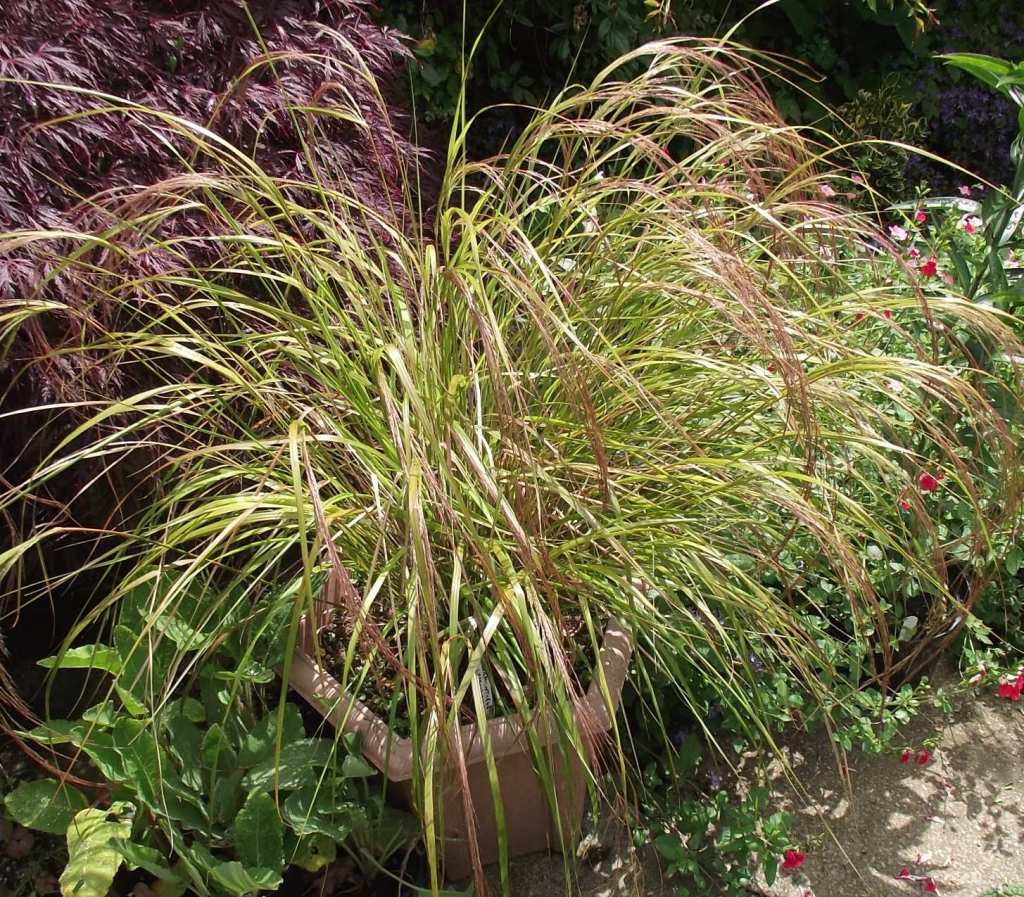
I am not a great fan of grasses but I find Anemanthele lessoniana, the pheasant tail grass outstanding. Unfortunately the picture doesn’t capture the effect of it glinting in the sunlight as it does. It will carry on throughout the year with the leaves taking on yellow, orange and red streaks towards winter.

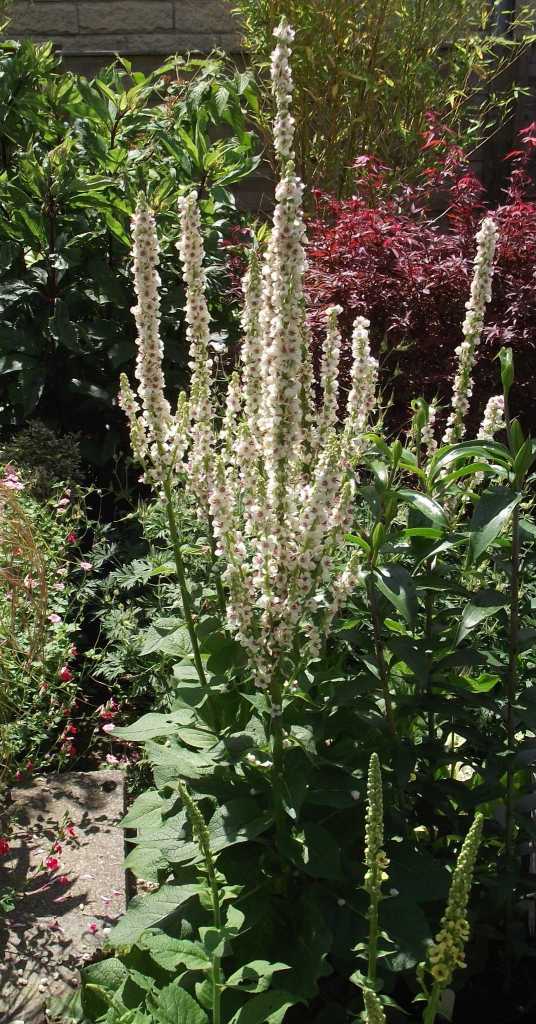
This white, self-seeded verbascum has improved year on year. I know the wild plant is somewhat looked down on as a weed but I find them rather attractive. A big plus is that they are constantly visited by numerous bees. Both the white one, and the smaller yellow one, in the foreground, originated from a packet of mixed verbascum seed, but these plants have seeded themselves, into the paving, from elsewhere in the garden.

Primula x bulleesiana showing fasciation. This is one of the few botanical “coveralls” that I can relate to. x bulleesiana is obviously the combination of bulleyana and beesiana. Fasciation is quite common in primulas, particularly the candelabra types. There seems to be a myriad of things that can cause it from genetic mutation to viral or insect damage, which means, I think, that nobody is really certain.

Another plant that has seeded itself into the garden. This rather neat astrantia has been with me for several years now, and I have just left it alone to do its thing.

The first lily flower this year from a pot I have had for years, so, naturally I have lost the label! At a guess, I think it could be Lilium ‘African Queen’ a Lilium longiflorum hybrid. But please don’t take my word for it!

This meme is hosted by Jim Stevens who is to be found with all the details and links to plenty of other blogs to enjoy at Garden Ruminations.