We have had three days of quite persistent rain and everything in the garden has shot up. It seems to be getting drier at the moment plus the sun is back, albeit intermittently. There seems to be quite a bit of blue in the garden, so this week I’m having the blues.
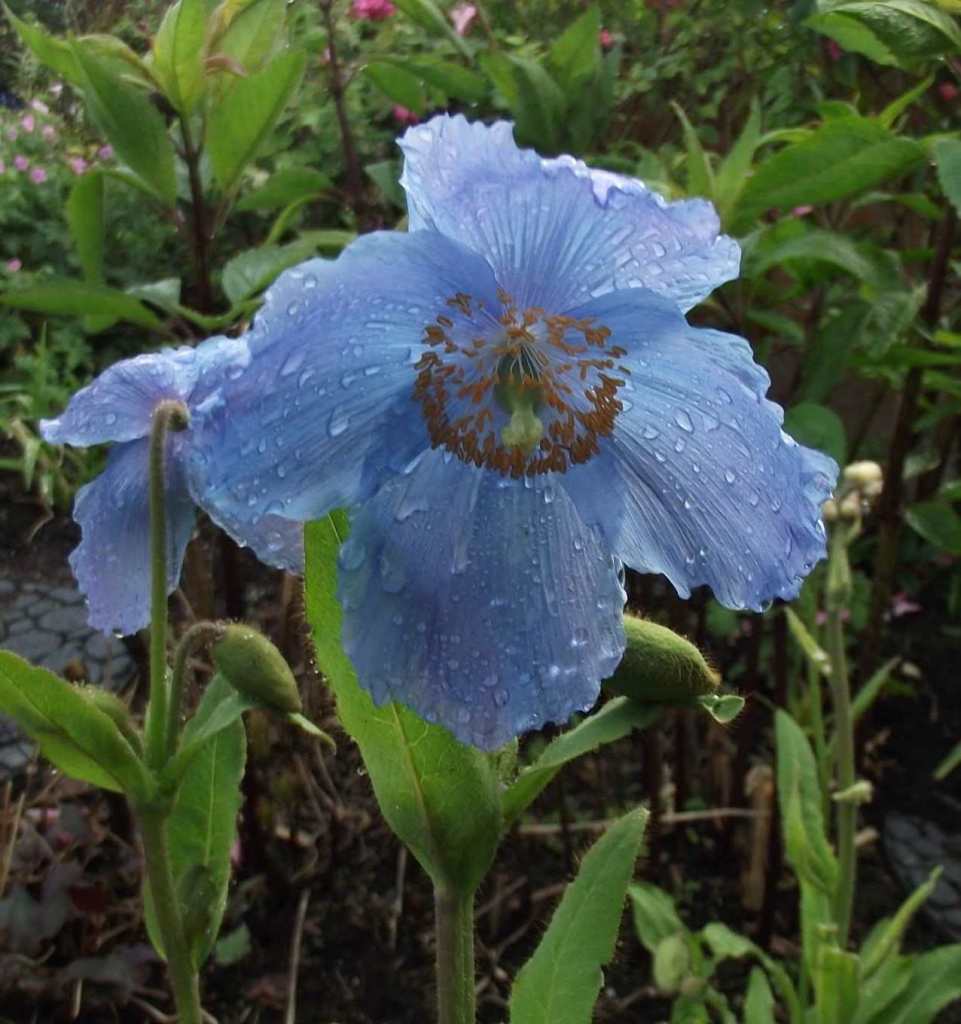
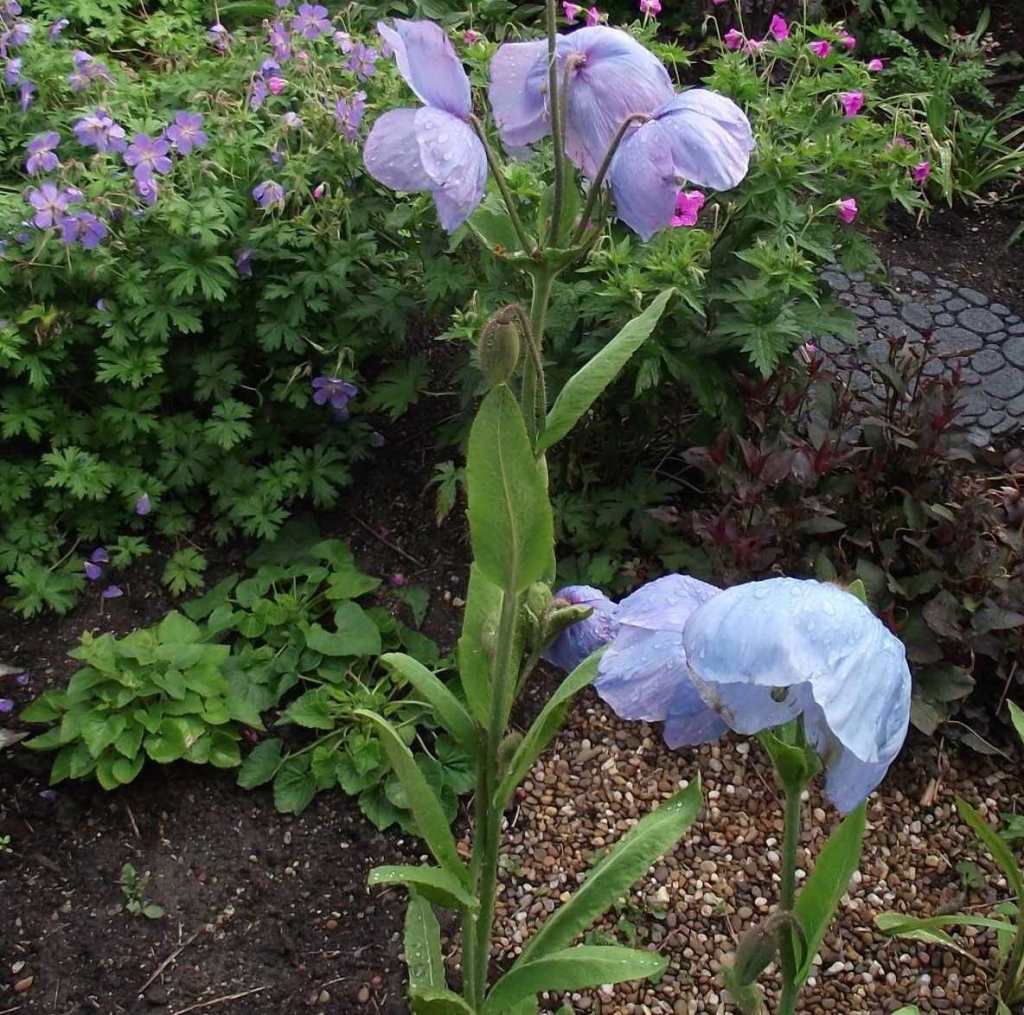
Smaller in stature than ‘Crarae’, Meconopsis ‘Crewdson Hybrid’ has been around for some time. It is believed to be an opportunist cross between M. betonicifolia and M. grandis. The interesting thing about many meconopsis is that although the original cross was made between two fertile species and the resulting plants often produce viable seed, they eventually become sterile in later generations. This means that my plants were produced vegetatively.
Geranium ‘Orion’
Geranium ‘Orion’ is in fact not an interspecies cross but a seedling of “Brookside”. One of what I like to call the “Big Blues”
I don’t think you can beat Geranium ‘Johnson’s Blue’ for strong growth and intense blue flowers. I find it can be rather a rampant grower and be a bit floppy, but I still wouldn’t be without it. As I am sure many of you have experienced geraniums, are notoriously promiscuous. This is an interspecies cross: G. himalayense x G. pratense. Another “Big Blue”!
Geranium ‘Brookside’
Geranium ‘Brookside’ is officially violet/blue so I am including it. Another “Big Blue” this is an interspecies cross: G. clarkei ‘Kashmir Purple’ x G. pratense.
Campanula portenschlagiana ‘Mrs Resholt’
I bought this little bellflower, sometimes known as ‘Resholt’s Variety’, as an edging plant. I will probably move it as it doesn’t seem suited to where it is. The soil is very poor, and I managed to run over it with the recycling bin a few weeks ago! Unfortunately it isn’t in full flower yet but I am running out of blues!
Meconopsis ‘Crarae’
No excuses! I couldn’t resist one last picture.
This meme is hosted by Jim Stevens who is to be found with all the details and links to plenty of other blogs to enjoy at Garden Ruminations.
When I first started this blog, having scrapped any that had gone before, it was mainly as a brain exercise. I came across the Six on Saturday meme run by Jim Stephens at Garden Ruminations and, through that, organically increased my presence on the web. This has prompted me to re-publish some of my old material some of which is updated. These posts are purely about the plants that I have grown and photographed, mainly in my previous garden, unless otherwise stated.
Erythronium
Fifty years ago these true forest floor plants which flower early before the canopy forms, were to my mind, an exotic rarity, the only one generally available was the European native Erythronium dens-canis however the myriad of species and cultivars that have been introduced over the years has now made bulbs of this beautiful genus more accessible.
Erythronium californicum ‘Harvington Snowgoose’Erythronium ‘Pagoda’ (E. tuolumense hybrid)
Unfortunately these are the only pictures I have and don’t do justice to these plants however there are plenty more to be seen on the web. Both are quite vigorous hybrids and are ideal for the average garden where they will perform well. There are a diverse range of species available to the more specialist grower some of which can lend themselves to pot culture in an alpine house such as E. hendersonii.
The common name Dog’s Tooth Violet comes from the shape of the bulbs which should be planted in an open soil which has plenty of humus, preferably incorporating leafmould if available, under deciduous trees or shrubs to give dappled shade. Erythroniums are found in both Europe and Asia but the largest influx has been from the USA where there are two distinct groups one from the east and the other from the west. they are members of the lily family and quite closely related to tulips.
Fritillaria
Fritillaria is a massive and complex genus with only a handful of species in general cultivation although there has been a significant number of hybrids introduced. Fritillaria meleagris (Snake’s head fritillary) is the best known being of European origin.
Fritillaria meleagris
Fritillaria meleagris White form
Fritillaria meleagris is basically a meadow plant and as such benefits from being allowed to naturalise however it can be grown in any rich moist but well drained soil preferably in dappled shade. I hate the term “moist but well drained” as it sounds like an oxymoron however it is difficult to think of other ways of describing it, basically think not waterlogged at any time! Some other species require exactly the opposite coming from much drier climes.
Fritillaria persica
Fritillaria persica has become popular in recent years and can be found in most catalogues. A surprisingly hardy bulb it does need a well drained gritty soil and a position in full sun to do its best. The most popular and impressive specie that is widely grown is Fritillaria imperialis known as the crown imperial and its many varieties. They are big and showy but unfortunately I have no pictures as I have never really felt the urge to acquire it, perhaps a bit too rich for my taste!
A word of warning Fritillaria meleagris is a member of the lily family and the first place to spot lily beetle before it moves onto the lilies a little later in the year.
Iris
The Iris genus is both large and complex, there are about half a dozen sub-genera and some of these are further sub-divided into sections. I did study some botany but, for the sake of simplicity, I think in terms of four main groups, there are the early spring flowering dwarf types, the “Dutch” iris, the large bearded iris and the non-bearded iris which are the ones I have grown the most of.
The most popular irises that are known as Reticulate-bulbed, bulbous irises are Iris danfordiae, Iris histrioides and Iris reticulata, and their many cultivars as shown above. They are all early flowering which adds to their appeal and also make good subjects for the alpine house. A sunny position in an open gritty soil suits them although I.reticulata is less fussy. As they die back during the summer, always try to be aware of where they are planted. The Juno irises also make good alpine house subjects and are extremely beautiful but not very widely grown as they are not easy. Juno irises are known as Smooth-bulbed, bulbous irises and I can only assume that means that they don’t have the striations of the reticulate species.
My garden was very shady so I never grew the big showy bearded iris despite them being very popular because of the wide range of varieties available. Unfortunately they only grow well when the rhizomes, which sit on the surface, get a good baking during the summer months which just wasn’t possible. Likewise the bulbous iris known as Dutch Iris, which you see advertised in the catalogues, is principally a plant which is best container grown and doesn’t lend itself to shady borders. Growing a plant that you already know isn’t suited to your conditions can only lead to disappointment. Incidentally Dutch Iris (Iris hollandica cultivars) are used to supply the cut flower industry.
The irises that thrive in damp shady conditions come from Eastern Europe, China, Japan and even the UK.
Iris ‘Blauewiesmotte’ Sino-siberian type.
Iris chrysographes ‘Black Gold’
Both of the above are Siberia or Sino-siberian irises, to anyone used to seeing the large bearded Iris they look like any fibrous-rooted plant but are in fact rhizomatous. Although I.chrysographes is very distinctive and the specie being found in the wild. The likes of Iris ‘Blauewiesmotte’ is one of many cultivars originating from such as I.sibirica whose origins could be lost in the mists of time. They all thrive in damp cool conditions in any reasonable soil.
My favourite iris is the Japanese Water Iris, Iris ensata (formerly I. kaempferi) it has very similar requirements to the Sino-siberians but, although it prefers more boggy conditions, I wouldn’t be inclined to use it as a pond marginal like our own Yellow Flag. The flowers are enormous and carried on sturdy stems on a fairly compact plant.
Iris ensata The Japanese Water Iris
Finally one of our very own. Along with Iris pseudacorus (Yellow Flag), The Stinking Iris, Iris foetidissima is one of the only two species to be found wild in the UK. A bit of a curiosity and not everyone’s cup of tea, I have never noticed the “stinking” bit, it sits in its own section of the iris taxonomy. Along with the others it likes a damp spot and although the flowers are fairly insignificant its crowning glory are the seed heads which are used in flower arrangements.
Just a little point, if you are tidying up iris plants when they have died back make sure to have a pair of scissors handy as the unsightly dead leaves cling tenaciously to the crown.
The sunshine and dry weather is meant to be coming to an end tomorrow (Saturday) with some welcome rain. Who would have thought that I would have “welcome” and “rain” in the same sentence. We are normally wishing it would stop! There is a possibility of warm weather returning after a week of unsettled weather according to the forecast. I apologise for a complete focus on meconopsis and primulas this week, but my two favourite genera are now in flower.
Meconopsis ‘Crarae’
This is the first time I have actually bought meconopsis plants as I have previously always raised them from seed. Meconopsis ‘Crarae’ comes from Crarae Gardens Argyll, Scotland. It is an infertile hybrid and therefore only propagated vegetatively. I had seen it in Scotland several years ago and have always wanted one, so that, coupled with my impatience after loosing a batch of seedlings two years ago, prompted the purchase last year.
Primula chungensis
Primula chungensis is more delicate looking than the more robust japonica candelabras, but like them, it is a water lover and thrives in a damp spot.
Meconopsis and Primula japonica
Meconopsis ‘Crewdson Hybrid’ coming into flower next to a clump of Primula japonica caught in the early morning sun. If anyone is interested please view my post on primulas at: https://ricksplantworld.blog/2025/03/05/primulas-updated/
Meconopsis ‘Crarae’
More Meconopsis ‘Crarae’ caught in the early morning sun, displaying the fine hairs on the leaves and stem.
Meconopsis betonicifoliaMeconopsis ‘Lingholm’
Two plants from seed sown last year. These will be planted out later in the year if I can find room! Note the much hairier leaves on ‘Lingholm’. If you are interested in the meconopsis please take a look at my post at: https://ricksplantworld.blog/2022/02/09/meconopsis/
Meconopsis ‘Crarae’
Finally a photo’ of Meconopsis ‘Crarae’ without the sun burning out the colour, showing its true self.
This meme is hosted by Jim Stevens who is to be found with all the details and links to plenty of other blogs to enjoy at Garden Ruminations.
When I first started this blog, having scrapped any that had gone before, it was mainly as a brain exercise. I came across the Six on Saturday meme run by Jim Stephens at Garden Ruminations and, through that, organically increased my presence on the web. This has prompted me to re-publish some of my old material some of which is updated. These posts are purely about the plants that I have grown and photographed, mainly in my previous garden, unless otherwise stated.
With the early spring flowers coming mainly from plants which aren’t fibrous rooted I thought a description of some of the genera would be topical. I don’t claim this to be a comprehensive list as the variety of plants and their preferences is too wide a subject to cover and many books have been written about them. In the case of where to plant, this in itself is impossible to generalise as even a single genus can have originated from diverse locations and climatic conditions. This is then an overview of those plants that I have grown and my own experience. Many plants which are actually, though not obviously, rhizomatous are included in the Hardy Perennial posts.
Alliums are no longer thought of as glorified onions but as a useful addition to any border. They have benefited from being marketed well by the bulb companies and are relatively easy to produce. Beware of advertisements offering allium collections at cheap prices as they very often include such as A.sphaerocephalon which in itself is attractive but the bulbs are tiny and the flowers are very small so check the varieties before you buy. The received advice is to plant the bulbs in a sunny border at least 6″ deep, although this doesn’t apply to the smaller bulbs and should be treated as a guide only. Personally I have successfully grown them in a quite shaded mixed border in proximity to deciduous shrubs, they benefit by being left alone where they will quite happily multiply forming attractive clumps. Many of the early ones poke through the ground with, or just after, the spring flowering bulbs but it is best to be aware that the large strapped shaped leaves can become very unsightly after flowering so planting amongst herbaceous perennials that will hide them is a good idea.
Nectaroscordum siculum or the Sicilian Honey Garlic is an unusual relative with beautiful pendant flowers, this one definitely needs a sunny spot, in shade it will contort its stems trying to reach the sun which I found out to my cost.
Anemone species.
Several species of anemone are grown from rhizomatous rootstocks, the best known of these are A.blanda and A.nemorosa the best known species to be grown from corms is Anemone coronaria often known as the Florists Anemone being used widely as cut flowers, the ‘De Caen Group’ are particularly noteworthy.
Anemone blandaAnemone nemerosa. Wood anemone
I have always treated A.nemerosa as it’s name suggests as a woodlander, cool dappled shade suiting it best. Remember as a forest dweller it flowers early before the forest canopy develops and does need sun for the flowers to open. Anemone blanda is quite versatile but again needs the sun to open fully. Anemone coronaria I have never had any success with and to be frank I don’t particularly like, I always visualise it growing in orderly rows as part of a commercial enterprise in the Channel Islands where I think it is best suited and should remain.
Chionodoxa luciliae
Chionodoxa luciliae and Chionodoxa luciliae alba. Glory of the Snow.
Chionodoxas or Glory of the Snow, as their common name implies, are early spring flowering bulbs from such places as Greece and Turkey and now classified as Scilla. Easy to grow and if left to their own devices will multiply by bulblets and seed. Looks well naturalizing in grassland where they are quite at home.
Colchicum
Known as the Autumn Crocus (Colchicum autumnale) and not to be confused with Crocus sativus which also goes by the same name but is actually the Saffron Crocus. The flowers emerge at the end of summer on naked stems, hence another common name of Naked Ladies, the leaves developing after flowering.
Colchicum autumnale.
Easy to grow in any decent deep soil the main problem being remembering where they are during the summer dormancy so it is another bulb (strictly a corm) that lends itself to being naturalized in grass. Used in medicine to produce a strong anti-inflammatory best known as Colchicine which is used in the treatment of gout. Colchicum autumnale is one of several species that come from Europe and the Mediterranean so will grow in the UK, there are others that are native to Africa. Unlike crocuses they belong to the lily family. This photograph was not taken in my garden.
Crocus
Crocus is a very large and diverse genus and one which I have little experience with, easy to grow from corms, plants range from the much hybridized larger late flowering “Dutch” types (Crocus vernus), like those pictured above, to the smaller early hybrids raised from such as C. chrysanthus like those below.
Crocus chrysanthus ‘Zwanenburg Bronze’
Crocus ‘Snow Bunting’
Crocuses are members of the Iris family and can be found from hot arid areas to arctic tundra although many come from the Eastern Mediterranean, probably best grown under some ground cover or in grass to make sure they are not disturbed when dormant.
The next post will feature erythroniums amongst others.
Weather-wise we have had a couple of light frosts at the beginning of the month and haven’t had any appreciable rainfall for weeks. We have had no rain in May, only 18mm in the whole of April, and the dry weather is set to continue for at least another week. It has been fascinating watching the weather radar, any rain clouds that did appear always veered away from our location! At least, now I have a small garden, it does make watering less of a task.
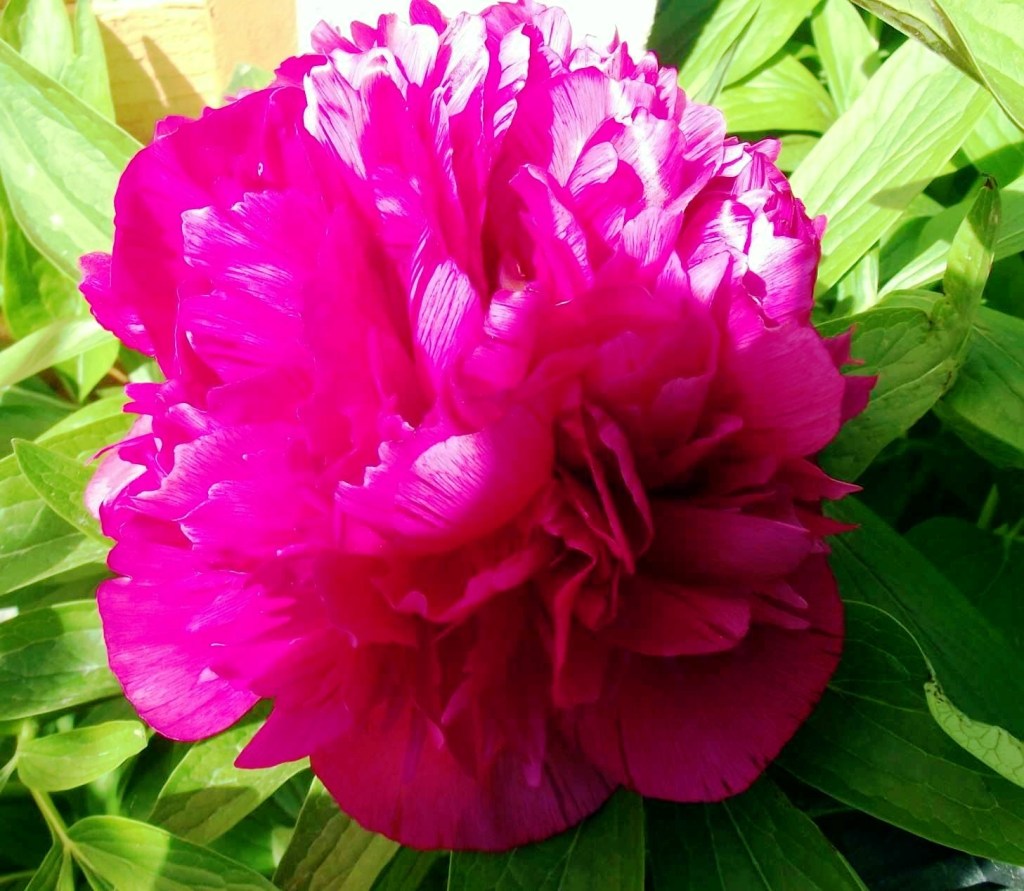
Inherited paeony of unknown origins. For some reason it thrives in a shaded dry spot but produces many flowers every year. Technically the photo’ is not good but I like the “silvering” and shade contrast.
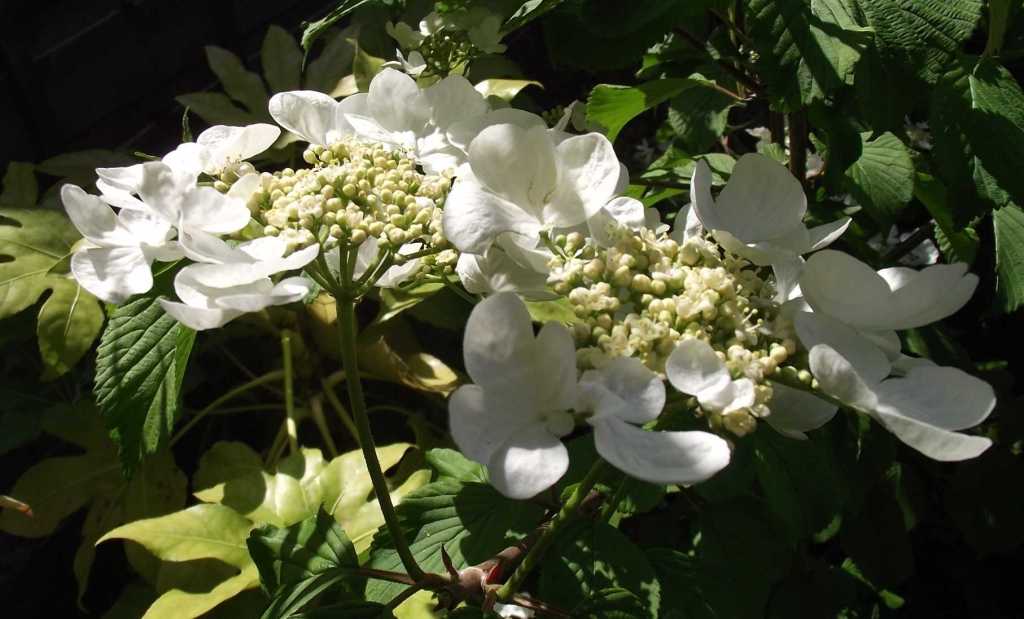
Viburnum plicatum f. tomentosum ‘Mariesii’
I am very appreciative of viburnums, I know they can have a problem with viburnum beetle which can badly affect the evergreen species, but, in my opinion, if this one was evergreen it would be perfect.
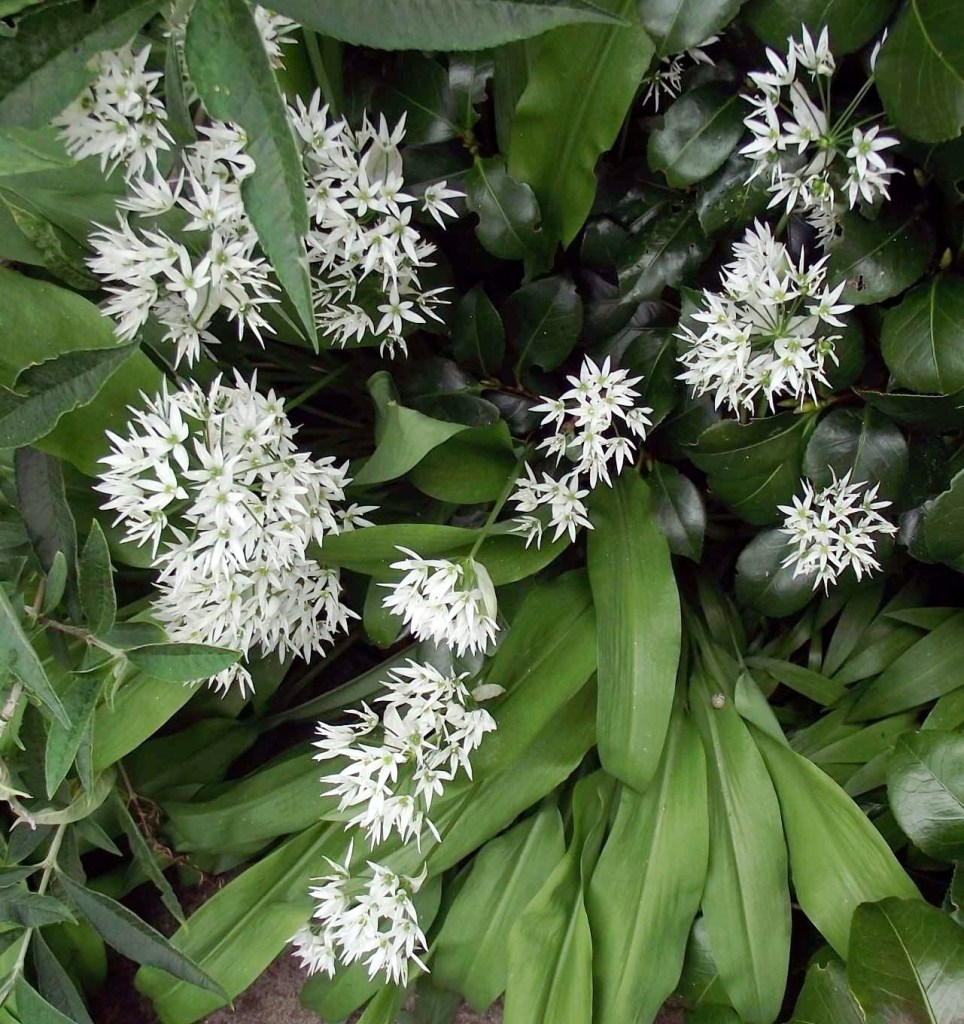
Wild garlic (Allium ursinum) can be a rampant spreader but having been offered a clump from a friend, and having several “difficult” areas in the garden I thought “why not”! It is relatively well contained although it has manged to appear in the joints of the adjacent flags. I do tend to go for many native and tough plants as much of my garden is on an old railway yard which I originally planted out with a pick and trenching tool which in fact I have used today!
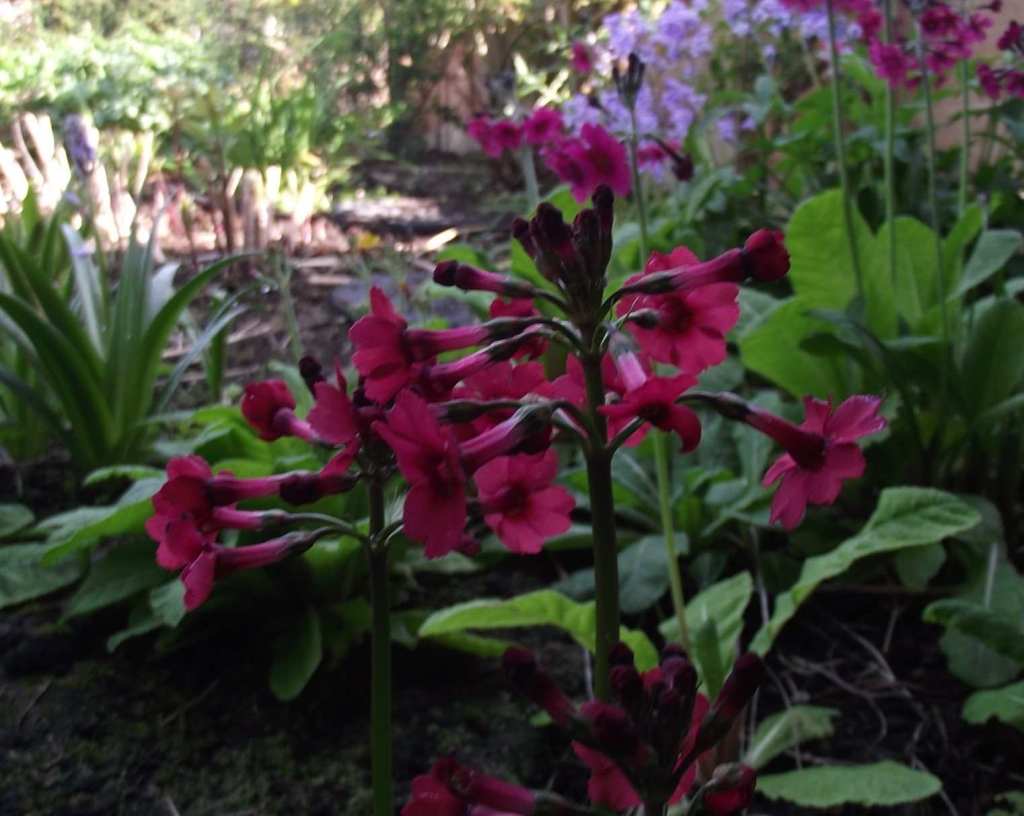
The candelabra primulas are coming into flower at my favourite time of the year. My first specialisation as an amateur gardener was alpines, but after visits to Ness Botanical Gardens, Fletcher Moss University Gardens and Harlow Carr I graduated to the larger end of the alpine spectrum. I first started to grow primulas rapidly joined by meconopsis and, luckily, I have a small area in the current garden where they will grow and I can still enjoy them.
Geranium seedling
This seedling appears to be true to its adjacent parent Geranium var. pratense. f. albiflorum. ‘Galactic’. It is so nice to have a white one pop-up as most self seedlings are usually from the blue plants.
Aquilegia fragransAquilegia seedling.
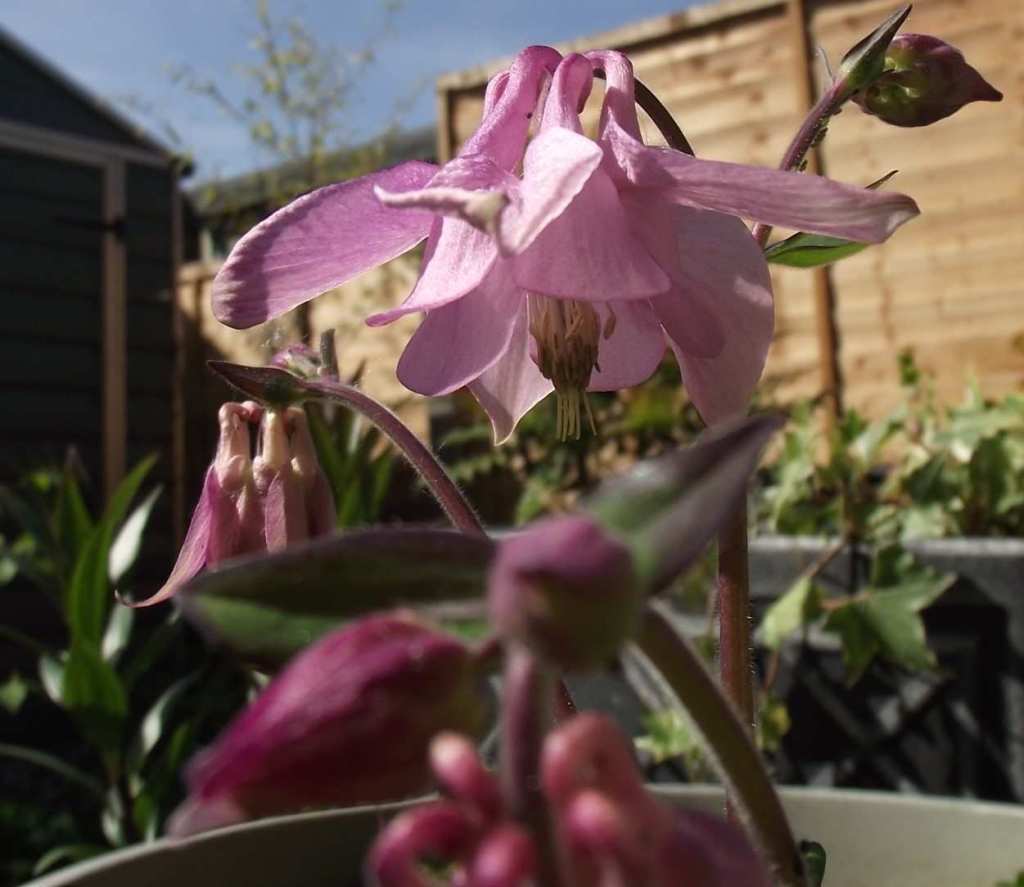
A couple of aquilegias to finish off. A.fragrans is from seed and seems to be wilting a bit unfortunately. It looks as if my policy of removing the seed heads from all standard deep blue A.vulgaris and leaving anything that was more interesting has paid off as I think that’s a rather nice seedling.
This meme is hosted by Jim Stevens who is to be found with all the details and links to plenty of other blogs to enjoy at Garden Ruminations.
Some more photos of plants I missed earlier from the old garden and some from the new.
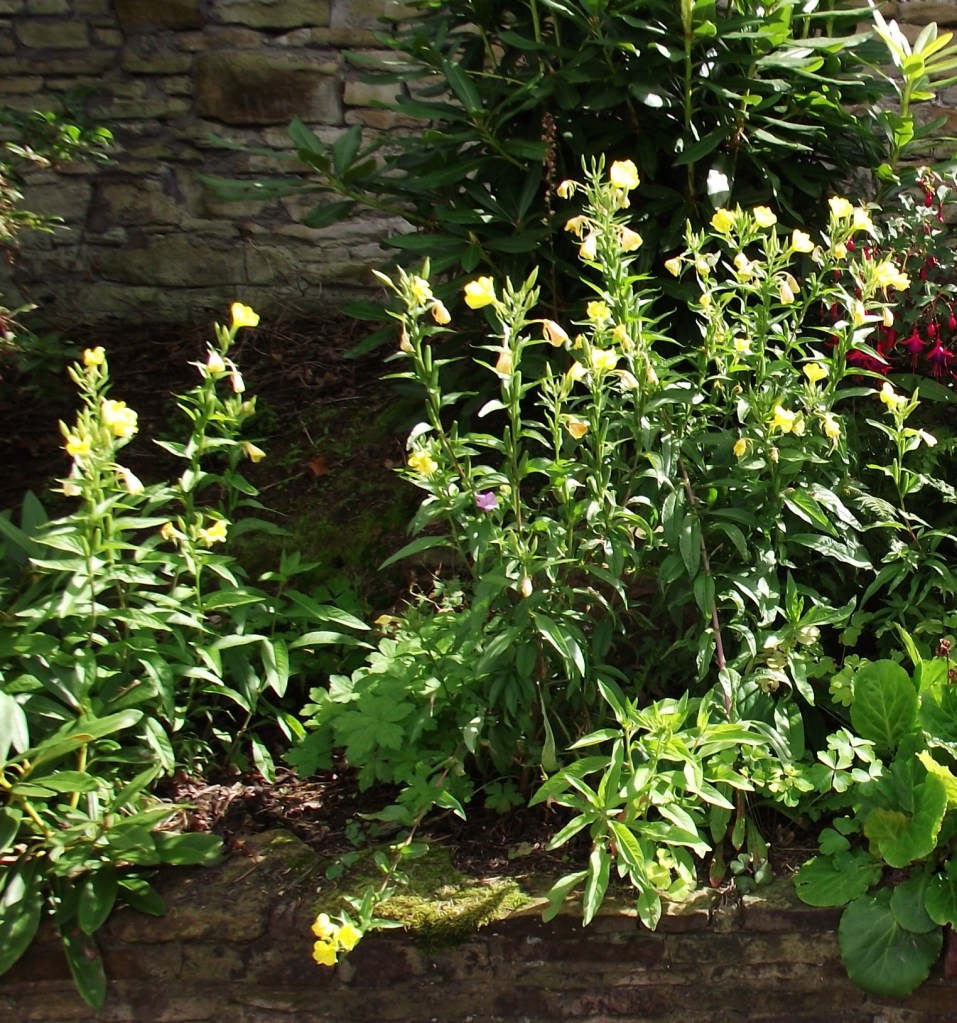
Oenothera
Oenothera biennis
Introduced from America, the evening primrose grows wild in the UK but is a useful although unreliable addition to the garden. Basically a biennial it has a habit of self seeding into the garden and popping up in unexpected places. The clump in the picture actually appeared several years earlier, died off after flowering and didn’t return immediately. The evening primrose gets its name from the fact the flowers open at dusk and can actually be observed doing so, it was once very popular in gardens but not so much now.
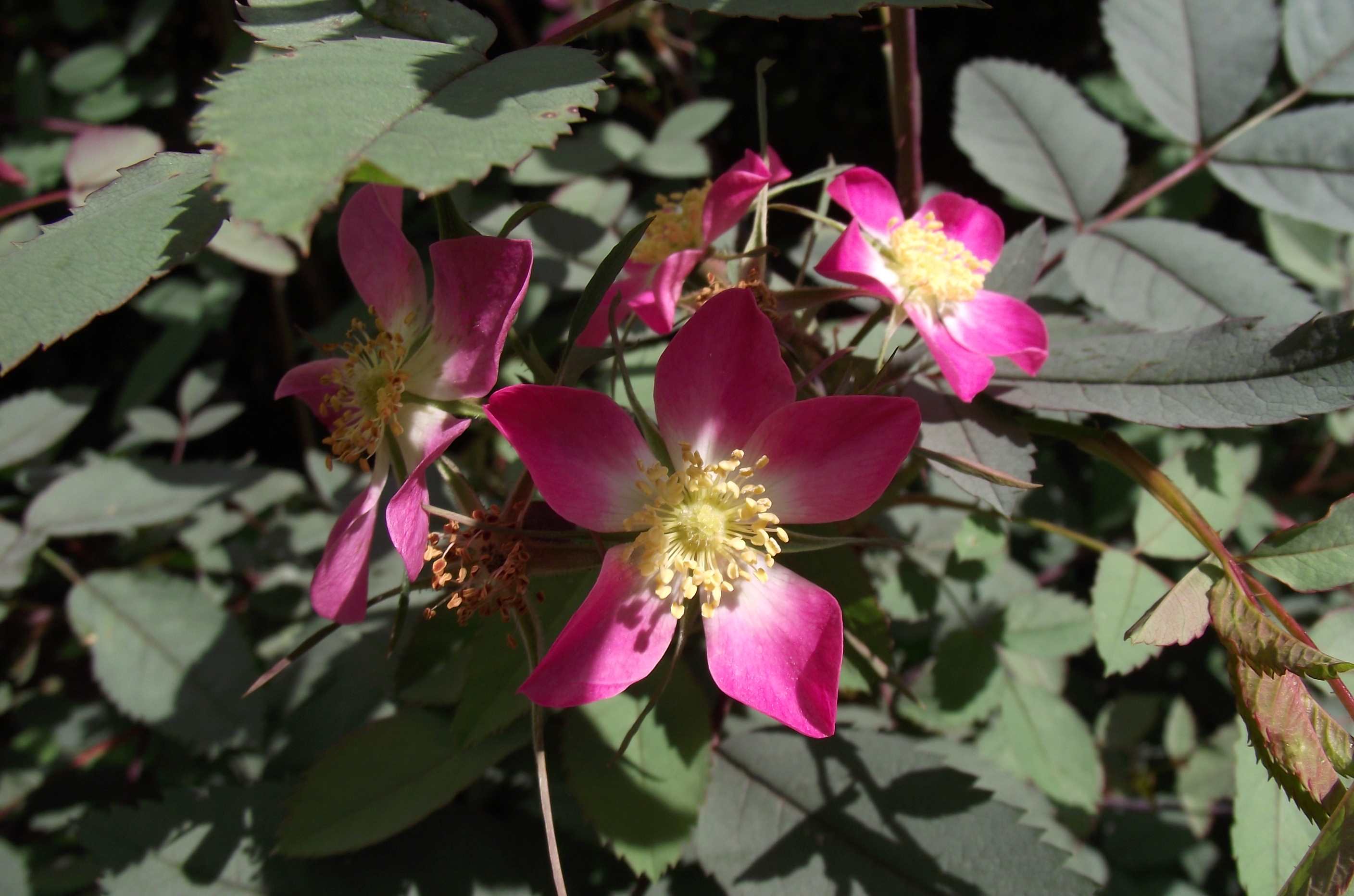
Rosa glauca
Rosa glauca is one of the few roses I have actually grown, it has small rather insignificant single flowers followed by worthwhile hips. The grey foliage is really its outstanding feature arching up to around 6′ which also makes it an ideal plant for a mixed hedge. Apparently it has become a proscribed species now, “irresponsible” planting subject to a fine.
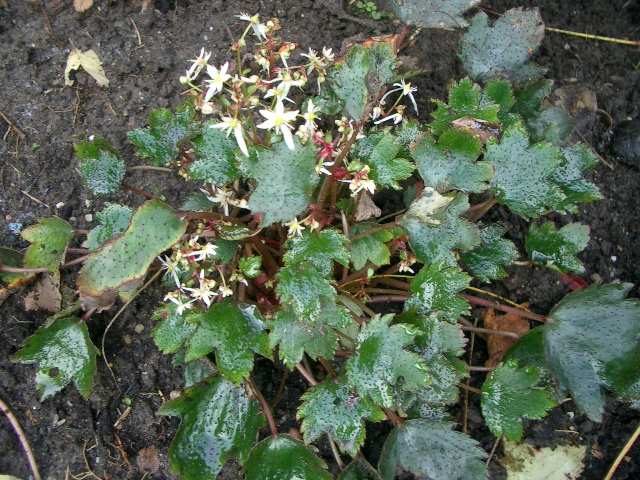
Saxifraga fortunei
Not really a common garden plant, although it has many cultivars, Saxifraga fortunei is tolerant of even deep shade. It has attractive leaves and the distinction of being late flowering so can light up a dark corner of the garden until the frosts take it down. I think most of its cultivars originate from Japan, some of which plus the specie plant have been awarded the RHS AGM.
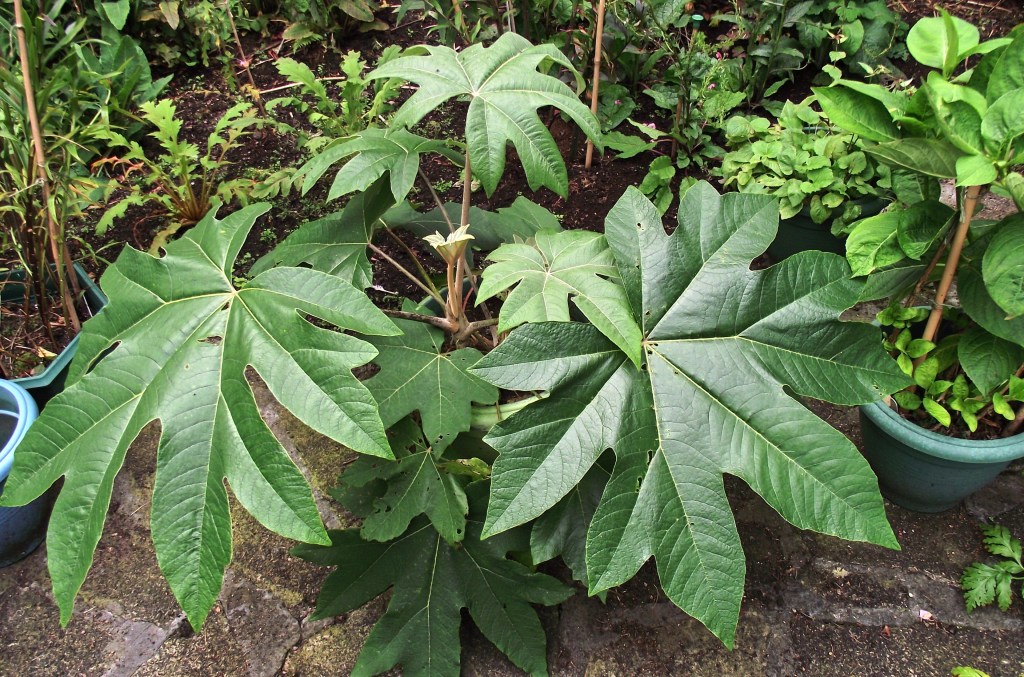
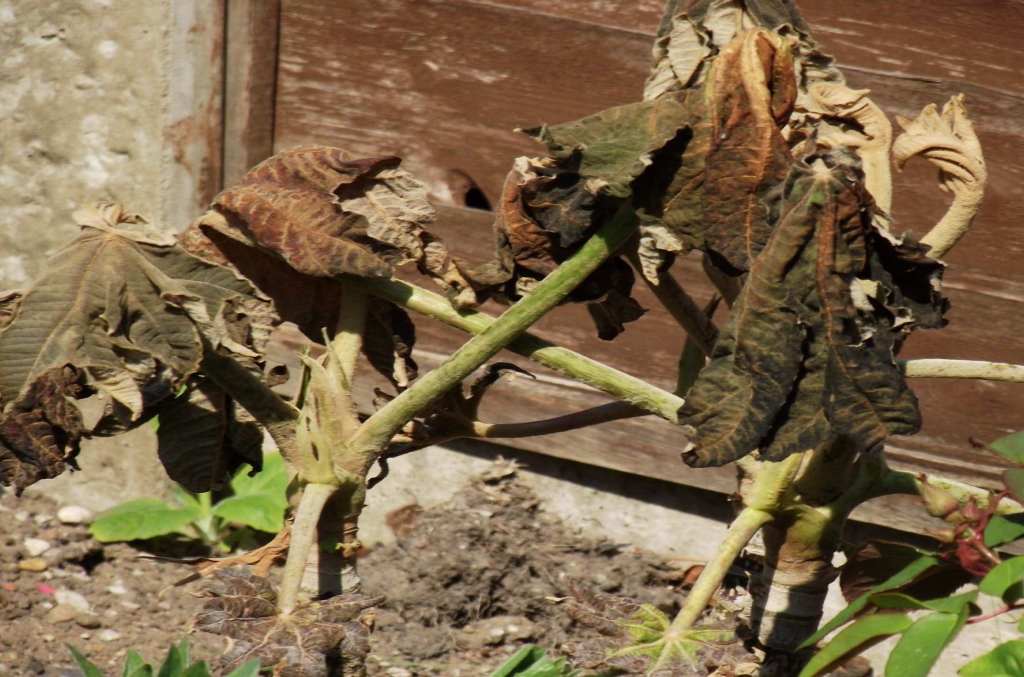
This was a major mistake and why you should always research a plant that you are unfamiliar with! My sister gave me a small plant of this, “T Rex” as she called it as she couldn’t remember the name, from her holiday home in Shropshire, I should have been alerted when she told me it had lots of babies! I had it confined in a larger pot for a year before moving it with me to the new garden. Once planted out in the front garden it drew attention as it grew to around 5′ displaying its striking tropical looking leaves until it was devastated by a sever frost which killed off the main stems completely. Then the trouble started, a crop of new shoots appeared around the original site but also new shoots started to appear at as much as 15′ away from the parent which in the end took me two seasons to eradicate as the monster nearly took over my tiny front garden, its thick fleshy roots getting everywhere. If you have plenty of space and want a tropical look, ideal.
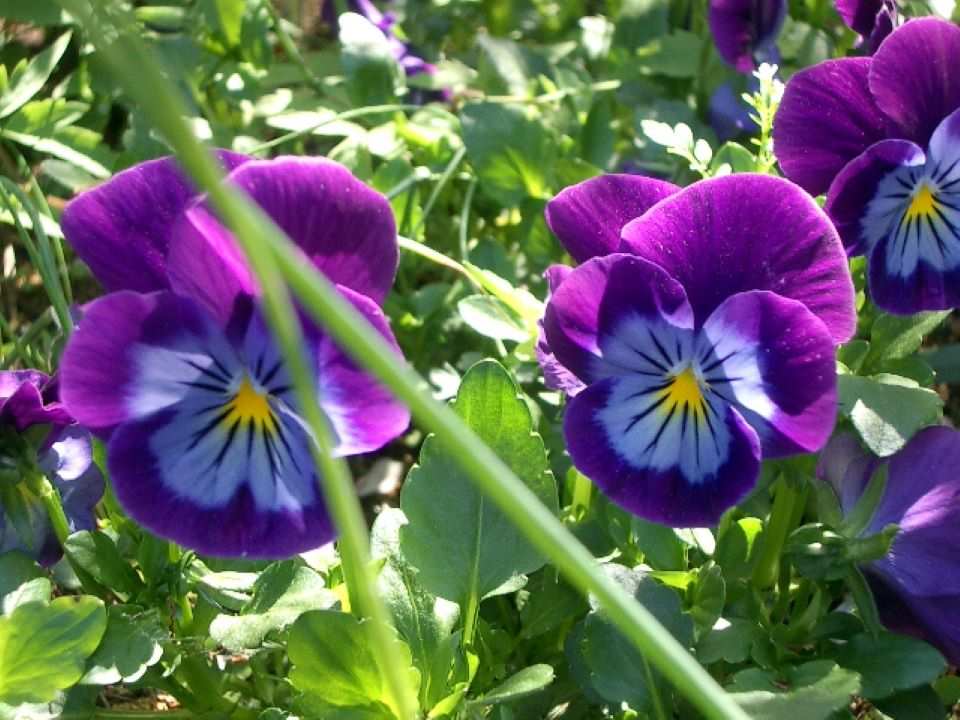
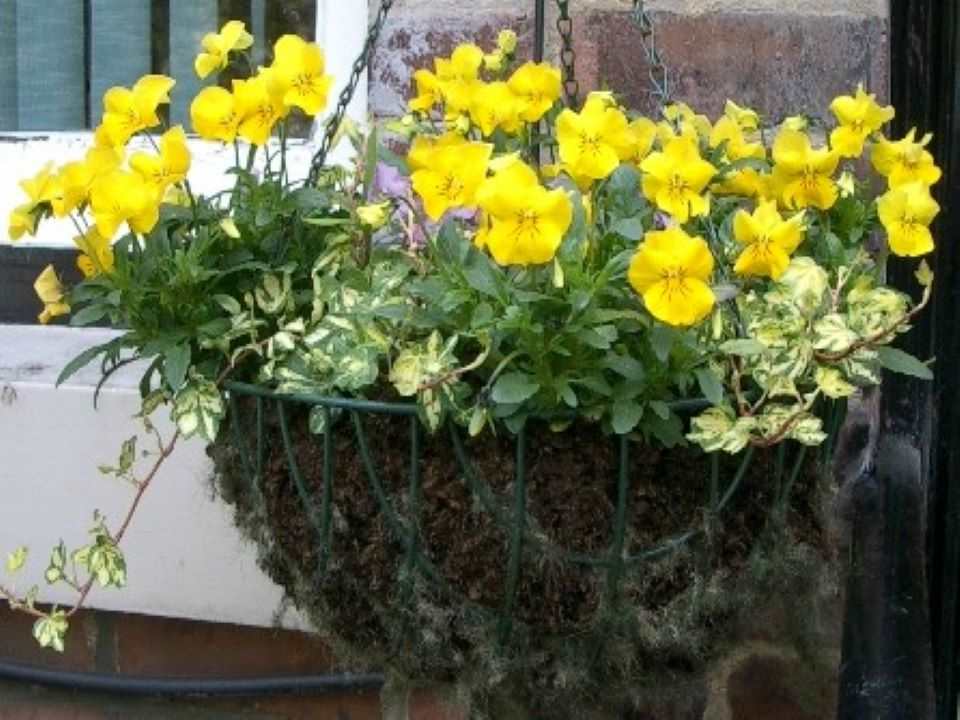
I have only photographed pansies in views of bedding or baskets but here are a few violas I have grown. It is impossible to cover the subject here, as it is so far wide ranging, including some delightfully scented specimens. Basically easy to grow, versatile and rightfully popular.
The unseasonal weather continues although it is beginning to cool down now with the possibility of frost on Monday night. Still no rain so regular watering of containers continues. We have had a very bad moorland fire the smoke from which was visible from where I live. It almost engulfed the site of the famous Cat and Fiddle, which is now a distillery, and we had the unusual sight of a helicopter water bombing the fire. The garden is coming on very quickly and, although there is not a great deal of flower to be seen, I have managed to scrape together a six.
Geranium himalayense
The first of my geraniums to flower. I would like to apologise in advance as I think I will be relying on them rather a lot this year to fill the Six on Saturday slot.
Galium odoratum
British native, Sweet woodruff, has proved useful for ground cover, along with Euphorbia characias, in a rather difficult corner. I’ll have to be careful as they are both invasive, but I think the hostile conditions should limit their ambition. I always think woodruff looks very tatty going into winter, it’s a pity it isn’t evergreen.
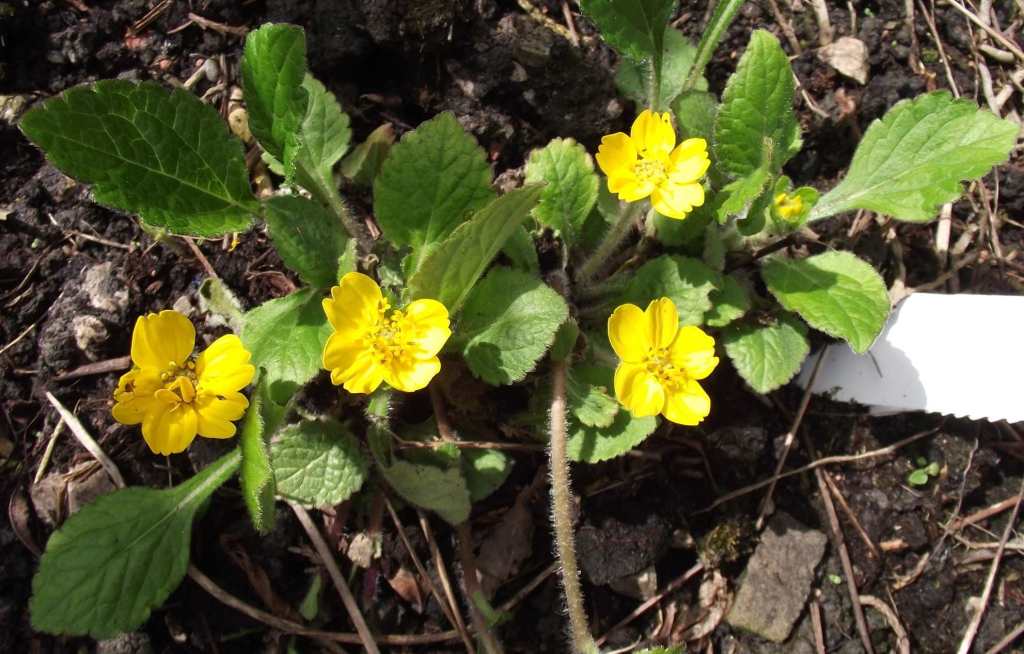
Chrysogonum virginianum
My first time with this rather neat, buttercup-like, little creeping plant from the eastern United States. It appears to be, at the very least, semi-evergreen, as it has kept the majority of its leaves over the, albeit mild, winter.
Spanish or English? Is it a hybrid? This clump of bluebells has a very faint scent and the stems are “nodding” rather than upright, typical of the English bluebell. The flowers are light coloured more like the Spanish species. I also have a clump of more robust plants which are not yet in flower, as soon as they are I am going to try a direct comparison. Until then I rather think these are Spanish, Hyacinthoides hispanica or are they a hybrid…………..?
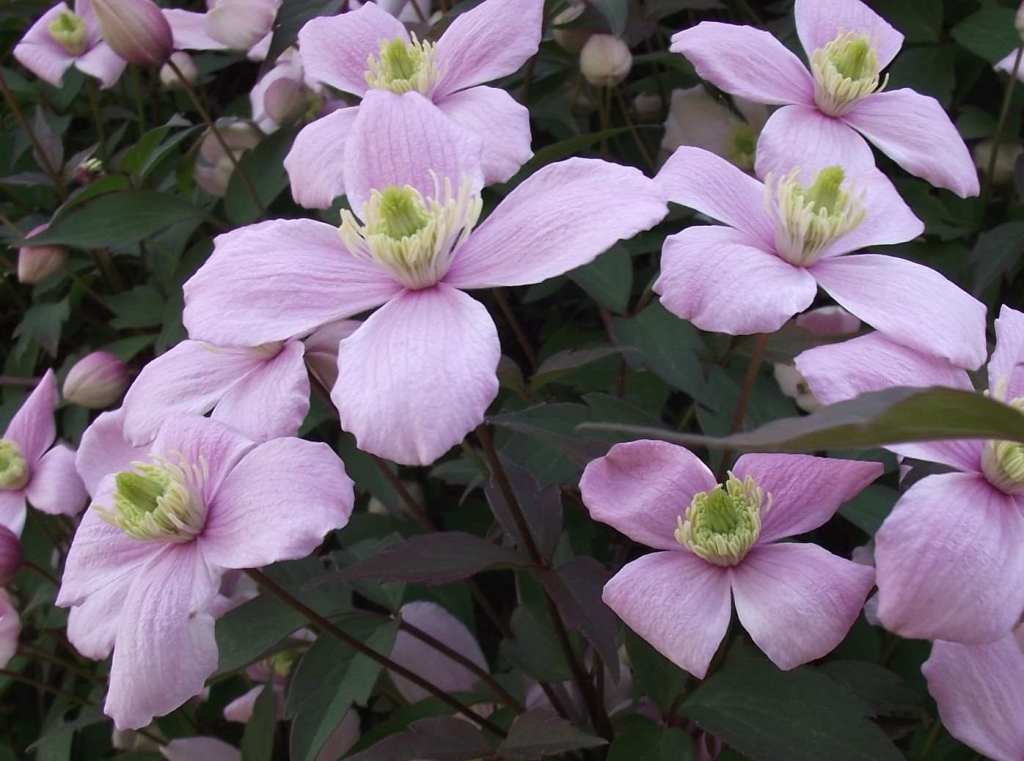
Clematis montana ‘Morning Yellow’Clematis montana
I think Clematis montana ‘Morning Yellow’ is a rather neat cultivar, it is definitely more cream than yellow, fading to white as they age. It doesn’t appear to be as rampant and flower as prolifically as montana, but nevertheless gives a good show. Both have that nice delicate vanilla scent.
Aquilegia vulgaris
A rather nice self-seeded common aquilegia that has appeared in a crack in the paving. I had too many aquilegias appearing in the garden so I ripped out a fair number as they came into flower, leaving only those of interest. This one must have escaped my notice!
This meme is hosted by Jim Stevens who is to be found with all the details and links to plenty of other blogs to enjoy at Garden Ruminations.
Now Lamprocapnos spectabilis, Bleeding Heart has become a popular addition to the cottage garden, its unusual flowers born on arching stems over fern-like foliage make an attractive show in early spring. Although it is one of the first border perennials to show it is worth noting that it is one of the first to die back in early autumn, so tends to look better in an informal setting. Thrives in any good moist soil in sun or partial shade but it does not respond well to being moved. There is a yellow leaved form available.
Dicentra scandens
An unusual member of the Dicentra genus is the climbing D.scandens, a half-hardy climber I grew from seed. Unfortunately the botanists have really done a number on the Dicentra genus which is now split into four different genera. D.scandens is now Dactylicapnos scandens! Why are the new names nearly always more difficult to remember and pronounce than the old ones?
Dierama
Dierama pulcherrimumDierama pulcherrimum
Dierama pulcherrimum, Angel’s Fishing Rods are beautiful, evergreen perennials for an informal setting. They have arching flower stems covered in funnel shaped flowers in a range of shades of pink/purple and white over grass-like foliage. They prefer a sunny sheltered spot in moist soil and are another plant that does not like being moved although they actually grow from corms. Personally I have struggled to grow them and have only managed a few flowers at best, probably because my garden was too cold and damp. A member of the Iris family from South Africa there are many species and cultivars in cultivation including the well established Slieve Donard hybrids bred in N.Ireland.
Digitalis or Foxglove is a genus of both biennial and short lived perennial plants. The native Digitalis purpurea is common everywhere and well known, however some of the species and hybrids are less seen. Broadly speaking, being woodlanders, they all prefer a moist soil in dappled shade although D.purpurea seeds itself almost anywhere and I have had an excellent plant growing from a shady rock crevice in the past. Pam’s Choice is a naturally occurring garden hybrid found by a keen amateur gardener.
Draba
Draba cuspidata
Drabas are alpine members of the brassica family and originate from Central Europe and even the UK, they are cushion or mat forming plants, the most common garden specie being Draba aizoides. As with most alpines they like a gritty open soil in a sunny position. The plant pictured above was grown from a “lucky dip” collection of society seed out of curiosity.
I have included this for its novelty value, possibly Epipactis helleborine, I am no expert when it comes to orchids, just seeded itself into my ‘woodland’ garden, flowered and disappeared.
Eryngium
Eryngium giganteum ‘Miss Willmott’s Ghost’
Eryngium giganteum or the Giant Sea Holly is colloquially associated with Miss Willmott of Warley Place, who by all accounts was a formidable lady, because of a story in which she was said to scatter the seed of the eryngium in any garden that she visited that she considered to be dull. Unfortunately the story has been debunked in recent years. Eryngiums are basically thistles and require a sunny spot in well drained but moist light soil to grow well. There are several cultivars available ranging from silvery white to steely dark blue.
Common name Joe Pye Weed, this is a fantastic plant for adding height and late colour to the border, growing to over 6′ its purple flower heads remain until the first frosts. This is one plant that I have introduced to my new garden, late to surface, its flowers have been covered in butterflies and other insects since the end of June and it is still going strong.
Eupatorium rugosum ‘Chocolate’
Eupatorium rugosum ‘Chocolate’ is a different plant altogether smaller in stature with dark green/red leaves and contrasting fluffy white flower heads it is rather striking. Now reclassified as Ageratina altissima which just doesn’t have the same ring to it somehow.
Euphorbia
Euphorbia characias ‘Silver Swan’Euphorbia characias
Euphorbia or Spurges are a massive and diverse genus ranging from annual weeds to trees, with shrubs and even succulents in between. The plant above is a typical garden cultivar the many species and cultivars have a range of colours including acid green and even orange. A well known member of the genus is the popular Christmas plant the Poinsettia (Euphorbia pulcherrima). The plant that is getting all my attention at the moment is the annual garden weed Euphorbia peplus, it only appeared a couple of years ago and is proving to be a nightmare! All of them, that we are likely to come in contact with, have a toxic sap which can cause painful blisters on someone who is sensitive.
We have had very little rain here in High Peak having avoided the downpours which have affected other areas and I am now having to water all my containers and pots on a regular basis. The forecast is currently showing an overcast day today (Saturday) but then temperatures are set to go into the twenties throughout next week. I am still very wary of a late frost even though it seems unlikely at the moment. I won’t be happy until we get to the last week of May.
Acer
I love this time of the year, the acers are now fully out and everywhere you look trees are bursting into life and the landscape is greening up. A gardener’s week is never done it seems, with the stronger sun and possibility of a late frost the acers stand to be scorched by either one whilst the leaves are so tender.
Tulipa clusiana var chrysantha
Specie tulip, Tulipa clusiana var chrysantha on a sunny day and not.
I no longer have cold glass so have to resort to outdoor sowing, of mainly hardy perennials, outside in a sheltered spot. These were sown in early February, as I would do normally under cover, using fresh society seed. Despite this two lots have been pricked out three weeks ago and are almost ready to go into the open ground. I get great pleasure in raising plants from seed and to be honest I don’t know where I am going to put them all. I do sow a good number of seeds, even though I may only keep a few plants of each, because in some cases poor germination is a factor. I am a great believer in raising them hard to get good strong plants.
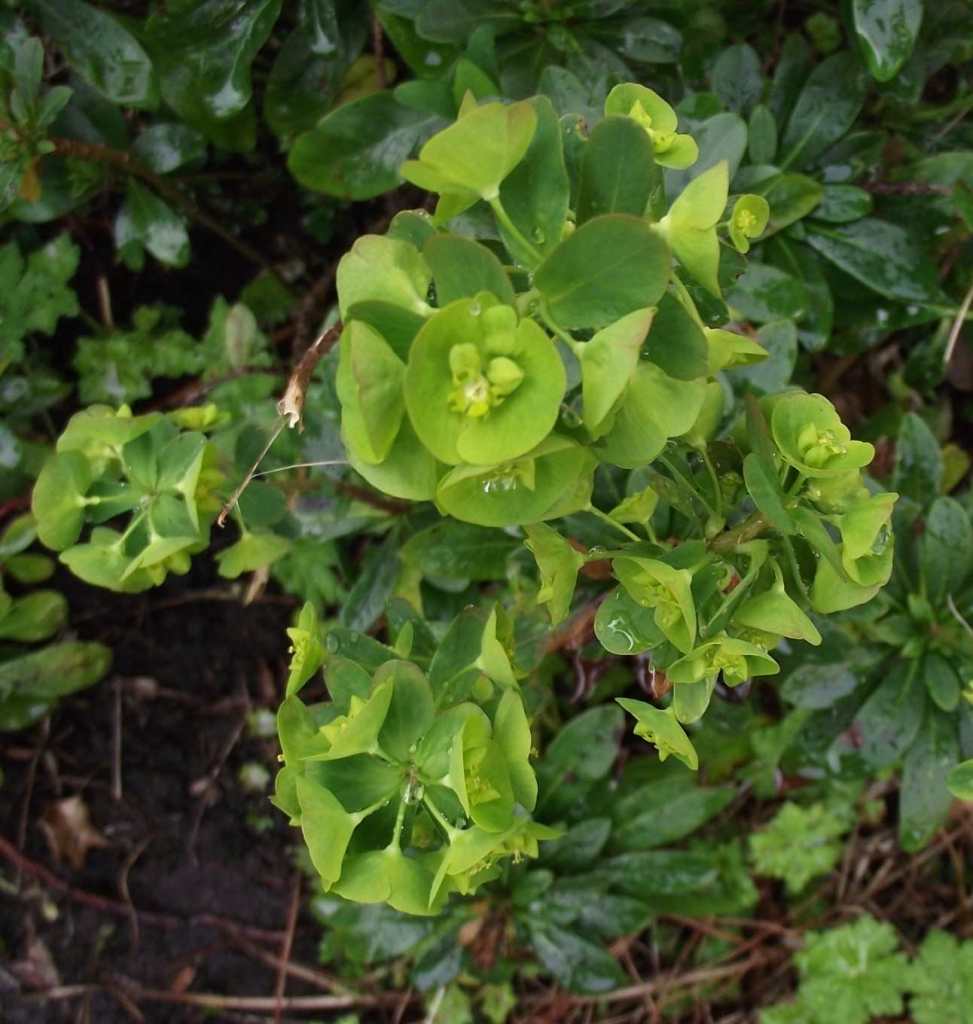
Euphorbia characias
I am making a bit of an assumption here that this is actually characias but it is filling up an awkward damp corner very nicely so I won’t complain.
Narcissus ‘February Gold’
These were planted very late and consequently we have February Gold flowering at the end of April. I find I can get away with planting tulips late, but narcissi, not so much.
Clematis montana
How did that get there? This montana has appeared around the central heating exhaust after travelling under the tiles from the gutter level. It will be short-lived as I will be taking it down to almost ground level after it flowers in order to paint the woodwork behind it.
This meme is hosted by Jim Stevens who is to be found with all the details and links to plenty of other blogs to enjoy at Garden Ruminations.
The warmer weather continues but, much as I am enjoying it, I feel it has come far too early and would be welcome in about a month’s time as I have a feeling of trepidation about what is round the corner. Many plants are thrusting up new tender growth and I have already noticed some damage caused by the light overnight frosts and possibly the cold winds. We can’t put out bedding with confidence until the end of the third week in May. The local NT gardens don’t start planting until the second week of June, mind you, they have thousands of plants at risk. On the 2nd June 1975 snow stopped play in Buxton, only a few miles from me, between Derbyshire and Lancashire cricket clubs. Play was resumed the following day in beautiful sunshine and the following year, 1976, was one of the hottest summers on record. Buxton Cricket Club are celebrating the 25th anniversary with a special event this year. We gardeners are very much at the mercy of the weather, but spare a thought for the poor farmers and growers who have to make a living.
Spirea japonica ‘Golden Princess’
This is one of my favourite small shrubs, I look forward every year to the emergence of the colourful foliage. I had one in my last garden which was quite a bit larger, it could be that the drier, less fertile soil this one is in is limiting its growth, but I think it’s a little gem nevertheless.
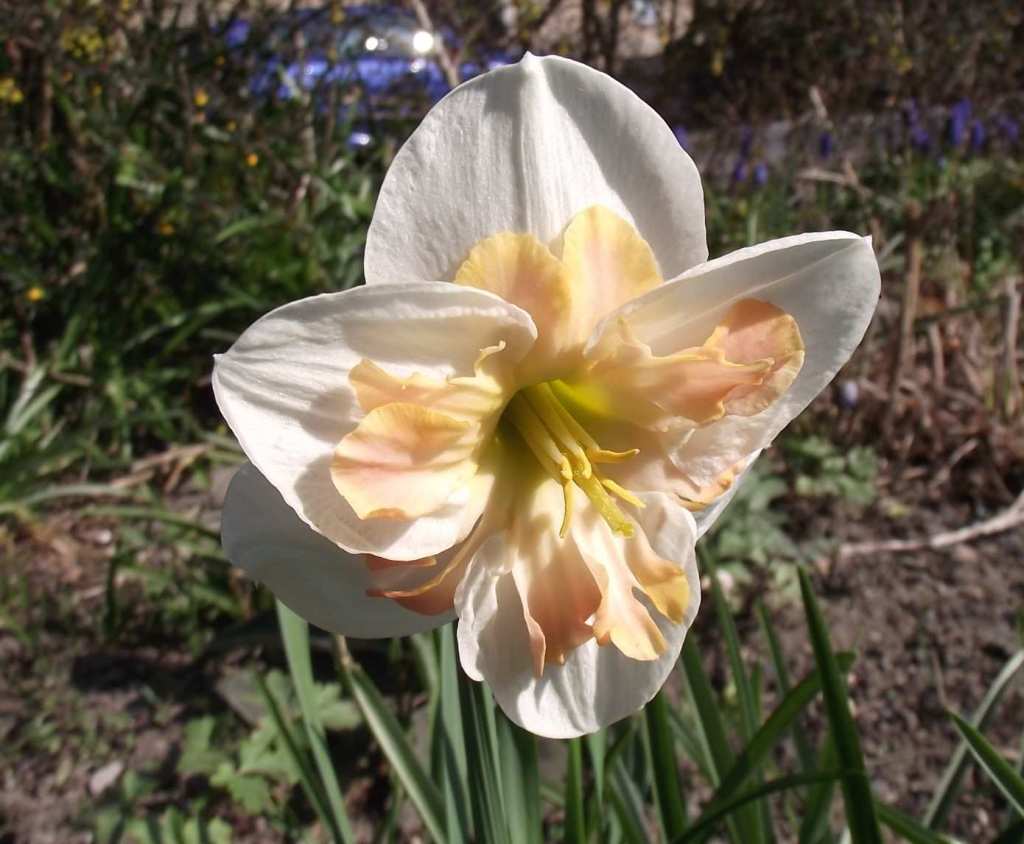
Narcissus ‘Pink Wonder’
One of the remaining two flowers this year from a clump I planted about four years ago. I never seem to get longevity from my bulbs, tulips I can understand, as they need a good baking during the summer, but daffodils I tend to plant and forget about so probably my fault.
Meconopsis ‘Crarae’
I used to grow numerous meconopsis as they are one of my favourite genera. This year is the first in my new garden that I am hoping to get some decent flowers. Crarae can only be raised vegetatively and I have never grown it before so fingers crossed! Crarae was raised at Crarae Gardens, Argyle, Scotland. If you are interested in meconopsis you might like to visit my page.
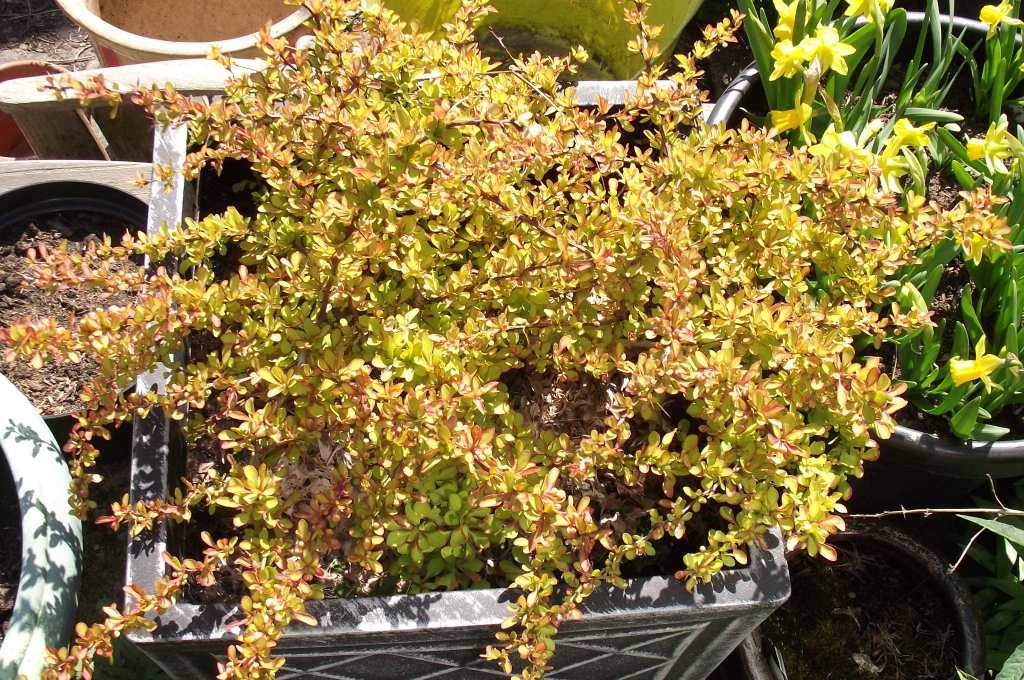
Berberis thunbergii ‘Diabolicum’
This berberis is another welcome splash of spring colour, it loses its reddish tinge as the year progresses. Like most berberis, it thrives here taking anything that the weather can throw at it.
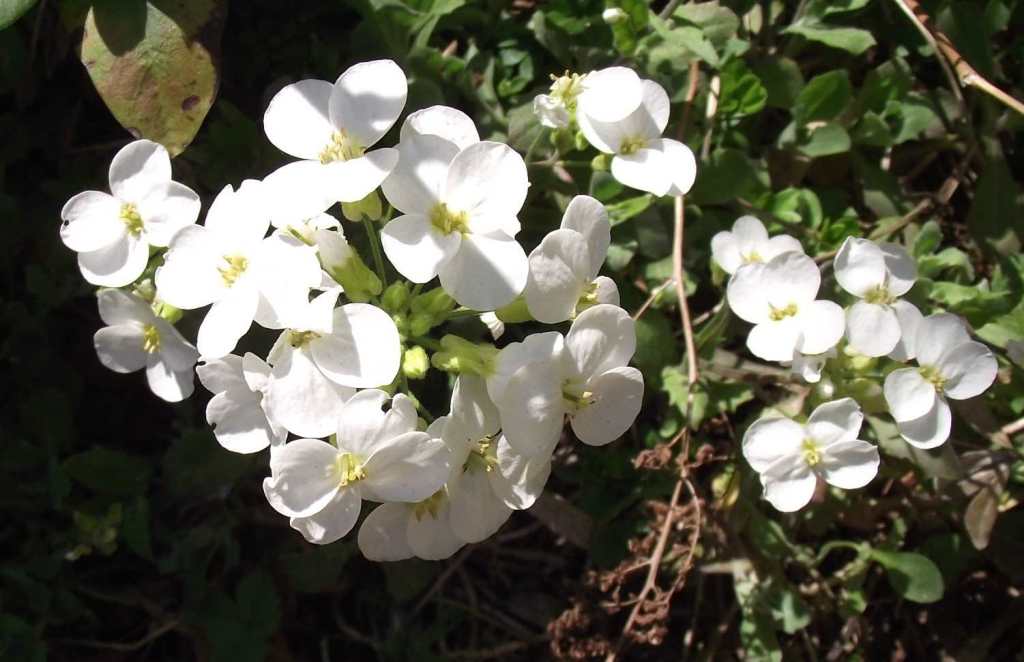
Arabis alpina ssp. caucasica ‘Snowcap’
I grew the common or garden Rock Cress, or at least an improved form of it, from seed. It makes a useful early splash of white every year.
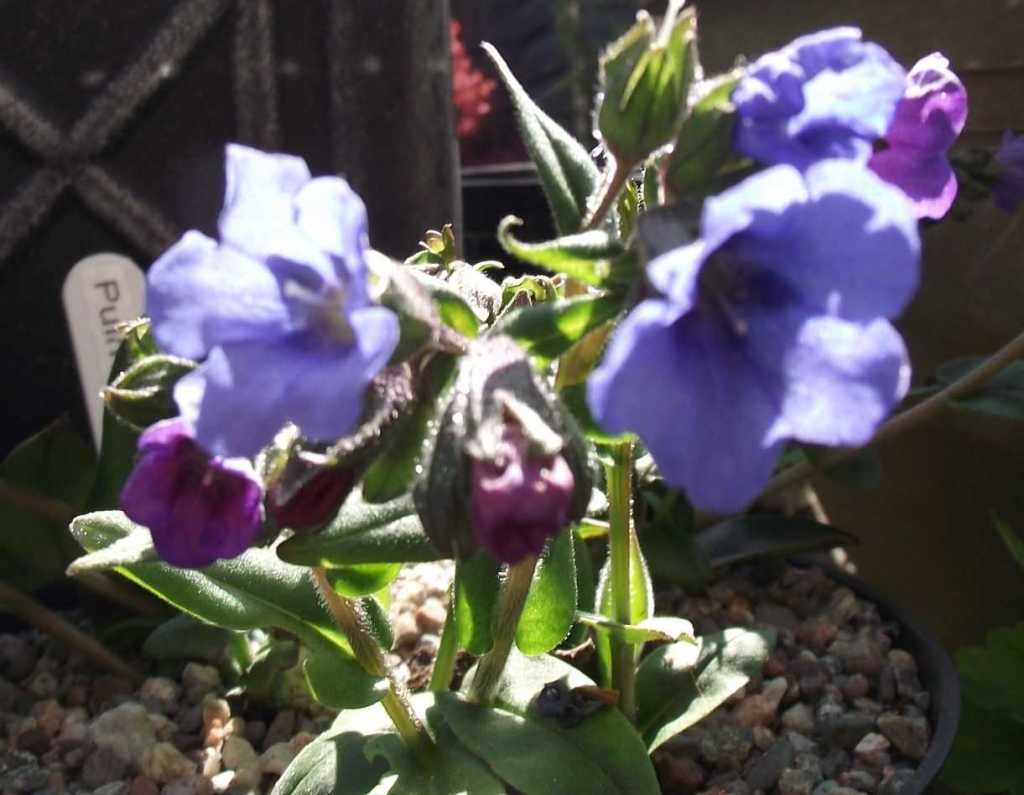
Pulmonaria ‘Blue Ensign’
Currently growing in a pot until I find somewhere to put it, I bought this pulmonaria as a bare-root plant which is why it is flowering slightly later than normal. I have taken a real liking to pulmonarias over the last few years, as there are so many cultivars now, and can’t wait to increase my collection.
This meme is hosted by Jim Stevens who is to be found with all the details and links to plenty of other blogs to enjoy at Garden Ruminations.
Book reviewer and garden enthusiast. Updates from my Hampshire garden. Usually talking about books and plants. People do not forget books or flowers that touch them or excite them—they recommend them.