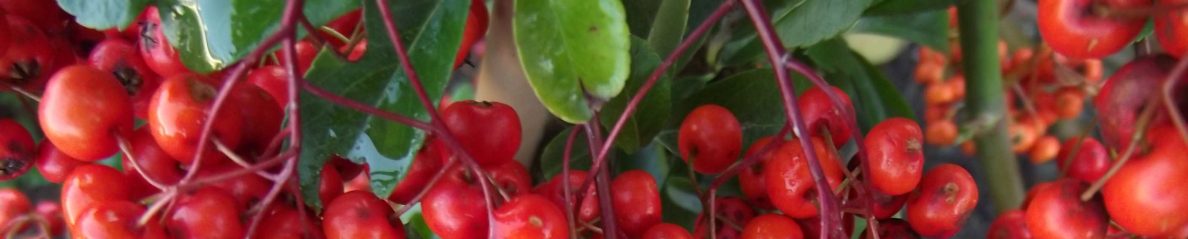
Six on Saturday 12/04/2025

The warmer weather continues but, much as I am enjoying it, I feel it has come far too early and would be welcome in about a month’s time as I have a feeling of trepidation about what is round the corner. Many plants are thrusting up new tender growth and I have already noticed some damage caused by the light overnight frosts and possibly the cold winds. We can’t put out bedding with confidence until the end of the third week in May. The local NT gardens don’t start planting until the second week of June, mind you, they have thousands of plants at risk. On the 2nd June 1975 snow stopped play in Buxton, only a few miles from me, between Derbyshire and Lancashire cricket clubs. Play was resumed the following day in beautiful sunshine and the following year, 1976, was one of the hottest summers on record. Buxton Cricket Club are celebrating the 25th anniversary with a special event this year. We gardeners are very much at the mercy of the weather, but spare a thought for the poor farmers and growers who have to make a living.

This is one of my favourite small shrubs, I look forward every year to the emergence of the colourful foliage. I had one in my last garden which was quite a bit larger, it could be that the drier, less fertile soil this one is in is limiting its growth, but I think it’s a little gem nevertheless.
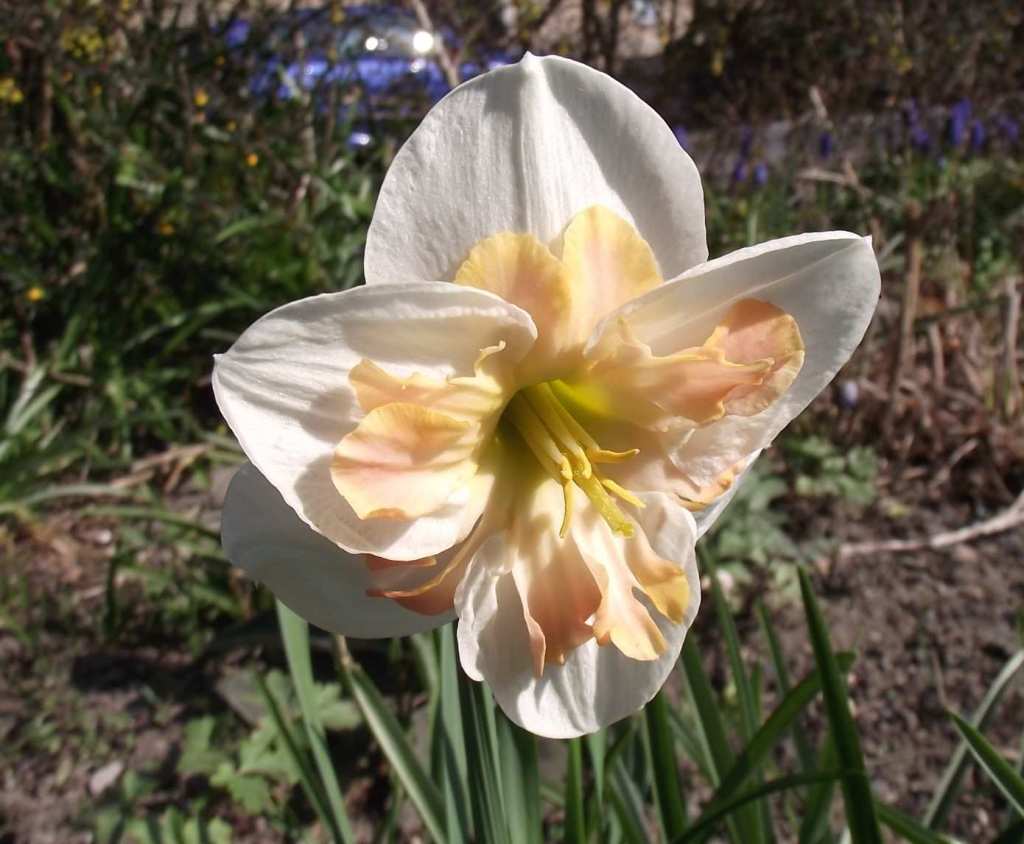
One of the remaining two flowers this year from a clump I planted about four years ago. I never seem to get longevity from my bulbs, tulips I can understand, as they need a good baking during the summer, but daffodils I tend to plant and forget about so probably my fault.

I used to grow numerous meconopsis as they are one of my favourite genera. This year is the first in my new garden that I am hoping to get some decent flowers. Crarae can only be raised vegetatively and I have never grown it before so fingers crossed! Crarae was raised at Crarae Gardens, Argyle, Scotland. If you are interested in meconopsis you might like to visit my page.
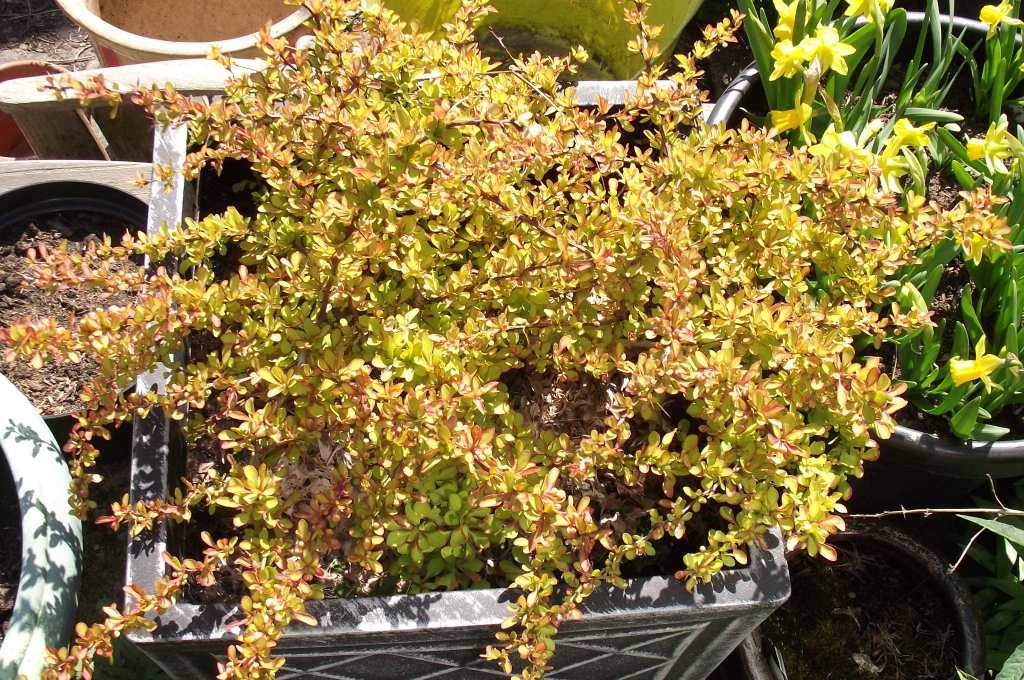
This berberis is another welcome splash of spring colour, it loses its reddish tinge as the year progresses. Like most berberis, it thrives here taking anything that the weather can throw at it.
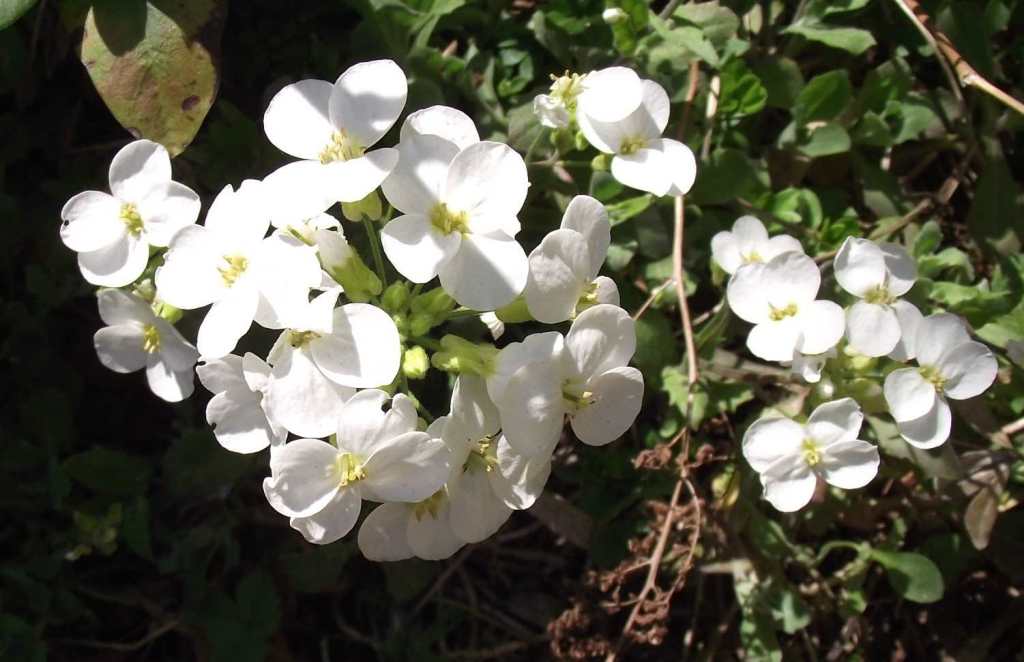
I grew the common or garden Rock Cress, or at least an improved form of it, from seed. It makes a useful early splash of white every year.
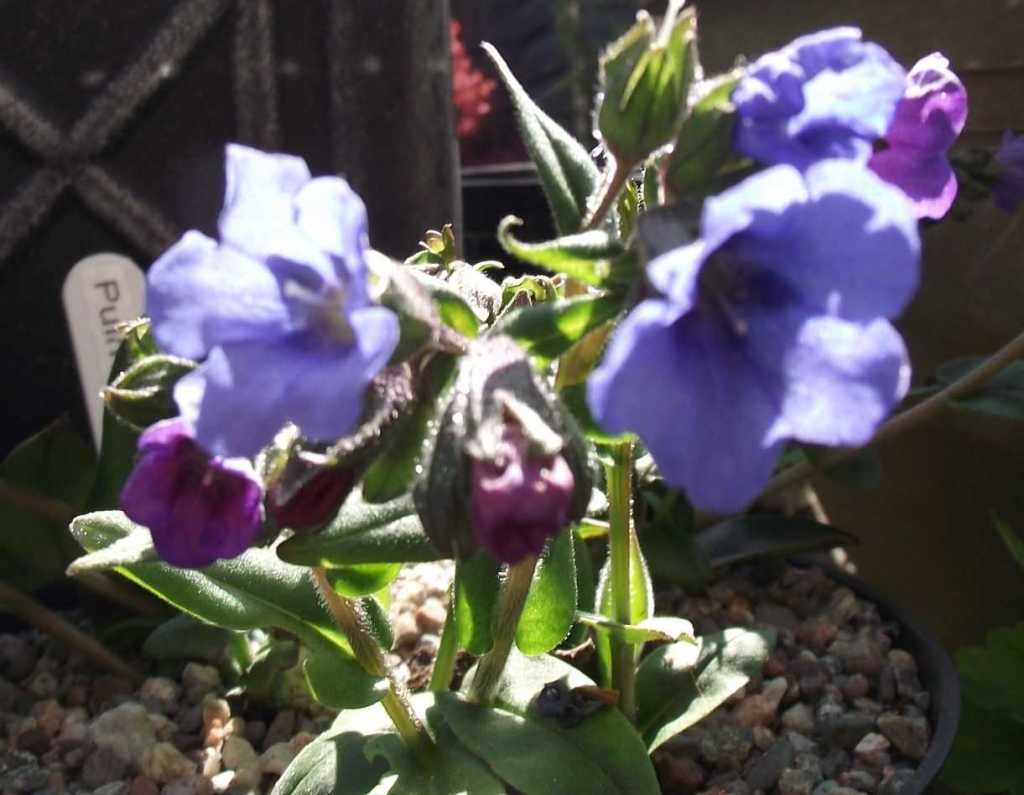
Currently growing in a pot until I find somewhere to put it, I bought this pulmonaria as a bare-root plant which is why it is flowering slightly later than normal. I have taken a real liking to pulmonarias over the last few years, as there are so many cultivars now, and can’t wait to increase my collection.

This meme is hosted by Jim Stevens who is to be found with all the details and links to plenty of other blogs to enjoy at Garden Ruminations.

Popular bulbs, corms, rhizomes etc……… the non-fibrous rooted plants. Part 5.

This is the rest of the plants in this section I can cover based on the photos that I have available.

Narcissi

Narcissi or daffodils are meadow plants and as such prefer a moist soil and will tolerate some shade, dwarf narcissi however are more suited to a well drained position in the sun and also make excellent early flowering subjects under cold glass. No matter how ugly the leaves look after flowering don’t cut them off but feed a high potash feed such as tomato fertilizer as they die down also make sure that the dead flower heads are removed immediately to stop any attempt to manufacture seeds. Failure to do this will result in the bulbs deteriorating over time.

Narcissus Pink Wonder
Narcissus Lemon Beauty
Narcissus Jetfire

Oxalis

There are several hundred species of Oxalis (sorrels) varying from weeds to pot plants the example below is fairly typical. The “shamrock” leaf varies from almost brown, through red to green and is usually augmented by yellow, white or pink flowers. Cultivation varies, pot varieties are grown in a cold greenhouse and treated as you would any early spring bulbs, whereas many of the “weedier” varieties enjoy more woodland situations. Oxalis is one of those plants that used to be passed from gardener to gardener as despite their invasive habit they are extremely pretty and will brighten up a dull corner.

Pleione

The hardy orchid Pleione formosana, the single leaf and flower develops from a pseudobulb. A native of Taiwan, P. formosana is a member of a small genera which hail from S.E. Asia. Only really hardy in very mild areas of the UK, it is best grown in shallow alpine pans containing a gritty compost under cold glass. A container full of these plants in flower is a really spectacular sight.

Pleione formosana

Zantedeschia aethiopica

The Arum Lily, sometimes known as the Calla Lily, prefers a damp soil such as at a pondside or by a stream. A rhizomatous perennial originating from S.Africa it can be extremely invasive in warmer climes however in the UK a winter mulch is often recommended to protect the root.

Zantedeschia aethiopica

The lily pictured above is the “base” species traditionally known as the Arum Lily which can even be grown in water at the pondside. As happens with many plants these days various colour forms have been developed mainly for the cut-flower industry. Colours include various pinks, yellow and orange and are generally known and sold as Calla Lilies, as far as the UK is concerned these are usually grown in containers for the garden.

Zephyranthes primulina

This beautiful little plant is quite rare and I only came across it in a “lucky dip” selection of seeds from one of the specialist societies I belong to. Part of the amaryllis family Zephyranthes (Rain Lilies) come from S.America and the Southern United States. Z.primulina is from Mexico and I would not attempt to grow it other than in a container under cold glass. Incidentally the seed was easy to germinate and the plant flowered in the second year which leads me to think that it spreads quite freely in its natural habitat.

This concludes the series, I know that it does not cover everything but is limited by the photos that I have available. I think the main thing to remember is that many larger bulbs, such as narcissi and those related to the lily family, are from natural grassland areas which tend to be damp, whereas most of the smaller bulbs, such as dwarf narcissus and iris are more suited to well drained soils in the sun. Remember if you don’t want to throw your tulips out every year that they need feeding and a good baking in the sun to develop.

Next post Meconopsis one of my two favourite genera.