Another picture post, dealing with the remaining tulips I have grown and also have pictures of.
Double Earlies
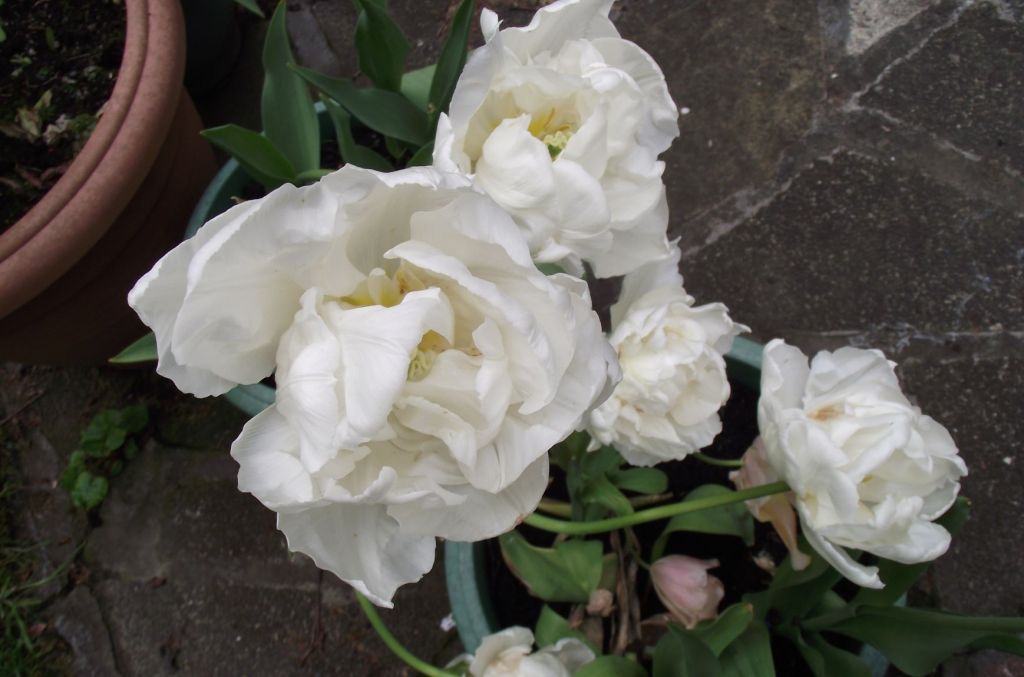
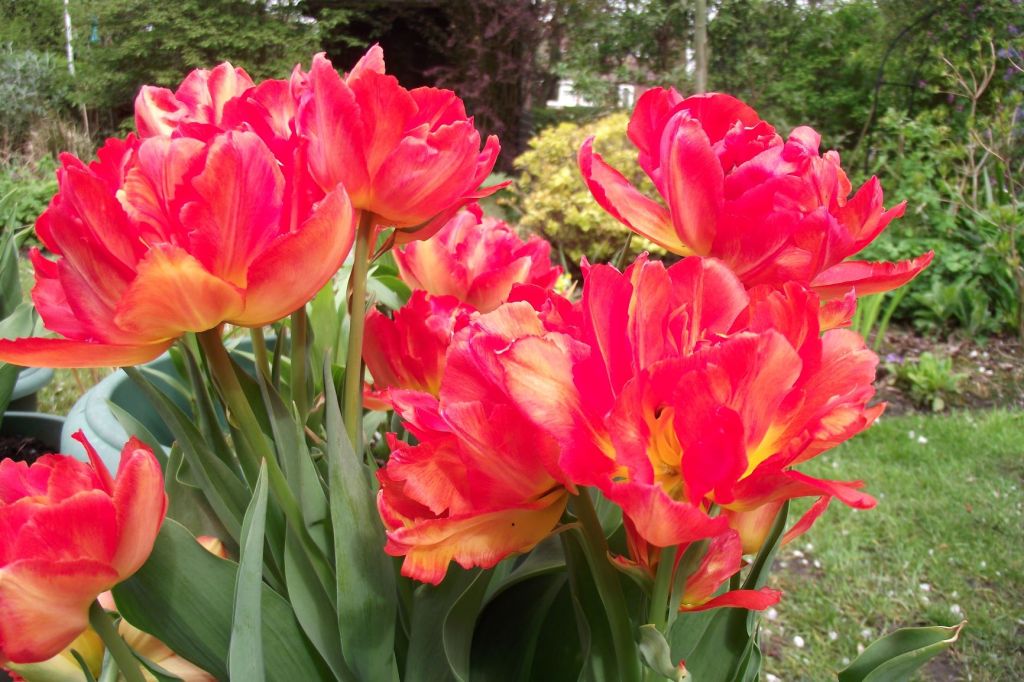
Tulipa ‘Mondial’ Tulipa ‘Monte Orange’
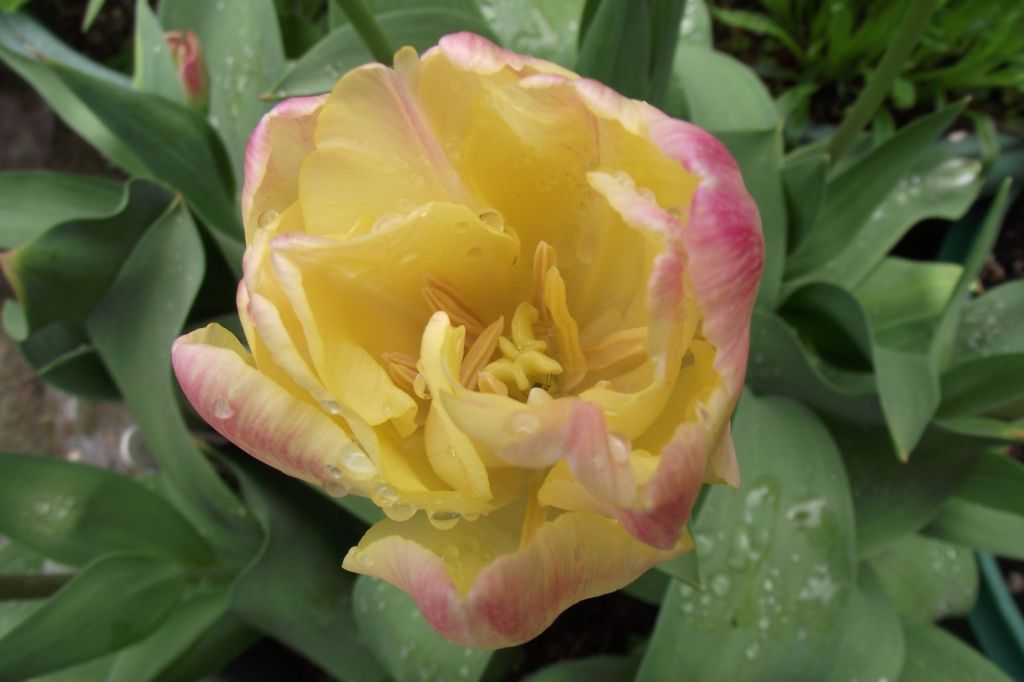
Tulipa ‘Silk Road’
Tulipa ‘Peach Blossom’
Flowering early to mid spring some of these tulips such as T.’Peach Blossom’ have the extra benefit of being scented which, along with the exquisite double flowers really enhances the early part of the year.
Following on from the earlies some of the Late Doubles such as T. ‘Angelique’ are also scented.
Miscellaneous.
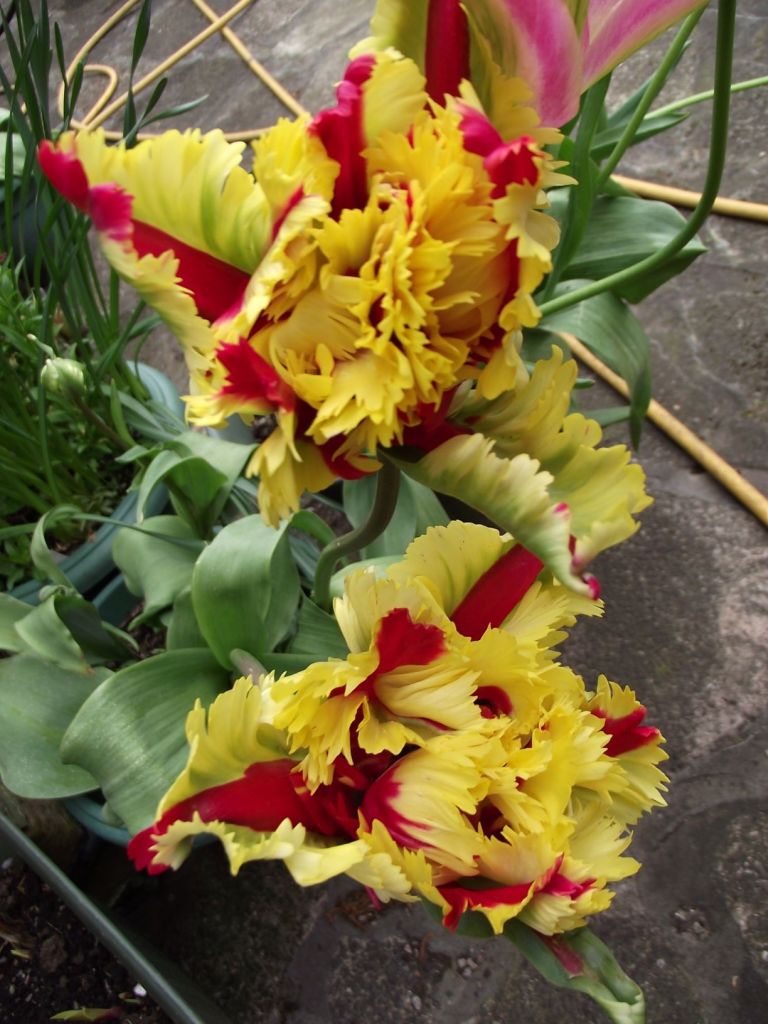
Parrot Tulip ‘Rococo’
Tulipa ‘Flaming Parrot’
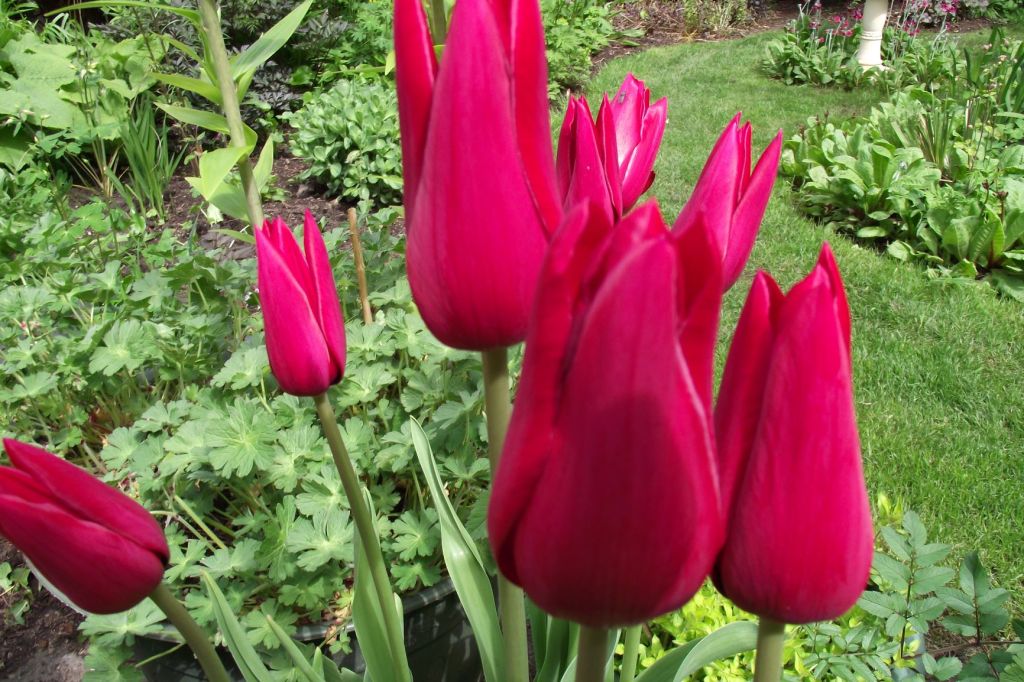
Lily flowered Tulipa ‘Red Shine’
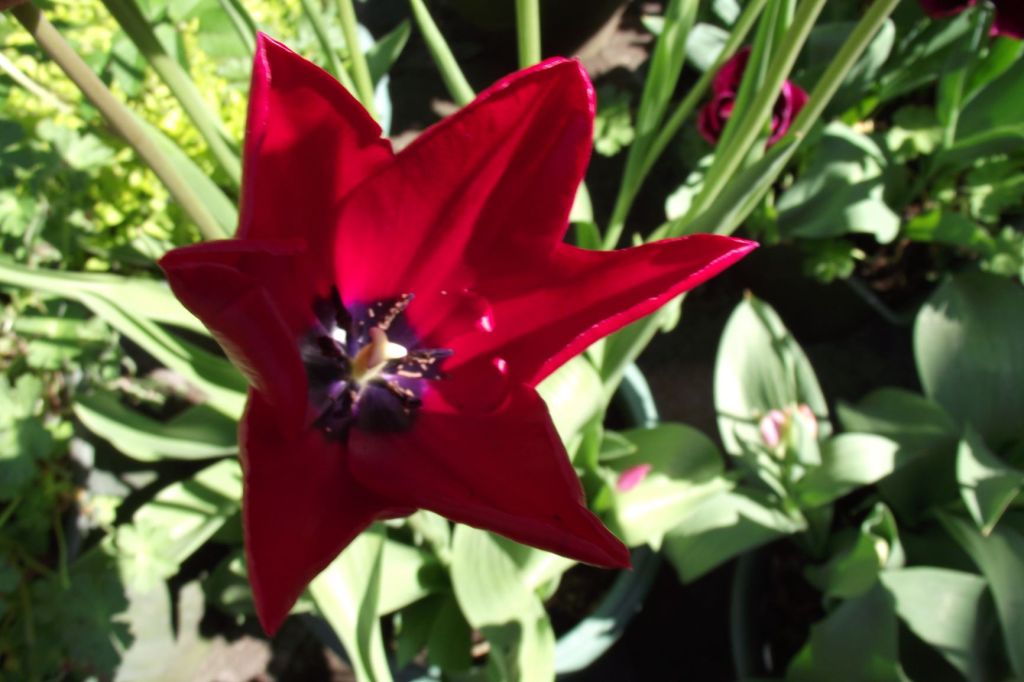
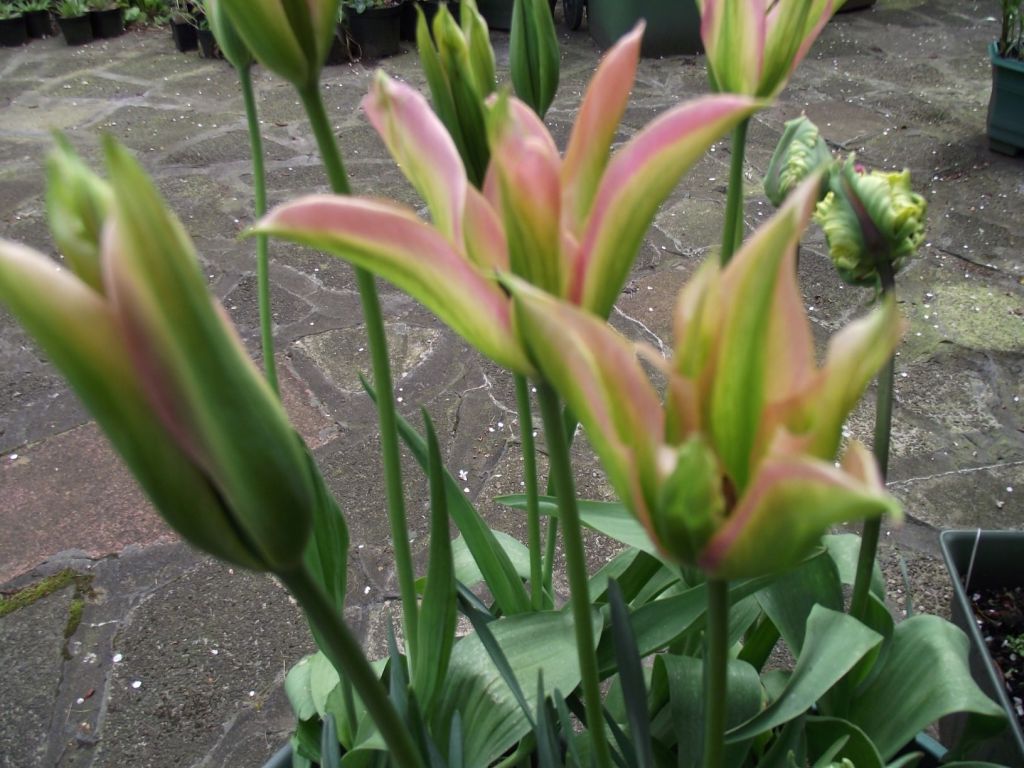
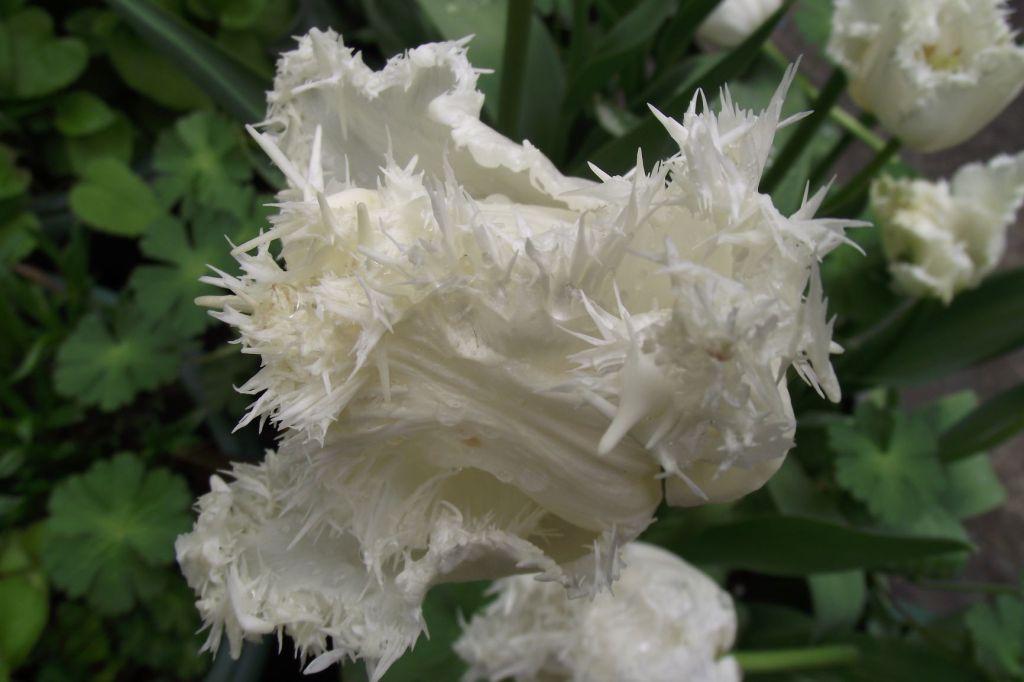
Unusual Lily Flowered Tulipa ‘Virichic’. These are known as Viridiflora Tulips.Late Single Tulipa ‘Queen of the Night’Bit of an oddity, can’t find it listed anymore Tulipa ‘Pirvilla Lady’ a Fringed Tulip.
The main pests and actually my nemesis are grey squirrels, they take absolute delight in rooting out the bulbs whether in containers or in the ground. One memorable Christmas Day I spent some time moving my pots into groups and spreading netting over them as I noticed the assault of the squirrel army had begun, eventually this led me to stop growing the Dutch tulips. I later hit upon the idea of putting a piece of heavy metal netting about an inch under the surface of the compost until this in turn was dragged out. I don’t find it worthwhile to keep the bulbs for another year but use tulips like bedding plants, in the past I have kept the bulbs for replanting but have found the results to be inconsistent. One advantage of using fresh bulbs each year is that it avoids the diseases to which tulips are prone.
Botanicals
Just a quick footnote regarding the botanicals or specie tulips, these are generally the dwarf spring flowering tulips, usually found in a rock garden setting or container, with which everyone is familiar. I have grown many of these such as Tulips kaufmanniana, greigii, praestans and their hybrids and also Tulipa tarda although I don’t have many pictures.
This is going to be more of a “pretty picture” post which is, after all, what tulips are about. There are two main groups, first the cultivated tulips which, although the original species hailed from the Near East, were developed by the Dutch plant breeders several hundred years ago till the present day. Holland is still the tulip capital of the world, the tulip fields visited by thousands every year. Vast resources were put into developing new colours and combinations resulting in inflated prices which caused tulips to become almost a form of currency leading to Tulip Mania and the first ever investment crash. The second group in general cultivation are the specie tulips or botanicals which are generally the dwarf, early flowering types seen in most rock gardens and containers. Please remember the pictures, as always, are of plants I have grown and this is by no means a definitive list.
Triumph Tulips
Tulipa ‘Carnaval de Rio‘Tulipa ‘Don Quichotte’Tulipa ‘Dynasty‘
Tulipa ‘Jan Reus‘
Tulipa ‘Jan Reus‘
Tulipa ‘Jimmy‘Tulipa ‘Leen van der Mark’Tulipa ‘Princess Irene‘Tulipa ‘Ronaldo‘Tulipa ‘Washington’
Flowering mid to late spring Triumph tulips are the largest group and the goblet-shaped flowers are the ones everybody is familiar with. Some gardeners may not like the use of plastic containers from an aesthetical point of view but I am afraid that, as I had many plants in a variety of containers, the factors of cost and weight came into consideration although some have been sprayed a different colour. The other factor to take into account is that I am more interested in the plants themselves hence the garden had a semi-wild look at best.
The “Rembrandt” tulips such as T.Washington and Princess Irene are created by careful selective breeding however at the time of Tulip Mania these colourations were caused by viruses and there were many crazy methods employed to try and induce these effects. The export of virus infected stock was banned many years ago by the Dutch.
Fifty years ago these true forest floor plants which flower early before the canopy forms, were to my mind, an exotic rarity, the only one generally available was the European native Erythronium dens-canis however the myriad of species and cultivars that have been introduced over the years has now made bulbs of this beautiful genus more accessible.
Erythronium californicum ‘Harvington Snowgoose’Erythronium ‘Pagoda’ (E. tuolumense hybrid)
Unfortunately these are the only pictures I have and don’t do justice to these plants however there are plenty more to be seen on the web. Both are quite vigorous hybrids and are ideal for the average garden where they will perform well. There are a diverse range of species available to the more specialist grower some of which can lend themselves to pot culture in an alpine house such as E. hendersonii.
The common name Dog’s Tooth Violet comes from the shape of the bulbs which should be planted in an open soil which has plenty of humus, preferably incorporating leafmould if available, under deciduous trees or shrubs to give dappled shade. Erythroniums are found in both Europe and Asia but the largest influx has been from the USA where there are two distinct groups one from the east and the other from the west. they are members of the lily family and quite closely related to tulips.
Fritillaria
Fritillaria is a massive and complex genus with only a handful of species in general cultivation although there has been a significant number of hybrids introduced. Fritillaria meleagris (Snake’s head fritillary) is the best known being of European origin.
Fritillaria meleagris
Fritillaria meleagris White form
Fritillaria meleagris is basically a meadow plant and as such benefits from being allowed to naturalise however it can be grown in any rich moist but well drained soil preferably in dappled shade. I hate the term “moist but well drained” as it sounds like an oxymoron however it is difficult to think of other ways of describing it, basically think not waterlogged at any time! Some other species require exactly the opposite coming from much drier climes.
Fritillaria persica
Fritillaria persica has become popular in recent years and can be found in most catalogues. A surprisingly hardy bulb it does need a well drained gritty soil and a position in full sun to do its best. The most popular and impressive specie that is widely grown is Fritillaria imperialis known as the crown imperial and its many varieties. They are big and showy but unfortunately I have no pictures as I have never really felt the urge to acquire it, perhaps a bit too rich for my taste!
A word of warning Fritillaria meleagris is a member of the lily family and the first place to spot lily beetle before it moves onto the lilies a little later in the year.
Iris
The Iris genus is both large and complex, there are about half a dozen sub-genera and some of these are further sub-divided into sections. I did study some botany but, for the sake of simplicity, I think in terms of four main groups, there are the early spring flowering dwarf types, the “Dutch” iris, the large bearded iris and the non-bearded iris which are the ones I have grown the most of.
The most popular irises that are known as Reticulate-bulbed bulbous irises are Iris danfordiae, Iris histrioides and Iris reticulata, and their many cultivars as shown above. They are all early flowering which adds to their appeal and also make good subjects for the alpine house. A sunny position in an open gritty soil suits them although I.reticulata is less fussy, as they die back during the summer, always try to be aware of where they are planted. The Juno irises also make good alpine house subjects and are extremely beautiful but not very widely grown as they are not easy. Juno irises are known as Smooth-bulbed bulbous irises and I can only assume that means that they don’t have the striations of the reticulate species.
My garden was very shady so I never grew the big showy bearded iris despite them being very popular because of the wide range of varieties available. Unfortunately they only grow well when the rhizomes, which sit on the surface, get a good baking during the summer months which just wasn’t possible. Likewise the bulbous iris known as Dutch Iris, which you see advertised in the catalogues, is principally a plant which is best container grown and doesn’t lend itself to shady borders. Growing a plant that you already know isn’t suited to your conditions can only lead to disappointment. Incidentally Dutch Iris (Iris hollandica cultivars) are used to supply the cut flower industry.
The irises that thrive in damp shady conditions come from Eastern Europe, China, Japan and even the UK.
Iris ‘Blauewiesmotte’ Sino-siberian type.
Iris chrysographes ‘Black Gold’
Both of the above are Siberia or Sino-siberian irises, to anyone used to seeing the large bearded Iris they look like any fibrous-rooted plant but are in fact rhizomatous. Although I.chrysographes is very distinctive and the specie being found in the wild, the likes of Iris ‘Blauewiesmotte’ is one of many cultivars originating from such as I.sibirica whose origins could be lost in the mists of time. They all thrive in damp cool conditions in any reasonable soil.
My favourite iris is the Japanese Water Iris, Iris ensata (formerly I. kaempferi) it has very similar requirements to the Sino-siberians but, although it prefers more boggy conditions, I wouldn’t be inclined to use it as a pond marginal like our own Yellow Flag. The flowers are enormous and carried on sturdy stems on a fairly compact plant.
Iris ensata The Japanese Water Iris
Finally one of our very own, along with Iris pseudacorus (Yellow Flag) the Stinking Iris, Iris foetidissima is one of the only two species to be found wild in the UK. A bit of a curiosity and not everyone’s cup of tea, I have never noticed the “stinking” bit, it sits in its own section of the iris taxonomy. Along with the others it likes a damp spot and although the flowers are fairly insignificant its crowning glory are the seed heads which are used in flower arrangements.
Just a little point, if you are tidying up iris plants when they have died back make sure to have a pair of scissors handy as the unsightly dead leaves cling tenaciously to the crown.
With the early spring flowers coming mainly from plants which aren’t fibrous rooted I thought a description of some of the genera would be topical. I don’t claim this to be a comprehensive list as the variety of plants and their preferences is too wide a subject to cover and many books have been written about them. In the case of where to plant, this in itself is impossible to generalise as even a single genus can have originated from diverse locations and climatic conditions. This is then an overview of those plants that I have grown and my own experience. Many plants which are actually, though not obviously, rhizomatous are included in the Hardy Perennial posts.
Alliums are no longer thought of as glorified onions but as a useful addition to any border. They have benefited from being marketed well by the bulb companies and are relatively easy to produce. Beware of advertisements offering allium collections at cheap prices as they very often include such as A.sphaerocephalon which in itself is attractive but the bulbs are tiny and the flowers are very small so check the varieties before you buy. The received advice is to plant the bulbs in a sunny border at least 6″ deep, although this doesn’t apply to the smaller bulbs and should be treated as a guide only. Personally I have successfully grown them in a quite shaded mixed border in proximity to deciduous shrubs, they benefit by being left alone where they will quite happily multiply forming attractive clumps. Many of the early ones poke through the ground with, or just after, the spring flowering bulbs but it is best to be aware that the large strapped shaped leaves can become very unsightly after flowering so planting amongst herbaceous perennials that will hide them is a good idea.
Nectaroscordum siculum or the Sicilian Honey Garlic is an unusual relative with beautiful pendant flowers, this one definitely needs a sunny spot, in shade it will contort its stems trying to reach the sun which I found out to my cost.
Anemone species.
Several species of anemone are grown from rhizomatous rootstocks, the best known of these are A.blanda and A.nemorosa the best known species to be grown from corms is Anemone coronaria often known as the Florists Anemone being used widely as cut flowers, the ‘De Caen Group’ are particularly noteworthy.
Anemone blandaAnemone nemerosa. Wood anemone
I have always treated A.nemerosa as it’s name suggests as a woodlander, cool dappled shade suiting it best. Remember as a forest dweller it flowers early before the forest canopy develops and does need sun for the flowers to open. Anemone blanda is quite versatile but again needs the sun to open fully. Anemone coronaria I have never had any success with and to be frank I don’t particularly like, I always visualise it growing in orderly rows as part of a commercial enterprise in the Channel Islands where I think it is best suited and should remain.
Chionodoxa luciliae
Chionodoxa luciliae and Chionodoxa luciliae alba. Glory of the Snow.
Chionodoxas or Glory of the Snow, as their common name implies, are early spring flowering bulbs from such places as Greece and Turkey and now classified as Scilla. Easy to grow and if left to their own devices will multiply by bulblets and seed. Looks well naturalizing in grassland where they are quite at home.
Colchicum
Known as the Autumn Crocus (Colchicum autumnale) and not to be confused with Crocus sativus which also goes by the same name but is actually the Saffron Crocus. The flowers emerge at the end of summer on naked stems, hence another common name of Naked Ladies, the leaves developing after flowering.
Colchicum autumnale.
Easy to grow in any decent deep soil the main problem being remembering where they are during the summer dormancy so it is another bulb (strictly a corm) that lends itself to being naturalized in grass. Used in medicine to produce a strong anti-inflammatory best known as Colchicine which is used in the treatment of gout. Colchicum autumnale is one of several species that come from Europe and the Mediterranean so will grow in the UK, there are others that are native to Africa. Unlike crocuses they belong to the lily family. This photograph was not taken in my garden.
Crocus
Crocus is a very large and diverse genus and one which I have little experience with, easy to grow from corms, plants range from the much hybridized larger late flowering “Dutch” types (Crocus vernus), like those pictured above, to the smaller early hybrids raised from such as C. chrysanthus like those below.
Crocus chrysanthus ‘Zwanenburg Bronze’
Crocus ‘Snow Bunting’
Crocuses are members of the Iris family and can be found from hot arid areas to arctic tundra although many come from the Eastern Mediterranean, probably best grown under some ground cover or in grass to make sure they are not disturbed when dormant.
The next post will feature erythroniums amongst others.
Book reviewer and garden enthusiast. Updates from my Hampshire garden. Usually talking about books and plants. People do not forget books or flowers that touch them or excite them—they recommend them.









 A Plantsman's World