Hardy Perennials (Part 4) – Updated

A further selection of plants that I have grown and photographed.

Francoa

Sometimes known as the Wedding Flower, Francoa sonchifolia is an evergreen hardy perennial from Chile which flowers mainly during late summer. Does best in a light soil in partial shade. In colder areas the foliage may die back during the winter months.

Gallium

Sweet Woodruff, Gallium odoratum, is a useful plant to use for ground-cover under trees and shrubs. It is particuarly useful in a shady spot particularly in wet soil. A British native it bears its small white flowers from late spring.

Gentian

When I used to specialise in alpines gentians were one of my go-to genera. The blue is only rivalled by such as meconopsis, and plants like the popular Gentiana sino-ornata and Gentiana acaulis were a must. In the border Gentiana asclepiadea displays the same striking blue trumpets but born on 12′ arching stems. It is a native of open woodland and meadow in Central Europe so prefers a moist soil with a little shade.

Geum

Avens make ideal plants for the front of the border and are a staple of cottage gardens. Geums are another genus which the plant breeders have exploited to the full, developing many attractive strains from the colour palette of shades of yellow, orange, pink and red. Grows in any good border soil in a sunny position. Herb Bennet or Geum urbanum is a pernicious weed and one-time bane of my life, it seeds itself into the garden and is difficult to eradicate once it has established itself in some shady moist corner, does not pull up easily and has to be rooted out.

Gunnera

Gunnera manicata or Giant Rhubarb is typical of the genus, large specimen plants which do well at the waterside. I have seen these following the line of a stream in Southern Ireland and at over 6′ in height they are quite an impressive sight. Just the opposite is Gunnera manicata, a low growing, creeping rhizomatous plant with rounded glossy green leaves. It hails from the southern countries of South America and the Falklands. Its common name is Devil’s Strawberry from the red fruits it bears , however this never happened for me.

Helianthemum

Helianthemums or Rock Roses are a valuable addition to the front of the border or large rock garden. Helianthemums are in fact low-growing shrubs but I thought I would include them in this section. It is a native of Europe, where the specie plant is usually found growing on chalk in full sun. An evergreen plant, it can be cut back during the growing season if it gets out of hand.

Helianthus

Obviously an annual, but included here because they are excellent border plants, Sunflowers are easy and fun for both children and adults to grow. The ‘Moon Walker’ shown was just under 9′ in height. A bit of trivia, they are a member of the aster family which, perhaps, not surprisingly, includes the Jerusalem artichoke.

Hellebores

One of the best and most showy plants for under-planting trees and shrubs or any shady spot with moist well-drained soil. The species such as H. argutifolius, the Corsican Hellebore, (syn. Helleborus corsicus) and H. foetidus, the Stinking Hellebore are easily raised from seed and will in fact seed themselves around. The cultivars of Helleborus orientalis, which result from micro-propagation, must be bought as plugs or plants.

Hemerocallis

Daylilies are east to grow on virtually any soil type in sunshine, flowers are produced from June to September and although they only last a day, follow in quick succession. This is another plant which has been a subject of intensive plant breeding and thousands of cultivars are available.

Hesparis

Hesparis matronalis, Sweet Rocket or Dame’s Violet is a biennial or short-lived perennial member of the brassica family and a useful cottage garden plant. It has scented flowers which are also attractive to bees and insects and will seed itself forming a naturalised drift in an informal setting

Heuchera

Coral Bells or sometimes Alum Root is a valuable semi-evergreen foliage plant for the border and containers. The flowers are largely insignificant but they come in a large range of leaf colours and shapes. They are woodland plants from North America so are best suited to a moist light soil in partial shade. One thing I have discovered is that they do not like being crowded. Their number one pest is vine weevil which seems to find them particularly attractive.

Heucherella

Heucherella is a garden hybrid between two genera, that of Heuchera and Tiarella. They are evergreen and grown for their foliage requiring much the same conditions as Heucheras, moist soil in partial shade.

Hieracium

Hieracium aurantiacum, Hawkweed is fine in poor conditions where its growth can be restricted, I had it in my old garden where it brightened up a shady spot on very poor soil where it was fine, but never, ever, let it loose in a good border! I am currently trying to eradicate it from my front garden where it appeared two years ago, it is not easy! Spreads with runners (stolons), hence another common name fox-and-cubs, and wind-borne seed. Reclassified as Pilosella aurantiaca.

Hosta

Hostas or Plantain Lilies are versatile Asiatics which will grow in shade and damp conditions although most are happy in full sun as long as they are kept moist. They come in a range of colours and sizes from the tiny ‘Mouse Ears’ to the giant ‘Empress Wu’. Hostas rose to popularity during the 2000’s when they caught the attention of the plant breeders and consequently many cultivars are available. Not only do they make an excellent plant for the open garden they are also ideal for growing in large containers. Number one enemy is slugs.

Houttuynia

Houttuynia cordata ‘Chameleon’ is generally the form which is grown, an attractive and unusual low-growing perennial it is ideal for ground-cover in large boggy areas but beware, anywhere else, it becomes an out and out thug!

Hardy Perennials (Part 3) Re-published

Dicentra

Dicentra spectabilis

Now Lamprocapnos spectabilis, Bleeding Heart has become a popular addition to the cottage garden, its unusual flowers born on arching stems over fern-like foliage make an attractive show in early spring. Although it is one of the first border perennials to show it is worth noting that it is one of the first to die back in early autumn, so tends to look better in an informal setting. Thrives in any good moist soil in sun or partial shade but it does not respond well to being moved. There is a yellow leaved form available.

Dicentra scandens

An unusual member of the Dicentra genus is the climbing D.scandens, a half-hardy climber I grew from seed. Unfortunately the botanists have really done a number on the Dicentra genus which is now split into four different genera. D.scandens is now Dactylicapnos scandens! Why are the new names nearly always more difficult to remember and pronounce than the old ones?

Dierama

Dierama pulcherrimum, Angel’s Fishing Rods are beautiful, evergreen perennials for an informal setting. They have arching flower stems covered in funnel shaped flowers in a range of shades of pink/purple and white over grass-like foliage. They prefer a sunny sheltered spot in moist soil and are another plant that does not like being moved although they actually grow from corms. Personally I have struggled to grow them and have only managed a few flowers at best, probably because my garden was too cold and damp. A member of the Iris family from South Africa there are many species and cultivars in cultivation including the well established Slieve Donard hybrids bred in N.Ireland.

Digitalis

Digitalis or Foxglove is a genus of both biennial and short lived perennial plants. The native Digitalis purpurea is common everywhere and well known, however some of the species and hybrids are less seen. Broadly speaking, being woodlanders, they all prefer a moist soil in dappled shade although D.purpurea seeds itself almost anywhere and I have had an excellent plant growing from a shady rock crevice in the past. Pam’s Choice is a naturally occurring garden hybrid found by a keen amateur gardener.

Draba

Draba cuspidata

Drabas are alpine members of the brassica family and originate from Central Europe and even the UK, they are cushion or mat forming plants, the most common garden specie being Draba aizoides. As with most alpines they like a gritty open soil in a sunny position. The plant pictured above was grown from a “lucky dip” collection of society seed out of curiosity.

Epimediums

Epimedium grandis

Find my post dedicated to Epimediums here.

Epipactis hardy orchid

Epipactis helleborine

I have included this for its novelty value, possibly Epipactis helleborine, I am no expert when it comes to orchids, just seeded itself into my ‘woodland’ garden, flowered and disappeared.

Eryngium

Eryngium giganteum ‘Miss Willmott’s Ghost’

Eryngium giganteum or the Giant Sea Holly is colloquially associated with Miss Willmott of Warley Place, who by all accounts was a formidable lady, because of a story in which she was said to scatter the seed of the eryngium in any garden that she visited that she considered to be dull. Unfortunately the story has been debunked in recent years. Eryngiums are basically thistles and require a sunny spot in well drained but moist light soil to grow well. There are several cultivars available ranging from silvery white to steely dark blue.

Eupatorium

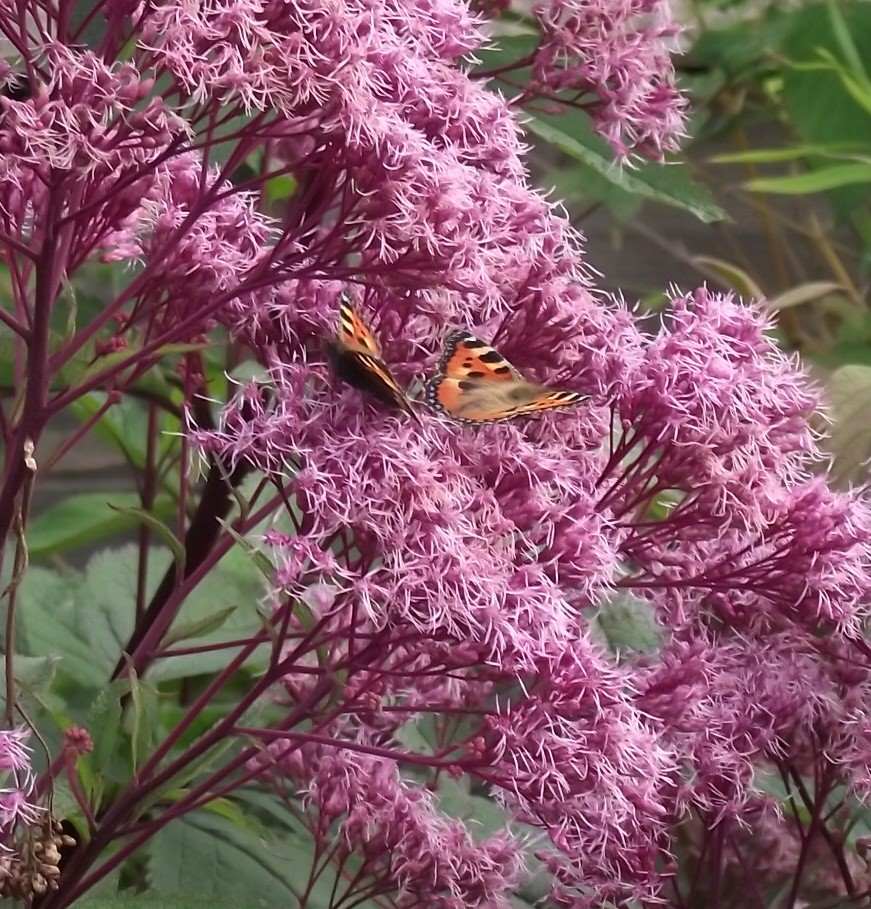
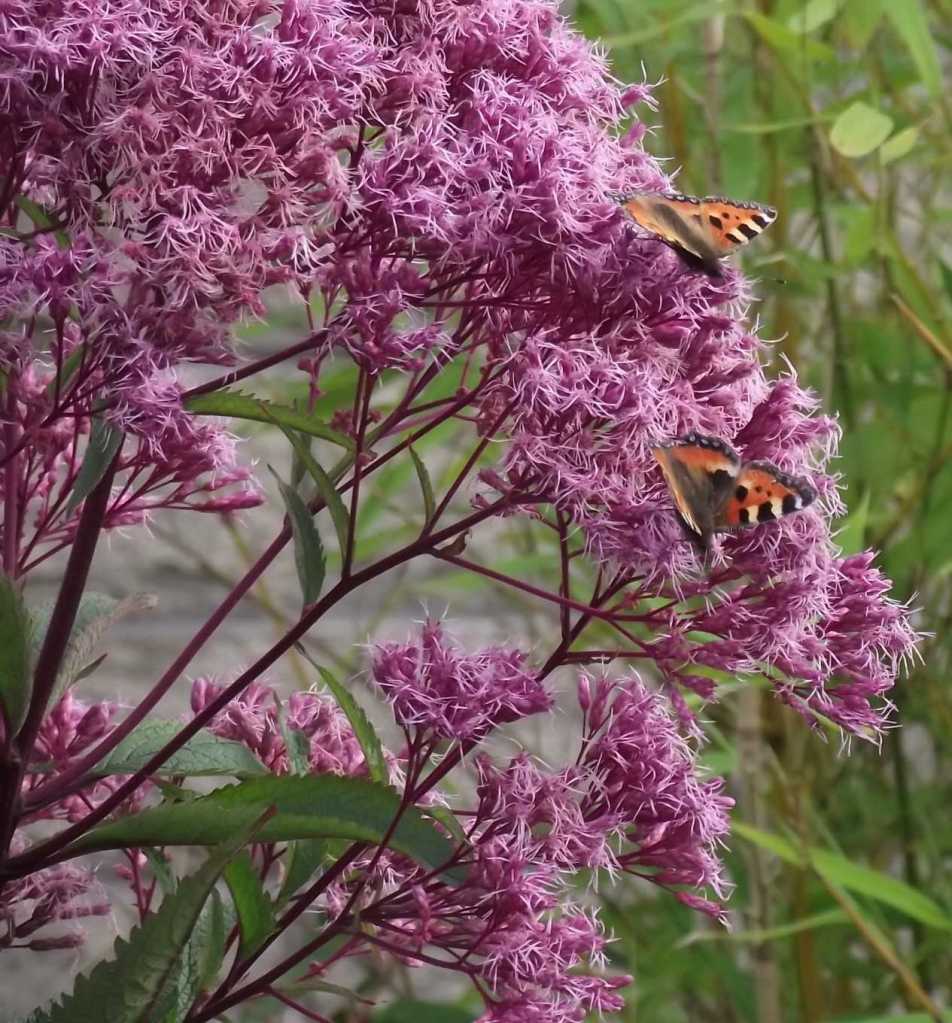
Common name Joe Pye Weed, this is a fantastic plant for adding height and late colour to the border, growing to over 6′ its purple flower heads remain until the first frosts. This is one plant that I have introduced to my new garden, late to surface, its flowers have been covered in butterflies and other insects since the end of June and it is still going strong.

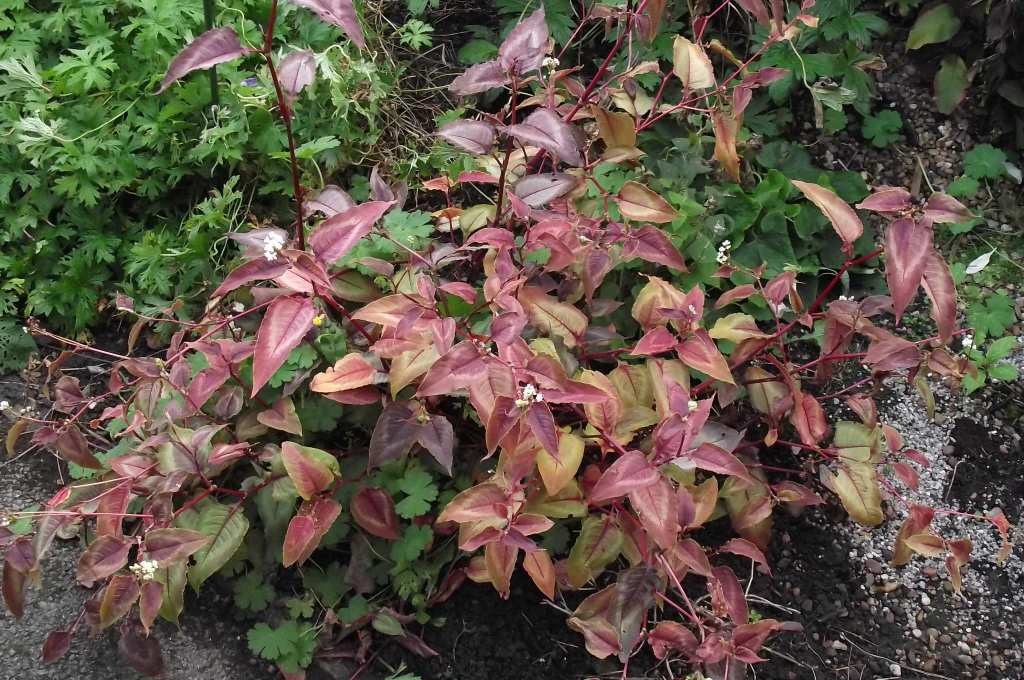
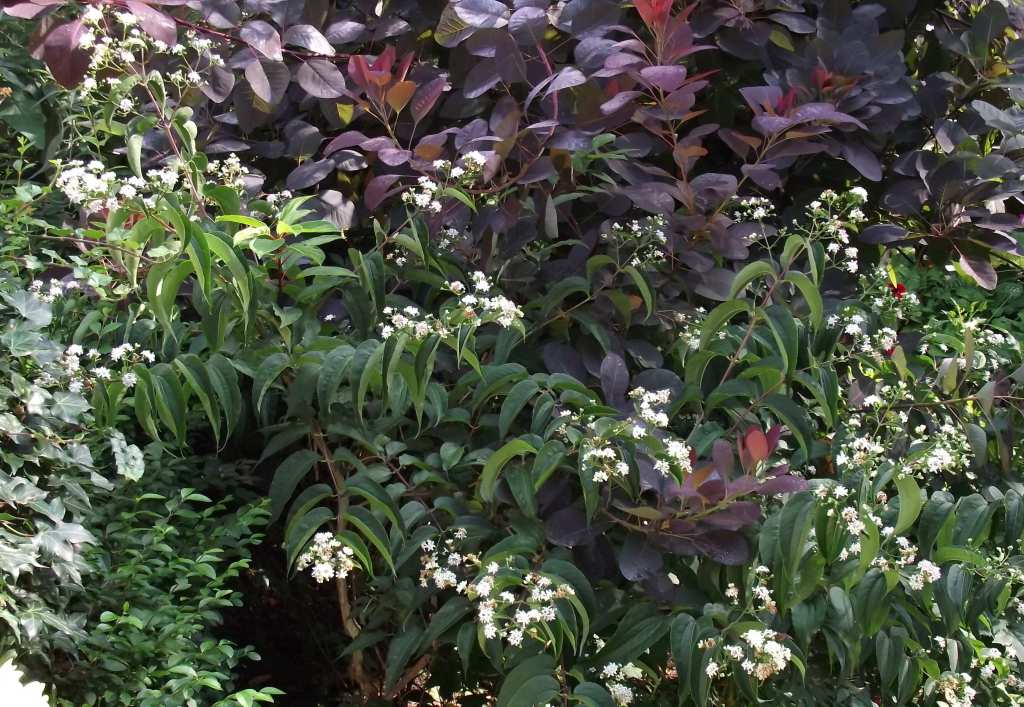
Eupatorium rugosum ‘Chocolate’ is a different plant altogether smaller in stature with dark green/red leaves and contrasting fluffy white flower heads it is rather striking. Now reclassified as Ageratina altissima which just doesn’t have the same ring to it somehow.

Euphorbia

Euphorbia or Spurges are a massive and diverse genus ranging from annual weeds to trees, with shrubs and even succulents in between. The plant above is a typical garden cultivar the many species and cultivars have a range of colours including acid green and even orange. A well known member of the genus is the popular Christmas plant the Poinsettia (Euphorbia pulcherrima). The plant that is getting all my attention at the moment is the annual garden weed Euphorbia peplus, it only appeared a couple of years ago and is proving to be a nightmare! All of them, that we are likely to come in contact with, have a toxic sap which can cause painful blisters on someone who is sensitive.

Six on Saturday 27/9/2025

I’ve been missing for a few weeks as, to be frank, I had very little to show without constant repetition. The main show now is the Eutrochium maculatum Atropurpureum Group which, despite my earlier fears, when there were hardly any butterflies to be seen, has done its job. This year the buddleias were covered in Peacock Butterflies and then there was a gap even though Joe Pye was in flower. Now there are plenty of mainly Red Admirals to be seen, when the sun comes out. I am assuming it is to do with the hot dry summer, but I have not seen so many different species of bees as I have this year either. Another new visitor attracted to an old honeysuckle is the Hummingbird Hawk Moth. It is easy to spot as it jinks about, but much harder to photograph!

Eutrochium maculatum Atropurpureum Group or Eupatorium maculatum ‘Atropurpureum’ or Eupatorium maculatum Atropurpureum Group or Eupatorium purpureum ‘Atropurpureum’ or Eupatorium fistulosum ‘Atropurpureum’ or Eupatorium purpureum var. atropurpureum according to the RHS, or just plain old Joe Pye Weed, between two Phyllostachys aureas.

Flutterbies. People ask “why do you have such a large plant in so small a garden?” What you see is why. I even have another one in the even smaller front garden. I’m happy to think my garden has become a butterfly oasis in the wilderness surrounding me.

I can never make my mind up about Persicaria microcephala ‘Red Dragon’. I just think the leaf colour could be brighter. I don’t think its sprawling habit is for everyone, but it does have an AGM.

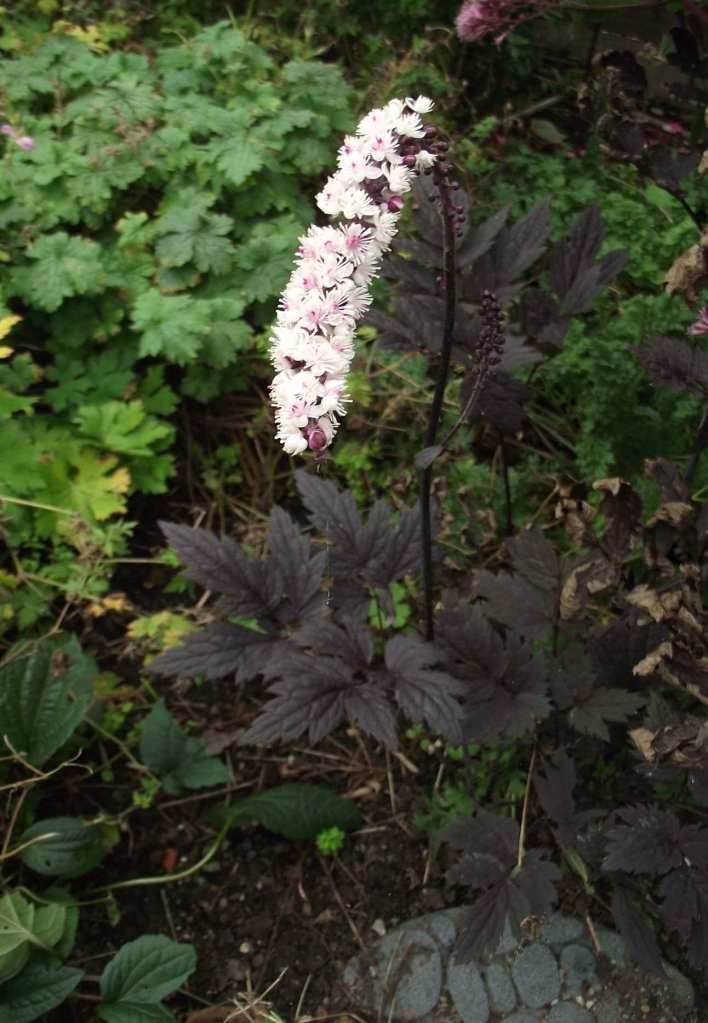
This plant of Actaea simplex ‘Brunette’ suffered very badly from the drought, all the flower spikes, bar this one, drooped never to recover. you can see the brown crinkled leaves to the right of the photo. Also known as Cimicifuga ramosa ‘Brunette’. I look at Actaea rubra and wonder how they can be related.

What’s left of my begonias. The other, more exposed, baskets were finally decimated by the torrential rain and wind that we had last Saturday. This one is in a very dark spot, lacking nutrients, and is definitely running out of steam. I grow these every year from plugs as I get little in the way of sun on this side of the house. Begonia Illumination ‘Apricot Shades’.

Sedum spectabilis ‘Autumn Joy’ or Hylotelephium telephium ‘Autumn Joy’. From Sedum to Hylotelephium please make it stop!

This meme is hosted by Jim Stevens who is to be found with all the details and links to plenty of other blogs to enjoy at Garden Ruminations.

Hardy Perennials (Part 2) – Updated

More plants grown and photographed by myself unless otherwise stated.

Bergenia

Common name Elephant’s Ears, bergenias are easy to grow and will thrive in good, deep, well drained loam in sun or shade, but will also tolerate dry soils. Excessive damp can cause them to rot. Basically an evergreen, bergenias are early flowering and can sometimes be damaged by frosts, keep the plant looking its best by removing dead or damaged leaves.

Borage

I love this herb, Borago officianalis is really an annual but I have included it here because it self seeds and generally reappears in the same spot every year. Definitely a plant for a sunny spot, will not perform in shade or on wet soils. Not only are the flowers a striking shade of blue but they are set off by the fine hairs that cover the stems and sepals. The foliage has a cucumber scent and both flowers and leaves are edible and have medicinal and culinary uses. A white form is also available and sometimes crops up among the seedlings.

Brunnera

Brunnera

A plant for cool shady conditions which will grow in moist soils brunneras have very attractive leaves and blue myosotis-like flowers and look well at the front of a shady border.

Bupleurum

A bit of an oddity Bupleurum is an unusual plant for the herbaceous border. Found in Central Europe and even the UK, it will grow in virtually any well drained soil in full sun or partial shade. The plant shown was grown from seed, the cultivar normally offered for sale is Bupleurum longifolium ‘Bronze Beauty’.

Caltha

The Marsh Marigold or King Cup is a plant for a boggy place and can be grown as a marginal where it will thrive. It overwinters with its buds just below the soil surface from where both flowers and leaves erupt together early in the spring. A member of the Buttercup family, it is an invaluable plant for early colour.

Campanula

Bellflowers are a popular, generally easy to grow, genus ranging from arctic alpine plants as cushions or scrambling over the ground to tall border perennials. Although relatively easy, campanulas are not good with winter wet and some species can be quite invasive such as Campanula poscharskyana from Siberia. Some of the showy border hybrids such as Campanula ‘Sarastro’ can have disproportionately large flowers and will need support. Propagation is from seed for species plants, buying in most cultivars, or division in the garden.

Celandine

Celandine

Ficaria verna subsp. verna or Lesser Celandine is my favourite ‘weed’. Growing from persistent bulbils, this native member of the buttercup family is definitely not everyone’s cup of tea. In a damp woodland setting, such as I had, it makes a wonderful very early spring flowering plant, providing an early source of nectar for the bees, however, in a more formal setting, it is definitely to be discouraged.

Chaerophyllum

Chaerophyllum hirsutum roseum

This Central European plant is similar to Cow Parsley but much more delicate in appearance, easy in a moist but not waterlogged soil. Personally I think this is a really useful border plant, the fernlike foliage is apple scented and the umbels of small flowers are a great attraction for pollinators even in late summer.

Chelone

Chelone obliqua or Turtlehead is a cottage garden plant which thrives in any good well drained garden soil. It has dark green leaves which unfortunately do not contrast too well with the purple flowers. There is however, a white form available. It is a late flowerer so provides some colour into the autumn. This plant was grown from seed, the white form is probably best obtained from a good nursery.

Convallaria

Convallaria majalis

Lily of the Valley used to be seen in most gardens but has gone out of fashion over time. A plant for shady woodland or spreading under shrubs its distinctive flowers give off a very strong scent which can then be followed by berries. There is a pinkish form available. Although popular for its ease of cultivation and scent I think it is possibly too invasive for today’s way of gardening.

Corydalis

Corydalis or Fumitory are generally shade lovers, ideal for a woodland setting, which flower in varying shades of blue to blue/white with the Yellow Fumitory being a welcome exception. They originate in the Northern Hemisphere primarily from China but are also found in America and the mountains of N.Africa. The nondescript Corydalis ophiocarpa is a good example of growing from seed not being quite what you hoped for! A point of interest Pere David who was a catholic missionary to China was a keen botanist and zoologist, although he collected the corydalis pictured above he also discovered Pere David’s deer. The deer became extinct in China where it had once been plentiful but is now being restored in significant numbers from the herd at Woburn.

Crocosmia

Crocosmia ‘Lucifer’

Formerly known as montbretia, Crocosmia should have been included in an earlier post as they are grown from bulb-like corms. Native to South Africa, so best grown in a sheltered spot in a severe climate. The original orange garden plant (Montbretia) was a hybrid (Crocosmia x crocosmiiflora) but there is now a huge range of vibrant colours available through intensive plant breeding. Easy to grow they will thrive in most soil types other than anything too wet. A little shade may help the flowers to last longer.

Hardy Perennials (Part 1) – Updated

Whether it be in the herbaceous border or more natural settings such as the woodland garden or informal rockery, hardy perennials are the backbone of the majority of gardens. They provide colour from early spring through to late autumn, and even into winter when the dead stems can add form and colour. Unless you intend to grow from seed find a good independent nurserymen. Although a dying breed, they are the people who have a passion for plants and are usually all too willing to give advice gained from their experience. Garden centres are another option but they tend to be impersonal and usually quite a bit more expensive. Online buying can be a bit of a lottery, pay attention to the pot size so you know what to expect. I actually planted out my new front garden with plugs bought online and had a good display the following year. It is important to remember that the above applies to the “standard” range of hardy perennials, when it comes to something more out of the ordinary specialist nurseries are the best option.

My preferred method is growing from seed, although I normally use society seed because I know it’s fresh, for the less invested gardener it is better to use one of the smaller seedsmen such as Plant World Seeds. The method I have always followed with hardy plants is to sow under cold glass, or in my case a poly-tunnel, usually in February to allow the seeds to germinate as they would do naturally. It would be just as good to sow outside except you haven’t the same control. Sowing from seed works well with anything which comes true from seed but in the case of most cultivars (hybrids) you need to buy in plugs or plants, many of which have been raised by micropropagation.

Achillea

From a traditional border plant achilleas (Yarrows) have been developed into a must have plant for the gardener. As with several genera, it has been recognised by the industry as a very desirable plant. Many cultivars, in a wide range of colours, have been produced. It will grow in most soils, is hardy, and attracts insects to its flat flower heads. I can say from experience that it is not fond of damp and shade, preferring an open sunny aspect, and is often used in prairie planting. Fashionable.

Aconitum

Aconitum napellus

Monkshood or wolfsbane is an easy hardy herbaceous perennial of medium height with delphinium-like flowers that prefers a rich moist soil to do well. Personally I think it does best in dappled shade rather than full sun. Easily propagated from seed. It is highly toxic to everything other than birds.

Actaea

Two totally different plants, Actaea rubra the red baneberry is an American native found in open woodland and therefore thrives in damp shady conditions. It actually forms rhizomes so should really have been included in an earlier post. The berries are toxic.

Actaea simplex (Atropurpurea Group) is an Asiatic baneberry which prefers moist soil and shade, although I have found it to be quite adaptable, thriving for me in an herbaceous border. The dark feathery leaves make a perfect foil for the delicate white scented flower spikes which insects find attractive. Also known as Cimicifuga simplex.

Agastache

Known as the anise hyssop or giant hyssop, agastaches make a nice plant for a sunny spot. Aniseed scented leaves, and with flowers that attract insects, it is a useful addition to any garden. Generally grown from seed, sometimes as a annual as it will flower in its first year, it will not thrive in a wet soil. Some of the woodier species are not entirely frost hardy.

Althaea

Althaea officinalis

Althea officinalis or the Marsh Mallow Herb is a vigorous herbaceous perennial, which, to be honest, I tend to think of as more of a shrub. Definitely one for a sunny spot it does well in almost any soil, and at one time was very popular but, doesn’t seem to be so much now. The plant has been used in herbal medicine for years, and has several remedial properties attributed to it.

Androsace

Androsace carnea x pyrenaica

Alpines were really my first love, and I built a rock garden and peat bed in the garden of my first house. I was lucky enough to have a small specialist nursery nearby, who bought in from another specialist on a regular basis. This gave me an ever-changing supply of plants on my doorstep. The androsace genus is a member of the primula family and contains almost as many species. They are mainly high alpines originating in the Himalayas. The majority form small cushions studded with disproportionately large flowers, which make stunning specimens for the alpine house and tufa wall. They are not easy to grow but the end result is a reward in itself. I grew a couple of the ‘easy’ species but unfortunately when I was growing alpines it never crossed my mind to take pictures, I really wish I had now. The plant pictured above, who’s name is bigger than it is, was grown from seed and managed a solitary flower in its second year.

Anemone

Anemones, commonly known as wind flowers, are related to the buttercup. The genus contains something like 120 species some of which are fibrous rooted, others grow from rhizomes or tubers. They are found almost worldwide and range in habitat from mountain scree to woodland. Because of their diverse habitats their cultivation varies equally. It ranges from the alpine house bench to the positively invasive such as Anemone tomentosa. For further information go to my earlier post.

Anemonella

This beautiful plant is a cultivar of the single species in the genus Anemonella. A native of North America, where it found in woodland, and is known as the rue-anemone. This tuberous-rooted beauty would usually obtained from a specialist nursery but the specie plant can be grown from seed. Best grown in moist soil in dappled shade as you would expect from a plant found in woodland.

Anemonopsis

This beautiful Japanese plant requires a moist lime-free soil in light shade to thrive. Best propagated from fresh seed. Obtainable from specialist nurseries and society seed lists.

Angelica

Wide spread in Northern Europe, particularly Scandinavia, angelica has tall hollow fluted stems and large flat flower-heads reminiscent of cow parsley. Its edible stems and roots have many culinary uses (candied angelica), flavouring spirits and more. Easy to grow, it is a biennial and sets copious amounts of seed. It self seeds everywhere, which can produce some interesting results. The self-seeded plant above has the dark foliage and the lesser stature of Angelic ‘Ebony’ but has crossed with the specie plant and has contrasting white flowers rather than the dusky pink of ‘Ebony’. It makes a good ‘spot plant’ in the border because of its height.

Aquilegia

A traditional cottage garden plant having some 60-70 species occurring in diverse habitats in the Northern Hemisphere. The traditional easy to grow garden varieties known as Columbine or Granny’s Bonnets maintain the spurred flower shape but vary greatly in colour and height. Most aquilegias seen in gardens today are the result of much interbreeding and self-seeding through generations. The earliest introduction of a strain that I remember were the McKana Hybrids which are still available today. I later saw the introduction of such as the Songbird Series of F1 Hybrids which although smaller in stature carry large flowers. They grow best in a damp gritty loam although it isn’t uncommon for them to seed into seemingly inhospitable spots but still live happily. There are a number of species from the mountains which need to be grown in the rockery or alpine house. One species illustrated above worthy of special mention is Aquilegia fragrans, not only does it make a superb specimen but, as its name suggests, is scented.

Astilbe (Spirea)

Ideal plants for a damp spot, astilbes, or as they are sometimes known, spireas, are another plant that seems to have been around in gardens forever. Once established they are easy to divide and share. The common name spirea is confusing because Spiraea is a genus of small shrubs. Astilbes come in all sorts of colours and heights and there are many named varieties. Basically they are a good solid garden plant.

Astrantia

Astrantias are another border stalwart, many varieties have been introduced in a variety of purple and pink shades developed from the specie plant. Astrantia major ‘Claret’ is the deepest red I know. They prefer a medium loam and do not tolerate wet soils readily

More Odds and Sods

Some more photos of plants I missed earlier from the old garden and some from the new.

Oenothera

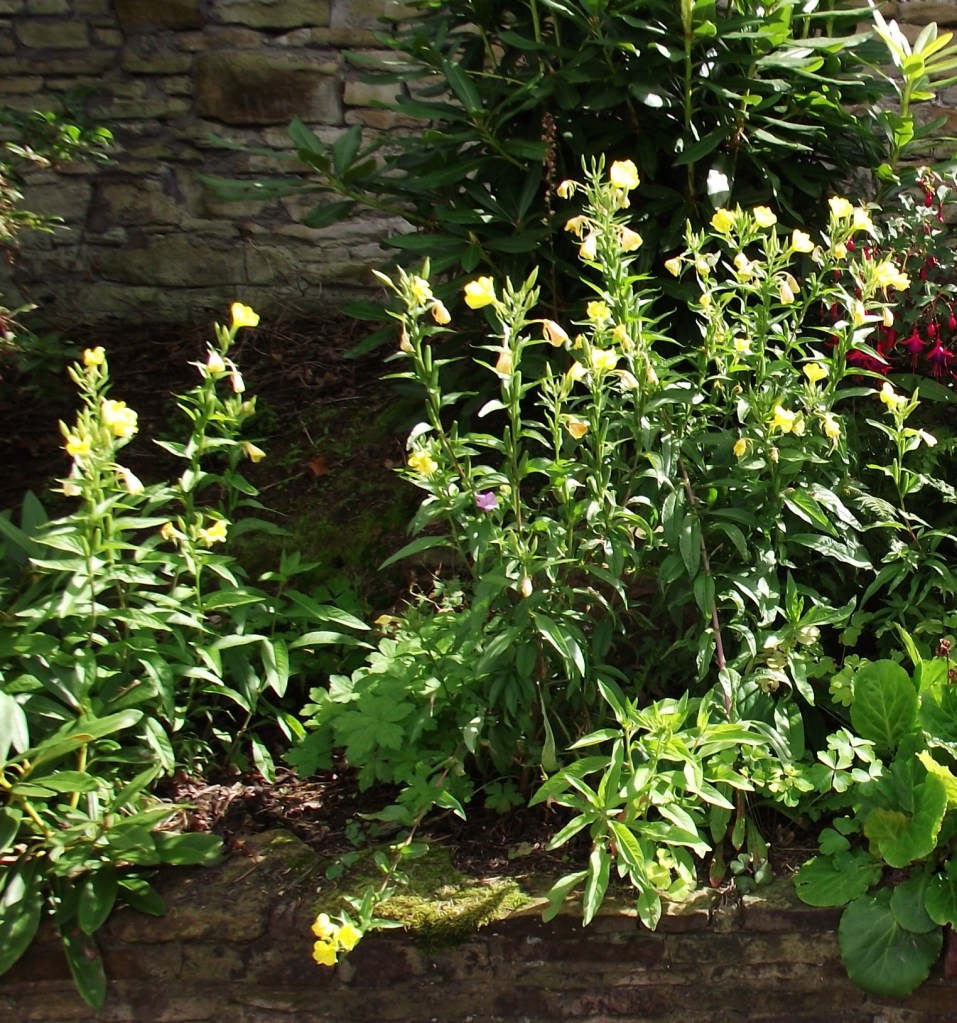
Introduced from America, the evening primrose grows wild in the UK but is a useful although unreliable addition to the garden. Basically a biennial it has a habit of self seeding into the garden and popping up in unexpected places. The clump in the picture actually appeared several years earlier, died off after flowering and didn’t return immediately. The evening primrose gets its name from the fact the flowers open at dusk and can actually be observed doing so, it was once very popular in gardens but not so much now.

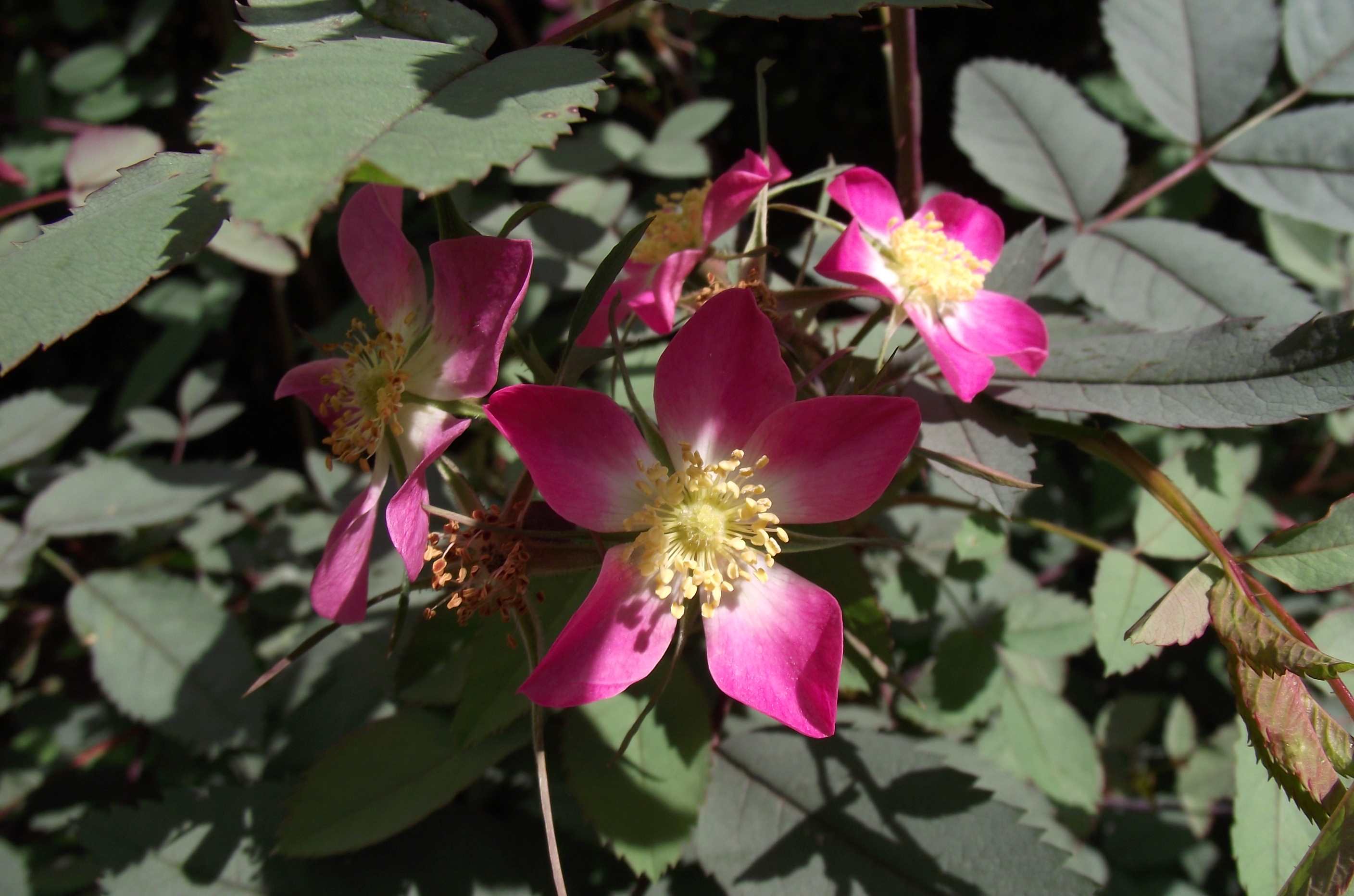
Rosa glauca is one of the few roses I have actually grown, it has small rather insignificant single flowers followed by worthwhile hips. The grey foliage is really its outstanding feature arching up to around 6′ which also makes it an ideal plant for a mixed hedge. Apparently it has become a proscribed species now, “irresponsible” planting subject to a fine.

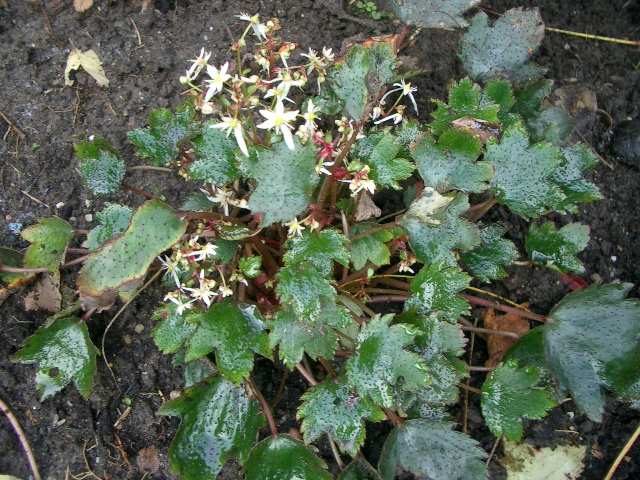
Not really a common garden plant, although it has many cultivars, Saxifraga fortunei is tolerant of even deep shade. It has attractive leaves and the distinction of being late flowering so can light up a dark corner of the garden until the frosts take it down. I think most of its cultivars originate from Japan, some of which plus the specie plant have been awarded the RHS AGM.

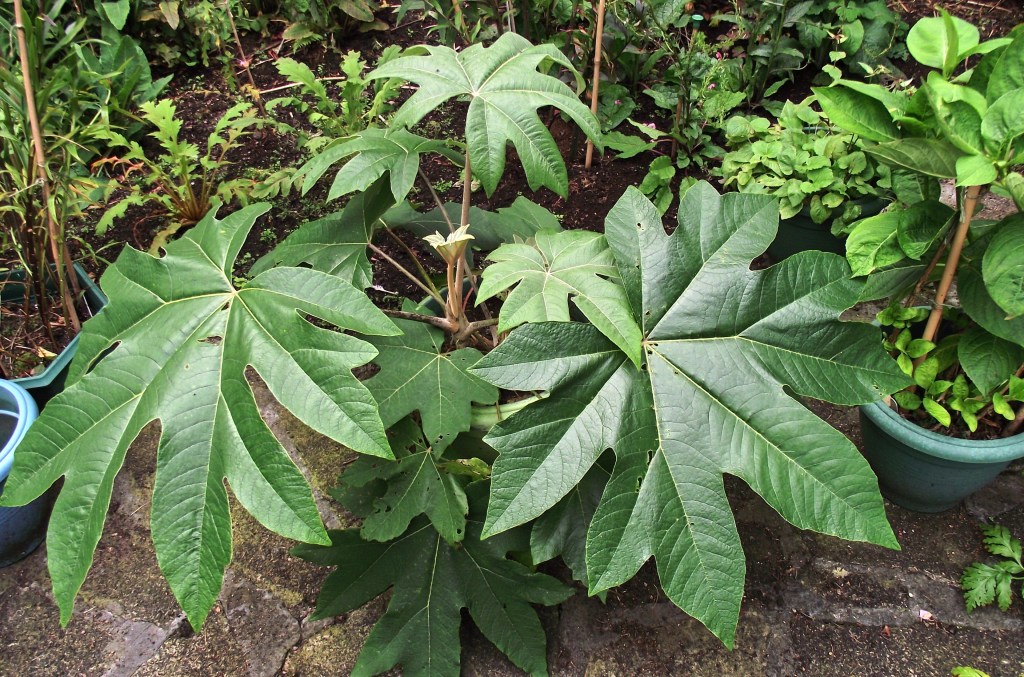
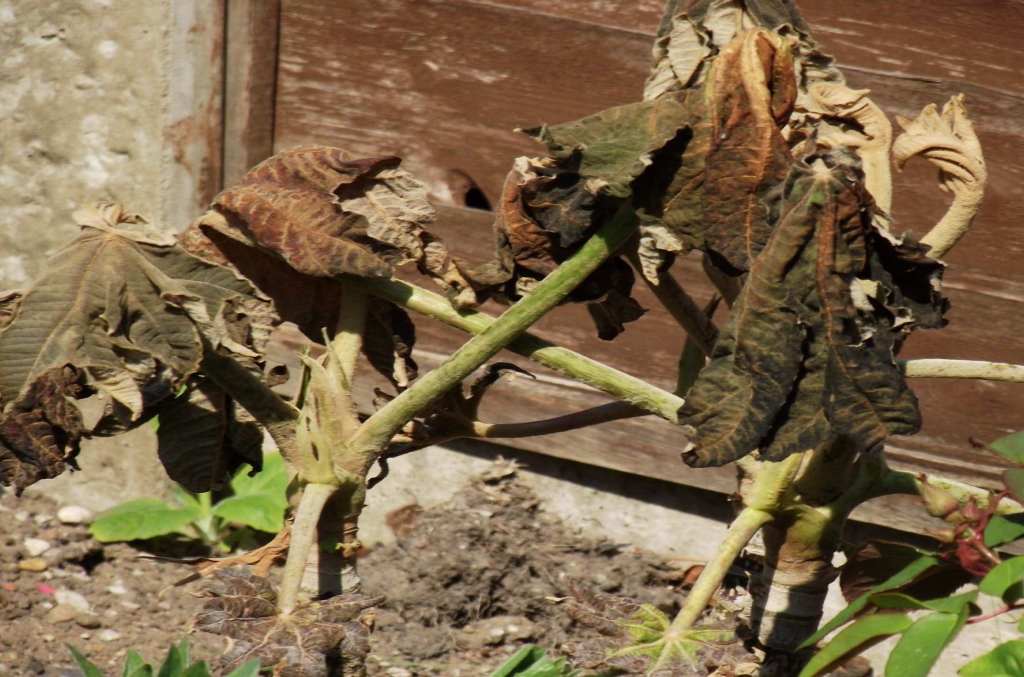
This was a major mistake and why you should always research a plant that you are unfamiliar with! My sister gave me a small plant of this, “T Rex” as she called it as she couldn’t remember the name, from her holiday home in Shropshire, I should have been alerted when she told me it had lots of babies! I had it confined in a larger pot for a year before moving it with me to the new garden. Once planted out in the front garden it drew attention as it grew to around 5′ displaying its striking tropical looking leaves until it was devastated by a sever frost which killed off the main stems completely. Then the trouble started, a crop of new shoots appeared around the original site but also new shoots started to appear at as much as 15′ away from the parent which in the end took me two seasons to eradicate as the monster nearly took over my tiny front garden, its thick fleshy roots getting everywhere. If you have plenty of space and want a tropical look, ideal.

Violas

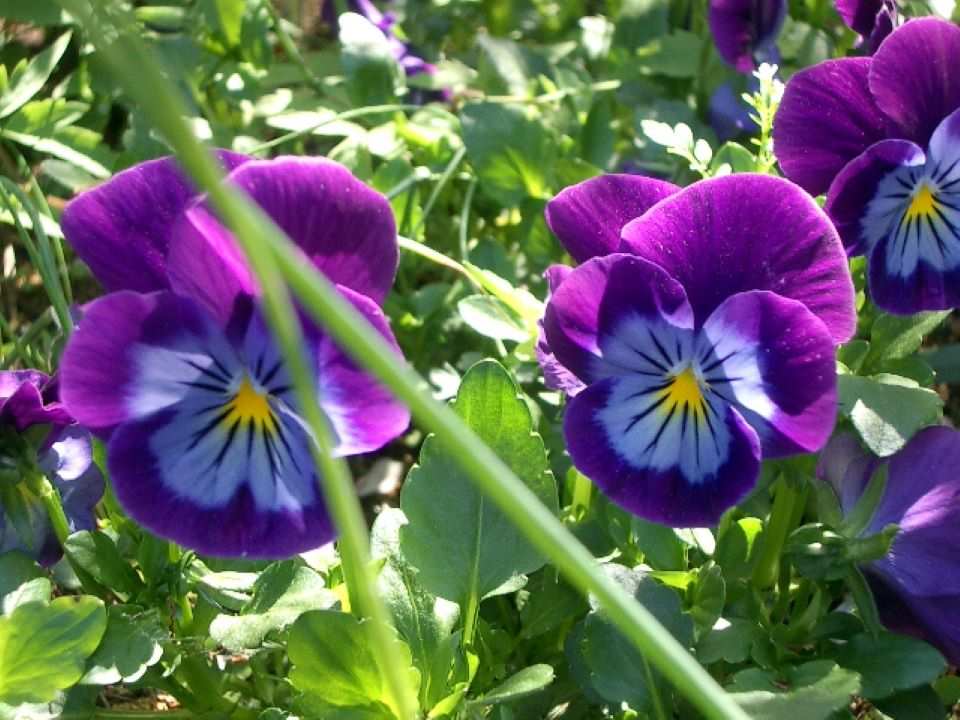
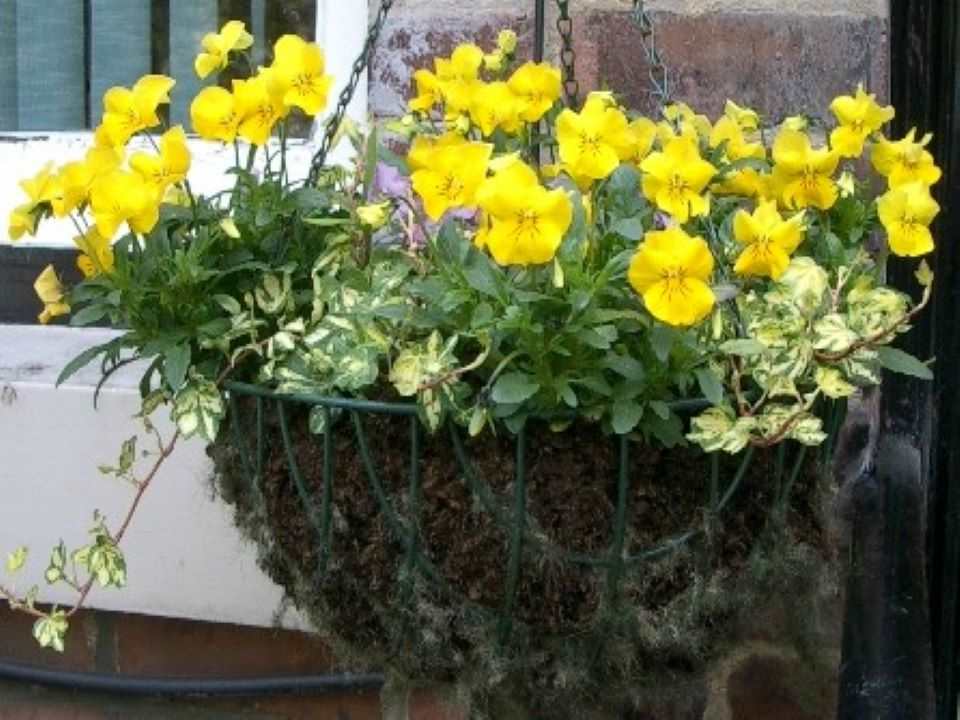
I have only photographed pansies in views of bedding or baskets but here are a few violas I have grown. It is impossible to cover the subject here, as it is so far wide ranging, including some delightfully scented specimens. Basically easy to grow, versatile and rightfully popular.

Hardy Perennials (Part 3) Updated

Dicentra

Dicentra spectabilis

Now Lamprocapnos spectabilis, Bleeding Heart has become a popular addition to the cottage garden, its unusual flowers born on arching stems over fern-like foliage make an attractive show in early spring. Although it is one of the first border perennials to show it is worth noting that it is one of the first to die back in early autumn, so tends to look better in an informal setting. Thrives in any good moist soil in sun or partial shade but it does not respond well to being moved. There is a yellow leaved form available.

Dicentra scandens

An unusual member of the Dicentra genus is the climbing D.scandens, a half-hardy climber I grew from seed. Unfortunately the botanists have really done a number on the Dicentra genus which is now split into four different genera. D.scandens is now Dactylicapnos scandens! Why are the new names nearly always more difficult to remember and pronounce than the old ones?

Dierama

Dierama pulcherrimum, Angel’s Fishing Rods are beautiful, evergreen perennials for an informal setting. They have arching flower stems covered in funnel shaped flowers in a range of shades of pink/purple and white over grass-like foliage. They prefer a sunny sheltered spot in moist soil and are another plant that does not like being moved although they actually grow from corms. Personally I have struggled to grow them and have only managed a few flowers at best, probably because my garden was too cold and damp. A member of the Iris family from South Africa there are many species and cultivars in cultivation including the well established Slieve Donard hybrids bred in N.Ireland.

Digitalis

Digitalis or Foxglove is a genus of both biennial and short lived perennial plants. The native Digitalis purpurea is common everywhere and well known, however some of the species and hybrids are less seen. Broadly speaking, being woodlanders, they all prefer a moist soil in dappled shade although D.purpurea seeds itself almost anywhere and I have had an excellent plant growing from a shady rock crevice in the past. Pam’s Choice is a naturally occurring garden hybrid found by a keen amateur gardener.

Draba

Draba cuspidata

Drabas are alpine members of the brassica family and originate from Central Europe and even the UK, they are cushion or mat forming plants, the most common garden specie being Draba aizoides. As with most alpines they like a gritty open soil in a sunny position. The plant pictured above was grown from a “lucky dip” collection of society seed out of curiosity.

Epimediums

Epimedium grandis

Find my post dedicated to Epimediums here.

Epipactis hardy orchid

Epipactis helleborine

I have included this for its novelty value, possibly Epipactis helleborine, I am no expert when it comes to orchids, just seeded itself into my ‘woodland’ garden, flowered and disappeared.

Eryngium

Eryngium giganteum ‘Miss Willmott’s Ghost’

Eryngium giganteum or the Giant Sea Holly is colloquially associated with Miss Willmott of Warley Place, who by all accounts was a formidable lady, because of a story in which she was said to scatter the seed of the eryngium in any garden that she visited that she considered to be dull. Unfortunately the story has been debunked in recent years. Eryngiums are basically thistles and require a sunny spot in well drained but moist light soil to grow well. There are several cultivars available ranging from silvery white to steely dark blue.

Eupatorium

Common name Joe Pye Weed, this is a fantastic plant for adding height and late colour to the border, growing to over 6′ its purple flower heads remain until the first frosts. This is one plant that I have introduced to my new garden, late to surface, its flowers have been covered in butterflies and other insects since the end of June and it is still going strong.

Eupatorium rugosum ‘Chocolate’ is a different plant altogether smaller in stature with dark green/red leaves and contrasting fluffy white flower heads it is rather striking. Now reclassified as Ageratina altissima which just doesn’t have the same ring to it somehow.

Euphorbia

Euphorbia or Spurges are a massive and diverse genus ranging from annual weeds to trees, with shrubs and even succulents in between. The plant above is a typical garden cultivar the many species and cultivars have a range of colours including acid green and even orange. A well known member of the genus is the popular Christmas plant the Poinsettia (Euphorbia pulcherrima). The plant that is getting all my attention at the moment is the annual garden weed Euphorbia peplus, it only appeared a couple of years ago and is proving to be a nightmare! All of them, that we are likely to come in contact with, have a toxic sap which can cause painful blisters on someone who is sensitive.

Six on Saturday 12/04/2025

The warmer weather continues but, much as I am enjoying it, I feel it has come far too early and would be welcome in about a month’s time as I have a feeling of trepidation about what is round the corner. Many plants are thrusting up new tender growth and I have already noticed some damage caused by the light overnight frosts and possibly the cold winds. We can’t put out bedding with confidence until the end of the third week in May. The local NT gardens don’t start planting until the second week of June, mind you, they have thousands of plants at risk. On the 2nd June 1975 snow stopped play in Buxton, only a few miles from me, between Derbyshire and Lancashire cricket clubs. Play was resumed the following day in beautiful sunshine and the following year, 1976, was one of the hottest summers on record. Buxton Cricket Club are celebrating the 25th anniversary with a special event this year. We gardeners are very much at the mercy of the weather, but spare a thought for the poor farmers and growers who have to make a living.

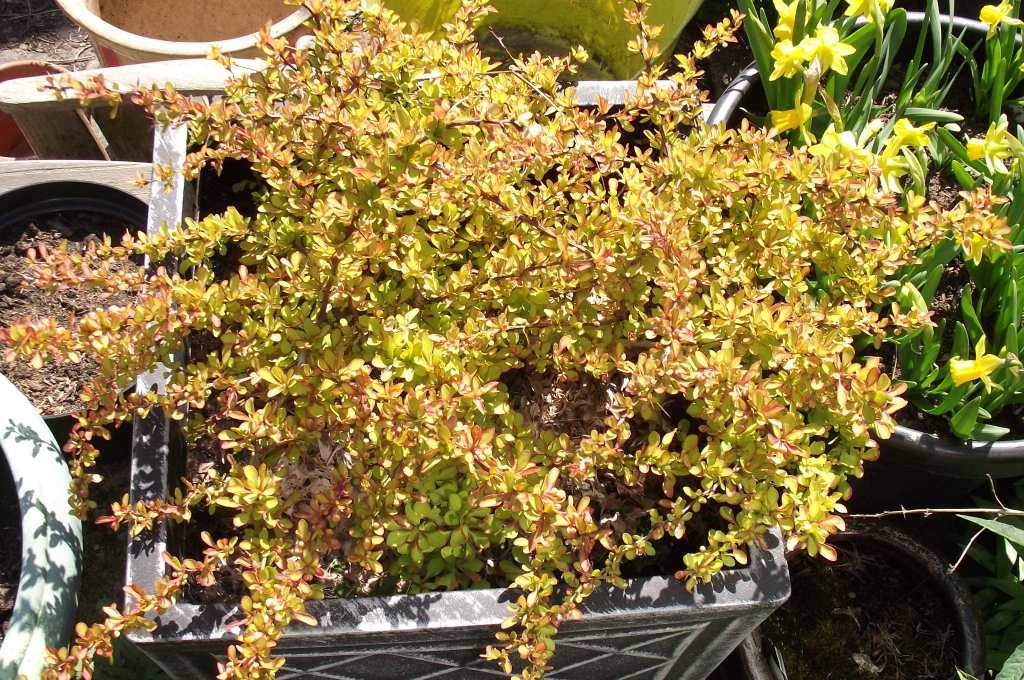
This is one of my favourite small shrubs, I look forward every year to the emergence of the colourful foliage. I had one in my last garden which was quite a bit larger, it could be that the drier, less fertile soil this one is in is limiting its growth, but I think it’s a little gem nevertheless.

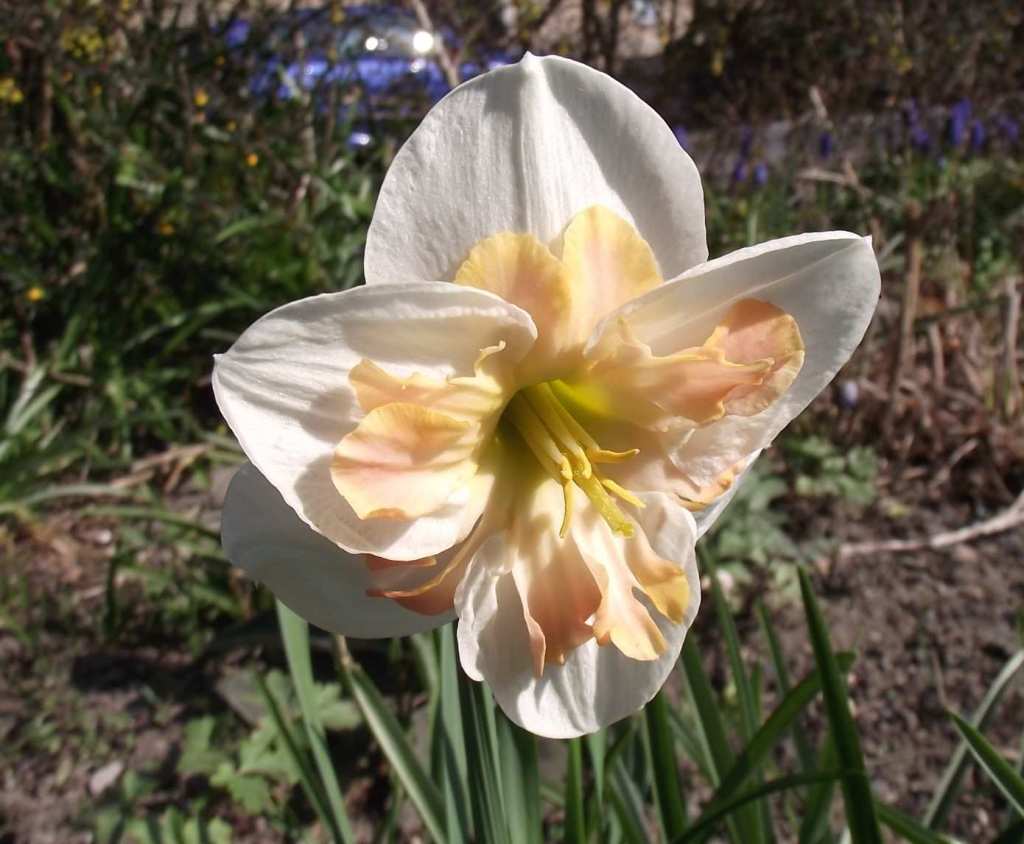
One of the remaining two flowers this year from a clump I planted about four years ago. I never seem to get longevity from my bulbs, tulips I can understand, as they need a good baking during the summer, but daffodils I tend to plant and forget about so probably my fault.

I used to grow numerous meconopsis as they are one of my favourite genera. This year is the first in my new garden that I am hoping to get some decent flowers. Crarae can only be raised vegetatively and I have never grown it before so fingers crossed! Crarae was raised at Crarae Gardens, Argyle, Scotland. If you are interested in meconopsis you might like to visit my page.

This berberis is another welcome splash of spring colour, it loses its reddish tinge as the year progresses. Like most berberis, it thrives here taking anything that the weather can throw at it.

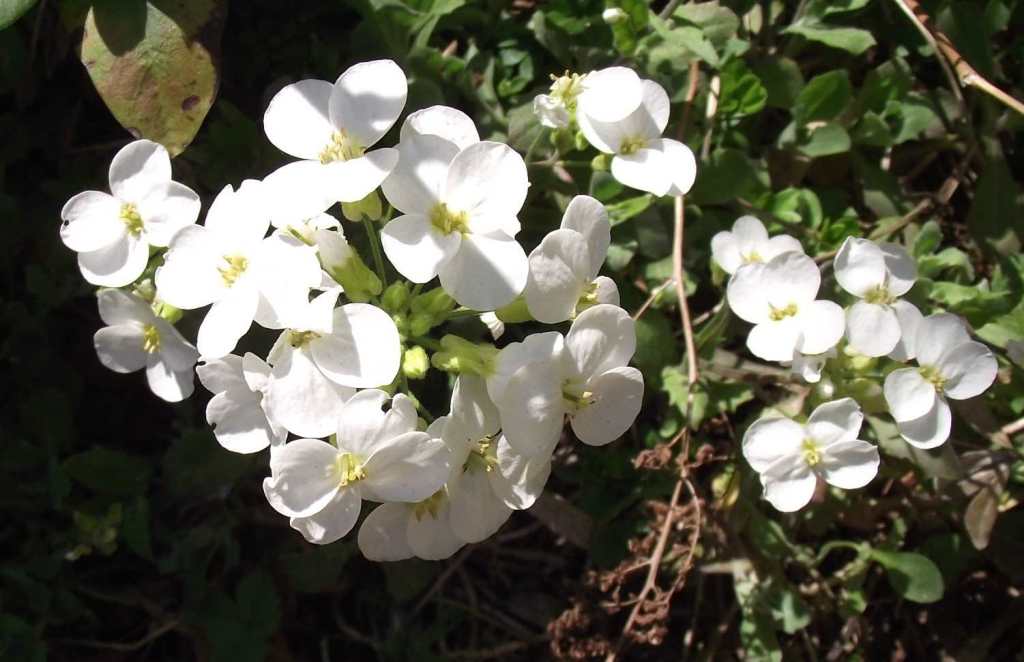
I grew the common or garden Rock Cress, or at least an improved form of it, from seed. It makes a useful early splash of white every year.

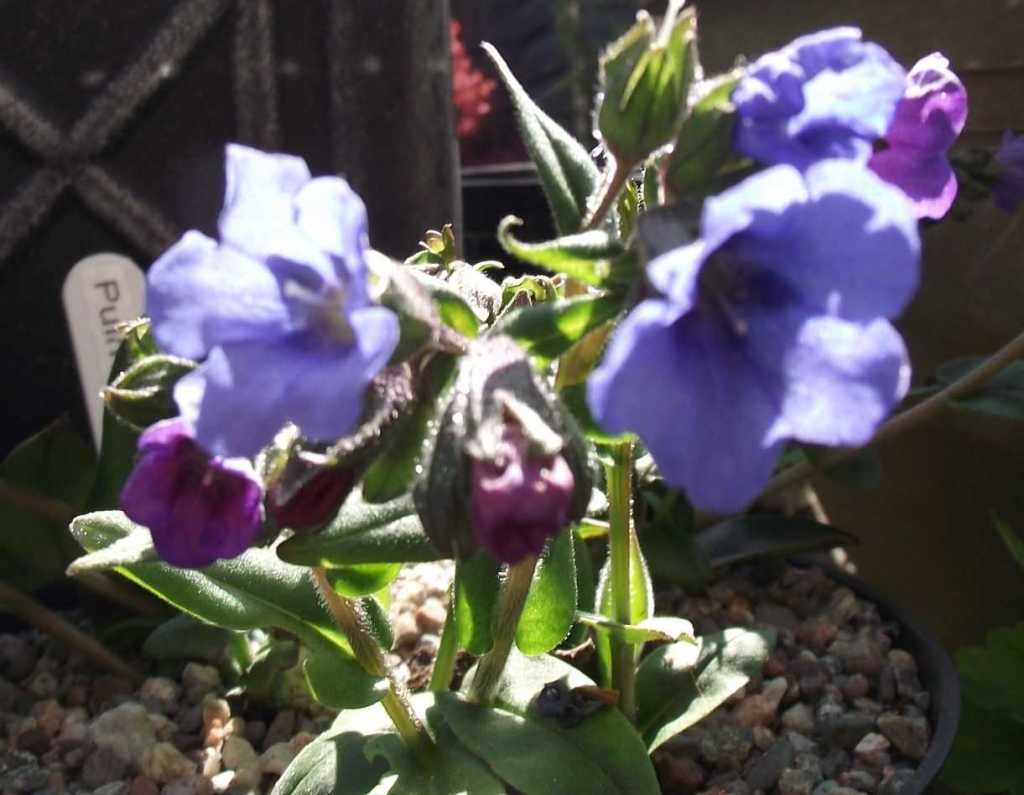
Currently growing in a pot until I find somewhere to put it, I bought this pulmonaria as a bare-root plant which is why it is flowering slightly later than normal. I have taken a real liking to pulmonarias over the last few years, as there are so many cultivars now, and can’t wait to increase my collection.

This meme is hosted by Jim Stevens who is to be found with all the details and links to plenty of other blogs to enjoy at Garden Ruminations.

Odds and Sods

Here are some photos of plants I missed earlier from the old garden and some from the new.

Dahlias

Everybody is familiar with dahlias, so no more needs writing. Probably the camera but the colour of ‘Mel’s Orange Marmalade’ looks decidedly off and ‘Cafe au Lait’ is looking definitely droopy. I used to raise ‘Bishop of Llandaff’ and his children from seed and they were the only dahlias I actually engaged with, dahlias are not really a favourite. My father used to love his dahlias as well as growing giant delphiniums, every year the tubers were lifted carefully, cleaned, dusted with sulphur and stored in the cellar in tomato boxes and every year half of them rotted off. I was hoping that one year everything would be perfect but it never was.

A couple of new Geraniums

‘Ingwersen’s Variety’ was grown from seed last year whilst ‘Galactic’ has been in the garden for a few years now, but I lost the label and have only recently been able to re-identify it by chance.

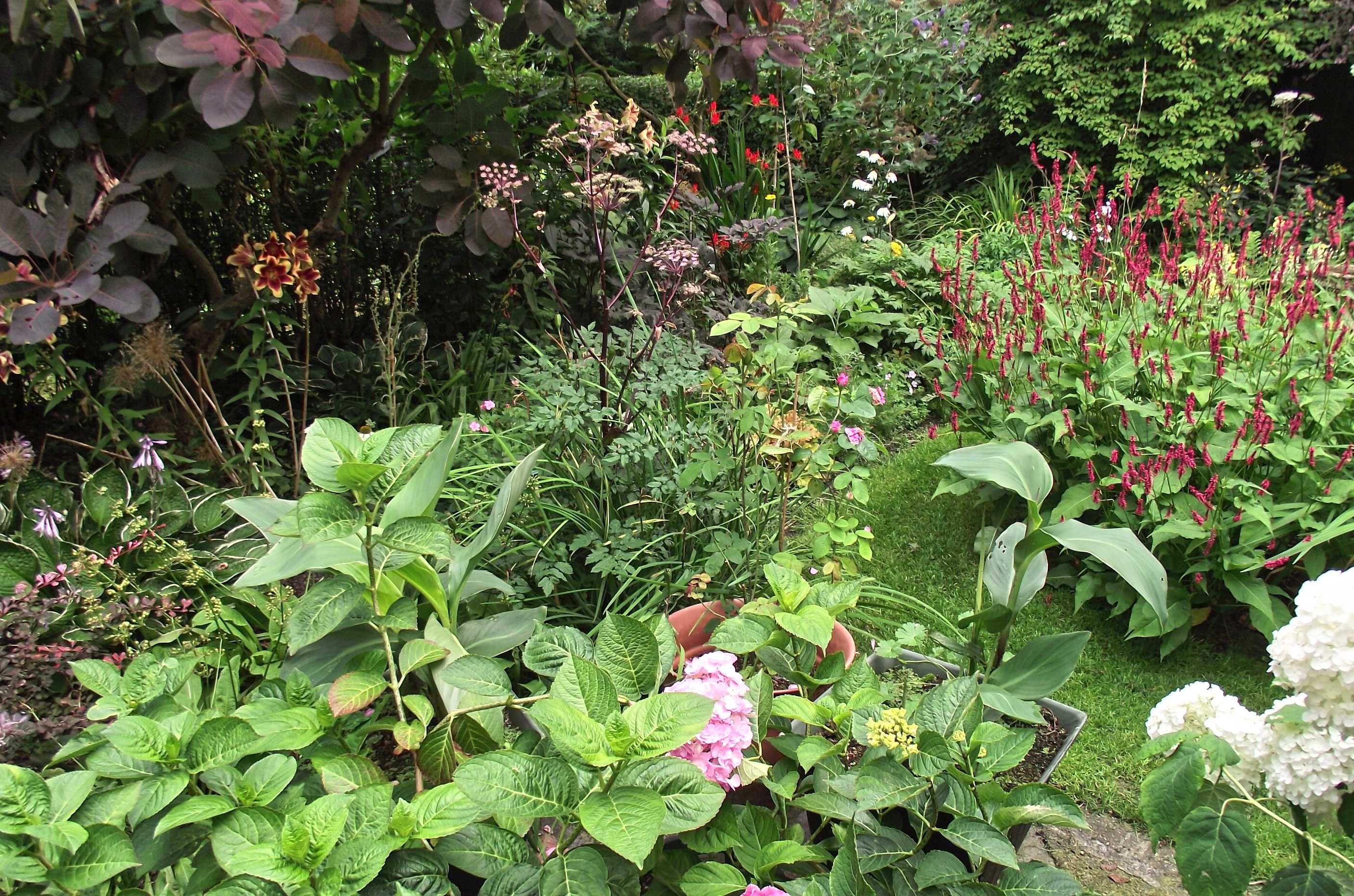
Canna lilies from tropical America, have been in cultivation for many years and consequently there are many cultivars in a range of vibrant colours available. I grew several in pots for a couple of years but ceased when I decided to no longer have winter heat in my tunnel. Note the use of plastic containers, I had so many that it would have cost a fortune to do otherwise, plus the weight factor when moving them around, although I did buy a sack-truck in later years.

I have no recollection of taking this photograph, although Heptacodium miconioides is certainly a worthy subject. A vigorous tall shrub from China with peeling bark, its scented flowers appear late in the year lasting well into October, which makes it an ideal subject for the woodland garden. There is also the benefit that it sets plenty of seed. Sometimes known as ‘Seven son flower of Zhejiang’

I bought this when T&M were advertising this new ‘Incrediball’ hydrangea and it is still going strong in a very large container in my new garden. Flowers reliably every year although they are not attaining the size that they should which is probably down to me. I am going to hard prune it this winter to see what happens.

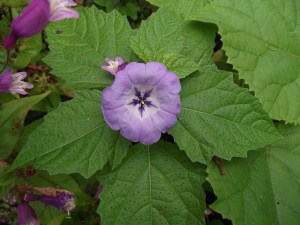
The shoo-fly plant or apple of Peru used to be quite widely grown for bedding schemes but seems to have gone out of favour. It is an extremely fast growing large annual rapidly attaining anything from 3 to 6 feet. The purple flowers die leaving a lantern shaped calyx which can be used in dried flower arrangements. It has a habit of appearing out of the blue, which is exactly what the pictured plant did.

Hardy Perennials (Part 5)

Kirengeshoma

Kirengeshoma palmata or Yellow Wax Bells is a member of the Hydrangea family from Japan and the adjacent Chinese mainland. Needs a shady spot on lime-free moist soil making it an ideal woodland plant.

Lamium

Lamiums or Dead Nettles are found throughout Europe and North Africa. They are robust plants and can tolerate dry and often shady conditions. Lamium maculatum is an excellent ground-cover subject which spreads by throwing down roots from its trailing stems, Lamium orvala however is more upright in its growth.

Leucanthemum

Shasta Daisies sometimes wrongly called Marguerites, are an outstanding border perennial and cottage garden plant. Leucanthemum x superbum has an interesting history in that it is the result of several inter-species crosses resulting in a triple-hybrid that was then crossed with a species from another genus producing an inter-generic hybrid. They thrive in any good garden soil in sun or part-shade, attract bees and other insects and make good cut-flower subjects, what more could one ask from a plant?

Lewisia

One of my favourite plants from my alpine growing days lewisias are actually a tap-rooted succulent from the mountains of California and as such, although winter hardy, will not tolerate damp conditions. I have found they are best planted in a very gritty mix on a slope or in a rock garden crevice. They are very rewarding subject, the flowers coming in a wide range of colours which stand out well against the dark green strap-like leaves and make an excellent plant for the alpine house.

Ligularia

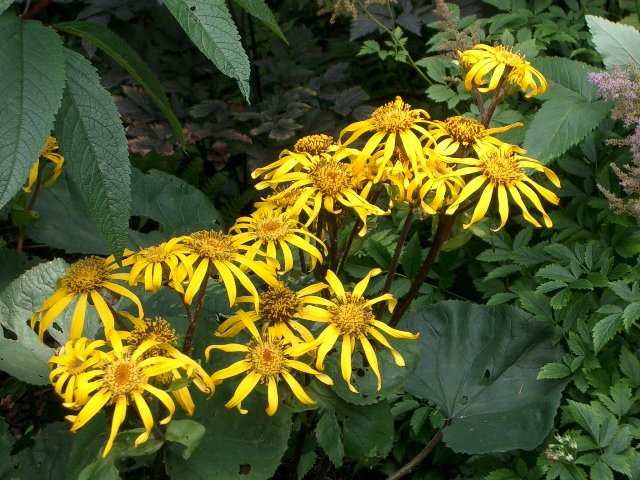
Ligularias are tall hardy herbaceous perennials mainly from China. They make a bold statement in the border with their striking foliage (particularly ‘Desdemona) and bright yellow flowers. They are moisture lovers and as such do well round the pond or stream side.

Lithodora (Lithospermum)

Another favourite from my “alpine days” when it was known as lithospermum. Lithodoras are a widespread genus but come principally from the USA. They make good edging plants particularly around pathways and are a staple of the rock garden. They require acidic, moist but free-draining soil in either sun or partial shade.

Lobelia

Quite different from the lobelia bedding plants which we are all familiar with Lobelia tupa is a woody upright plant growing to around 6′. It is a native of Chile so only truly perennial in warm gardens in the UK where it will tolerate quite dry conditions. I grew my plants from seed and managed to get a couple of winters out of them without protection. Another lobelia of merit is Lobelia cardinalis which is very similar in appearance but much hardier hailing from right through the Americas including Canada.

Lupinus

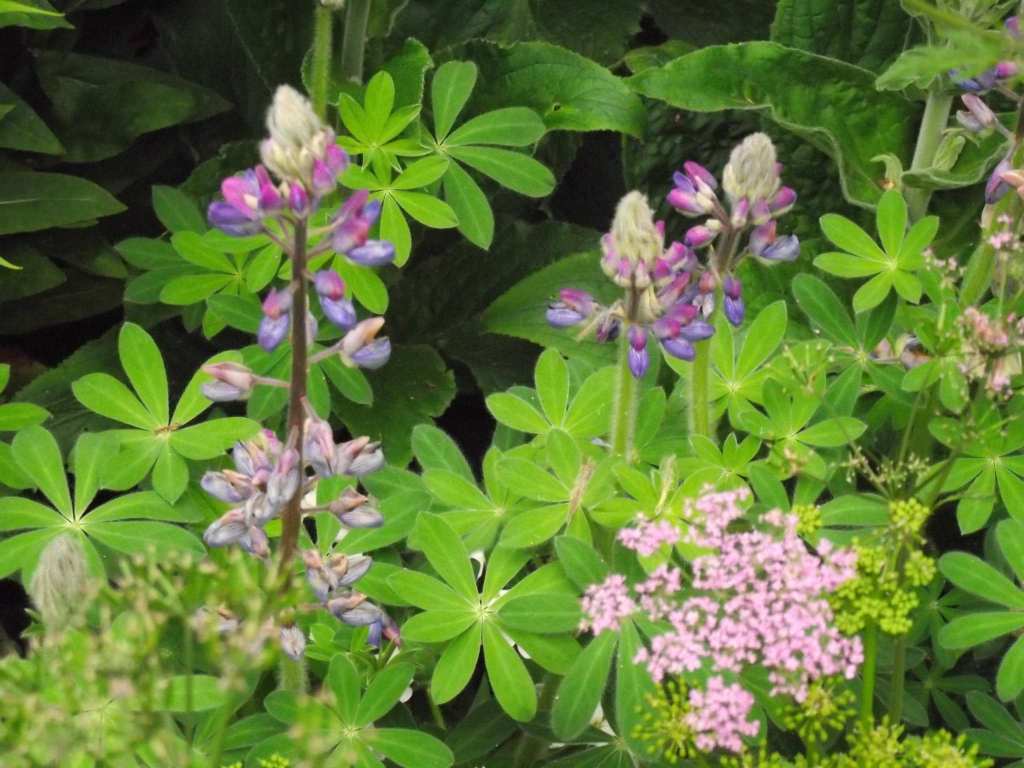
One of the most popular garden plants lupins are particularly associated with the cottage garden. They can easily be propagated from seed or by careful division. ‘Tequila Flame’ is an example of a popular strain of cultivars but I have included L. nootkatensis as a good illustration of the difference between a typical specie plant and its more sophisticated cultivar. L.nootkatensis is quite interesting, a native of N.America where it is found even in Alaska it was introduced into Iceland to help against soil erosion because of its ability to fixate nitrogen but is now listed as an invasive species.

Lysichiton

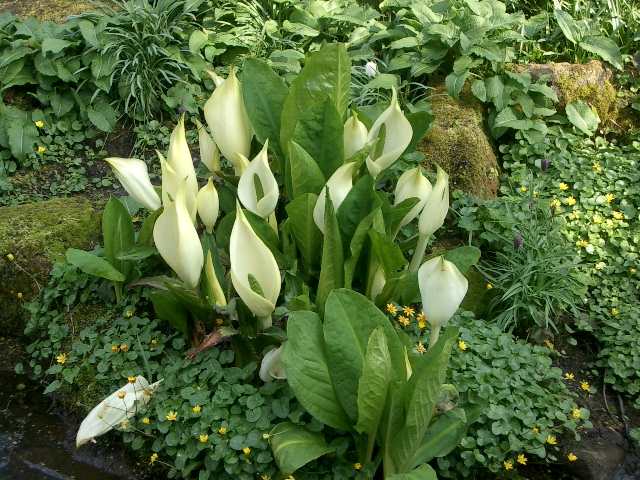
The two different species of Skunk Cabbages shown come from two different locations. L.americanus as the name implies comes from the Pacific Northwest of the USA. whereas L.camtschatcensis, again the clue is in the name, is from Eastern Russia and Japan. Typically found in water meadows in their natural habitat they are often grown in cultivation in large estate gardens as marginals but need a lot of room as they are both rather invasive. A preferred form Lysichiton x hortensis which is a cross between the two is more appropriate for the garden, particularly as the obnoxious scent is not as pronounced. These pictures were taken at Fletcher Moss Botanical Gardens, Manchester.

Lysimachia

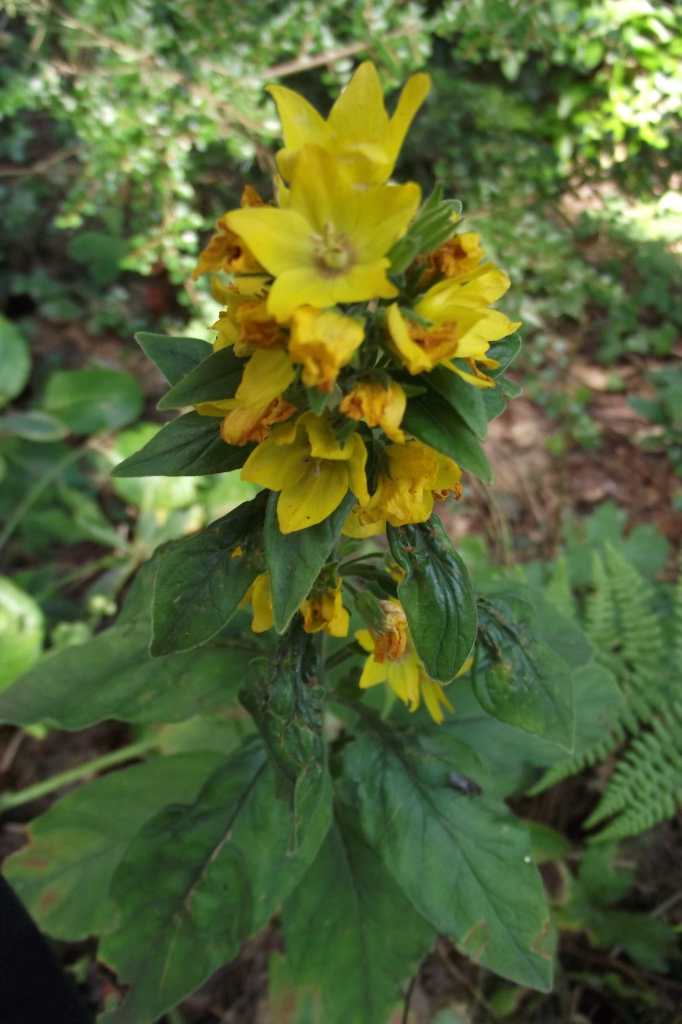
Lysimachias are surprisingly a member of the primula family and are generally to be found in damp areas across the Northern Hemisphere. Some species are known as loosestrifes such as L.punctata the Garden Loosestrife which is a common garden plant. ‘Firecracker’ is quite striking with its yellow flowers contrasting well with the purple foliage but beware it can be quite invasive. L.ephemerum has a rather loose upright habit and is attractive to bees and other insects. ‘Beaujolais’ is a popular addition to the garden with its deep red flower spikes contrasting well with the grey-green foliage but is generally short lived.

Mukdenia

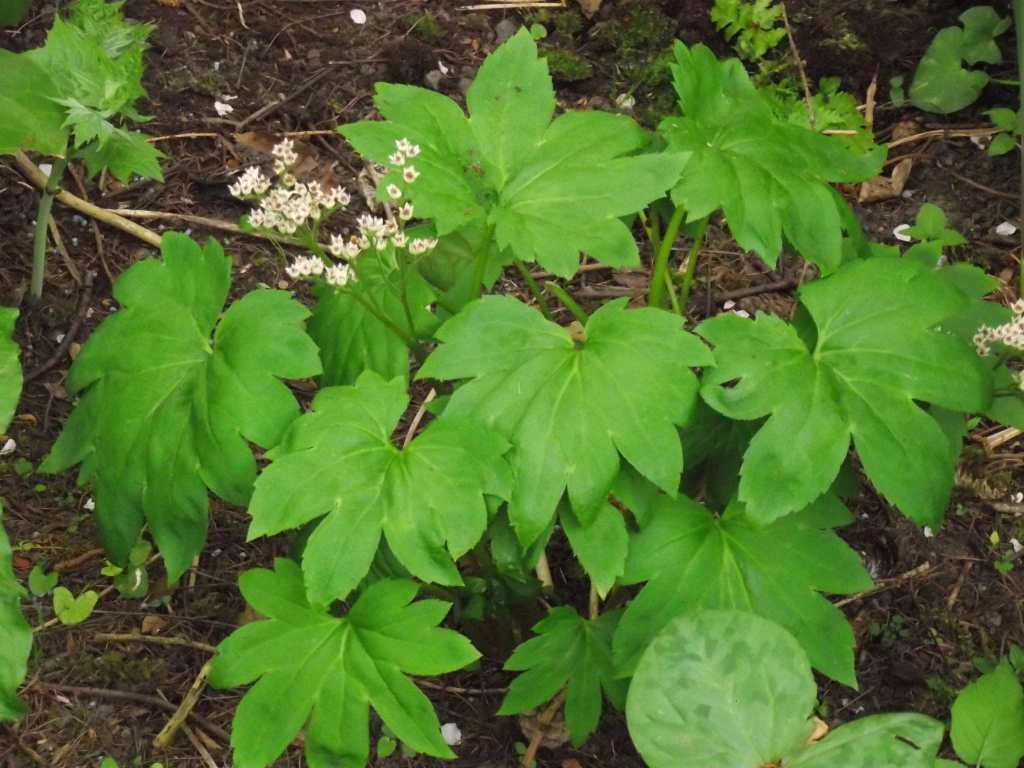
A useful perennial for the woodland planting Mukdenia rossii hails from China. Similar to heucheras in habit its leaves will take on red shades in the autumn.

Myosotis

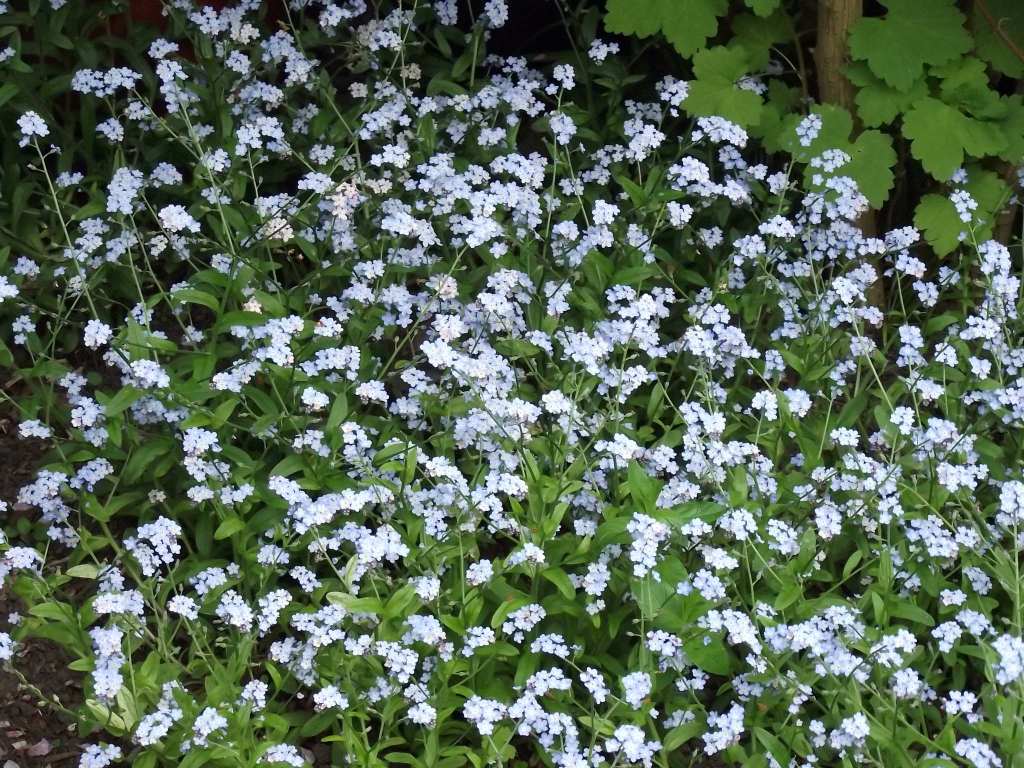
The forget-me-not is a plant well known to everyone, M.sylvatica (the woodland forget-me-not) is cultivated throughout the temperate world and has produced hundreds of cultivars, many of which are used in spring bedding. Although a short-lived perennial it will seed itself everywhere which makes it more of a permanent feature.