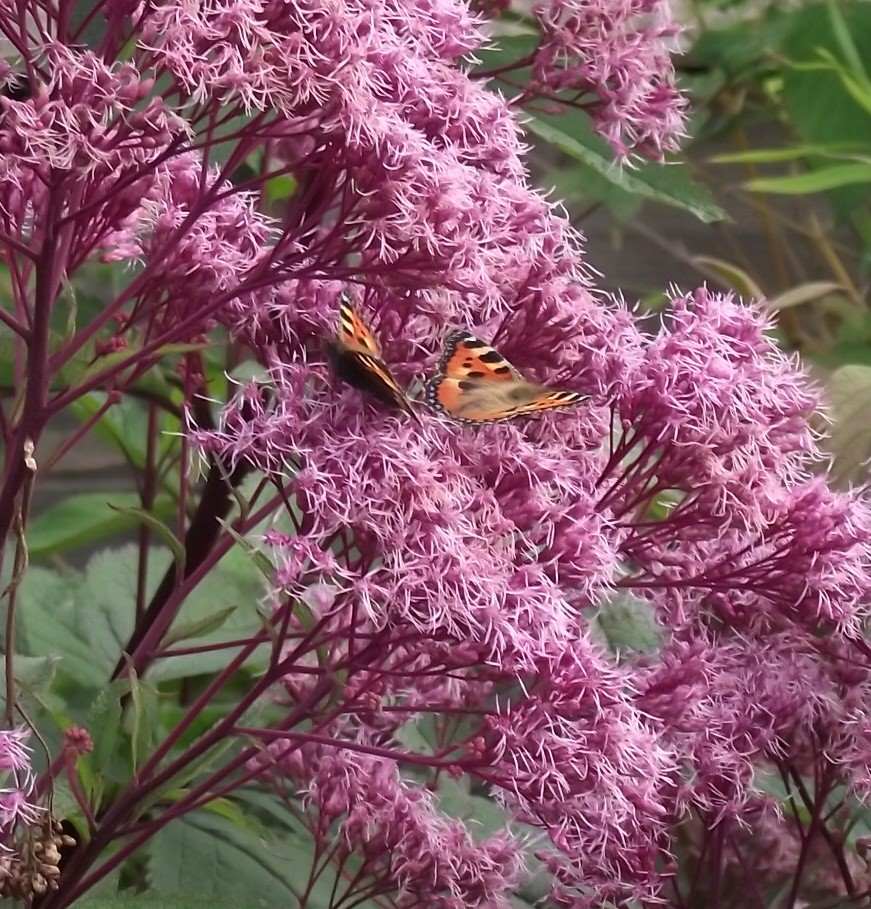
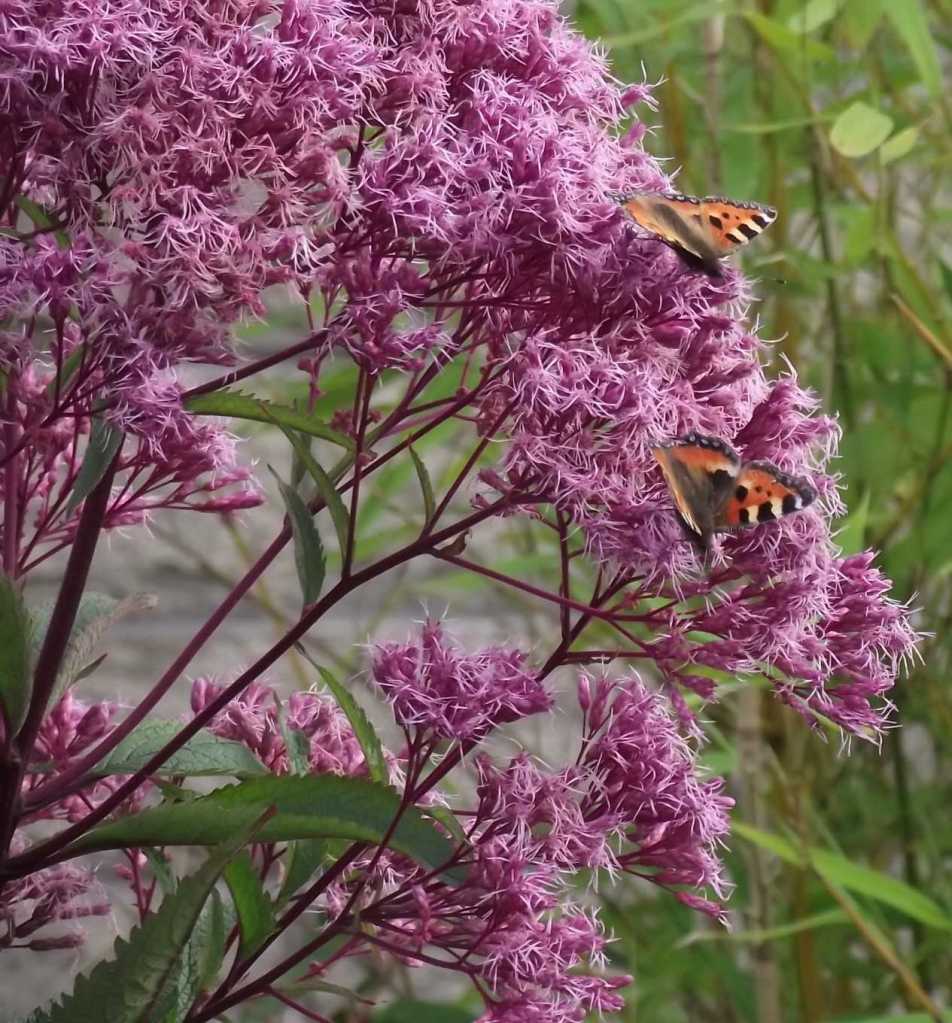
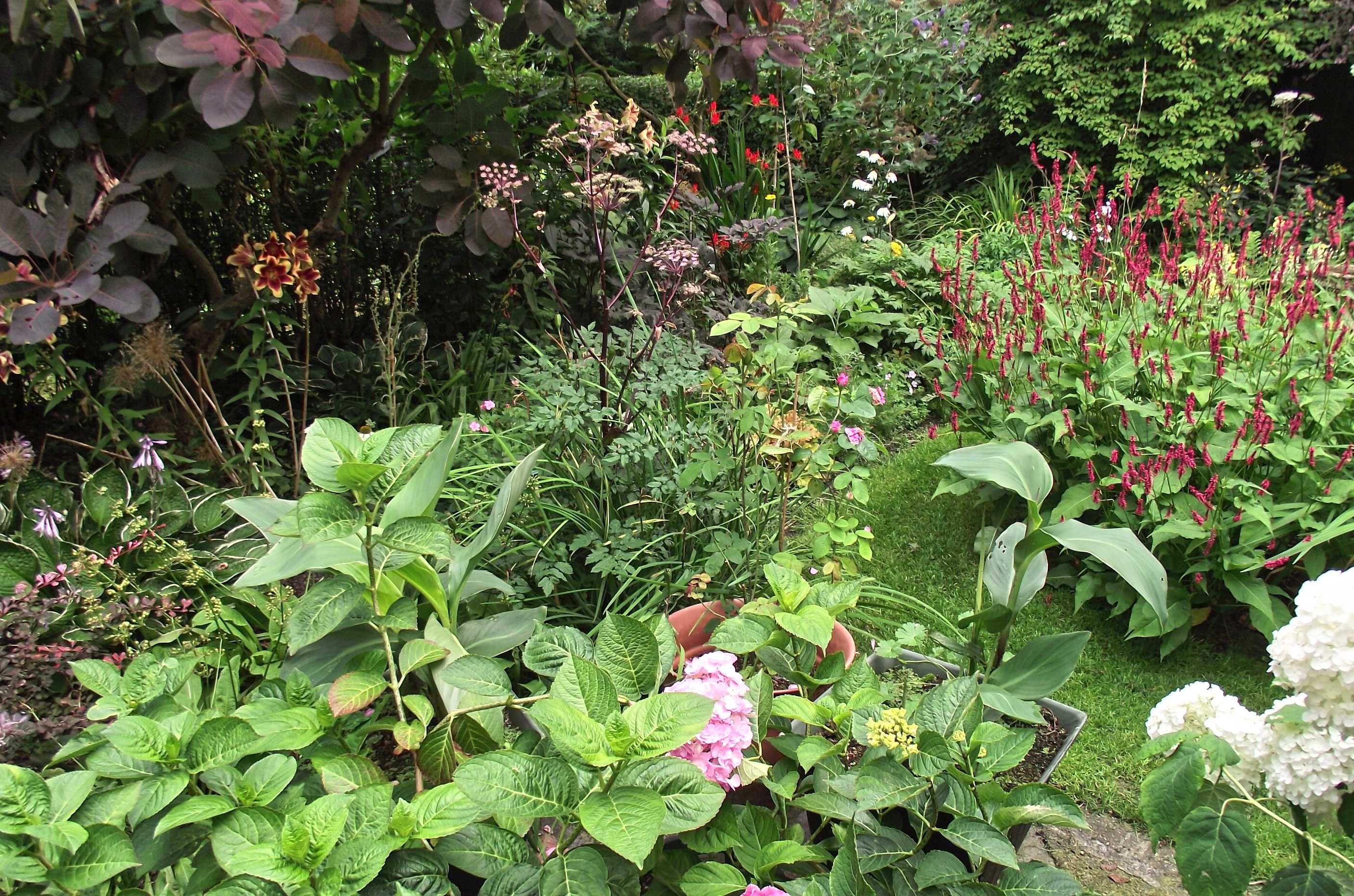
I’ve been missing for a few weeks as, to be frank, I had very little to show without constant repetition. The main show now is the Eutrochiummaculatum Atropurpureum Group which, despite my earlier fears, when there were hardly any butterflies to be seen, has done its job. This year the buddleias were covered in Peacock Butterflies and then there was a gap even though Joe Pye was in flower. Now there are plenty of mainly Red Admirals to be seen, when the sun comes out. I am assuming it is to do with the hot dry summer, but I have not seen so many different species of bees as I have this year either. Another new visitor attracted to an old honeysuckle is the Hummingbird Hawk Moth. It is easy to spot as it jinks about, but much harder to photograph!
Eutrochium maculatum Atropurpureum Group or Eupatorium maculatum ‘Atropurpureum’ or Eupatorium maculatum Atropurpureum Group or Eupatorium purpureum ‘Atropurpureum’ or Eupatorium fistulosum ‘Atropurpureum’ or Eupatorium purpureum var. atropurpureum according to the RHS, or just plain old Joe Pye Weed, between two Phyllostachys aureas.
Flutterbies. People ask “why do you have such a large plant in so small a garden?” What you see is why. I even have another one in the even smaller front garden. I’m happy to think my garden has become a butterfly oasis in the wilderness surrounding me.
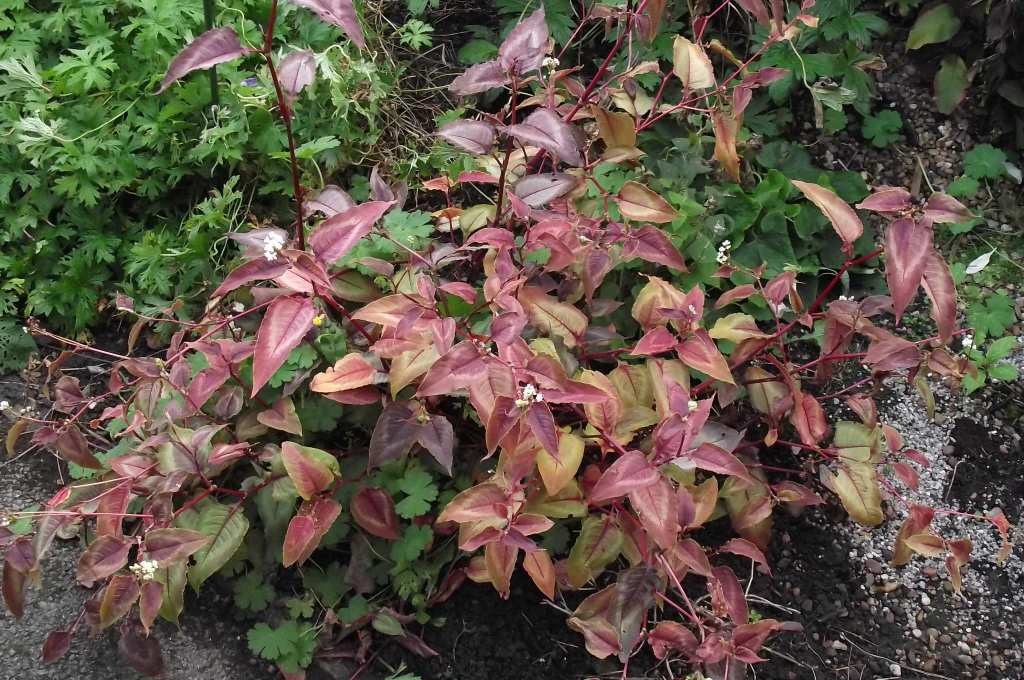
I can never make my mind up about Persicaria microcephala ‘Red Dragon’. I just think the leaf colour could be brighter. I don’t think its sprawling habit is for everyone, but it does have an AGM.
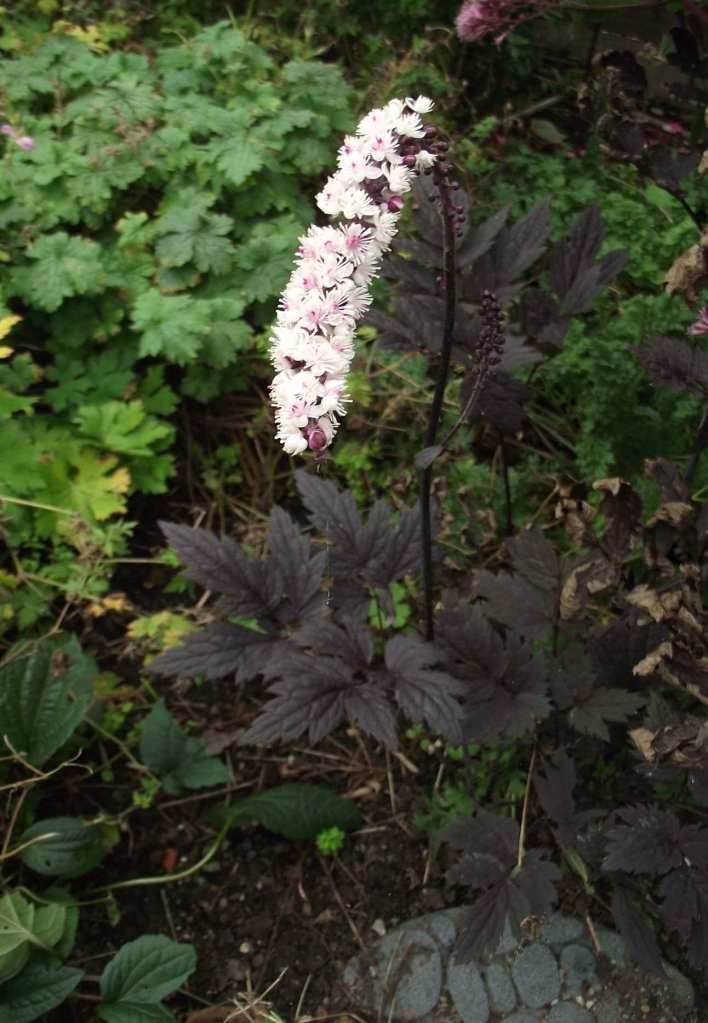
This plant of Actaea simplex ‘Brunette’ suffered very badly from the drought, all the flower spikes, bar this one, drooped never to recover. you can see the brown crinkled leaves to the right of the photo. Also known as Cimicifuga ramosa ‘Brunette’. I look at Actaea rubra and wonder how they can be related.
What’s left of my begonias. The other, more exposed, baskets were finally decimated by the torrential rain and wind that we had last Saturday. This one is in a very dark spot, lacking nutrients, and is definitely running out of steam. I grow these every year from plugs as I get little in the way of sun on this side of the house. Begonia Illumination ‘Apricot Shades’.
Sedum spectabilis ‘Autumn Joy’ or Hylotelephium telephium ‘Autumn Joy’. From Sedum to Hylotelephium please make it stop!
This meme is hosted by Jim Stevens who is to be found with all the details and links to plenty of other blogs to enjoy at Garden Ruminations.
Some more photos of plants I missed earlier from the old garden and some from the new.
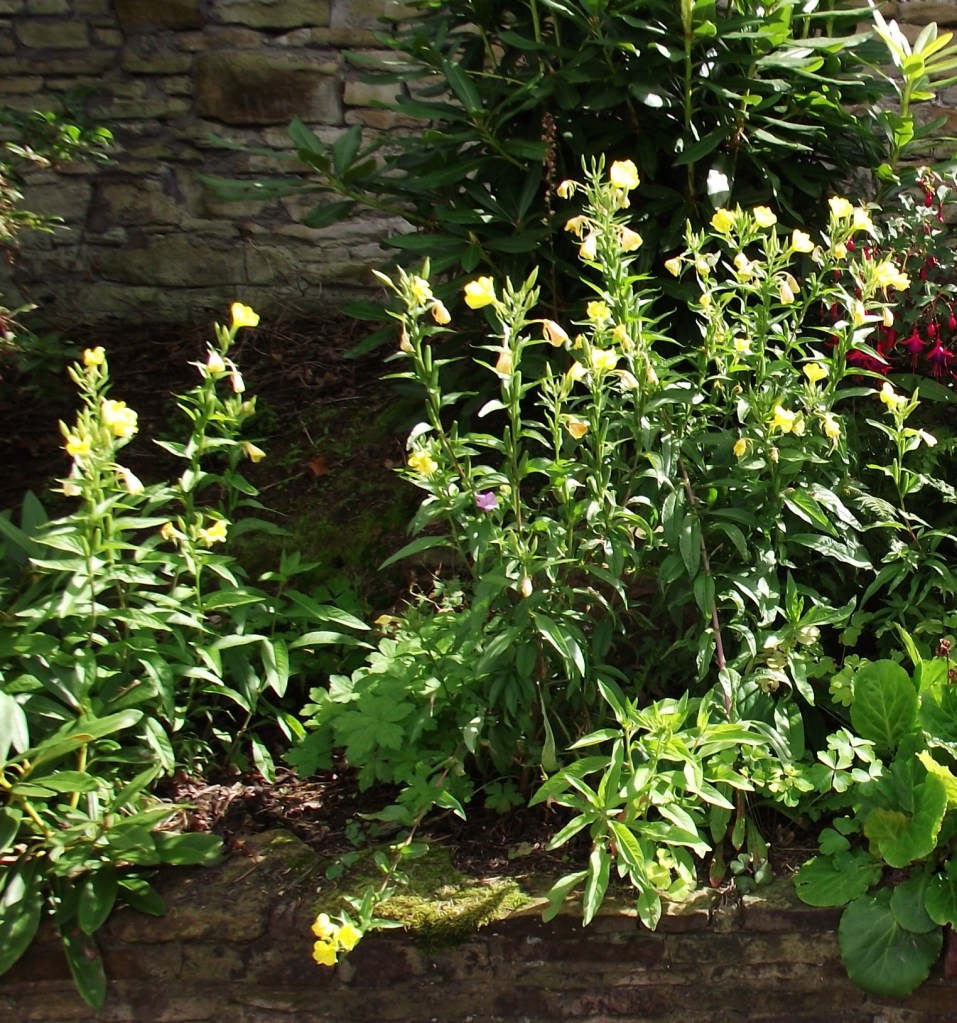
Oenothera
Oenothera biennis
Introduced from America, the evening primrose grows wild in the UK but is a useful although unreliable addition to the garden. Basically a biennial it has a habit of self seeding into the garden and popping up in unexpected places. The clump in the picture actually appeared several years earlier, died off after flowering and didn’t return immediately. The evening primrose gets its name from the fact the flowers open at dusk and can actually be observed doing so, it was once very popular in gardens but not so much now.
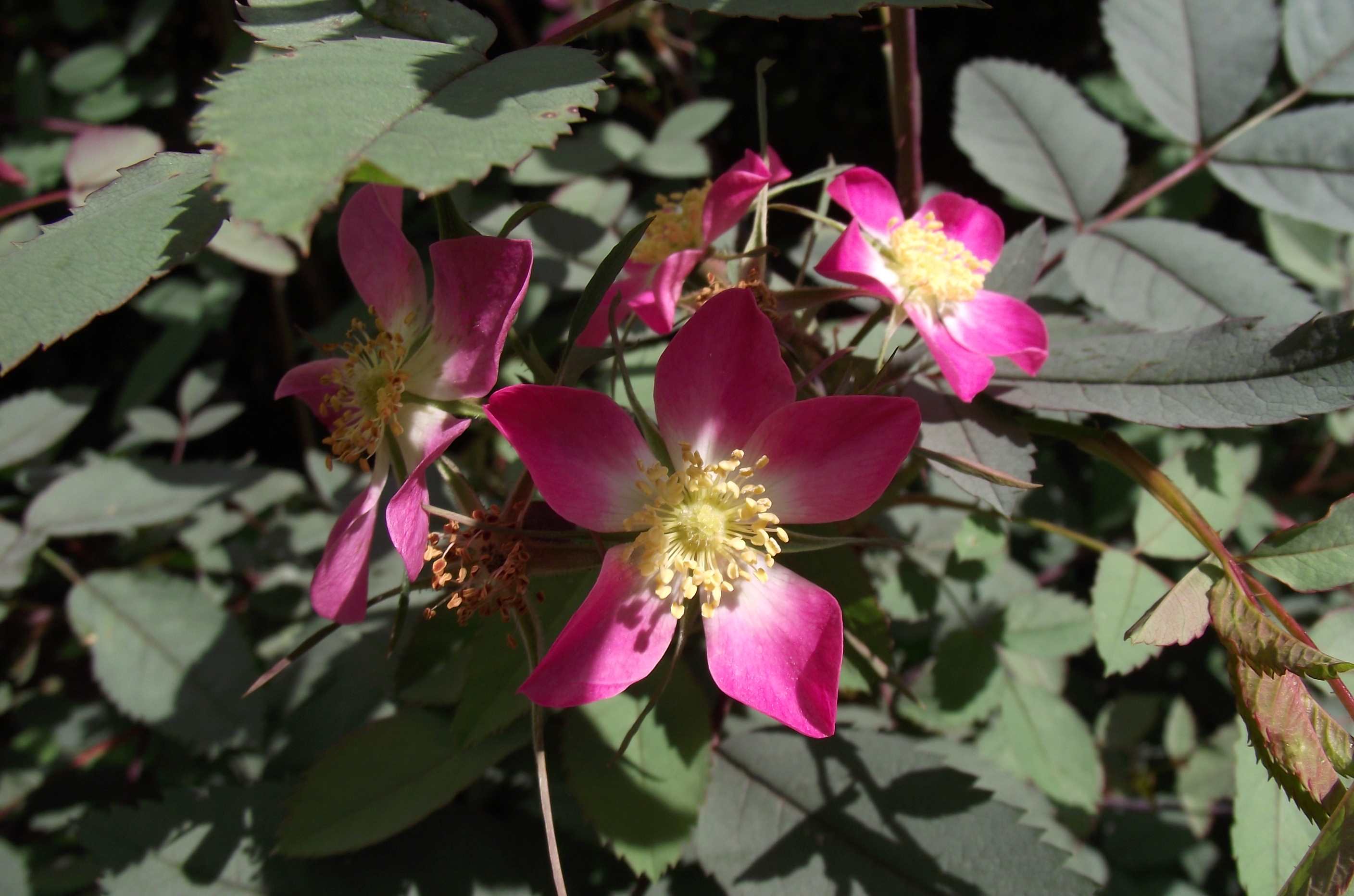
Rosa glauca
Rosa glauca is one of the few roses I have actually grown, it has small rather insignificant single flowers followed by worthwhile hips. The grey foliage is really its outstanding feature arching up to around 6′ which also makes it an ideal plant for a mixed hedge. Apparently it has become a proscribed species now, “irresponsible” planting subject to a fine.
Saxifraga fortunei
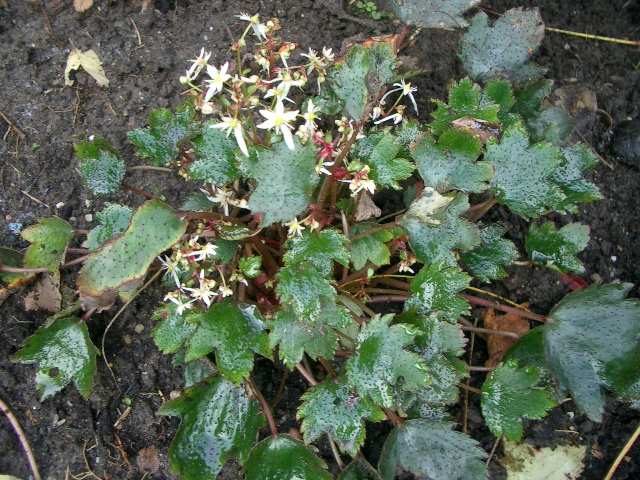
Not really a common garden plant, although it has many cultivars, Saxifraga fortunei is tolerant of even deep shade. It has attractive leaves and the distinction of being late flowering so can light up a dark corner of the garden until the frosts take it down. I think most of its cultivars originate from Japan, some of which plus the specie plant have been awarded the RHS AGM.
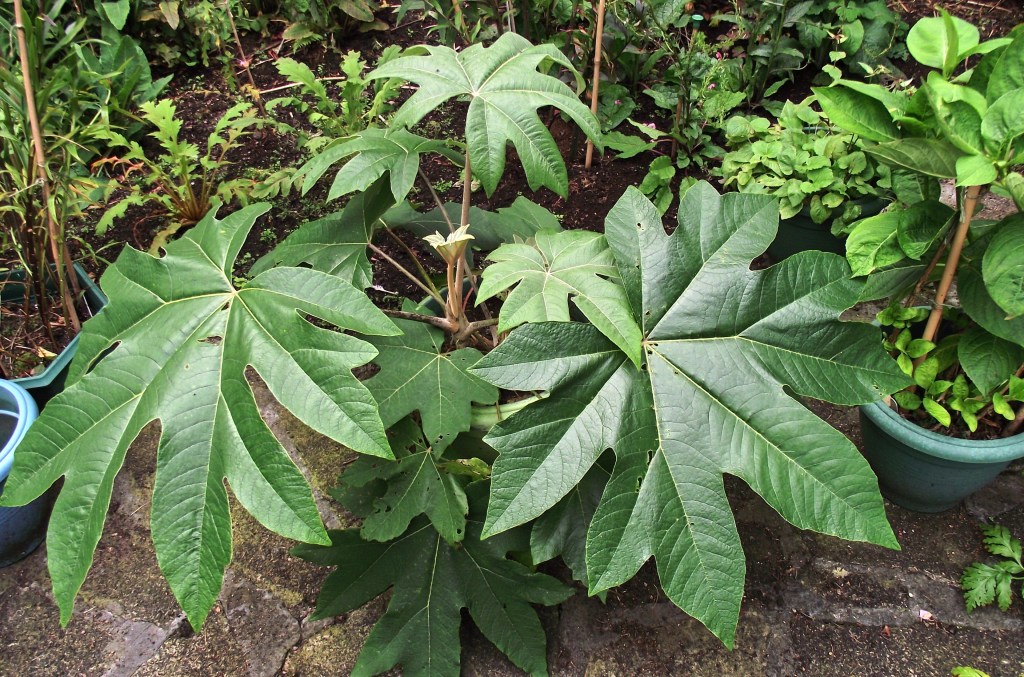
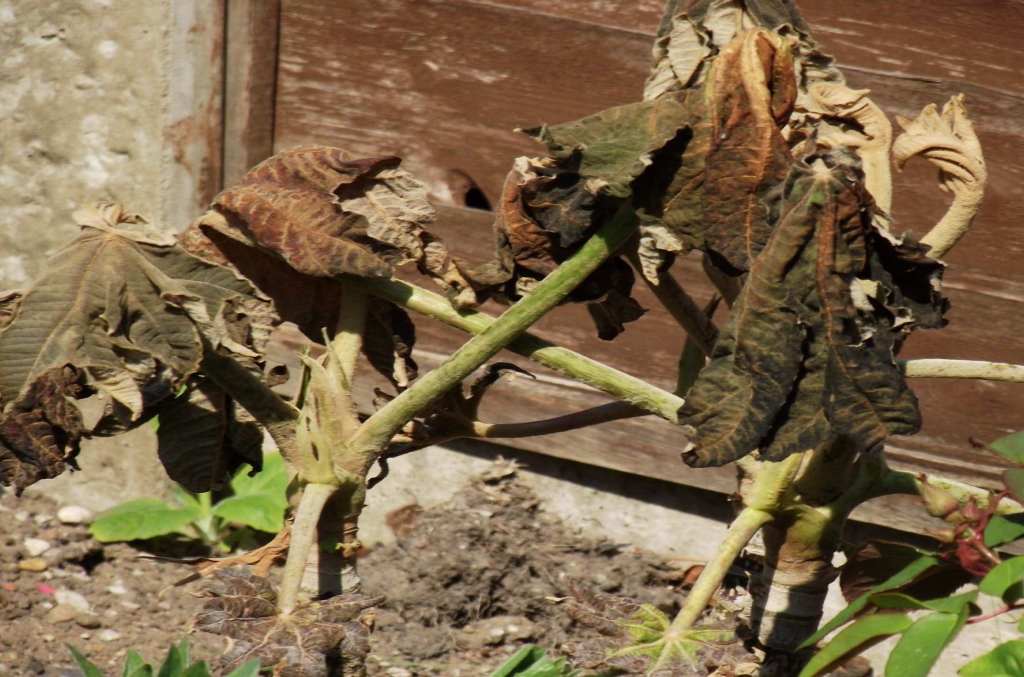
This was a major mistake and why you should always research a plant that you are unfamiliar with! My sister gave me a small plant of this, “T Rex” as she called it as she couldn’t remember the name, from her holiday home in Shropshire, I should have been alerted when she told me it had lots of babies! I had it confined in a larger pot for a year before moving it with me to the new garden. Once planted out in the front garden it drew attention as it grew to around 5′ displaying its striking tropical looking leaves until it was devastated by a sever frost which killed off the main stems completely. Then the trouble started, a crop of new shoots appeared around the original site but also new shoots started to appear at as much as 15′ away from the parent which in the end took me two seasons to eradicate as the monster nearly took over my tiny front garden, its thick fleshy roots getting everywhere. If you have plenty of space and want a tropical look, ideal.
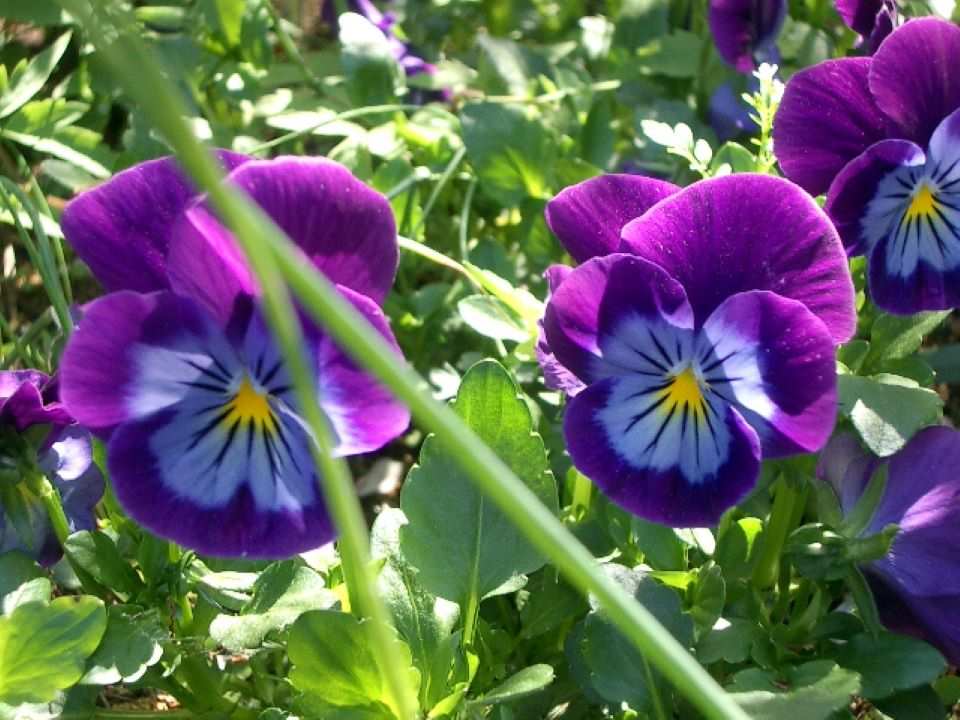
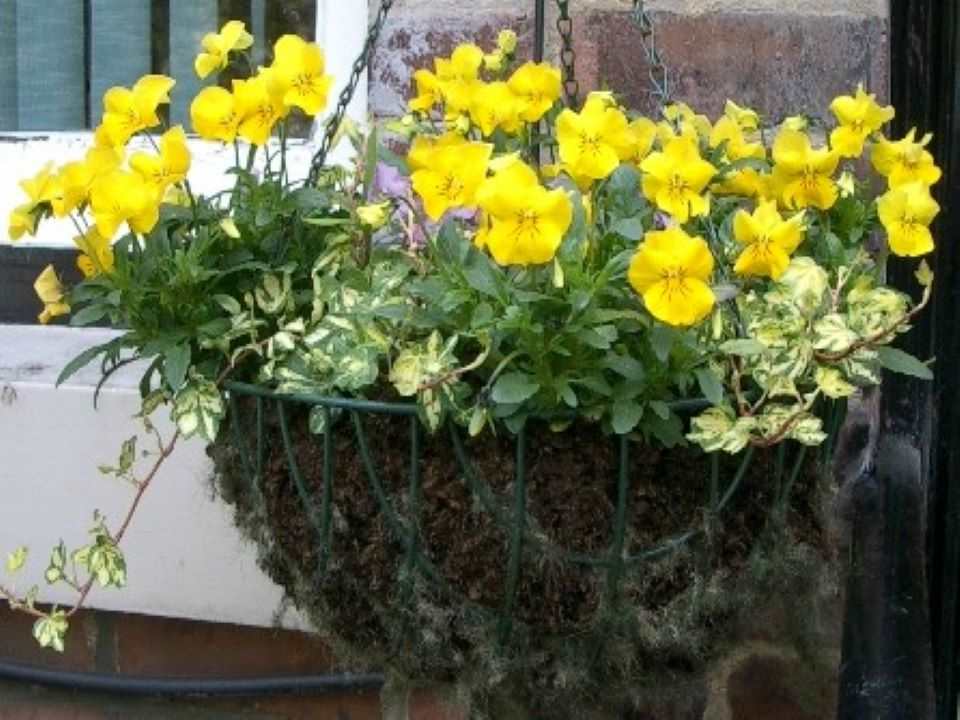
I have only photographed pansies in views of bedding or baskets but here are a few violas I have grown. It is impossible to cover the subject here, as it is so far wide ranging, including some delightfully scented specimens. Basically easy to grow, versatile and rightfully popular.
The warmer weather continues but, much as I am enjoying it, I feel it has come far too early and would be welcome in about a month’s time as I have a feeling of trepidation about what is round the corner. Many plants are thrusting up new tender growth and I have already noticed some damage caused by the light overnight frosts and possibly the cold winds. We can’t put out bedding with confidence until the end of the third week in May. The local NT gardens don’t start planting until the second week of June, mind you, they have thousands of plants at risk. On the 2nd June 1975 snow stopped play in Buxton, only a few miles from me, between Derbyshire and Lancashire cricket clubs. Play was resumed the following day in beautiful sunshine and the following year, 1976, was one of the hottest summers on record. Buxton Cricket Club are celebrating the 25th anniversary with a special event this year. We gardeners are very much at the mercy of the weather, but spare a thought for the poor farmers and growers who have to make a living.
Spirea japonica ‘Golden Princess’
This is one of my favourite small shrubs, I look forward every year to the emergence of the colourful foliage. I had one in my last garden which was quite a bit larger, it could be that the drier, less fertile soil this one is in is limiting its growth, but I think it’s a little gem nevertheless.
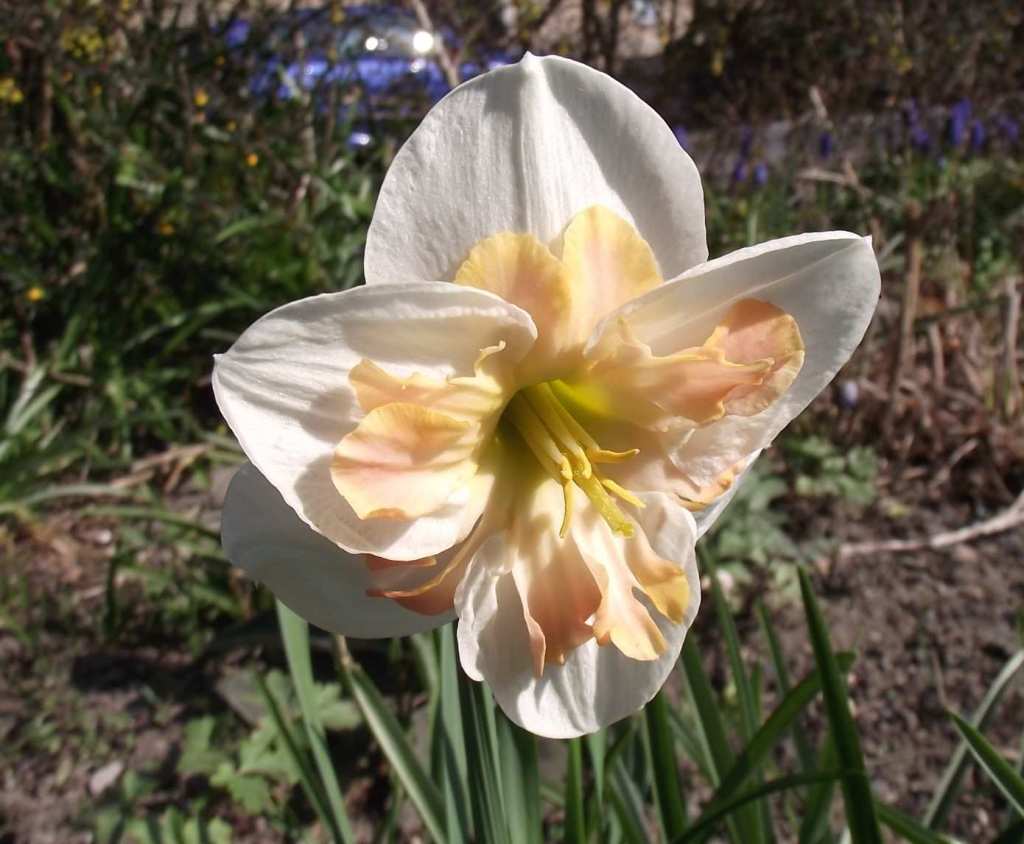
Narcissus ‘Pink Wonder’
One of the remaining two flowers this year from a clump I planted about four years ago. I never seem to get longevity from my bulbs, tulips I can understand, as they need a good baking during the summer, but daffodils I tend to plant and forget about so probably my fault.
Meconopsis ‘Crarae’
I used to grow numerous meconopsis as they are one of my favourite genera. This year is the first in my new garden that I am hoping to get some decent flowers. Crarae can only be raised vegetatively and I have never grown it before so fingers crossed! Crarae was raised at Crarae Gardens, Argyle, Scotland. If you are interested in meconopsis you might like to visit my page.
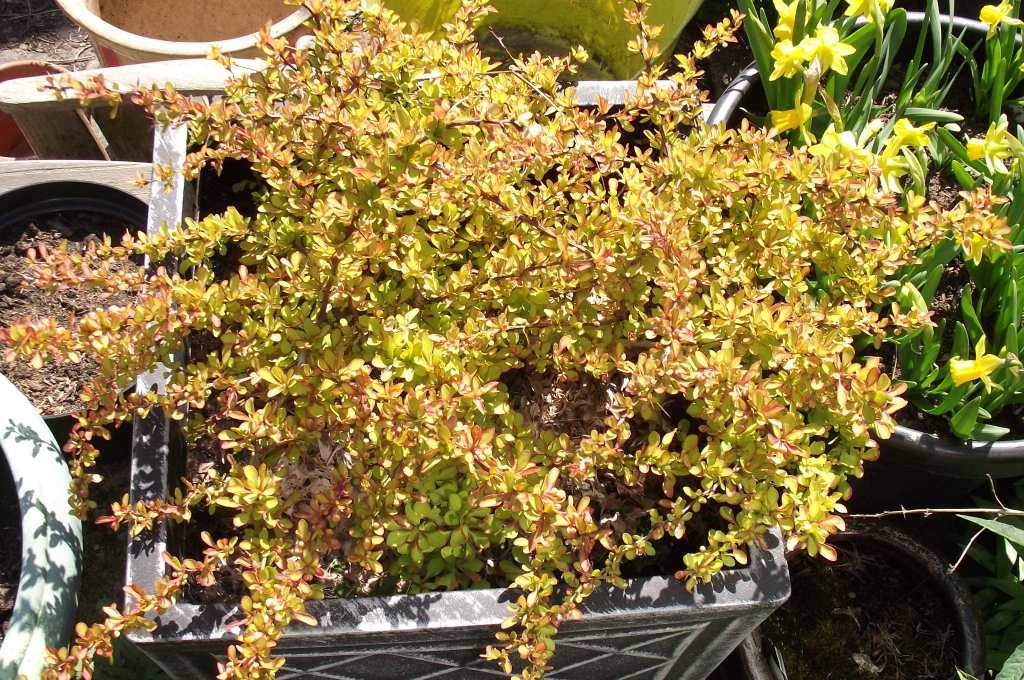
Berberis thunbergii ‘Diabolicum’
This berberis is another welcome splash of spring colour, it loses its reddish tinge as the year progresses. Like most berberis, it thrives here taking anything that the weather can throw at it.
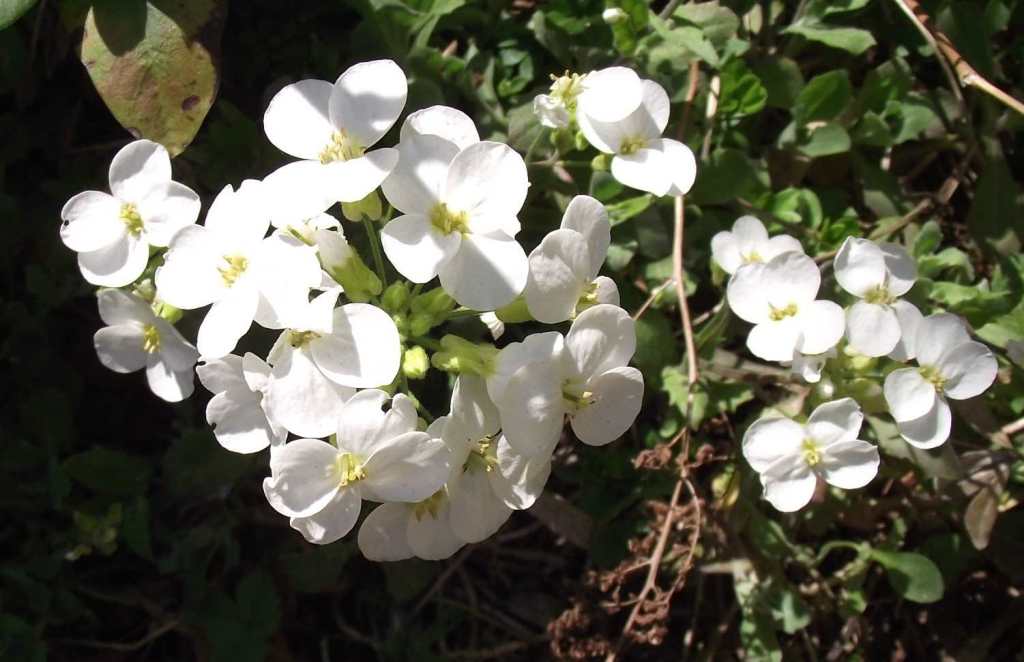
Arabis alpina ssp. caucasica ‘Snowcap’
I grew the common or garden Rock Cress, or at least an improved form of it, from seed. It makes a useful early splash of white every year.
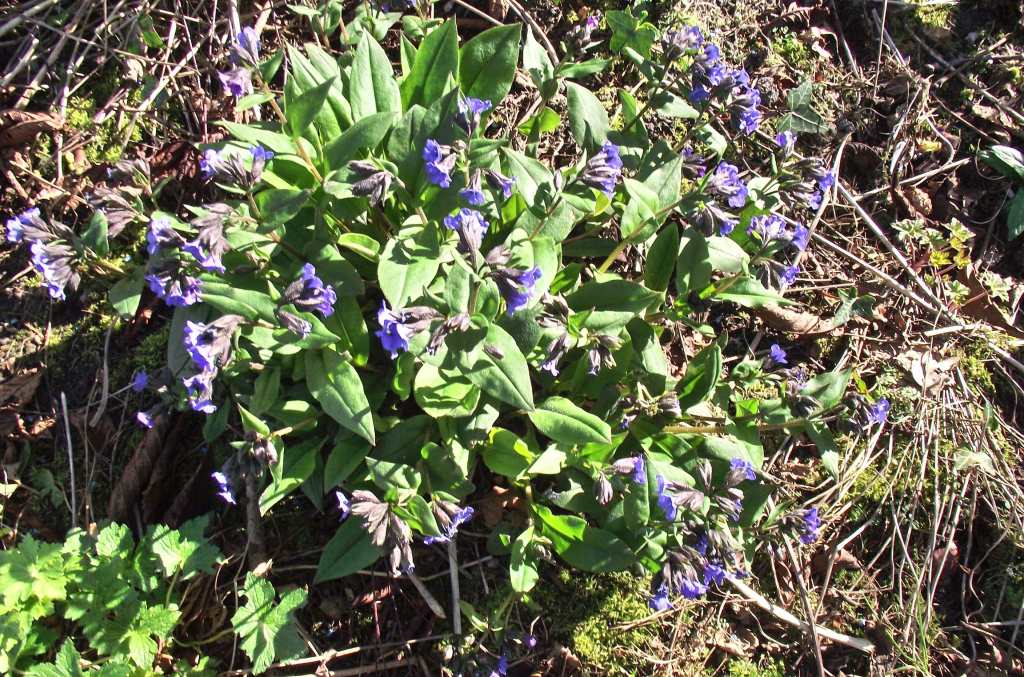
Pulmonaria ‘Blue Ensign’
Currently growing in a pot until I find somewhere to put it, I bought this pulmonaria as a bare-root plant which is why it is flowering slightly later than normal. I have taken a real liking to pulmonarias over the last few years, as there are so many cultivars now, and can’t wait to increase my collection.
This meme is hosted by Jim Stevens who is to be found with all the details and links to plenty of other blogs to enjoy at Garden Ruminations.
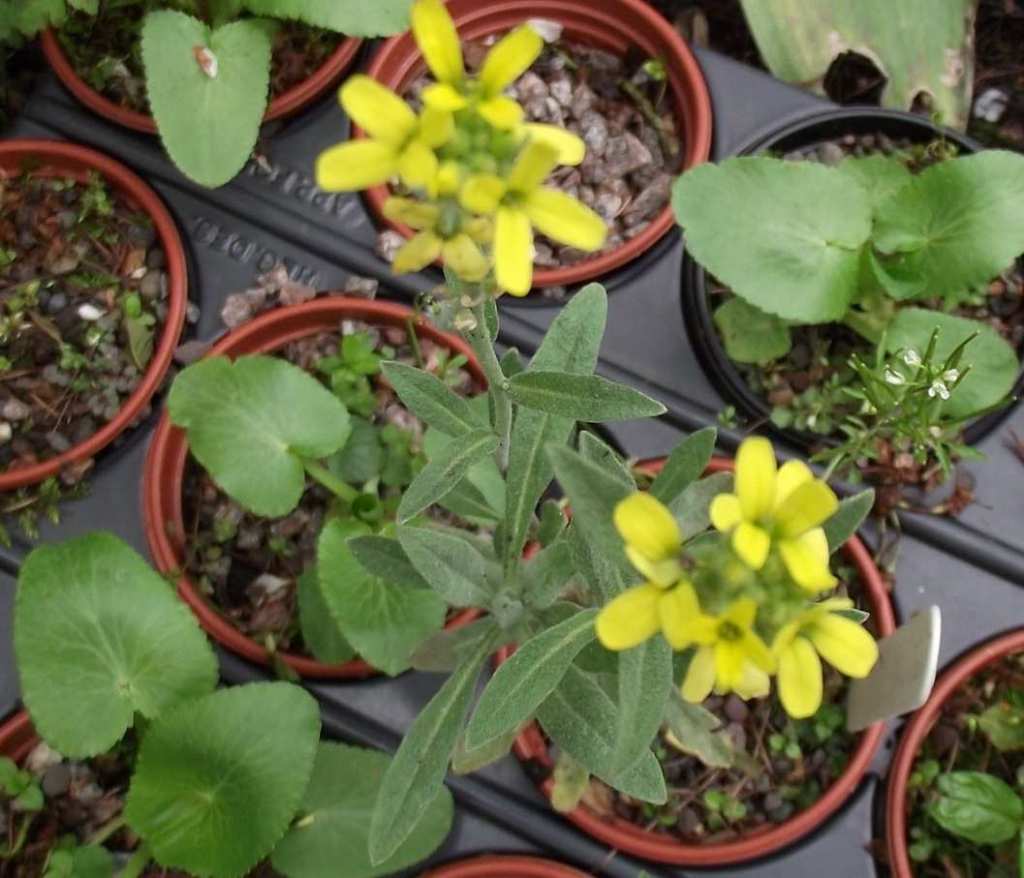
Sisymbrium luteum is a member of a small genus of plants in the brassica family and is basically a mustard. Grown from a “lucky-dip” batch of seeds out of curiosity, I think it is an American species and grew well in standard border soil and conditions, probably more of a field plant in the wild.
Stachys
Stachys recta?
Stachys is a large genus probably the most familiar members being S.byzantina and S.lanata known as Lamb’s Ears which are evergreen carpet forming plants with woolly leaves. The plant illustrated was grown from seed labelled S.recta however the problem is that S.recta is the Yellow Woundwort! Other members of the genus include various Hedge-nettles and Betony. When it comes to cultivation most seem able to grow in fairly poor dry conditions.
Strobilanthes
Strobilanthes wallichiiStrobilanthes wallichii
A member of a genus that is widespread throughout Asia, Strobilanthes wallichii or the Hardy Persian Shield is a Himalayan plant which thrived in my “woodland garden”. One of the few plants producing such intense blue flowers it is a welcome late-flowering addition to any garden.
Stylophorum
Stylophorum lasiocarpumStylophorum lasiocarpum
Stylophorum lasiocarpum, the Chinese Celandine Poppy is a biennial or short lived perennial from Central China. The flowers don’t last but I find the tapering seed pods fascinating, when they eventually ripen the seeds are ejected explosively. Best grown in moist soil in sun or partial shade.
Symphyandra
Symphyandra hoffmannii
Symphyandra hoffmannii is a rather beautiful member of the campanula family from the Balkans. This biennial or short-lived perennial is rarely seen but is easy to grow and sets copious amounts of seed to the extent, if left to its own devices, it is capable of producing great drifts of flowers which are both long-lasting and go on to late in the season. A real gem.
Sysrinichium
Sysrinichium striatum
Sysrinichium striatum is an American member of the Iris family which has a variety of common names such as pale yellow-eyed grass because of its narrow leaves giving it a grass-like appearance. It is actually rhizomatous and as one would expect prefers a well-drained soil in a sunny spot to thrive.
Telekia
Telekia speciosa
Telekia speciosa sometimes known as the yellow ox eye is a superb plant for the back of the herbaceous border. A rhizome forming plant it is easy to grow in any good border soil and reasonable aspect. The subject above looked particularly striking with the background cotinus for contrast.
Tradescantia
Tradescantia x andersoniana
Tradescantia is probably a genus more associated with house plants known as spiderworts such as T.zebrina and T.pallida however one species makes an attractive border plant. Tradescantia x andersoniana is the group classification for a range of cultivars that have been developed by the plant breeders. They are all easy to grow in well drained soil in sun or partial shade. Note the generic characteristic of three petals.
The toad lilies originate from Japan and Taiwan (T.formosana) they are best suited to shady areas in a rich moist acidic soil and will in fact tolerate quite heavy shade. They thrived in my “woodland garden” their rhizomes spreading well. One can’t help but be fascinated by the exotic orchid-like flowers being produced on such a tough little plant.
Trilliums are beautiful spring-flowering plants from Asia and the United States. The name is self-evident three petals being born above three leaves makes them very distinctive. They are another woodland subject and thrive in the same conditions as tricyrtis, once planted best left alone as they are not fond of being disturbed. In the wild T.grandiflorum, in particular, forms huge drifts in deciduous woodland.
The mulleins are a large genus of mainly biennial and perennial plants which are both easy to grow in any good to poor soil in a reasonably sunny position. Although they are native to Europe and Asia V.thapsus is now in fact a familiar field weed in some states in America. They are all easy to raise from seed and some of the big ones such as the biennial Verbascum ‘Arctic Summer’ are definitely a talking point with their large woolly leaves and 6′ flower spikes. To be honest a favourite of mine.
Verbena
Verbena bonariensis
We are all familiar with the summer bedding and trailing verbenas but Verbena bonariensis is now listed in most of the main online catalogues as a wonderful go-to plant which I don’t think is entirely accurate. I admit it is quite exceptional in many ways but illustrates everything I hate in the horticultural industry of which it is not the only example. I have grown this in my shaded garden with little success which is what I would expect as in reality it will only do well in light soils in a sunny position along with many other plants particularly those included in the prairie planting trend. It is easy to grow from seed but although it is perennial I would expect it to be short-lived in other than ideal conditions.
Vinca
Vinca major variegata
There are basically two forms of the periwinkle grown V.major and V.minor both make excellent if somewhat rampant ground-cover plants. Tolerant of most conditions they are a stalwart for weed suppression under shrubs or even roses. There are white flowered forms available a particularly good one being Vinca minor f. alba ‘Gertrude Jekyll’.
I have only photographed pansies in views of bedding or baskets but here are a few violas I have grown. It is impossible to cover the subject here as it is so far wide ranging including some delightfully scented specimens. Basically easy to grow, versatile and rightfully popular.
Rheum tanguticum (syn. R. palmatum var. tanguticum) is a fairly uncommon form of Giant Rhubarb, I have included several pictures of it in various stages of growth because it is definitely one of my favourites. This spectacular plant is at home in the bog garden and mine was planted next to a bird bath which frequently overflowed providing an ideal spot for it.
Rodgersia
Rodgersia ‘Herkules’
Rodgersias are another moisture loving plant suited to the pond or stream side. Unfortunately the plant pictured, although in moist soil, did not give of its best as the soil was probably not wet enough. The young leaves have a reddish tint and become quite shiny as they age dying back in the early winter. The flower stems can be left on for winter interest.
Rudbekias particularly R.fulgida often known as Black-eyed Susan are a staple of the cottage garden border however there are many beautiful varieties, particularly from R.hirta which are used as annual bedding, biennials or short-lived perennials. Native to N.America and Canada they all prefer a moist but well drained soil and will flower best in full sun.
Sanguisorba
Sanguisorba menziesiiSanguisorba tenuifolia
Burnets are members of the rose family that range over the Northern Hemisphere, S.menziesii comes from Alaska. A useful border plant they will tolerate most soil types and grow equally well in sun or part-shade.
Saxifraga
Saxifraga fortunei
I used to grow many mossy and encrusted saxifrages back in my “alpine days” my favourite being the spectacular S.longifolia, S. fortunei is however a different animal altogether. Introduced from woodland in China it is not widely grown but is an ideal subject for the shaded garden. It looks very different from what many people would think to be a saxifrage but the clue is in the flower if you look closely. Despite it being rare in the UK there are many varieties in cultivation as a result of plant breeders in the far east selecting them for leaf colour rather in the same way as heucheras. One of this lovely plant’s greatest assets is that it flowers from autumn until the frost eventually shuts it down.
Scabiosa
Scabiosa drakensbergensis
Plants in the genus Scabiosa come in all forms and sizes, annuals, biennials and perennials both evergreen and semi evergreen. There are quite a few cultivars grown in the herbaceous border and cottage garden in colours varying from the most common blue through to deep magenta and white. S.drakensbergensis, as its name suggests comes from the Drakensberg mountains in S.Africa and is a white flowered, clump forming hardy perennial which makes a useful subject for the more informal garden. The specimen shown was grown from seed.
Schizostylis
Schizostyliscoccinea
Schizostylis coccinea or Kaffir Lily is a semi-evergreen rhizomatous member of the Iris family of which there are several cultivars generally ranging through shades of pink. They are fairly easy to grow in a well drained sunny spot and have the added advantage of flowering through autumn and into winter, sometimes still being in flower at Christmas in a mild winter.
Sedum
Sedum ‘ Jose Aubergine’Sedum spectabile ‘Autumn Joy’
Sedum is a large genus of plants having both succulent leaves and stems commonly known as stonecrops. They come in many forms from the more familiar creeping plants, border plants such as those shown above, and even shrubs, which to be honest I have never seen. Easy to grow given a well drained soil and sunny position, it goes without saying that they are drought resistant, and are ideal border subjects for autumn colour. The cultivar S. ‘Jose Aubergine’ is remarkable as it has dark leaves similar to the flower colour rather than the more usual silvery grey/green. I swear that the scientists who are studying DNA are there just to make the gardener’s life difficult, Sedum is now reclassified as Hylotelephium and I have just read that our nice and simple Sedum ‘Autumn Joy’ is now Hylotelephium x mottramianum ‘Herbstfreude’ !
Another massive genus, up to 1000 species, Silene or Campions come in all shapes and forms and are widely distributed as can be seen from the names of the plants illustrated. Really too diverse to delve into here it is sufficient to say that the garden varieties are easy to grow in a well drained soil in a sunny spot, think of them as meadow plants. One drawback worth mentioning is that they are not generally long-lived but on the plus side set copious amounts of seed.
Nomocharis are beautiful members of the lily family from China, Tibet and Burma which I have found best suited to my “woodland” area where they have done well in a rich moist well drained soil in dappled shade. They are quite rare and to buy the bulbs can be costly, the plants that I had were grown from seed and flowered in their second year.
Omphalodes
Omphalodes cappadocica ‘Cherry Ingram’
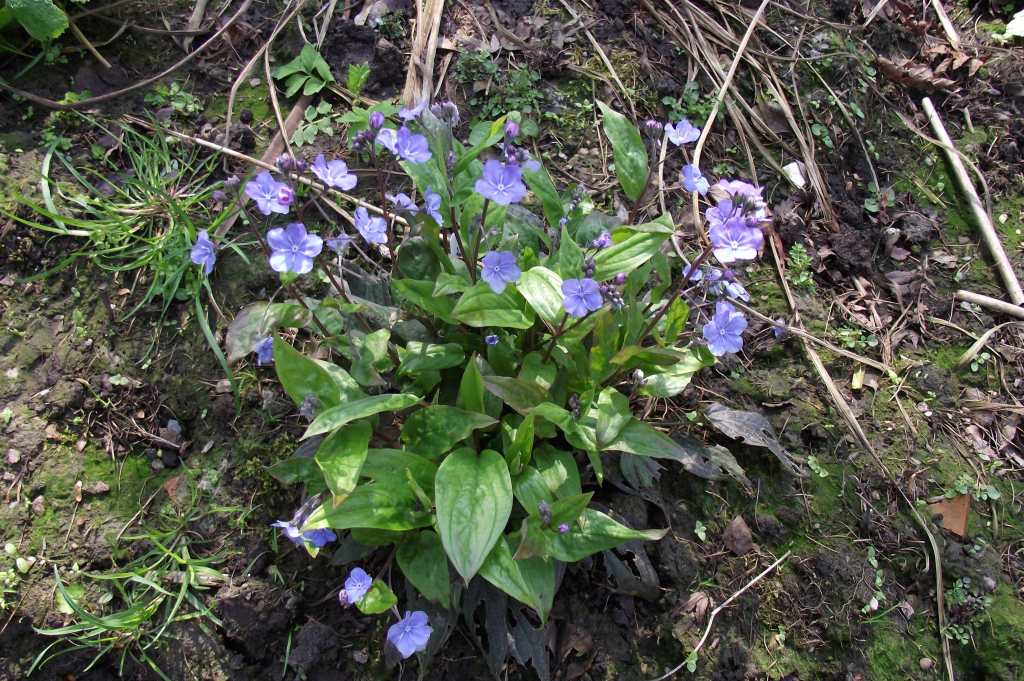
Omphalodes cappadocica is a useful ground-cover for a shady damp spot in the garden. Although it does like moist soil, along with most plants, it doesn’t appreciate winter waterlogging. The cultivar ‘Cherry Ingram’ has larger than the specie flowers carried over the attractive semi-evergreen leaves.
Paeonia
Paeonia ludlowiiPaeonia Officinalis Rubra Flore PlenaPaeonia veitchii var. woodwardii
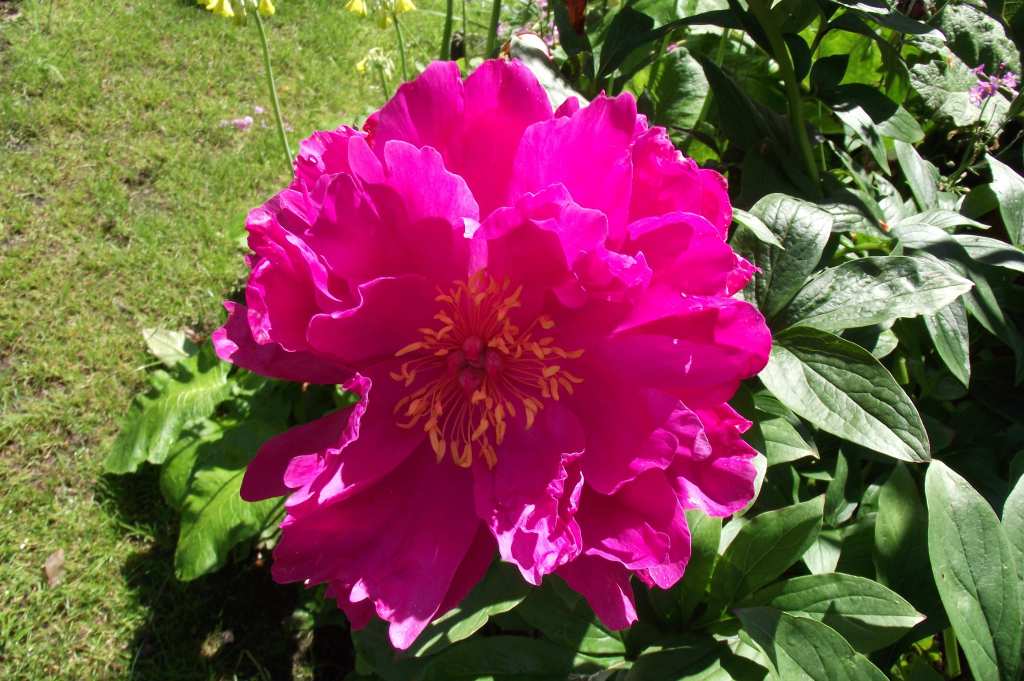
Peonies can be split into two main groups, the herbaceous paeonies for the border and the tree peonies which are really shrubs. Herbaceous peonies such as ‘Rubra Flore Plena’ make excellent border plants and are to be seen in many cottage gardens. They are slow growing but the spectacular blooms in spring and early summer are worth waiting for. Tree peonies generally flower earlier than the border varieties and make excellent plants for the back of a large border or as spot plants in a lawn. Although the flowers are over quite quickly the attractive feathery foliage makes a perfect foil for other flowers. In my experience the herbaceous plants don’t like being moved and new plantings take a while to establish.
Poppies are probably familiar to everyone ranging from the common field poppy, Papaver rhoeas to the big blowsy cultivars of Papaver orientale the Oriental Poppy. Annuals such as P.rhoeas, P.commutatum (Ladybird Poppy) and P.somniferum the Opium Poppy are best sown direct in the spring. The perennials, cottage garden stalwarts, are raised from seed in the usual way or purchased as plugs or plants.
Parnassia
Parnassia grandifolia
The large leaved Grass of Parnassus is a rare plant in both cultivation and the wild mine being grown from society seed. Because they come from the wetlands of SE United States they are obvious candidates for planting in a water garden environment. A close relative of the Grass of Parnassus, Parnassia palustris, which was once a feature of UK wetlands but is now in decline.
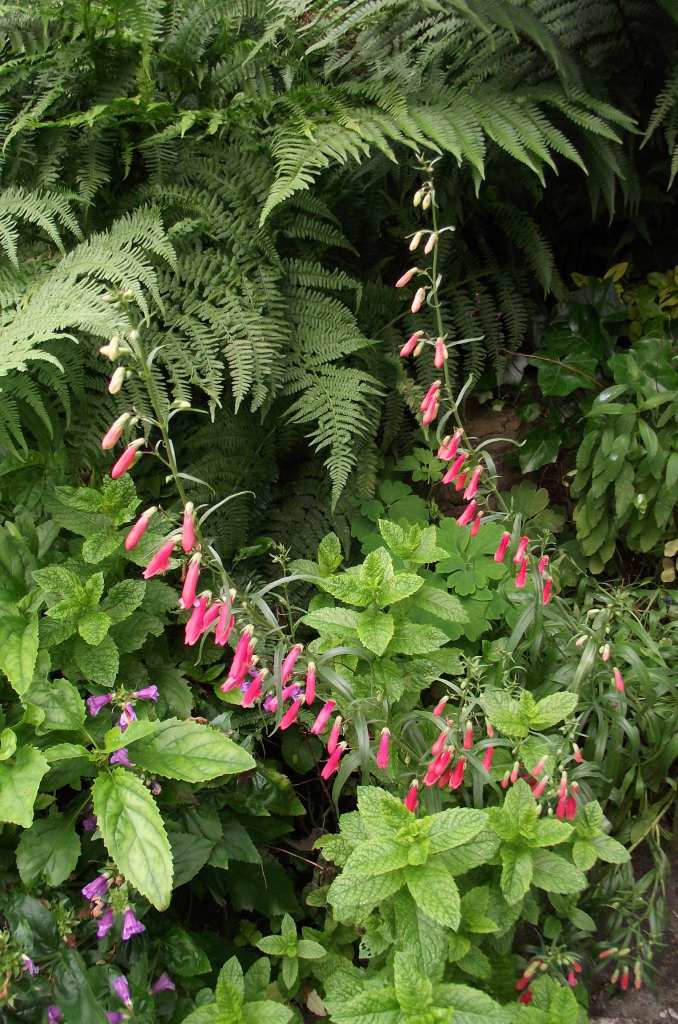
Penstemons are an American native which have become very much part of the herbaceous border in relatively recent years due to the efforts of the plant breeders probably the best known strain being the Pensham cultivars raised by Edward Wilson in the village of Pensham near Pershore, Worcestershire. Plants are not too fussy on soil type but need to be in a sunny spot. They are semi-evergreen and are best cut down to about 6″ above ground level in March to avoid a proliferation of woody stems, coincidentally this is also an ideal time for planting out. Cultivars are bought as plants or plugs whilst there are several species which can be raised from seed.
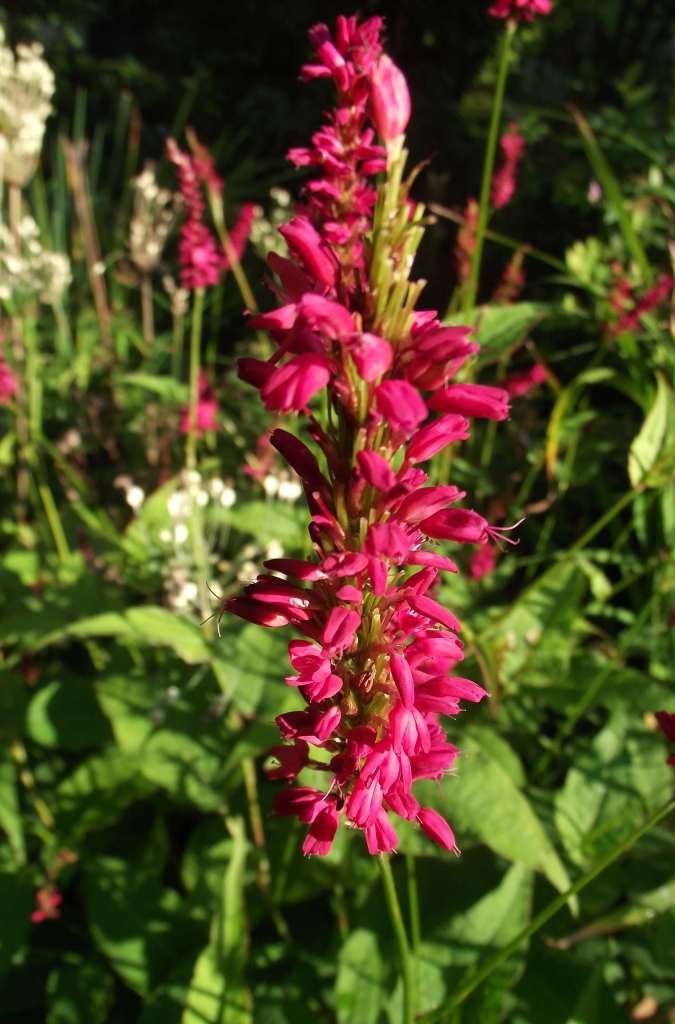
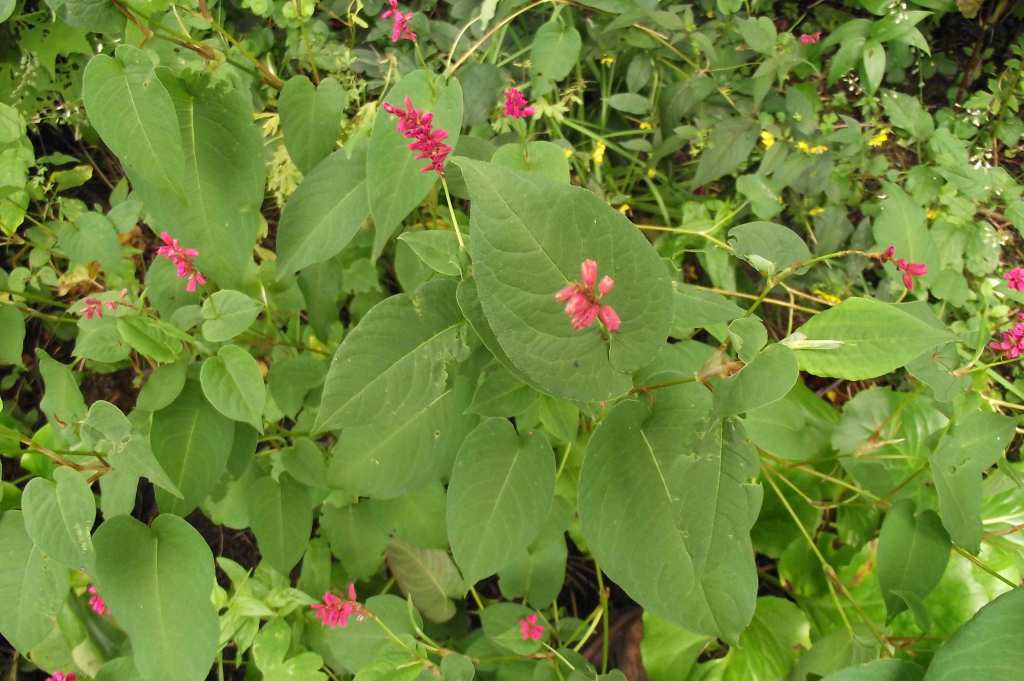
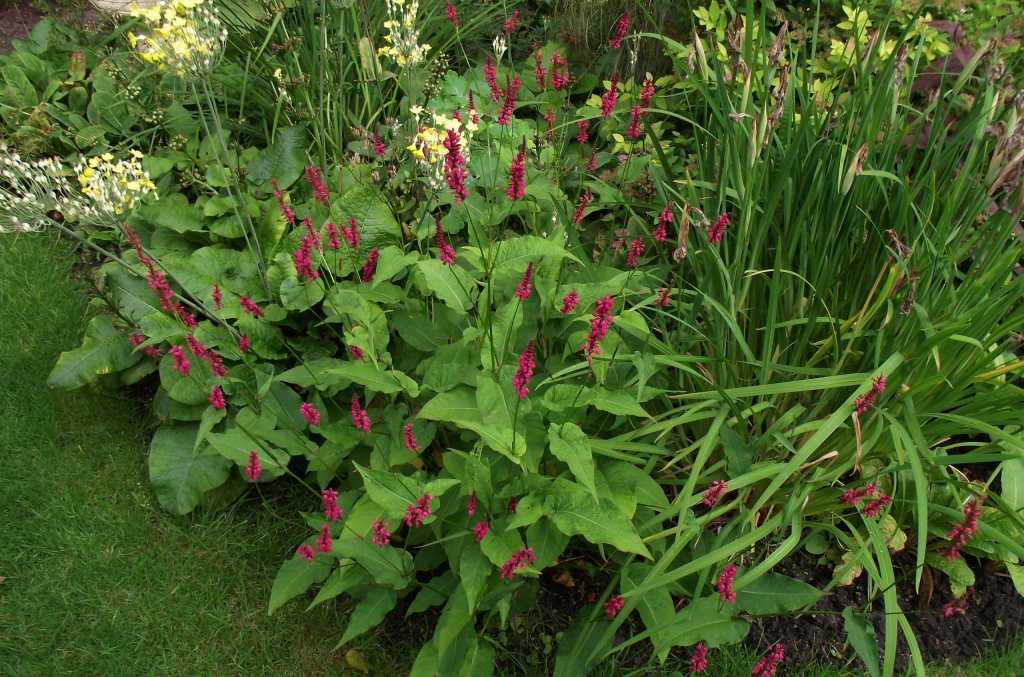
The genus Persicaria, sometimes known as Red Bistort hails from the Himalayan regions. Those I have grown have been a useful addition to the front of the border where they need plenty of room to contain their robust rather sprawling habit. Mainly semi-evergreens several also give a brief period of attractive autumn colour. The variety ‘Inverleith’ is smaller and not as robust as the specie plant making it more suitable for the less spacious garden.
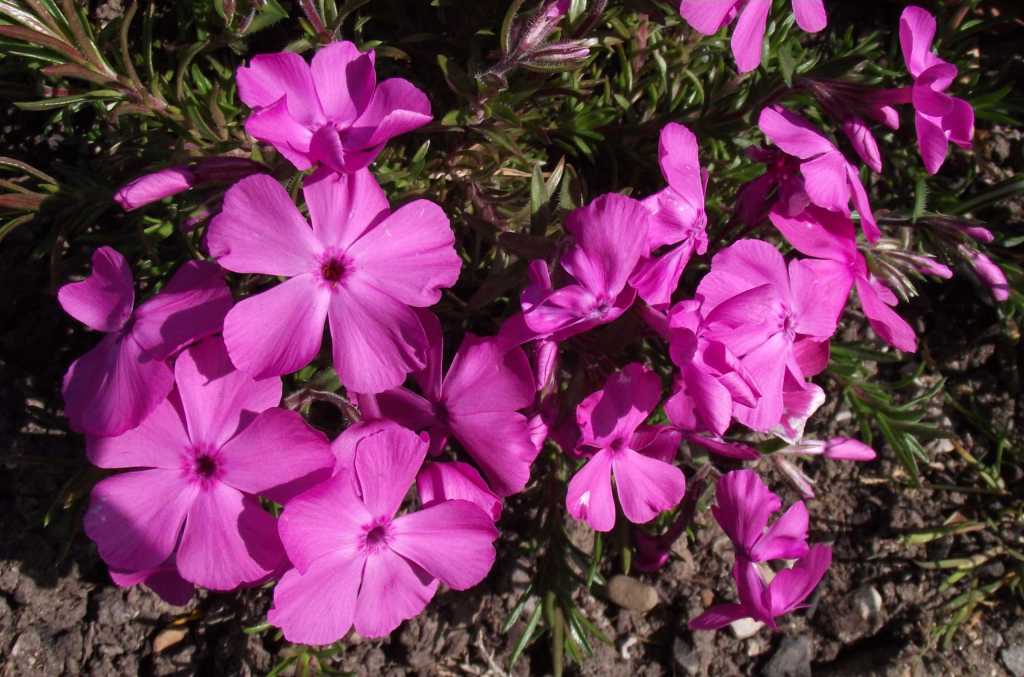
Phlox can be divided into two main types, the well-known herbaceous plant, Phlox paniculata and its cultivars, stalwart of the cottage garden and cut-flower section of autumn gardening shows, and the cultivars of P.subulata the low growing plant for the rock garden. Herbaceous phlox are easy to grow in sun or part-shade in virtually any soil types but as they are plants from the woodland edge prefer a rich moist soil to do there best. The rock phlox are typical alpine plants doing best in a well drained soil in full sun. it is worth noting that many varieties of both types are scented.
Physaria
Physaria didymocarpa
A real oddity Physaria didymocarpa or twinpod, an American member of the mustard family grown from a lucky-dip seed distribution out of curiosity. I rather liked the combination of the greyish leaves and yellow flowers.
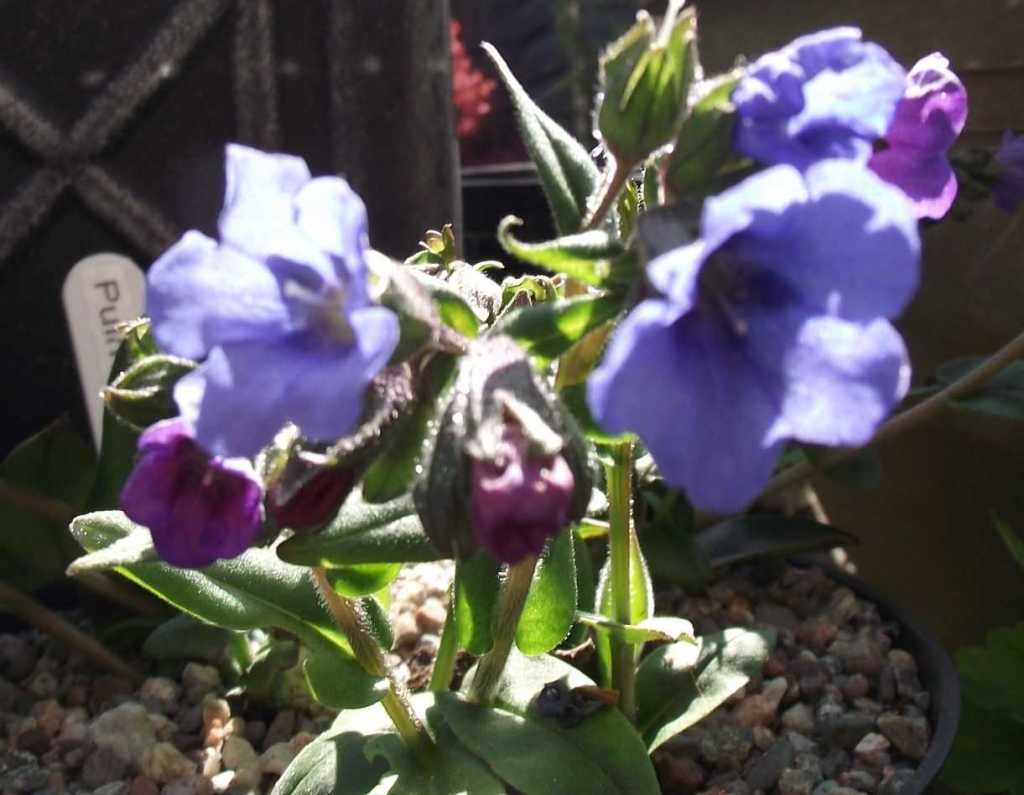
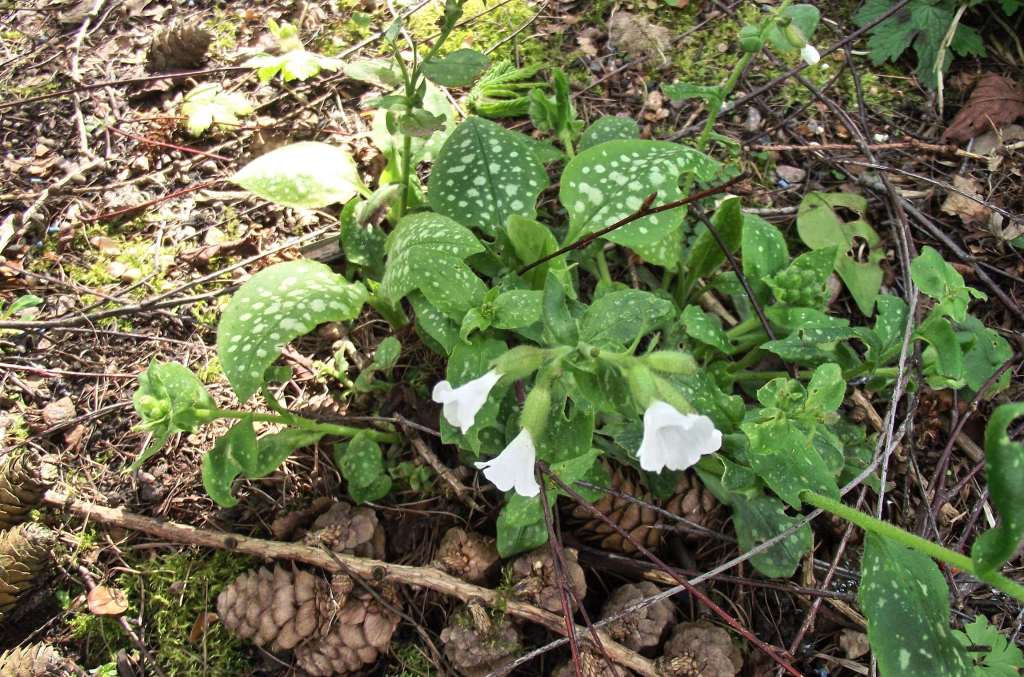
Pulmonaria, Lungworts have emerged from obscurity in recent times due to the efforts of the plant breeders who have developed a great range of variety in both flower and leaf colour. Ideal shade plants they flower early in the spring and thrived in the rich moist soil of my “woodland” garden.
Pulsatilla
Pulsatilla vulgaris
The Pasque Flower, P. vulgaris is related to the buttercup and was once known as Anemone pulsatilla. This rather beautiful spring-flowering plant comes from Europe where it is found growing in calcareous upland meadows but is a rare sight growing wild in this country due to the erosion of its habitat. Grows best in rock garden conditions in a well drained gritty soil in full sun. Easy from seed but it does not take well to transplanting once established.
I have been looking back at some older pictures which I took with a different camera and realised that I had missed a few genera out previously so here they are.
Acanthus mollis
Acanthus mollis
Acanthus mollis or Bear’s Britches is an easy to grow robust herbaceous perennial with striking flower spikes and glossy semi-evergreen leaves, a stalwart of the cottage garden.
Adenophora
Adenophora liliifoliaAdenophora tashiroi
Adenophoras, sometimes known as Lady Bells are a close relative of the campanulas but those I have grown had a more dainty habit with smaller bells. Like campanulas they are generally easy going but averse to winter wet. Easy from seed.
Agapanthus
Agapanthus ‘Donau’
The agapanthus or African Lily is a popular plant for both the border and containers. Originating from S.Africa it needs full sun in virtually any free-draining soil but will not tolerate winter wet. There are many colours available ranging through blue and purple shades to white. Although they are regarded as hardy I personally would not guarantee it and advise caution.
Alchemilla
Alchemilla mollisAlchemilla mollis
Alchemilla mollis or Lady’s Mantle has been a familiar sight in gardens for many years, it is both easy to grow and seeds itself regularly. Not a great favourite I must admit but it is interesting to note where the name came from. Legend and botanists have it that the alchemists of old used to collect the morning dew from its leaves for their potions, hence alchemilla.
Anaphalis
Anaphalis triplinervis
Grown from seed out of curiosity Anaphalis triplinervis is an unusual plant with its everlasting flowers held over attractive silver grey leaves. A member of the aster family it hails from the Himalayas and, although it is of interest to the flower arrangers, it wasn’t for me.
Cynara cardunculus known as the Cardoon or Cardoon Thistle is an extraordinary plant, the artichoke is a more refined version of it. It prefers a light well drained soil in full sun to do its best. It is a robust hardy perennial whose flower heads, coming in late summer, are attractive to bees and other insects. The third picture was taken in Scotland the other two in my garden.
I don’t know how I managed to overlook cyclamens as they are one of my favourite alpines. Unlike the well known house plant, usually cultivars of C.persicum, hardy cyclamen come easily from seed and are ideal for the “woodland garden”. Cyclamen coum is a winter flowering plant appearing in early winter and spring, whereas Cyclamen hederifolium is in flower in late summer and early autumn. Both have several cultivars with variations in both flower colour, including white, leaf markings and shades. One tip as they spend much of the year dormant you need to mark out or remember where they are. Small but very rewarding.
Dipsacus
Dipsacusfullonum, syn. Dipsacus sylvestris
Teasel is a biennial but I have included it here as it makes a good border plant the upright stems and old calyx remain standing adding winter interest. The tiny blue flowers appear in a band round the flower-head and the resulting seeds are attractive to goldfinches. The foliage is quite attractive and has spines along the underside of center rib. Definitely one for the flower arrangers.
Echinops
Echinops ritro Echinops ritro
Like most thistles Echinops ritro, the Globe Thistle, can thrive in dry poor soil in full sun. A spectacular addition to the border it has grey-green toothed leaves with a whitish underside, the flowers are purple and attractive to bees and other insects. Another popular plant for the flower arrangers.
Book reviewer and garden enthusiast. Updates from my Hampshire garden. Usually talking about books and plants. People do not forget books or flowers that touch them or excite them—they recommend them.






















 A Plantsman's World