Epimediums

For the last ten years or so I have been increasingly in love with this genus of beautiful flowering plants. They are so adaptable, some more than others, to what are best described as “difficult” conditions some members of the genus have actually seemed to thrive for me rather than just tolerate dry shade which is one of the most difficult areas to cater for. There are both evergreen and deciduous species many with colourful leaves particularly when just emerging in the early spring and sometimes again in the autumn. Many variations are now available sporting different flower combinations giving a wide range of “mini-orchids” to choose from.

Epimedium grandiflorum ‘Queen Esta’

Deciduous cultivar Queen Esta prefers a moisture retentive soil although I have grown it within a few feet of the base of a birch tree as shown in the picture without any trouble however during very dry spells the area received some watering.

Epimedium x rubrum

Much as I like the flowers of Epimedium x rubrum I have never grown a robust specimen and I normally don’t have a problem with epimediums, in fact the new plant I have now is not doing well compared with its companions. This plant is evergreen in that the leaves last the winter and although preferring moist soils should withstand drier conditions.

Epimedium x warleyense ‘Orangekonigin’
Epimedium x warleyense ‘Orangekonigin

Epimedium x warleyense from the legendary Miss Willmott’s garden was the result of a cross between two western species, the cultivar ‘Orangekonigin’ is a fairly recent introduction. Seems to thrive in either moist or dryish soils. Unfortunately the new foliage pictured had been visited by Mr. Slug!
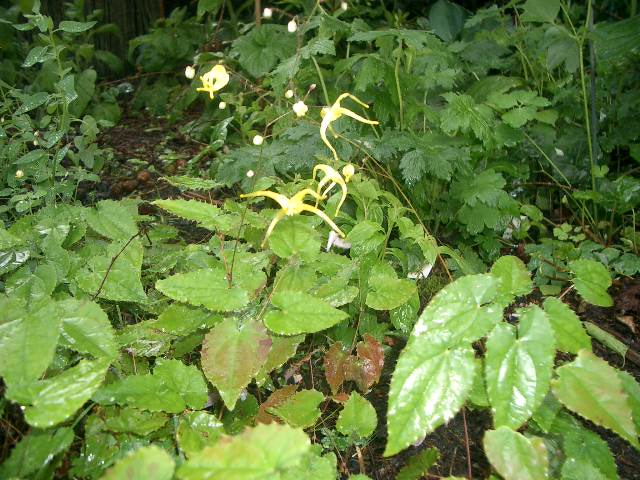
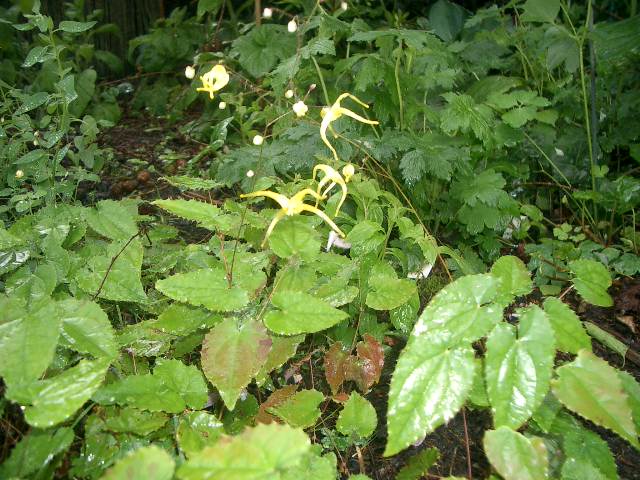
Epimedium davidii?

I am not sure if this actually is E.davidii but the combination of the yellow spider-like flowers and the glossy toothed leaves makes for a really useful plant. I had this in my mind as E.rossii but it could have been a case of word association as I knew someone called David Ross, who knows? E.davidii is from China and therefore prefers moist conditions although, again, the plant pictured, which thrived, was growing in fairly dry shade.

Epimedium grandiflorum ‘Lilafee’

E. grandiflorum ‘Lilafee’ is a cultivar from the same stable as ‘Orangekonigin’. The lilac coloured flowers are suspended over glossy leaves with toothed edges, seems to grow best in moist conditions.
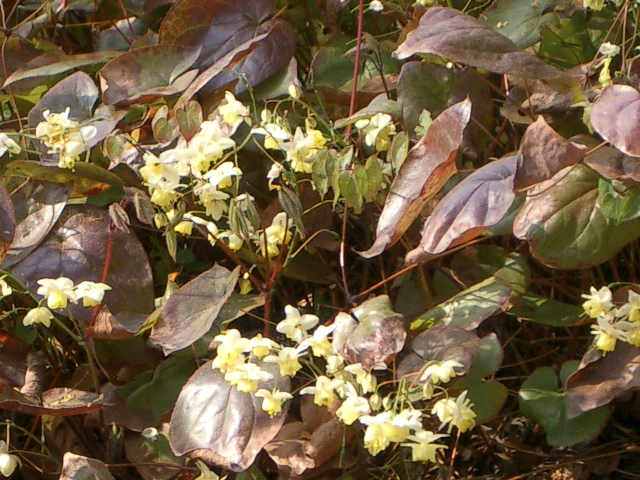
Epimedium x versicolor ‘Sulphureum’

Delicate flower spikes over copper foliage which tends to green up during the summer only to revert to copper again as winter approaches. Although evergreen the foliage does tend to look rather tatty by the spring.

Epimedium x youngianum Niveum AGM

Neat little plant growing to about 8″, delicate pure white flowers hang off wiry stems which are reddish in colour. prefers a moist spot to thrive. The new leaves can give some good colour.

It is a matter of preference when or if one decides to remove the old foliage, personally I prefer to leave it on until the spring and then remove it just as the new foliage and flower stems are appearing being careful not to cause any damage to the new growth. This allows a good view of the flowers and the colours of the new leaves, leaving the foliage intact can detract from the display in some types which carry their flowers closer to the base of the plant.

Some New Additions

In my new front garden I added quite a few plants last year as plugs and a few bulbs. Unfortunately we did get some frost damage a couple of weeks ago on some of the plants I brought with me.

Tetrapanax papyrifer

Every Acer I have was damaged but none of them too severely, where I lived before late frost damage was not a feature although I suspect the unexpected warm spring bringing the plants on was the culprit this year. Some of last year’s plugs, bulbs and young plants have come on well from last year, here a few examples.

Geum ‘Cosmopolitan
Geum ‘Cosmopolitan’ (Cocktails Series)

Since the plant breeders have really concentrated on geums some marvellous colour combinations have been produced.

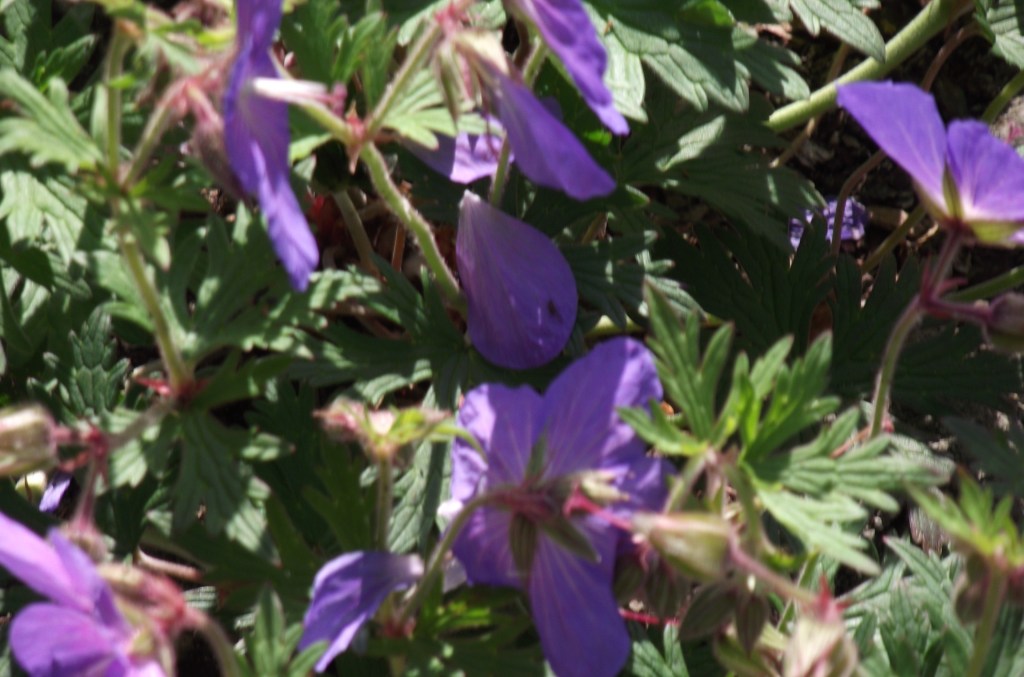
Geranium Johnson’s Blue

Geraniums are one of my favourite plants, the majority are as tough as old boots and I have grown many varieties in the past and have already quite a few among my new purchases and have actually sown seed of some of my favourites this year.

Helianthemums

Grown from plugs last year along with Phlox subulata for some quick bright colour.

Papaver Orientale Royal Wedding

Grown from plugs, the plants themselves need another year to properly settle down and are a bit tatty nevertheless they have produced some nice flowers.

Lupinus Tequila Flame

Again grown from plugs this lupin strain, bred in this country has been a revelation in terms of both growth and colour.

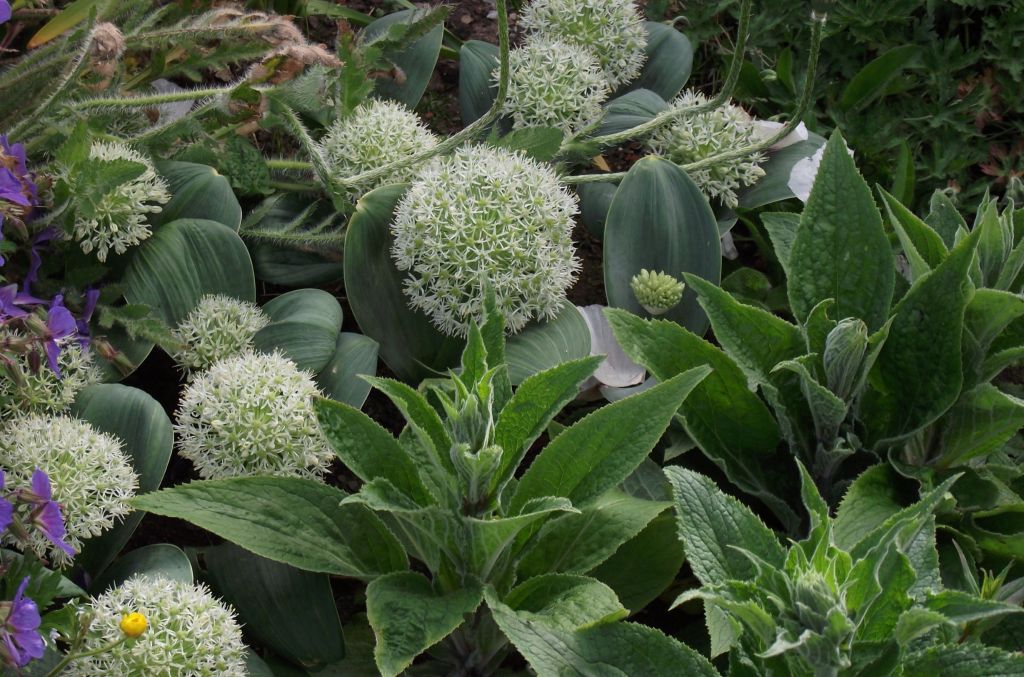
Allium karataviense Ivory Queen

Very pleased with this bulb as it gives a really nice combination between the white flowers and the gunmetal leaves, I hope it comes strongly again next year.

More spring colour

After a change in the weather has brought grey skies and some rain and drizzle as if things weren’t depressing enough! I took a walk, just before the weather broke, round my local park which is actually a piece of land, including woodland, which was purchased by the village to honour the fallen of the First World War. most of the trees are only just beginning to break leaf but there were a few patches of lovely blossom.

The weather has now become more settled and despite some very cold east winds, has remained mainly dry with the promise of some higher temperatures to come. I am lucky in that these pictures were taken a ten minute walk from where I live.

Wild Garlic

A patch of wild garlic amongst the trees with its distinctive onion scent that can be picked out a good distance away. Back to the plants on my next post.

My spring flowers

I have already had some crocus and iris in flower this year but for the purpose of my new blog here are some plants which are in flower this week.

Narcissus Jetfire

I love daffodils and narcissus, there something about them that really heralds spring, although there are quite a few plants that are in flower earlier they still steal the show for me. This year with the cold spring they seem to have lasted longer than usual.

Narcissus Lemon Beauty
Narcissus Pink Wonder

Personally I always deadhead, let the foliage die down naturally and, if I remember, feed with a high potash liquid feed such as Tomorite.

Amongst the springtime greens and yellows the plugs I planted last year add a splash of bright colour. Heucheras are fairly forgiving given sun and a reasonable soil but will not tolerate overcrowding.

Heuchera var.
Heuchera var.

Reliable easy to grow alpine phlox, almost garish colours provide a real splash. Best grown in a sunny spot on fairly poor but well drained soil. The thing to remember about most “rock dwellers” is that they don’t need a rich medium to grow well and will grow “soft” and not flower well if overfed.

Geum is one of my favourite genera other than the weed Geum urbanum which had become a real pest in my last garden. There are plenty of cultivars available now as the genus has become a popular subject for plant breeders. Although many are very showy the one pictured below is quite muted. They are tolerant of shade and will grow in even fairly poor soils, not only that many have a very long flowering period.

Geum Tequila Sunrise

Here’s to the next time!

Return to the Web

After an absence of over a year in which time I have moved to a much smaller property at a slightly higher elevation I have decided to return to the world of blogging.

The garden I have now consists of two small plots at the back and front of my little bungalow respectively which is quite sufficient for my needs today. My intention is to fill the new areas, which are minuscule compared with my last garden, with as many plants as possible and to this end I am first going to plant a number of “basic” genera to give points of interest and some kind of framework followed by bringing in my more specialised plants next year.

The front garden I inherited had a few nice plants and a patch of grass in the middle which I covered with several tons of topsoil and planted out, mainly using plugs, to form a country garden effect incorporating roses, which did not grow well in my last garden because of the damp conditions, and a few climbers and shrubs. This year it should come to fruition and is showing signs of being quite successful.

The back garden however is a totally different proposition, the garden has been stripped right back to the original soil level which in turn has been covered in limestone chippings and flags. Most of the flags have been removed, a basic layout has been achieved and quite a few plants have been introduced however planting with a pick and my favourite trenching spade was not easy!

Because of the limited scope of the new garden it is now my intention to use this blog to describe many of the plants that I have grown and my experience with them rather than a formulaic list. To keep things moving along I also expect to give interim reports on the new garden as it develops plus some diversification into the area of pubs and steam trains when we are allowed to live again.