Six on Saturday 16/8/2025

The weather is holding steady, temperatures as high as 30°C, although 20-25°C is more the norm. The few showers we have experienced have barely dampened the ground. Typically for this time of the year colour is sparse, so the lilies are welcome. Although they do not hold their blooms well in the heat. One thing I have noticed is the lack of butterflies. We were inundated with them earlier, particularly with the Peacocks. Although the eupatorium, now Eutrochium purpureum, is in flower, a tremendous bee and butterfly magnate, there are hardly any to be seen. This is the exact opposite of what happened last year so I am putting it down to the warm spring. For anyone who is interested I have taken the liberty to include a few links to some of my previous posts devoted to lilies that I have grown, with many more pictures.

The ever popular Lilium ‘Stargazer’. This is one of the first lilies that I ever grew and remains a favourite even now. I took this picture a couple of days ago but it is already looking worse for ware in the heat. Another Oriental, Lilium ‘Hachi’, which I featured a couple of weeks ago, is very similar with its upturned blooms but the flowers are notably much larger than those of ‘Stargazer’. Here is a link to Lilies Part 1 – Updated for more lily pictures.
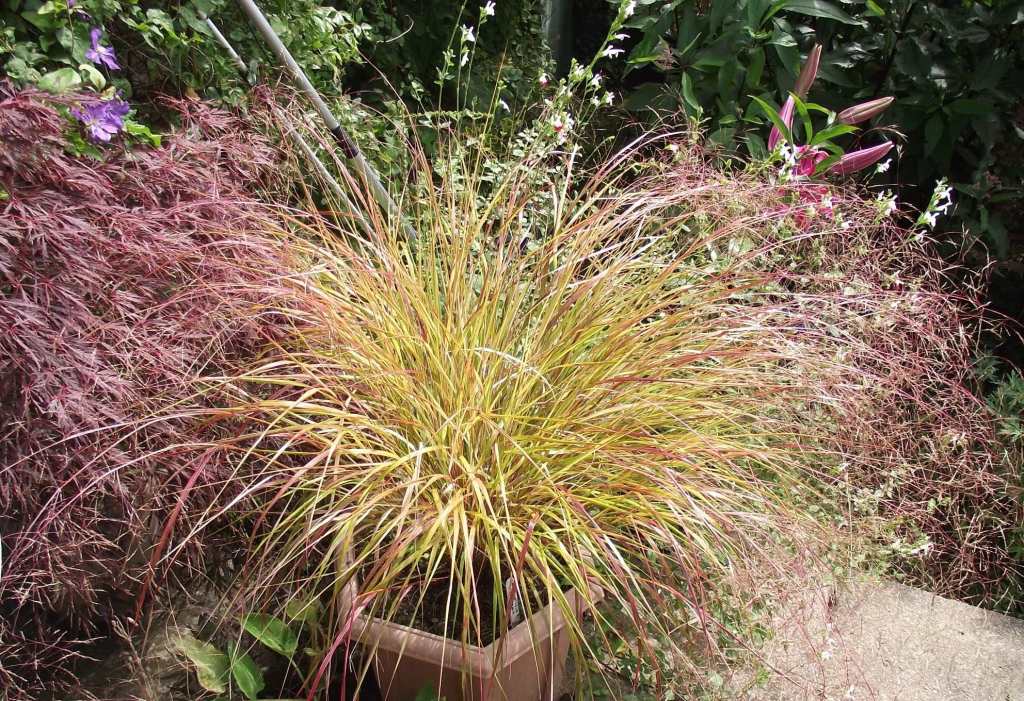
I have shown Anemanthele lessoniana, pheasant tail grass, before but is now at its best. The leaves are taking on some red splashes which are complemented by the airy inflorescences floating in the breeze. I’ll be quoting poetry next!
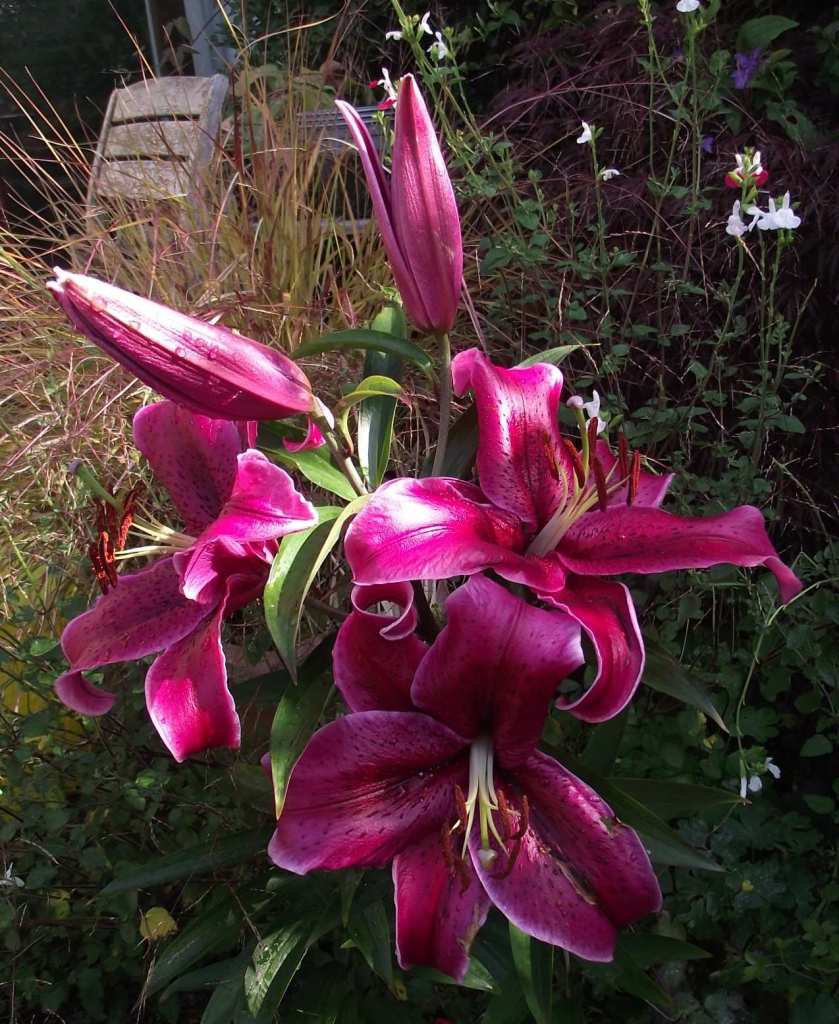
I have never grown Lilium ‘Red Flash’ before and I am rather enamoured with the strong colour. Unfortunately the bottom bloom is past its best. For even more pictures of lilies that I have grown Lilies Part2 -Updated

A good old standby for late summer/autumn colour Rudbekia fulgida ‘Goldsturm’. I don’t think you can beat these simple “cone-flowers” to add a splash of colour, at this time of the year. I did have some echinaceas but they have decided not to come out to play this year. The splash of blue in the lower right-hand corner is Geranium ‘Johnson’s Blue’ which, in my small garden, is becoming far too invasive. I intend to remove it altogether shortly. Even though I reduced it by half last winter. It is taking up far too much space for one plant, and I have plenty of stuff stuck in pots which can take its place.
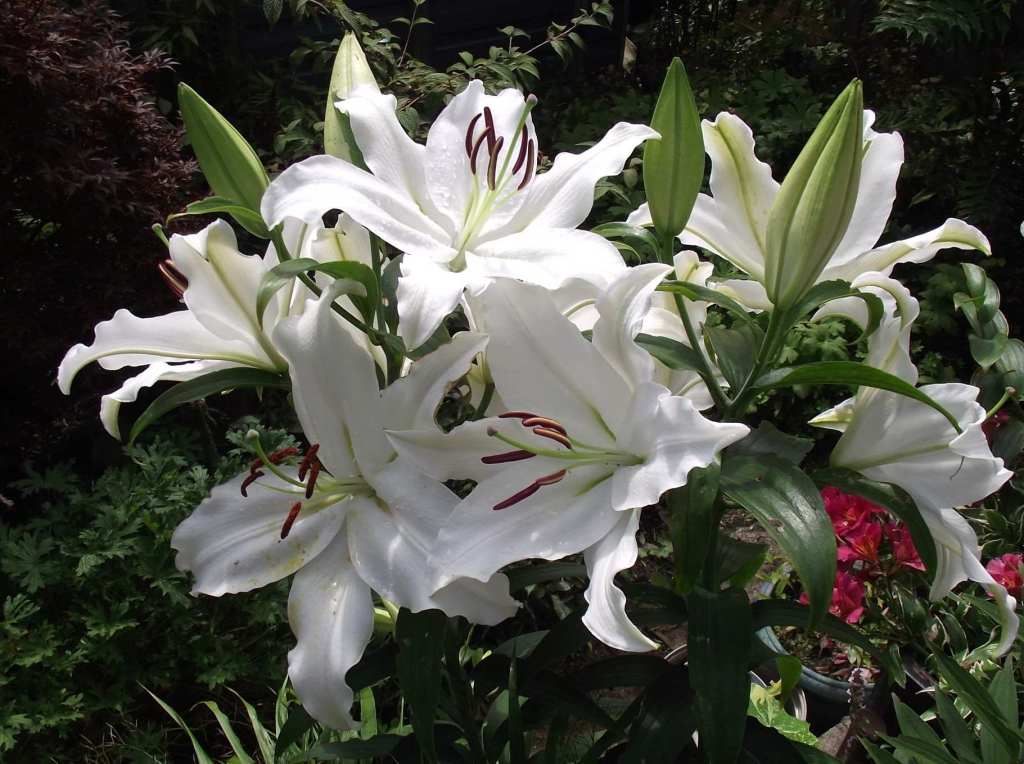
Another strongly scented Oriental. Lilium ‘Casa Blanca’ is another old favourite of mine. I have to admit that I had forgotten it was there until I checked the label before it came into bloom. It is a true pure white and all the better for it. I am in a bit of a quandary at the moment. I have no room to plant the lilies out, so do I keep the pots overwinter and chance that they will come good again next year, which they should do. Or do I buy in some more to guarantee a good show next year. I will probably do both! Here is some more about lilies including Cardiocrinum giganteum. Lilies Part 3-Updated
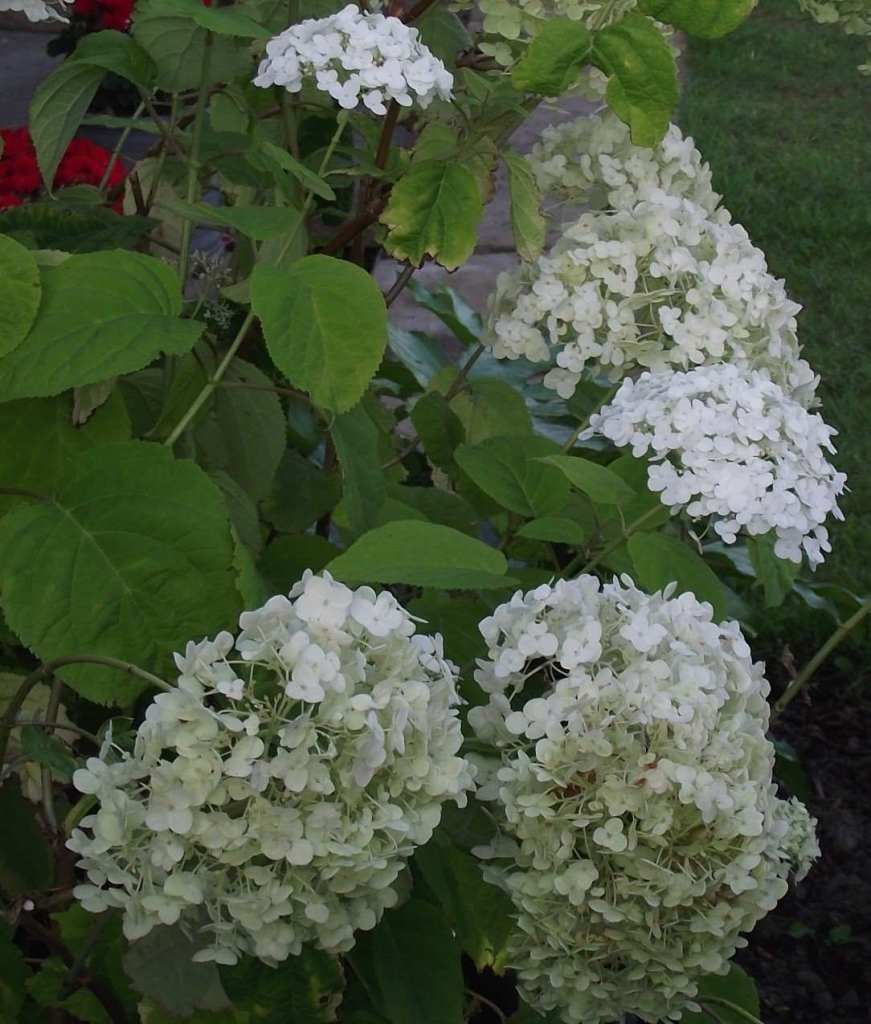
I bought this hydrangea from Thompson and Morgan at least eight years ago when they were selling it as Hydrangea ‘Incrediball’. I think it is now better known as, and is certainly synonymous with, Hydrangea arborescens ‘Strong Annabelle’. My plant is still in a container, and although the blooms aren’t the size that they should be, it still puts on a fairly good display every year. I intended to cut it back hard last winter but forgot. I need to remedy that this year, and put it on a high potash diet to see if I can improve it. Re-potting would be ideal but it is in a very large container so I will continue to nurture it where it is for as long as I can.

This meme is hosted by Jim Stevens who is to be found with all the details and links to plenty of other blogs to enjoy at Garden Ruminations.
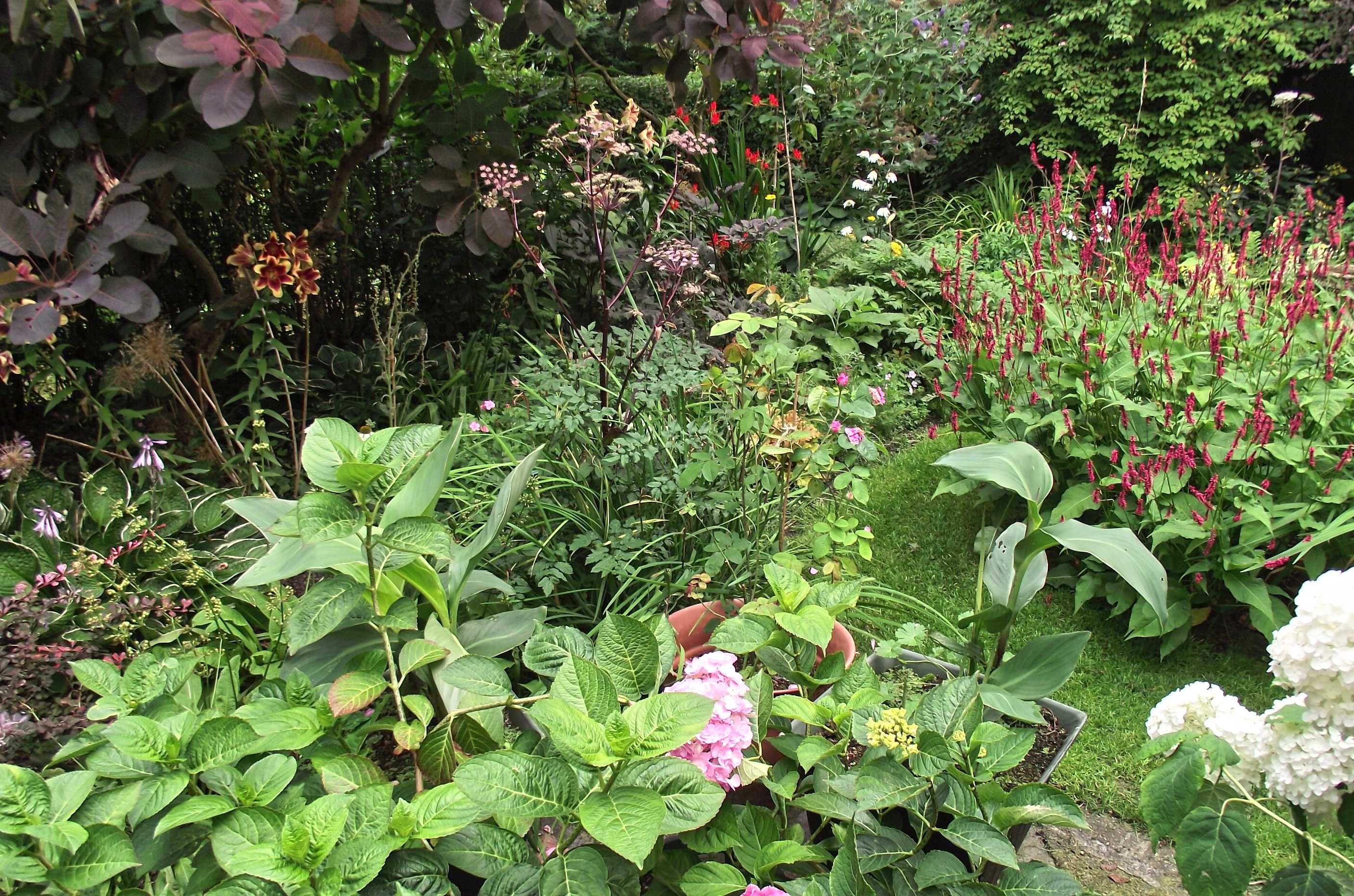
More Odds and Sods

Some more photos of plants I missed earlier from the old garden and some from the new.

Oenothera

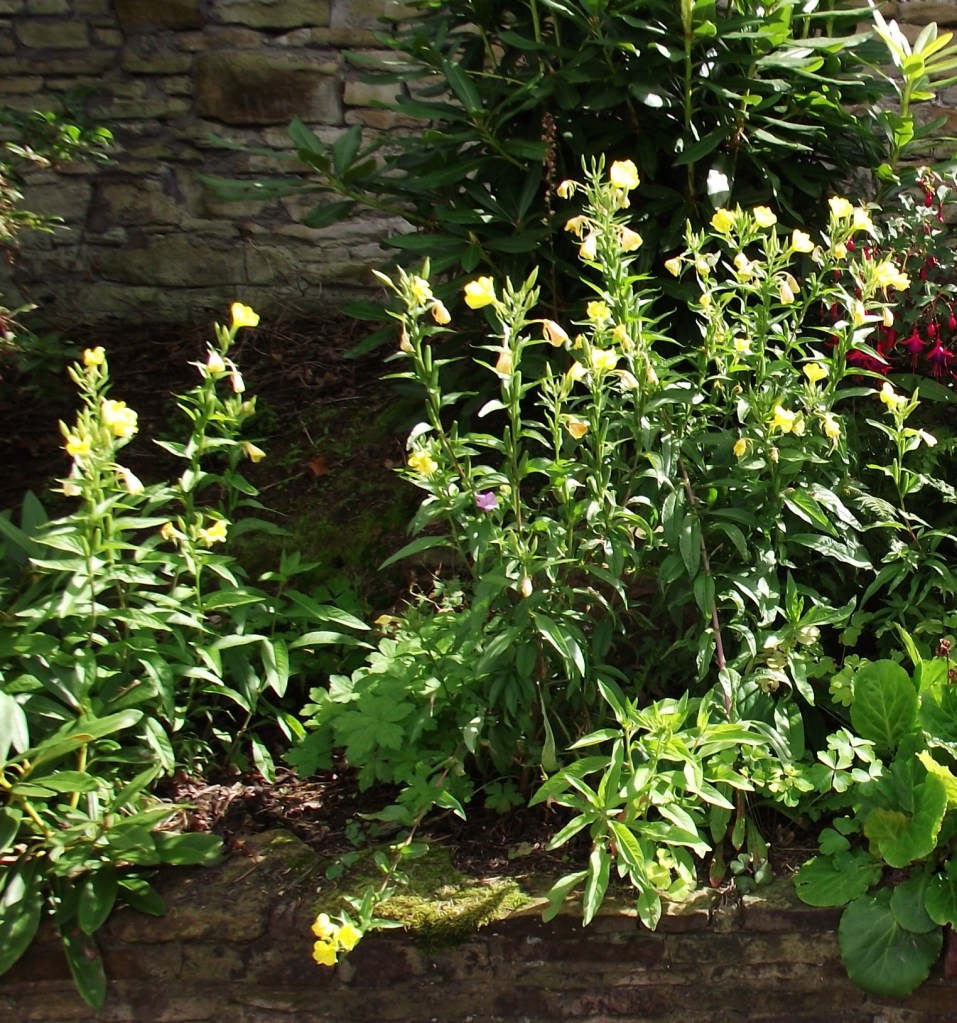
Introduced from America, the evening primrose grows wild in the UK but is a useful although unreliable addition to the garden. Basically a biennial it has a habit of self seeding into the garden and popping up in unexpected places. The clump in the picture actually appeared several years earlier, died off after flowering and didn’t return immediately. The evening primrose gets its name from the fact the flowers open at dusk and can actually be observed doing so, it was once very popular in gardens but not so much now.

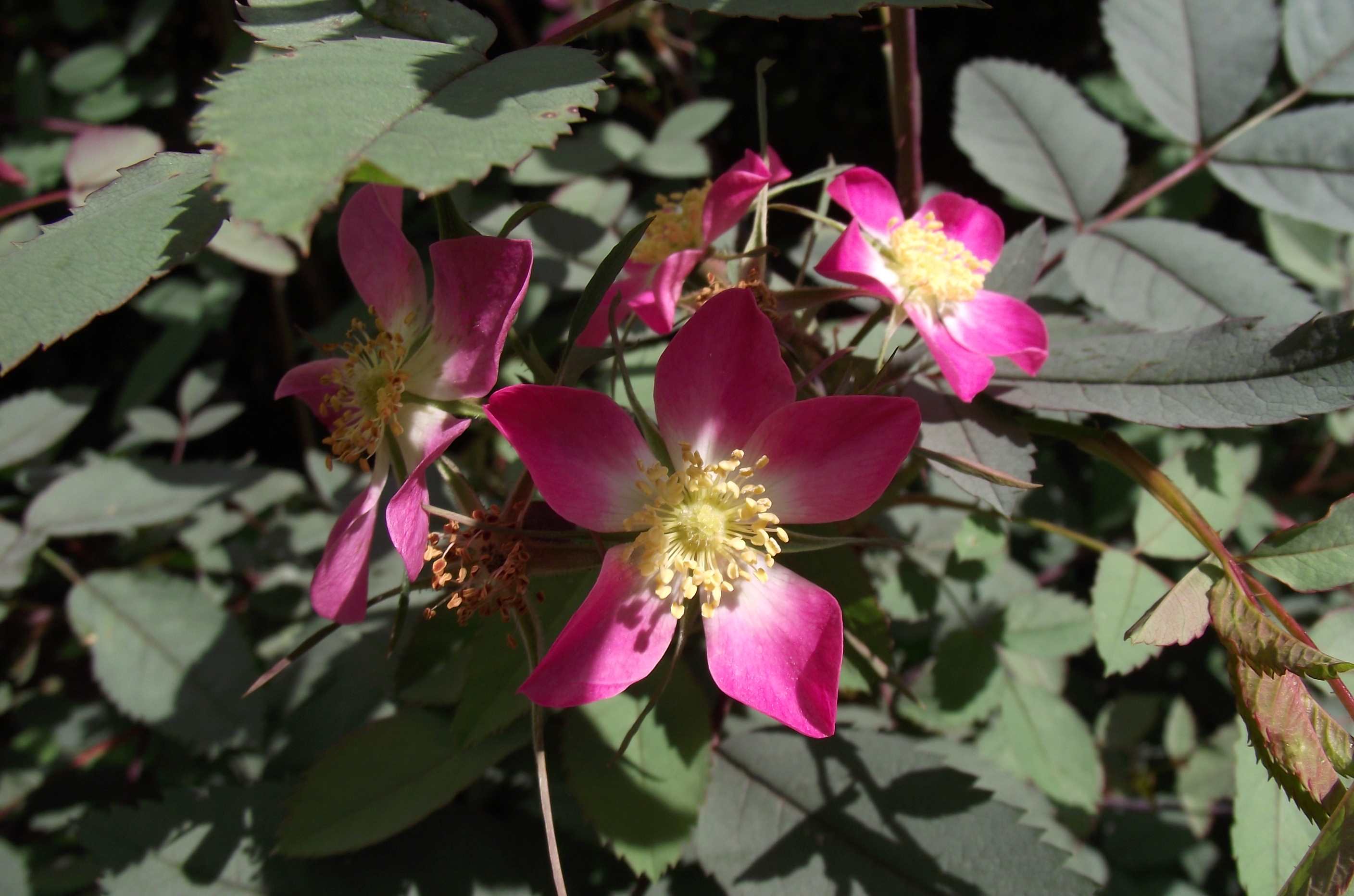
Rosa glauca is one of the few roses I have actually grown, it has small rather insignificant single flowers followed by worthwhile hips. The grey foliage is really its outstanding feature arching up to around 6′ which also makes it an ideal plant for a mixed hedge. Apparently it has become a proscribed species now, “irresponsible” planting subject to a fine.

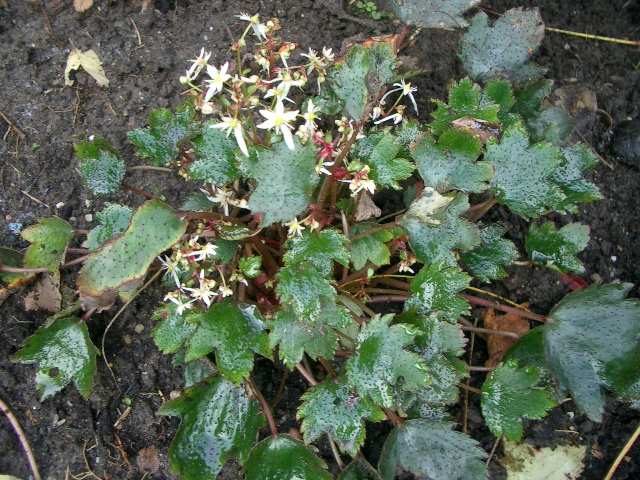
Not really a common garden plant, although it has many cultivars, Saxifraga fortunei is tolerant of even deep shade. It has attractive leaves and the distinction of being late flowering so can light up a dark corner of the garden until the frosts take it down. I think most of its cultivars originate from Japan, some of which plus the specie plant have been awarded the RHS AGM.

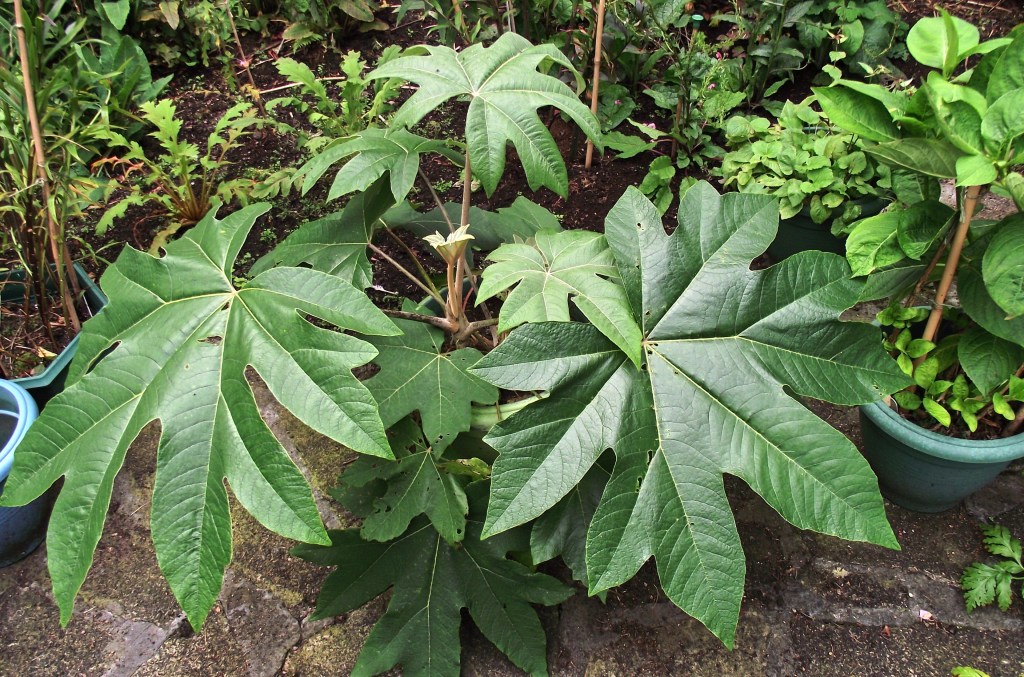
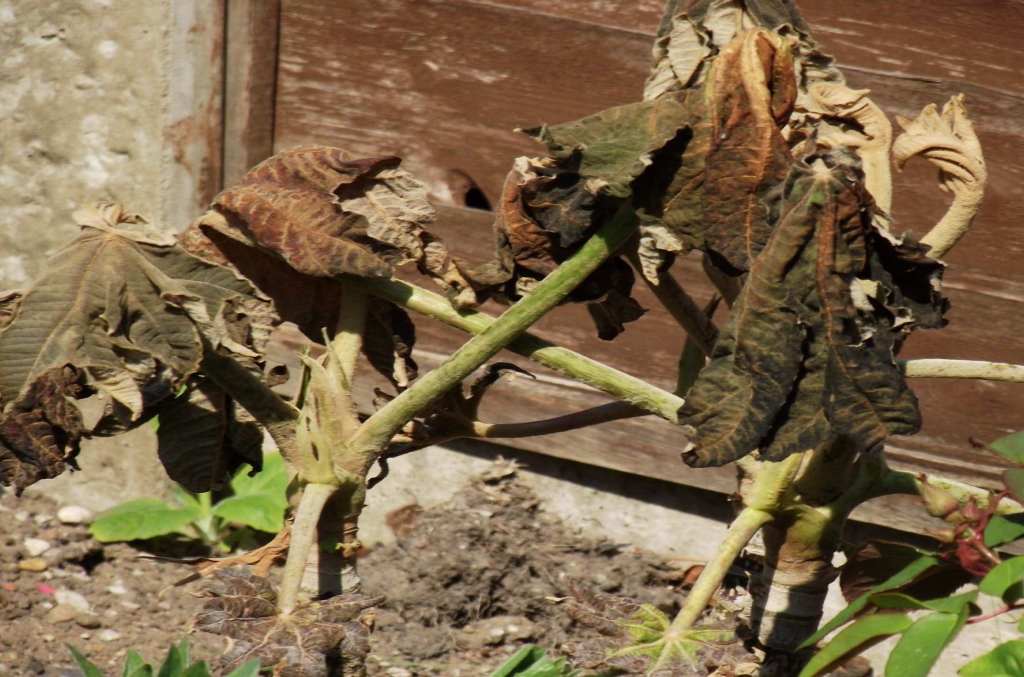
This was a major mistake and why you should always research a plant that you are unfamiliar with! My sister gave me a small plant of this, “T Rex” as she called it as she couldn’t remember the name, from her holiday home in Shropshire, I should have been alerted when she told me it had lots of babies! I had it confined in a larger pot for a year before moving it with me to the new garden. Once planted out in the front garden it drew attention as it grew to around 5′ displaying its striking tropical looking leaves until it was devastated by a sever frost which killed off the main stems completely. Then the trouble started, a crop of new shoots appeared around the original site but also new shoots started to appear at as much as 15′ away from the parent which in the end took me two seasons to eradicate as the monster nearly took over my tiny front garden, its thick fleshy roots getting everywhere. If you have plenty of space and want a tropical look, ideal.

Violas

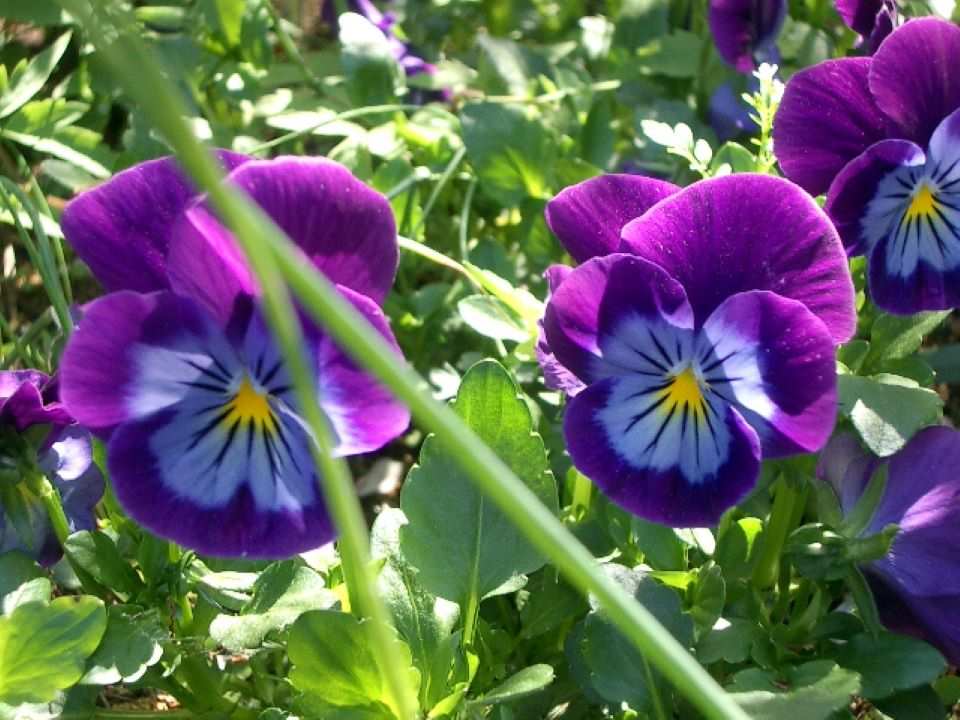
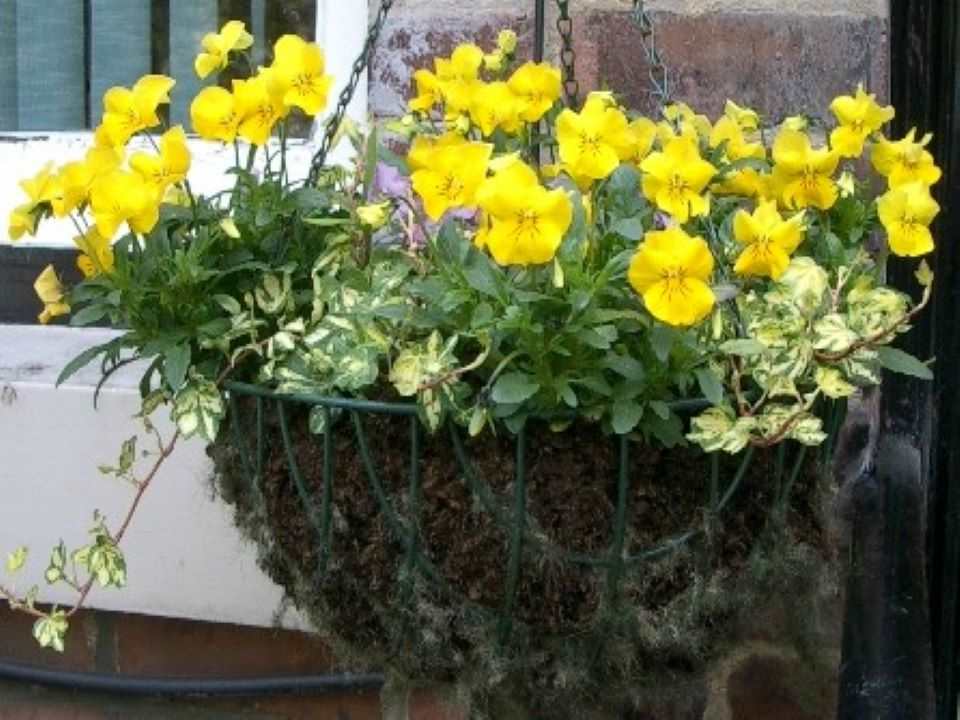
I have only photographed pansies in views of bedding or baskets but here are a few violas I have grown. It is impossible to cover the subject here, as it is so far wide ranging, including some delightfully scented specimens. Basically easy to grow, versatile and rightfully popular.

Odds and Sods

Here are some photos of plants I missed earlier from the old garden and some from the new.

Dahlias

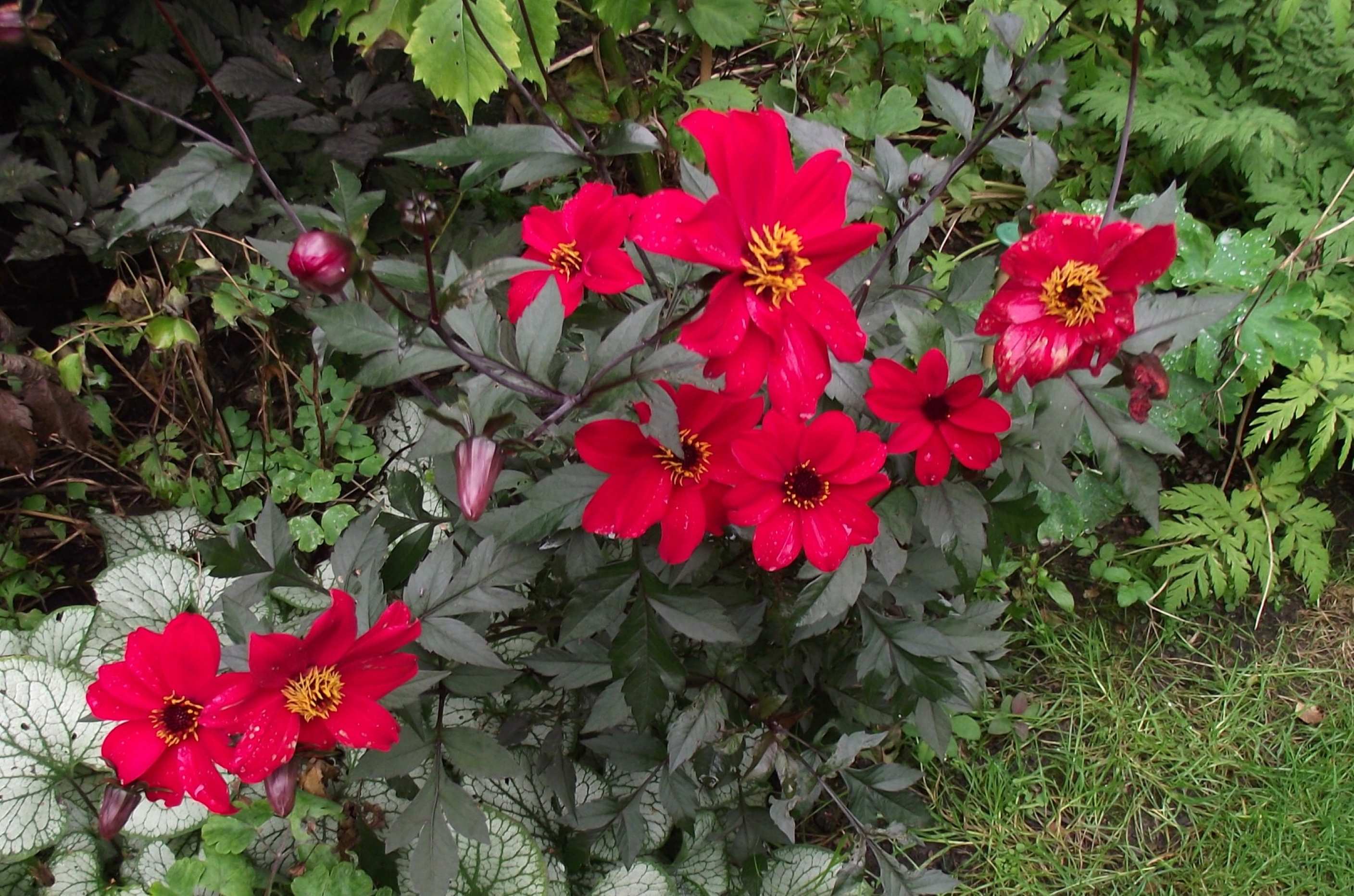
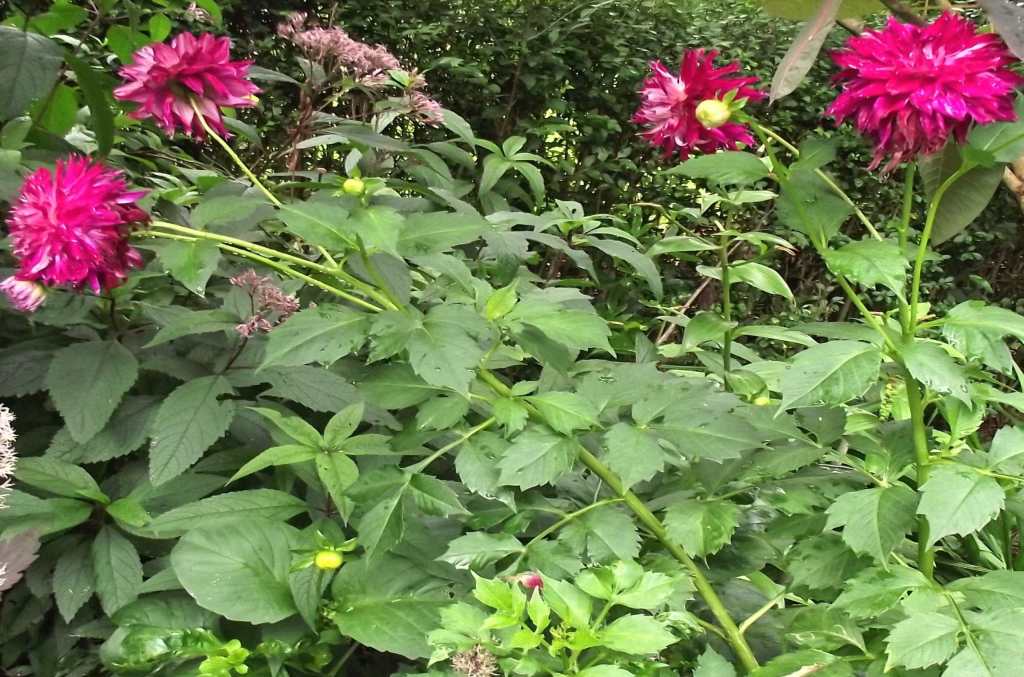
Everybody is familiar with dahlias, so no more needs writing. Probably the camera but the colour of ‘Mel’s Orange Marmalade’ looks decidedly off and ‘Cafe au Lait’ is looking definitely droopy. I used to raise ‘Bishop of Llandaff’ and his children from seed and they were the only dahlias I actually engaged with, dahlias are not really a favourite. My father used to love his dahlias as well as growing giant delphiniums, every year the tubers were lifted carefully, cleaned, dusted with sulphur and stored in the cellar in tomato boxes and every year half of them rotted off. I was hoping that one year everything would be perfect but it never was.

A couple of new Geraniums

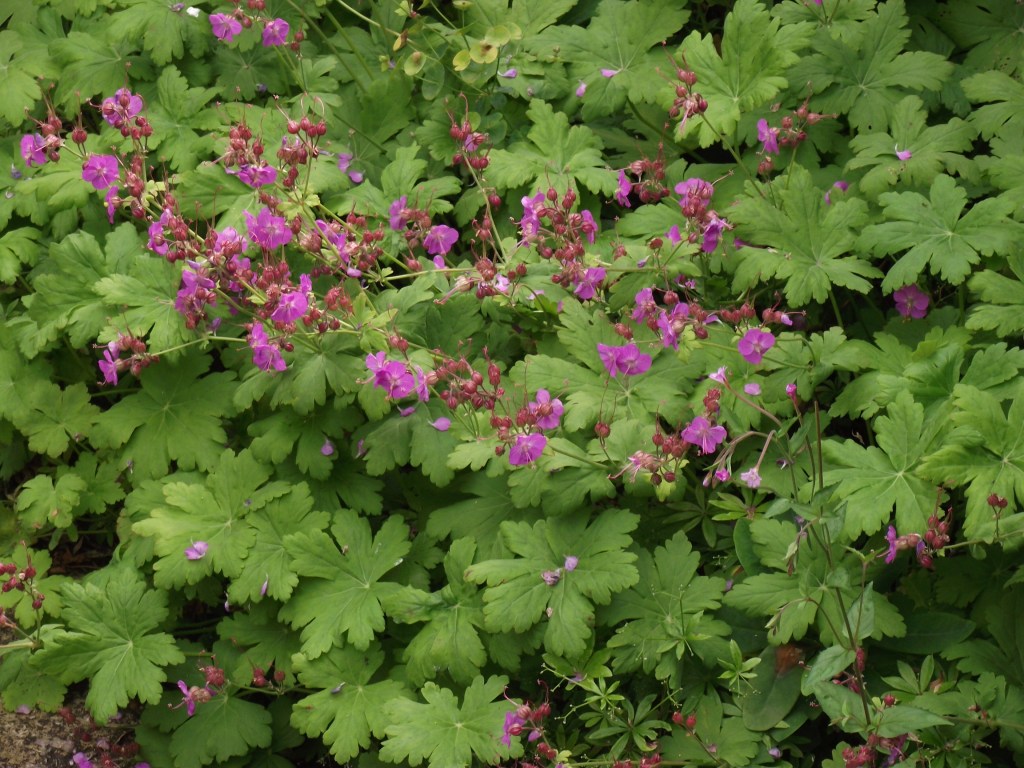
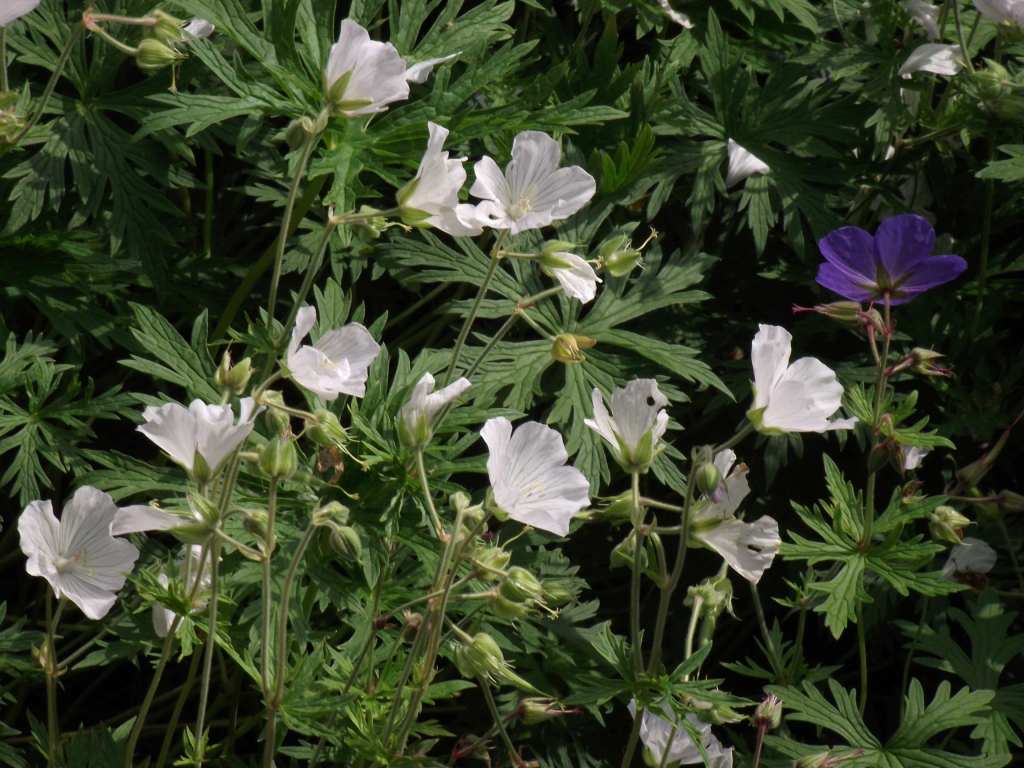
‘Ingwersen’s Variety’ was grown from seed last year whilst ‘Galactic’ has been in the garden for a few years now, but I lost the label and have only recently been able to re-identify it by chance.

Canna lilies from tropical America, have been in cultivation for many years and consequently there are many cultivars in a range of vibrant colours available. I grew several in pots for a couple of years but ceased when I decided to no longer have winter heat in my tunnel. Note the use of plastic containers, I had so many that it would have cost a fortune to do otherwise, plus the weight factor when moving them around, although I did buy a sack-truck in later years.

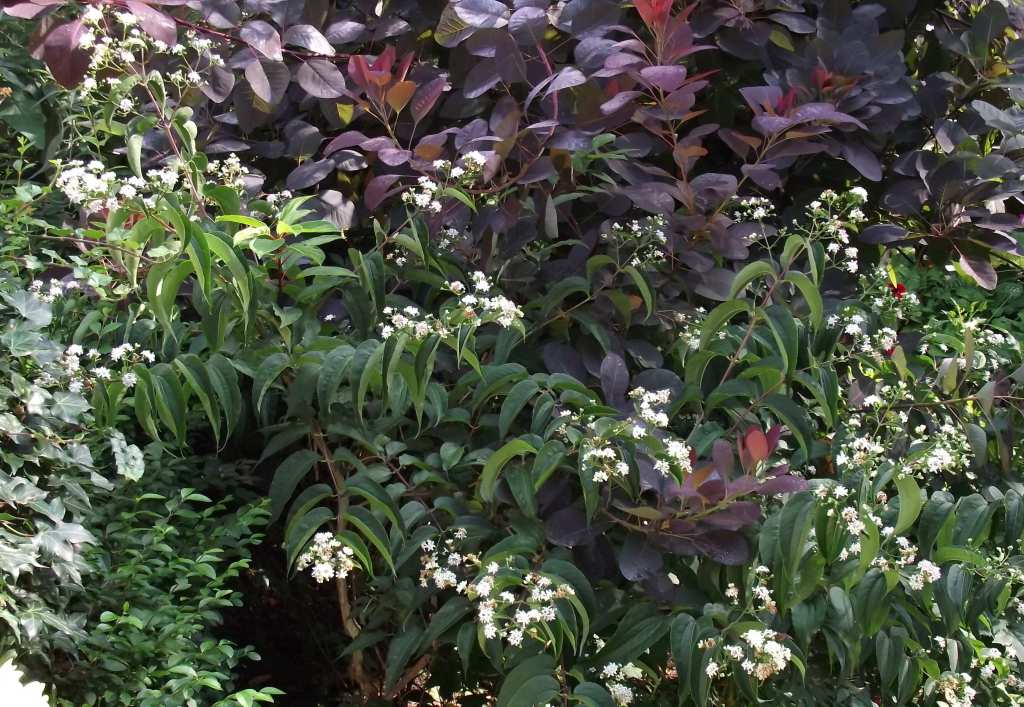
I have no recollection of taking this photograph, although Heptacodium miconioides is certainly a worthy subject. A vigorous tall shrub from China with peeling bark, its scented flowers appear late in the year lasting well into October, which makes it an ideal subject for the woodland garden. There is also the benefit that it sets plenty of seed. Sometimes known as ‘Seven son flower of Zhejiang’

I bought this when T&M were advertising this new ‘Incrediball’ hydrangea and it is still going strong in a very large container in my new garden. Flowers reliably every year although they are not attaining the size that they should which is probably down to me. I am going to hard prune it this winter to see what happens.

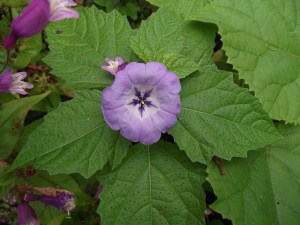
The shoo-fly plant or apple of Peru used to be quite widely grown for bedding schemes but seems to have gone out of favour. It is an extremely fast growing large annual rapidly attaining anything from 3 to 6 feet. The purple flowers die leaving a lantern shaped calyx which can be used in dried flower arrangements. It has a habit of appearing out of the blue, which is exactly what the pictured plant did.