Meconopsis

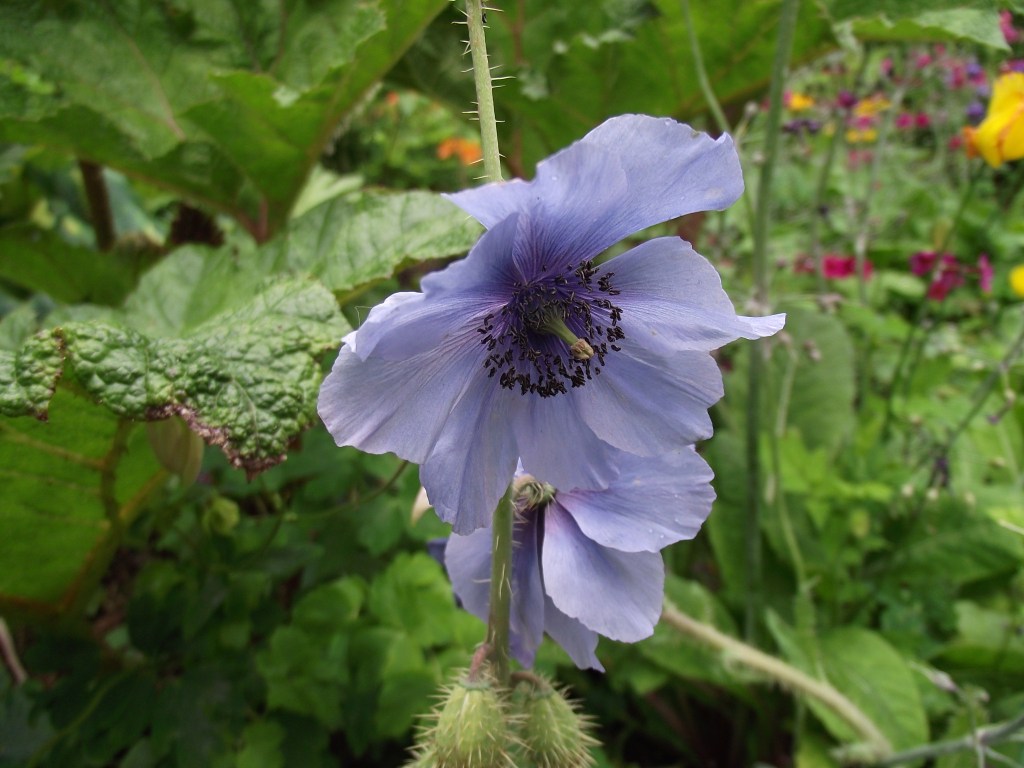
Best known as the Blue Poppy or Tibetan Blue Poppy, Meconopsis baileyi (syn. Meconopsis betonicifolia) has probably the clearest blue of any flower and is one of my absolute favourites. Living on acid soil in the damp north west of the country is a great advantage to growing these gems as they undoubtedly do better in Scotland and are very tricky to grow in the lighter soils of the south and on limestone. The biggest aid to understanding the growing conditions for any plant is to find out from where it originates, in the case of meconopsis the fact they are from the Himalayas is a good guide.

The Blue Poppies.

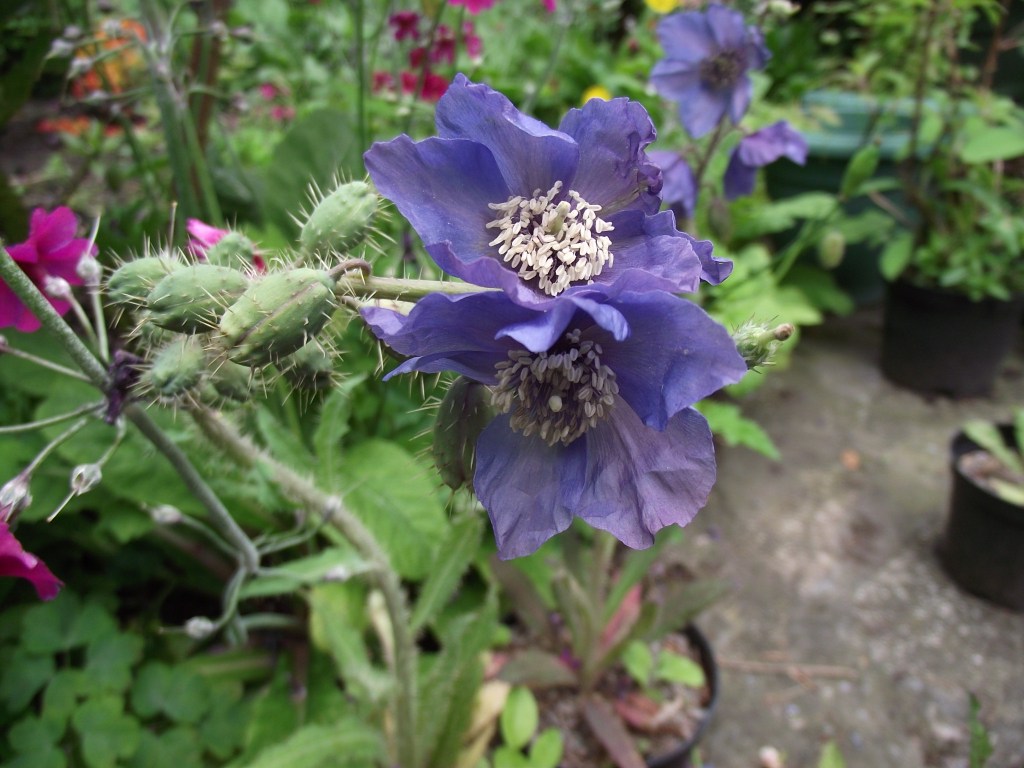
The plants that are generally referred to as “blue poppies” are the hybrids and cultivars of Meconopsis baileyi, most of the cultivars are in different shades of blue with a white form (alba) occurring as well as an attractive violet form. It is worth remembering that all meconopsis are short lived perennials or monocarpic in that they die after flowering. One of the benefits of this is that many are prolific seed producers and one of the great joys is raising them from your own seed, they may not come true especially if you are growing several types but you can finish up with some excellent plants.

Striking plant grown from own home collected seed.

Meconopsis baileyi along with M. Lingholm is now available from most mainstream suppliers due to their popularity with the general public, you have to go to a specialist grower for the more unusual cultivars.

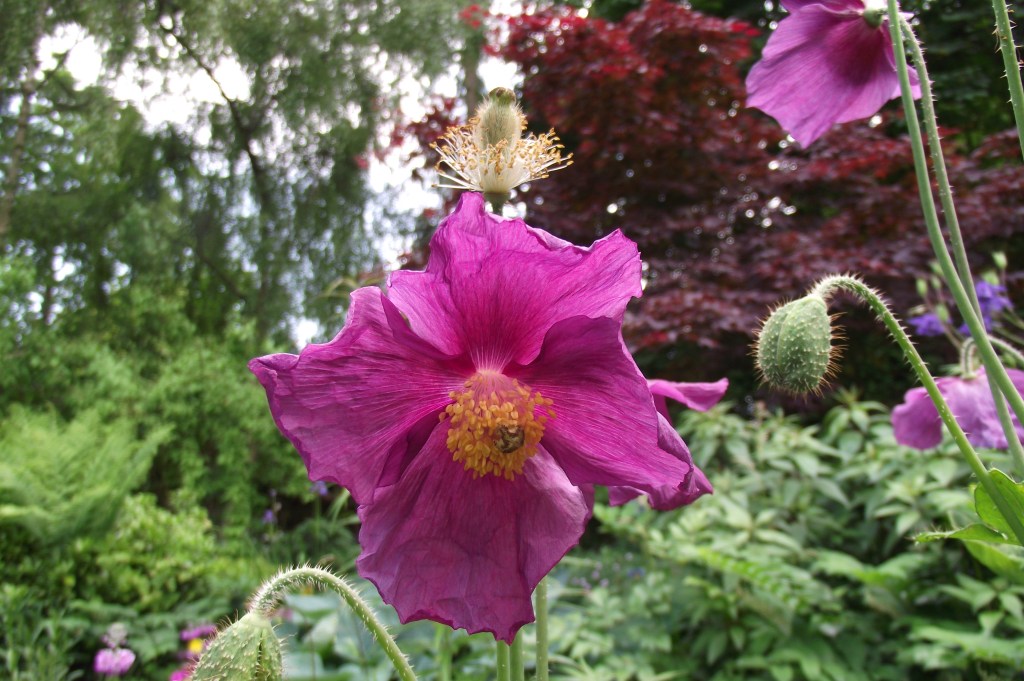
Meconopsis baileyi.
Meconopsis “Crarae”

A distinctive garden cultivar, Meconopsis “Crarae” gets its name from the large numbers that are grown at Crarae Gardens, Argyle. These plants are infertile so can only be propagated by division. This photo was taken at Crarae and is the only one that is not from my garden.

Meconopsis grandis
Meconopsis grandis distinctive flower bud.

Meconopsis grandis is a “traditional blue poppy”, a wild hybrid, it readily produces seed from which it can be easily raised. All Meconopsis seed is best sown as fresh as possible under cold glass in January to March, in fact I find the seed of all hardy perennials is best treated this way. Sowing in pots outside is quite common but I prefer to have the containers protected from birds, animals and the weather.
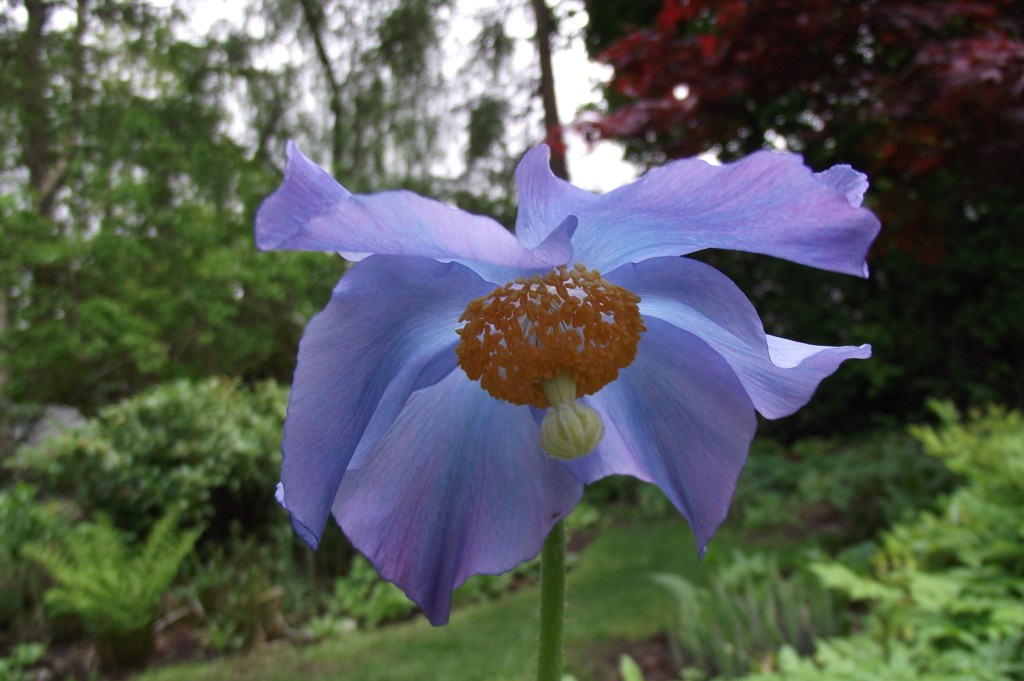
Meconopsis “Kingsbarns”

Another excellent fertile blue poppy, exceptionally strong grower, as with all blue poppies they need plenty of space to grow well.
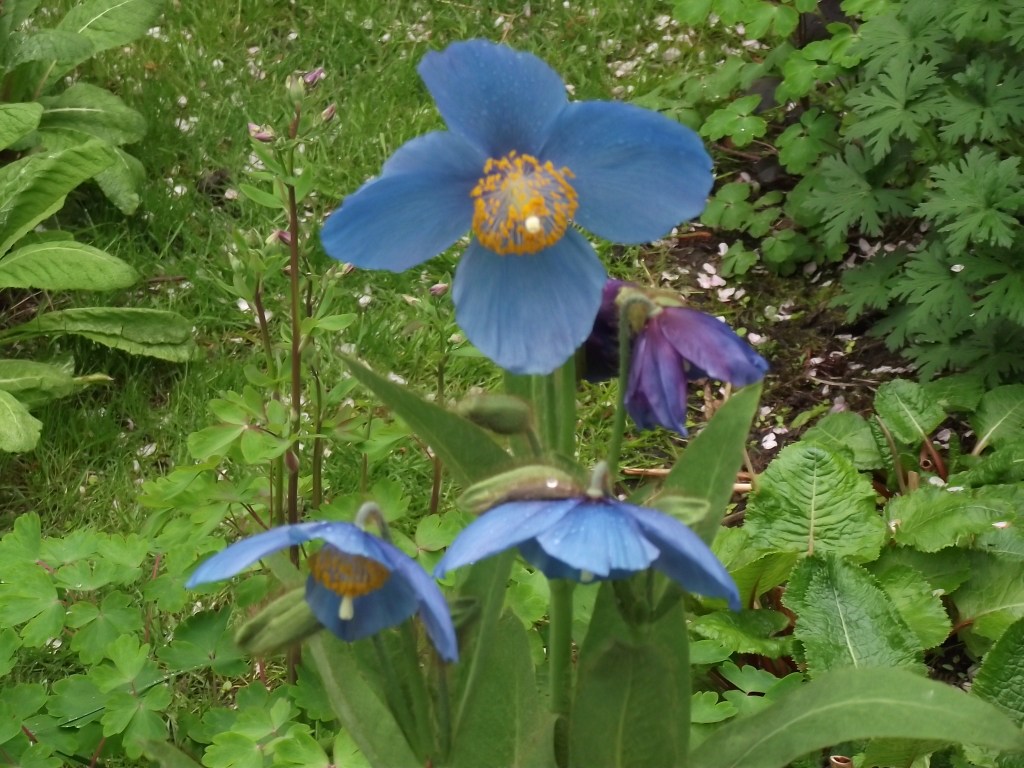
Meconopsis “Lingholm”

The last of my blue poppies, there are many more although, with the odd exception, most are infertile cultivars. Lingholm is another strong grower and like most I have mentioned can be propagated by seed or division.

The ” Paniculatas”

This group is made up of principally three species, Meconopsis superba, which unfortunately I have never grown, Meconopsis napaulensis and Meconopsis paniculata however, as with all meconopsis, there is tremendous variation in both form and colour. They are all monocarpic and can take a couple of years to flower but have the benefit of producing wonderful evergreen rosettes as well as oodles of seed. Meconopsis regia seen in cultivation is generally accepted to be a form of M.napaulensis.

Meconopsis paniculata

Meconopsis regia

Here a couple of pictures of winter rosettes, the fact that the leaves are very often quite hairy means they are subject to winter damp rot although I have always managed without protection with very few fatalities.
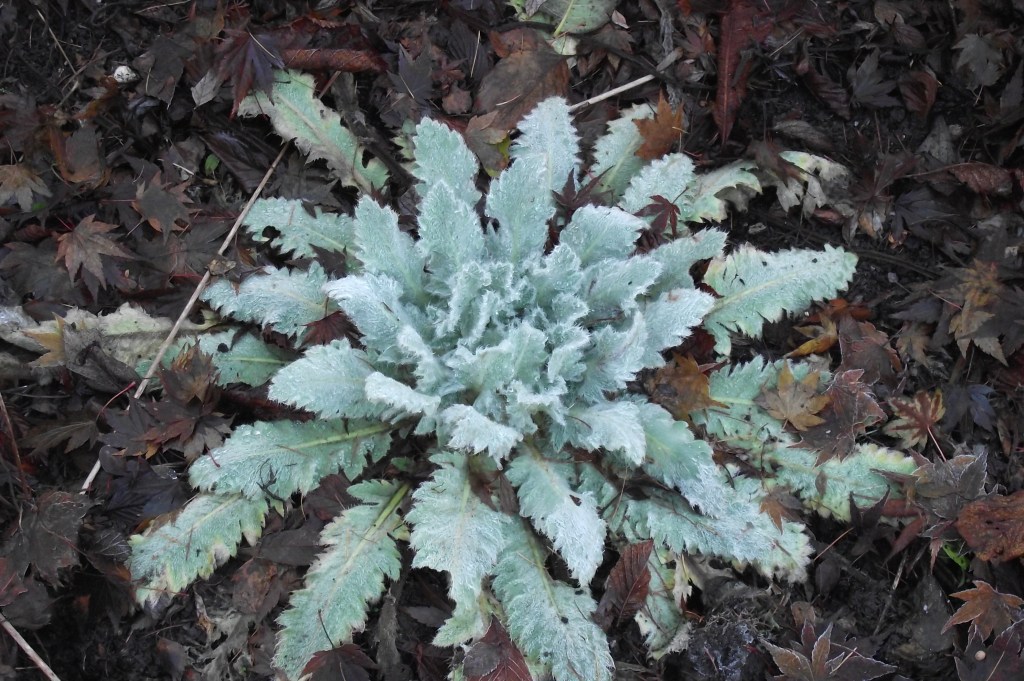
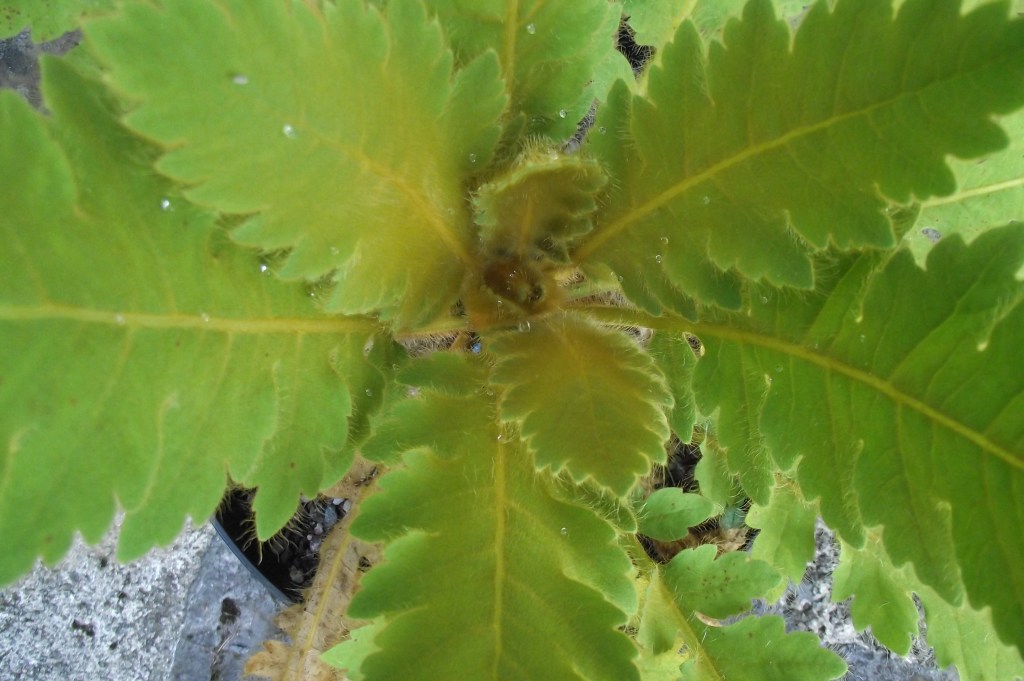
The plant I had always wanted to grow is Meconopsis paniculata Ghunsa Form a spectacular paniculata with golden hairy rosettes so please excuse all the pictures.
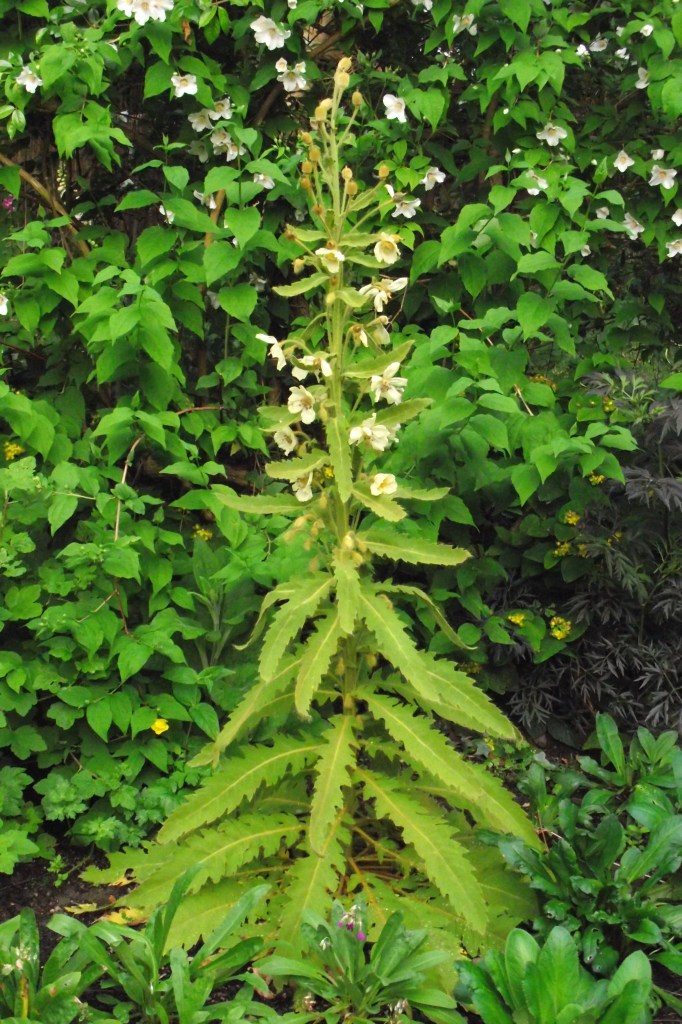
Meconopsis paniculata Ghunsa Form

The “spiny” meconopsis. Meconopsis horridula group.

Unfortunately I can’t guarantee that these pictures are totally accurate, the plants are all grown from seed and identification can be a little difficult as there is tremendous variation even within the species. All these plants are often sold under the name Meconopsis horridula. They are monocarpic and set plenty of seed.

Meconopsis racemosa
Meconopsis latifolia

After much deliberation I have decided that this is Meconopsis latifolia, a rather rare relative of Meconopsis horridula. Raised from seed, even if it actually isn’t latifolia it’s still a nice plant.

Miscellaneous Meconopsis.
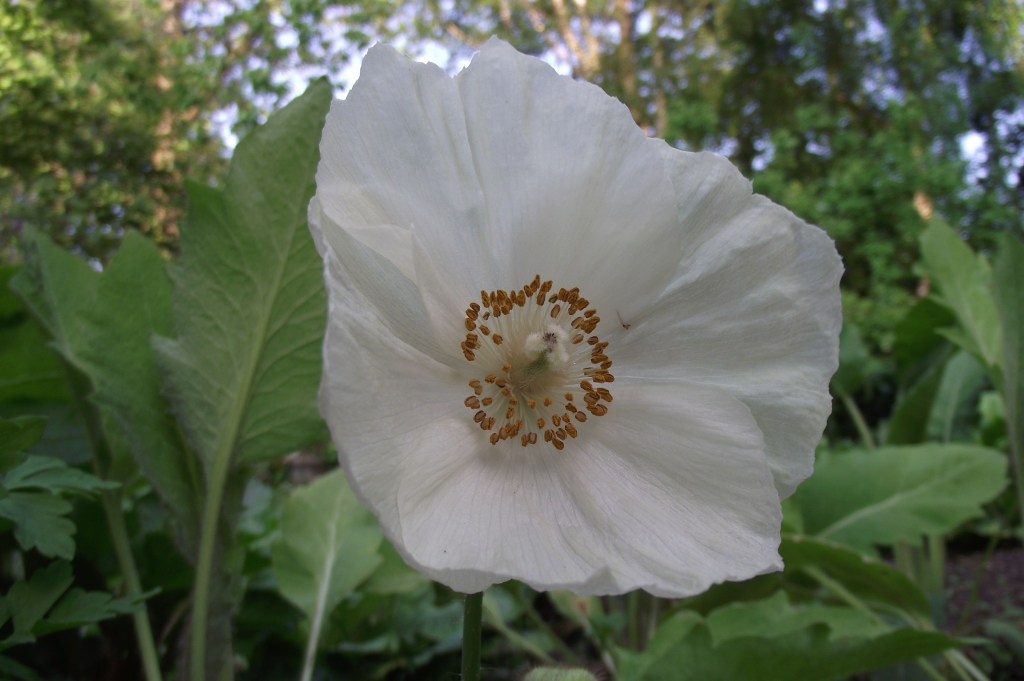
Meconopsis pseudointegrifolia.

Like many people I have a job to see where some plants sit in the meconopsis hierarchy, unfortunately the only picture I have of this beautiful plant doesn’t show its soft green leaves plus I think it should have a sulphur yellow flower, let’s face it I’m not even sure it actually is pseudointegrifolia, this is the problem you get with promiscuous poppies!
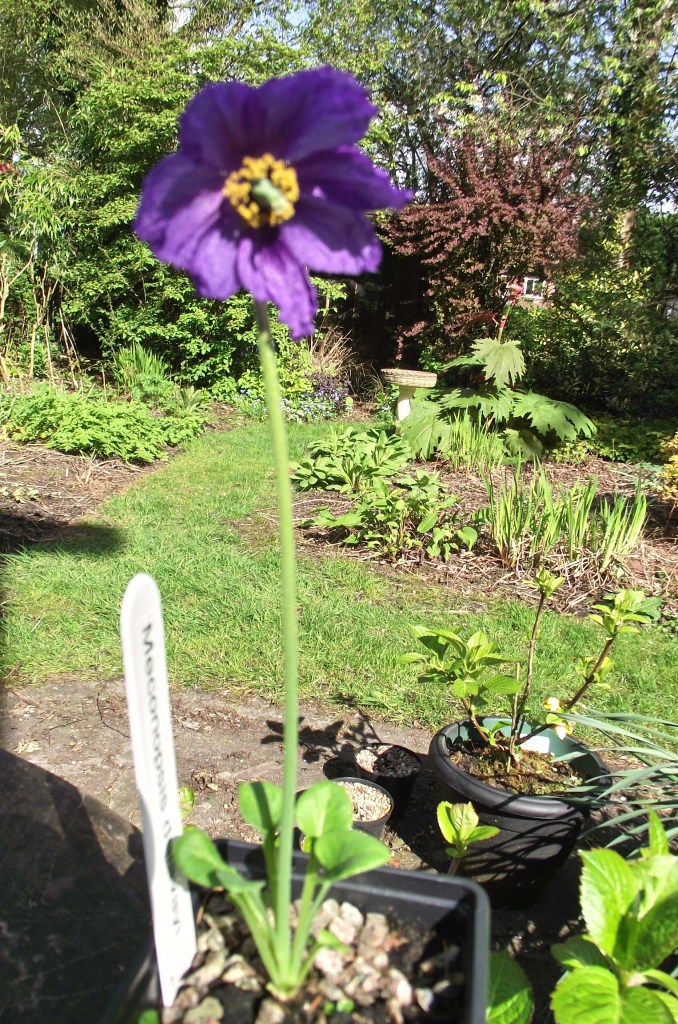
Meconopsis delavayi

A rather weedy looking plant, the only one I have managed to raise, although no different from those I have seen pictured in the wild. Just to be awkward Meconopsis delavayi is a lime lover.

Meconopsis x sarsonii

This is what happens when it all goes wrong, Meconopsis x sarsonii when the flower buds have been damaged by frost and/or damp.

Blue poppies are big feeders I grow them on fairly heavy rich soil with added grit and peat, yes peat, for best results.
Popular bulbs, corms, rhizomes etc……… the non-fibrous rooted plants. Part 4.

Tulips Part 2.

Another picture post, dealing with the remaining tulips I have grown and also have pictures of.

Double Earlies

Tulipa ‘Mondial’
Tulipa ‘Monte Orange’
Tulipa ‘Silk Road’
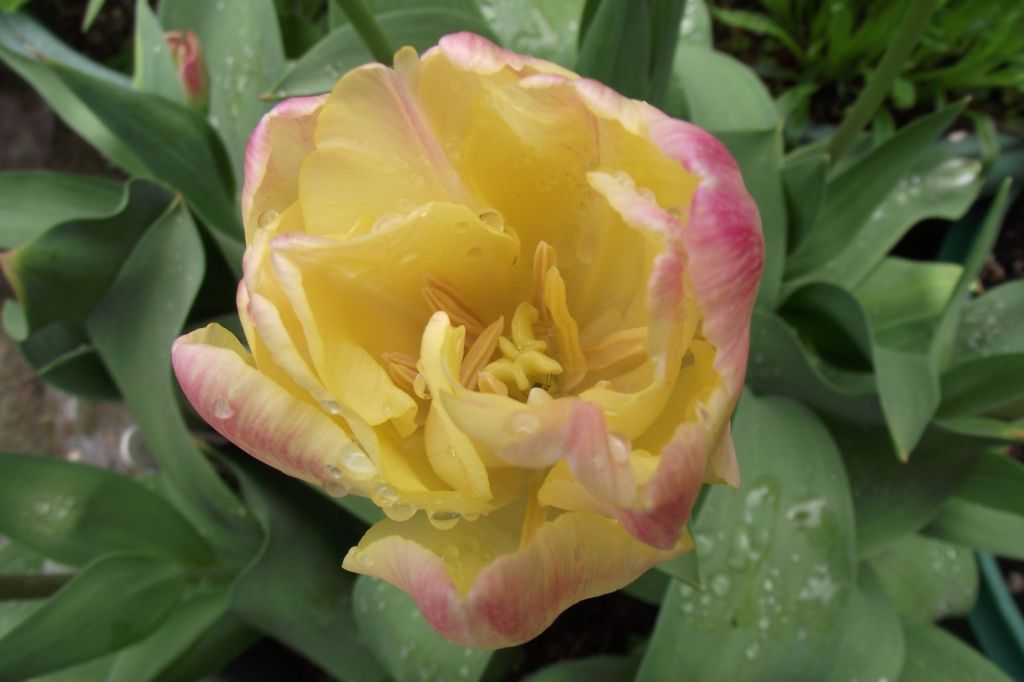
Tulipa ‘Peach Blossom’

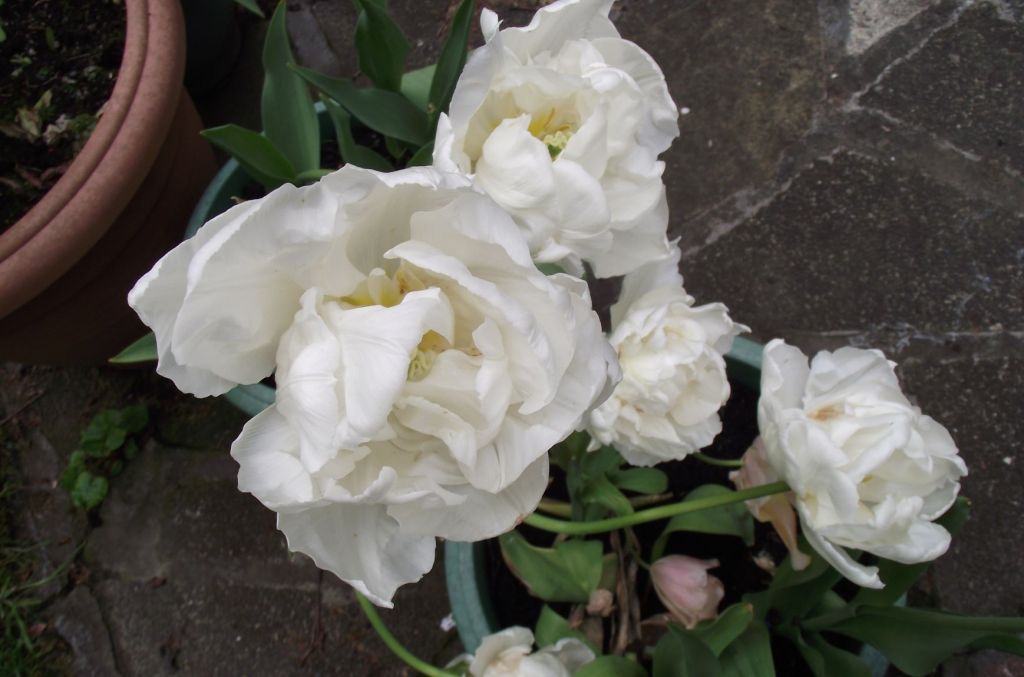
Flowering early to mid spring some of these tulips such as T.’Peach Blossom’ have the extra benefit of being scented which, along with the exquisite double flowers really enhances the early part of the year.

Double Lates

Paeony flowered Tulipa ‘Angelique
Paeony flowered Tulipa ‘Antraciet’
Tulipa ‘Creme Upstar’
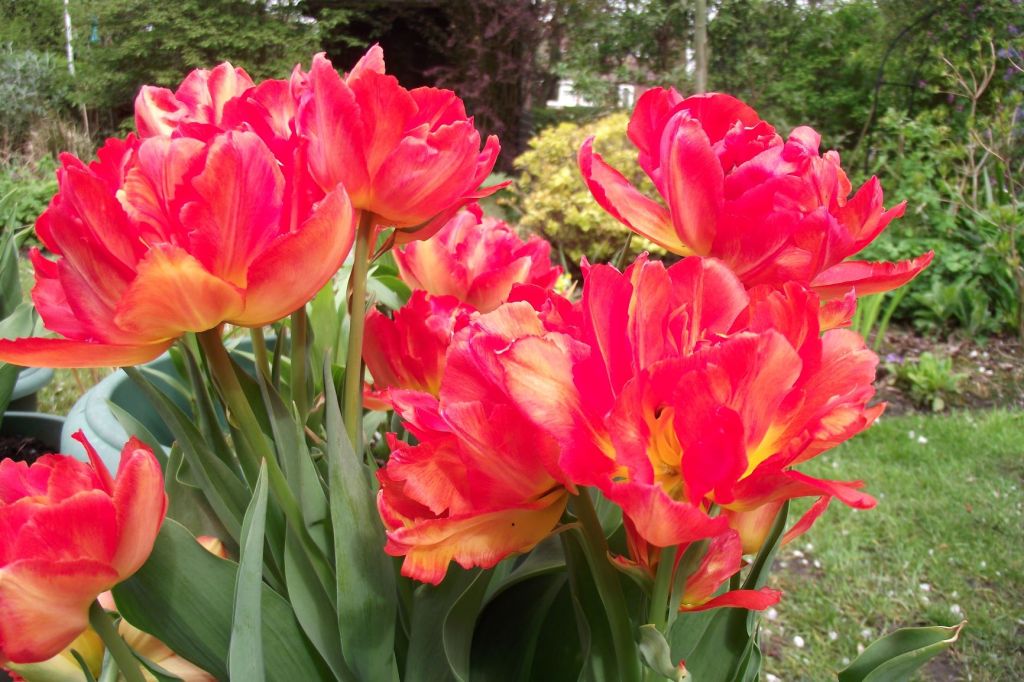
Tulipa ‘Orange Princess’ Paeony flowered.

Following on from the earlies some of the Late Doubles such as T. ‘Angelique’ are also scented.

Miscellaneous.

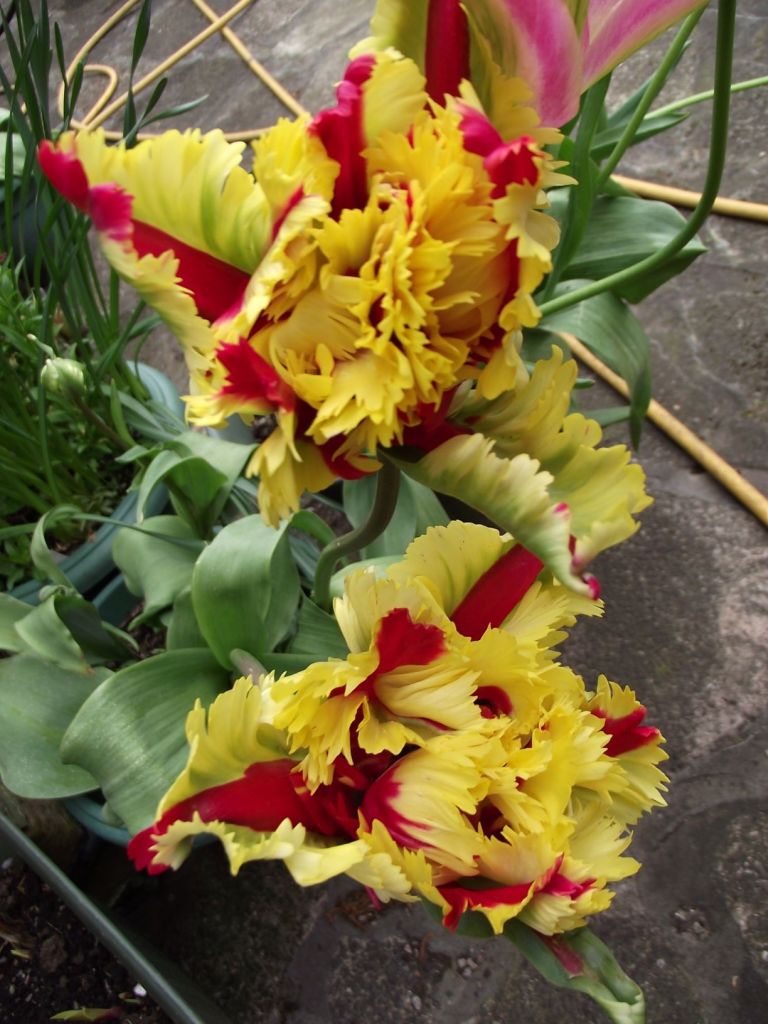
Parrot Tulip ‘Rococo’
Tulipa ‘Flaming Parrot’
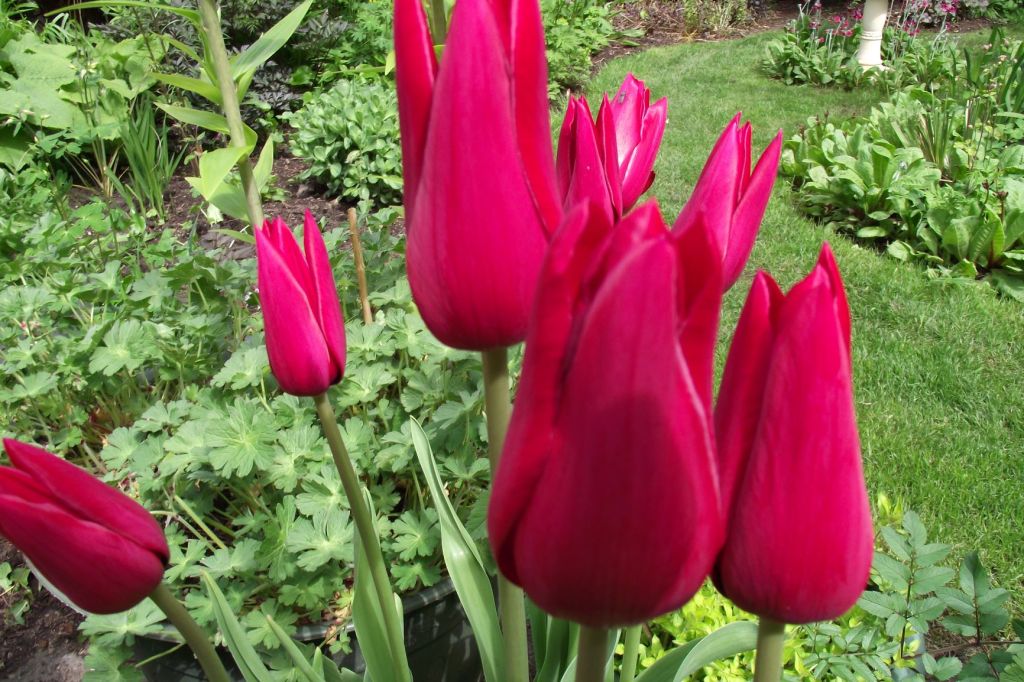
Lily flowered Tulipa ‘Red Shine’
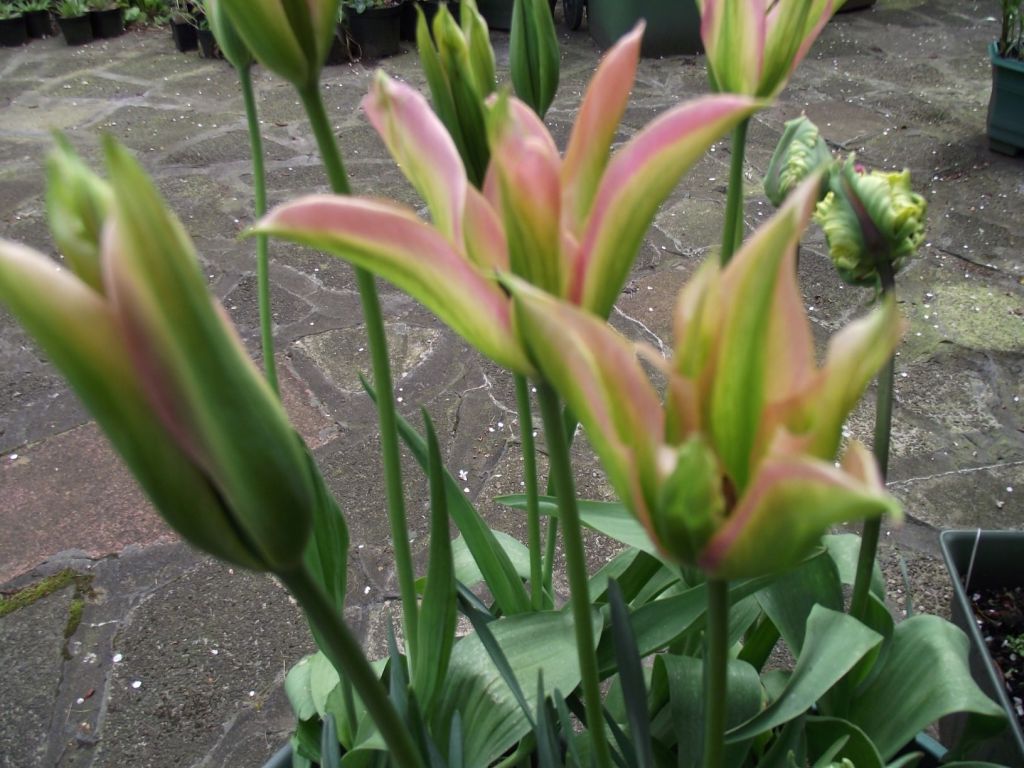
Unusual Lily Flowered Tulipa ‘Virichic’. These are known as Viridiflora Tulips.
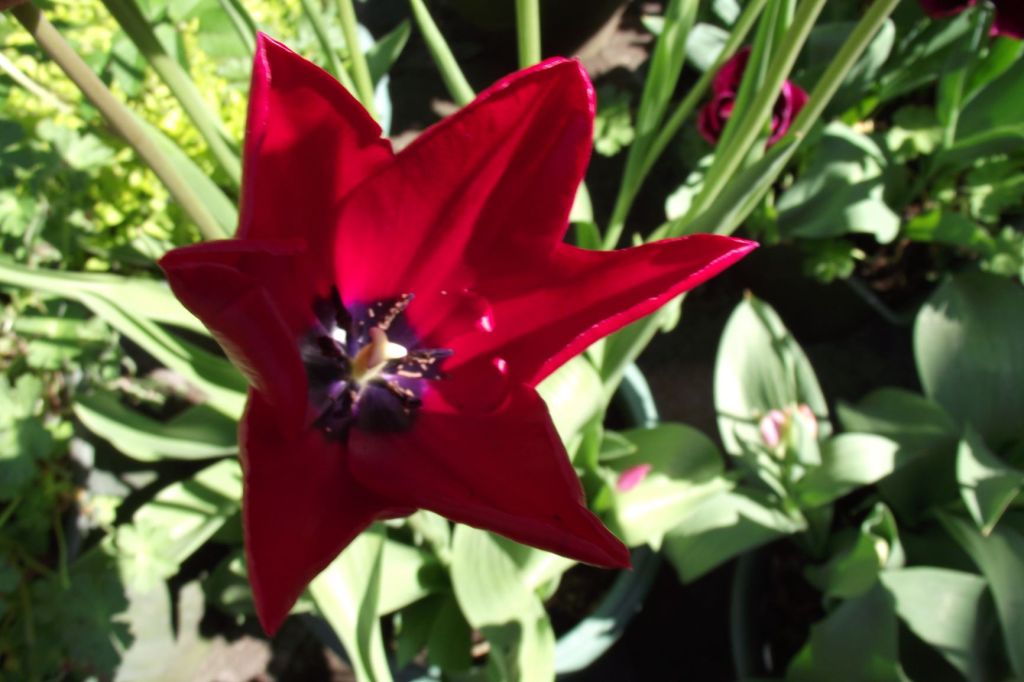
Late Single Tulipa ‘Queen of the Night’
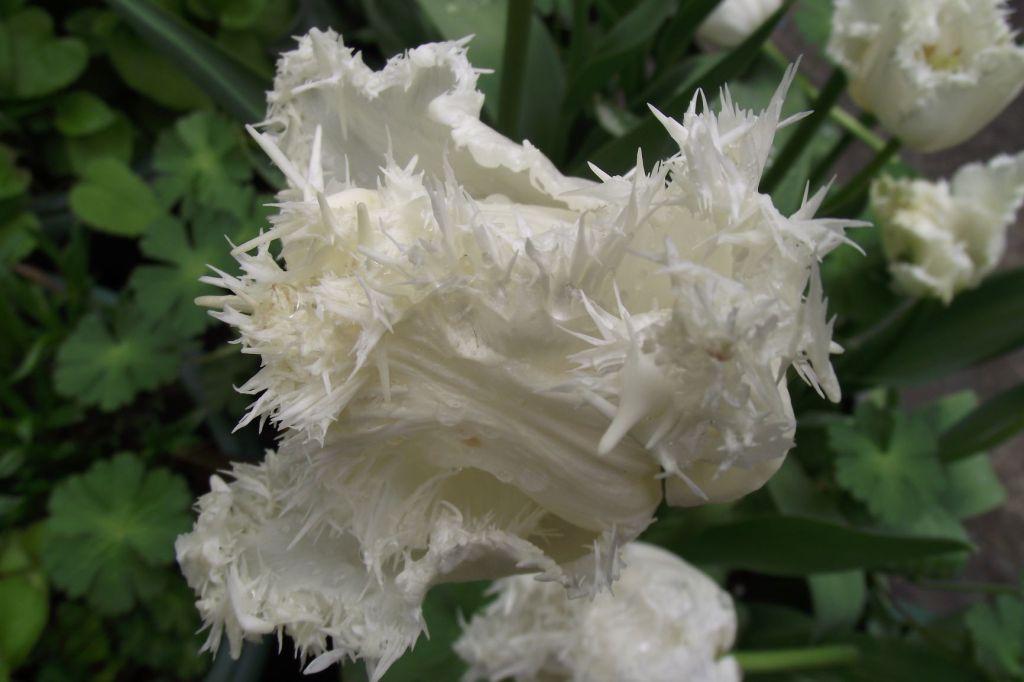
Bit of an oddity, can’t find it listed anymore Tulipa ‘Pirvilla Lady’ a Fringed Tulip.

The main pests and actually my nemesis are grey squirrels, they take absolute delight in rooting out the bulbs whether in containers or in the ground. One memorable Christmas Day I spent some time moving my pots into groups and spreading netting over them as I noticed the assault of the squirrel army had begun, eventually this led me to stop growing the Dutch tulips. I later hit upon the idea of putting a piece of heavy metal netting about an inch under the surface of the compost until this in turn was dragged out. I don’t find it worthwhile to keep the bulbs for another year but use tulips like bedding plants, in the past I have kept the bulbs for replanting but have found the results to be inconsistent. One advantage of using fresh bulbs each year is that it avoids the diseases to which tulips are prone.

Botanicals

Just a quick footnote regarding the botanicals or specie tulips, these are generally the dwarf spring flowering tulips, usually found in a rock garden setting or container, with which everyone is familiar. I have grown many of these such as Tulips kaufmanniana, greigii, praestans and their hybrids and also Tulipa tarda although I don’t have many pictures.

Tulipa praestans ‘Fusilier’ with Anemone blanda.

See more bulbs I have grown on my next post.

Popular bulbs, corms, rhizomes etc……… the non-fibrous rooted plants. Part 3.

Tulips Part 1

This is going to be more of a “pretty picture” post which is, after all, what tulips are about. There are two main groups, first the cultivated tulips which, although the original species hailed from the Near East, were developed by the Dutch plant breeders several hundred years ago till the present day. Holland is still the tulip capital of the world, the tulip fields visited by thousands every year. Vast resources were put into developing new colours and combinations resulting in inflated prices which caused tulips to become almost a form of currency leading to Tulip Mania and the first ever investment crash. The second group in general cultivation are the specie tulips or botanicals which are generally the dwarf, early flowering types seen in most rock gardens and containers. Please remember the pictures, as always, are of plants I have grown and this is by no means a definitive list.

Triumph Tulips

Tulipa ‘Carnaval de Rio
Tulipa ‘Don Quichotte’
Tulipa ‘Dynasty
Tulipa ‘Jan Reus
Tulipa ‘Jan Reus
Tulipa ‘Jimmy
Tulipa ‘Leen van der Mark’
Tulipa ‘Princess Irene
Tulipa ‘Ronaldo
Tulipa ‘Washington’

Flowering mid to late spring Triumph tulips are the largest group and the goblet-shaped flowers are the ones everybody is familiar with. Some gardeners may not like the use of plastic containers from an aesthetical point of view but I am afraid that, as I had many plants in a variety of containers, the factors of cost and weight came into consideration although some have been sprayed a different colour. The other factor to take into account is that I am more interested in the plants themselves hence the garden had a semi-wild look at best.

The “Rembrandt” tulips such as T.Washington and Princess Irene are created by careful selective breeding however at the time of Tulip Mania these colourations were caused by viruses and there were many crazy methods employed to try and induce these effects. The export of virus infected stock was banned many years ago by the Dutch.

Lilies Part 3

Included here is the giant of them all Cardiocrinum giganteum (Syn. Lilium giganteum), a few Asiatics and pest and disease.

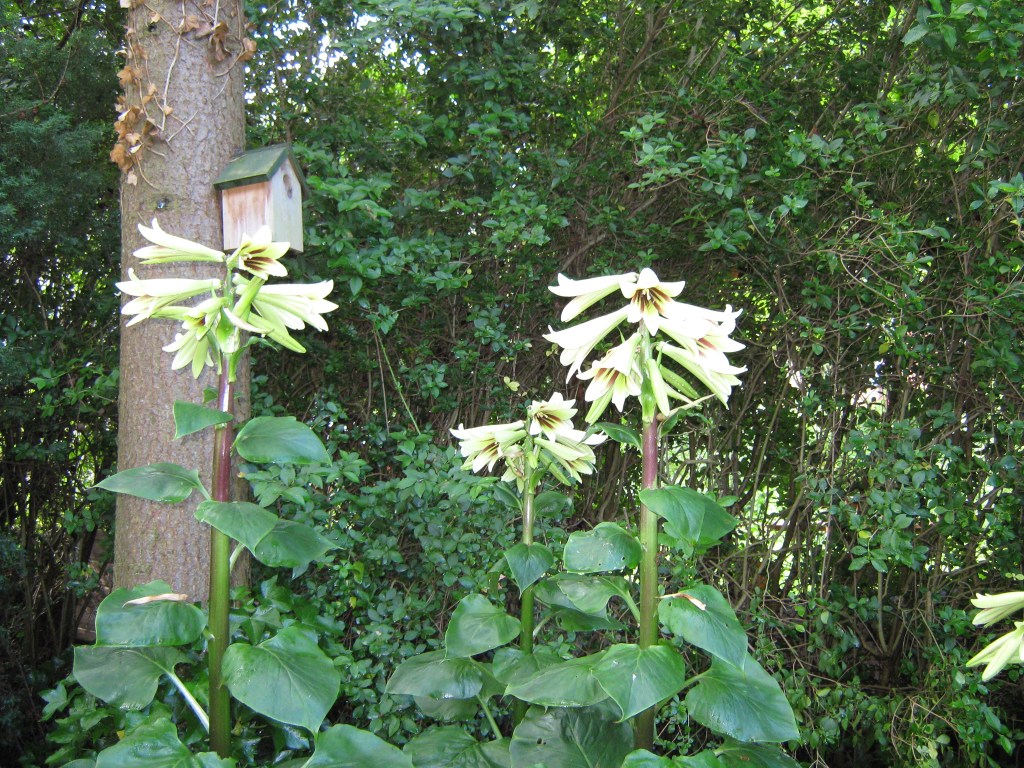
Cardiocrinum giganteum
Cardiocrinum giganteum emerging.
Cardiocrinum ready to open.
Cardiocrinum flower close up.
Cardiocrinum seed-head.

Cardiocrinums or Giant Himalayan Lilies grow up to 10 feet tall and are monocarpic (die after flowering) it takes around 5 years to flower from bulbs which develop as offshoots from the original before it dies. If you are extra patient it takes around 7 years from seed. They prefer a rich acid soil with some shade and unlike other lilies are planted with the nose of the bulb at the surface of the soil. The large glossy rosettes of leaves can be 12″ across, so plenty of space needs to be given. The flowers are born very high up on the stem, are 6″ or more long and highly scented, to stand near a group on a warm humid day is an exceptional experience.

Although I much prefer Oriental Lilies I have a grown a few Asiatics, ‘Night Flyer’ is a favourite.

Lilium ‘Night Flyer’
Lilium ‘Night Flyer’ Close up.
Pure white Asiatic Lily ‘Amazing’

The above are a few “Patio Hybrids” I had as a bonus offer, only 12″ high, very attractive flowers but unfortunately no scent.

The number one pest experienced by lily growers is the Lily Beetle, appearing first on fritillaries and later on lilies they are capable of great damage in a comparatively short time. The grubs only develop on these genera and are easily recognised by the fact they wrap themselves in their own excrement so if you see any nasty looking dark blobs on your leaves, usually at the axil, you know what they are. The easiest method of control is to be vigilant and pick the adults off as they appear and crush them but be careful they are tricky devils and if allowed to drop on the ground they land on their backs and are virtually invisible.

Host plant Fritillaria meleagris
Lily Beetle

I have come across a virus disease once and it can be devastating, although not fatal, the plant is severely weakened and never performs to the same degree. Spread by aphids, although aphid control and good garden hygiene helps, once the plant is infected the only way to deal with Mosaic Virus realistically is to uproot and burn it entirely.

Mosaic Virus

As I finish the post I have taken delivery of some more lily bulbs. Looking forward to a summer full of scent!

Warning: Lily pollen is fatal to felines.

Lilies Part2

Lilies generally prefer a slightly acid soil, originally I planted them in pots preferring to have the scent close to the house, later as their numbers grew, I started to remove them from the pot intact and planted the whole thing in the border after the first year, this worked quite well as many of the “transplanted groups” gave a good display for years. If planting direct into the garden it is recommended that a layer of grit is placed beneath the bulb to aid drainage however the thing to avoid is creating pockets in heavy soils which will fill with water during the winter. If planting in heavy ground a thorough cultivation of the planting area adding grit and additional grit under and around the bulb would seem prudent. I usually plant at 100mm which also helps to stabilise the stems as many lilies do actually throw roots out from the stem. Remember using odd numbers in a group always looks better and less artificial.

Oriental lily ‘Nippon’
Lilium ‘Pink Perfection’ Scented Trumpet Lily
Lilium ‘Robert Swanson’ Giant – Tree Lily.
Lilium ‘Salinas’ Highly scented Oriental.
Lilium ‘Salmon Star’
Shorter than most this scented Oriental (sometimes Dwarf Oriental) lends itself to container culture.
Dwarf Oriental Lily ‘Souvenir’
Oriental Lily ‘Starfighter’ Very large upturned flowers.
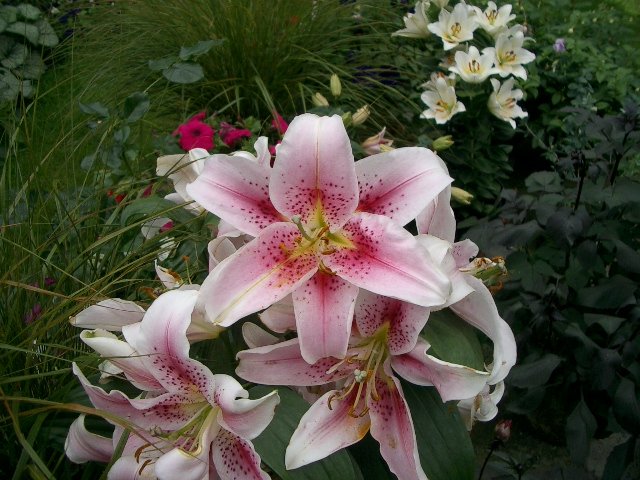
Lilium ‘Stargazer’ Oriental Lily. A deliberate cross between two species to produce an upturned flower. Traditional lily which has been around for some time.
Lilium ‘Time Out’ Oriental lily.
Oriental Lily ‘Tom Pouce’ Extremely large trumpets.
Lilium ‘Venezuela’ Oriental.
Fragrant Tree Lily ‘Honeymoon’

Watch out for the lily beetle! Next post miscellaneous, plus pest and disease and the giant of them all Cardiocrinum giganteum.

Lilies Part 1

I love of lilies, there is something about their stature and the majestic blooms that appeals to me although I have to admit, when younger, I shunned them as too artificial looking.There are none in my new garden but I have taken a delivery of some bulbs today which has inspired this post.

Lilies slot into various groups and have distinct characteristics but I am afraid that I only go for the scented ones, principally the Orientals, and ignore the others, mainly Asiatics, as a lily without scent just doesn’t do it for me. The post is probably more pictorial than informative but, this is the nature of the beast, they are reasonably easy to grow and will grow well in plenty of sun or dappled shade, many of the original species coming from the margins of woodland.

Trumpet lily ‘African Queen’ Lilium longiflorum hybrid.
Lilium ‘Arena’ Very fragrant Oriental.
Lilium Anastasia ‘Oriental Trumpet, Tree Lily or Orienpet Lily growing up to 2.5 mtrs.
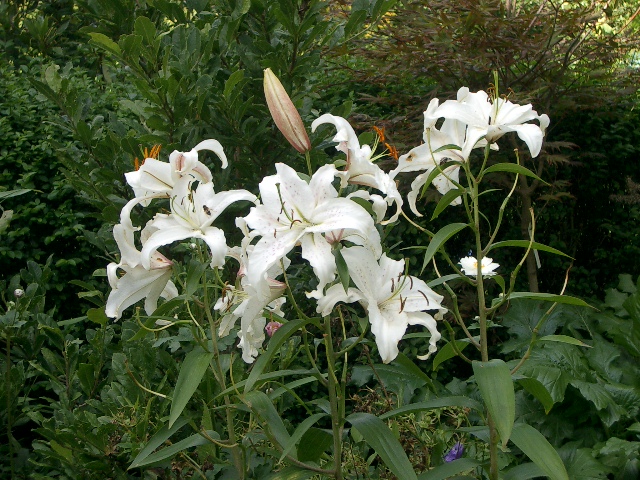
Oriental Lily ‘Casa Blanca’
Oriental Lily ‘Dizzy’
Another highly scented Oriental Lily ‘Everest’
Oriental Lily ‘Excelsior’
Lilium ‘Golden Splendour’ Trumpet Lily.
Sweet scented Lilium ‘Josephine’ Oriental Lily
Oriental Lily ‘Kiss Proof’
Tree Lily Lilium ‘Lavon’ These large lilies can take up to three years to attain their final height of approx. 2 Mtrs.
Lilium ‘Mona Lisa’ – Oriental Hybrid
Lilium ‘Muscadet’ – Oriental stunner.

Planting and my preferences coming up in Part 2.

Epimediums

For the last ten years or so I have been increasingly in love with this genus of beautiful flowering plants. They are so adaptable, some more than others, to what are best described as “difficult” conditions some members of the genus have actually seemed to thrive for me rather than just tolerate dry shade which is one of the most difficult areas to cater for. There are both evergreen and deciduous species many with colourful leaves particularly when just emerging in the early spring and sometimes again in the autumn. Many variations are now available sporting different flower combinations giving a wide range of “mini-orchids” to choose from.

Epimedium grandiflorum ‘Queen Esta’

Deciduous cultivar Queen Esta prefers a moisture retentive soil although I have grown it within a few feet of the base of a birch tree as shown in the picture without any trouble however during very dry spells the area received some watering.

Epimedium x rubrum

Much as I like the flowers of Epimedium x rubrum I have never grown a robust specimen and I normally don’t have a problem with epimediums, in fact the new plant I have now is not doing well compared with its companions. This plant is evergreen in that the leaves last the winter and although preferring moist soils should withstand drier conditions.

Epimedium x warleyense ‘Orangekonigin’
Epimedium x warleyense ‘Orangekonigin

Epimedium x warleyense from the legendary Miss Willmott’s garden was the result of a cross between two western species, the cultivar ‘Orangekonigin’ is a fairly recent introduction. Seems to thrive in either moist or dryish soils. Unfortunately the new foliage pictured had been visited by Mr. Slug!

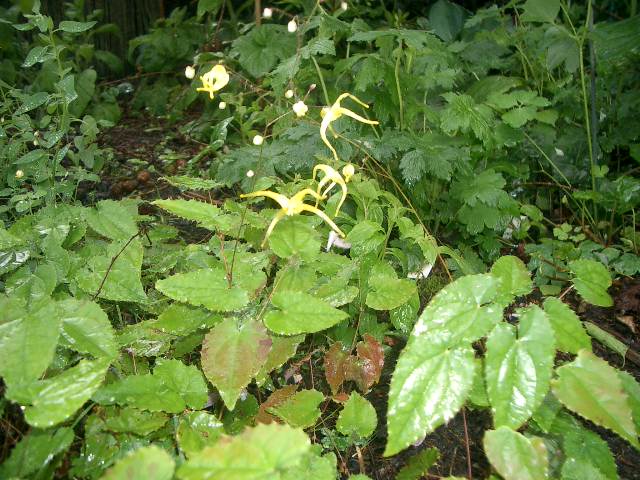
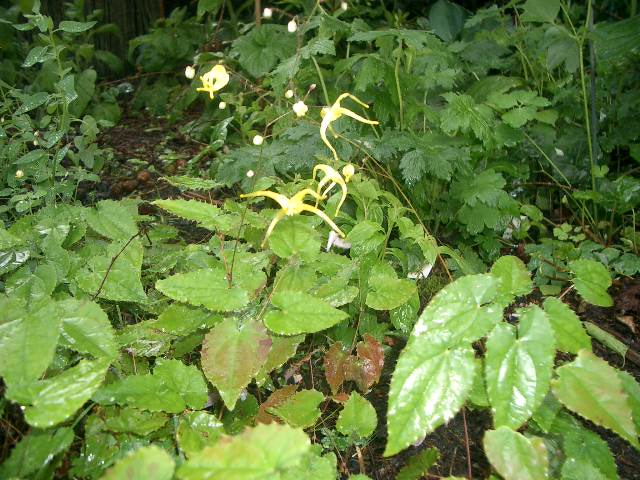
Epimedium davidii?

I am not sure if this actually is E.davidii but the combination of the yellow spider-like flowers and the glossy toothed leaves makes for a really useful plant. I had this in my mind as E.rossii but it could have been a case of word association as I knew someone called David Ross, who knows? E.davidii is from China and therefore prefers moist conditions although, again, the plant pictured, which thrived, was growing in fairly dry shade.

Epimedium grandiflorum ‘Lilafee’

E. grandiflorum ‘Lilafee’ is a cultivar from the same stable as ‘Orangekonigin’. The lilac coloured flowers are suspended over glossy leaves with toothed edges, seems to grow best in moist conditions.

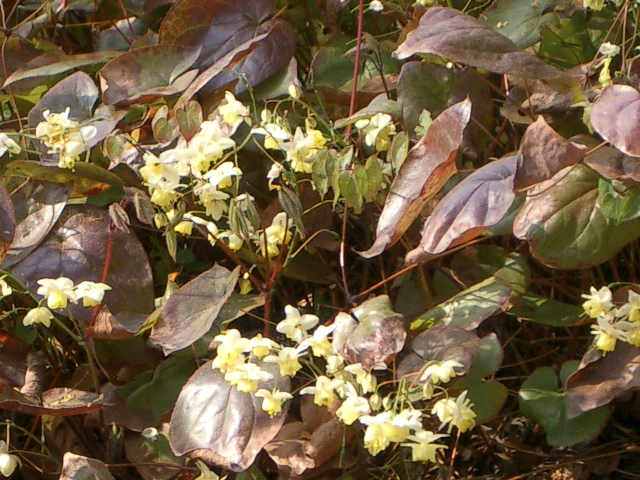
Epimedium x versicolor ‘Sulphureum’

Delicate flower spikes over copper foliage which tends to green up during the summer only to revert to copper again as winter approaches. Although evergreen the foliage does tend to look rather tatty by the spring.

Epimedium x youngianum Niveum AGM

Neat little plant growing to about 8″, delicate pure white flowers hang off wiry stems which are reddish in colour. prefers a moist spot to thrive. The new leaves can give some good colour.

It is a matter of preference when or if one decides to remove the old foliage, personally I prefer to leave it on until the spring and then remove it just as the new foliage and flower stems are appearing being careful not to cause any damage to the new growth. This allows a good view of the flowers and the colours of the new leaves, leaving the foliage intact can detract from the display in some types which carry their flowers closer to the base of the plant.