Six on Saturday 28/6/2025

The welcome rainfall has really boosted everything in the garden, although it is always sad to see the early bloomers finished until next year. My garden is always at its best Mid-April To mid-June. I can now breathe a sigh of relief, as the couple of bamboos that I have, are finally greening up again. I always worry that they aren’t going to recover after their winter battering, because they are so late. I have a Phyllostachys nigra which was badly damaged a couple of years ago, and only partially survived. We are promised another “heatwave” next week. I think it is meant to reach as much as 29°C on one day!

An abundance of geraniums this week. I wanted to get them in before some finish flowering.
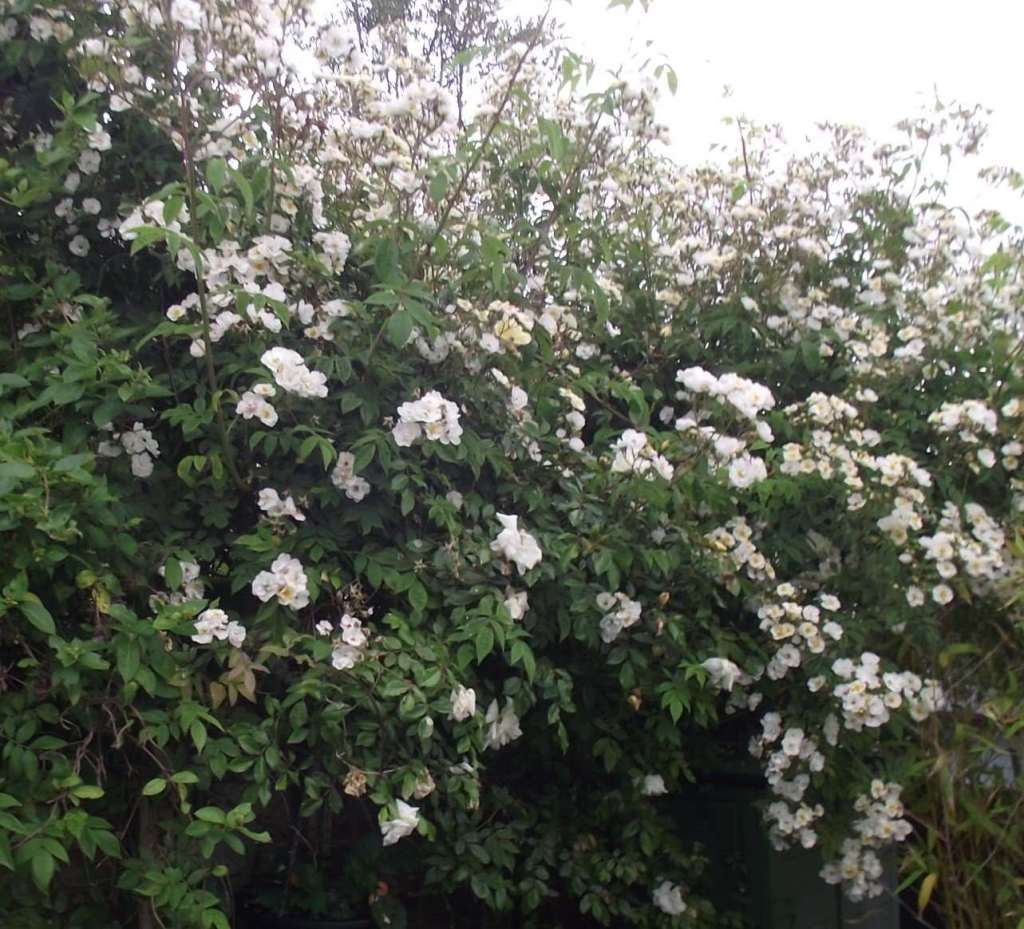
I’m sure Rosa ‘Rambling Rector’ is on steroids. This is only its third year since I planted it, but I never thought this would be the result. Some late pruning, to contain it a little, has certainly helped the flower count. On a warm day it fills my tiny garden with scent, so I won’t complain. A drastic prune is now due!

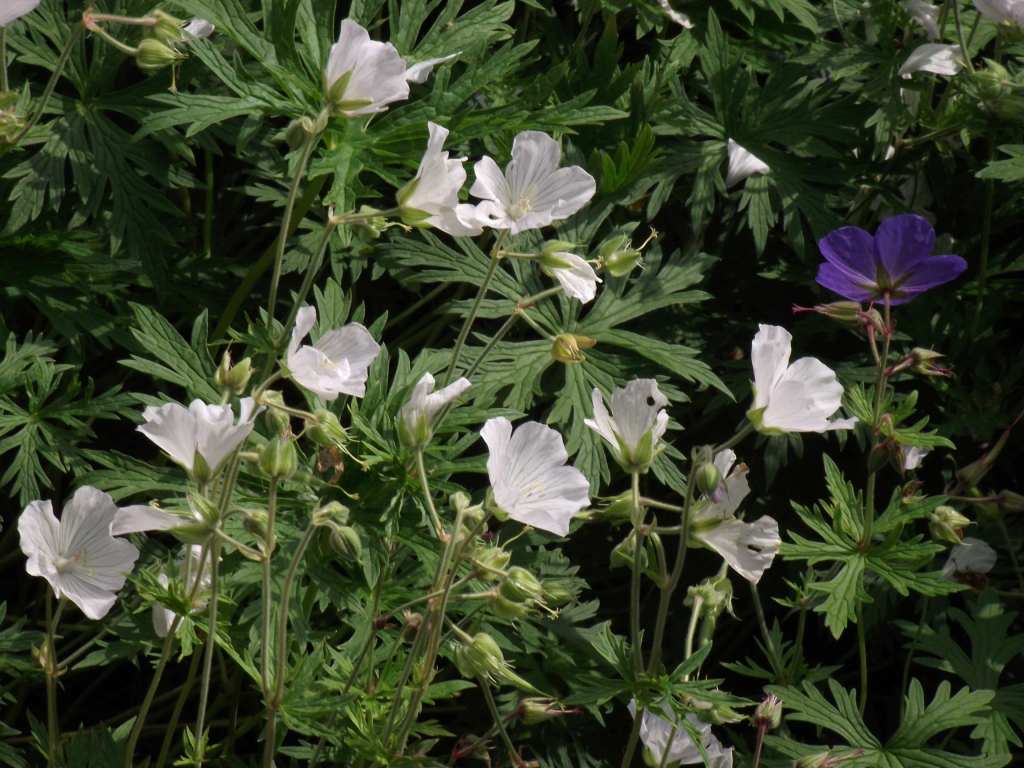
Geranium ‘Galactic’ or to give it the full title Geranium pratense var. pratense f. albiflorum ‘Galactic’, poor thing! It sat in the garden unrecognised, until I found an old label that had been disregarded a few years ago. I am always hesitant when identifying geraniums, as the variations are often very slight. This has led to a growing problem of, plants offered for sale, being wrongly labeled. Best left to the specialists.
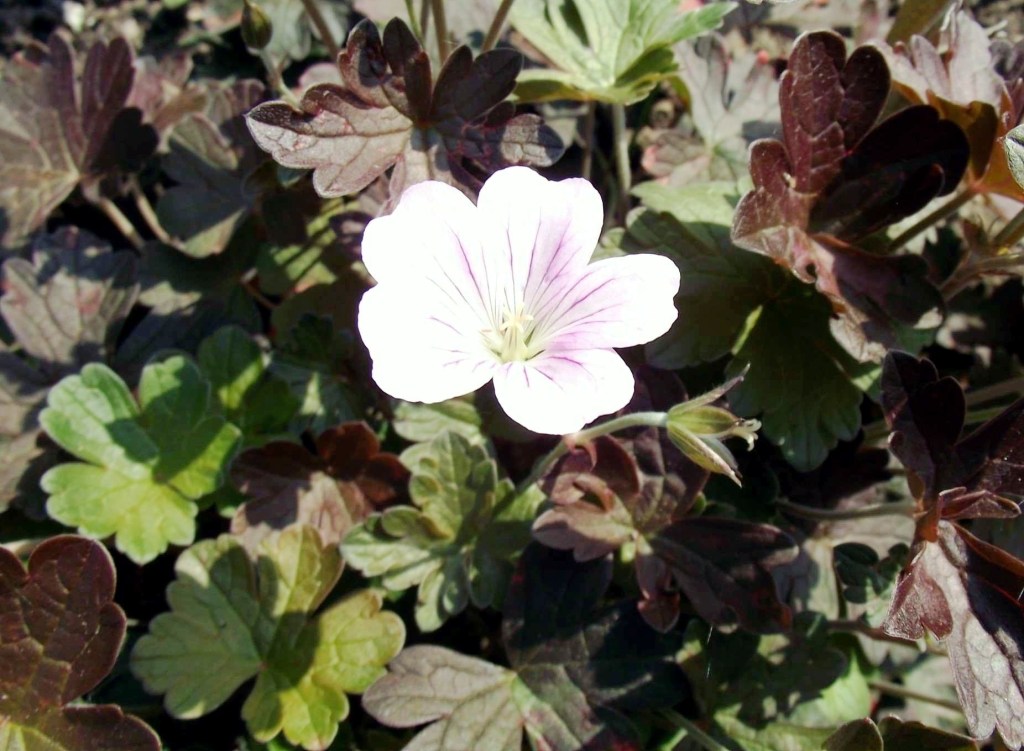
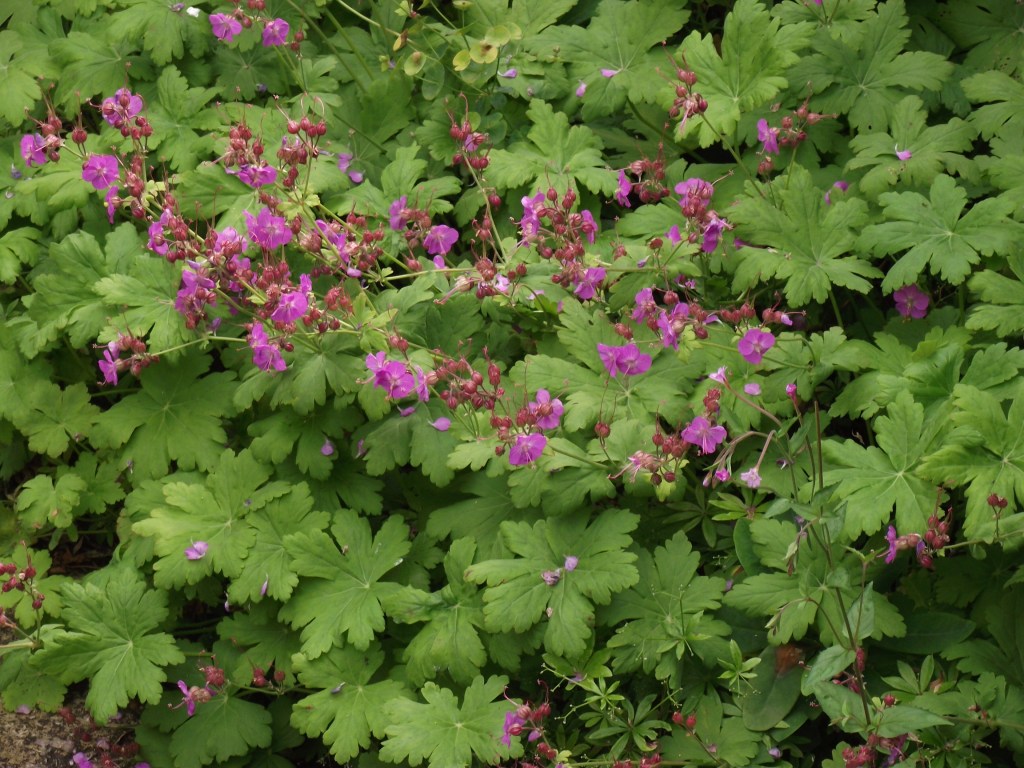
Unfortunately the flower is much pinker than shown, as the name implies. Geranium x oxonianum ‘Dusky Rose’ is a new cultivar which I am hoping should flower right through the summer.
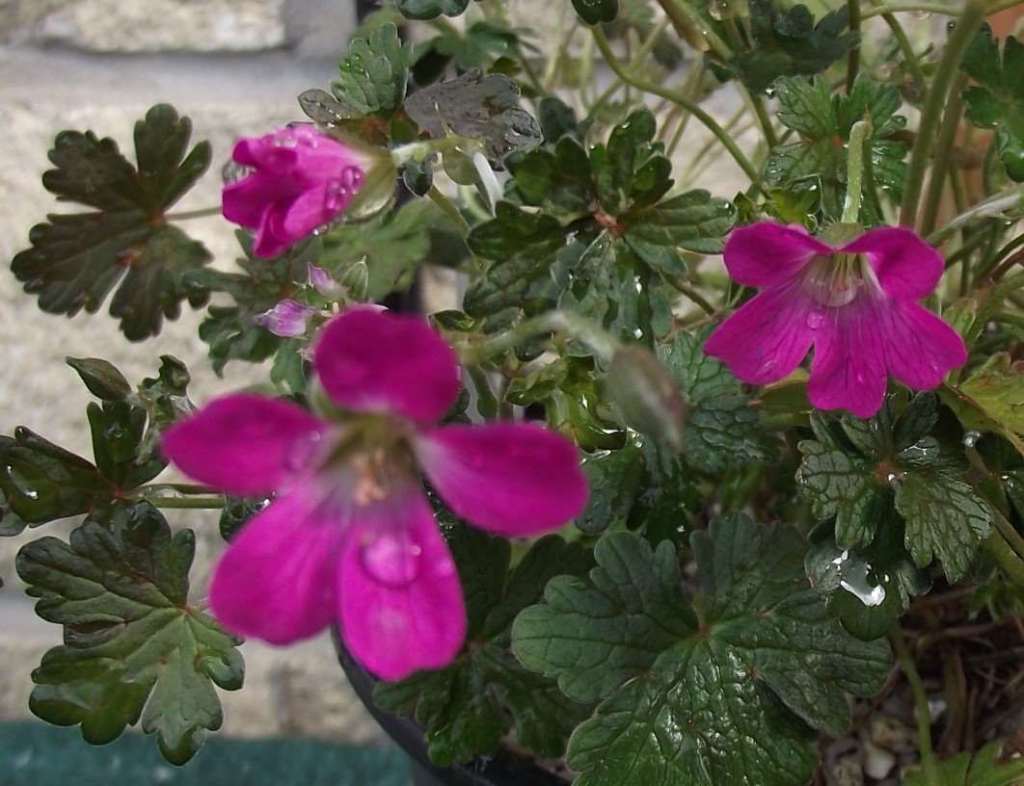
Another low growing geranium (6″). Geranium Orkney Cherry is bred by Alan Bremner in the Orkney Islands so it must be hardy.
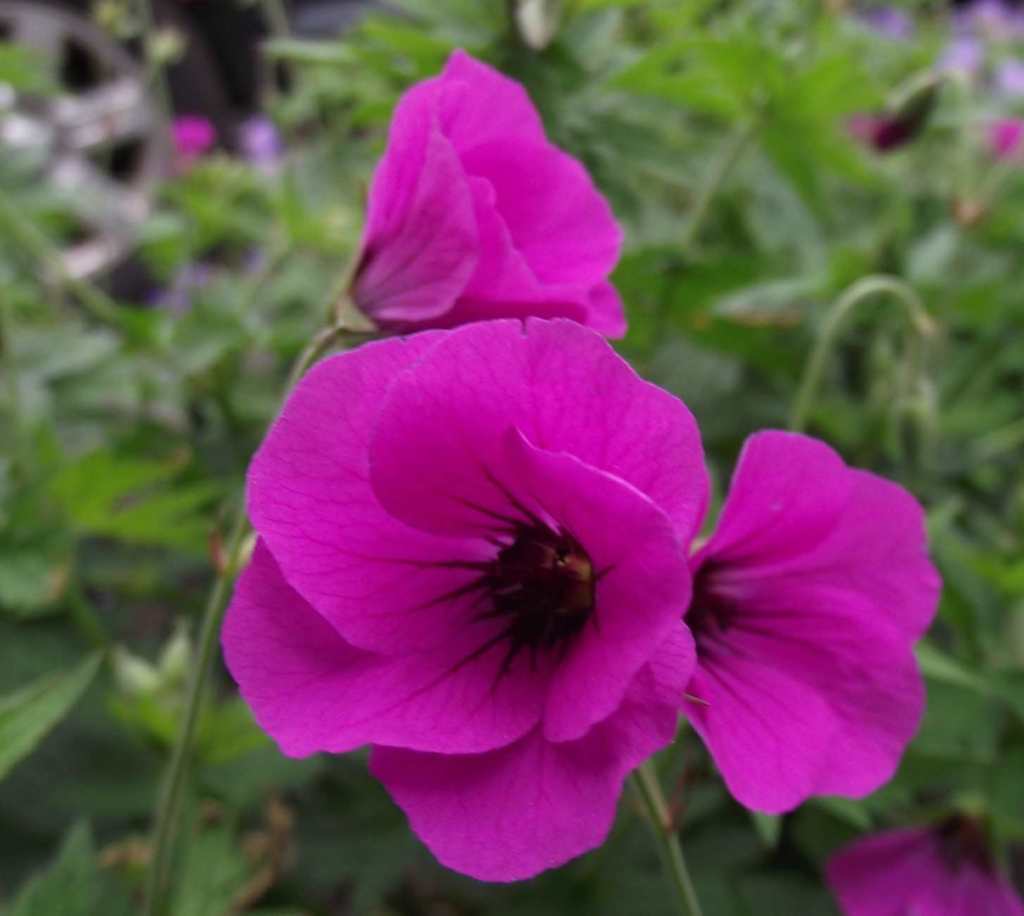
Geranium Patricia is another cultivar from Alan Bremner and is the result of Geranium endressii x Geranium psilostomen. I know this one will produce flowers through the summer. Geranium ‘Galactic’ however, I will be cutting back in the next couple of weeks, and hoping for a second flush of flowers.

My favourite pink geranium. I have had Geranium × oxonianum ‘Wargrave Pink’ for many years, even before I made the decision to grow more geraniums. This is another one I know will keep flowering right through the summer.

This meme is hosted by Jim Stevens who is to be found with all the details and links to plenty of other blogs to enjoy at Garden Ruminations.
Six on Saturday 7/6/2025

We have had a very wet week, with very little sun. In between showers I have discovered a couple of pests causing damage to foliage. The mullein moth caterpillar has been feasting on a clump of verbascums making large holes in the leaves. I have found that the easiest way of combating them is to simply pick them off and dispose of them. It’s the first time I have come across these, even though I have been growing verbascums for years. Another first is the geranium sawfly. I have always thought of geraniums as being pest-free and I have found no reference to the sawfly in earlier textbooks. The larvae make fairly neat, small, round holes in the leaves, which detract more from the appearance, than the actual health of the plant. Besides an odd one, the culprits had disappeared, although it’s possible to get another attack later in the year. The odd thing is that they attacked one geranium but a different species growing right next to it was left alone. The good news is no lily beetle yet!

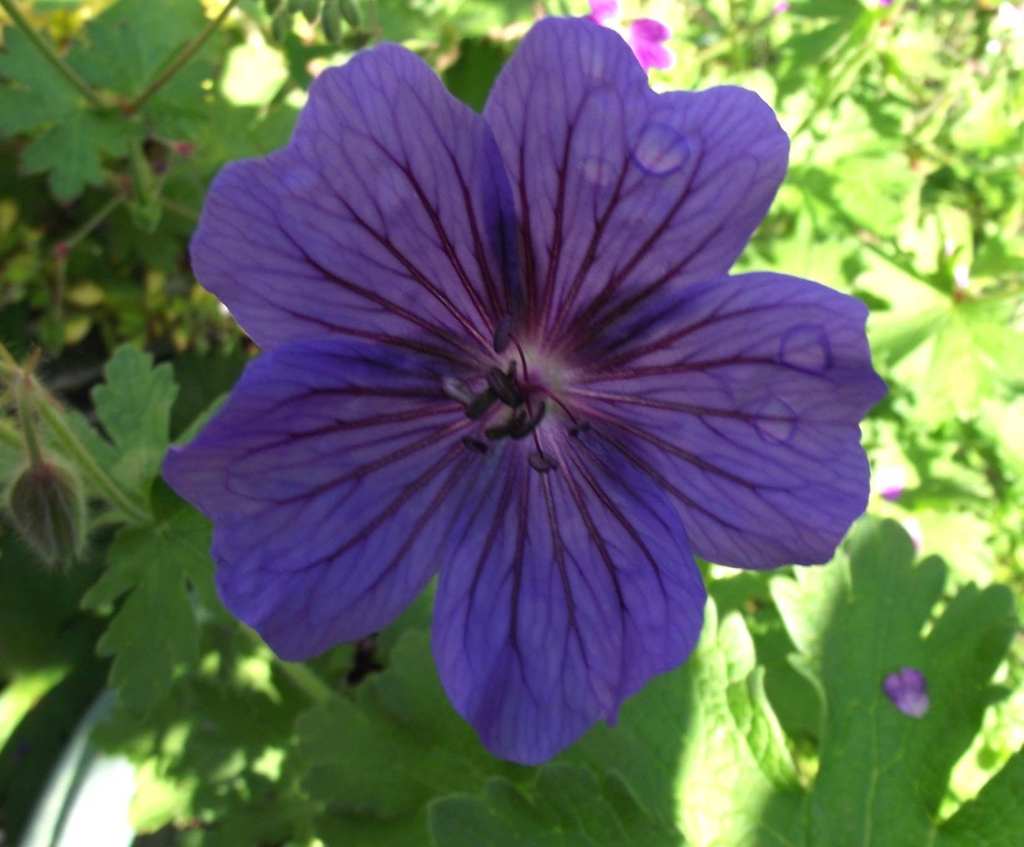
Rather magnificent veining of Geranium x magnificum ‘Blue Blood‘ which is a variant of the original cross: G. ibericum x G. platypetalum.

Another of my favourite candelabra primulas. Although this plant was grown from seed last year, overwintered in a container, and only planted out a a month ago it has still produced a reasonably sturdy flower stem. If it had only made a weak attempt to flower I would have removed the stem to allow it to bulk up more.

I have mixed feelings about this rambler. It opens from a really nice tight, typical rosebud. When half- open it till maintains its form. When fully open it becomes a bit of a mess! It might be that the form I have is not as good as it might be, but even though it is also only lightly scented, I am reluctant to part with it.

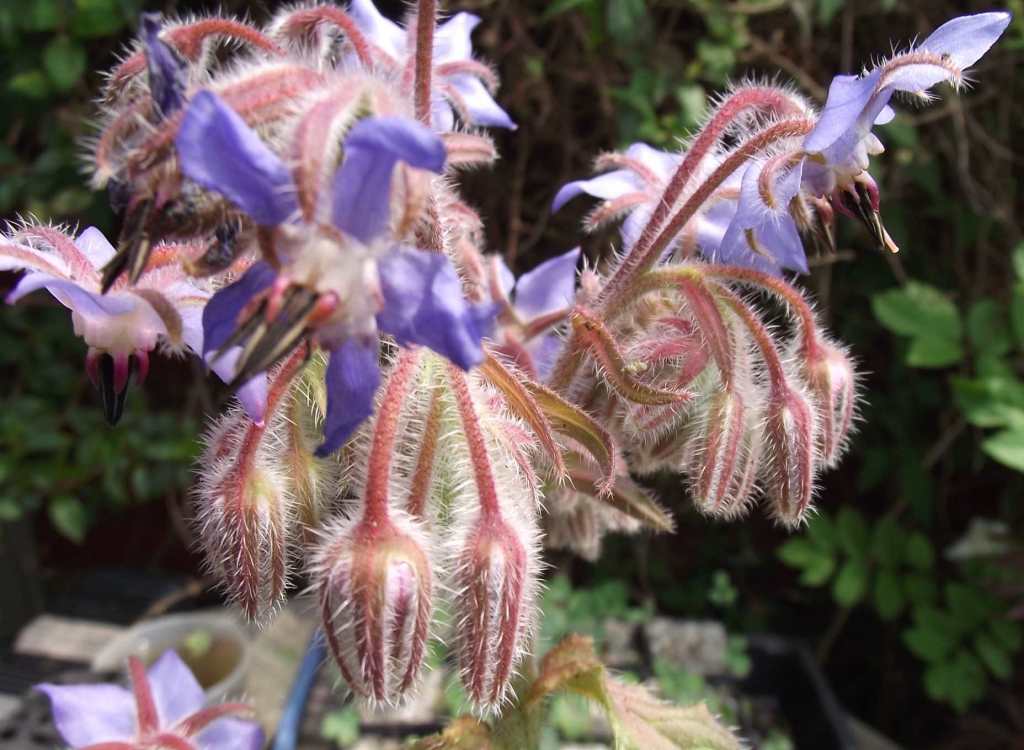
I can’t resist the colour and texture of herb borage, I even have a photograph on my wall. This plant is flowering from a cold sowing at the end of January.

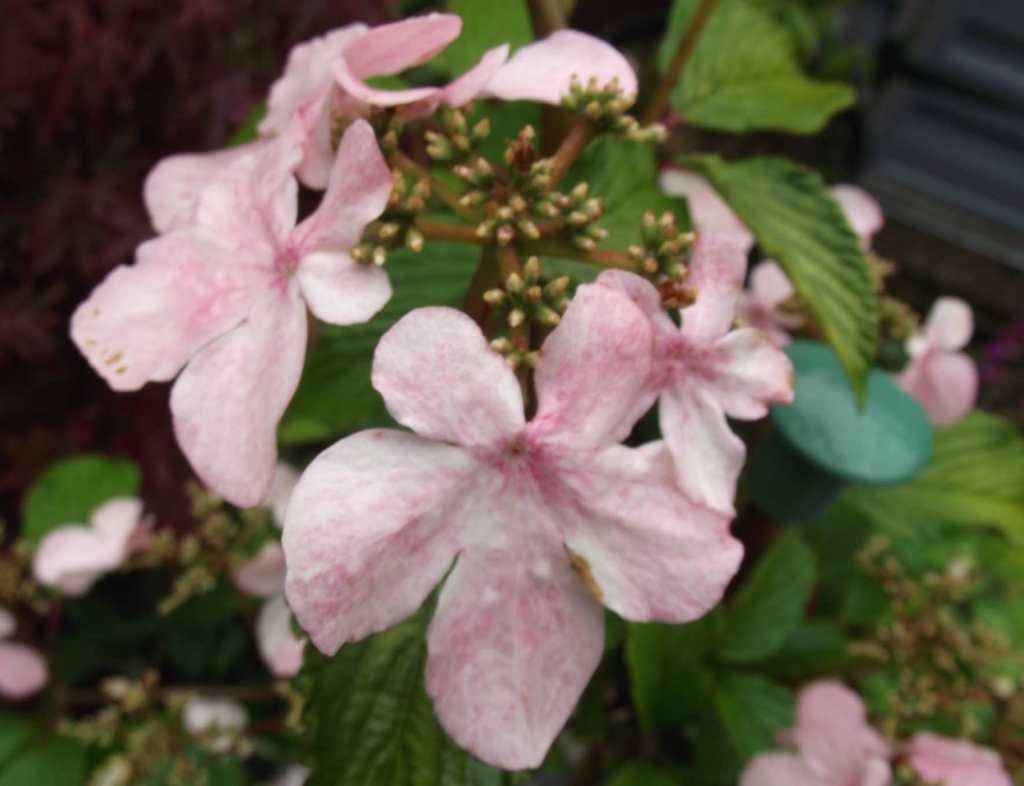
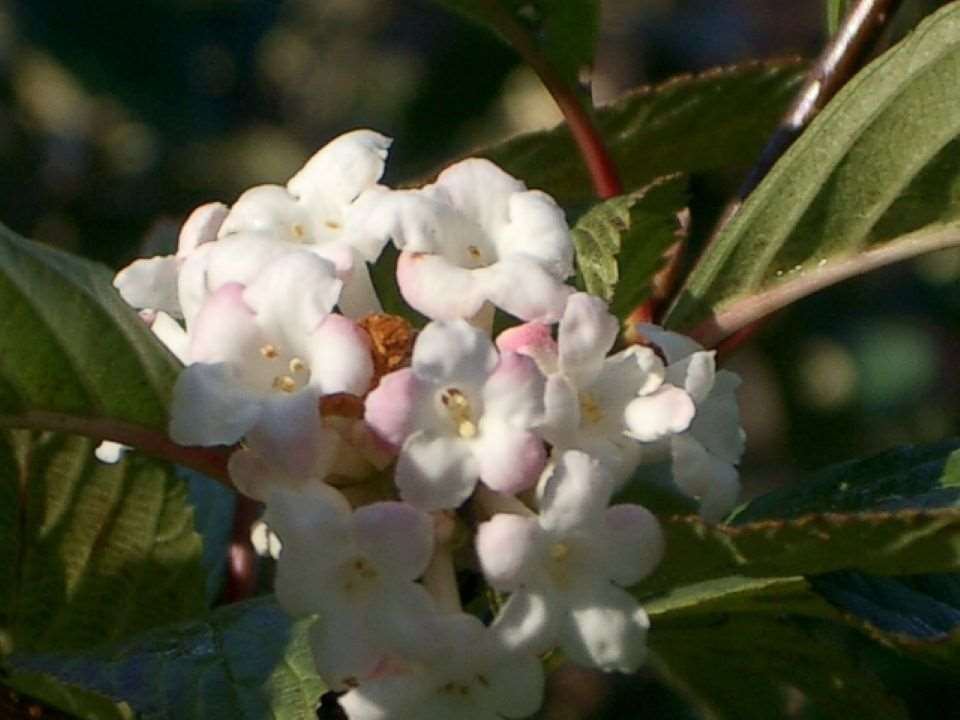
I have cheated a bit here in order to show the various stages of Viburnum plicatum ‘Kilimanjaro Sunrise’. It opens with the petals suffused quite a dark pink, goes to almost pure white, and then fades to a softer pink as it ages. This is a young plant but the flowers lasted quite well. The flowers of Viburnum plicatum f. tomentosum ‘Mariesii’, which flowered earlier, were over very quickly. I think it could have been the long dry spell that caused this to happen.

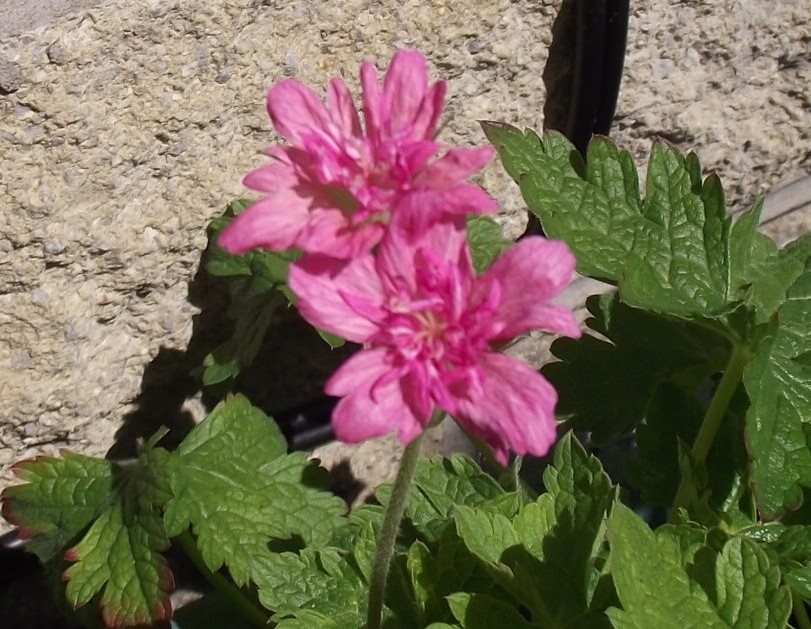
Geranium × oxonianum f. thurstonianum ‘Southcombe Double’ to give it its full title, is one of a massive group of geraniums which are variants of crosses between G. endressii and G. versicolor, that contain many of my favourites. I think that this is a rather pretty little thing.

This meme is hosted by Jim Stevens who is to be found with all the details and links to plenty of other blogs to enjoy at Garden Ruminations.

Six on Saturday 17/05/2025

Weather-wise we have had a couple of light frosts at the beginning of the month and haven’t had any appreciable rainfall for weeks. We have had no rain in May, only 18mm in the whole of April, and the dry weather is set to continue for at least another week. It has been fascinating watching the weather radar, any rain clouds that did appear always veered away from our location! At least, now I have a small garden, it does make watering less of a task.

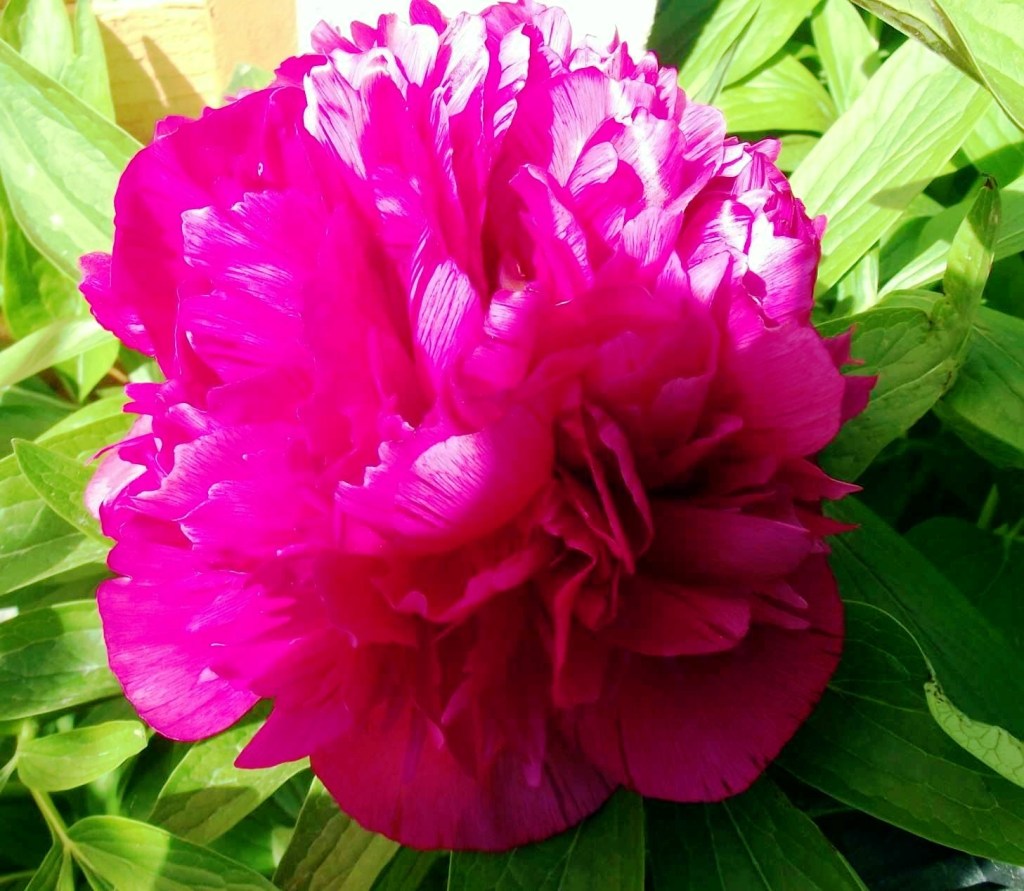
Inherited paeony of unknown origins. For some reason it thrives in a shaded dry spot but produces many flowers every year. Technically the photo’ is not good but I like the “silvering” and shade contrast.

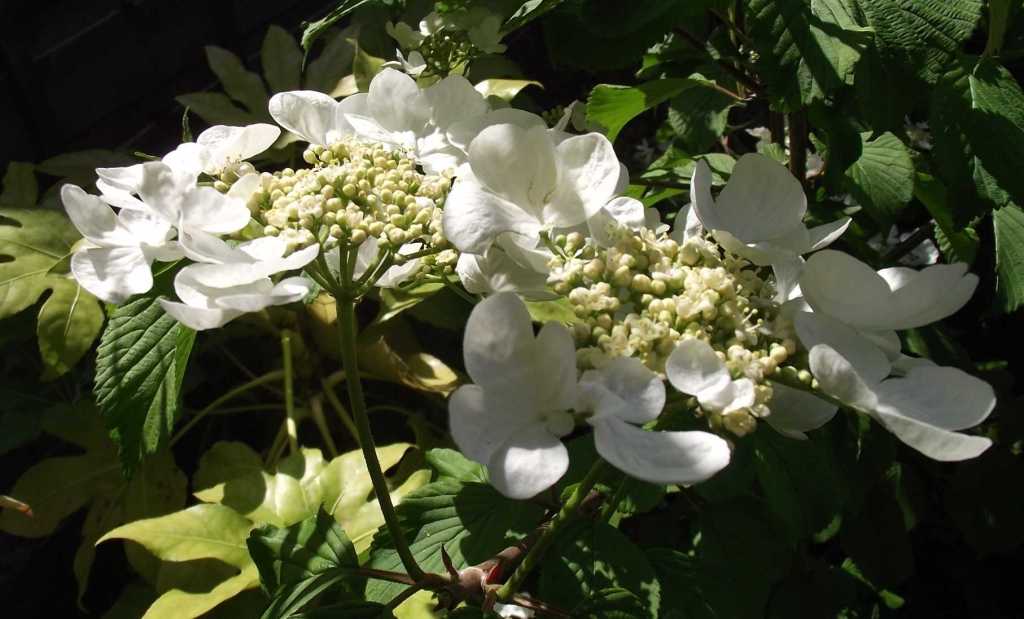
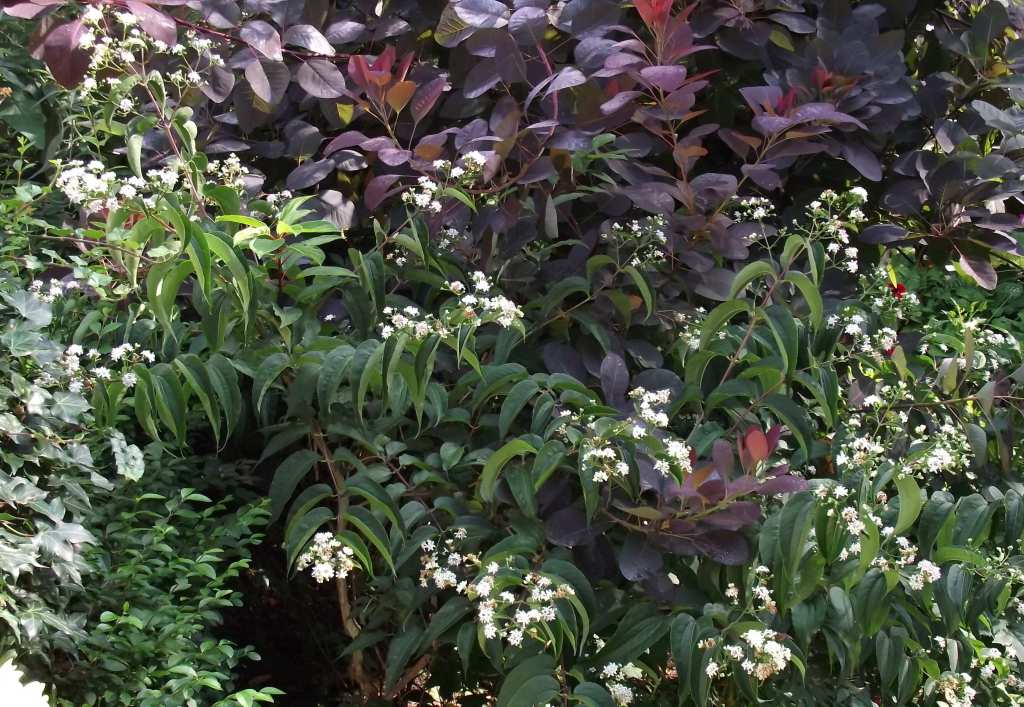
I am very appreciative of viburnums, I know they can have a problem with viburnum beetle which can badly affect the evergreen species, but, in my opinion, if this one was evergreen it would be perfect.

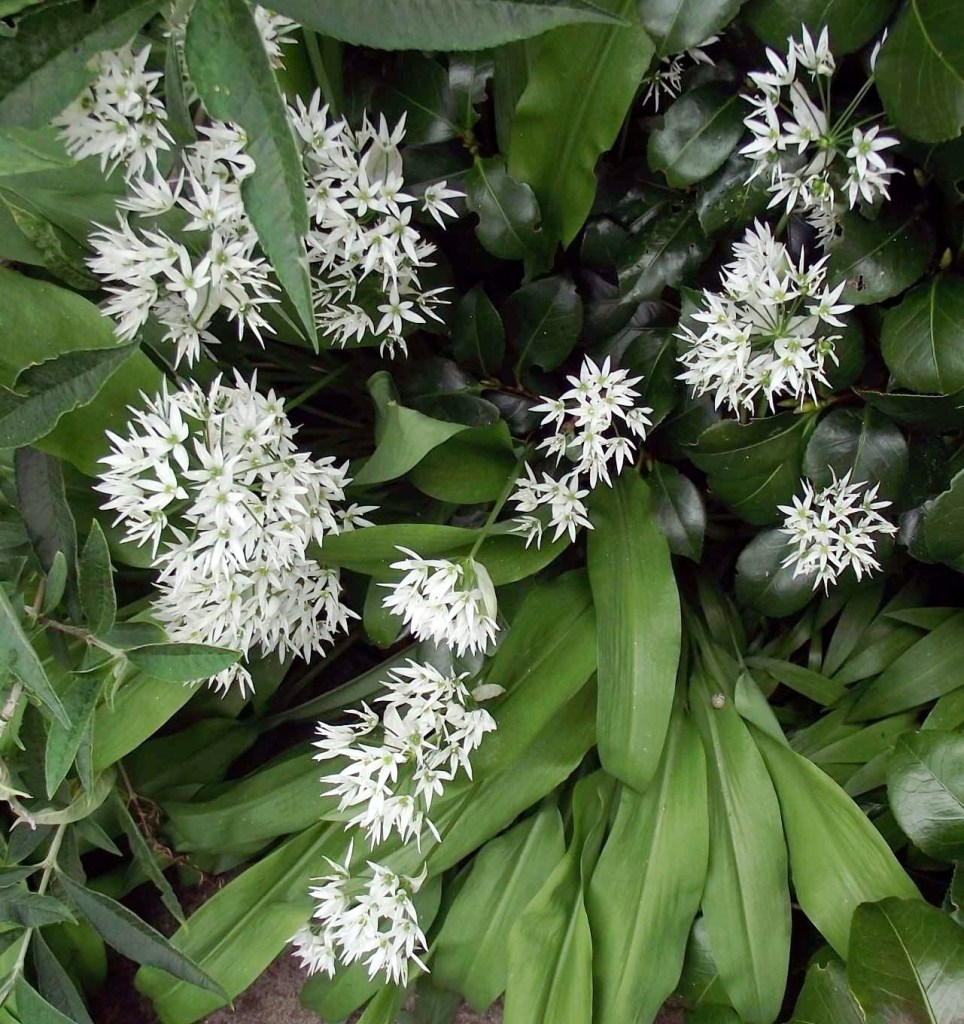
Wild garlic (Allium ursinum) can be a rampant spreader but having been offered a clump from a friend, and having several “difficult” areas in the garden I thought “why not”! It is relatively well contained although it has manged to appear in the joints of the adjacent flags. I do tend to go for many native and tough plants as much of my garden is on an old railway yard which I originally planted out with a pick and trenching tool which in fact I have used today!

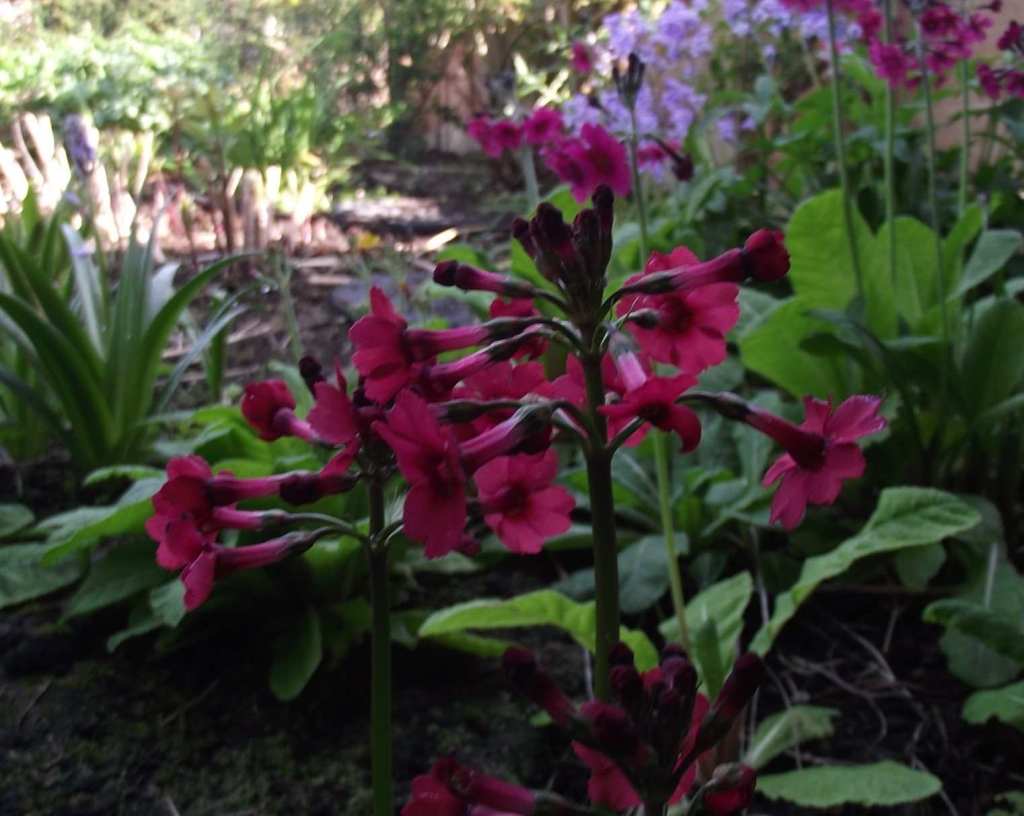
The candelabra primulas are coming into flower at my favourite time of the year. My first specialisation as an amateur gardener was alpines, but after visits to Ness Botanical Gardens, Fletcher Moss University Gardens and Harlow Carr I graduated to the larger end of the alpine spectrum. I first started to grow primulas rapidly joined by meconopsis and, luckily, I have a small area in the current garden where they will grow and I can still enjoy them.

This seedling appears to be true to its adjacent parent Geranium var. pratense. f. albiflorum. ‘Galactic’. It is so nice to have a white one pop-up as most self seedlings are usually from the blue plants.

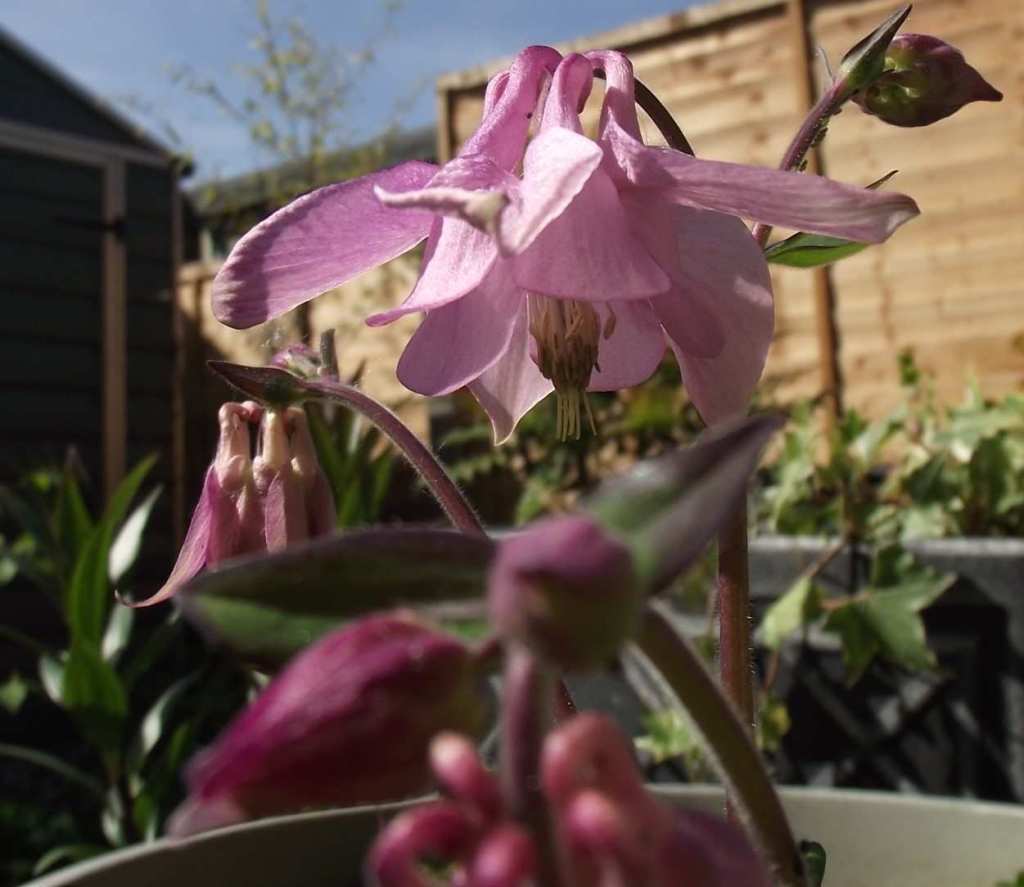
A couple of aquilegias to finish off. A.fragrans is from seed and seems to be wilting a bit unfortunately. It looks as if my policy of removing the seed heads from all standard deep blue A.vulgaris and leaving anything that was more interesting has paid off as I think that’s a rather nice seedling.

This meme is hosted by Jim Stevens who is to be found with all the details and links to plenty of other blogs to enjoy at Garden Ruminations.

Six on Saturday 03/05/2025

The unseasonal weather continues although it is beginning to cool down now with the possibility of frost on Monday night. Still no rain so regular watering of containers continues. We have had a very bad moorland fire the smoke from which was visible from where I live. It almost engulfed the site of the famous Cat and Fiddle, which is now a distillery, and we had the unusual sight of a helicopter water bombing the fire. The garden is coming on very quickly and, although there is not a great deal of flower to be seen, I have managed to scrape together a six.

The first of my geraniums to flower. I would like to apologise in advance as I think I will be relying on them rather a lot this year to fill the Six on Saturday slot.

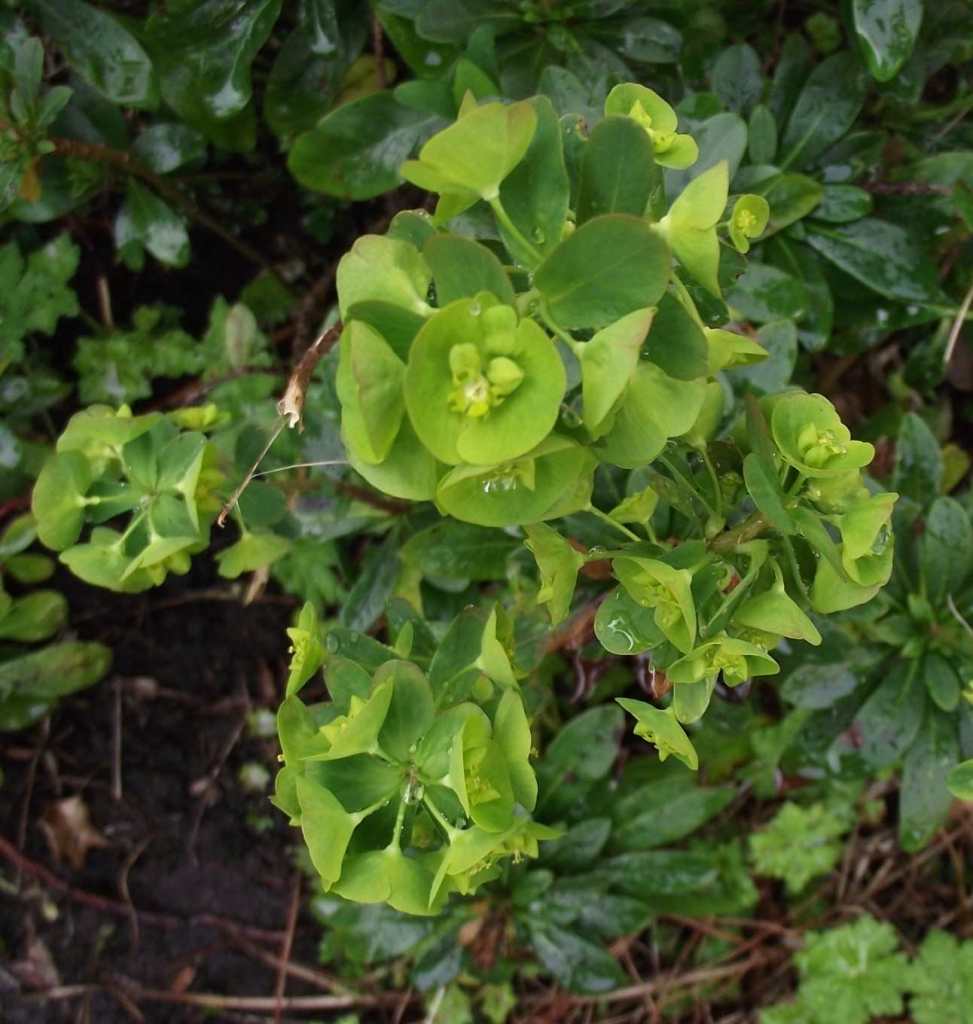
British native, Sweet woodruff, has proved useful for ground cover, along with Euphorbia characias, in a rather difficult corner. I’ll have to be careful as they are both invasive, but I think the hostile conditions should limit their ambition. I always think woodruff looks very tatty going into winter, it’s a pity it isn’t evergreen.

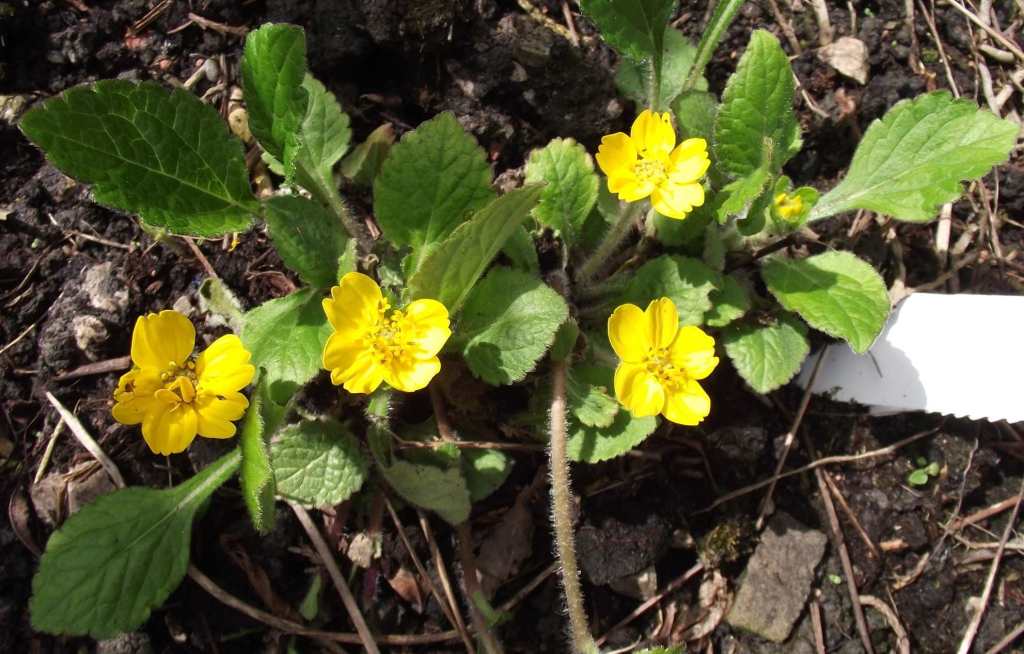
My first time with this rather neat, buttercup-like, little creeping plant from the eastern United States. It appears to be, at the very least, semi-evergreen, as it has kept the majority of its leaves over the, albeit mild, winter.

Spanish or English? Is it a hybrid? This clump of bluebells has a very faint scent and the stems are “nodding” rather than upright, typical of the English bluebell. The flowers are light coloured more like the Spanish species. I also have a clump of more robust plants which are not yet in flower, as soon as they are I am going to try a direct comparison. Until then I rather think these are Spanish, Hyacinthoides hispanica or are they a hybrid…………..?

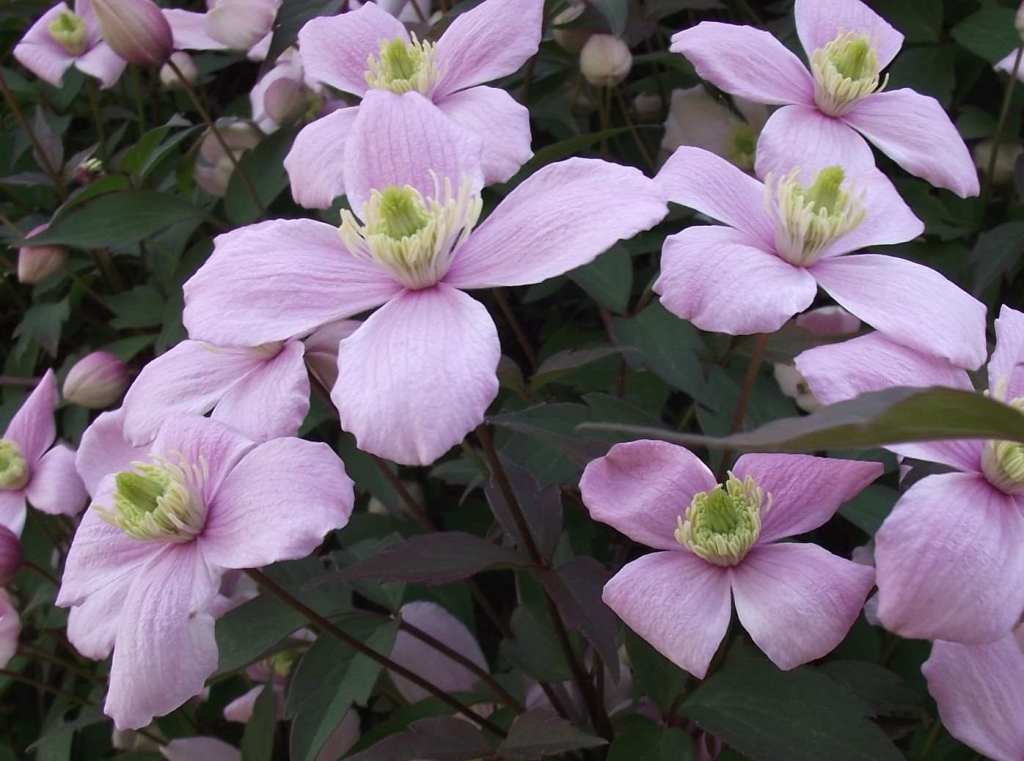
I think Clematis montana ‘Morning Yellow’ is a rather neat cultivar, it is definitely more cream than yellow, fading to white as they age. It doesn’t appear to be as rampant and flower as prolifically as montana, but nevertheless gives a good show. Both have that nice delicate vanilla scent.

A rather nice self-seeded common aquilegia that has appeared in a crack in the paving. I had too many aquilegias appearing in the garden so I ripped out a fair number as they came into flower, leaving only those of interest. This one must have escaped my notice!

This meme is hosted by Jim Stevens who is to be found with all the details and links to plenty of other blogs to enjoy at Garden Ruminations.

Six on Saturday 26/04/2025

We have had very little rain here in High Peak having avoided the downpours which have affected other areas and I am now having to water all my containers and pots on a regular basis. The forecast is currently showing an overcast day today (Saturday) but then temperatures are set to go into the twenties throughout next week. I am still very wary of a late frost even though it seems unlikely at the moment. I won’t be happy until we get to the last week of May.

I love this time of the year, the acers are now fully out and everywhere you look trees are bursting into life and the landscape is greening up. A gardener’s week is never done it seems, with the stronger sun and possibility of a late frost the acers stand to be scorched by either one whilst the leaves are so tender.

Specie tulip, Tulipa clusiana var chrysantha on a sunny day and not.

I no longer have cold glass so have to resort to outdoor sowing, of mainly hardy perennials, outside in a sheltered spot. These were sown in early February, as I would do normally under cover, using fresh society seed. Despite this two lots have been pricked out three weeks ago and are almost ready to go into the open ground. I get great pleasure in raising plants from seed and to be honest I don’t know where I am going to put them all. I do sow a good number of seeds, even though I may only keep a few plants of each, because in some cases poor germination is a factor. I am a great believer in raising them hard to get good strong plants.

I am making a bit of an assumption here that this is actually characias but it is filling up an awkward damp corner very nicely so I won’t complain.

These were planted very late and consequently we have February Gold flowering at the end of April. I find I can get away with planting tulips late, but narcissi, not so much.

How did that get there? This montana has appeared around the central heating exhaust after travelling under the tiles from the gutter level. It will be short-lived as I will be taking it down to almost ground level after it flowers in order to paint the woodwork behind it.

This meme is hosted by Jim Stevens who is to be found with all the details and links to plenty of other blogs to enjoy at Garden Ruminations.
Six on Saturday 12/04/2025

The warmer weather continues but, much as I am enjoying it, I feel it has come far too early and would be welcome in about a month’s time as I have a feeling of trepidation about what is round the corner. Many plants are thrusting up new tender growth and I have already noticed some damage caused by the light overnight frosts and possibly the cold winds. We can’t put out bedding with confidence until the end of the third week in May. The local NT gardens don’t start planting until the second week of June, mind you, they have thousands of plants at risk. On the 2nd June 1975 snow stopped play in Buxton, only a few miles from me, between Derbyshire and Lancashire cricket clubs. Play was resumed the following day in beautiful sunshine and the following year, 1976, was one of the hottest summers on record. Buxton Cricket Club are celebrating the 25th anniversary with a special event this year. We gardeners are very much at the mercy of the weather, but spare a thought for the poor farmers and growers who have to make a living.

This is one of my favourite small shrubs, I look forward every year to the emergence of the colourful foliage. I had one in my last garden which was quite a bit larger, it could be that the drier, less fertile soil this one is in is limiting its growth, but I think it’s a little gem nevertheless.

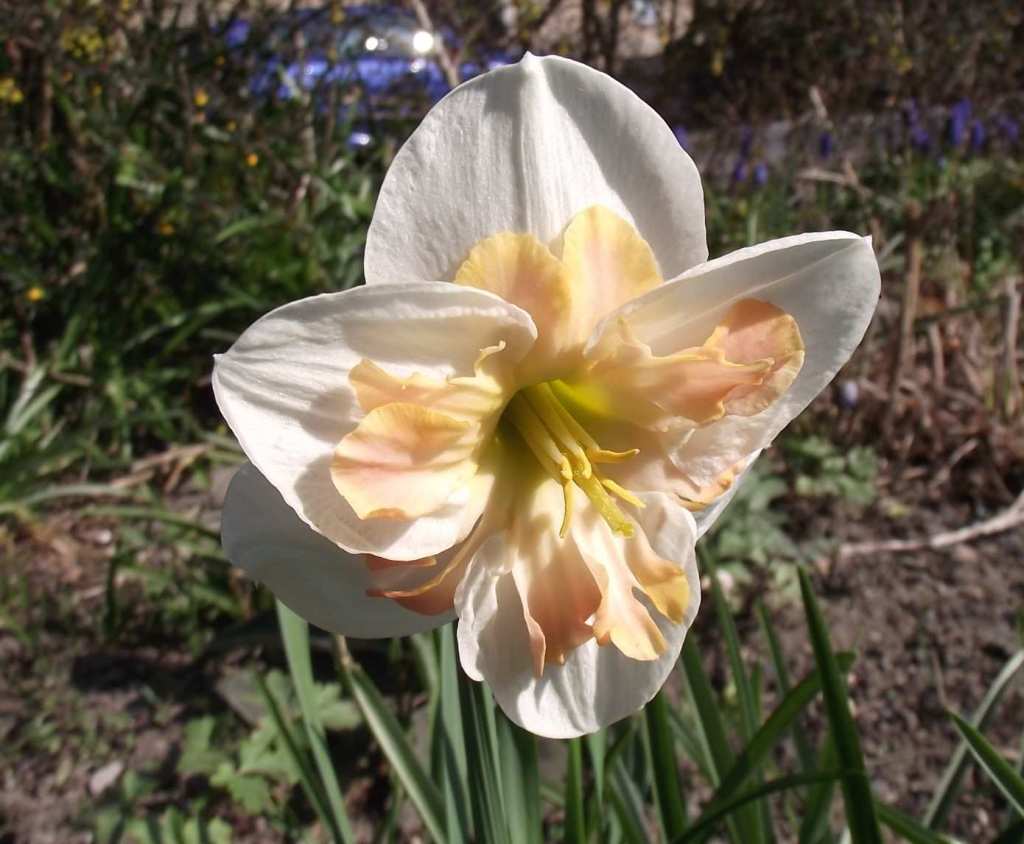
One of the remaining two flowers this year from a clump I planted about four years ago. I never seem to get longevity from my bulbs, tulips I can understand, as they need a good baking during the summer, but daffodils I tend to plant and forget about so probably my fault.

I used to grow numerous meconopsis as they are one of my favourite genera. This year is the first in my new garden that I am hoping to get some decent flowers. Crarae can only be raised vegetatively and I have never grown it before so fingers crossed! Crarae was raised at Crarae Gardens, Argyle, Scotland. If you are interested in meconopsis you might like to visit my page.

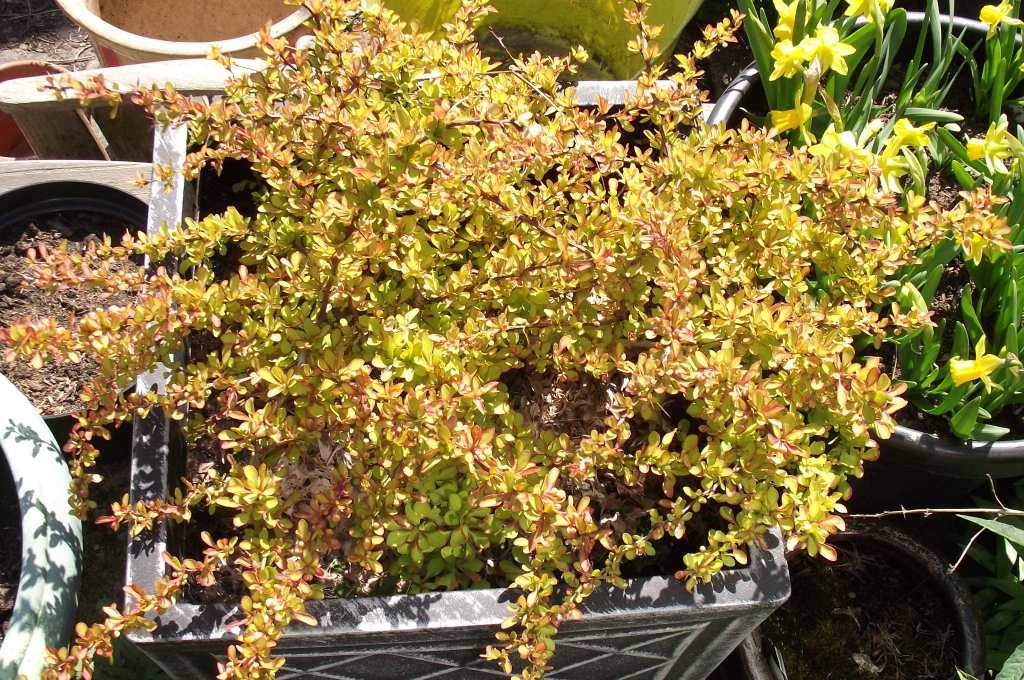
This berberis is another welcome splash of spring colour, it loses its reddish tinge as the year progresses. Like most berberis, it thrives here taking anything that the weather can throw at it.

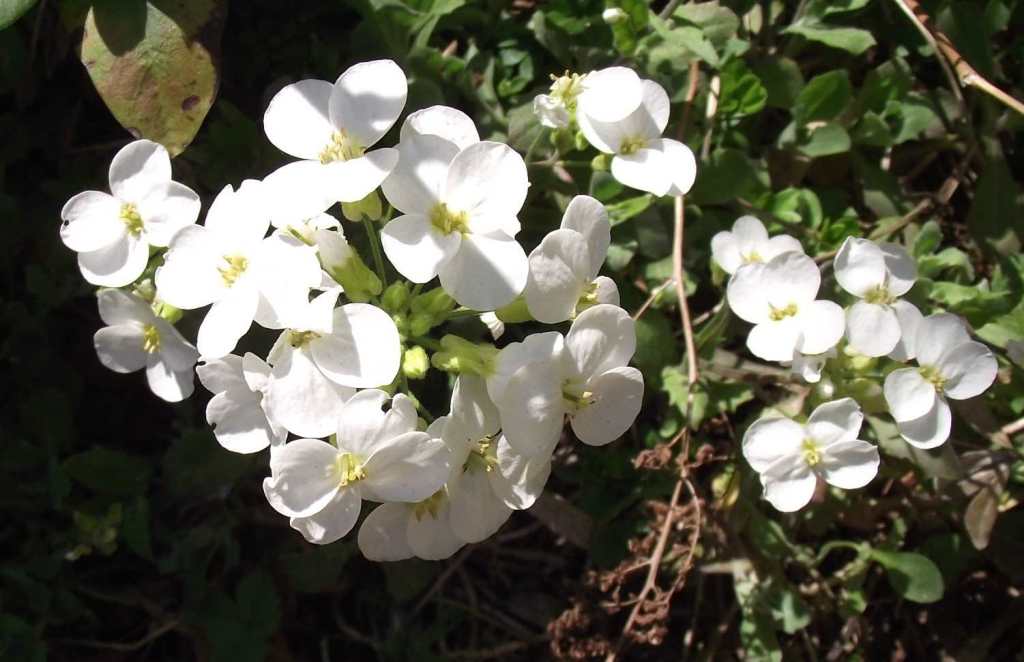
I grew the common or garden Rock Cress, or at least an improved form of it, from seed. It makes a useful early splash of white every year.

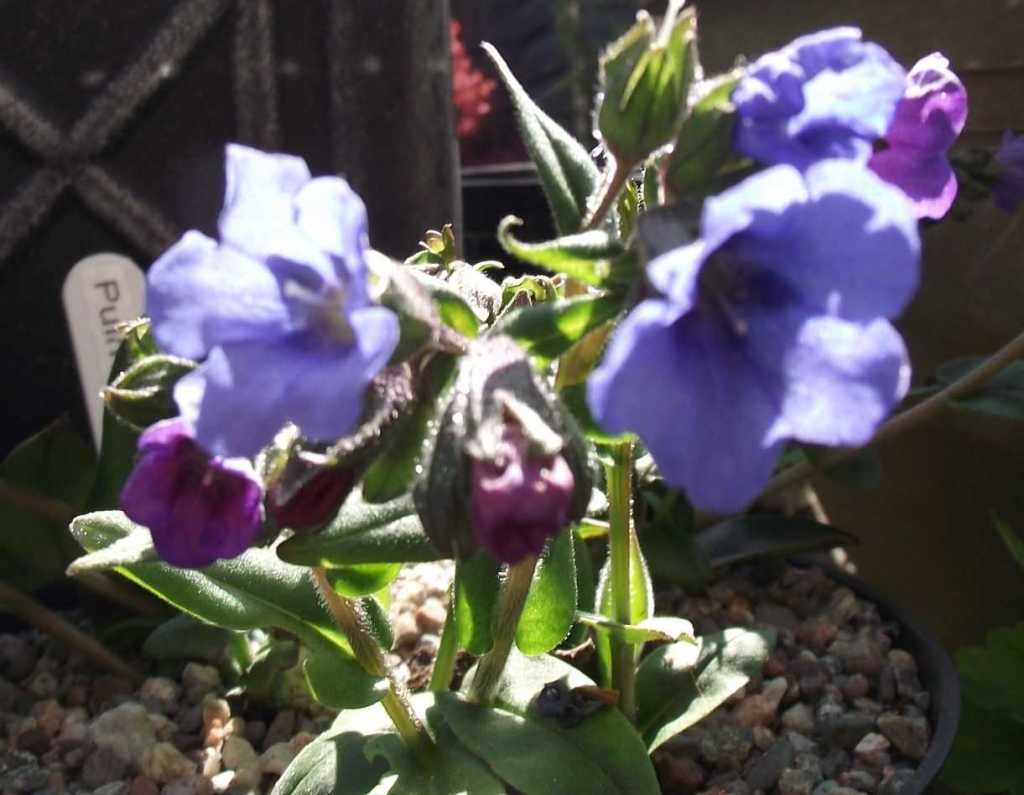
Currently growing in a pot until I find somewhere to put it, I bought this pulmonaria as a bare-root plant which is why it is flowering slightly later than normal. I have taken a real liking to pulmonarias over the last few years, as there are so many cultivars now, and can’t wait to increase my collection.

This meme is hosted by Jim Stevens who is to be found with all the details and links to plenty of other blogs to enjoy at Garden Ruminations.

Odds and Sods

Here are some photos of plants I missed earlier from the old garden and some from the new.

Dahlias

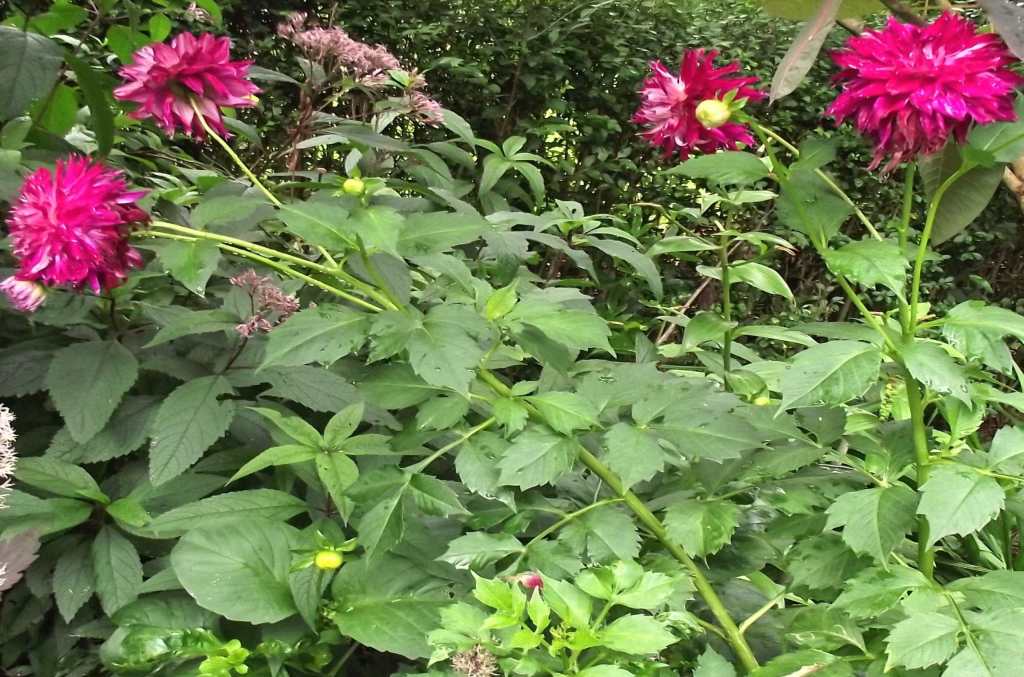
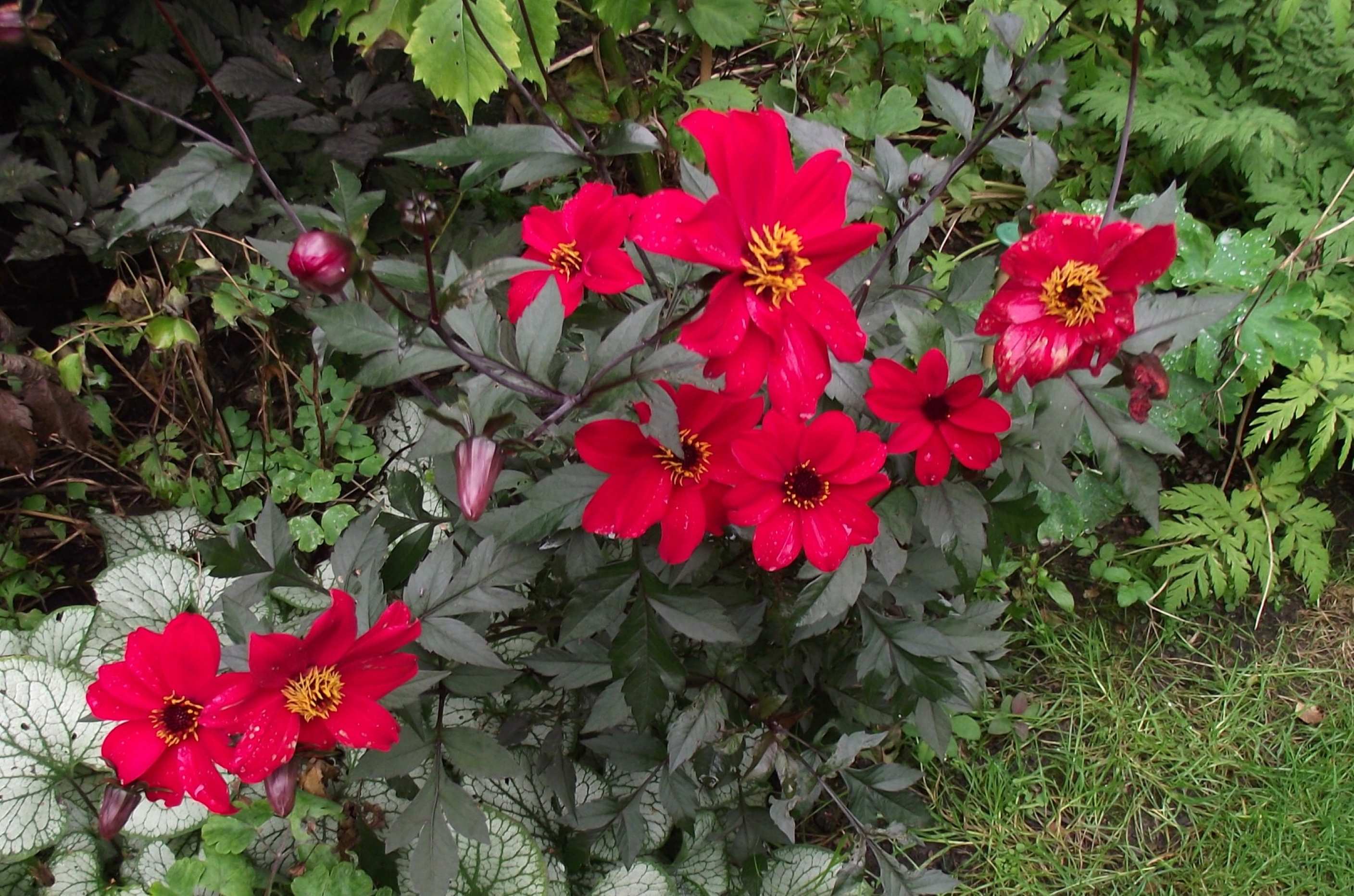
Everybody is familiar with dahlias, so no more needs writing. Probably the camera but the colour of ‘Mel’s Orange Marmalade’ looks decidedly off and ‘Cafe au Lait’ is looking definitely droopy. I used to raise ‘Bishop of Llandaff’ and his children from seed and they were the only dahlias I actually engaged with, dahlias are not really a favourite. My father used to love his dahlias as well as growing giant delphiniums, every year the tubers were lifted carefully, cleaned, dusted with sulphur and stored in the cellar in tomato boxes and every year half of them rotted off. I was hoping that one year everything would be perfect but it never was.

A couple of new Geraniums

‘Ingwersen’s Variety’ was grown from seed last year whilst ‘Galactic’ has been in the garden for a few years now, but I lost the label and have only recently been able to re-identify it by chance.

Canna lilies from tropical America, have been in cultivation for many years and consequently there are many cultivars in a range of vibrant colours available. I grew several in pots for a couple of years but ceased when I decided to no longer have winter heat in my tunnel. Note the use of plastic containers, I had so many that it would have cost a fortune to do otherwise, plus the weight factor when moving them around, although I did buy a sack-truck in later years.

I have no recollection of taking this photograph, although Heptacodium miconioides is certainly a worthy subject. A vigorous tall shrub from China with peeling bark, its scented flowers appear late in the year lasting well into October, which makes it an ideal subject for the woodland garden. There is also the benefit that it sets plenty of seed. Sometimes known as ‘Seven son flower of Zhejiang’

I bought this when T&M were advertising this new ‘Incrediball’ hydrangea and it is still going strong in a very large container in my new garden. Flowers reliably every year although they are not attaining the size that they should which is probably down to me. I am going to hard prune it this winter to see what happens.

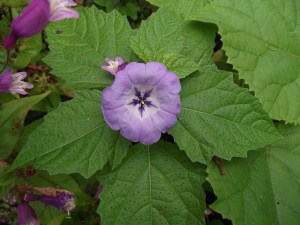
The shoo-fly plant or apple of Peru used to be quite widely grown for bedding schemes but seems to have gone out of favour. It is an extremely fast growing large annual rapidly attaining anything from 3 to 6 feet. The purple flowers die leaving a lantern shaped calyx which can be used in dried flower arrangements. It has a habit of appearing out of the blue, which is exactly what the pictured plant did.

Trees,climbers,shrubs and other random plants. (Part 9)

Further pictures and jottings from the archives.

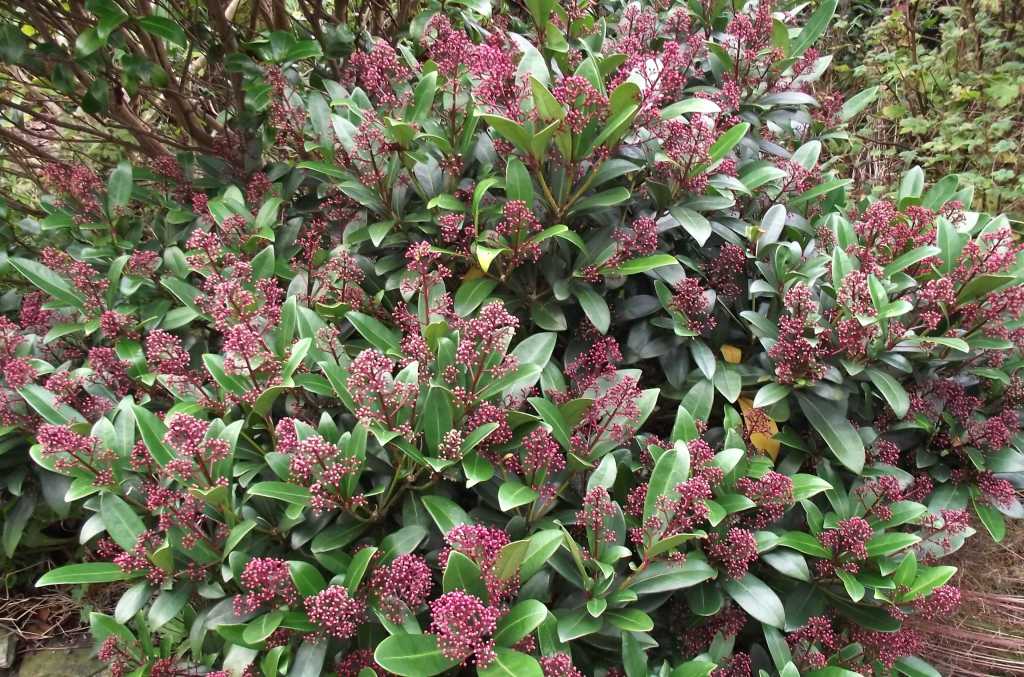
Skimmia

Small evergreen shrubs, very popular with garden centres as they carry their coloured buds through the winter and flower in the spring making an attractive package for containers. Like many similar shrubs a cool root run in acid soil is best in dappled shade. Although they will look good for one season in a container there is absolutely no substitute for a position in a suitable border.

Sophora

Not a very impressive picture, Sophora microphylla ‘Sun King’ is a large shrub which flowers through winter into spring, definitely for a well drained sheltered spot in full sun. My specimen never really attained its potential as it just wasn’t in the right spot.

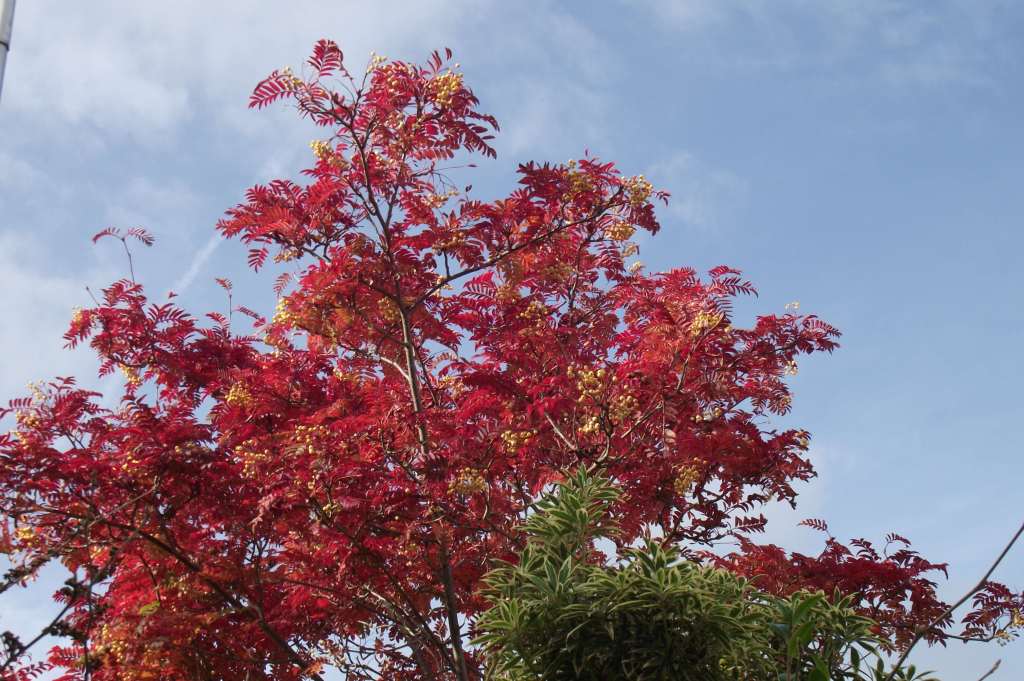
Sorbus (Rowan)

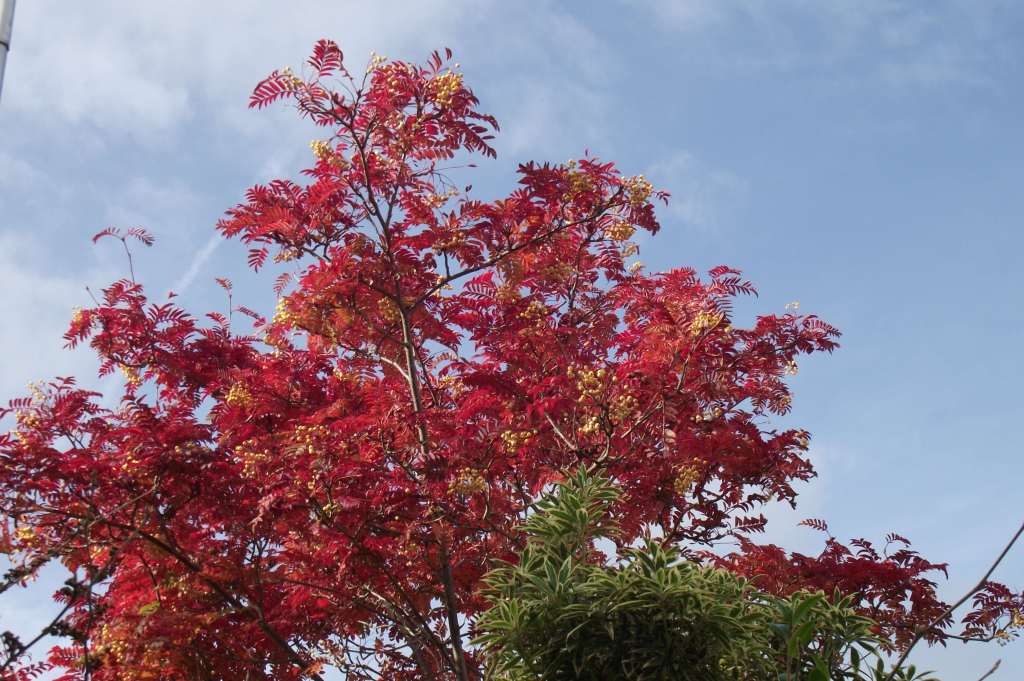
Rowans are my favourite medium sized trees for the smaller garden, in fact my favourite trees altogether so I was doubly blessed as ‘Joseph Rock’ is my favourite rowan. Also known as the mountain-ash, the rowan is steeped in both Nordic and Celtic folklore and figures in local superstition to this day. Sorbus is distributed throughout the northern hemisphere and into N.Africa and can be found growing in most soils and even out of mountain crevices it is also pollution tolerant. Although Joseph Rock has yellow/white berries, red is the more common colour by far, it’s just that I am rather partial to the contrast between the berries and the red autumn foliage colour. What more can I say about this rewarding member of the rose family?!

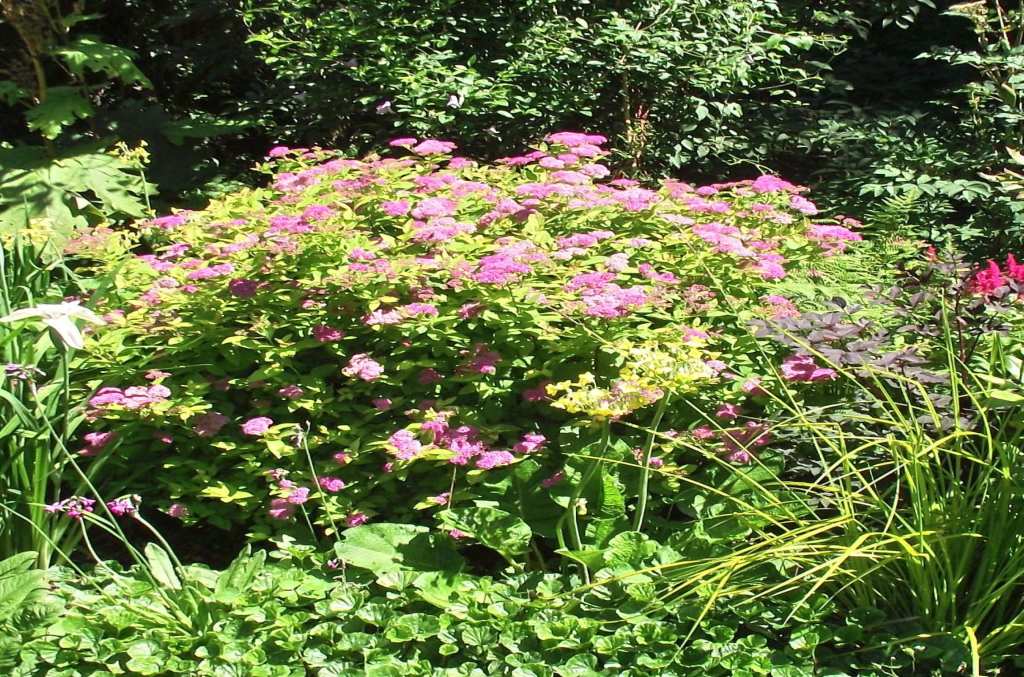
Spiraea

Another one of those sources of confusion between the botanical and common names arises here, many people will think of the attractive plumes of the spirea growing in the damp areas of the garden but, in fact, they are astilbes botanically not spiraeas. Spiraeas are a genus of deciduous leaved shrubs which are members of the rose family and found throughout the northern hemisphere in most soil types. Spiraea japonica ‘Golden Princess’ is an outstanding plant which I found many years ago. I believe that it evolved as a naturally occurring cross, basically nature doing its own thing. The plant I have now, is nowhere near as robust as the original and I am almost tempted to think that there is some sort of reversion going on or perhaps I should try it in another spot.

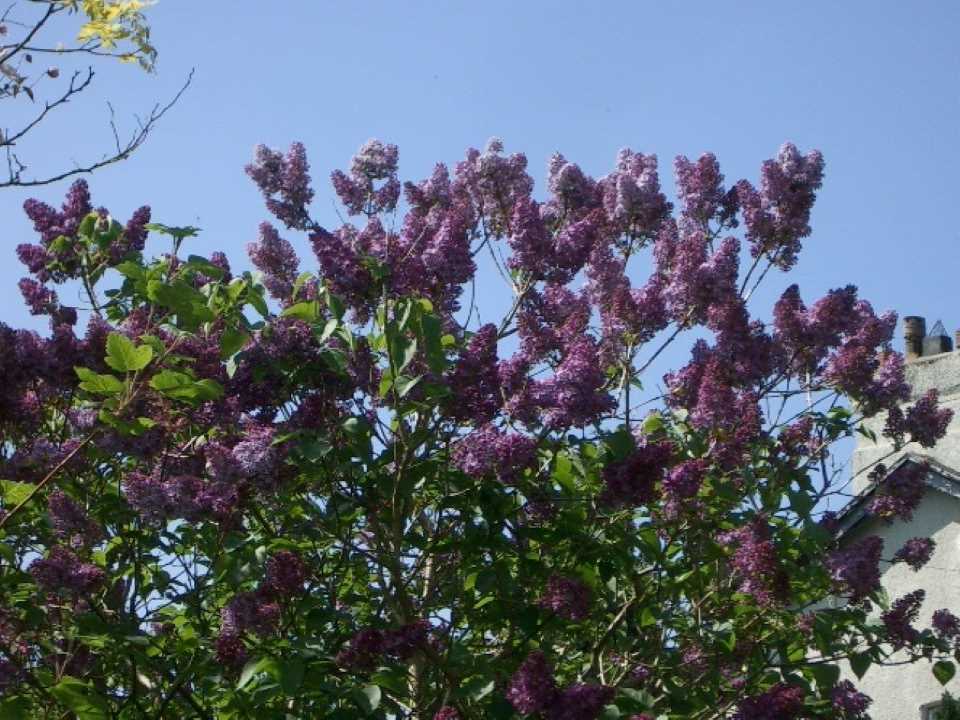
Syringia

The wild or common lilac is the plant from which all modern cultivars have been bred. Easy to grow, a common sight for as long as I can remember, the heavily scented purple flowers were very popular with other than my superstitious mum who wouldn’t have them in the house. I first remember a white flowered variety appearing but now there are all sorts of variations ranging from reds, doubles (French lilac) and patio plants as the breeders have developed them for the domestic market. Despite this I still regard them as a one trick pony, aside from the scented flowers, and I have to say the scent is really something, the rest of the year the shrub itself is rather uninspiring.

Viburnum

Viburnum plicatum f. tomentosum ‘Mariesii’

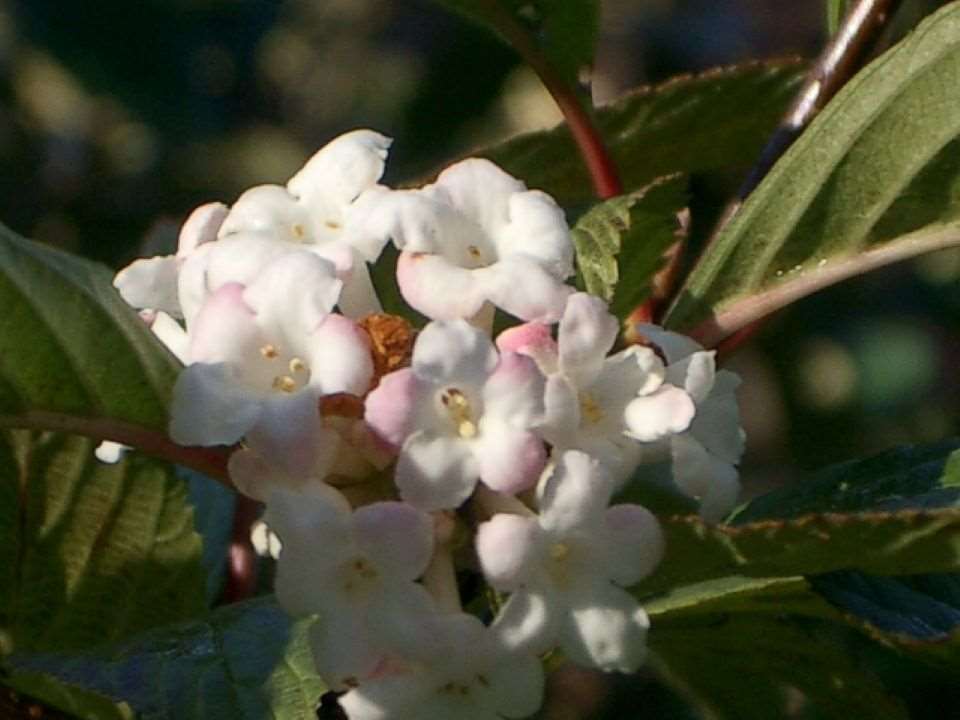
There is only one thing I can criticise with V.plicatum and that is it isn’t evergreen, nevertheless it still ranks as my all-time favourite shrub. Mine also had the advantage of being adjacent to a similar size specimen of Berberis thunbergii f. atropurpurea which was a perfect foil. The tiered branches of V.plicatum give it a pyramid shape, covered by a profusion of white flowers followed by red/black berries, what’s not to like? Although V.plicatum is not an evergreen in some ways it is perhaps a blessing as another species the evergreen V.tinus is very susceptible to Viburnum beetle attack which can severely damage the appearance of the plant, and being an evergreen, is much more difficult to rectify. Another fine viburnum is Viburnum x bodnantse ‘Dawn’, the original plant was bred at Bodnant Gardens in North Wales, the improved cultivar ‘Dawn’ being developed later. This remarkable plant flowers on bare wood anytime throughout the winter emitting a powerful sweet scent, which is why it is often recommended to plant near to the house to take advantage. Viburnum rhytidophyllum is a bold architectural plant but unfortunately I found the foliage interesting but a bit too coarse for my taste so I did actually uproot it, probably better off in a much bigger garden. Overall the Viburnum genus has provided me with two remarkable but totally diverse specimens. (Viburnum tinus photo’ taken in local park.)

Trees,climbers,shrubs and other random plants. (Part 8)

More jottings from my old garden.

Prunus

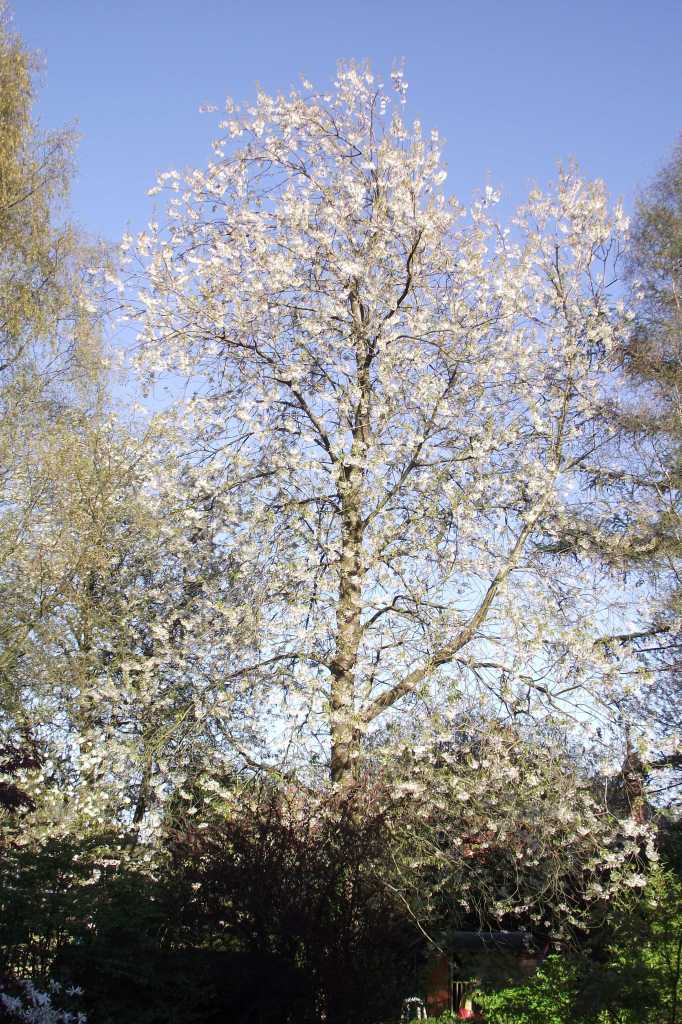
The wild cherry, just slipped this one in because I had one at the bottom of the garden. Unsurprisingly the avium comes from the fact it is generally propagated from seed deposited by our feathered friends.

Rhus

The stag’s horn sumach, is a bit of a curiosity, it only fruits on female plants although the male carries the flowers. It gets its name from the way the branches resemble a stag’s antlers also the stems carry a sort of brown velvety russet which is also reminiscent. A fairly undemanding, strong grower, it is easy to propagate as it produces plentiful suckers and can quickly turn into a thicket if allowed. The pictures could possibly be of Rhus typhina laciniata.

Ribes

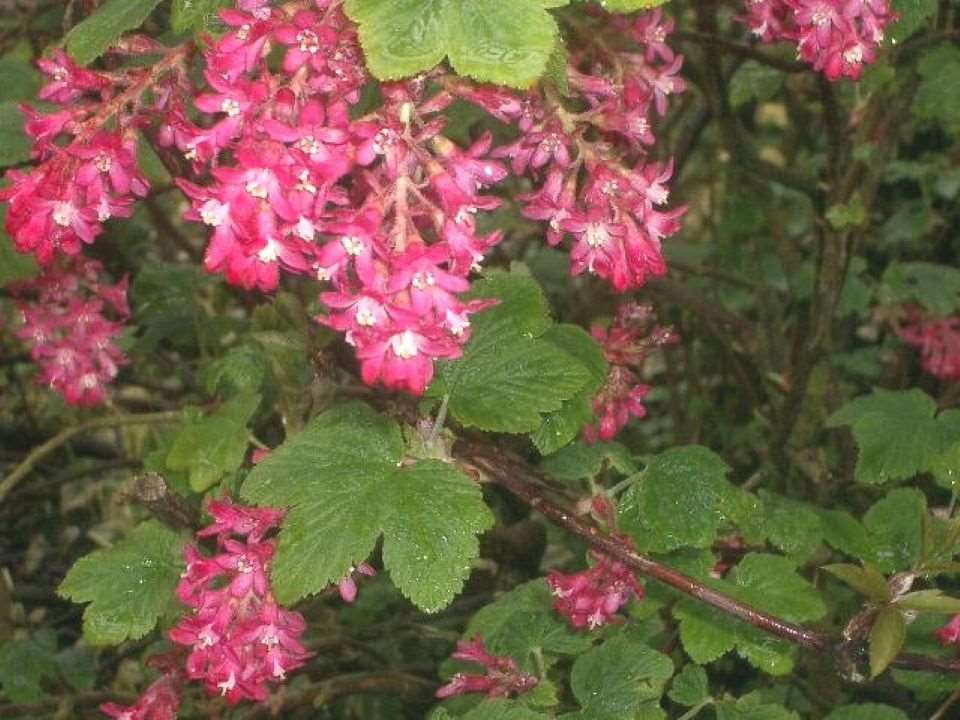
Flowering currants are one of those plants which belong to the era of when forsythia, philadelphus and ribes was just about all that was on offer. The flowers offered early nectar for bees and other insects but once flowered the actual shrub itself was hardly engaging for the rest of the year. Still has a place in the larger garden with some cultivars available, in particular an old favourite R.sanguineum ‘Kind Edward VII’. As you would expect the prevailing impression from the plant is the smell of currants.

Robinia

Known in the UK usually as the false acacia this tree is actually a legume even to the extent that the roots fixate nitrogen. I never really liked it, although the fresh leaves were attractive, it frequently carried areas of die back and a rather untidy form as can be seen in the photo’. In this case it did die completely one day so I had to tolerate it no further.

Rosa sericea subsp. omiensis f. pteracantha

This is real one-off, it was impossible to grow roses in my damp shaded garden without massive fungal problems but when I heard about this rose from parts of China and read an account of it growing in Nepal I had to have it! Grown for its spectacular thorned stems it had small nondescript white flowers followed by red hips of which unfortunately, I don’t have a picture, however the spectacular red stems and thorns make up for it.

Fallopia

The Russian vine or one time Russian glory vine, (syn. Polygonum baldschuanicum) was very popular for covering up unsightly structures until it was realised it could also cause untold damage to the structures and any shrubs and even trees in the vicinity. Superb when in flower but rather uninspiring for the rest of the year, definitely needs handling with care!

Trees,climbers,shrubs and other random plants. (Part 7)

Continuing the saga of plants I have grown and photographed along with a few scribbles.

Mahonia

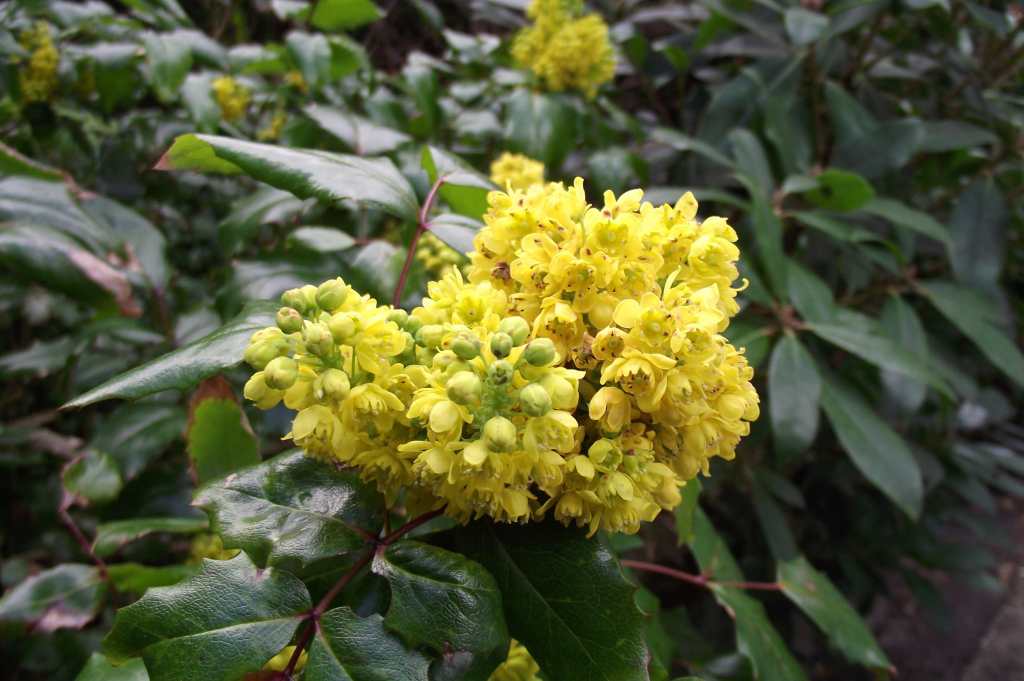
The mahonias are closely allied to berberis and as such the nomenclature can get a little confused with the generic name getting interchanged. Mahonia aquifolium, the Oregon grape, incidently the state flower, is generally a low growing (one metre) high spreading bush which is ideal for under-planting larger trees and shrubs, although stand-alone specimens in the wild grow to several metres. The flowers are followed by dark berries which are attractive to birds. I find the biggest problem is the evergreen foliage can become scrappy which detracts from the appearance so a heavy prune once in a while regenerates the growth. Mahonia japonica originates from Taiwan and it and its cultivars are now widely grown. These are very strong growing shrubs and like M.aquifolium benefit from a heavy prune from time to time. Although M.japonica is often classed as winter flowering I have known it in flower anytime from September to April depending on the prevailing weather conditions. Mainly in the spring, the yellow flowers attract blue-tits who just love to strip them. Do not go hand-weeding within a country mile of a large mahonia without wearing heavy gloves, the spines on the dead leaves in the leaf litter really hurt.

Parthenocissus

The Virginia creeper, as its name would imply, is an American native which is a useful deciduous climber for covering unsightly walls, out-buildings etc. because it attaches to the masonry by sucker pads and does not penetrate the fabric. The roots however, are a different matter, and can prove detrimental to such as old foundations but probably only on a par with others of a similar ilk. The flowers are insignificant, the foliage being the principal attraction, the berries that appear later are a good food source for the birds but are deadly poisonous to humans.
Passiflora

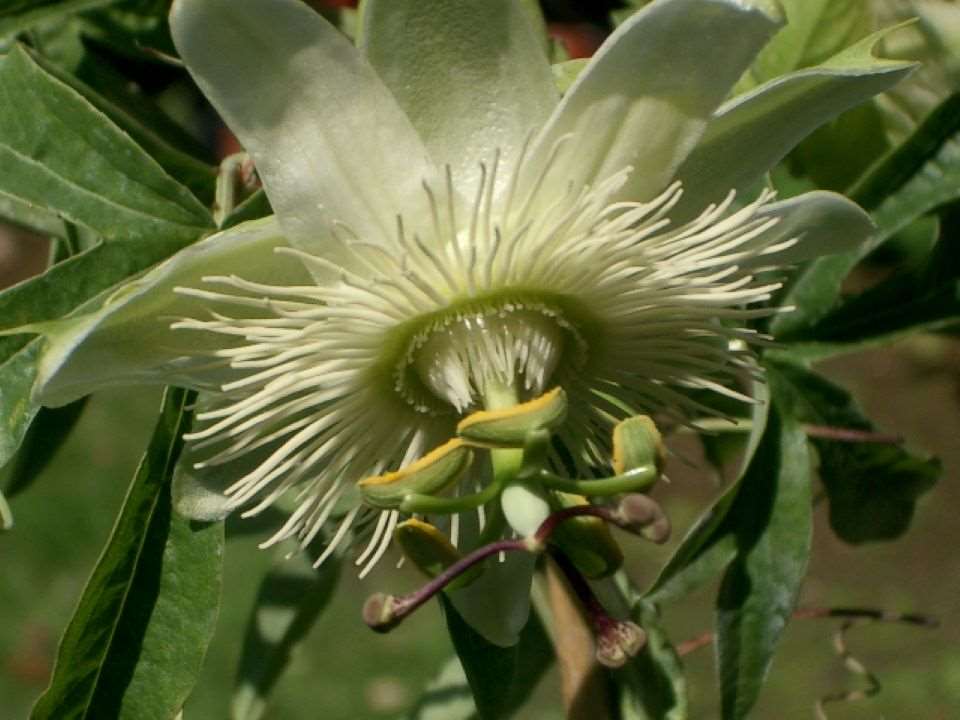
Sixty plus years ago the Passion Flower was a rarity but I was told about it as a child because of the Christian symbolism attached to the flower, it was also regarded as a subject for a cool greenhouse at best. Today there are only a few cultivars and ‘Constance Elliot’ AGM is probably the best known. What was once a talking point is now to be commonly found rampaging over fences and walls in in many urban gardens. The fruit is edible but by all reports rather insipid, I’ll leave it that.
Anemanthele lessoniana (Pheasant Grass)

This one appears under the all-inclusive banner of “other random plants” and because I forgot to include it earlier. I really like this grass, although I am not a big fan of grasses overall. Grown from seed, planted in containers, maybe it’s because I have not grown many grasses, but to actually see a group of these with the sun behind them is indeed impressive. Easy to grow but will seed around. (syn. Stipa arundinacea apparently.)

Philadelphus

Philadelphus, the mock orange, is another shrub, along with the likes of forsythia, which was among the limited choice we had back in the 1960’s and 70’s. The fact that it was deciduous and did not make a particularly attractive bush was offset by its pure white flowers and powerful scent over its short flowering period at the time. Today the plant breeders have developed many cultivars ranging from patio-size bushes to double flowered specimens, nevertheless it remains a tough hardy plant.

Pieris

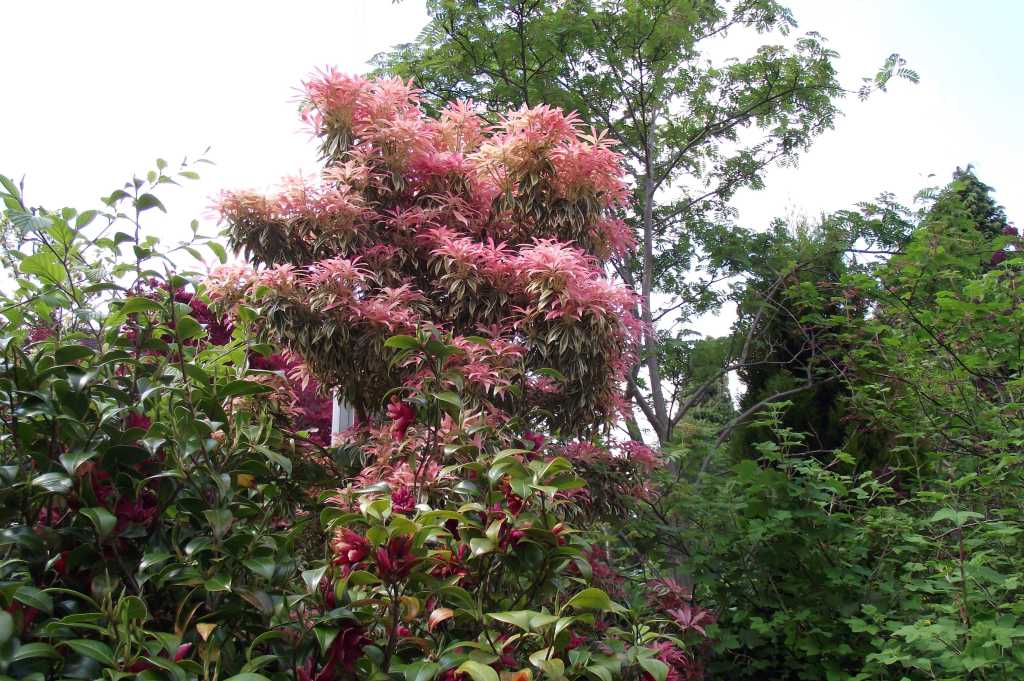
There are generally two species and their cultivars grown as ornamental shrubs in the UK. P. ‘Forest Flame’ is a typical cultivar of P.floribunda from the US and the other is P. japonica from Japan and Taiwan. P.floribunda types are the ones which have the red/pink new growth which frequently is hit by frost in exposed areas, whereas P.japonica has striking and often variegated leaves. Both have bunches of lily of the valley-like flowers in white or sometimes pink. They are both toxic to animals and humans although I believe P.japonica to be extremely so.

Pieris inundated with sooty mould.