Six on Saturday 7/6/2025

We have had a very wet week, with very little sun. In between showers I have discovered a couple of pests causing damage to foliage. The mullein moth caterpillar has been feasting on a clump of verbascums making large holes in the leaves. I have found that the easiest way of combating them is to simply pick them off and dispose of them. It’s the first time I have come across these, even though I have been growing verbascums for years. Another first is the geranium sawfly. I have always thought of geraniums as being pest-free and I have found no reference to the sawfly in earlier textbooks. The larvae make fairly neat, small, round holes in the leaves, which detract more from the appearance, than the actual health of the plant. Besides an odd one, the culprits had disappeared, although it’s possible to get another attack later in the year. The odd thing is that they attacked one geranium but a different species growing right next to it was left alone. The good news is no lily beetle yet!
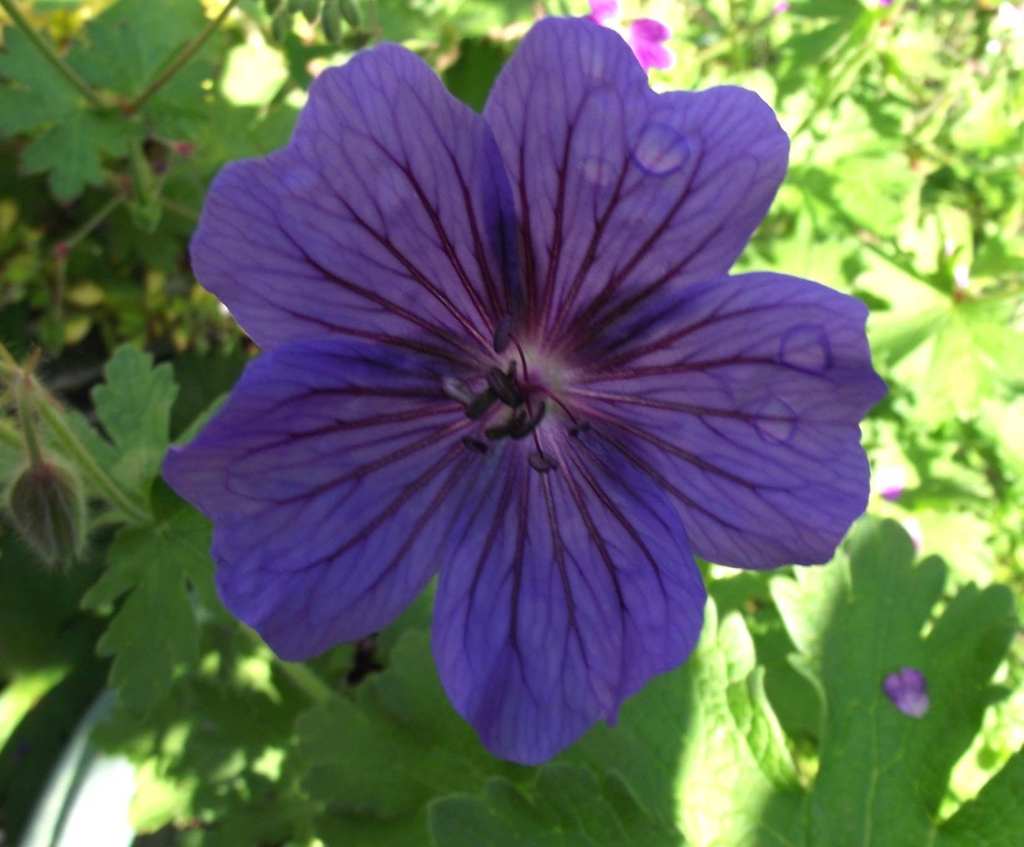
Rather magnificent veining of Geranium x magnificum ‘Blue Blood‘ which is a variant of the original cross: G. ibericum x G. platypetalum.

Another of my favourite candelabra primulas. Although this plant was grown from seed last year, overwintered in a container, and only planted out a a month ago it has still produced a reasonably sturdy flower stem. If it had only made a weak attempt to flower I would have removed the stem to allow it to bulk up more.

I have mixed feelings about this rambler. It opens from a really nice tight, typical rosebud. When half- open it till maintains its form. When fully open it becomes a bit of a mess! It might be that the form I have is not as good as it might be, but even though it is also only lightly scented, I am reluctant to part with it.
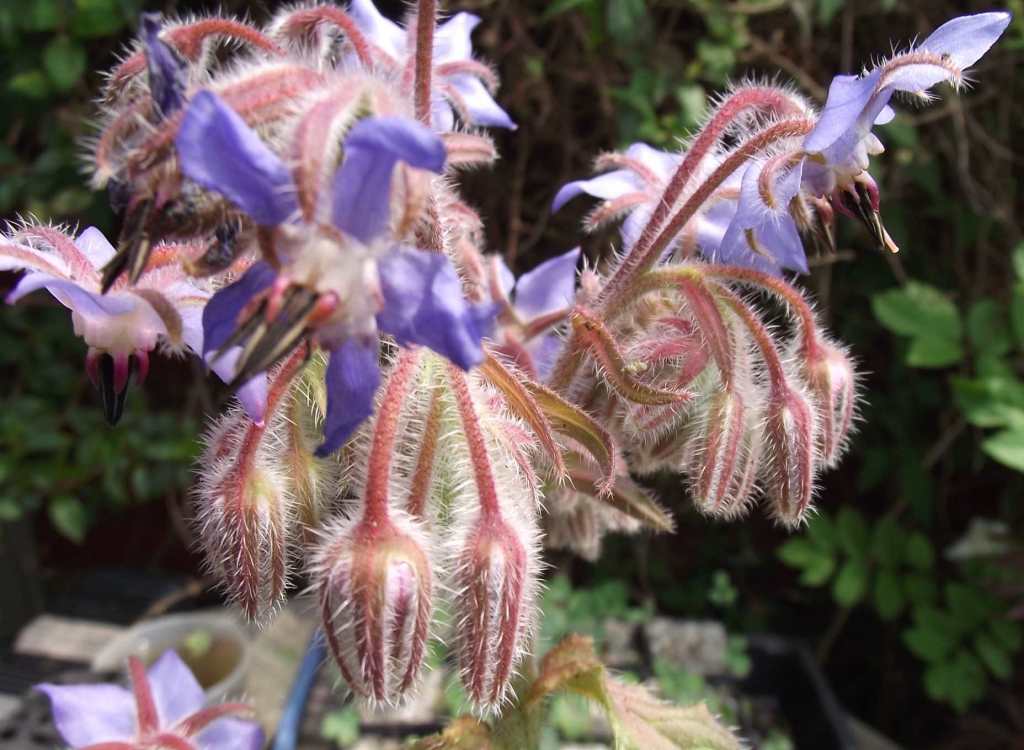
I can’t resist the colour and texture of herb borage, I even have a photograph on my wall. This plant is flowering from a cold sowing at the end of January.

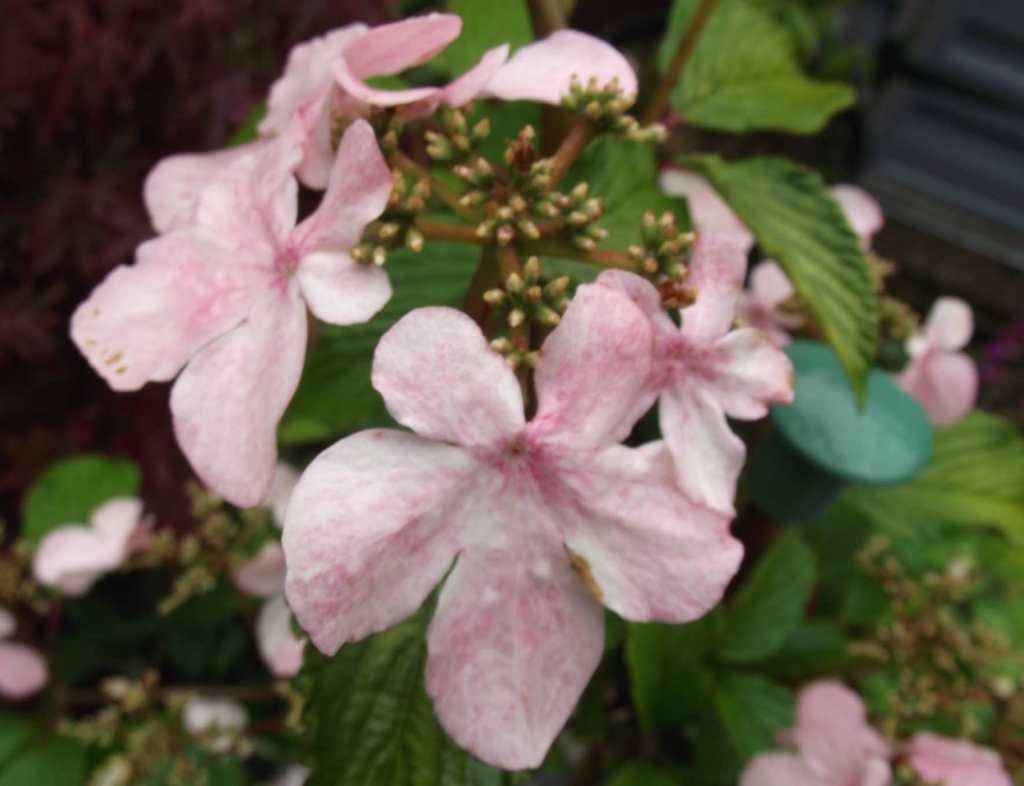
I have cheated a bit here in order to show the various stages of Viburnum plicatum ‘Kilimanjaro Sunrise’. It opens with the petals suffused quite a dark pink, goes to almost pure white, and then fades to a softer pink as it ages. This is a young plant but the flowers lasted quite well. The flowers of Viburnum plicatum f. tomentosum ‘Mariesii’, which flowered earlier, were over very quickly. I think it could have been the long dry spell that caused this to happen.
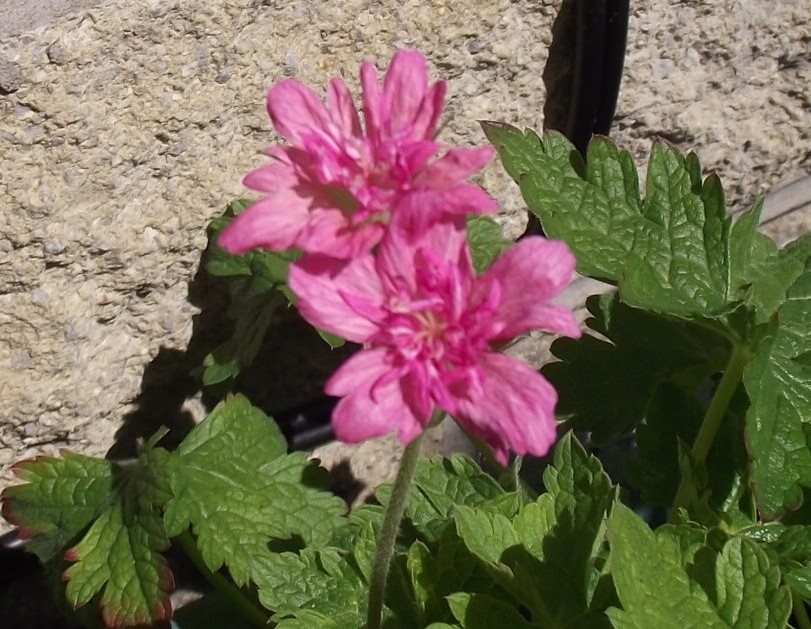
Geranium × oxonianum f. thurstonianum ‘Southcombe Double’ to give it its full title, is one of a massive group of geraniums which are variants of crosses between G. endressii and G. versicolor, that contain many of my favourites. I think that this is a rather pretty little thing.

This meme is hosted by Jim Stevens who is to be found with all the details and links to plenty of other blogs to enjoy at Garden Ruminations.
Six on Saturday 17/05/2025

Weather-wise we have had a couple of light frosts at the beginning of the month and haven’t had any appreciable rainfall for weeks. We have had no rain in May, only 18mm in the whole of April, and the dry weather is set to continue for at least another week. It has been fascinating watching the weather radar, any rain clouds that did appear always veered away from our location! At least, now I have a small garden, it does make watering less of a task.

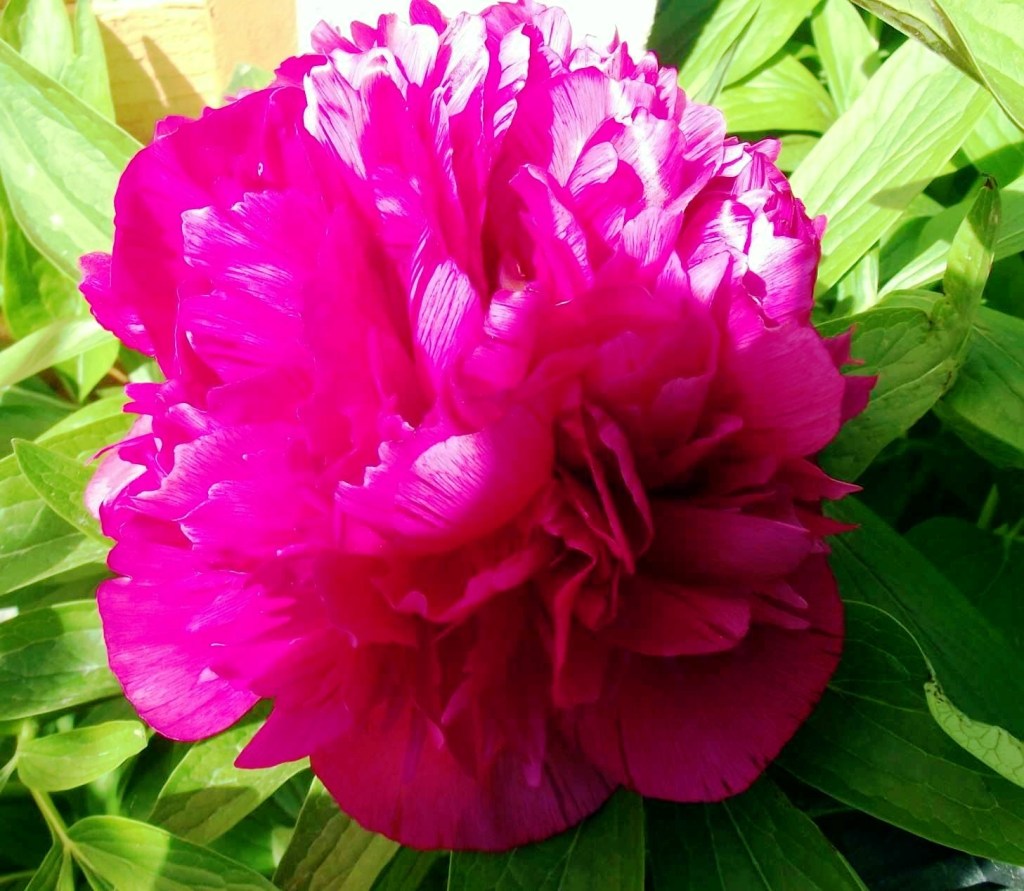
Inherited paeony of unknown origins. For some reason it thrives in a shaded dry spot but produces many flowers every year. Technically the photo’ is not good but I like the “silvering” and shade contrast.

I am very appreciative of viburnums, I know they can have a problem with viburnum beetle which can badly affect the evergreen species, but, in my opinion, if this one was evergreen it would be perfect.

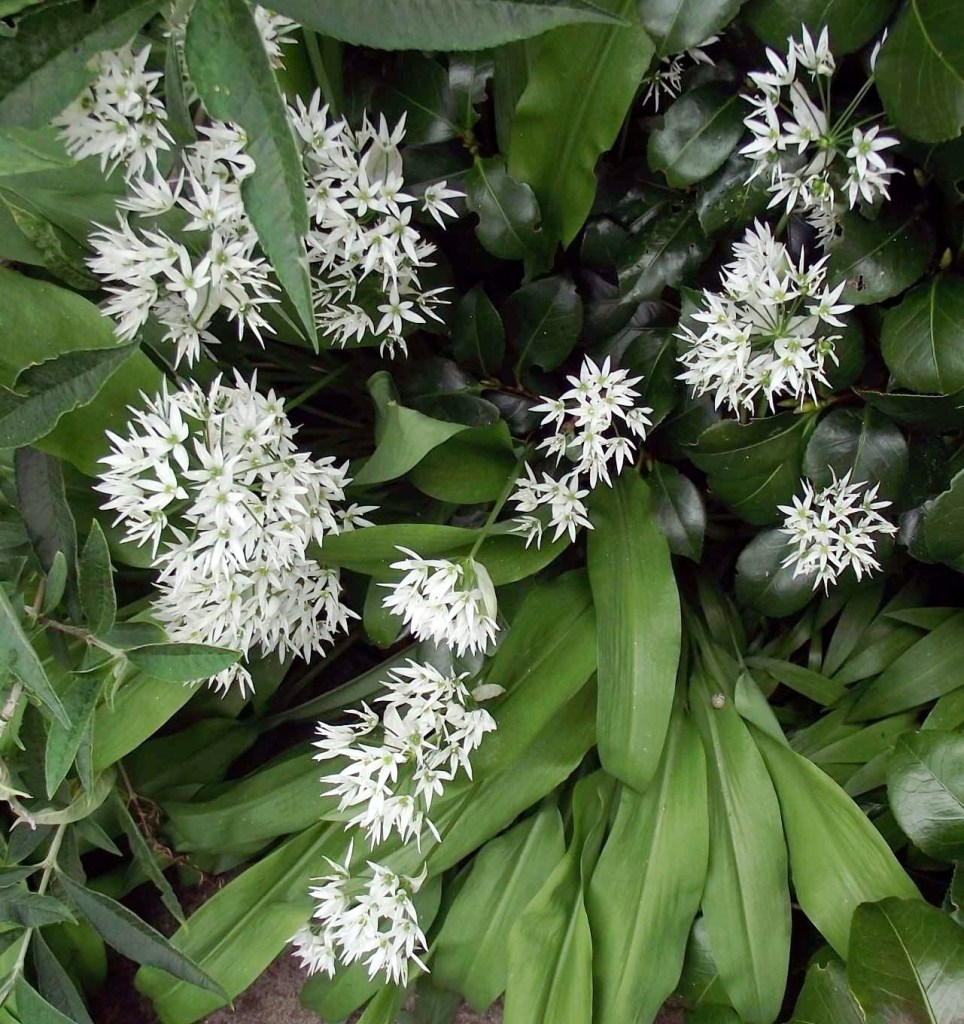
Wild garlic (Allium ursinum) can be a rampant spreader but having been offered a clump from a friend, and having several “difficult” areas in the garden I thought “why not”! It is relatively well contained although it has manged to appear in the joints of the adjacent flags. I do tend to go for many native and tough plants as much of my garden is on an old railway yard which I originally planted out with a pick and trenching tool which in fact I have used today!

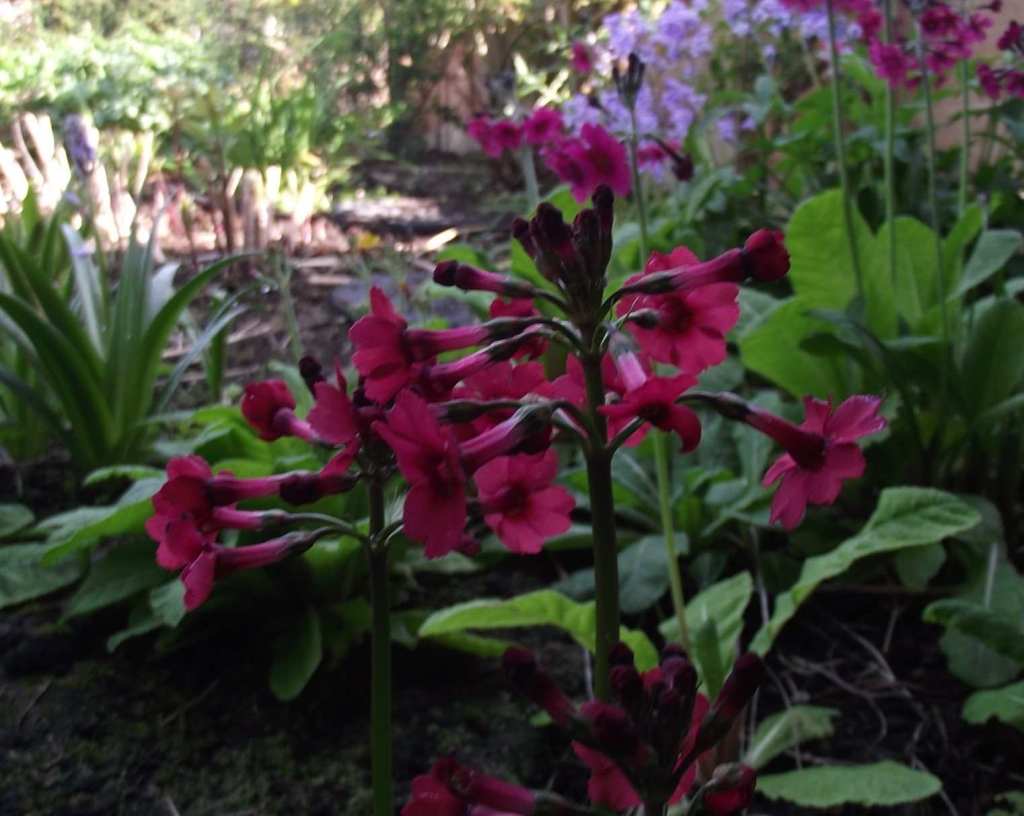
The candelabra primulas are coming into flower at my favourite time of the year. My first specialisation as an amateur gardener was alpines, but after visits to Ness Botanical Gardens, Fletcher Moss University Gardens and Harlow Carr I graduated to the larger end of the alpine spectrum. I first started to grow primulas rapidly joined by meconopsis and, luckily, I have a small area in the current garden where they will grow and I can still enjoy them.

This seedling appears to be true to its adjacent parent Geranium var. pratense. f. albiflorum. ‘Galactic’. It is so nice to have a white one pop-up as most self seedlings are usually from the blue plants.

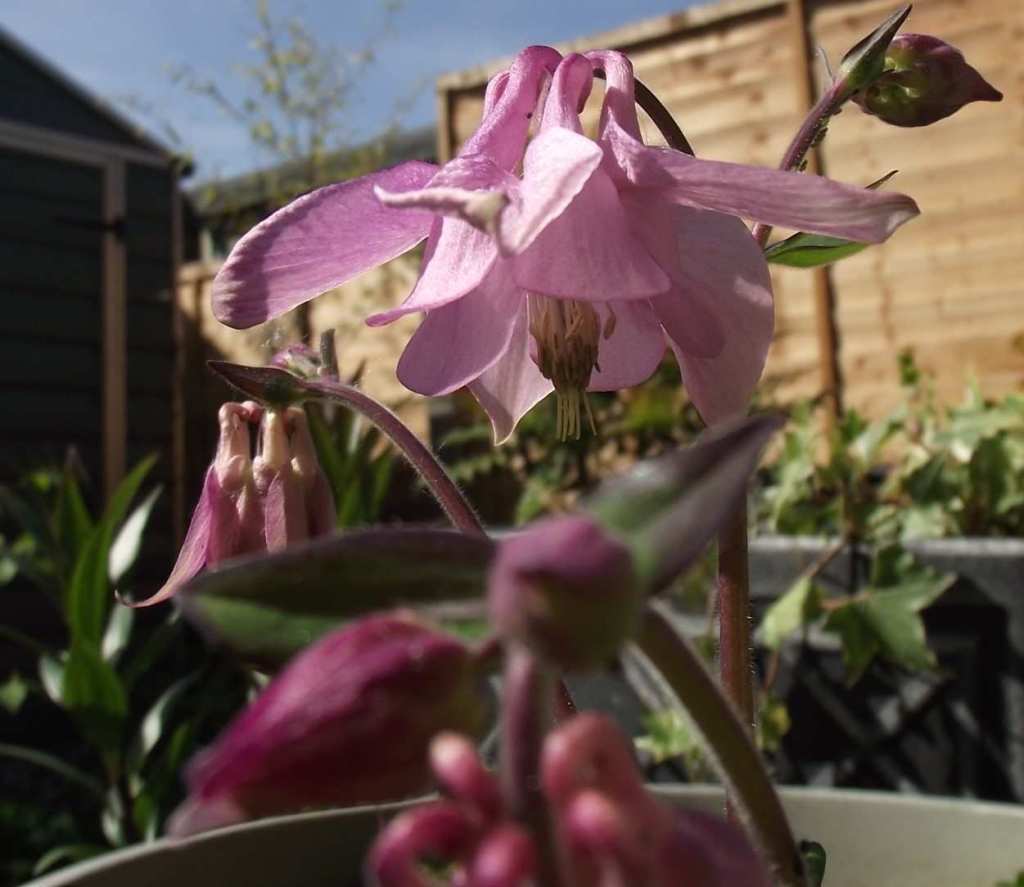
A couple of aquilegias to finish off. A.fragrans is from seed and seems to be wilting a bit unfortunately. It looks as if my policy of removing the seed heads from all standard deep blue A.vulgaris and leaving anything that was more interesting has paid off as I think that’s a rather nice seedling.

This meme is hosted by Jim Stevens who is to be found with all the details and links to plenty of other blogs to enjoy at Garden Ruminations.
Trees,climbers,shrubs and other random plants. (Part 9)

Further pictures and jottings from the archives.

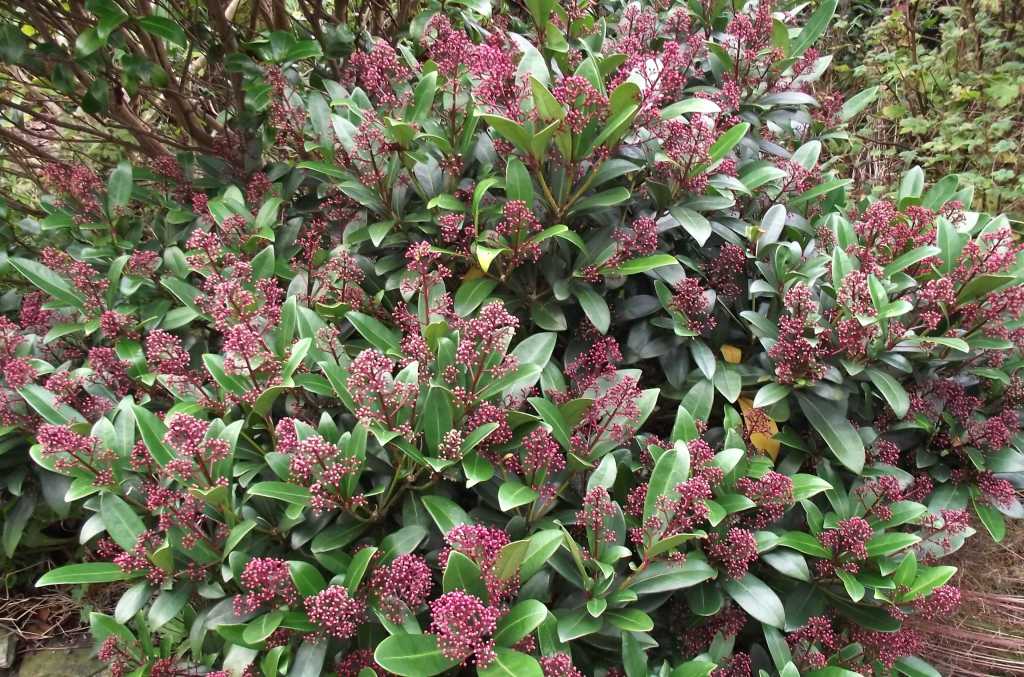
Skimmia

Small evergreen shrubs, very popular with garden centres as they carry their coloured buds through the winter and flower in the spring making an attractive package for containers. Like many similar shrubs a cool root run in acid soil is best in dappled shade. Although they will look good for one season in a container there is absolutely no substitute for a position in a suitable border.

Sophora

Not a very impressive picture, Sophora microphylla ‘Sun King’ is a large shrub which flowers through winter into spring, definitely for a well drained sheltered spot in full sun. My specimen never really attained its potential as it just wasn’t in the right spot.

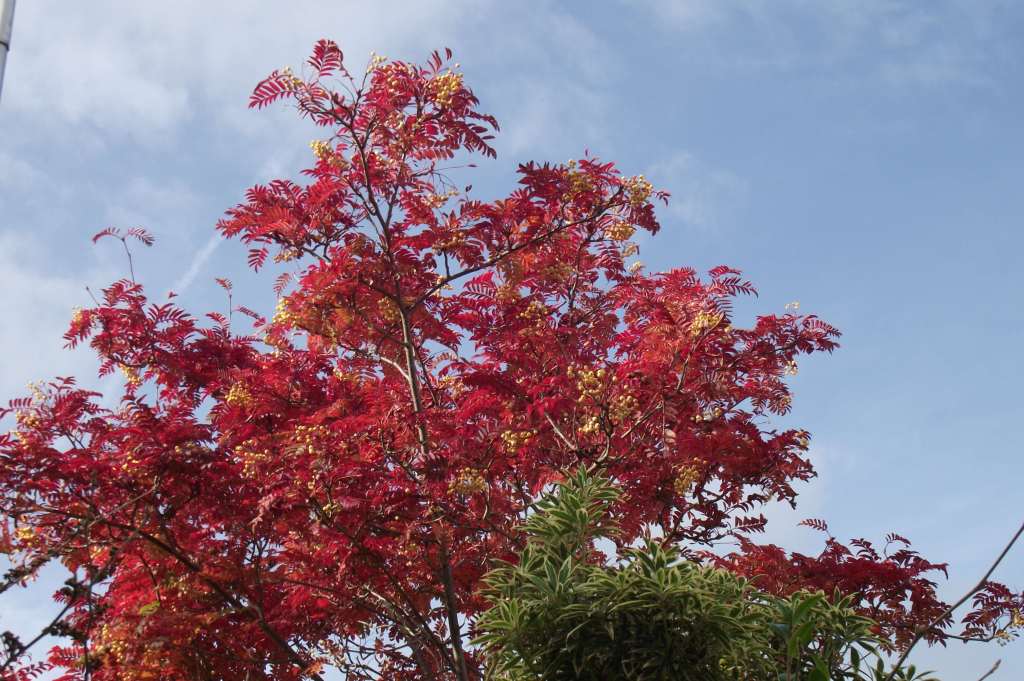
Sorbus (Rowan)

Rowans are my favourite medium sized trees for the smaller garden, in fact my favourite trees altogether so I was doubly blessed as ‘Joseph Rock’ is my favourite rowan. Also known as the mountain-ash, the rowan is steeped in both Nordic and Celtic folklore and figures in local superstition to this day. Sorbus is distributed throughout the northern hemisphere and into N.Africa and can be found growing in most soils and even out of mountain crevices it is also pollution tolerant. Although Joseph Rock has yellow/white berries, red is the more common colour by far, it’s just that I am rather partial to the contrast between the berries and the red autumn foliage colour. What more can I say about this rewarding member of the rose family?!

Spiraea

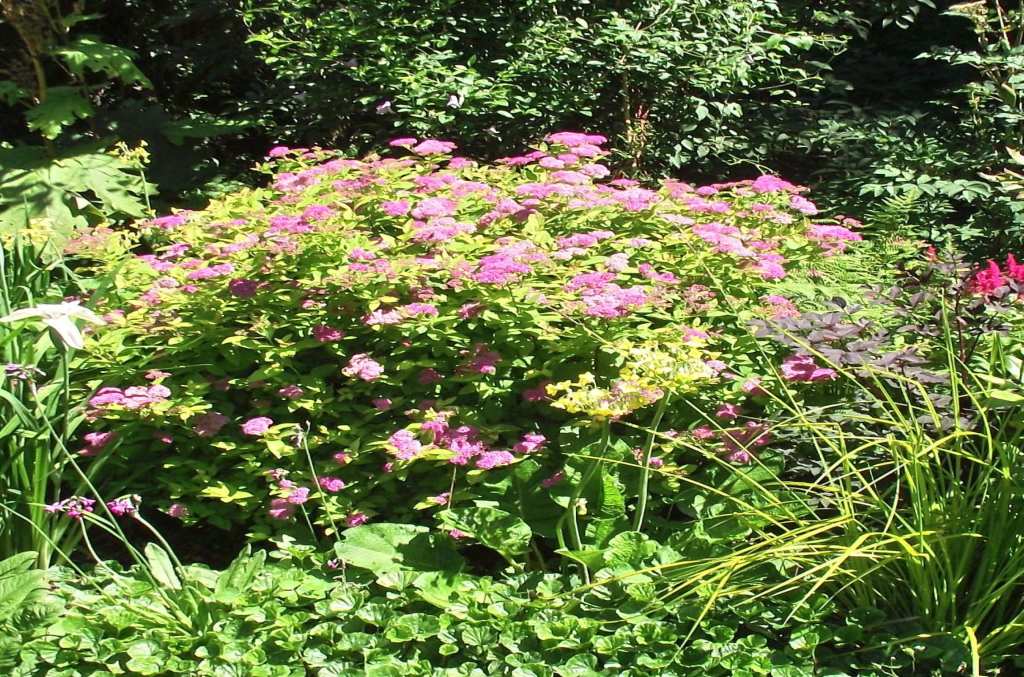
Another one of those sources of confusion between the botanical and common names arises here, many people will think of the attractive plumes of the spirea growing in the damp areas of the garden but, in fact, they are astilbes botanically not spiraeas. Spiraeas are a genus of deciduous leaved shrubs which are members of the rose family and found throughout the northern hemisphere in most soil types. Spiraea japonica ‘Golden Princess’ is an outstanding plant which I found many years ago. I believe that it evolved as a naturally occurring cross, basically nature doing its own thing. The plant I have now, is nowhere near as robust as the original and I am almost tempted to think that there is some sort of reversion going on or perhaps I should try it in another spot.

Syringia

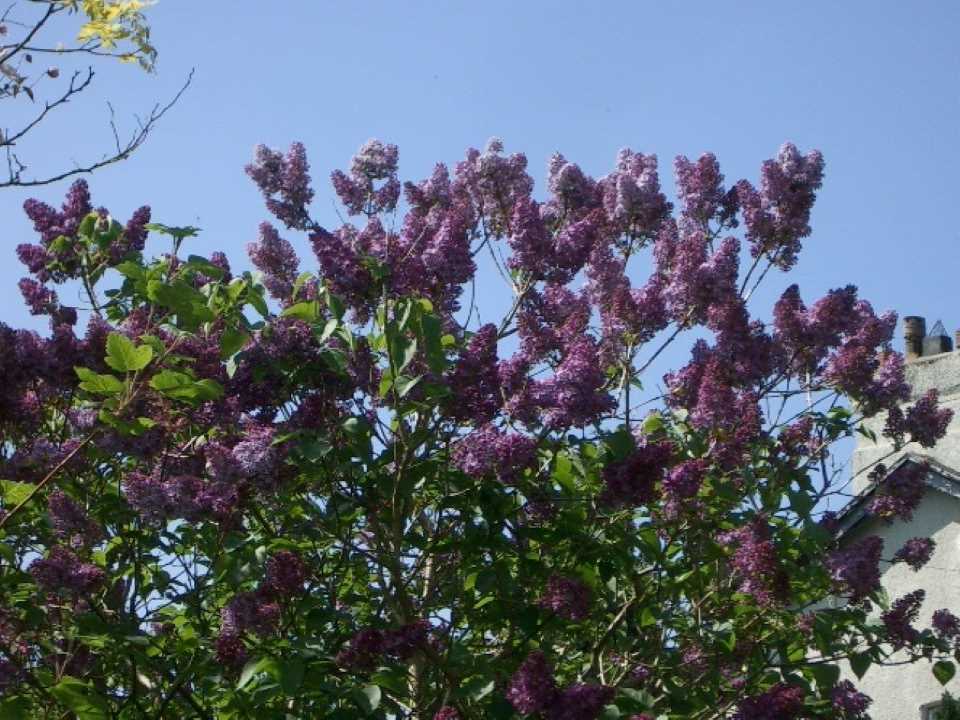
The wild or common lilac is the plant from which all modern cultivars have been bred. Easy to grow, a common sight for as long as I can remember, the heavily scented purple flowers were very popular with other than my superstitious mum who wouldn’t have them in the house. I first remember a white flowered variety appearing but now there are all sorts of variations ranging from reds, doubles (French lilac) and patio plants as the breeders have developed them for the domestic market. Despite this I still regard them as a one trick pony, aside from the scented flowers, and I have to say the scent is really something, the rest of the year the shrub itself is rather uninspiring.

Viburnum

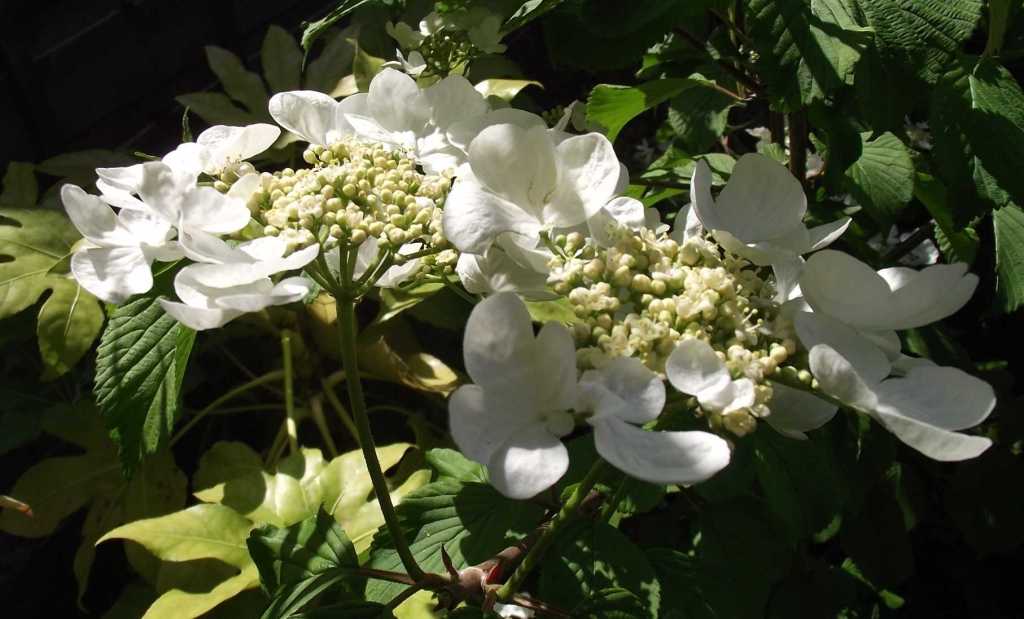
Viburnum plicatum f. tomentosum ‘Mariesii’

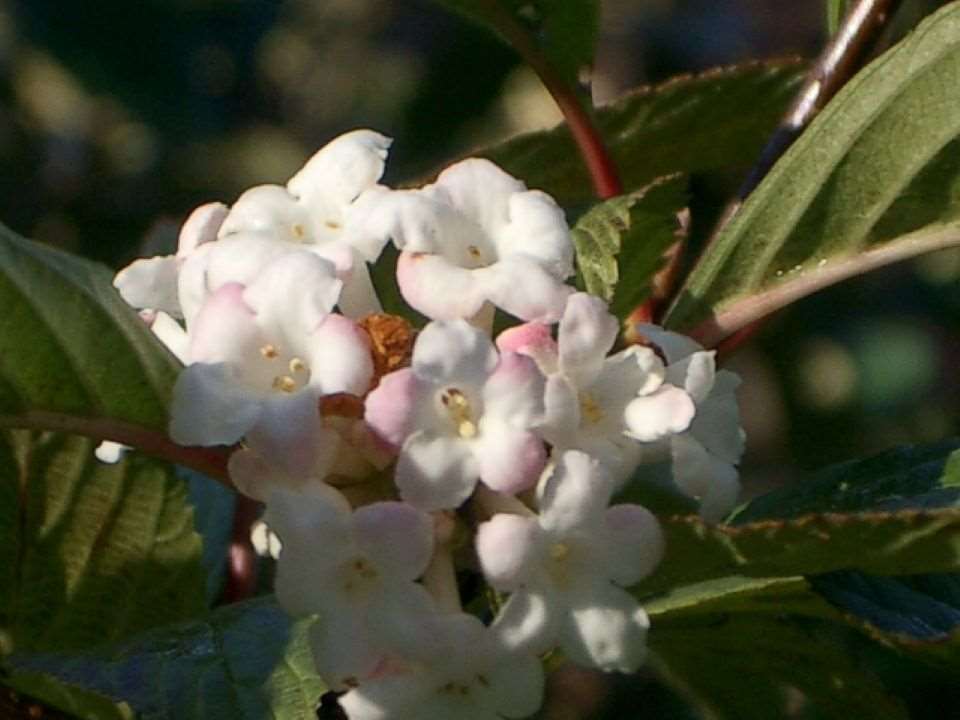
There is only one thing I can criticise with V.plicatum and that is it isn’t evergreen, nevertheless it still ranks as my all-time favourite shrub. Mine also had the advantage of being adjacent to a similar size specimen of Berberis thunbergii f. atropurpurea which was a perfect foil. The tiered branches of V.plicatum give it a pyramid shape, covered by a profusion of white flowers followed by red/black berries, what’s not to like? Although V.plicatum is not an evergreen in some ways it is perhaps a blessing as another species the evergreen V.tinus is very susceptible to Viburnum beetle attack which can severely damage the appearance of the plant, and being an evergreen, is much more difficult to rectify. Another fine viburnum is Viburnum x bodnantse ‘Dawn’, the original plant was bred at Bodnant Gardens in North Wales, the improved cultivar ‘Dawn’ being developed later. This remarkable plant flowers on bare wood anytime throughout the winter emitting a powerful sweet scent, which is why it is often recommended to plant near to the house to take advantage. Viburnum rhytidophyllum is a bold architectural plant but unfortunately I found the foliage interesting but a bit too coarse for my taste so I did actually uproot it, probably better off in a much bigger garden. Overall the Viburnum genus has provided me with two remarkable but totally diverse specimens. (Viburnum tinus photo’ taken in local park.)