When I first started this blog, having scrapped any that had gone before, it was mainly as a brain exercise, plus, not a little, nostalgia. I came across the Six on Saturday meme run by Jim Stephens at Garden Ruminations and, through that, organically increased my presence on the web. This has prompted me to re-publish some of my old material some of which is updated. These posts are purely about the plants that I have grown and photographed, mainly in my previous garden, unless otherwise stated.
Lilies generally prefer a slightly acid soil, originally I planted them in pots preferring to have the scent close to the house. As their numbers grew, I started to remove them from the pot intact and planted the whole thing in the border after the first year. This worked quite well as many of the “transplanted groups” gave a good display for years. If planting direct into the garden it is recommended that a layer of grit is placed beneath the bulbs to aid drainage. The thing to avoid is creating pockets in heavy soils which will fill with water during the winter. If planting in heavy ground a thorough cultivation of the planting area adding grit and additional grit under and around the bulb would seem prudent. I usually plant at 100mm which also helps to stabilise the stems as many lilies do actually throw roots out from the stem. Remember using odd numbers in a group always looks better and less artificial.
Oriental lily ‘Nippon’
Lilium ‘Pink Perfection’ Scented Trumpet Lily
Lilium ‘Robert Swanson’ Giant – Tree Lily.
Lilium ‘Salinas’ Highly scented Oriental.
Lilium ‘Salmon Star’ Shorter than most this scented Oriental (sometimes Dwarf Oriental) lends itself to container culture.
Dwarf Oriental Lily ‘Souvenir’
Oriental Lily ‘Starfighter’Very large upturned flowers.
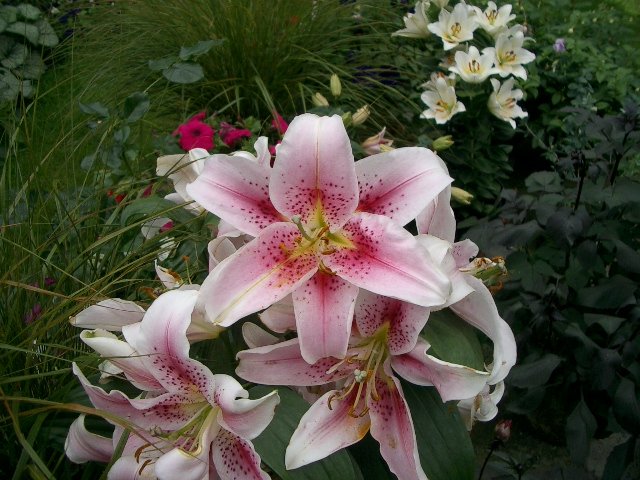
Lilium ‘Stargazer’ Oriental Lily. A deliberate cross between two species to produce an upturned flower. Traditional lily which has been around for some time.
Lilium ‘Time Out’ Oriental lily.
Oriental Lily ‘Tom Pouce’ Extremely large trumpets.
Lilium ‘Venezuela’ Oriental.
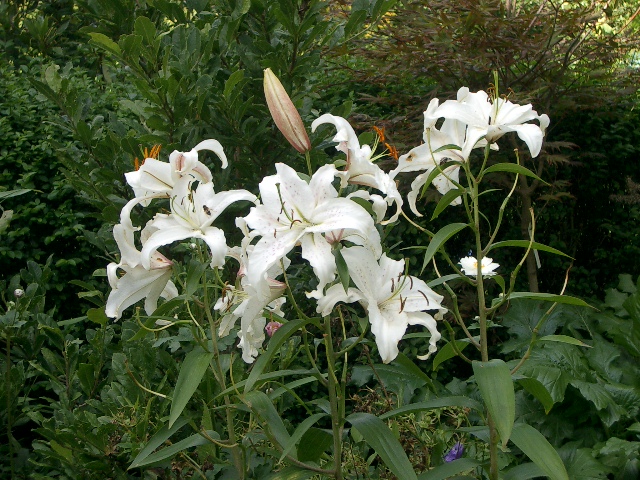
Fragrant Tree Lily ‘Honeymoon’
Watch out for the lily beetle! Next post miscellaneous, plus pest and disease and the giant of them all Cardiocrinum giganteum.
When I first started this blog, having scrapped any that had gone before, it was mainly as a brain exercise, plus, not a little, nostalgia. I came across the Six on Saturday meme run by Jim Stephens at Garden Ruminations and, through that, organically increased my presence on the web. This has prompted me to re-publish some of my old material some of which is updated. These posts are purely about the plants that I have grown and photographed, mainly in my previous garden, unless otherwise stated.
I love lilies, there is something about their stature and the majestic blooms that appeals to me although I have to admit, when younger, I shunned them as too artificial looking. I am only growing a few lilies in my new garden by comparison with the numerous ones I have grown before.
Lilies slot into various groups and have distinct characteristics but I am afraid that I only go for the scented ones, principally the Orientals, and ignore the others. Asiatics, as a lily without scent just doesn’t do it for me. The post is probably more pictorial than informative but, this is the nature of the beast. They are reasonably easy to grow and will grow well in plenty of sun or dappled shade, many of the original species, coming from the margins of woodland. I tend to grow them in containers for the first year then plant out the whole contents of the container the following year.
Temperatures are remaining around 20°C which rather suits me. I am writing this on Friday and we are expecting heavy rain later which is much needed. The garden has really filled out now and I can hardly move for plants. Which is making it difficult to get to any weeds without treading on things I’d rather not. A mixed bag this week of plants I can name, and those I can’t.
Update 6.00am Saturday. As always, it seems, the promised heavy rain went north of us. When I looked out this morning everywhere was dry! More heavy rain forecast for early morning tomorrow. Fingers crossed.
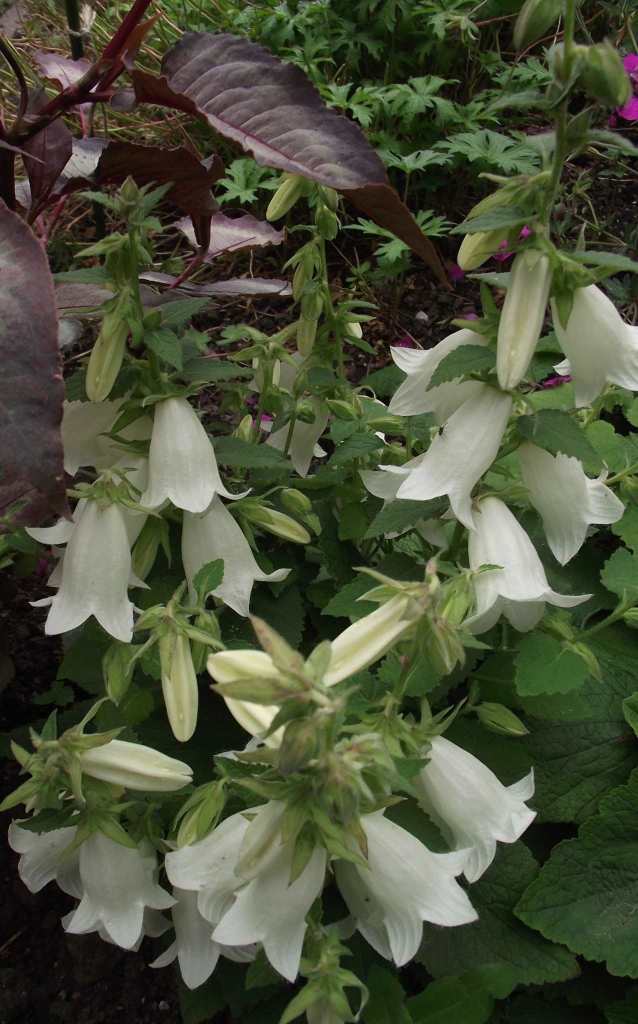
This little campanula is from a packet of seed labeled large white flowered. The flowers are white and also large for the plant, which is typical of campanulas. The plant itself however, is less than a foot tall. It reminds me very much of Symphyandra hoffmannii which I used to grow.
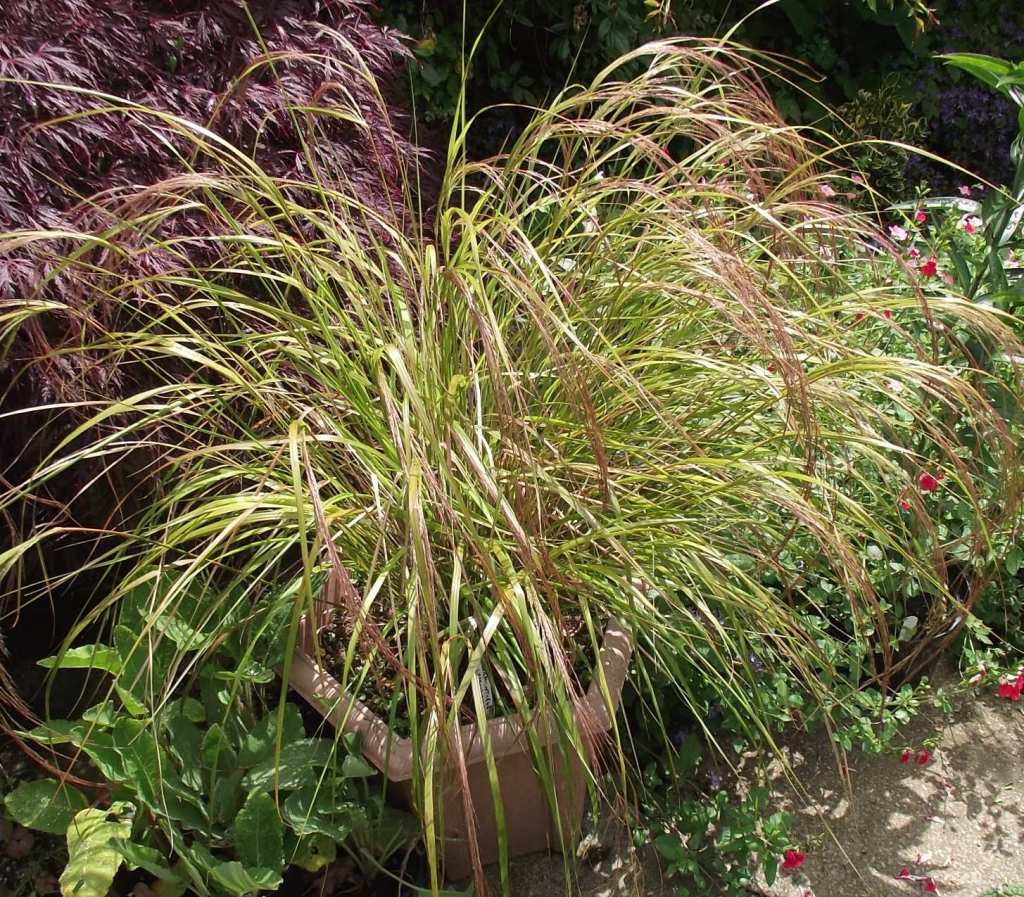
I am not a great fan of grasses but I find Anemanthele lessoniana, the pheasant tail grass outstanding. Unfortunately the picture doesn’t capture the effect of it glinting in the sunlight as it does. It will carry on throughout the year with the leaves taking on yellow, orange and red streaks towards winter.
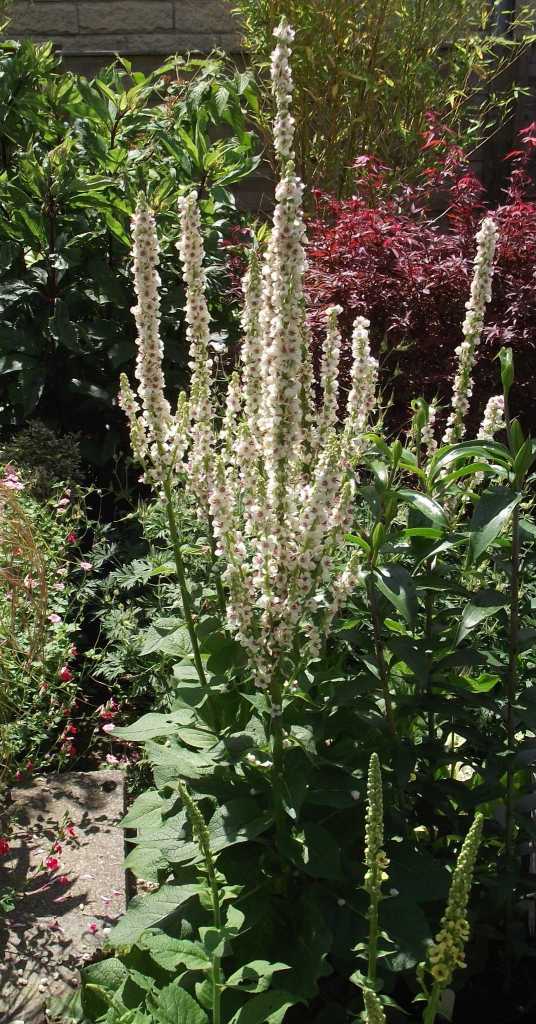
This white, self-seeded verbascum has improved year on year. I know the wild plant is somewhat looked down on as a weed but I find them rather attractive. A big plus is that they are constantly visited by numerous bees. Both the white one, and the smaller yellow one, in the foreground, originated from a packet of mixed verbascum seed, but these plants have seeded themselves, into the paving, from elsewhere in the garden.
Primula x bulleesiana showing fasciation. This is one of the few botanical “coveralls” that I can relate to. x bulleesiana is obviously the combination of bulleyana and beesiana. Fasciation is quite common in primulas, particularly the candelabra types. There seems to be a myriad of things that can cause it from genetic mutation to viral or insect damage, which means, I think, that nobody is really certain.
Another plant that has seeded itself into the garden. This rather neat astrantia has been with me for several years now, and I have just left it alone to do its thing.
The first lily flower this year from a pot I have had for years, so, naturally I have lost the label! At a guess, I think it could be Lilium ‘African Queen’ a Lilium longiflorum hybrid. But please don’t take my word for it!
This meme is hosted by Jim Stevens who is to be found with all the details and links to plenty of other blogs to enjoy at Garden Ruminations.
The welcome rainfall has really boosted everything in the garden, although it is always sad to see the early bloomers finished until next year. My garden is always at its best Mid-April To mid-June. I can now breathe a sigh of relief, as the couple of bamboos that I have, are finally greening up again. I always worry that they aren’t going to recover after their winter battering, because they are so late. I have a Phyllostachys nigra which was badly damaged a couple of years ago, and only partially survived. We are promised another “heatwave” next week. I think it is meant to reach as much as 29°C on one day!
An abundance of geraniums this week. I wanted to get them in before some finish flowering.
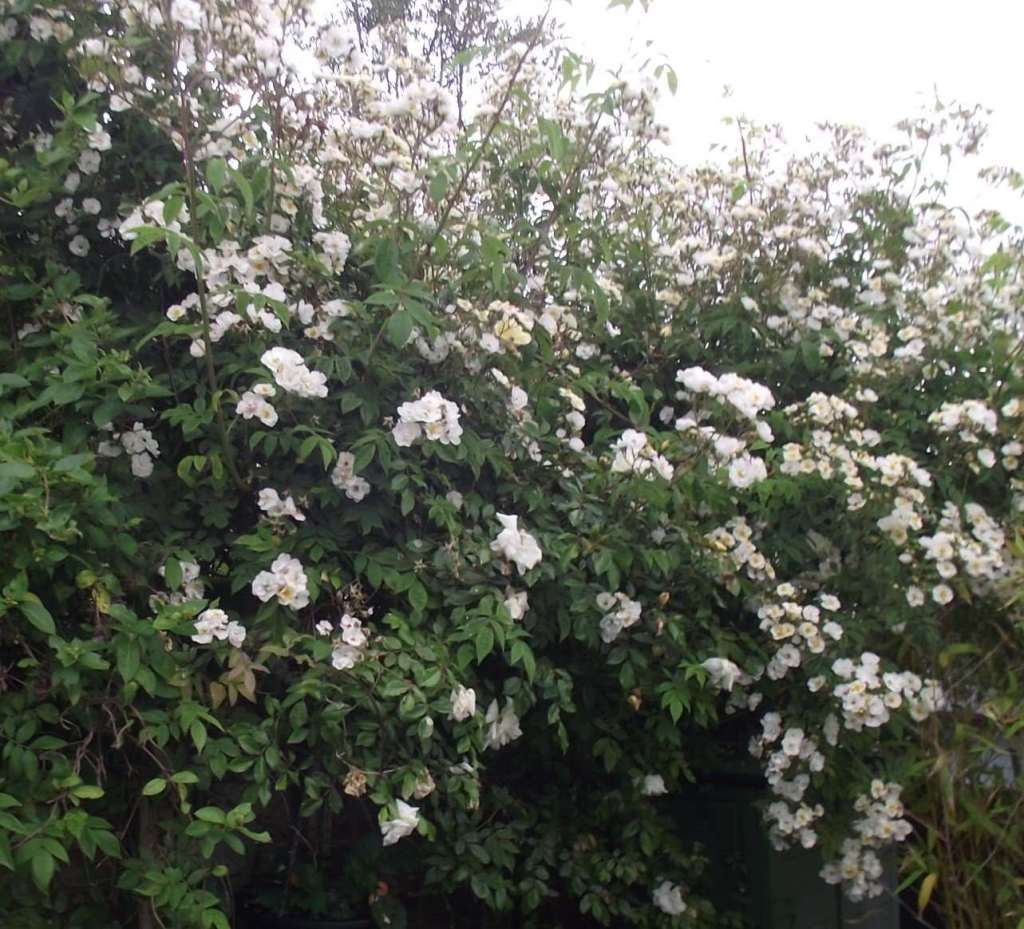
I’m sure Rosa ‘Rambling Rector’ is on steroids. This is only its third year since I planted it, but I never thought this would be the result. Some late pruning, to contain it a little, has certainly helped the flower count. On a warm day it fills my tiny garden with scent, so I won’t complain. A drastic prune is now due!
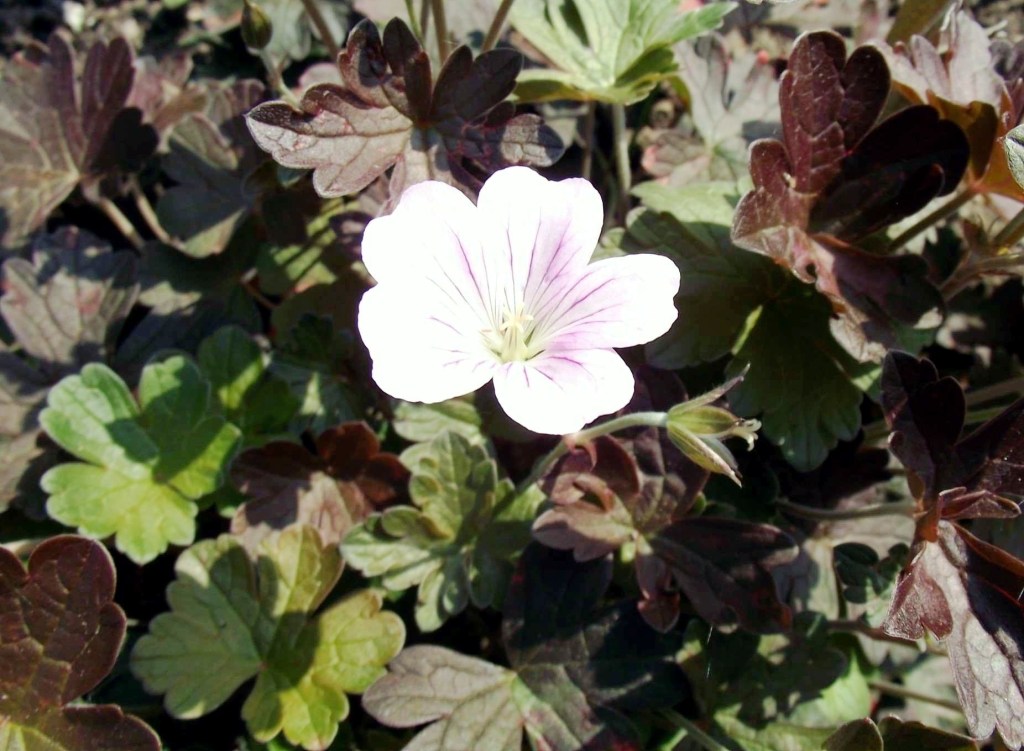
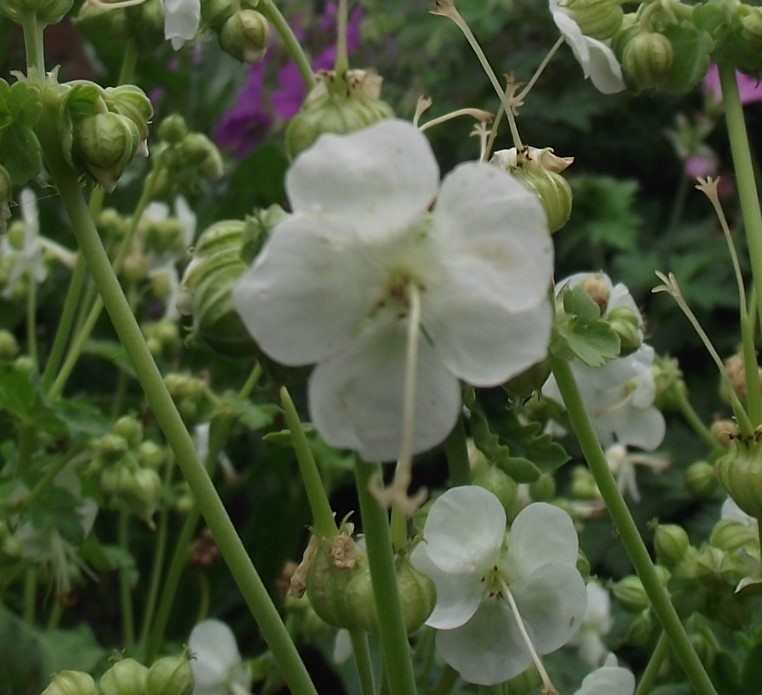
Geranium ‘Galactic’ or to give it the full title Geranium pratense var. pratense f. albiflorum ‘Galactic’, poor thing! It sat in the garden unrecognised, until I found an old label that had been disregarded a few years ago. I am always hesitant when identifying geraniums, as the variations are often very slight. This has led to a growing problem of, plants offered for sale, being wrongly labeled. Best left to the specialists.
Unfortunately the flower is much pinker than shown, as the name implies. Geranium x oxonianum ‘Dusky Rose’ is a new cultivar which I am hoping should flower right through the summer.
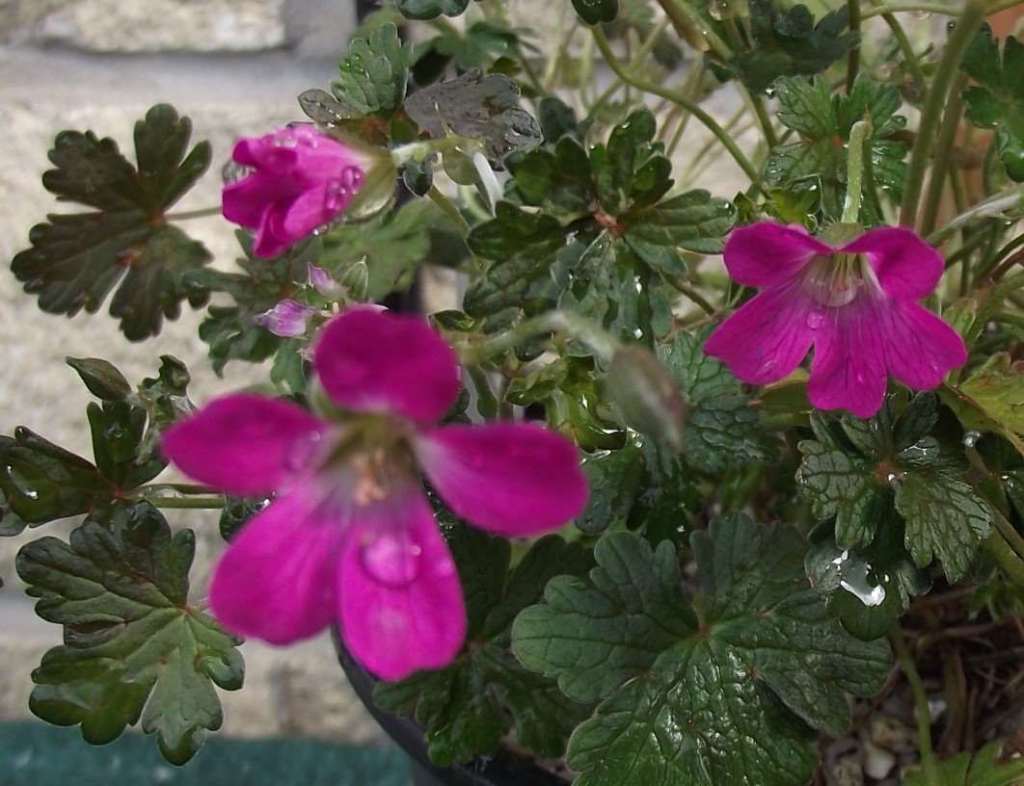
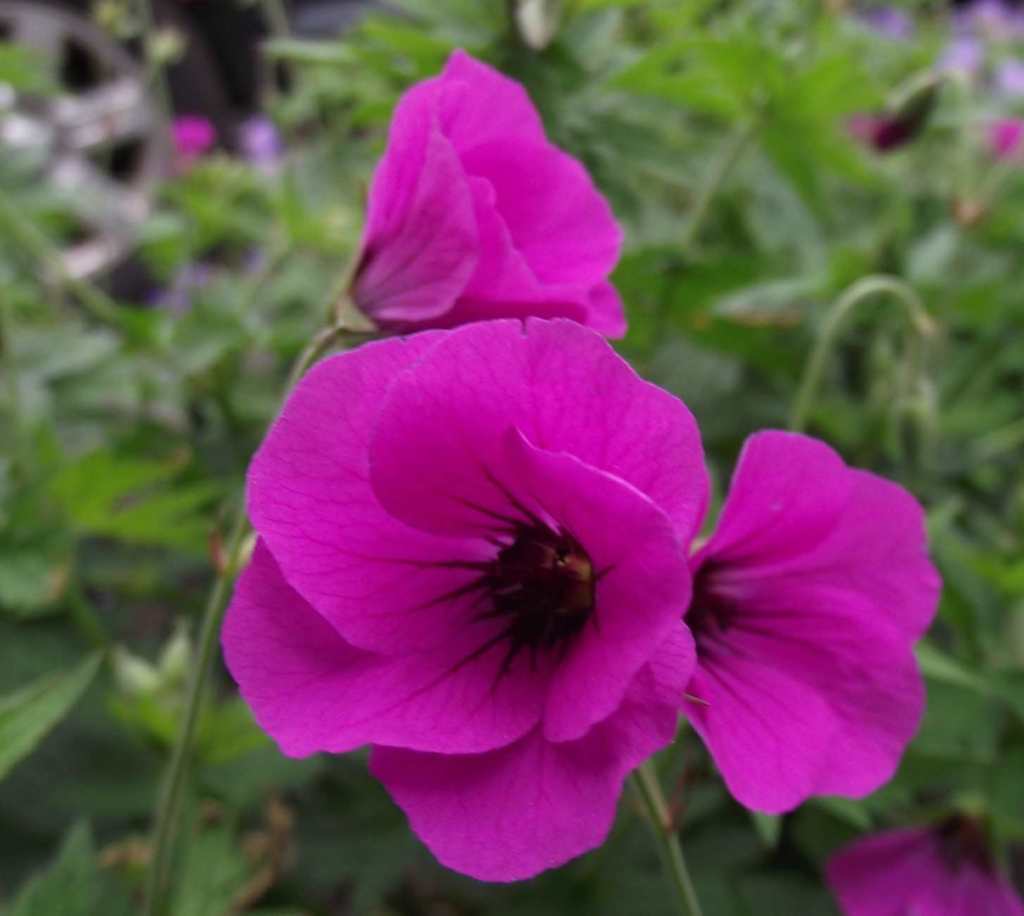
Another low growing geranium (6″). Geranium Orkney Cherry is bred by Alan Bremner in the Orkney Islands so it must be hardy.
Geranium Patricia is another cultivar from Alan Bremner and is the result of Geranium endressii x Geranium psilostomen. I know this one will produce flowers through the summer. Geranium ‘Galactic’ however, I will be cutting back in the next couple of weeks, and hoping for a second flush of flowers.
My favourite pink geranium. I have had Geranium × oxonianum ‘Wargrave Pink’ for many years, even before I made the decision to grow more geraniums. This is another one I know will keep flowering right through the summer.
This meme is hosted by Jim Stevens who is to be found with all the details and links to plenty of other blogs to enjoy at Garden Ruminations.
When I first started this blog, having scrapped any that had gone before, it was mainly as a brain exercise, plus, not a little, nostalgia. I came across the Six on Saturday meme run by Jim Stephens at Garden Ruminations and, through that, organically increased my presence on the web. This has prompted me to re-publish some of my old material some of which is updated. These posts are purely about the plants that I have grown and photographed, mainly in my previous garden, unless otherwise stated.
Tulips Part 2.
Another picture post, dealing with the remaining tulips I have grown and also have pictures of.
Double Earlies
Tulipa ‘Mondial’ Tulipa ‘Monte Orange’
Tulipa ‘Silk Road’
Tulipa ‘Peach Blossom’
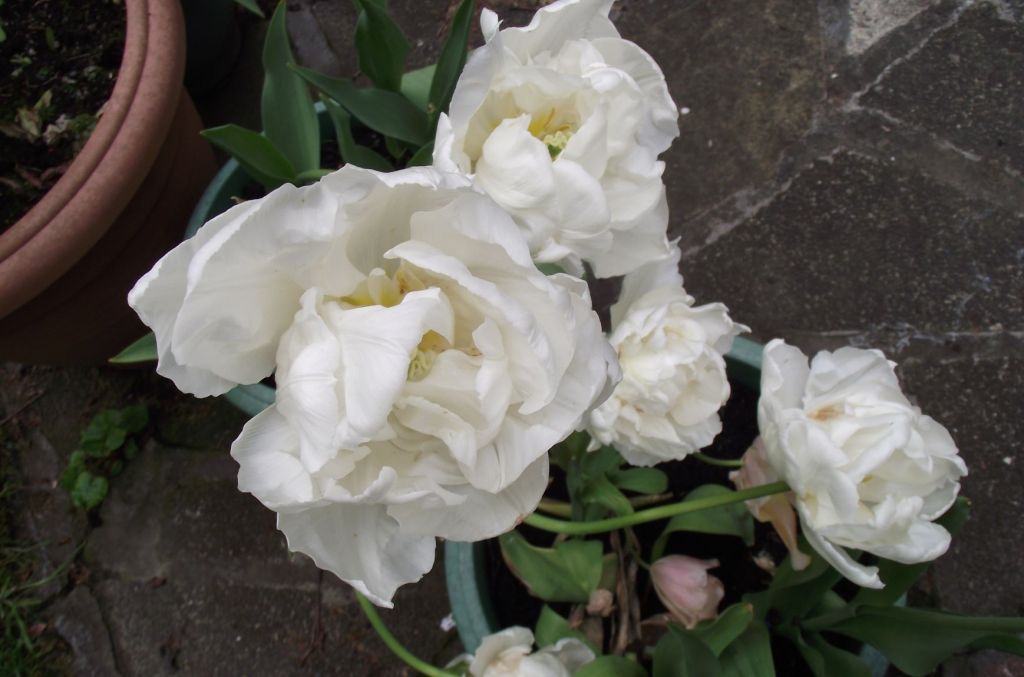
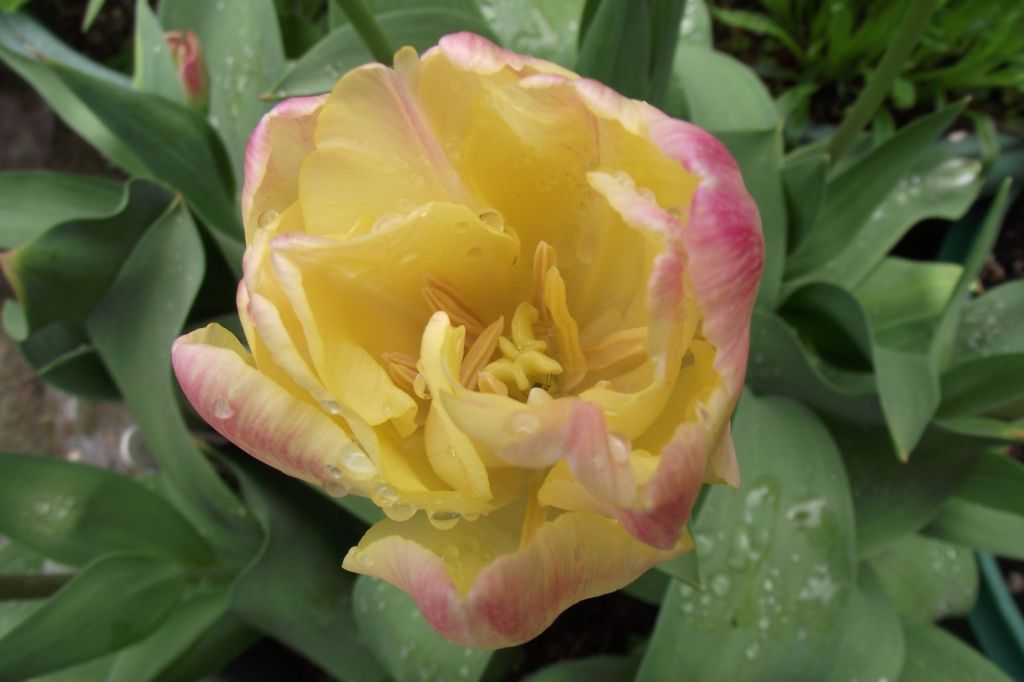
Flowering early to mid spring some of these tulips such as T.’Peach Blossom’ have the extra benefit of being scented which, along with the exquisite double flowers really enhances the early part of the year.
Following on from the earlies some of the Late Doubles such as T. ‘Angelique’ are also scented.
Miscellaneous.
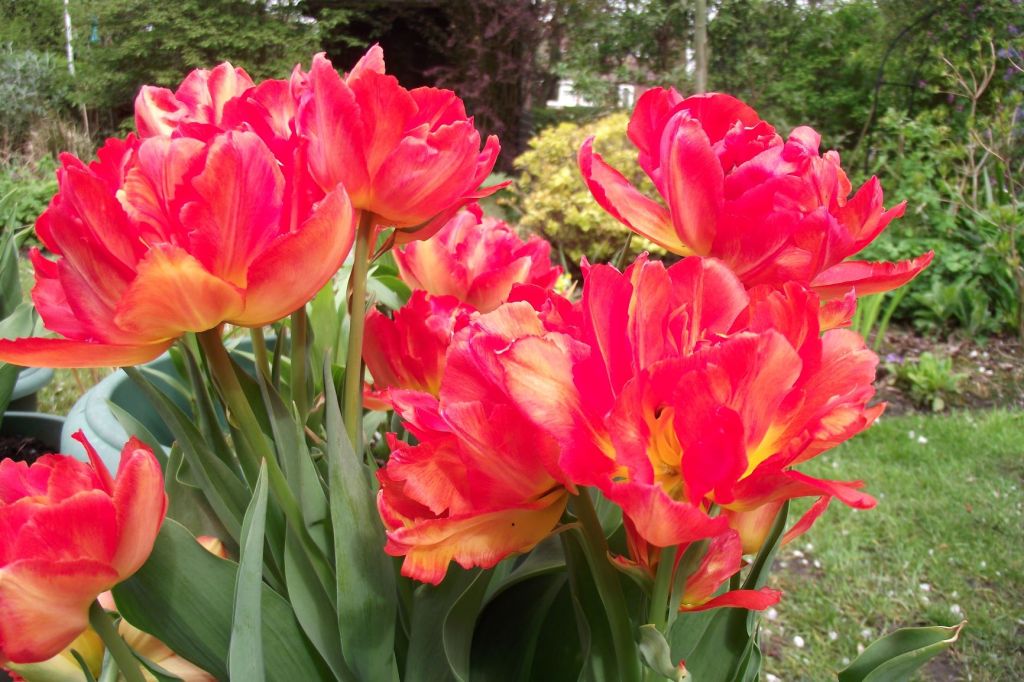
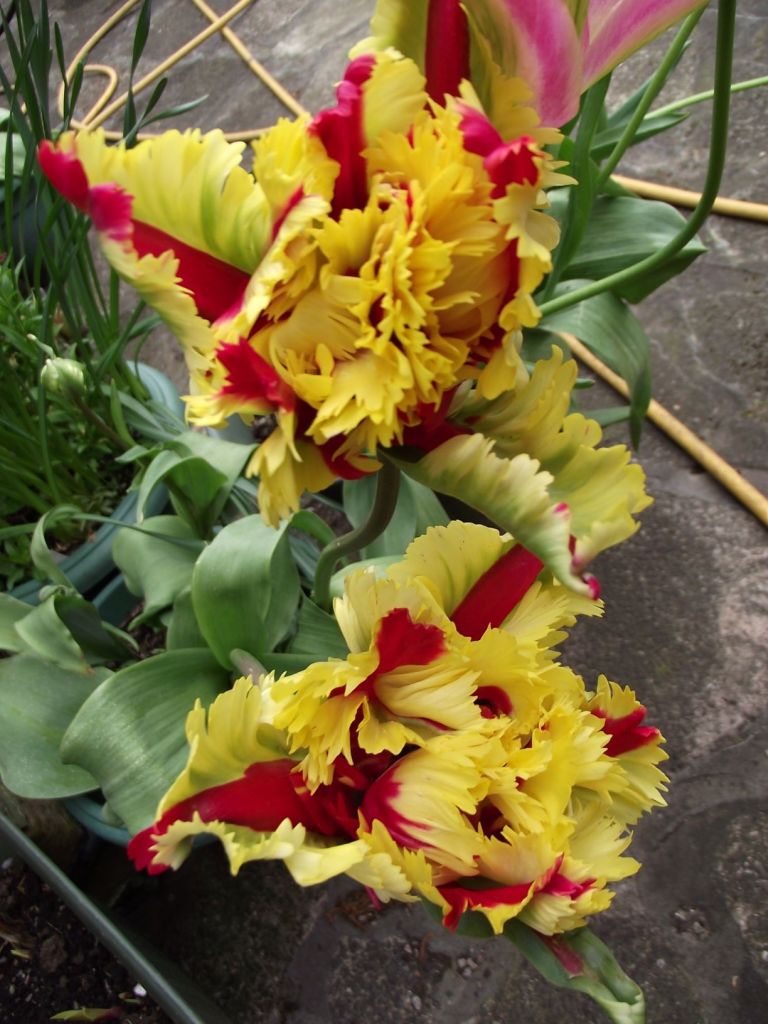
Parrot Tulip ‘Rococo’
Tulipa ‘Flaming Parrot’
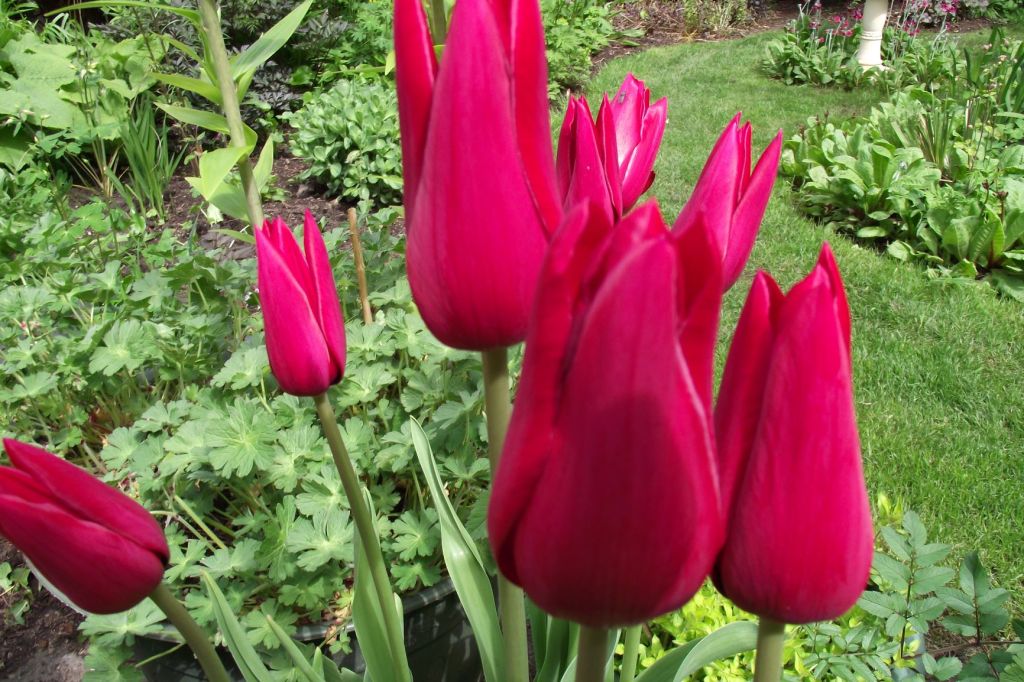
Lily flowered Tulipa ‘Red Shine’
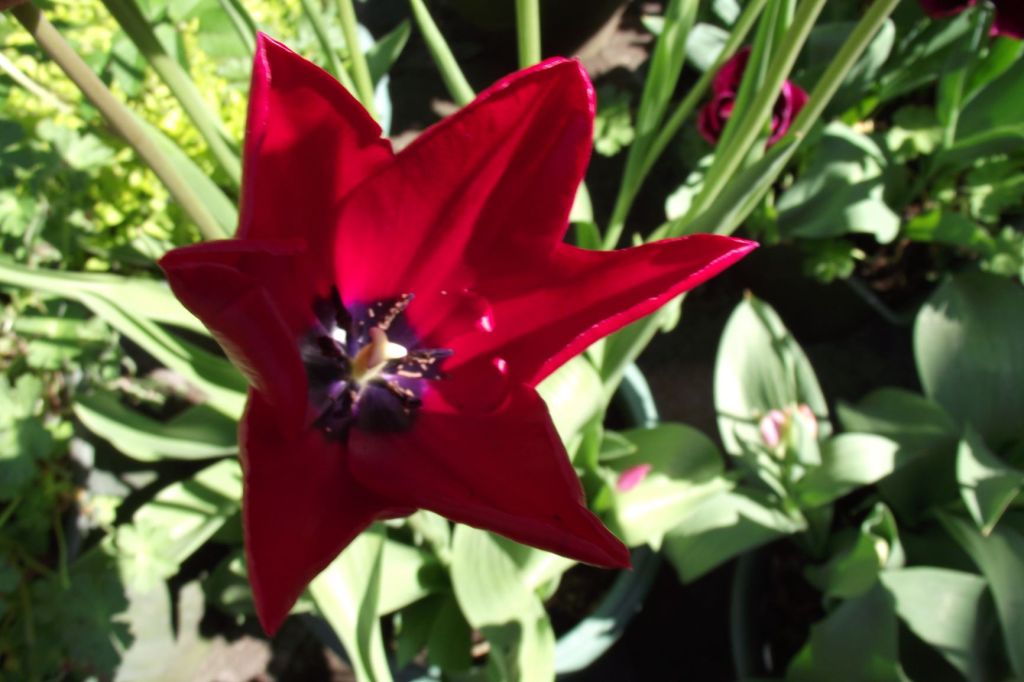
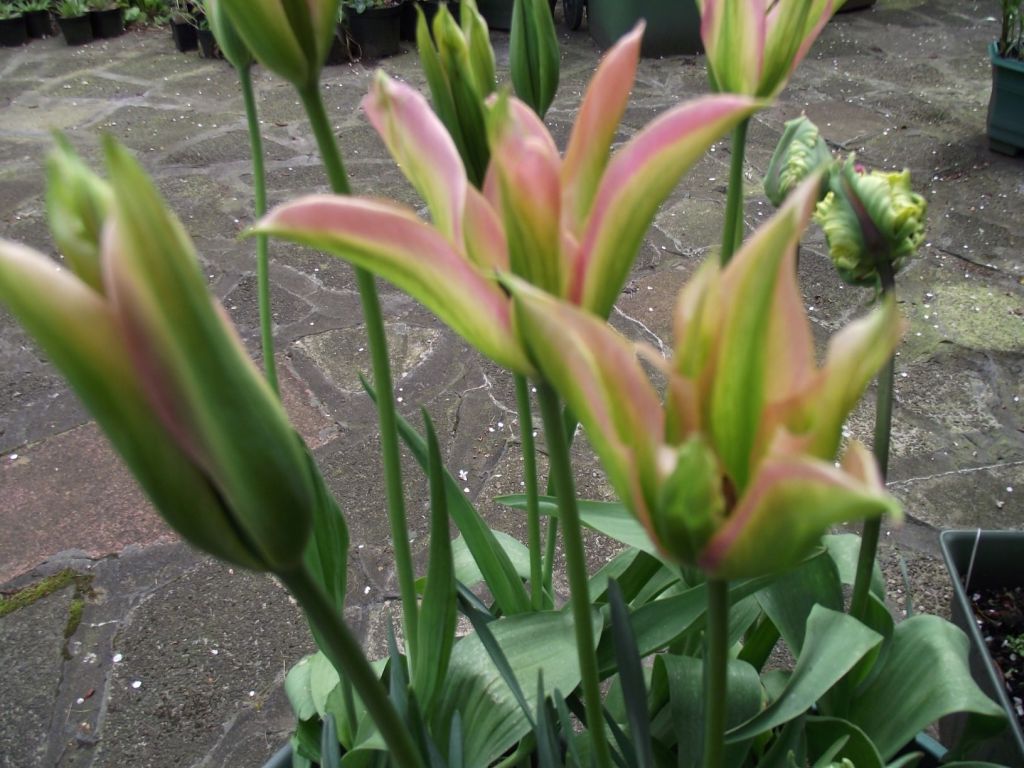
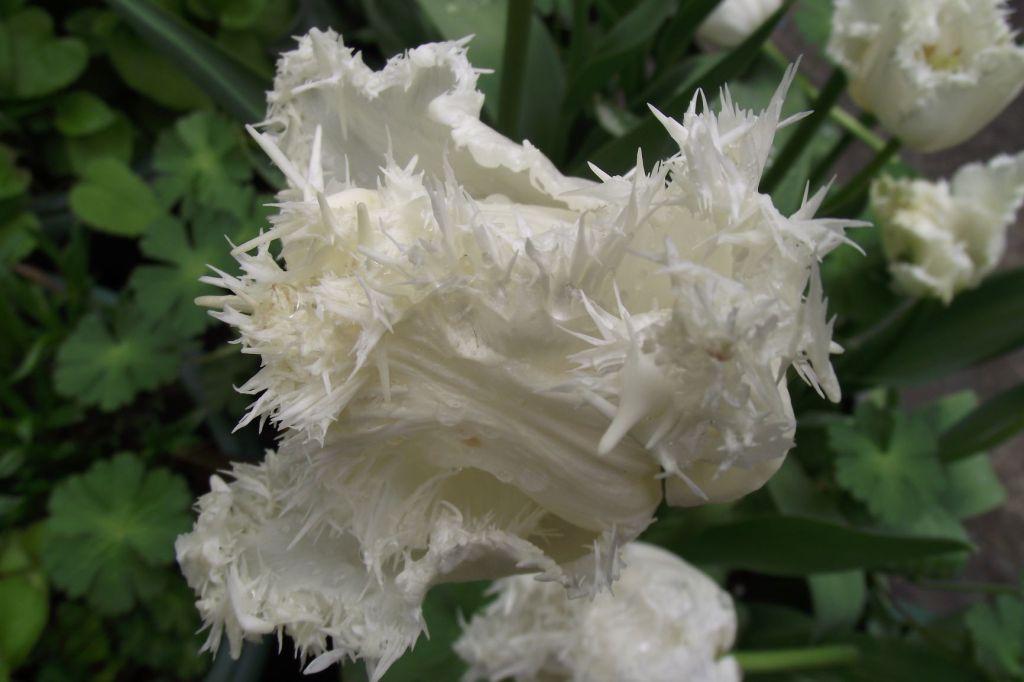
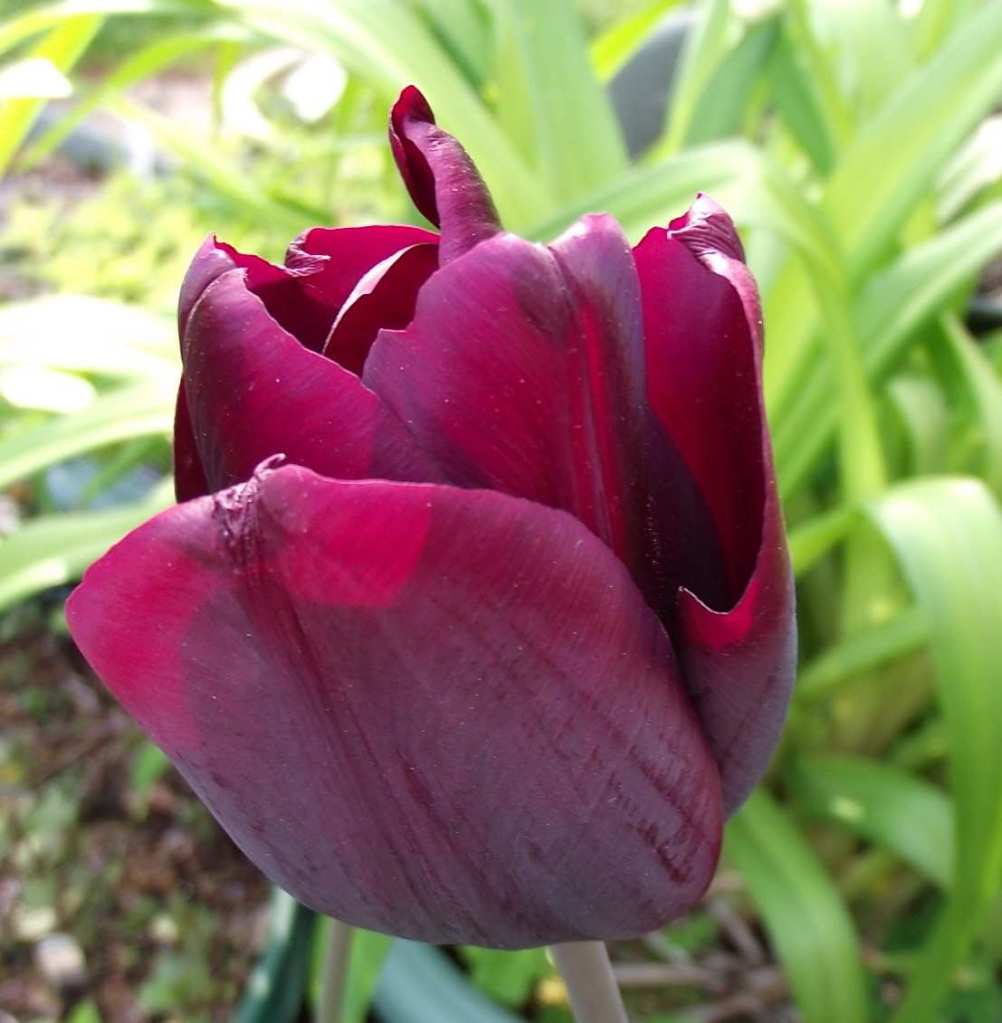
Unusual Lily Flowered Tulipa ‘Virichic’. These are known as Viridiflora Tulips.Late Single Tulipa ‘Queen of the Night’Bit of an oddity, can’t find it listed anymore Tulipa ‘Pirvilla Lady’ a Fringed Tulip.
The main pests and actually my nemesis are grey squirrels, they take absolute delight in rooting out the bulbs, whether in containers or in the ground. One memorable Christmas Day, I spent some time moving my pots into groups and spreading netting over them. The assault of the squirrel army had begun, eventually this led me to stop growing the Dutch tulips. I later hit upon the idea of putting a piece of heavy metal netting about an inch under the surface of the compost until this in turn was dragged out. I don’t find it worthwhile to keep the bulbs for another year, but use tulips like bedding plants, in the past I have kept the bulbs for replanting, but have found the results to be inconsistent. One advantage of using fresh bulbs each year is that it avoids the diseases to which tulips are prone.
Botanicals
Just a quick footnote regarding the botanicals or specie tulips, these are generally the dwarf spring flowering tulips, usually found in a rock garden setting or container, with which everyone is familiar. I have grown many of these such as Tulips kaufmanniana, greigii, praestans and their hybrids and also Tulipa tarda although I don’t have many pictures.
The heavy rain seems to have died down and temperatures have risen again. We are promised some thunderstorms in the near future, so we will have to wait and see what is in store for us.
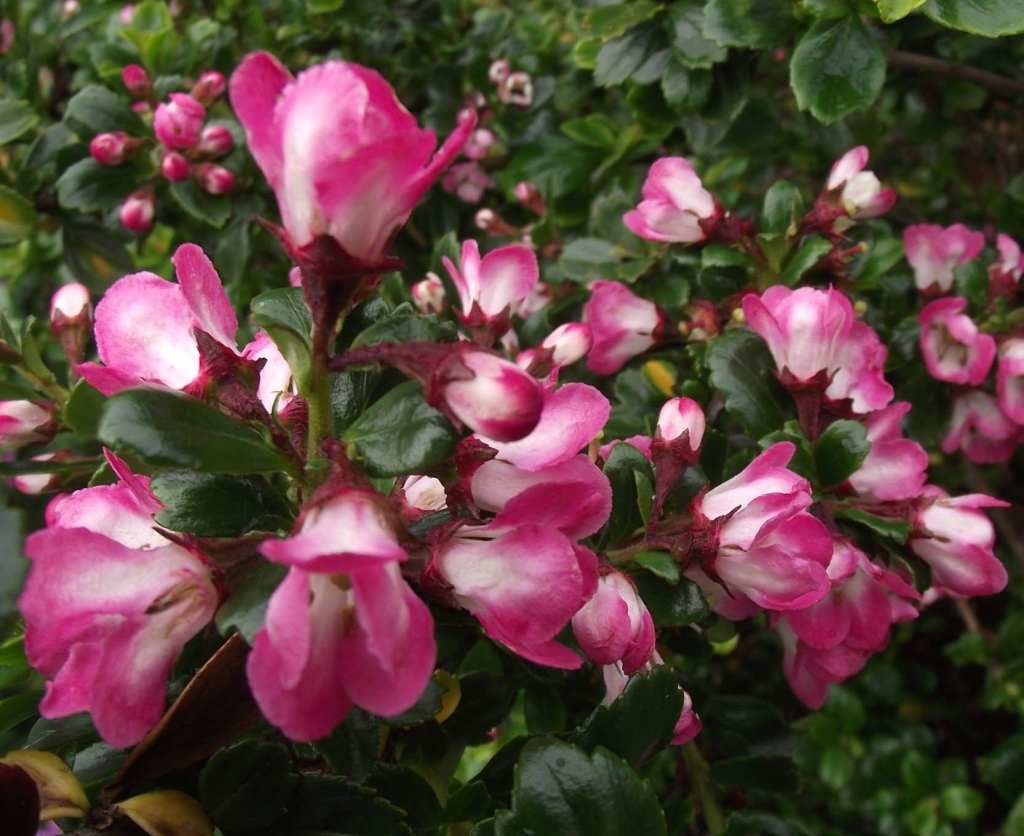
Escallonia ‘Apple Blossom’
Although escallonias don’t seem to be as popular as they used to be, this one is so aptly named. The dark green, evergreen foliage makes an excellent foil for those plants in front of it.
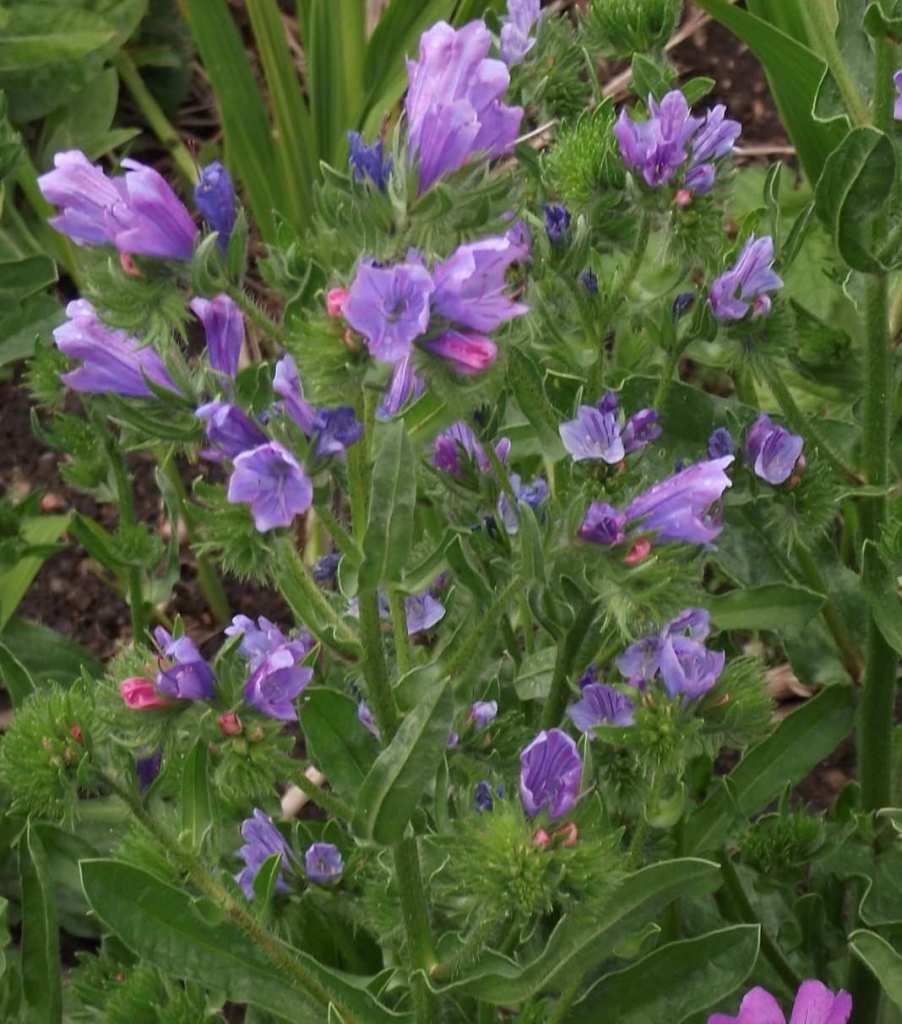
Echium plantagineum
The common viper’s bugloss (Echium vulgare) is a native flower, which I first saw in a garden when I was in my early teens. We had neighbours who had returned from India after serving in the British Raj, which we youngsters found fascinating. Charles was a keen amateur astronomer and my father and I spent a few nights with him gazing at the stars. His wife Effie (Euphemia) was a very keen gardener and an archetypical, indomitable Victorian lady who did much to encourage me in the ways of gardening. One of her favourites was viper’s bugloss, which I have grown in her memory ever since. Echium plantagineum, the purple viper’s bugloss, actually comes from warmer climes, but it is flowering from a February cold sowing.
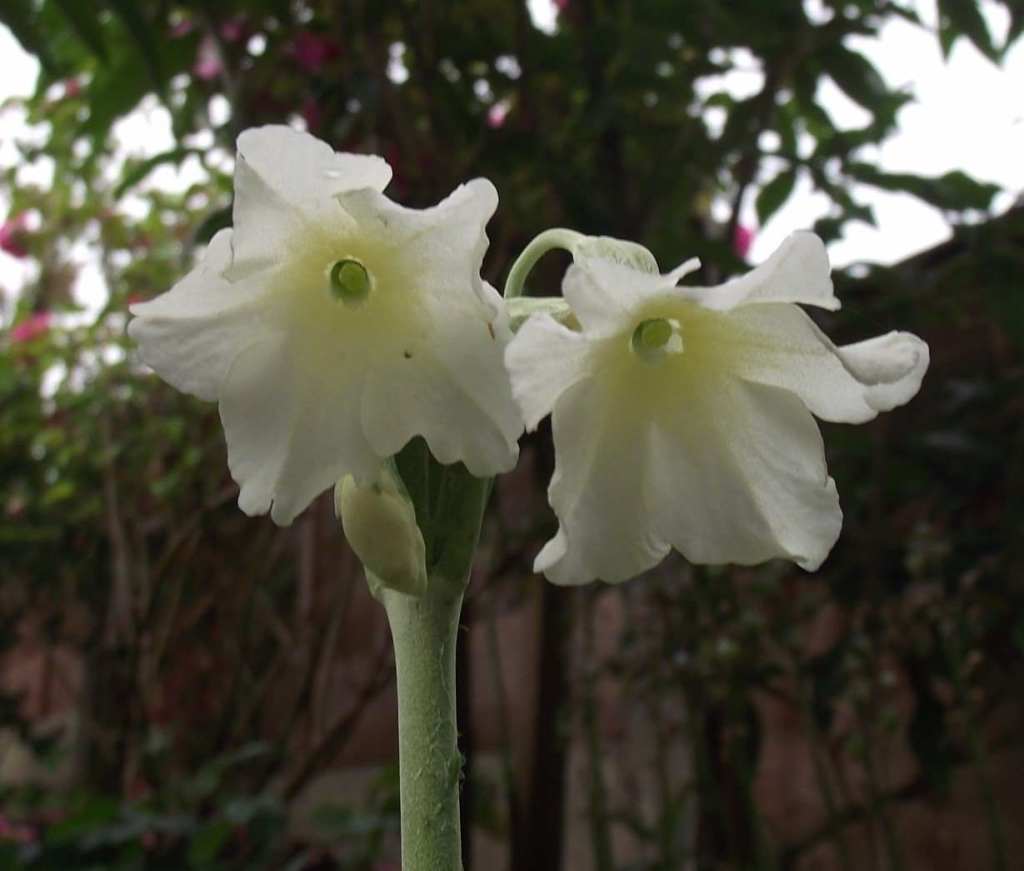
Primula alpicola albaPrimula alpicola violacea
Primula alpicola the moonlight primrose is another little beauty for a damp spot.
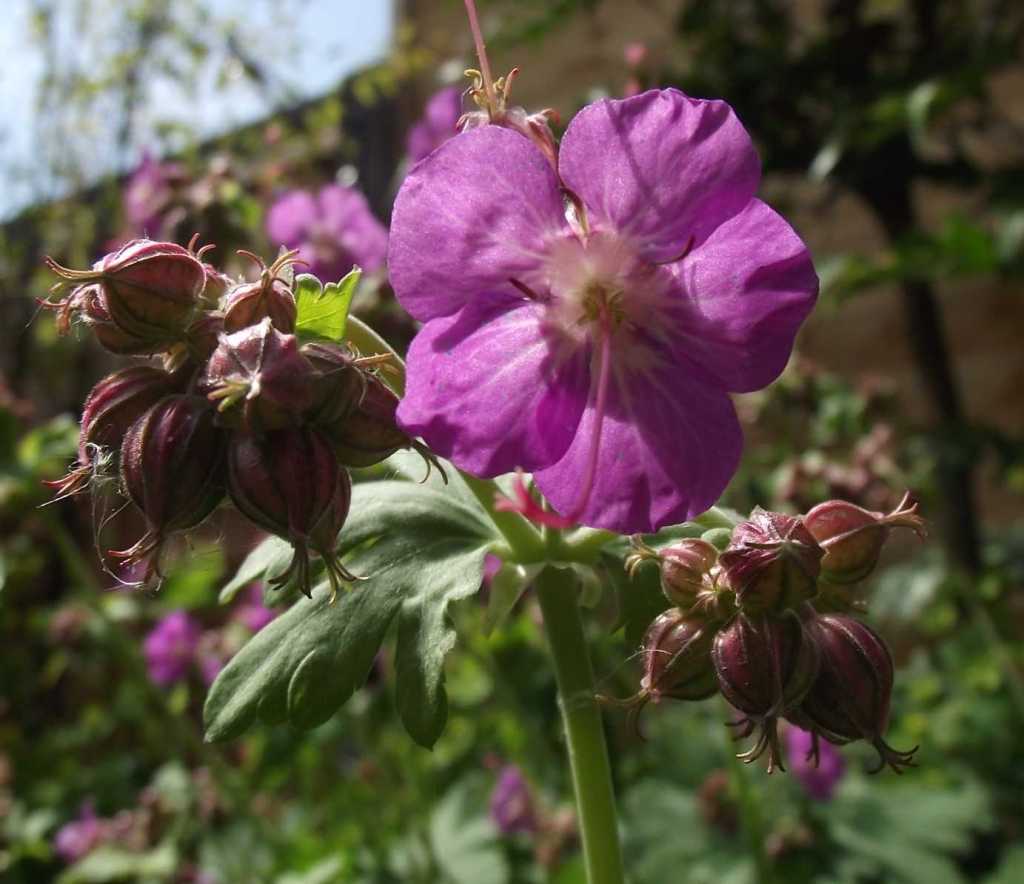
Grows virtually anywhere, autumn tints to the leaves, aromatic foliage, bee magnate. What more could anyone want?! Geranium macrorrhizum ‘Bevan’s Variety’ is very similar, in fact, to be honest, I can’t tell them apart.
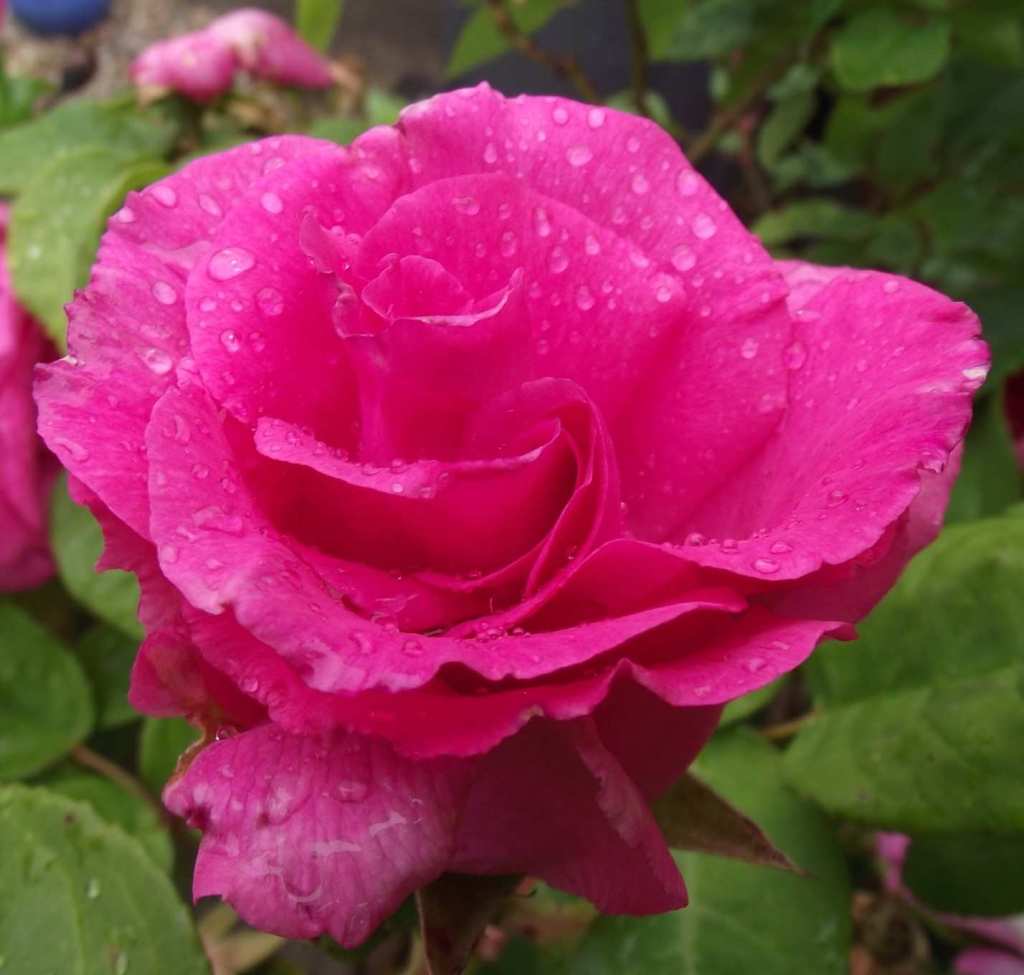
Rosa ‘Zéphirine Drouhin’
Finally a rose. I am really happy to be able to grow roses here, although I have limited them to the climbers and ramblers. I love ‘Zéphirine Drouhin’, it is the only rose that I managed to grow in my previous, shady, damp garden.
This meme is hosted by Jim Stevens who is to be found with all the details and links to plenty of other blogs to enjoy at Garden Ruminations.
We have had a very wet week, with very little sun. In between showers I have discovered a couple of pests causing damage to foliage. The mullein moth caterpillar has been feasting on a clump of verbascums making large holes in the leaves. I have found that the easiest way of combating them is to simply pick them off and dispose of them. It’s the first time I have come across these, even though I have been growing verbascums for years. Another first is the geranium sawfly. I have always thought of geraniums as being pest-free and I have found no reference to the sawfly in earlier textbooks. The larvae make fairly neat, small, round holes in the leaves, which detract more from the appearance, than the actual health of the plant. Besides an odd one, the culprits had disappeared, although it’s possible to get another attack later in the year. The odd thing is that they attacked one geranium but a different species growing right next to it was left alone. The good news is no lily beetle yet!
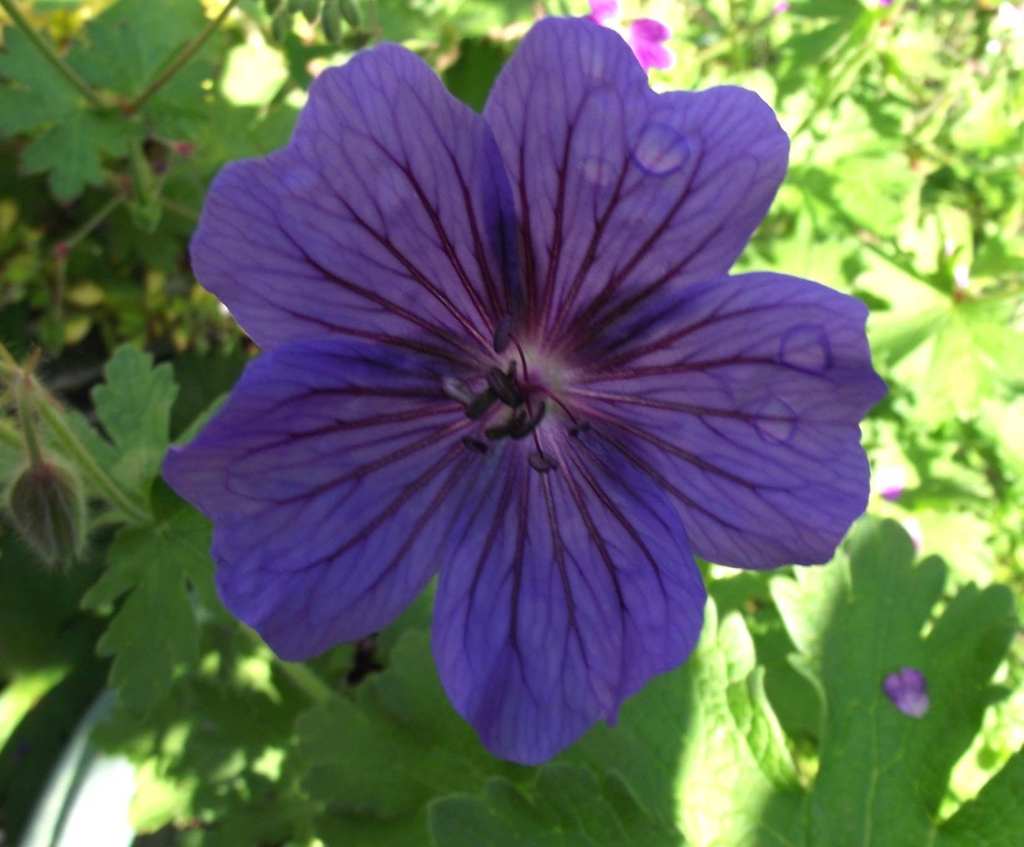
Geranium x magnificum ‘Blue Blood’
Rather magnificent veining of Geranium x magnificum ‘Blue Blood‘ which is a variant of the original cross: G. ibericum x G. platypetalum.
Primula bulleyana
Another of my favourite candelabra primulas. Although this plant was grown from seed last year, overwintered in a container, and only planted out a a month ago it has still produced a reasonably sturdy flower stem. If it had only made a weak attempt to flower I would have removed the stem to allow it to bulk up more.
Rosa ‘Albéric Barbier’Rosa ‘Albéric Barbier’
I have mixed feelings about this rambler. It opens from a really nice tight, typical rosebud. When half- open it till maintains its form. When fully open it becomes a bit of a mess! It might be that the form I have is not as good as it might be, but even though it is also only lightly scented, I am reluctant to part with it.
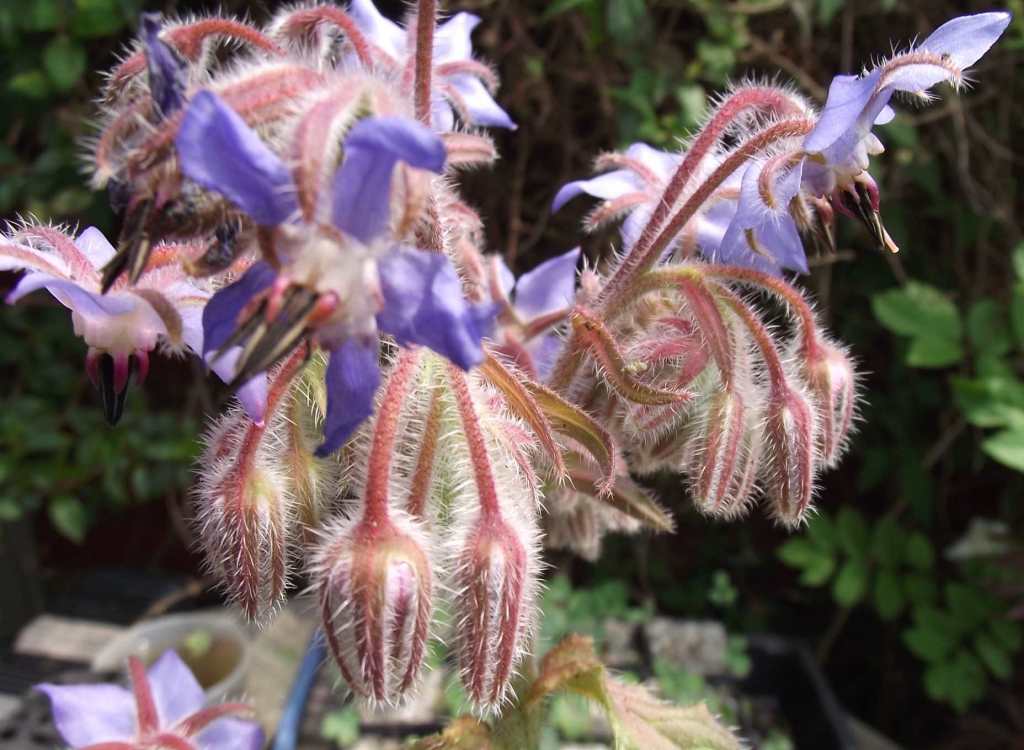
Borago officianalis
I can’t resist the colour and texture of herb borage, I even have a photograph on my wall. This plant is flowering from a cold sowing at the end of January.
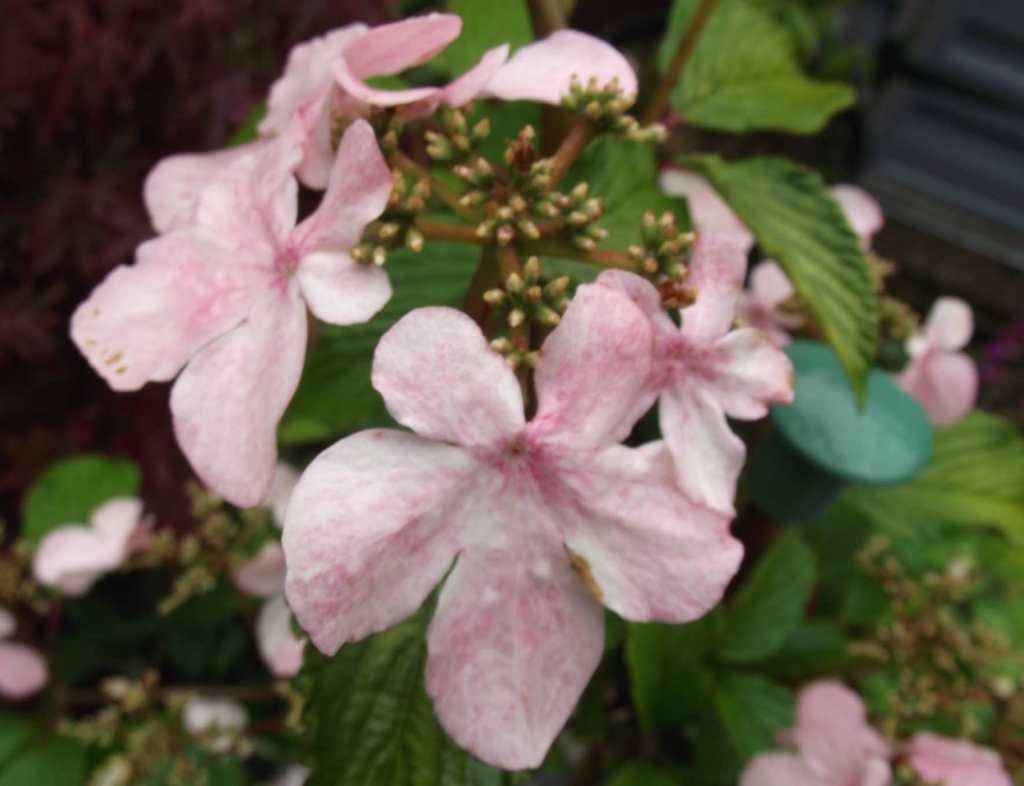
I have cheated a bit here in order to show the various stages of Viburnum plicatum ‘Kilimanjaro Sunrise’. It opens with the petals suffused quite a dark pink, goes to almost pure white, and then fades to a softer pink as it ages. This is a young plant but the flowers lasted quite well. The flowers of Viburnum plicatum f. tomentosum ‘Mariesii’, which flowered earlier, were over very quickly. I think it could have been the long dry spell that caused this to happen.
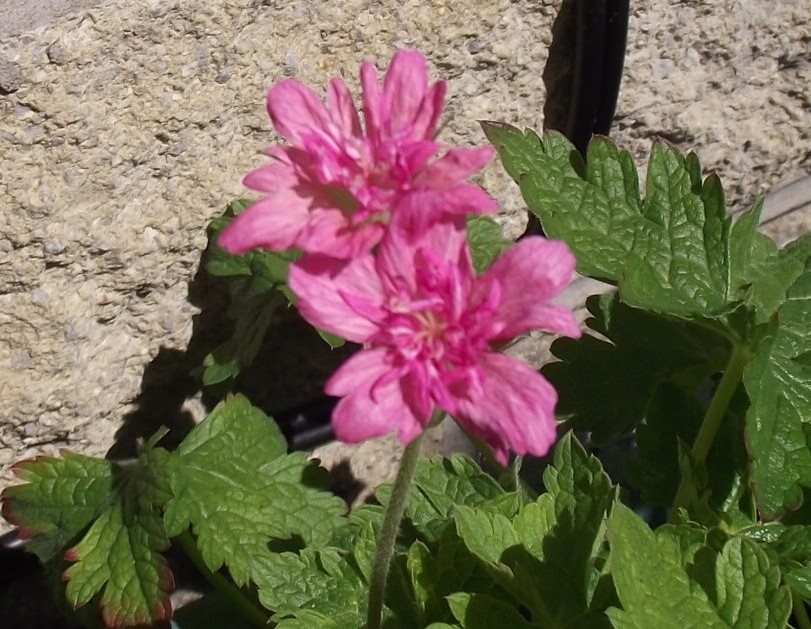
Geranium ‘Southcombe Double’
Geranium × oxonianum f. thurstonianum ‘Southcombe Double’ to give it its full title, is one of a massive group of geraniums which are variants of crosses between G. endressii and G. versicolor, that contain many of my favourites. I think that this is a rather pretty little thing.
This meme is hosted by Jim Stevens who is to be found with all the details and links to plenty of other blogs to enjoy at Garden Ruminations.
When I first started this blog, having scrapped any that had gone before, it was mainly as a brain exercise, plus, not a little, nostalgia. I came across the Six on Saturday meme run by Jim Stephens at Garden Ruminations and, through that, organically increased my presence on the web. This has prompted me to re-publish some of my old material some of which is updated. These posts are purely about the plants that I have grown and photographed, mainly in my previous garden, unless otherwise stated.
Tulips Part 1
This is going to be more of a “pretty picture” post which is, after all, what tulips are about. There are two main groups, first the cultivated tulips which, although the original species hailed from the Near East, were developed by the Dutch plant breeders several hundred years ago. This has continued until the present day. Holland is still the tulip capital of the world, the tulip fields visited by thousands every year. Vast resources were put into developing new colours and combinations. This resulted in inflated prices which caused tulips to become almost a form of currency leading to Tulip Mania and the first ever investment crash. The second group in general cultivation are the specie tulips or botanicals which are generally the dwarf, early flowering types seen in most rock gardens and containers. Please remember the pictures, as always, are of plants I have grown and this is by no means a definitive list.
Triumph Tulips
Tulipa ‘Carnaval de Rio‘Tulipa ‘Don Quichotte’Tulipa ‘Dynasty‘
Tulipa ‘Jan Reus‘
Tulipa ‘Jan Reus‘
Tulipa ‘Jimmy‘Tulipa ‘Leen van der Mark’Tulipa ‘Princess Irene‘Tulipa ‘Ronaldo‘Tulipa ‘Washington’
Flowering mid to late spring Triumph tulips are the largest group, and the goblet-shaped flowers are the ones everybody is familiar with. Some gardeners may not like the use of plastic containers from an aesthetical point of view. I had many plants in a variety of containers, so the factors of cost and weight came into consideration. The other factor to take into account is that I am more interested in the plants themselves hence the garden had a semi-wild look at best.
The “Rembrandt” tulips such as T.Washington and Princess Irene are created by careful selective breeding. At the time of Tulip Mania these colourations were caused by viruses, and there were many crazy methods employed to try and induce these effects. The export of virus infected stock was banned many years ago by the Dutch.
We have had three days of quite persistent rain and everything in the garden has shot up. It seems to be getting drier at the moment plus the sun is back, albeit intermittently. There seems to be quite a bit of blue in the garden, so this week I’m having the blues.
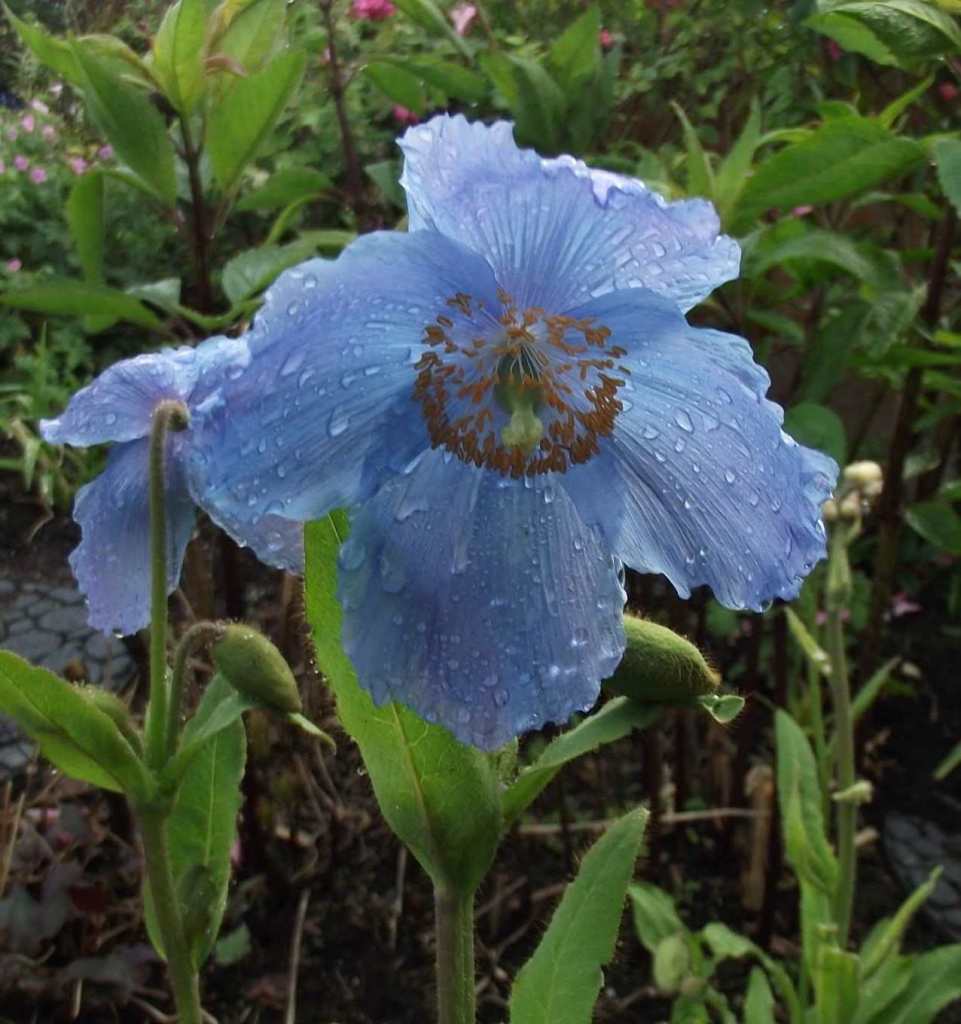
Smaller in stature than ‘Crarae’, Meconopsis ‘Crewdson Hybrid’ has been around for some time. It is believed to be an opportunist cross between M. betonicifolia and M. grandis. The interesting thing about many meconopsis is that although the original cross was made between two fertile species and the resulting plants often produce viable seed, they eventually become sterile in later generations. This means that my plants were produced vegetatively.
Geranium ‘Orion’
Geranium ‘Orion’ is in fact not an interspecies cross but a seedling of “Brookside”. One of what I like to call the “Big Blues”
I don’t think you can beat Geranium ‘Johnson’s Blue’ for strong growth and intense blue flowers. I find it can be rather a rampant grower and be a bit floppy, but I still wouldn’t be without it. As I am sure many of you have experienced geraniums, are notoriously promiscuous. This is an interspecies cross: G. himalayense x G. pratense. Another “Big Blue”!
Geranium ‘Brookside’
Geranium ‘Brookside’ is officially violet/blue so I am including it. Another “Big Blue” this is an interspecies cross: G. clarkei ‘Kashmir Purple’ x G. pratense.
Campanula portenschlagiana ‘Mrs Resholt’
I bought this little bellflower, sometimes known as ‘Resholt’s Variety’, as an edging plant. I will probably move it as it doesn’t seem suited to where it is. The soil is very poor, and I managed to run over it with the recycling bin a few weeks ago! Unfortunately it isn’t in full flower yet but I am running out of blues!
Meconopsis ‘Crarae’
No excuses! I couldn’t resist one last picture.
This meme is hosted by Jim Stevens who is to be found with all the details and links to plenty of other blogs to enjoy at Garden Ruminations.
When I first started this blog, having scrapped any that had gone before, it was mainly as a brain exercise. I came across the Six on Saturday meme run by Jim Stephens at Garden Ruminations and, through that, organically increased my presence on the web. This has prompted me to re-publish some of my old material some of which is updated. These posts are purely about the plants that I have grown and photographed, mainly in my previous garden, unless otherwise stated.
Erythronium
Fifty years ago these true forest floor plants which flower early before the canopy forms, were to my mind, an exotic rarity, the only one generally available was the European native Erythronium dens-canis however the myriad of species and cultivars that have been introduced over the years has now made bulbs of this beautiful genus more accessible.
Erythronium californicum ‘Harvington Snowgoose’Erythronium ‘Pagoda’ (E. tuolumense hybrid)
Unfortunately these are the only pictures I have and don’t do justice to these plants however there are plenty more to be seen on the web. Both are quite vigorous hybrids and are ideal for the average garden where they will perform well. There are a diverse range of species available to the more specialist grower some of which can lend themselves to pot culture in an alpine house such as E. hendersonii.
The common name Dog’s Tooth Violet comes from the shape of the bulbs which should be planted in an open soil which has plenty of humus, preferably incorporating leafmould if available, under deciduous trees or shrubs to give dappled shade. Erythroniums are found in both Europe and Asia but the largest influx has been from the USA where there are two distinct groups one from the east and the other from the west. they are members of the lily family and quite closely related to tulips.
Fritillaria
Fritillaria is a massive and complex genus with only a handful of species in general cultivation although there has been a significant number of hybrids introduced. Fritillaria meleagris (Snake’s head fritillary) is the best known being of European origin.
Fritillaria meleagris
Fritillaria meleagris White form
Fritillaria meleagris is basically a meadow plant and as such benefits from being allowed to naturalise however it can be grown in any rich moist but well drained soil preferably in dappled shade. I hate the term “moist but well drained” as it sounds like an oxymoron however it is difficult to think of other ways of describing it, basically think not waterlogged at any time! Some other species require exactly the opposite coming from much drier climes.
Fritillaria persica
Fritillaria persica has become popular in recent years and can be found in most catalogues. A surprisingly hardy bulb it does need a well drained gritty soil and a position in full sun to do its best. The most popular and impressive specie that is widely grown is Fritillaria imperialis known as the crown imperial and its many varieties. They are big and showy but unfortunately I have no pictures as I have never really felt the urge to acquire it, perhaps a bit too rich for my taste!
A word of warning Fritillaria meleagris is a member of the lily family and the first place to spot lily beetle before it moves onto the lilies a little later in the year.
Iris
The Iris genus is both large and complex, there are about half a dozen sub-genera and some of these are further sub-divided into sections. I did study some botany but, for the sake of simplicity, I think in terms of four main groups, there are the early spring flowering dwarf types, the “Dutch” iris, the large bearded iris and the non-bearded iris which are the ones I have grown the most of.
The most popular irises that are known as Reticulate-bulbed, bulbous irises are Iris danfordiae, Iris histrioides and Iris reticulata, and their many cultivars as shown above. They are all early flowering which adds to their appeal and also make good subjects for the alpine house. A sunny position in an open gritty soil suits them although I.reticulata is less fussy. As they die back during the summer, always try to be aware of where they are planted. The Juno irises also make good alpine house subjects and are extremely beautiful but not very widely grown as they are not easy. Juno irises are known as Smooth-bulbed, bulbous irises and I can only assume that means that they don’t have the striations of the reticulate species.
My garden was very shady so I never grew the big showy bearded iris despite them being very popular because of the wide range of varieties available. Unfortunately they only grow well when the rhizomes, which sit on the surface, get a good baking during the summer months which just wasn’t possible. Likewise the bulbous iris known as Dutch Iris, which you see advertised in the catalogues, is principally a plant which is best container grown and doesn’t lend itself to shady borders. Growing a plant that you already know isn’t suited to your conditions can only lead to disappointment. Incidentally Dutch Iris (Iris hollandica cultivars) are used to supply the cut flower industry.
The irises that thrive in damp shady conditions come from Eastern Europe, China, Japan and even the UK.
Iris ‘Blauewiesmotte’ Sino-siberian type.
Iris chrysographes ‘Black Gold’
Both of the above are Siberia or Sino-siberian irises, to anyone used to seeing the large bearded Iris they look like any fibrous-rooted plant but are in fact rhizomatous. Although I.chrysographes is very distinctive and the specie being found in the wild. The likes of Iris ‘Blauewiesmotte’ is one of many cultivars originating from such as I.sibirica whose origins could be lost in the mists of time. They all thrive in damp cool conditions in any reasonable soil.
My favourite iris is the Japanese Water Iris, Iris ensata (formerly I. kaempferi) it has very similar requirements to the Sino-siberians but, although it prefers more boggy conditions, I wouldn’t be inclined to use it as a pond marginal like our own Yellow Flag. The flowers are enormous and carried on sturdy stems on a fairly compact plant.
Iris ensata The Japanese Water Iris
Finally one of our very own. Along with Iris pseudacorus (Yellow Flag), The Stinking Iris, Iris foetidissima is one of the only two species to be found wild in the UK. A bit of a curiosity and not everyone’s cup of tea, I have never noticed the “stinking” bit, it sits in its own section of the iris taxonomy. Along with the others it likes a damp spot and although the flowers are fairly insignificant its crowning glory are the seed heads which are used in flower arrangements.
Just a little point, if you are tidying up iris plants when they have died back make sure to have a pair of scissors handy as the unsightly dead leaves cling tenaciously to the crown.
Book reviewer and garden enthusiast. Updates from my Hampshire garden. Usually talking about books and plants. People do not forget books or flowers that touch them or excite them—they recommend them.




































 A Plantsman's World