After the heavy rain, not as bad here as in the south, temperatures have been quite good hovering around 15°C and remaining dry although it is forecast to go down to around 10° toward the end of the week with light rain tomorrow. I am still planting out some hardy perennials I have raised from seed plus a few geraniums that I have acquired as the soil is still warm.
Phlox cultivar
Staple of the herbaceous border, phlox always remind me of autumn shows where the open cut flower class used to be full of them.
Unknown Acer
One of two acers I bought at a knockdown price from Aldi and brought with me to the new garden. This one is still in a container.
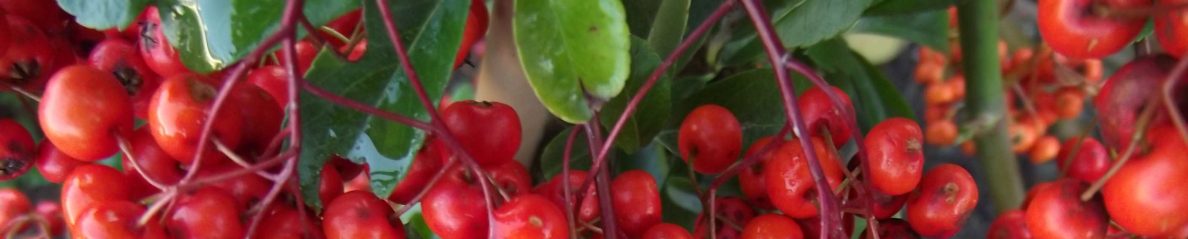
Pyracantha ‘Red Column’
The king of autumn berries, this is a plant I bought last year as I have never been without one for as long as I can remember.
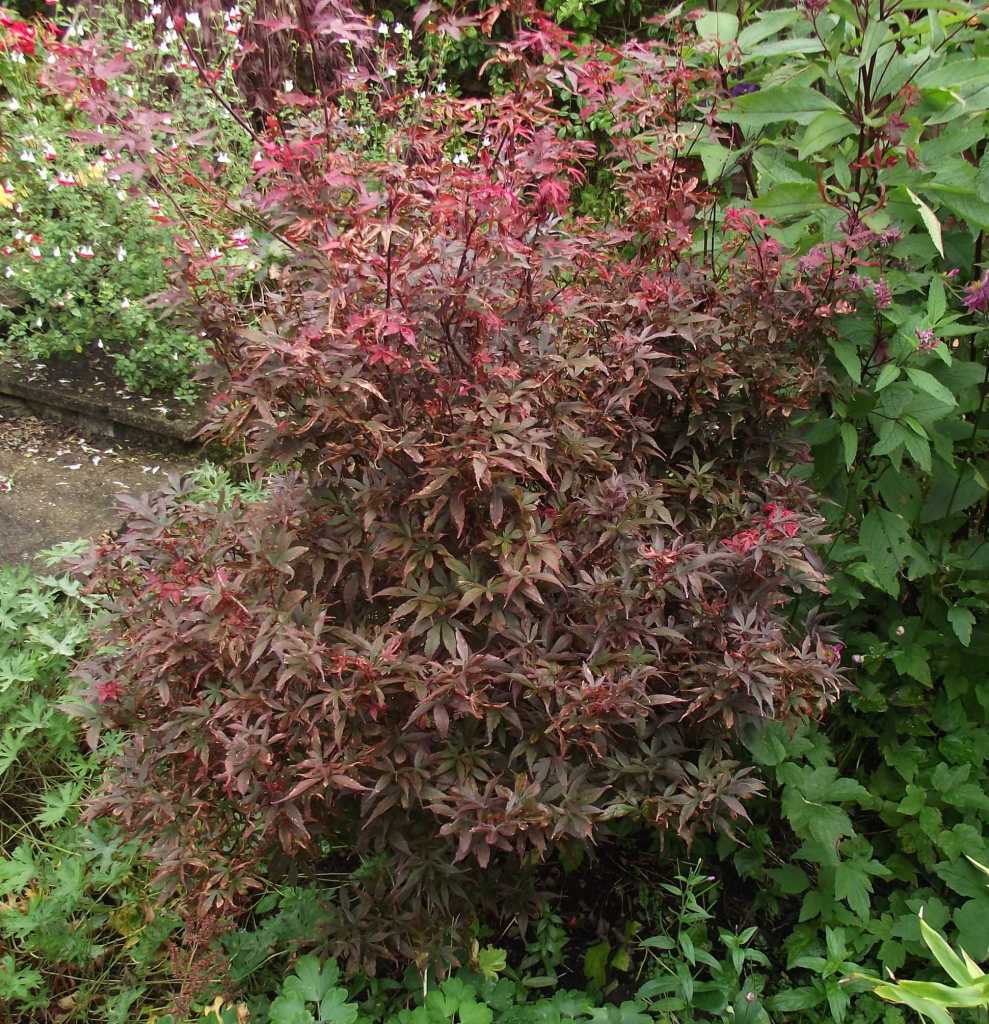
Unknown Acer
The other cut-price acer planted in the ground this time, I thought I had better take a picture before the frosts.
Elaeagnus x ebbingei ‘Gilt Edge’
Something for winter colour, I tend to think of elaeagnus as being a less flamboyant brother to the euonymous.
Euonymous japonicus ‘White Spire’
More for winter colour, this is a fairly new introduction I think which caught my eye last year.
Unfortunately I think I have almost exhausted the available plants for now in my small garden, so fingers crossed, I might manage one more Six on Saturday.
This meme is hosted by Jim Stevens who is to be found with all the details and links to plenty of other blogs to enjoy at Garden Ruminations.
I have come to the conclusion that this retrospective of the photos from my previous garden is not necessarily a good thing, the more I see of it the more I miss it. Nostalgia has set in!
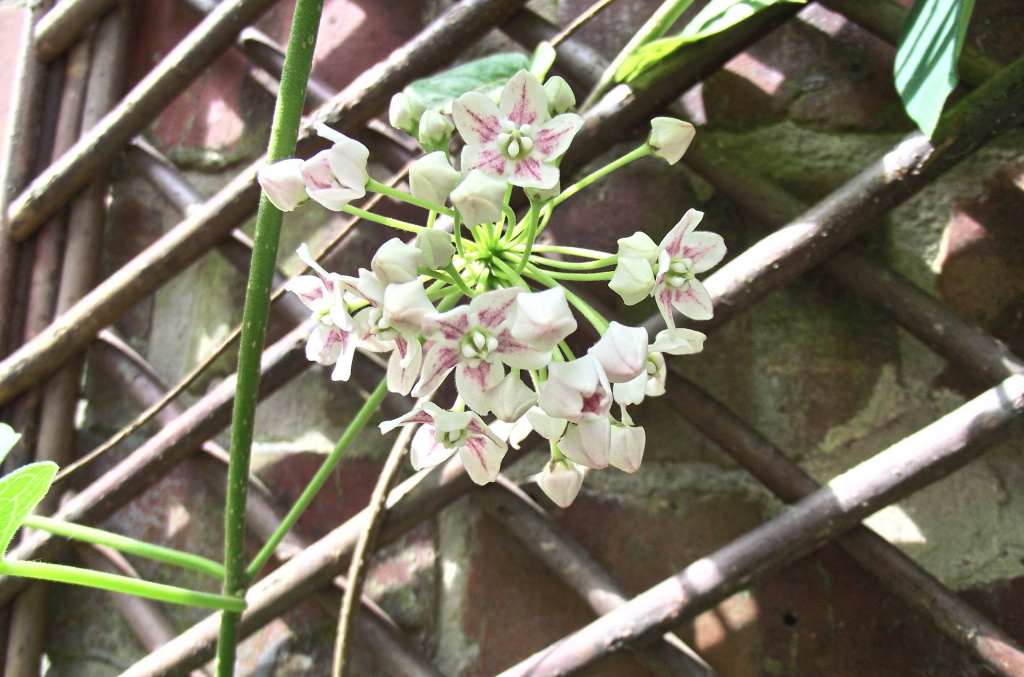
Dregea sinensis
Dregea sinensis
Here is a real oddity, a beautiful almost hardy evergreen climber which I was lucky enough to grow from seed. Hailing from China it has scented hoya-like flower clusters and is thought to be related to stephanotis, although there appears to be some debate about its true nomenclature. Plants are available from some of the more specialist nurseries, certainly worth a go.
Elaeagnus
Elaeagnus x ebbingei ‘Limelight‘
Elaeagnus are not the showiest of shrubs, the attractive foliage tends to be rather muted, but they do make a good foil for other showier plants and make useful hedges particularly when salt tolerance is required. Originating mainly from China, there are several established hybrids and their cultivars available which bear fragrant blossoms during the summer. They are a good choice as a tough, resilient garden stalwart.
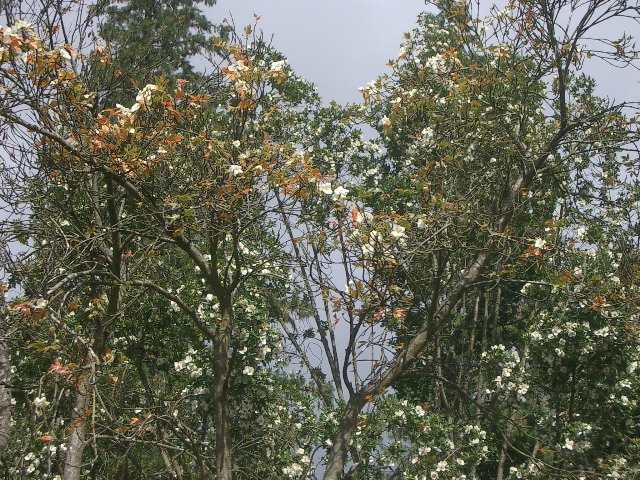
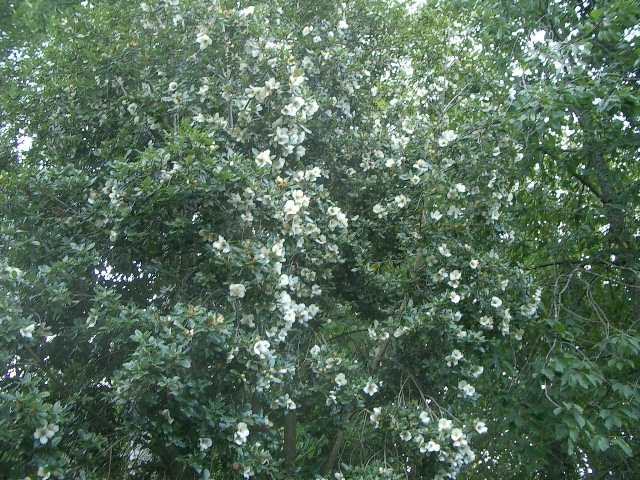
Eucryphia
Eucryphia glutinosaEucryphia x nymansensis
Definitely not in my back garden, but photographed on the west coast of Scotland, I have always wanted to try eucryphias but is something I no longer have room for. They all prefer a moist soil in full sun and, as they originate from S.America and Australia, a mild climate. Generally evergreen trees although E.glutinosa is best described as semi-evergreen. Not for the small garden.
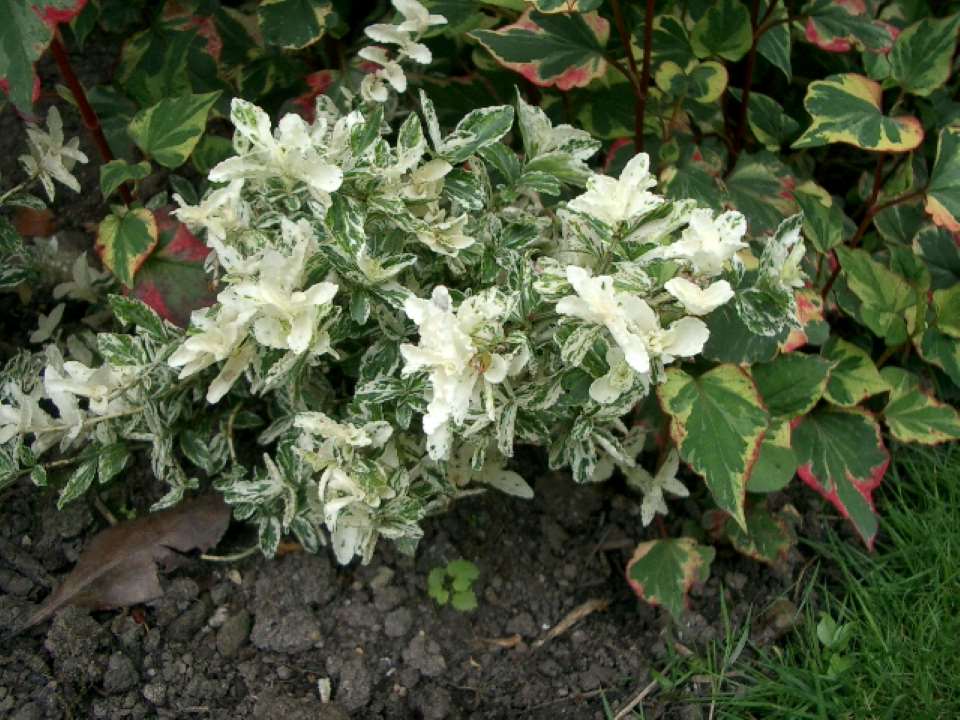
The spindle trees originate mainly from E.Asia but are now widely distributed. Tough, easy to grow shrubs, their cultivars exhibit a wide range of foliage colours. They are very adaptable and, depending on the variety, can be grown as anything from single specimens to use as ground cover. They always put me in mind as being the showier cousins of the elaeagnus.
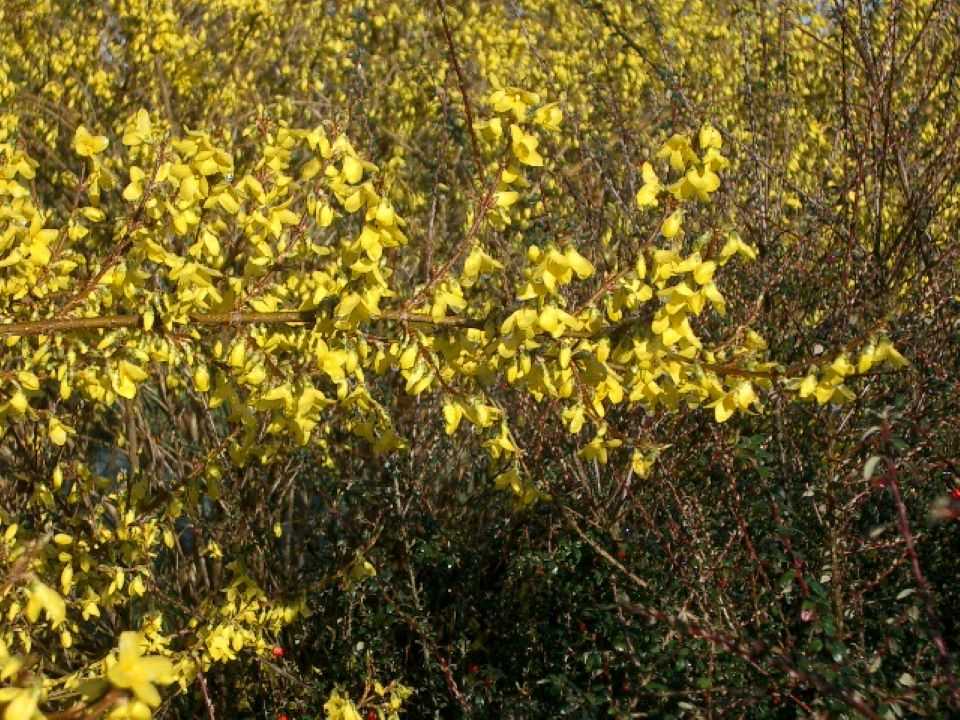
Forsythia
Forsythia x intermedia
In my experience too many “garden snobs” tend to look down on the likes of forsythia as a “common” garden plant forgetting that 60 years ago forsythia and its ilk were very often all that was available to the ordinary gardener to brighten up the day. Personally I regard it as a shrub for a large garden as there is far too much down-time when not in flower on a not too attractive bush, one certainly wouldn’t want to make it a focal point. Moving on there are now many cultivars available as the breeders have picked up and carried the torch but it still comes down to why is it “common”? Because it is popular and does the job as a harbinger of spring like a familiar old friend.
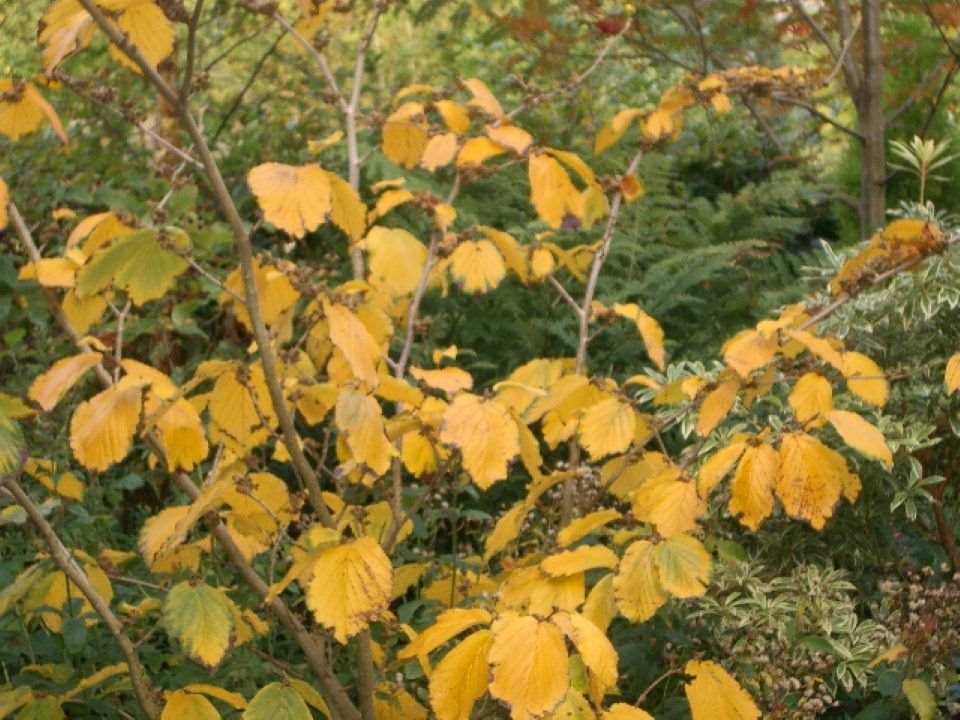
Hamamelis
Hamamelis mollisHamamelis mollis
Chinese witch hazel gives both fragrant flowers at a time when the garden needs them along with the turning winter foliage. A bit too vigorous for some gardens, there are now however many cultivars available, some are bred for the smaller garden and even patio and have a developed a wider spectrum of flower colour including red. A good, tough, deciduous shrub.
To me glyphosate, now synonymous with RoundUp is the ultimate herbicide, its introduction in the 1970’s by Monsanto to be used with crops which had been genetically modified to be resistant to it, was a major breakthrough in weed control. Since the 70’s its use has diversified including on crops that have ripened unevenly so they can be harvested and as a major constituent of no-till agricultural practice. Although of prime importance to agriculture, it has been used successfully in the garden for many years until fairly recently when there have been claims that it is a carcinogenic and, as sure as night follows day, the litigation and subsequent bad publicity have followed.
Since 2018 there have been several high profile law suits in the United States against Monsanto, now a subsidiary of Bayer, because of an alleged cancer risk from the use of RoundUp and specifically its main ingredient glyphosate. The cancers in question are non-Hodgkin lymphoma and those related to it, and most allegations seemed to be based on a lack of warning on the product that it posed a cancer risk or even that the company deliberately withheld the fact. Although some studies suggest a link between glyphosate and non-Hodgkin lymphoma it has not been established and still remains open to debate. Even though Bayer offered up around $11billion to settle outstanding claims in 2020, there are still thousands that remain unresolved. Bayer has also removed its glyphosate from the amateur gardening market, but do not see this as admitting culpability as they still claim that it is safe and continue to supply the farming community.
Several countries in Europe have banned glyphosate for household use, including France, Holland and Belgium whilst Germany is moving toward restricting its use in public spaces and eventually a ban. Controversy arises from the fact that many agencies throughout the world back the findings of the EPA (Environmental Protection Agency) that glyphosate is an unlikely carcinogenic the primary dissenter, it would appear, is the International Agency for Research on Cancer which lists it as a probable human carcinogen. It must be noted that IARC is part of the WHO (World Health Organization) who in turn is an arm of of the UN (United Nations) and as such do not have the power to legislate in this case, although I am sure they would very much like to, this is the responsibility of the appropriate agency in each country or even state. Two major factors must be taken into consideration, firstly that the use of glyphosate is so widespread and such an integral part of modern farming methods it is currently impossible to replace it with anything remotely as effective, (see Rothamsted) and secondly, to prove or disprove the case is impossible simply because testing isn’t practical on human subjects and any results from animal testing would be purely conjecture, in effect it is a gigantic grey area. The saga roles on, Bayer trying to push for a Supreme Court judgement in their favour whilst handling yet more claims against them.
Despite there being no legislation in force, in the UK many supermarkets, garden centres and other retail outlets have removed RoundUp from their shelves in a mixture of independent and collective action but whether this is to appease their consciences or to appease the green lobby it is hard to tell, similar action having been taken with bagged peat.
On the other side of the coin in 2023 the EU has extended glyphosate’s licence for a further 10 years as member states reached a stalemate. In Brighton and Hove, always leaders when it comes to green initiatives, the banning of the use of glyphosate in 2019 and the decision to control the problem it has with weed growth on its pavements and roads manually has resulted in parts of the city looking “completely wild”. Glyphosate has been approved by the city council earlier this year for targeted use and with the exception of open spaces and play areas to get things back under control.
The warm spell that we enjoyed is at an end, day temperatures have dropped by around 5°C and this morning my car is frozen over, signs of approaching winter are definitely upon us. To be honest I am not a fan of this time of the year and would be quite happy to hibernate ’til spring, not the least because I am now going to find it very hard to find subjects for Six on Saturday. Methinks I may have to go a wandering!
Prunella vulgaris
My current dwelling is built on an old railway yard, in fact I planted the back garden with a pick and trenching spade, so I do err towards tough hardy plants with a few treasured exceptions. Geraniums are top of my list but the little prunella, a British wildflower, fits the bill, it’s tough, has a long flowering period and is attractive to bees and other insects.
Hardy Fuchsia unknown
When I first moved into my little bungalow there was a broken down fence in front of the property, the first thing I did was to rip it out and plant a Berberis x stenophylla hedge. This fuchsia must have been planted against the fence and survived all the upheaval unnoticed, so I think it has earned its place.
Coreopsis uptick yellow and red
What’s left, hanging on in there after being absolutely battered by the storm. I have planted these this year for the first time to give some late colour along with the rudbeckias.
Anemone hupehensis var. japonica ‘Pamina’
Another late flowering stalwart Japanese anemones can be invasive, but I find this rather ragged “double” less rampant. Unfortunately this flower stem is fighting its way through a bigger neighbour to show itself. Also known as Anemone x hybrida ‘Pamina’. Unfortunately the wind caught the bloom at the bottom of the picture and it came out a little blurred.
Persicaria ‘Red Dragon’
I like persicarias and particularly ‘Red Dragon’ because it is different, this is another plant I brought with me from my previous garden.
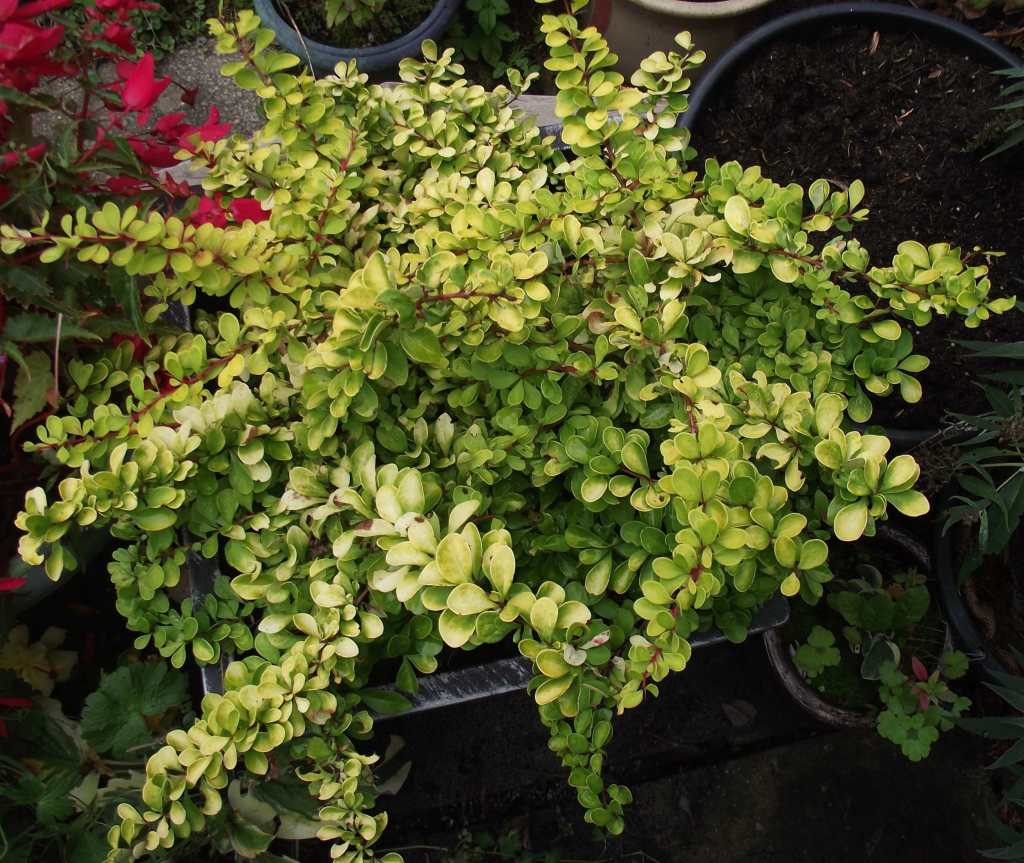
Berberis thunbergii ‘Diabolicum’
This berberis makes up the numbers, totally the wrong time of the year as in spring the new growth has fiery red tints, but I thought I better catch it before the leaves drop.
This meme is hosted by Jim Stevens who is to be found with all the details and links to plenty of other blogs to enjoy at Garden Ruminations.
We are having a remarkable spell of dry warm weather at the moment, misty mornings clearing to blue skies with the occasional overcast day still making above 17°. Here are a few subjects which are still going well before we get the inevitable thunderstorm, or at the very least heavy rain, to disturb the peace and tranquillity.
Rudbeckia fulgida var. sullivantii ‘Goldsturm’
Where would we be without rudbeckias for autumn colour?
Sedum ‘Autumn Joy’
Another traditional autumn flowering plant. I was going to give it the chop this year but left it too late however the stems have stayed strong and not flopped as has happened before. Note the solitary insect, Joe Pye next to it is covered in bees and several butterflies, obviously the High Table!
Rose ‘Zéphirine Drouhin’
‘Zéphirine Drouhin’ has been with me for years, it was the only rose that survived in my old shaded garden. It climbed up a cast iron railing that supported the handrail for the steps up to the backdoor and as such did get some sun and wasn’t in the shade like much of the garden. This allowed it to only be slightly affected by the plethora of fungal diseases that put an end to any attempt to grow roses, or even photinias, anywhere else.
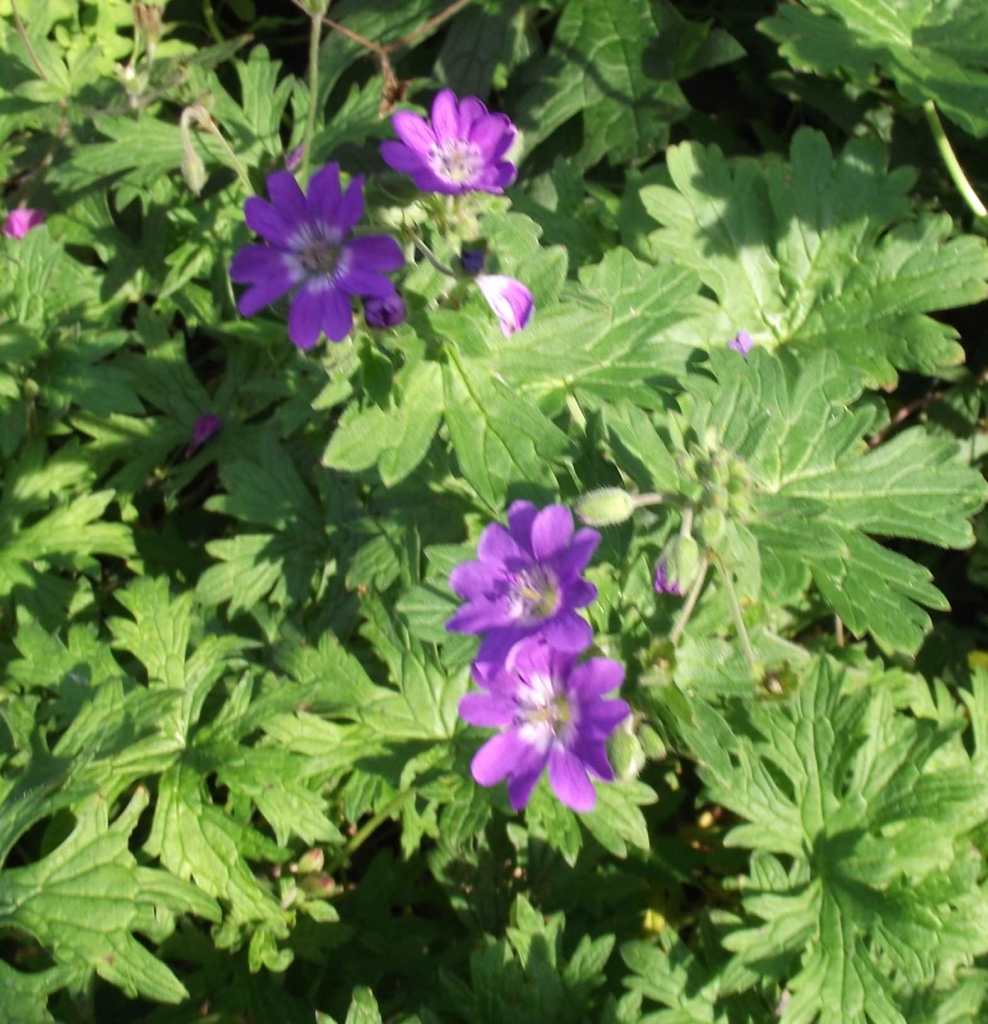
Geranium ”Patricia’
Geranium ‘Patricia’ one of my favourites, note the G. pyrenaicum intertwining itself.
Geranium pyrenaicum
I allow Geranium pyrenaicum to seed itself as it will, the hedgerow geranium, now found growing wild in the UK is such a dainty little thing and any unwanted seedlings are soon pulled up. I did have the white form, but it has absented itself.
Peacock on Joe Pye
I make no excuses for including Joe Pye Weed again this week, its only there to show off the peacock!
All for this week, fingers crossed for next week! This meme is hosted by Jim Stevens who is to be found at Garden Ruminations where he is chewing things over.
Smoke bushes are grown for their foliage colour and their plumes of flowers in summer which give the appearance of smoke. Although the popular cultivars are grown from C. coggygria they do vary in form quite a bit. Of the two examples shown, I find ‘Grace’ to have a very sprawling habit, whereas ‘Royal Purple’ makes a much neater bush. Both of these have an NHS Award of Garden Merit.
Cotoneaster
Cotoneaster ‘Chinese hybrid’
The only picture I have of these versatile shrubs is that of what was described as a”Chinese Hybrid” which was the name given to plants of generally a mixed parentage from the tall growing species in the 1960’s and 70’s. Along with these Cotoneaster horizontalis was very popular at the time. This particular specimen was adjacent to my drive and when the birds descended during the berry season it was not the place to have your car parked!
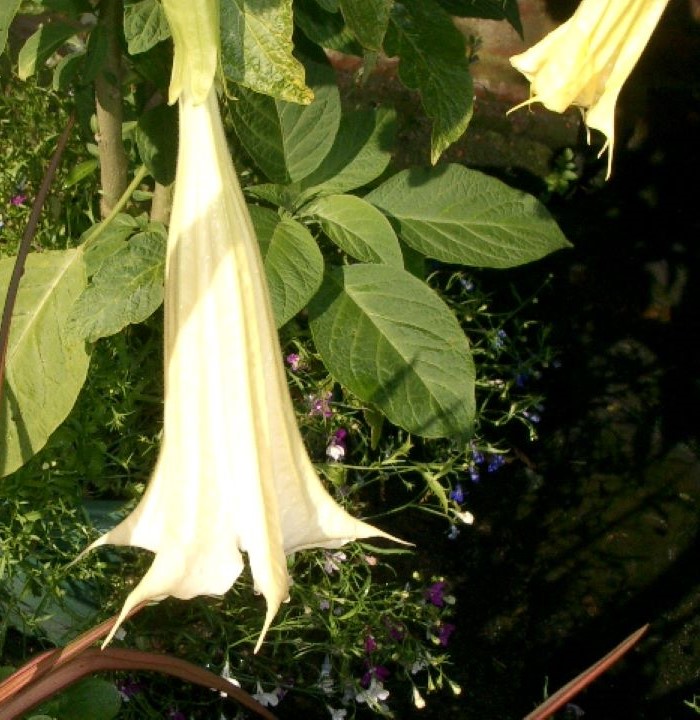
Datura
…… or Brugmansia. I wasn’t going to include this plant but it is always intriguing to look at which is which. Ostensibly Daturas are herbaceous plants bearing upright trumpets whereas Brugmansias have woody stems forming shrubs or small trees from which the flowers hang down. This being said, the plant shown is herbaceous, sown as Datura but the flowers hang down? Both are half-hardy at best in a very mild position and generally need moving indoors in the winter.
They may be known as Angel’s Trumpets but they are all VERY POISONOUS and suit one of their other names Devil’s Trumpets much better.
Davidia involucrata
Davidia involucrata
Not pictured in my garden, the paper handkerchief tree, is a medium size deciduous tree originating from China grown principally for its large white flower bracts giving it an almost ethereal look.
Dianthus
Dianthus barbatus nigrescens ‘Sooty’Garden pink
……………and now for something completely different, a common or garden pink, backbone of the cottage garden, available in hundreds of varieties and a rather neat biennial Sweet William grown on a whim.
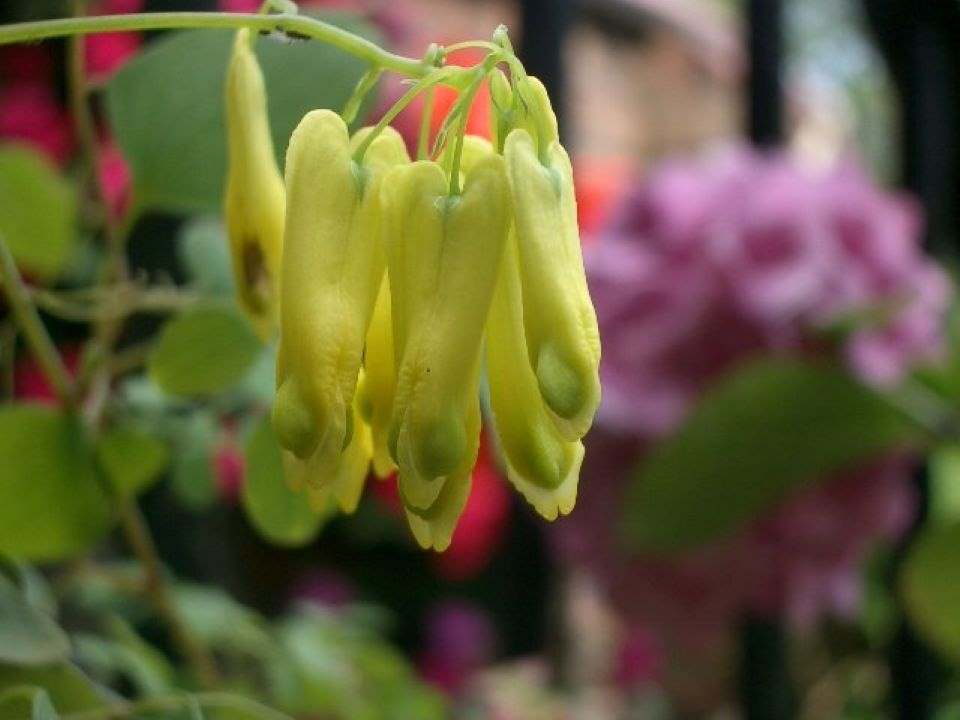
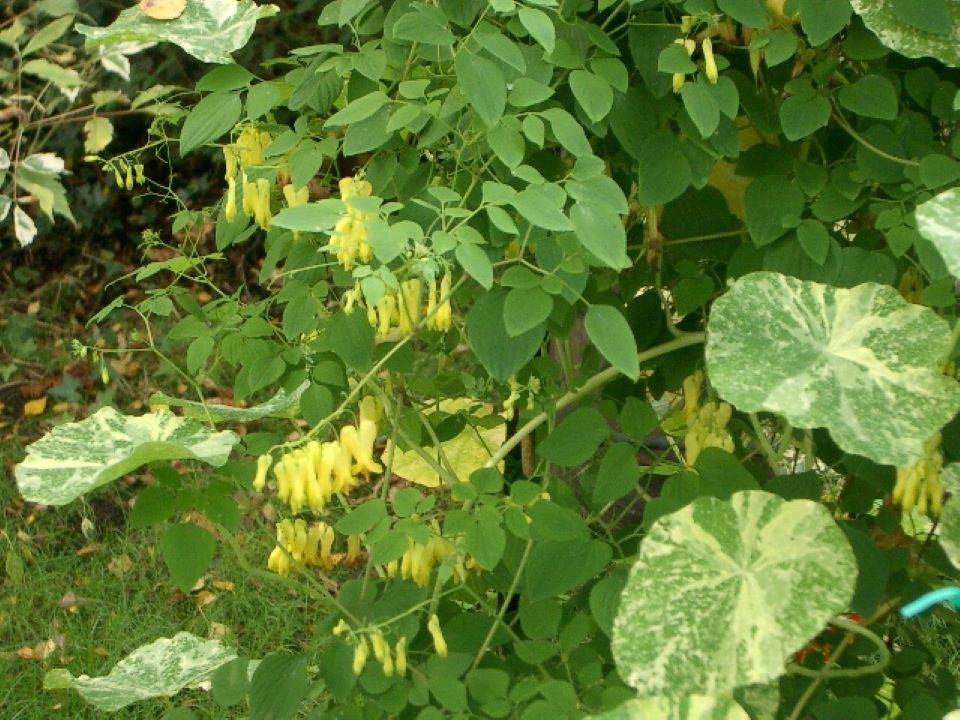
Discentra
Discentra scandensDiscentra scandens
Discentra spectabilis or Bleeding Heart has been dealt with in an earlier chapter but here is a climber which I was fortunate enough to obtain seed of. The genus Discentra has now been turned upside down, sorry revised, so Discentra scandens is now Dactylicapnos scandens and our old familiar bleeding heart is Lamprocapnos spectabilis, when will it end! D.scandens by the way, is not frost hardy.
This is the first time that I have contributed to this meme hosted by Jim Stephens of Garden Ruminations and I have, without doubt, started at the wrong time of the year so it could well be the first and last until next season depending on what I can find. My current garden is literally postage-stamp size compared with my previous one so I think I may struggle.
Geranium ‘Rozanne’
One of my favourite trouble free hardy geraniums certainly worthy of all its accolades.
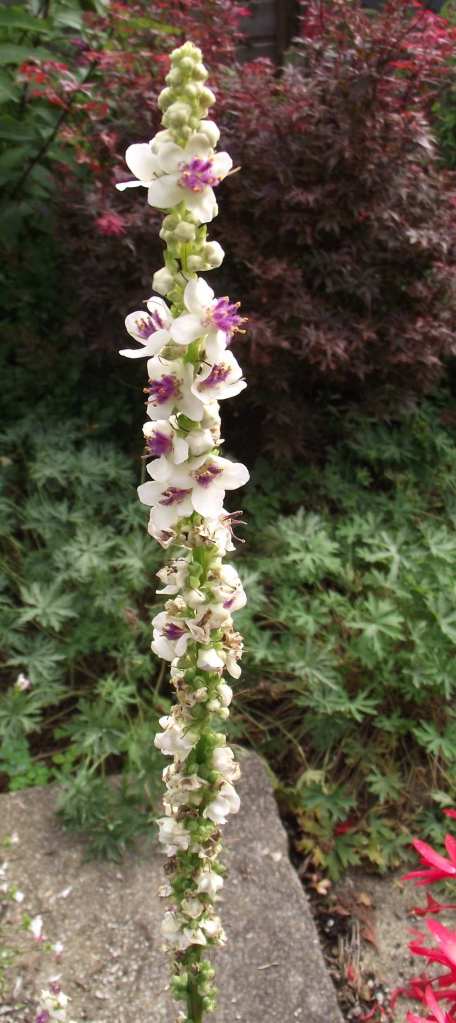
Verbascum self-seeded
I grow several verbascums and let them seed around, the garden is tiny but acts as an oasis for butterflies, bees and other insects and my verbascums, although regarded as “weedy” by some are a great attraction. This is the last remaining flower-spike on the plant.
Salvia officinalisSalvia x microphylla ‘Hot Lips’ or Salvia x jamensis ‘Hot Lips‘
Two for the price of one, some late flowers on the sage which is actually growing out of a crack between paving stones, and ‘Hot Lips’ one of my favourite ornamental sages, so reliable, grows from ground level every year. Both are bee magnates.
Geranium x oxonianum ‘Wargrave Pink’
I love the colour of this robust hardy geranium, flowers all season but down to the last few now.
Helleborus argutifolius ‘Pacific Frost’
I can’t wait to see how these young plants turn out. I cold sow all my hardy perennials but this year’s appalling weather definitely retarded the development of quite a few of my spring sowings. Talking of which, we had an air frost on Thursday night , one month earlier than last year.
Eupatorium + Red AdmiralEupatorium purpureum subsp. maculatum ‘Atropurpureum’
Another two for one, Joe Pye Weed. This big striking American plant is too coarse for many people’s taste, but I love it. I had it in my last garden where it was far less prominent and have two in my present one. The plant dominates half of the front garden at this time of the year, but is covered with butterflies and other insects in my “oasis”. Plenty of Red Admirals and also Peacocks have been almost resident. The geneticists have been at it again and poor old Joe Pye has become Eutrochium maculatum.
I might just mange a six next week with a bit of luck.
For the last ten years or so I have been increasingly in love with this genus of beautiful flowering plants. They are so adaptable, some more than others, to what are best described as “difficult” conditions some members of the genus have actually seemed to thrive for me rather than just tolerate dry shade which is one of the most difficult areas to cater for. There are both evergreen and deciduous species many with colourful leaves, particularly when just emerging in the early spring and sometimes again in the autumn. Many variations are now available sporting different flower combinations giving a wide range of “mini-orchids” to choose from.
Epimedium grandiflorum ‘Queen Esta’
Deciduous cultivar Queen Esta prefers a moisture retentive soil although I have grown it within a few feet of the base of a birch tree as shown in the picture without any trouble however during very dry spells the area received some watering.
Epimedium x rubrum
Much as I like the flowers of Epimedium x rubrum I have never grown a robust specimen and I normally don’t have a problem with epimediums, in fact the new plant I have now is not doing well compared with its companions. This plant is evergreen in that the leaves last the winter and, although preferring moist soils, should withstand drier conditions.
Epimedium x warleyense ‘Orangekonigin’
Epimedium x warleyense ‘Orangekonigin‘
Epimedium x warleyense from the legendary Miss Willmott’s garden was the result of a cross between two western species, the cultivar ‘Orangekonigin’ is a fairly recent introduction. Seems to thrive in either moist or dryish soils. Unfortunately the new foliage pictured had been visited by Mr. Slug!
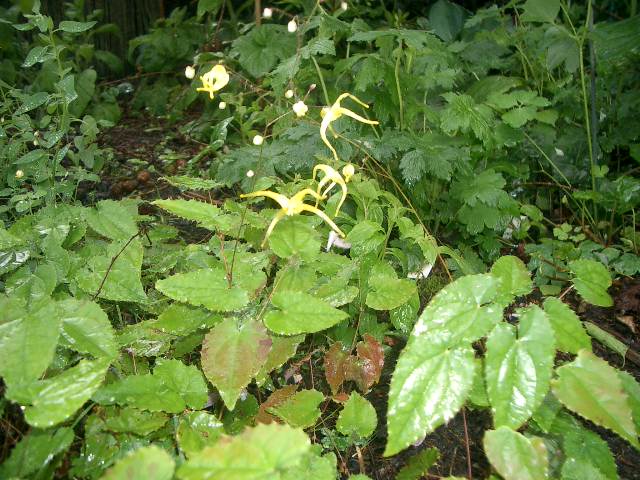
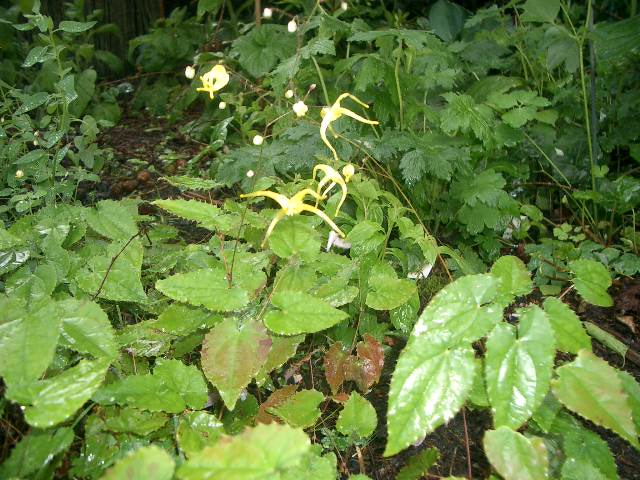
Epimedium davidii?
I am not sure if this actually is E.davidii but the combination of the yellow spider-like flowers and the glossy toothed leaves makes for a really useful plant. I had this in my mind as E.rossii but it could have been a case of word association as I knew someone called David Ross, who knows? E.davidii is from China and therefore prefers moist conditions although, again, the plant pictured, which thrived, was growing in fairly dry shade.
Epimedium grandiflorum ‘Lilafee’
E. grandiflorum ‘Lilafee’ is a cultivar from the same stable as ‘Orangekonigin’. The lilac coloured flowers are suspended over glossy leaves with toothed edges, seems to grow best in moist conditions.
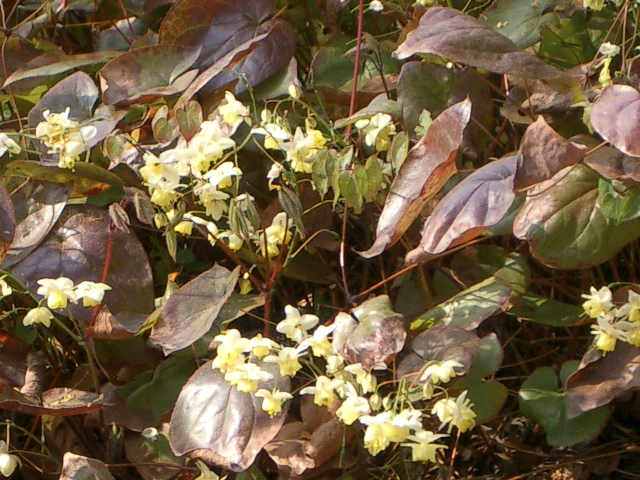
Epimedium x versicolor ‘Sulphureum’
Delicate flower spikes over copper foliage which tends to green up during the summer only to revert to copper again as winter approaches. Although evergreen the foliage does tend to look rather tatty by the spring.
Epimedium x youngianum Niveum AGM
Neat little plant growing to about 8″, delicate pure white flowers hang off wiry stems which are reddish in colour. prefers a moist spot to thrive. The new leaves can give some good colour.
It is a matter of preference when or if one decides to remove the old foliage, personally I prefer to leave it on until the spring and then remove it just as the new foliage and flower stems are appearing being careful not to cause any damage to the new growth. This allows a good view of the flowers and the colours of the new leaves, leaving the foliage intact can detract from the display in some types which carry their flowers closer to the base of the plant.
Callistemon citrinus or the Australian Bottle Brush displays the distinctive flower-heads over the neat evergreen scented foliage. This remarkable specimen was found on the west coast of Scotland were it has thrived in the mild climate. I have tried to grow it at home but only managed a couple of winters before its demise.
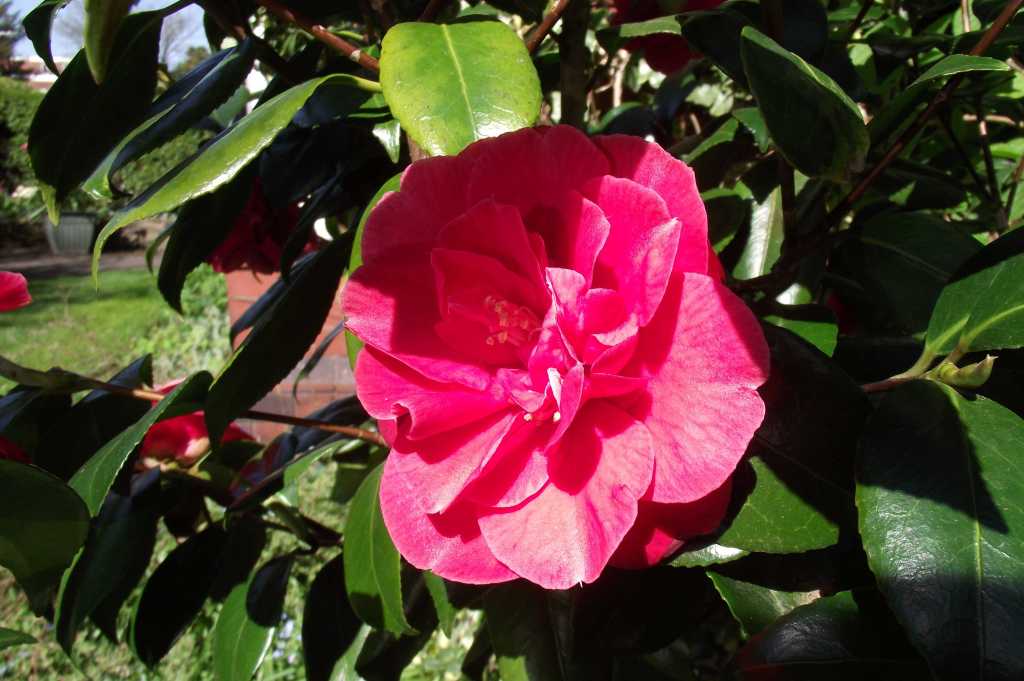
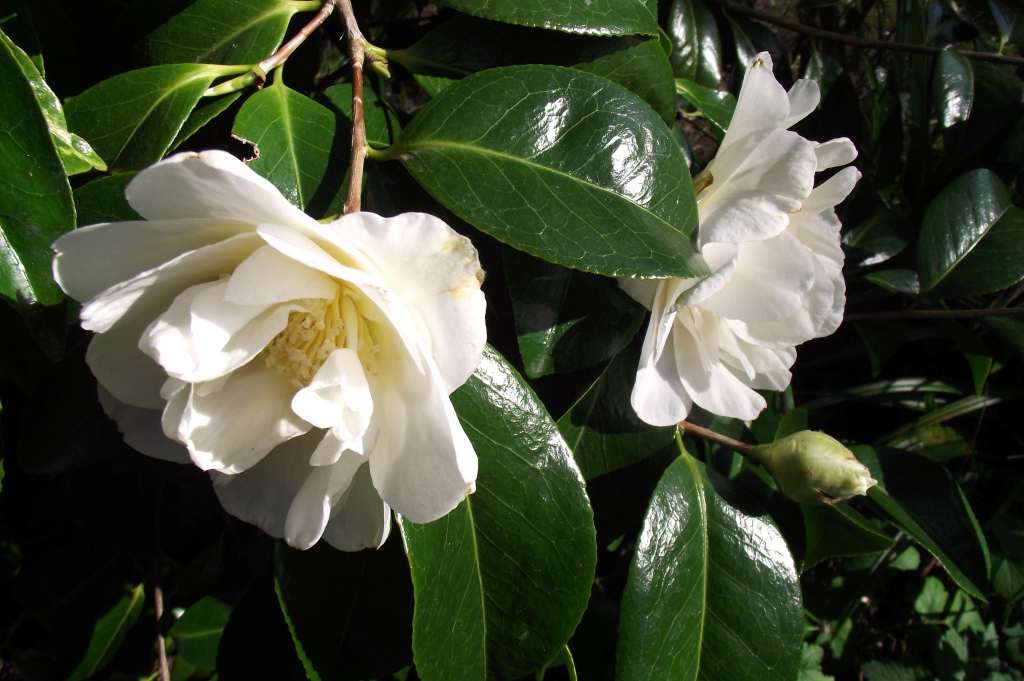
There are hundreds of cultivars of the most common camellia – Camellia japonica, many of which can become substantial shrubs or even trees. Although not in my garden I have included a picture of Camellia x williamsii ‘C F Coates’ out of interest, not for the flowers unfortunately, but for the distinctive leaves denoting it as a “fishtail camellia”.
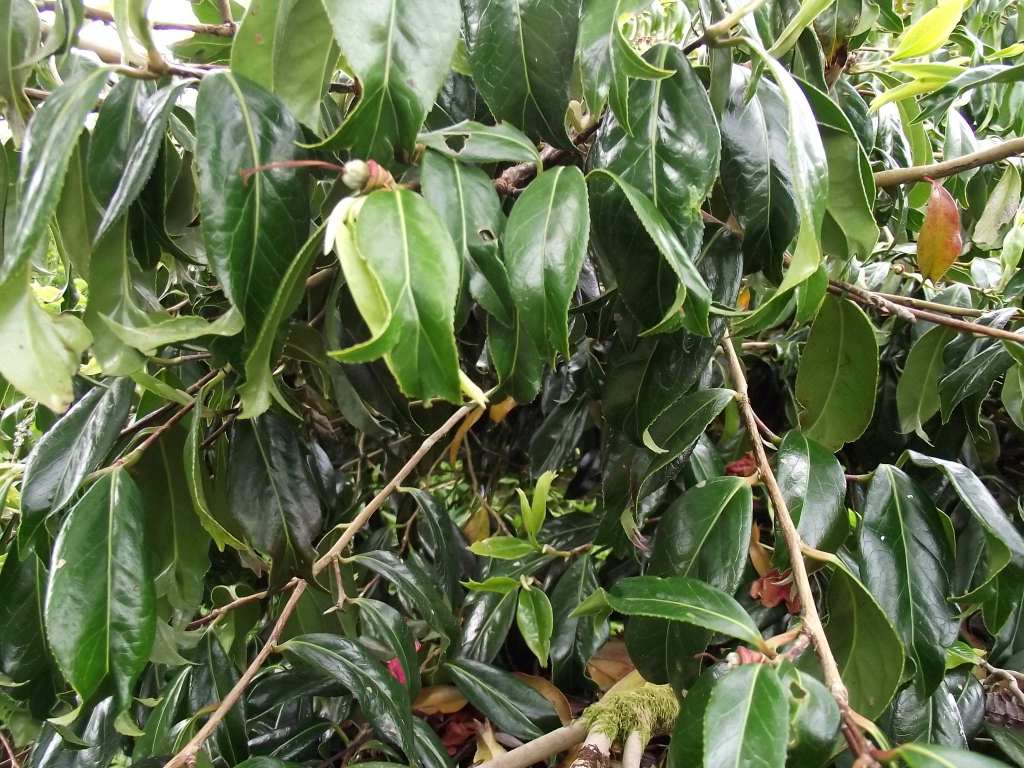
Cushion scale and sooty mildew.
Camellias are another genus which can be susceptible to the dreaded cushion scale pest and subsequent sooty mildew.
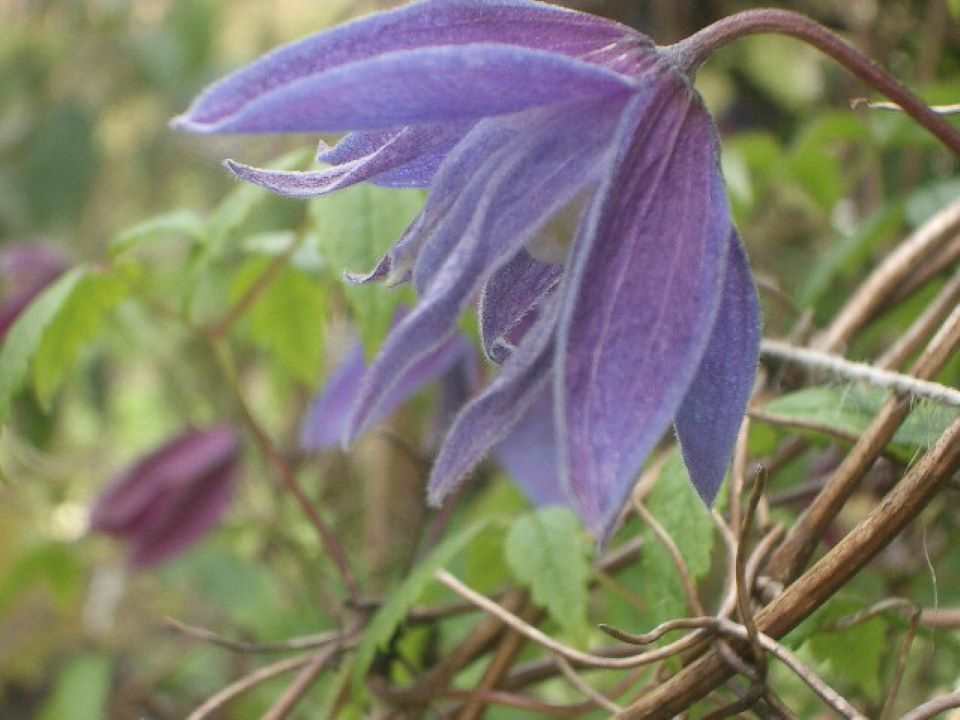
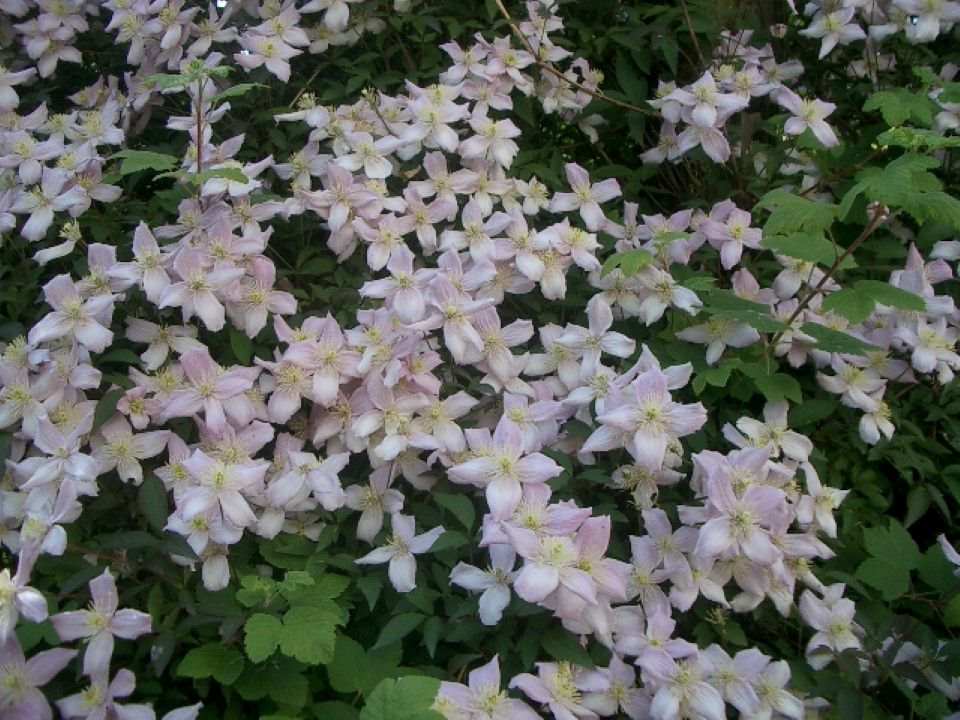
So much has been written about clematis that there is little point in me adding to it. These versatile plants suit every occasion from growing the rampant C.montana and its many cultivars to cover walls, fences or even buildings to growing the large flowered hybrids just to admire their beauty, a clematis can be found to fit the bill. They are generally trouble free, although an attack of the dreaded clematis wilt can be devastating. My personal favourite is Clematis tangutica in particularly the ‘Lampton Park’ form.
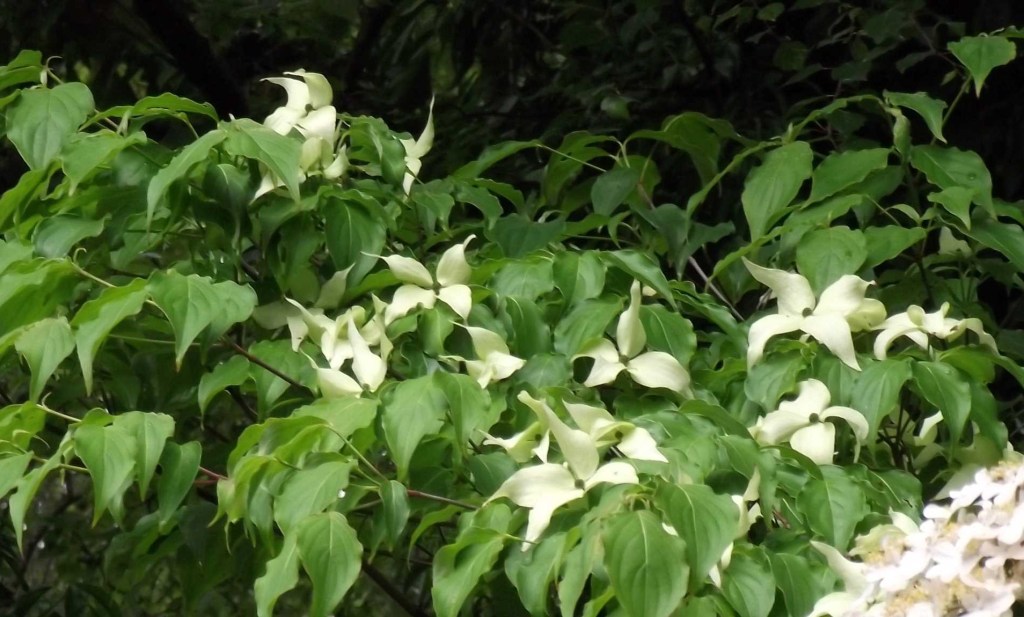
Cornus
Cornus kousa
Dogwoods, mainly Cornus alba, a native of Siberia, and its forms, are grown extensively for landscaping and general garden planting for their winter bark colours, ranging from yellows to deep reds. For some reason I have not taken pictures of those I have grown, the only one I have being of Cornus kousa or the Japanese dogwood which is a small tree with colour in its seasonal foliage and from its pure white bracts which later reveal clusters of strawberry-like fruit, making it an attractive proposition for the small garden.
Book reviewer and garden enthusiast. Updates from my Hampshire garden. Usually talking about books and plants. People do not forget books or flowers that touch them or excite them—they recommend them.





































 A Plantsman's World