We have had very little rain here in High Peak having avoided the downpours which have affected other areas and I am now having to water all my containers and pots on a regular basis. The forecast is currently showing an overcast day today (Saturday) but then temperatures are set to go into the twenties throughout next week. I am still very wary of a late frost even though it seems unlikely at the moment. I won’t be happy until we get to the last week of May.
Acer
I love this time of the year, the acers are now fully out and everywhere you look trees are bursting into life and the landscape is greening up. A gardener’s week is never done it seems, with the stronger sun and possibility of a late frost the acers stand to be scorched by either one whilst the leaves are so tender.
Tulipa clusiana var chrysantha
Specie tulip, Tulipa clusiana var chrysantha on a sunny day and not.
I no longer have cold glass so have to resort to outdoor sowing, of mainly hardy perennials, outside in a sheltered spot. These were sown in early February, as I would do normally under cover, using fresh society seed. Despite this two lots have been pricked out three weeks ago and are almost ready to go into the open ground. I get great pleasure in raising plants from seed and to be honest I don’t know where I am going to put them all. I do sow a good number of seeds, even though I may only keep a few plants of each, because in some cases poor germination is a factor. I am a great believer in raising them hard to get good strong plants.
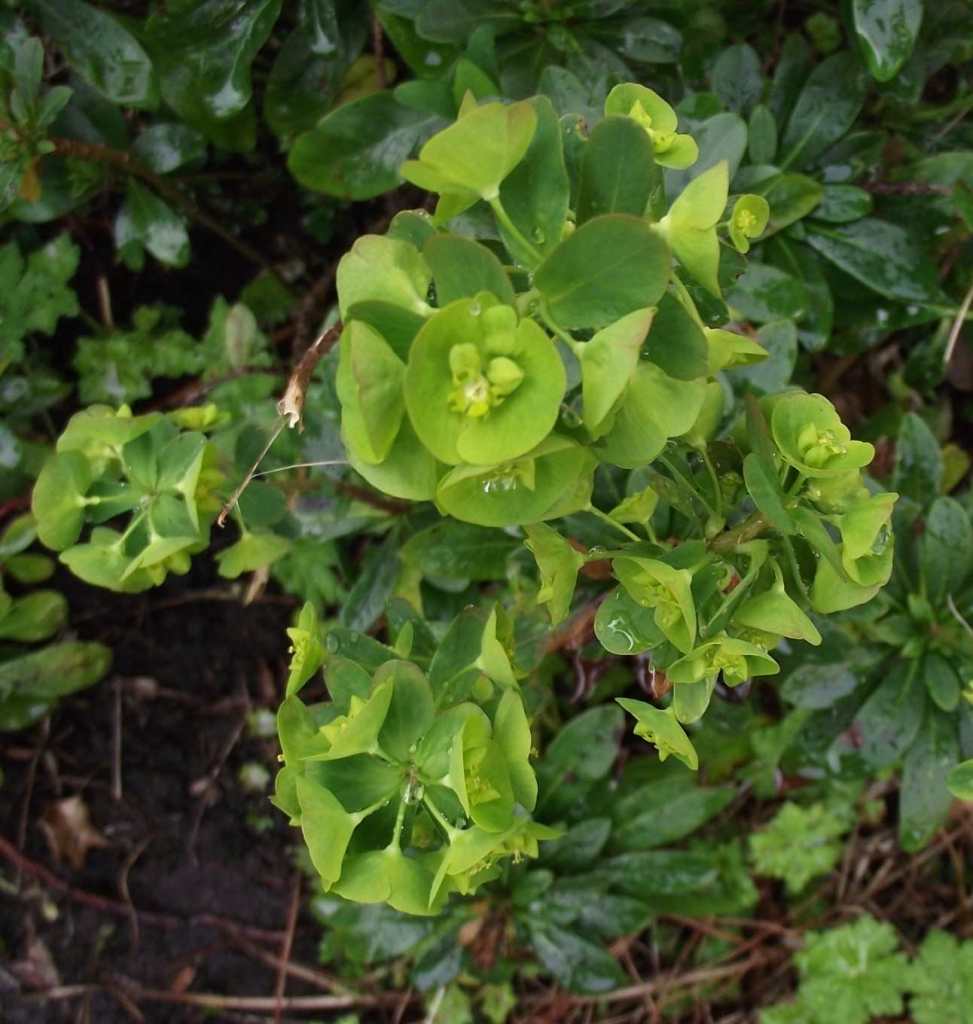
Euphorbia characias
I am making a bit of an assumption here that this is actually characias but it is filling up an awkward damp corner very nicely so I won’t complain.
Narcissus ‘February Gold’
These were planted very late and consequently we have February Gold flowering at the end of April. I find I can get away with planting tulips late, but narcissi, not so much.
Clematis montana
How did that get there? This montana has appeared around the central heating exhaust after travelling under the tiles from the gutter level. It will be short-lived as I will be taking it down to almost ground level after it flowers in order to paint the woodwork behind it.
This meme is hosted by Jim Stevens who is to be found with all the details and links to plenty of other blogs to enjoy at Garden Ruminations.
We have had a warm, mainly dry, spell with temperatures quite high for this time of the year so far, but have been dogged by a persistent cold wind which we get here. The garden is wakening up and the magnolias and early blossoms are in evidence not far from here but I am still vary wary of any late frosts which may occur.
Anemone blanda
I haven’t any A. nemorosa now unfortunately but I am always pleased to see these lovely spring flowers emerge.
Lamprocapnos spectabilis
The Bleeding Heart is one of the earliest herbaceous perennials to flower, and is always welcome. I think the emerging flower stems have a rather surreal quality about them. Dicentra was a lot easier to remember!
Lysimachia ciliata ‘Fire Cracker’
All lysimachias tend to be garden thugs, but I have never been able to resist the little yellow flowers contrasted against the deep purple of the leaves of ‘Fire Cracker’
Osmanthus burkwoodii
The beautiful clusters of flowers of osmanthus have been out for the last week or so which means I have managed to enjoy their wonderful scent in the warm weather we have been having. All too often the whole of the flowering season is under grey skies. Apologies for the out of focus bit!
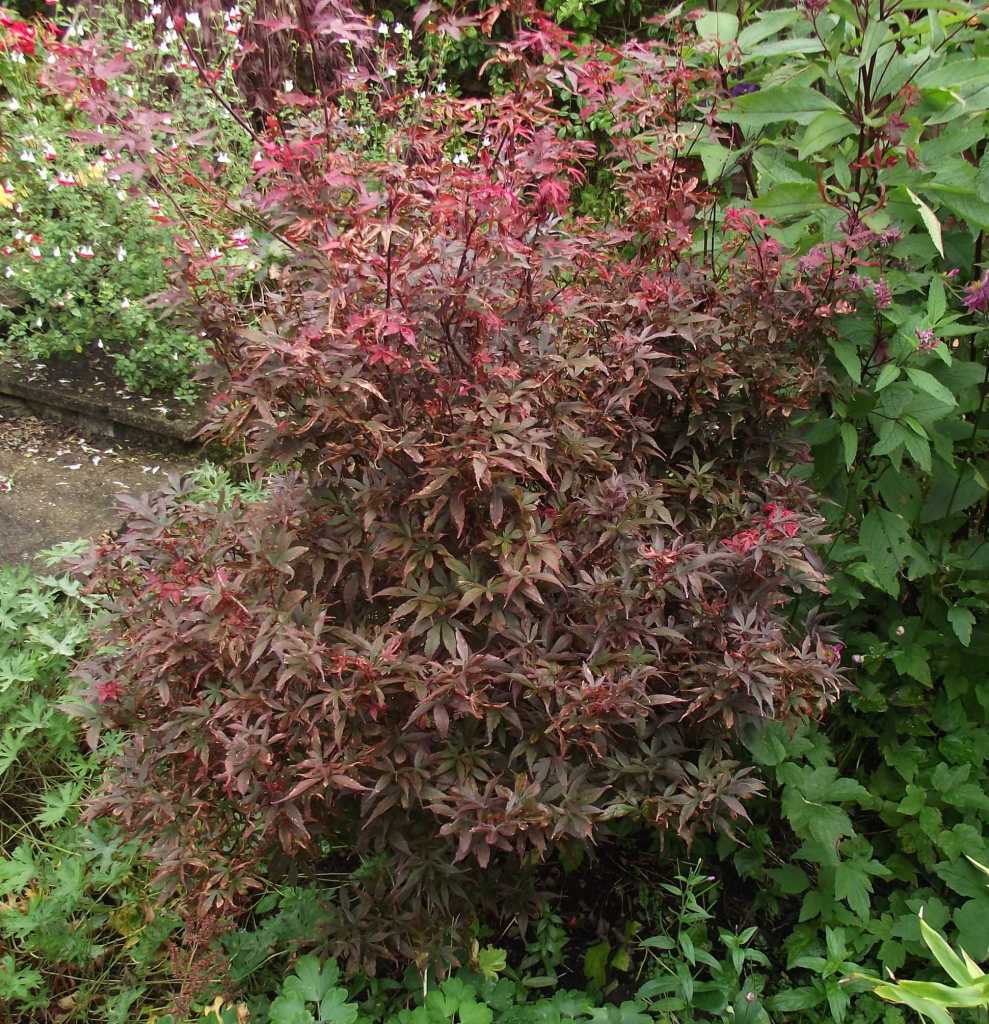
Unknown Acer
The buds on this acer are just opening, fingers crossed there is no severe frost now. The winter damaged tip has been taken off.
Primula denticulata
First of the tall primulas to emerge for me. Primula denticulata used to be a common site a few years ago, but not so much now. Shame really I find the powder blue flowers and farinose leaves and flower stems quite attractive and very welcome at this time of the year..
This meme is hosted by Jim Stevens who is to be found with all the details and links to plenty of other blogs to enjoy at Garden Ruminations.
After the heavy rain, not as bad here as in the south, temperatures have been quite good hovering around 15°C and remaining dry although it is forecast to go down to around 10° toward the end of the week with light rain tomorrow. I am still planting out some hardy perennials I have raised from seed plus a few geraniums that I have acquired as the soil is still warm.
Phlox cultivar
Staple of the herbaceous border, phlox always remind me of autumn shows where the open cut flower class used to be full of them.
Unknown Acer
One of two acers I bought at a knockdown price from Aldi and brought with me to the new garden. This one is still in a container.
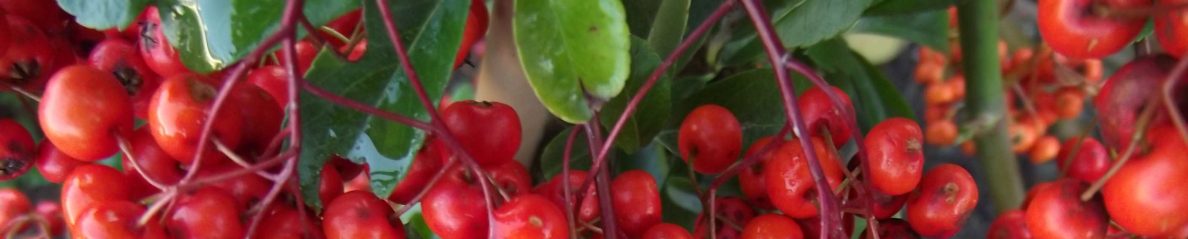
Pyracantha ‘Red Column’
The king of autumn berries, this is a plant I bought last year as I have never been without one for as long as I can remember.
Unknown Acer
The other cut-price acer planted in the ground this time, I thought I had better take a picture before the frosts.
Elaeagnus x ebbingei ‘Gilt Edge’
Something for winter colour, I tend to think of elaeagnus as being a less flamboyant brother to the euonymous.
Euonymous japonicus ‘White Spire’
More for winter colour, this is a fairly new introduction I think which caught my eye last year.
Unfortunately I think I have almost exhausted the available plants for now in my small garden, so fingers crossed, I might manage one more Six on Saturday.
This meme is hosted by Jim Stevens who is to be found with all the details and links to plenty of other blogs to enjoy at Garden Ruminations.
Continuing to work through pictures from my old garden in North West England which was surrounded by trees and had a moist, not always well-drained, slightly acid soil. This particularly enabled me to indulge my two favourite genera of meconopsis and mainly Asiatic primulas, amongst many others. All the photographs were taken in my garden unless otherwise stated.
Abutilon
Abutilon hybridAbutilon hybrid
Abutilons come from tropical and sub-tropical areas and as such are not fully hardy in the UK although some may survive against a sunny south-facing wall in warmer areas. My first job was for a local parks department and I will always remember the large specimen of A.megapotamicum that dominated the cool glass house with its lantern shaped flowers. A.megapotamicum was really the only abutilon that was widely cultivated but now there are many cultivars available as their showy flowers and interesting foliage have made them a desirable subject.
Acers are one of our most recognisable trees from the common sycamore (Acer pseudoplatanus) to all the various cultivars, particularly from Acer palmatum, grown mainly for their leaf colours, be it the contrasting new growth in spring or glorious autumn displays. Widespread throughout the Northern Hemisphere, although acers are not native to the UK, they are easily recognisable by their distinctive leaf shape and winged fruit. In siting a maple (acer), particularly the Japanese types, it is worth bearing in mind that very often protecting the foliage is a major objective so a cool spot out of the way of cold winds and early morning sunshine is to be preferred. One thing I have learned to my cost was acers certainly don’t like getting their feet wet, I was given a rather expensive specimen as a present which I put in, what I thought was, an ideal spot, that winter that area of the garden decided to drown and so did the acer.
Amelanchier
Amelanchier lamarckii
Amelanchier lamarckii or snowy mespilus is a member of the rose family, which is possibly a hybrid that is thought to originate from North America although it is not found in the wild there. A large bush or small tree it has white blossom in spring followed by inedible fruits and some autumn leaf colour. Likes a cool root run in moist slightly acid soil but also flowers better in full sun.
Asarina?
Asarina scandensMaurandya purpusii
Completely mixed up about these, now synonymous with Maurandya these plants were grown from seed labelled as Asarina scandens and Maurandya purpusii respectively. Anyway, the climbing snapdragon is a half-hardy climbing sub-shrub hailing from Mexico and the southern United States and is grown as a half-hardy perennial or annual usually in a container. I rather like them although grown more as a novelty from a”lucky dip” purchase. To add insult to injury Maurandya purpusii that was Asarina purpusii is now Lophospermum purpusii, I give up!
Berberis
Berberis linearifolia ‘Orange King’Berberis x stenophyllaBerberis thunbergii ‘Atropurpurea’
Found pretty much all over the world this genus, which is probably familiar to all gardeners in one form or another, is easy to grow, versatile and decorative as well as many of its members making ideal hedging material, their thorns making an effective barrier to both human and animal. I think most of its familiar members can be described as ‘tough as old boots’. The whitish sheen apparent on the B.thunbergii pictured is actually a powdery mildew which appeared every year regardless of the prevailing weather conditions.
As they are often seen at the roadside, on abandoned buildings and beside the rail-lines as a weed, buddlejas tend to have a bad press but I wouldn’t be without them and in fact have two in my new small garden. Most cultivars which are available are from B.davidii although ‘Lochinch’ is sometimes known as B.fallowiana and I have read somewhere that B.x weyeriana ‘Sungold’ is an early cross between a form of B.davidii and a South American species. Love them or hate them, I don’t think they can be surpassed in their ability to attract bees and butterflies and their intense fragrance.
Book reviewer and garden enthusiast. Updates from my Hampshire garden. Usually talking about books and plants. People do not forget books or flowers that touch them or excite them—they recommend them.







 A Plantsman's World