Six on Saturday 16/8/2025

The weather is holding steady, temperatures as high as 30°C, although 20-25°C is more the norm. The few showers we have experienced have barely dampened the ground. Typically for this time of the year colour is sparse, so the lilies are welcome. Although they do not hold their blooms well in the heat. One thing I have noticed is the lack of butterflies. We were inundated with them earlier, particularly with the Peacocks. Although the eupatorium, now Eutrochium purpureum, is in flower, a tremendous bee and butterfly magnate, there are hardly any to be seen. This is the exact opposite of what happened last year so I am putting it down to the warm spring. For anyone who is interested I have taken the liberty to include a few links to some of my previous posts devoted to lilies that I have grown, with many more pictures.

The ever popular Lilium ‘Stargazer’. This is one of the first lilies that I ever grew and remains a favourite even now. I took this picture a couple of days ago but it is already looking worse for ware in the heat. Another Oriental, Lilium ‘Hachi’, which I featured a couple of weeks ago, is very similar with its upturned blooms but the flowers are notably much larger than those of ‘Stargazer’. Here is a link to Lilies Part 1 – Updated for more lily pictures.
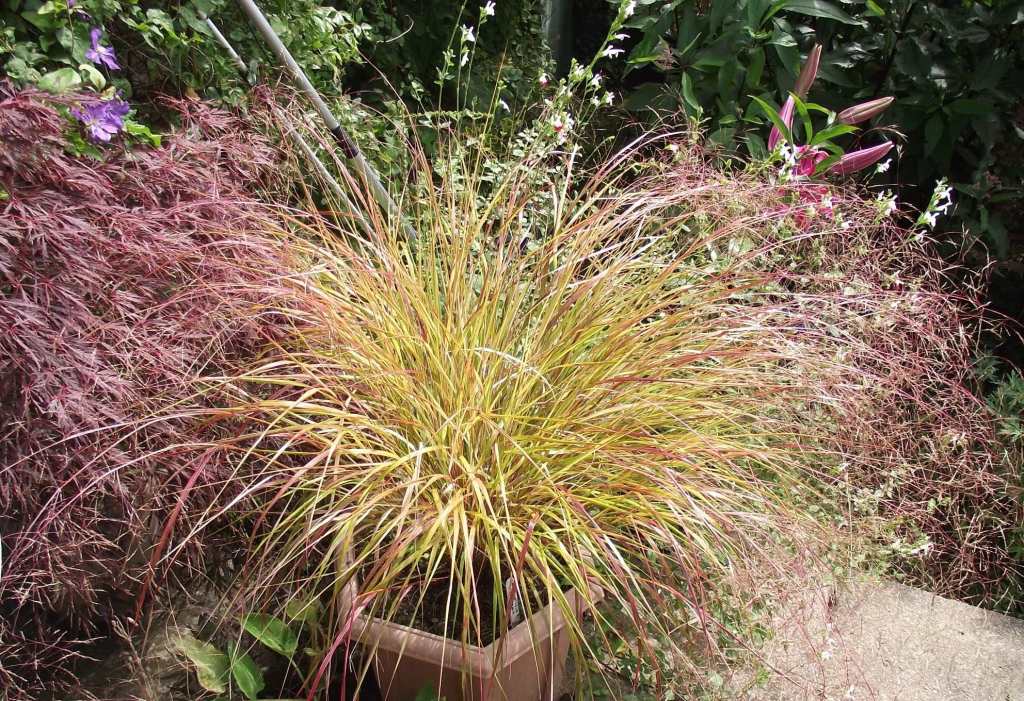
I have shown Anemanthele lessoniana, pheasant tail grass, before but is now at its best. The leaves are taking on some red splashes which are complemented by the airy inflorescences floating in the breeze. I’ll be quoting poetry next!
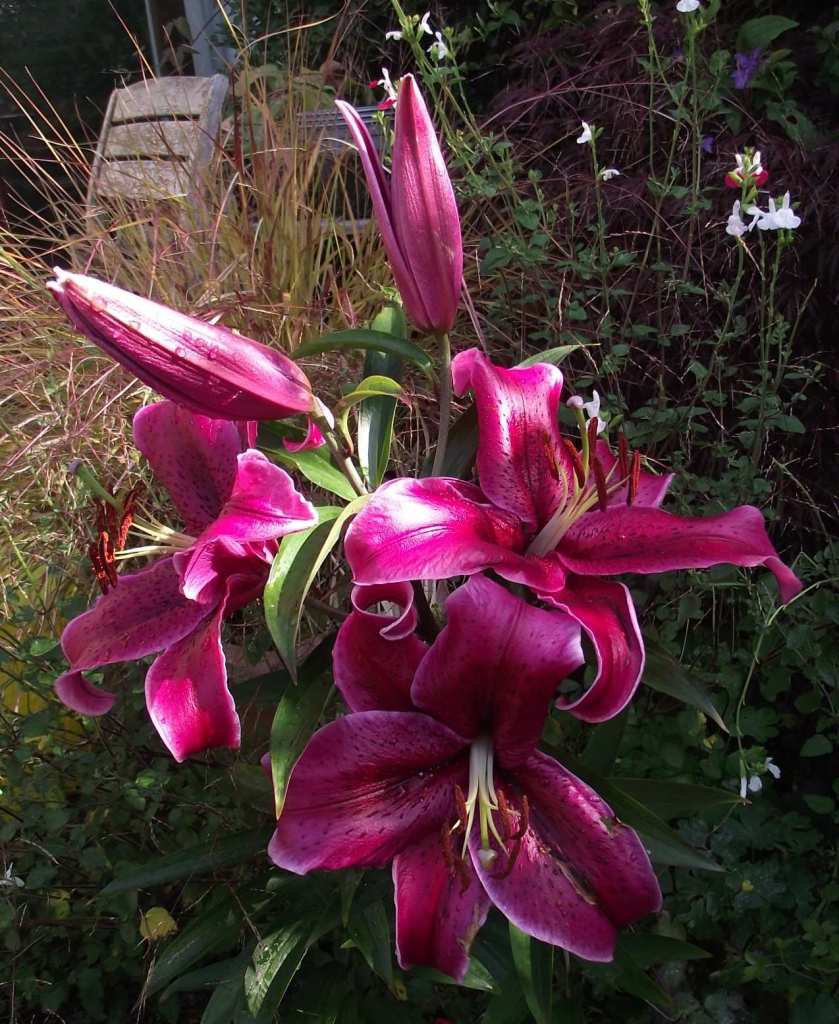
I have never grown Lilium ‘Red Flash’ before and I am rather enamoured with the strong colour. Unfortunately the bottom bloom is past its best. For even more pictures of lilies that I have grown Lilies Part2 -Updated

A good old standby for late summer/autumn colour Rudbekia fulgida ‘Goldsturm’. I don’t think you can beat these simple “cone-flowers” to add a splash of colour, at this time of the year. I did have some echinaceas but they have decided not to come out to play this year. The splash of blue in the lower right-hand corner is Geranium ‘Johnson’s Blue’ which, in my small garden, is becoming far too invasive. I intend to remove it altogether shortly. Even though I reduced it by half last winter. It is taking up far too much space for one plant, and I have plenty of stuff stuck in pots which can take its place.
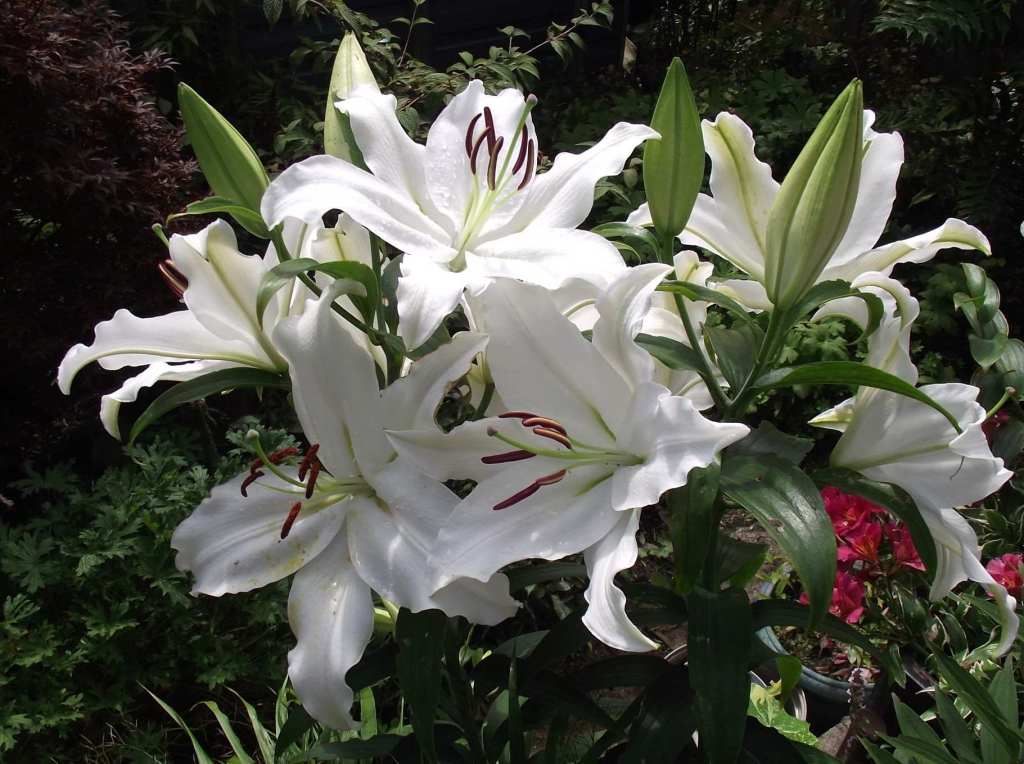
Another strongly scented Oriental. Lilium ‘Casa Blanca’ is another old favourite of mine. I have to admit that I had forgotten it was there until I checked the label before it came into bloom. It is a true pure white and all the better for it. I am in a bit of a quandary at the moment. I have no room to plant the lilies out, so do I keep the pots overwinter and chance that they will come good again next year, which they should do. Or do I buy in some more to guarantee a good show next year. I will probably do both! Here is some more about lilies including Cardiocrinum giganteum. Lilies Part 3-Updated
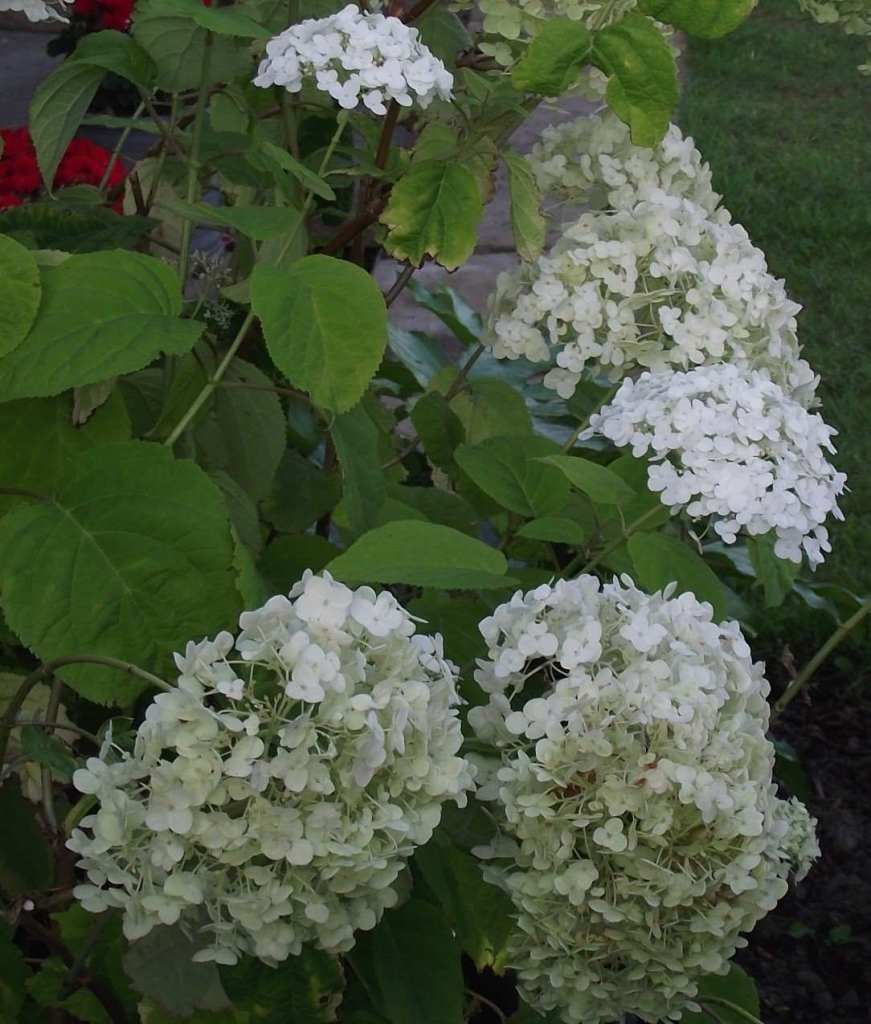
I bought this hydrangea from Thompson and Morgan at least eight years ago when they were selling it as Hydrangea ‘Incrediball’. I think it is now better known as, and is certainly synonymous with, Hydrangea arborescens ‘Strong Annabelle’. My plant is still in a container, and although the blooms aren’t the size that they should be, it still puts on a fairly good display every year. I intended to cut it back hard last winter but forgot. I need to remedy that this year, and put it on a high potash diet to see if I can improve it. Re-potting would be ideal but it is in a very large container so I will continue to nurture it where it is for as long as I can.

This meme is hosted by Jim Stevens who is to be found with all the details and links to plenty of other blogs to enjoy at Garden Ruminations.
Six on Saturday 5/7/2025

Temperatures are remaining around 20°C which rather suits me. I am writing this on Friday and we are expecting heavy rain later which is much needed. The garden has really filled out now and I can hardly move for plants. Which is making it difficult to get to any weeds without treading on things I’d rather not. A mixed bag this week of plants I can name, and those I can’t.

Update 6.00am Saturday. As always, it seems, the promised heavy rain went north of us. When I looked out this morning everywhere was dry! More heavy rain forecast for early morning tomorrow. Fingers crossed.

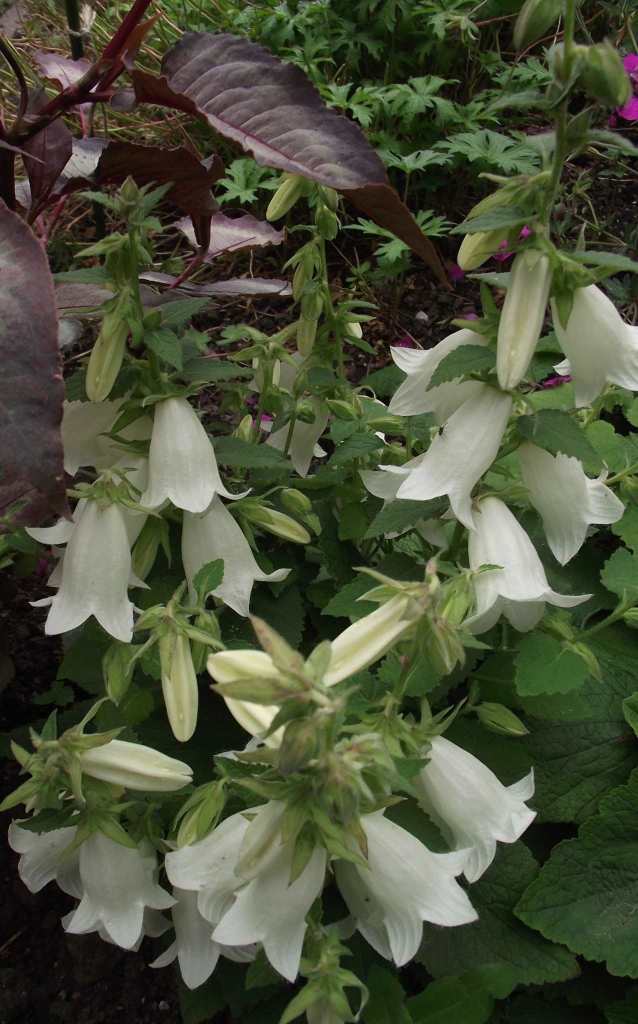
This little campanula is from a packet of seed labeled large white flowered. The flowers are white and also large for the plant, which is typical of campanulas. The plant itself however, is less than a foot tall. It reminds me very much of Symphyandra hoffmannii which I used to grow.

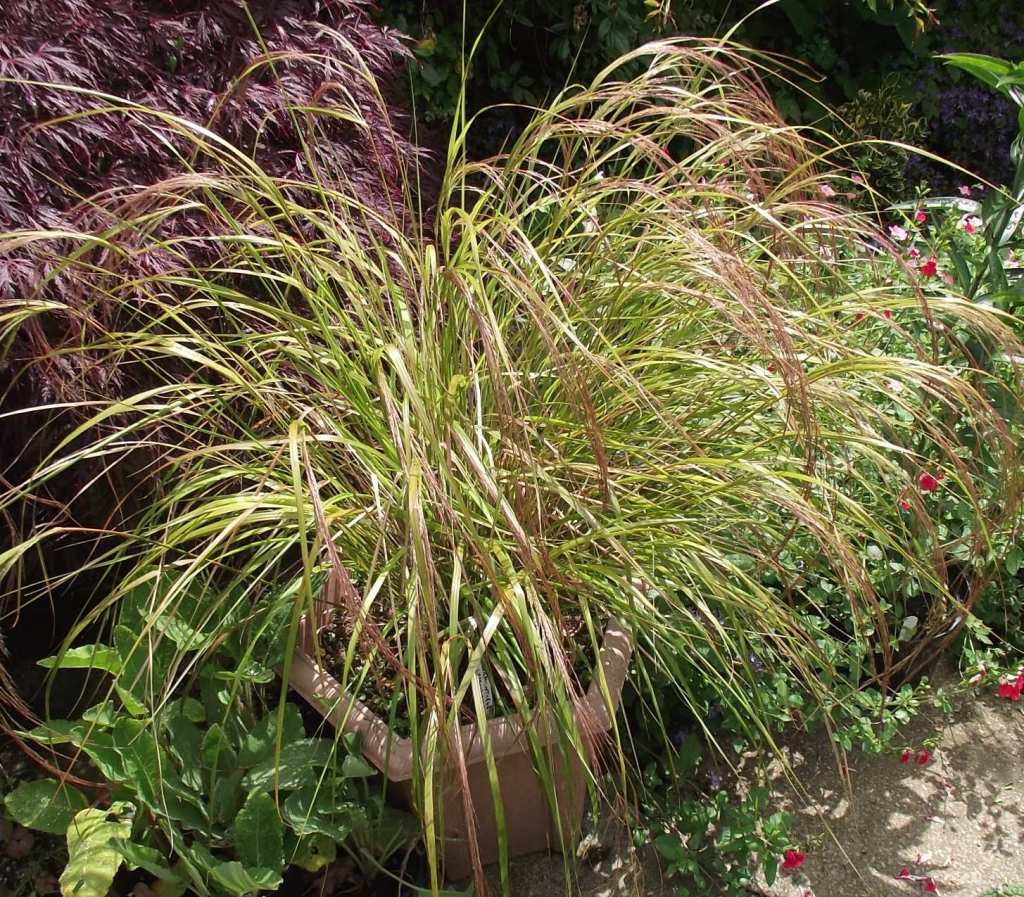
I am not a great fan of grasses but I find Anemanthele lessoniana, the pheasant tail grass outstanding. Unfortunately the picture doesn’t capture the effect of it glinting in the sunlight as it does. It will carry on throughout the year with the leaves taking on yellow, orange and red streaks towards winter.

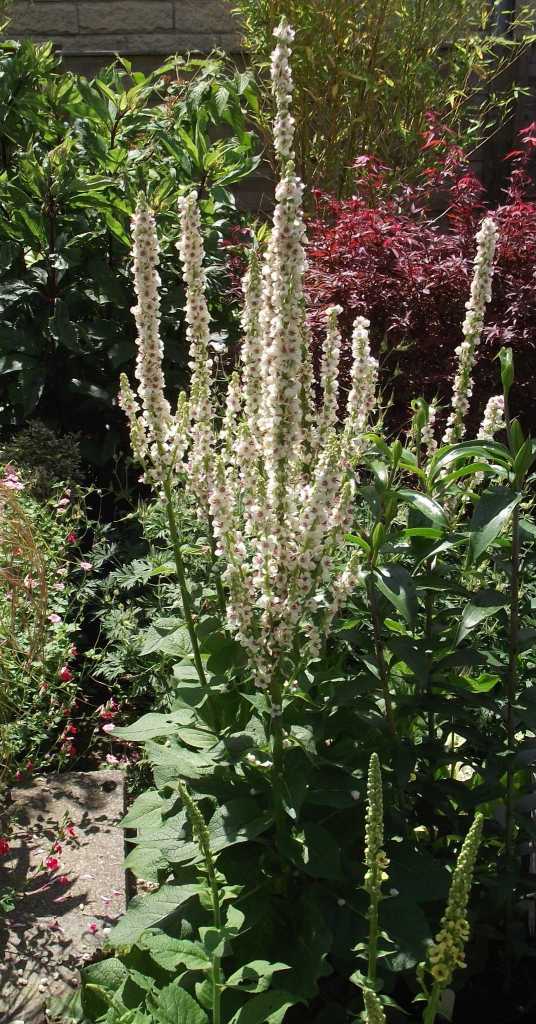
This white, self-seeded verbascum has improved year on year. I know the wild plant is somewhat looked down on as a weed but I find them rather attractive. A big plus is that they are constantly visited by numerous bees. Both the white one, and the smaller yellow one, in the foreground, originated from a packet of mixed verbascum seed, but these plants have seeded themselves, into the paving, from elsewhere in the garden.

Primula x bulleesiana showing fasciation. This is one of the few botanical “coveralls” that I can relate to. x bulleesiana is obviously the combination of bulleyana and beesiana. Fasciation is quite common in primulas, particularly the candelabra types. There seems to be a myriad of things that can cause it from genetic mutation to viral or insect damage, which means, I think, that nobody is really certain.

Another plant that has seeded itself into the garden. This rather neat astrantia has been with me for several years now, and I have just left it alone to do its thing.

The first lily flower this year from a pot I have had for years, so, naturally I have lost the label! At a guess, I think it could be Lilium ‘African Queen’ a Lilium longiflorum hybrid. But please don’t take my word for it!

This meme is hosted by Jim Stevens who is to be found with all the details and links to plenty of other blogs to enjoy at Garden Ruminations.
Six on Saturday 29/02/2025

I have not posted since last October when I ran out of subjects in my tiny garden however there are now signs of spring and, with rising temperatures and dry weather forecast for next week, I remain hopeful. Although it may be a few more weeks before I can post again I have managed to scrape together a rather contrived six for this week.

Slight problem with the header, I must have decided I was having my own leap year! Too late to change it now.

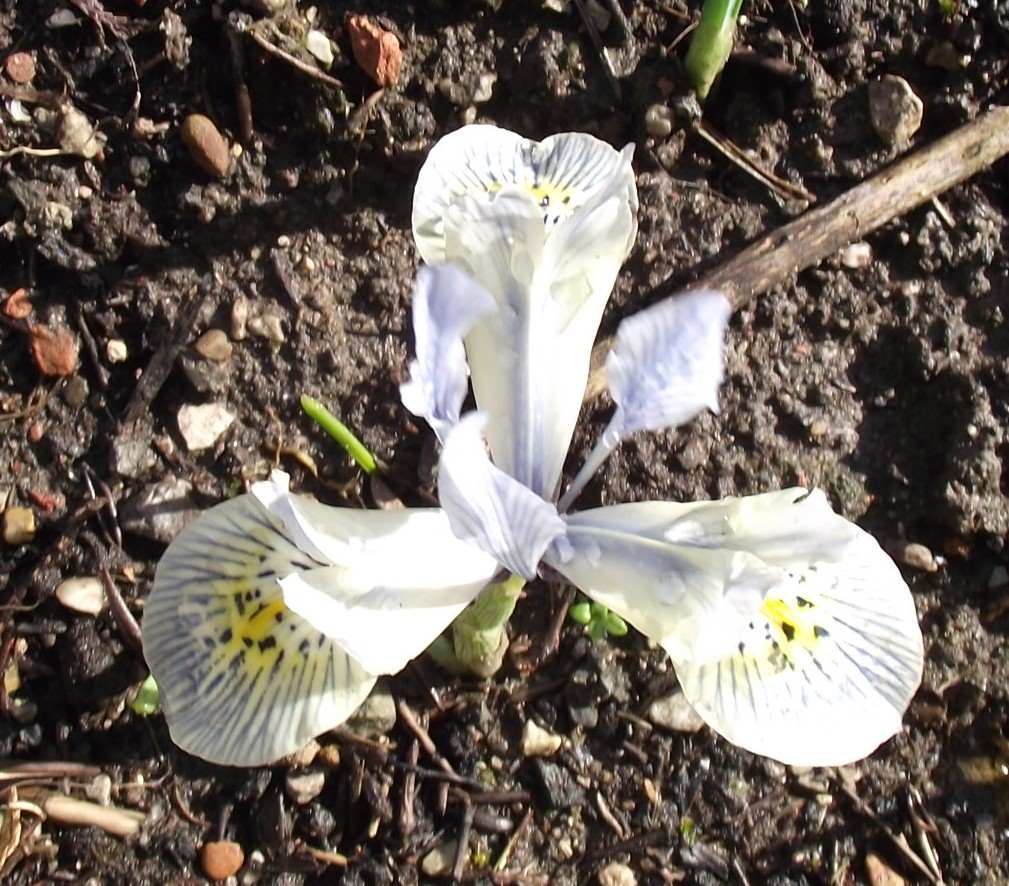
A real favourite of mine, particularly as it’s such an early flowerer. Unfortunately this one is almost all that is left of a clump I planted about five years ago, time to renew!

I am not a great fan of grasses, although I can appreciate them planted in drifts. I raised Anemanthele lessoniana (syn. Stipa arundinacea) Pheasant’s tail grass, from seed many years ago and had three large containers of it in my previous garden which were spectacular when viewed with the sun behind them. This is a recent acquisition which I hope thrives. Incidently I never cut them back just “combed” them, wearing a stout pair of gloves, in the late spring.

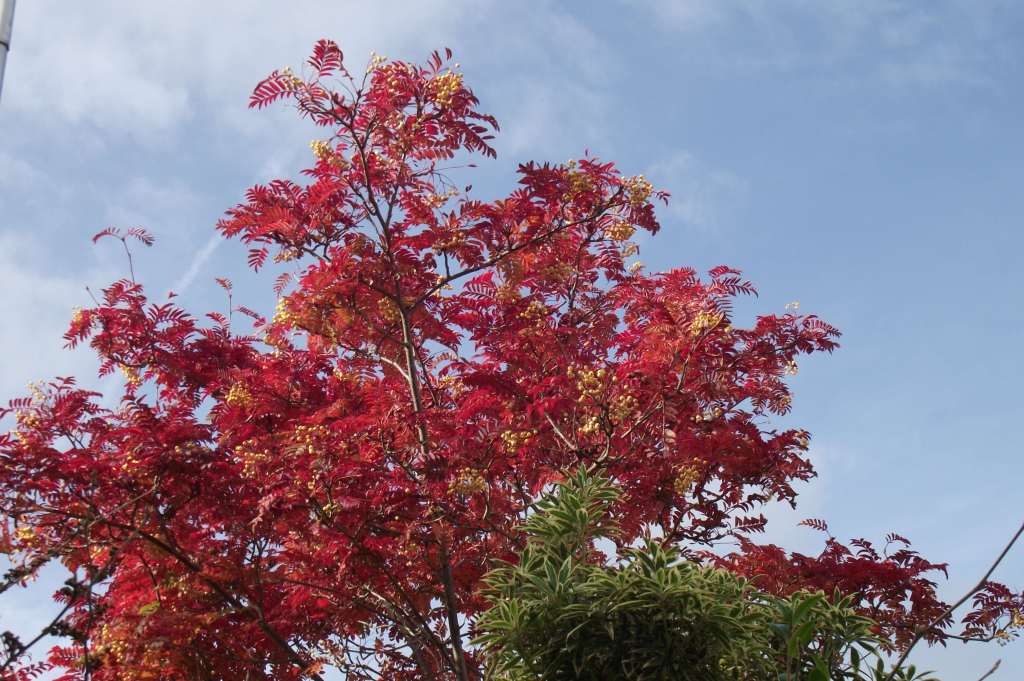
This leaf caught my attention, unfortunately when I tried to reposition it to get a decent photo I snapped it off! I am guessing at its nomenclature but I think I am correct.

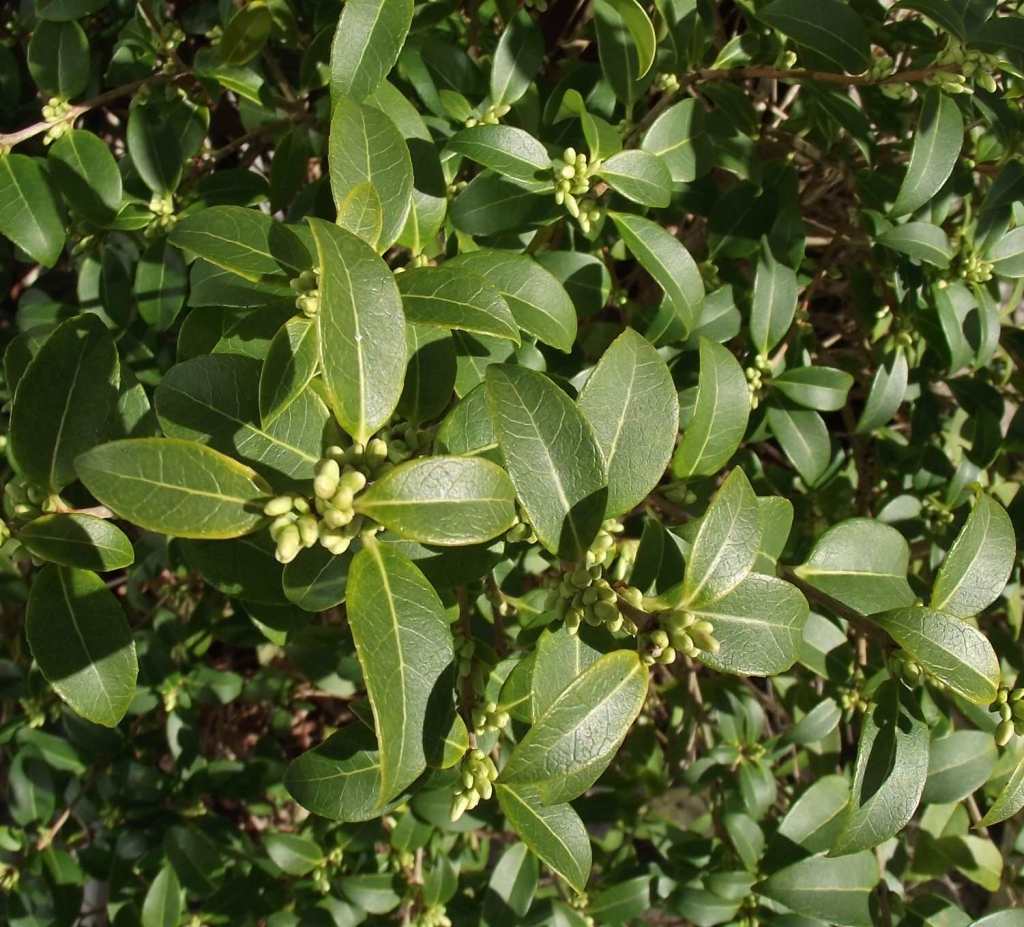
The osmanthus is growing in a large container next to the door into the garden so I am hoping there are some warm days when it does flower so I can fully appreciate the scent.

I know snowdrops are everywhere but I just thought they would make up the numbers. I have no idea where the shell in the background came from!

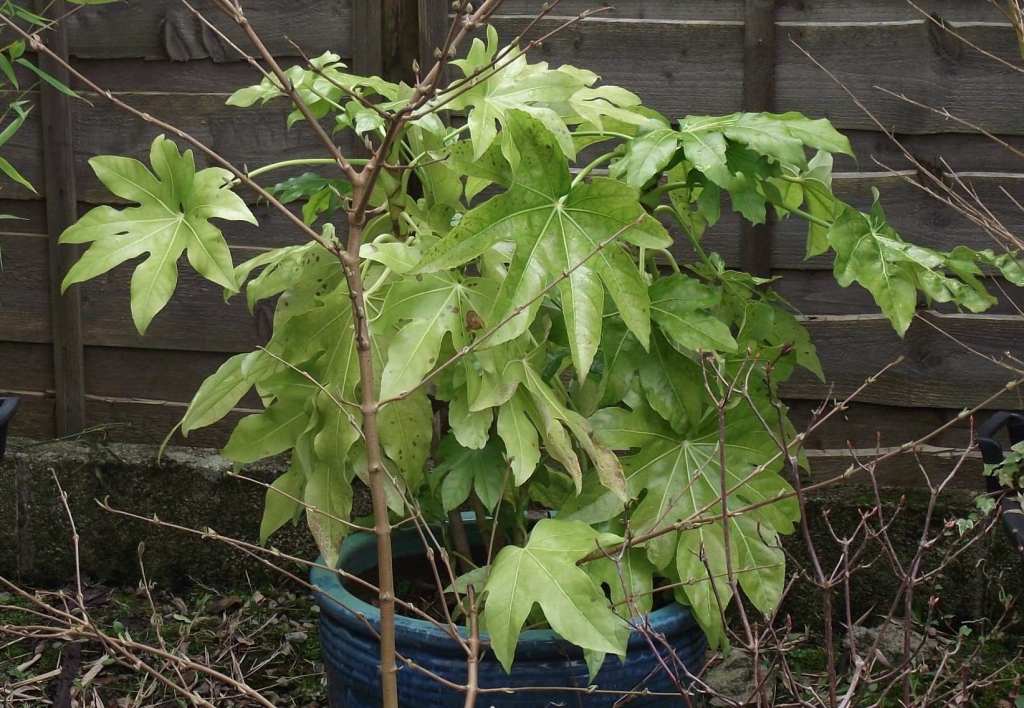
Not everyone’s cup of tea and actually the first time I have grown it, Fatsia japonica just happened to fulfil a purpose and is currently in a container. The thing I did like was to have some healthy green leaves to look at during the grey winter months.

This meme is hosted by Jim Stevens who is to be found with all the details and links to plenty of other blogs to enjoy at Garden Ruminations.
Trees,climbers,shrubs and other random plants. (Part 7)

Continuing the saga of plants I have grown and photographed along with a few scribbles.

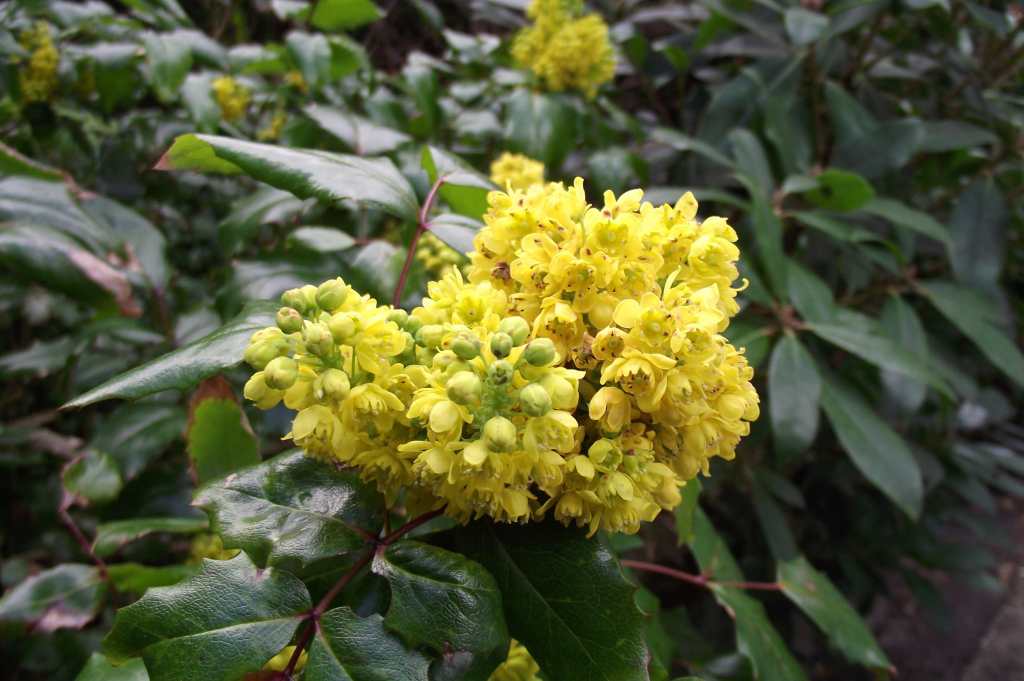
Mahonia

The mahonias are closely allied to berberis and as such the nomenclature can get a little confused with the generic name getting interchanged. Mahonia aquifolium, the Oregon grape, incidently the state flower, is generally a low growing (one metre) high spreading bush which is ideal for under-planting larger trees and shrubs, although stand-alone specimens in the wild grow to several metres. The flowers are followed by dark berries which are attractive to birds. I find the biggest problem is the evergreen foliage can become scrappy which detracts from the appearance so a heavy prune once in a while regenerates the growth. Mahonia japonica originates from Taiwan and it and its cultivars are now widely grown. These are very strong growing shrubs and like M.aquifolium benefit from a heavy prune from time to time. Although M.japonica is often classed as winter flowering I have known it in flower anytime from September to April depending on the prevailing weather conditions. Mainly in the spring, the yellow flowers attract blue-tits who just love to strip them. Do not go hand-weeding within a country mile of a large mahonia without wearing heavy gloves, the spines on the dead leaves in the leaf litter really hurt.

Parthenocissus

The Virginia creeper, as its name would imply, is an American native which is a useful deciduous climber for covering unsightly walls, out-buildings etc. because it attaches to the masonry by sucker pads and does not penetrate the fabric. The roots however, are a different matter, and can prove detrimental to such as old foundations but probably only on a par with others of a similar ilk. The flowers are insignificant, the foliage being the principal attraction, the berries that appear later are a good food source for the birds but are deadly poisonous to humans.

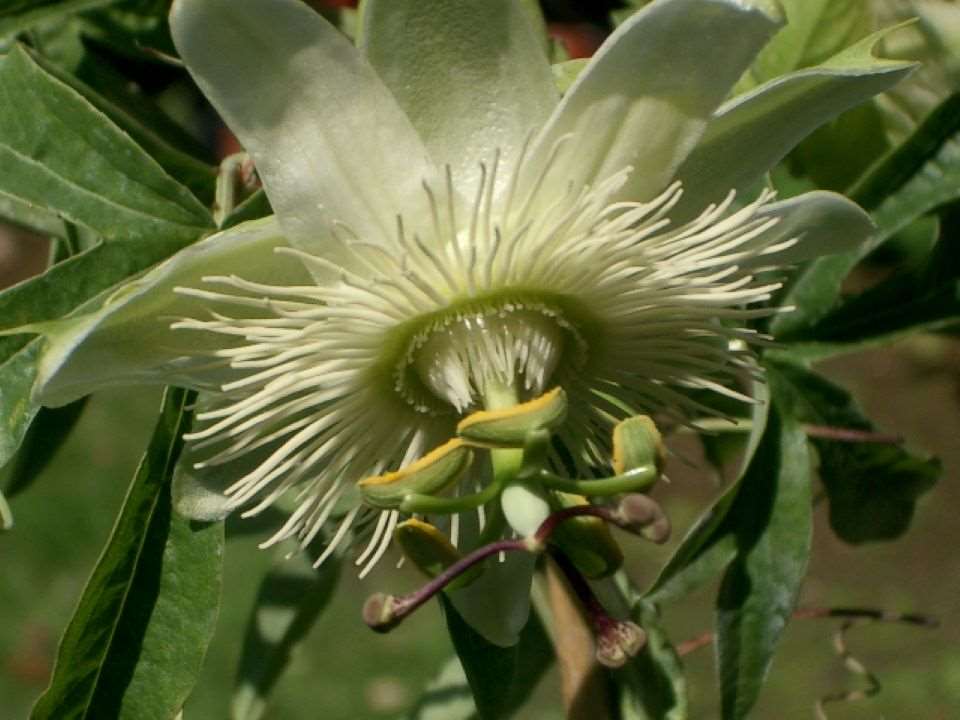
Passiflora

Sixty plus years ago the Passion Flower was a rarity but I was told about it as a child because of the Christian symbolism attached to the flower, it was also regarded as a subject for a cool greenhouse at best. Today there are only a few cultivars and ‘Constance Elliot’ AGM is probably the best known. What was once a talking point is now to be commonly found rampaging over fences and walls in in many urban gardens. The fruit is edible but by all reports rather insipid, I’ll leave it that.

Anemanthele lessoniana (Pheasant Grass)

This one appears under the all-inclusive banner of “other random plants” and because I forgot to include it earlier. I really like this grass, although I am not a big fan of grasses overall. Grown from seed, planted in containers, maybe it’s because I have not grown many grasses, but to actually see a group of these with the sun behind them is indeed impressive. Easy to grow but will seed around. (syn. Stipa arundinacea apparently.)

Philadelphus

Philadelphus, the mock orange, is another shrub, along with the likes of forsythia, which was among the limited choice we had back in the 1960’s and 70’s. The fact that it was deciduous and did not make a particularly attractive bush was offset by its pure white flowers and powerful scent over its short flowering period at the time. Today the plant breeders have developed many cultivars ranging from patio-size bushes to double flowered specimens, nevertheless it remains a tough hardy plant.

Pieris

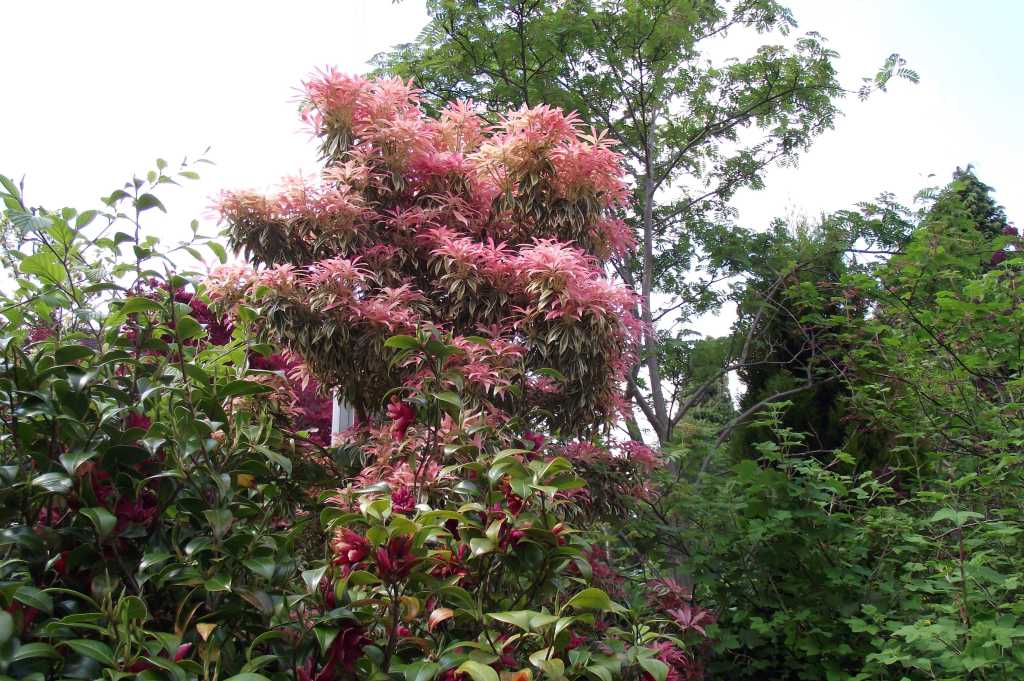
There are generally two species and their cultivars grown as ornamental shrubs in the UK. P. ‘Forest Flame’ is a typical cultivar of P.floribunda from the US and the other is P. japonica from Japan and Taiwan. P.floribunda types are the ones which have the red/pink new growth which frequently is hit by frost in exposed areas, whereas P.japonica has striking and often variegated leaves. Both have bunches of lily of the valley-like flowers in white or sometimes pink. They are both toxic to animals and humans although I believe P.japonica to be extremely so.

Pieris inundated with sooty mould.