Six on Saturday 12/04/2025

The warmer weather continues but, much as I am enjoying it, I feel it has come far too early and would be welcome in about a month’s time as I have a feeling of trepidation about what is round the corner. Many plants are thrusting up new tender growth and I have already noticed some damage caused by the light overnight frosts and possibly the cold winds. We can’t put out bedding with confidence until the end of the third week in May. The local NT gardens don’t start planting until the second week of June, mind you, they have thousands of plants at risk. On the 2nd June 1975 snow stopped play in Buxton, only a few miles from me, between Derbyshire and Lancashire cricket clubs. Play was resumed the following day in beautiful sunshine and the following year, 1976, was one of the hottest summers on record. Buxton Cricket Club are celebrating the 25th anniversary with a special event this year. We gardeners are very much at the mercy of the weather, but spare a thought for the poor farmers and growers who have to make a living.

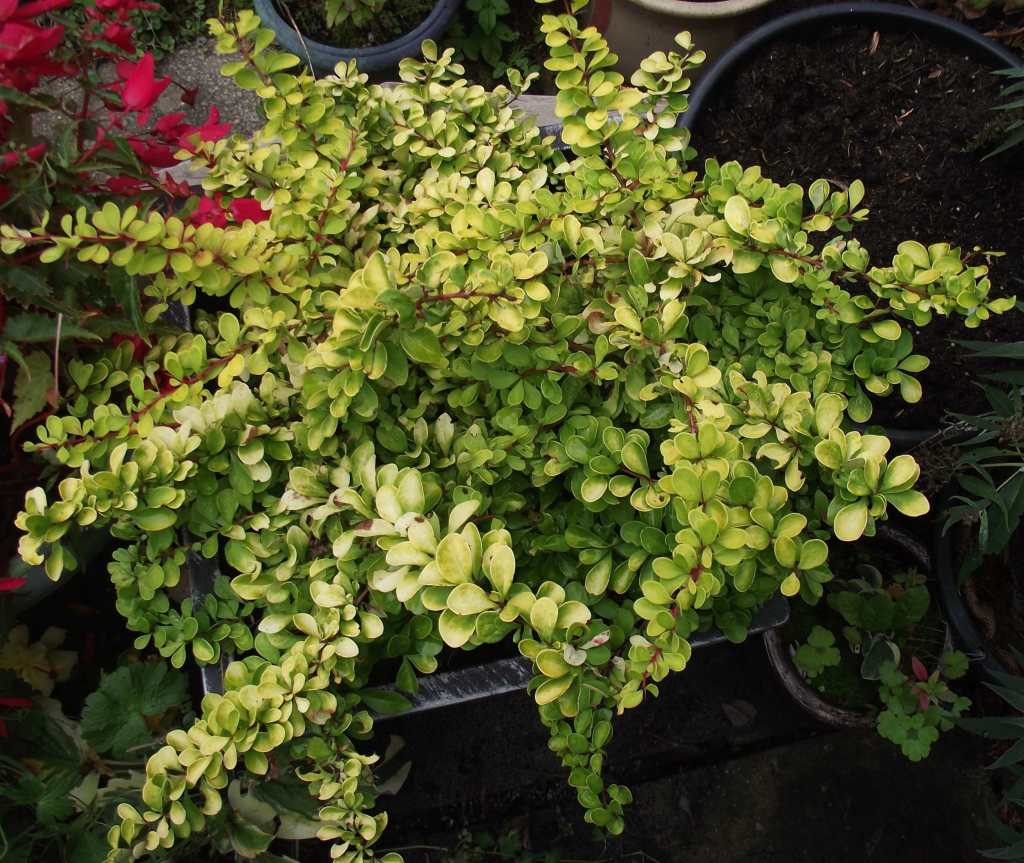
This is one of my favourite small shrubs, I look forward every year to the emergence of the colourful foliage. I had one in my last garden which was quite a bit larger, it could be that the drier, less fertile soil this one is in is limiting its growth, but I think it’s a little gem nevertheless.
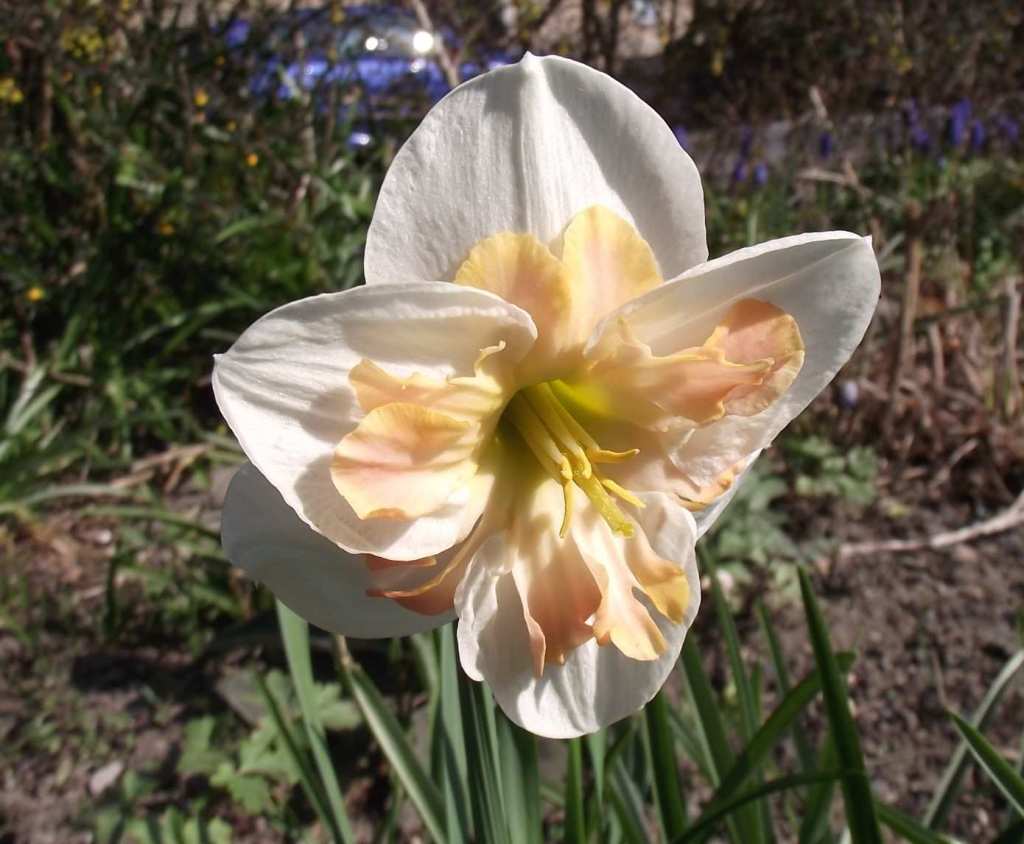
One of the remaining two flowers this year from a clump I planted about four years ago. I never seem to get longevity from my bulbs, tulips I can understand, as they need a good baking during the summer, but daffodils I tend to plant and forget about so probably my fault.

I used to grow numerous meconopsis as they are one of my favourite genera. This year is the first in my new garden that I am hoping to get some decent flowers. Crarae can only be raised vegetatively and I have never grown it before so fingers crossed! Crarae was raised at Crarae Gardens, Argyle, Scotland. If you are interested in meconopsis you might like to visit my page.
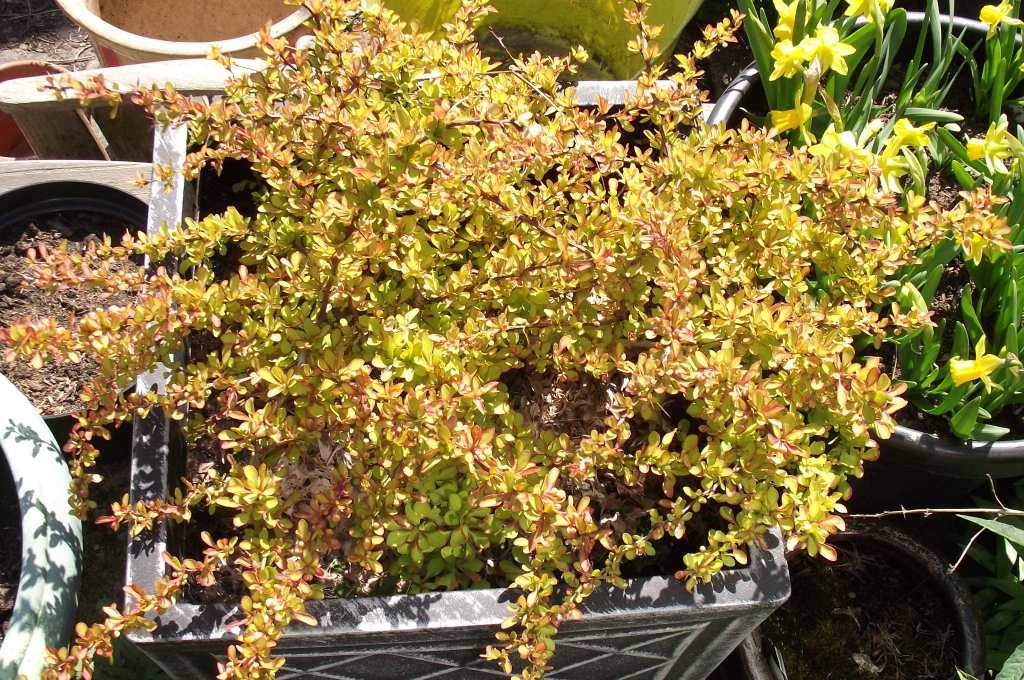
This berberis is another welcome splash of spring colour, it loses its reddish tinge as the year progresses. Like most berberis, it thrives here taking anything that the weather can throw at it.
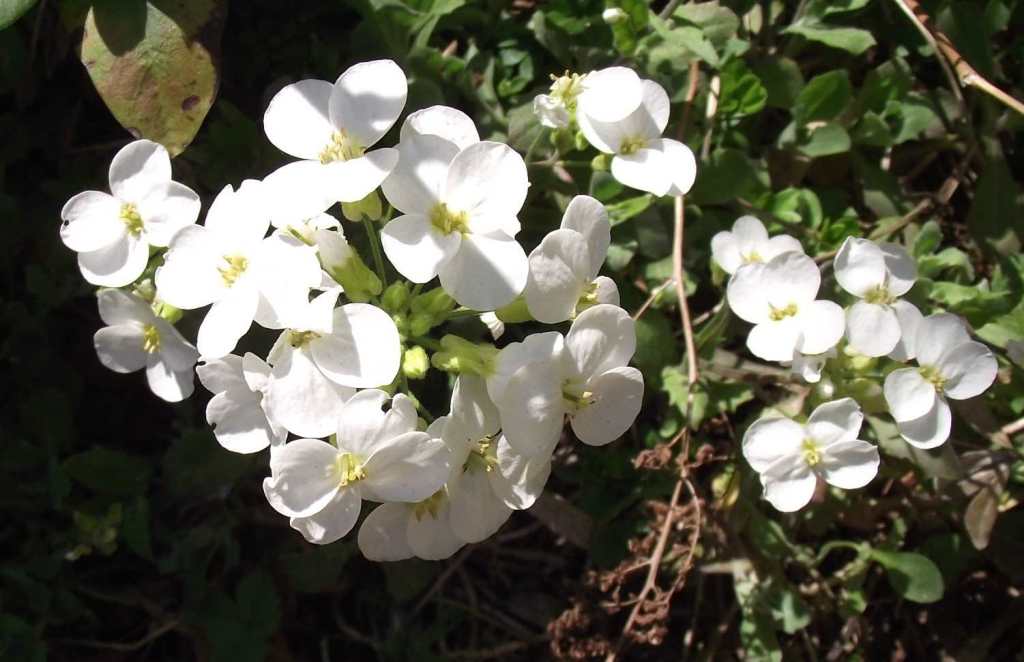
I grew the common or garden Rock Cress, or at least an improved form of it, from seed. It makes a useful early splash of white every year.
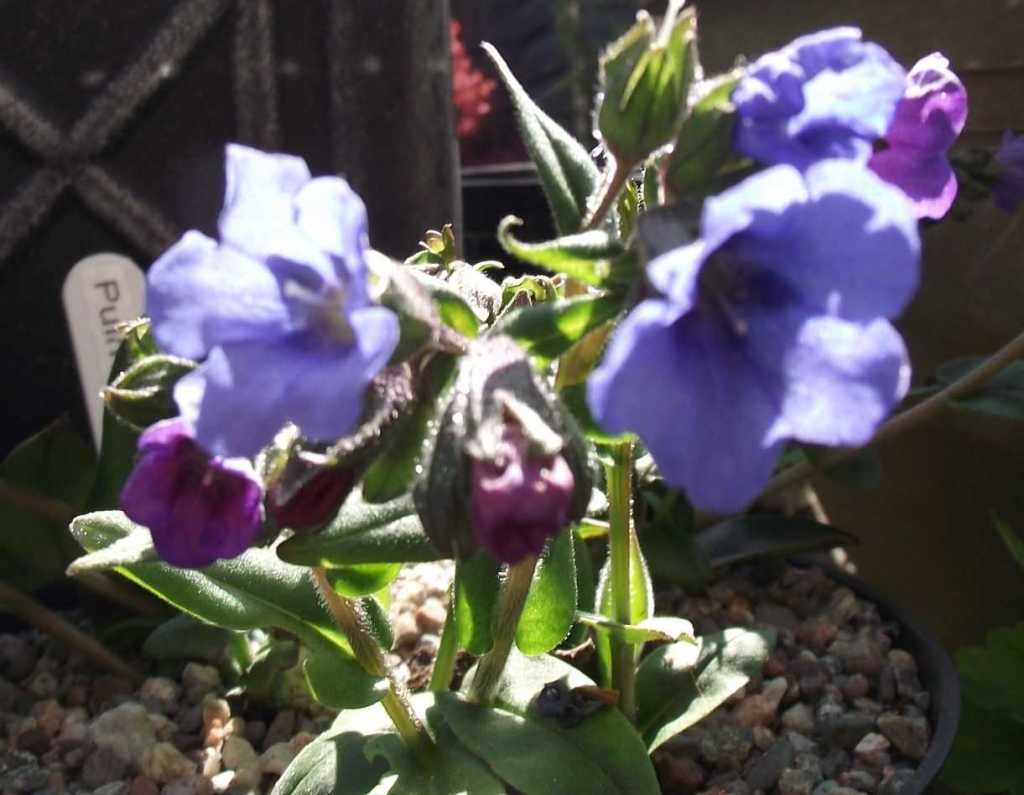
Currently growing in a pot until I find somewhere to put it, I bought this pulmonaria as a bare-root plant which is why it is flowering slightly later than normal. I have taken a real liking to pulmonarias over the last few years, as there are so many cultivars now, and can’t wait to increase my collection.

This meme is hosted by Jim Stevens who is to be found with all the details and links to plenty of other blogs to enjoy at Garden Ruminations.

Six on Saturday 28/09/2024

The warm spell that we enjoyed is at an end, day temperatures have dropped by around 5°C and this morning my car is frozen over, signs of approaching winter are definitely upon us. To be honest I am not a fan of this time of the year and would be quite happy to hibernate ’til spring, not the least because I am now going to find it very hard to find subjects for Six on Saturday. Methinks I may have to go a wandering!

My current dwelling is built on an old railway yard, in fact I planted the back garden with a pick and trenching spade, so I do err towards tough hardy plants with a few treasured exceptions. Geraniums are top of my list but the little prunella, a British wildflower, fits the bill, it’s tough, has a long flowering period and is attractive to bees and other insects.

When I first moved into my little bungalow there was a broken down fence in front of the property, the first thing I did was to rip it out and plant a Berberis x stenophylla hedge. This fuchsia must have been planted against the fence and survived all the upheaval unnoticed, so I think it has earned its place.

What’s left, hanging on in there after being absolutely battered by the storm. I have planted these this year for the first time to give some late colour along with the rudbeckias.

Another late flowering stalwart Japanese anemones can be invasive, but I find this rather ragged “double” less rampant. Unfortunately this flower stem is fighting its way through a bigger neighbour to show itself. Also known as Anemone x hybrida ‘Pamina’. Unfortunately the wind caught the bloom at the bottom of the picture and it came out a little blurred.

I like persicarias and particularly ‘Red Dragon’ because it is different, this is another plant I brought with me from my previous garden.

This berberis makes up the numbers, totally the wrong time of the year as in spring the new growth has fiery red tints, but I thought I better catch it before the leaves drop.

This meme is hosted by Jim Stevens who is to be found with all the details and links to plenty of other blogs to enjoy at Garden Ruminations.

Trees,climbers,shrubs and other random plants (Part 2)

Continuing to work through pictures from my old garden in North West England which was surrounded by trees and had a moist, not always well-drained, slightly acid soil. This particularly enabled me to indulge my two favourite genera of meconopsis and mainly Asiatic primulas, amongst many others. All the photographs were taken in my garden unless otherwise stated.

Abutilon

Abutilons come from tropical and sub-tropical areas and as such are not fully hardy in the UK although some may survive against a sunny south-facing wall in warmer areas. My first job was for a local parks department and I will always remember the large specimen of A.megapotamicum that dominated the cool glass house with its lantern shaped flowers. A.megapotamicum was really the only abutilon that was widely cultivated but now there are many cultivars available as their showy flowers and interesting foliage have made them a desirable subject.

Acer

Acers are one of our most recognisable trees from the common sycamore (Acer pseudoplatanus) to all the various cultivars, particularly from Acer palmatum, grown mainly for their leaf colours, be it the contrasting new growth in spring or glorious autumn displays. Widespread throughout the Northern Hemisphere, although acers are not native to the UK, they are easily recognisable by their distinctive leaf shape and winged fruit. In siting a maple (acer), particularly the Japanese types, it is worth bearing in mind that very often protecting the foliage is a major objective so a cool spot out of the way of cold winds and early morning sunshine is to be preferred. One thing I have learned to my cost was acers certainly don’t like getting their feet wet, I was given a rather expensive specimen as a present which I put in, what I thought was, an ideal spot, that winter that area of the garden decided to drown and so did the acer.

Amelanchier

Amelanchier lamarckii or snowy mespilus is a member of the rose family, which is possibly a hybrid that is thought to originate from North America although it is not found in the wild there. A large bush or small tree it has white blossom in spring followed by inedible fruits and some autumn leaf colour. Likes a cool root run in moist slightly acid soil but also flowers better in full sun.

Asarina?

Completely mixed up about these, now synonymous with Maurandya these plants were grown from seed labelled as Asarina scandens and Maurandya purpusii respectively. Anyway, the climbing snapdragon is a half-hardy climbing sub-shrub hailing from Mexico and the southern United States and is grown as a half-hardy perennial or annual usually in a container. I rather like them although grown more as a novelty from a”lucky dip” purchase. To add insult to injury Maurandya purpusii that was Asarina purpusii is now Lophospermum purpusii, I give up!

Berberis

Found pretty much all over the world this genus, which is probably familiar to all gardeners in one form or another, is easy to grow, versatile and decorative as well as many of its members making ideal hedging material, their thorns making an effective barrier to both human and animal. I think most of its familiar members can be described as ‘tough as old boots’. The whitish sheen apparent on the B.thunbergii pictured is actually a powdery mildew which appeared every year regardless of the prevailing weather conditions.

Buddleja

As they are often seen at the roadside, on abandoned buildings and beside the rail-lines as a weed, buddlejas tend to have a bad press but I wouldn’t be without them and in fact have two in my new small garden. Most cultivars which are available are from B.davidii although ‘Lochinch’ is sometimes known as B.fallowiana and I have read somewhere that B.x weyeriana ‘Sungold’ is an early cross between a form of B.davidii and a South American species. Love them or hate them, I don’t think they can be surpassed in their ability to attract bees and butterflies and their intense fragrance.