


There is always confusion when talking about geraniums, the colourful plants that we use as summer bedding are actually pelargoniums the plants that we are looking at here are from the genus Geranium and are generally hardy perennials ranging from the small “alpine” types to probably the most useful border and ground-cover plants available. There are many species, hybrids and cultivars available but the flowers generally range through shades of blue, purple, pink and red with some white forms thrown in.
The Big Blues.
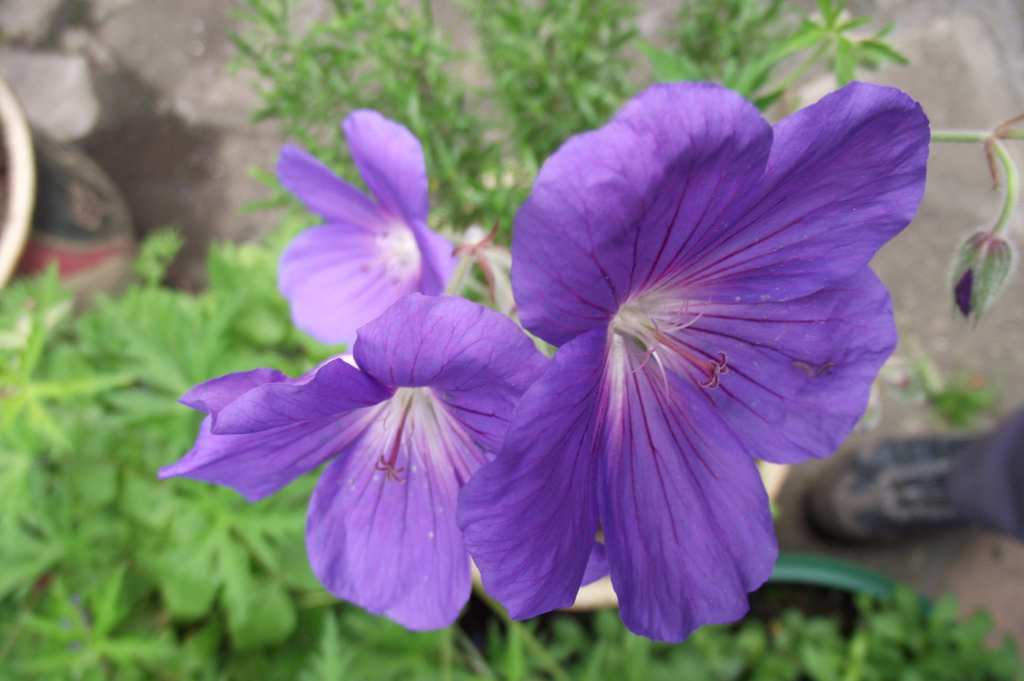


The thing to remember about geraniums is that they are a promiscuous lot enabling the plant breeders to have a field day when looking for new seedlings, many of the parent plants being British natives or those which have naturalized here. The main aim with border geraniums was to develop plants which will flower for long periods or at least have two flushes and to increase flower size.
Geranium ‘Rozanne’ illustrates just how random selection can be. Rozanne has won many prestigious awards including the public vote for Chelsea Plant of the Centenary for the decade 1993-2002. It flowers for long periods and is very attractive to bees and other insects, the almost perfect plant and a big commercial success yet it was a garden find that luckily was spotted by keen gardeners and then passed on to professional growers. It is believed that it is a naturally occurring hybrid of G. himalayense, the Himalayan geranium, and a cultivar of G. wallichianum known as ‘Buxton’s Variety.’
G.’Eureka Blue’ is a seedling of G.’Orion’ which in turn was a seedling from G.’Brookside’ which is a hybrid between G. clarkei ‘Kashmir Purple’ and G.pratense.
Johnson’s Blue or G.x johnsonii ‘Johnson’s Blue’ is thought to be a cross between G.himalayense and G.pratense our own Meadow Cranesbill, so you can see how bringing plants together from all over the world goes to produce the hybrids and cultivars that we see today.
Geranium ‘Light Dilys’
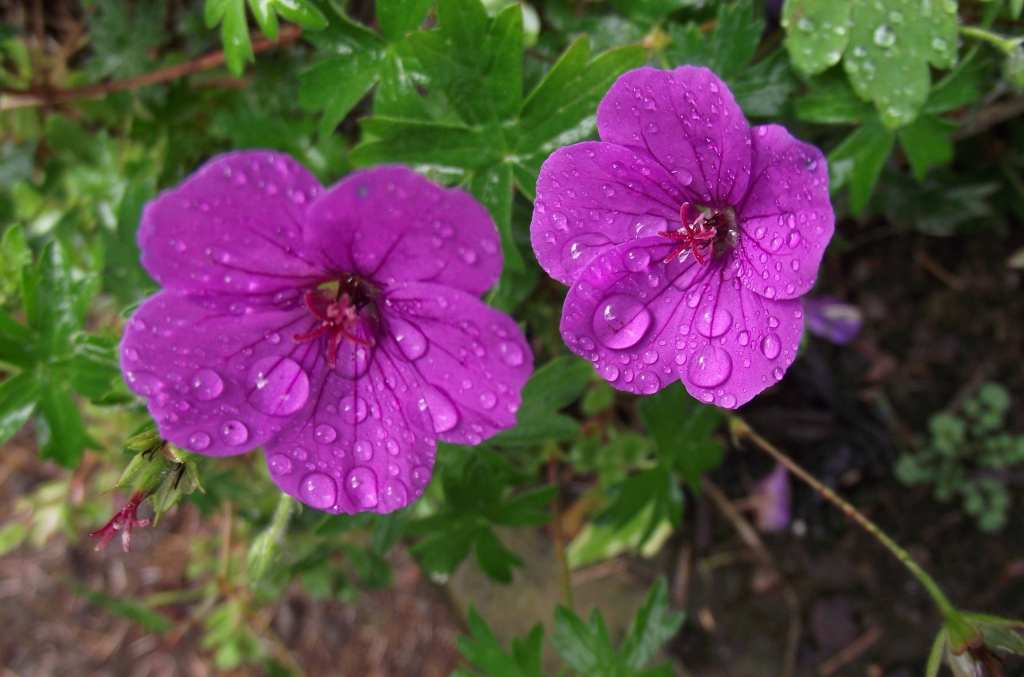
‘Light Dilys” parents appear to be lost in the mists of time, however Geranium sanguineum is probably in the mix.
Geranium macrorrhizum


Geranium macrorrhizum is a semi-evergreen perennial growing to about 2′ with attractive fragrant foliage which is useful for under-planting trees and shrubs as it is tolerant of some shade and dry soils. Both these were planted in my “woodland” garden.
Geranium nodosum
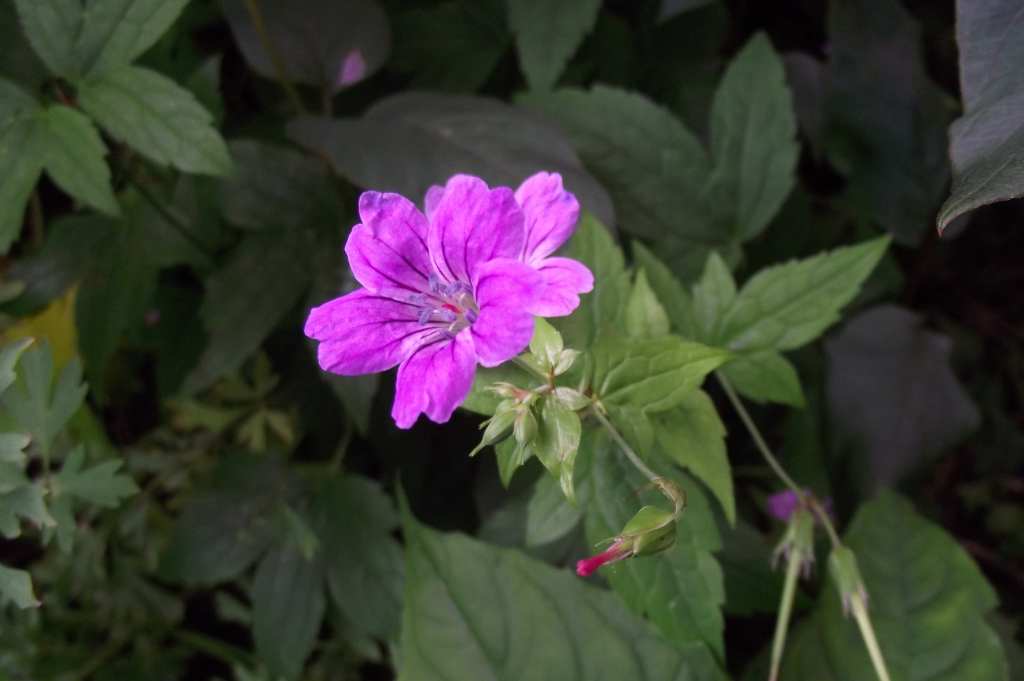
Geranium nodosum has a sprawling habit which makes it ideal for ground-cover particularly in a woodland setting where it will tolerate dry shade.
Geranium ‘Orkney Cherry’
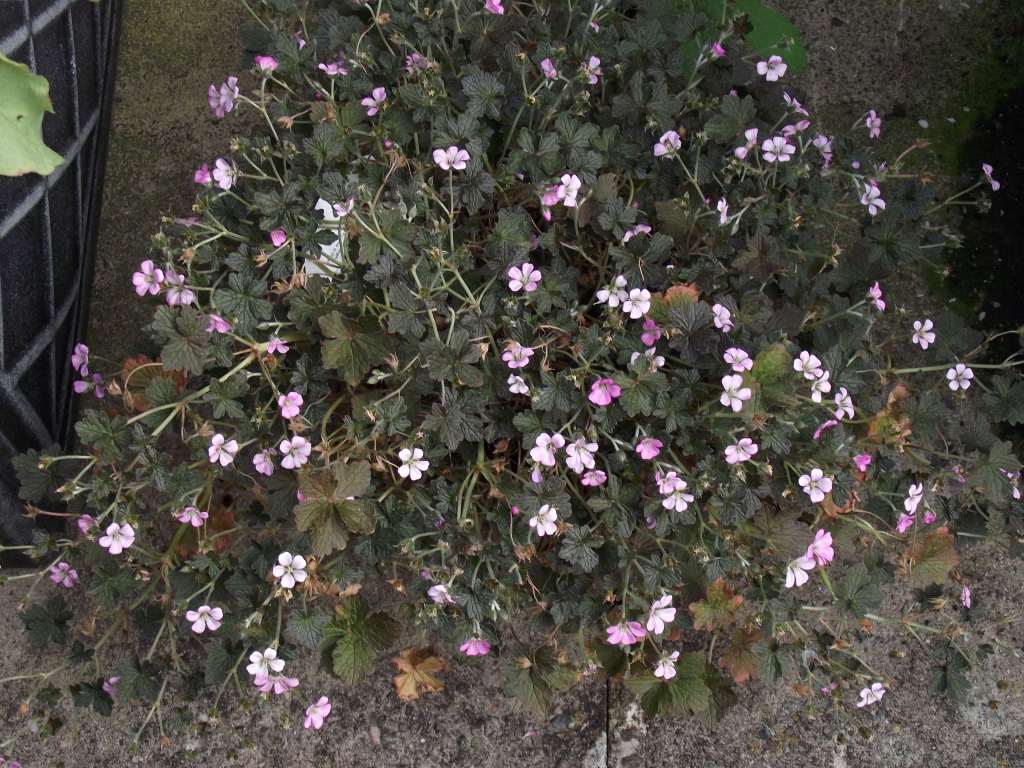
‘Orkney Cherry’ is an outstanding plant from geranium breeder Alan Bremner who has made many contributions to the geranium world. Bred in the Orkneys its deep green foliage turns to bronze as the year goes on contrasting with the delicate pink flowers which are present from early summer onward. Semi-evergreen.
Geranium oxonianum
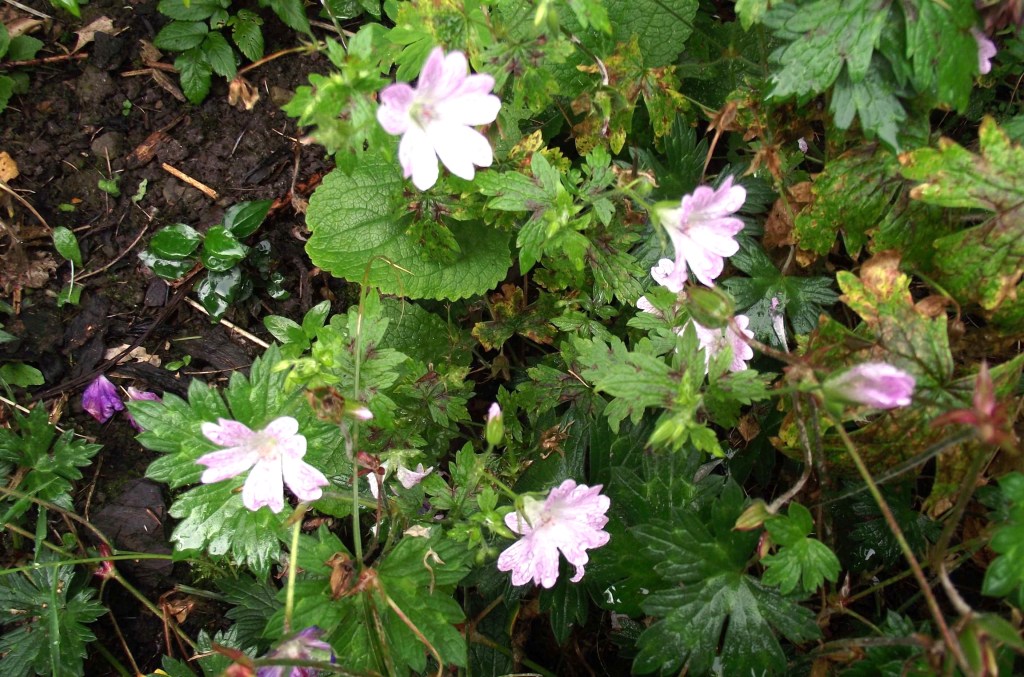
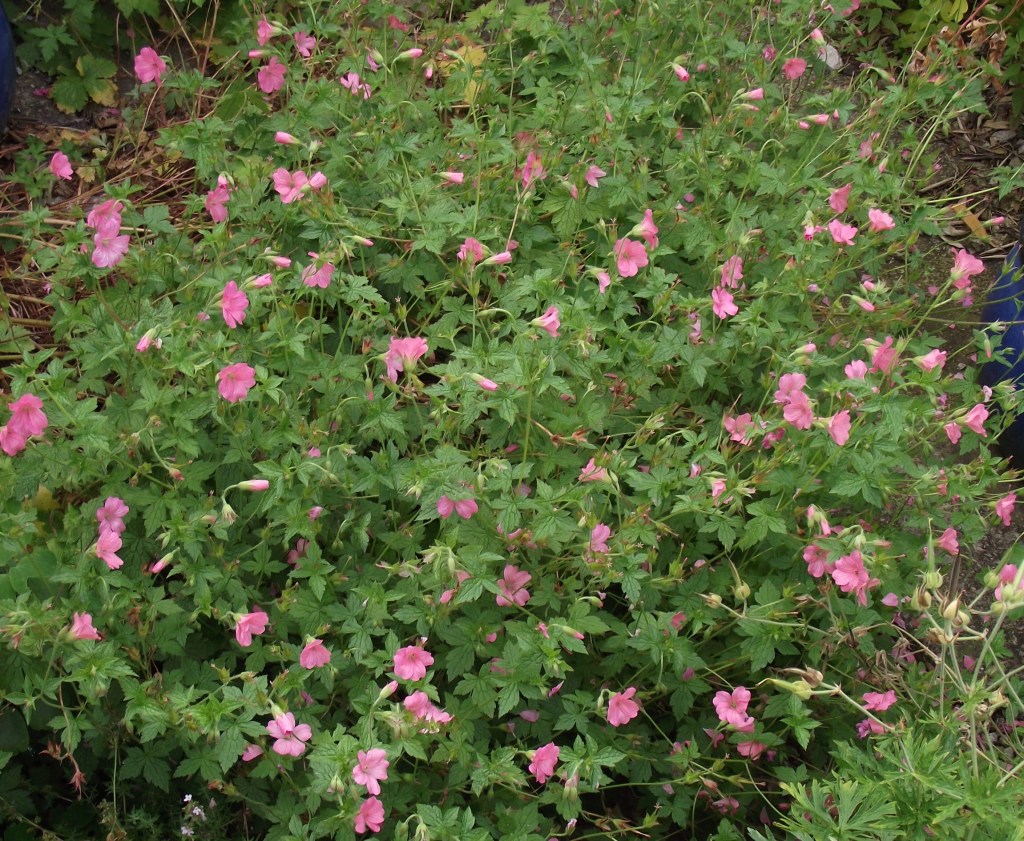
The specie name x oxonianum is given to all crosses between G.endressii and G.versicolor. The parent plants cross-fertilise readily and the resultant hybrids are fertile which allows a myriad of cultivars to be developed. ‘Wargrave Pink’ is probably my favourite geranium, it grows strongly, is tolerant of a wide range of conditions and flowers for at least six months of the year. Another reason I like it is because it is a lovely clear pink and a welcome change from all the blues and purples.
Geranium phaeum
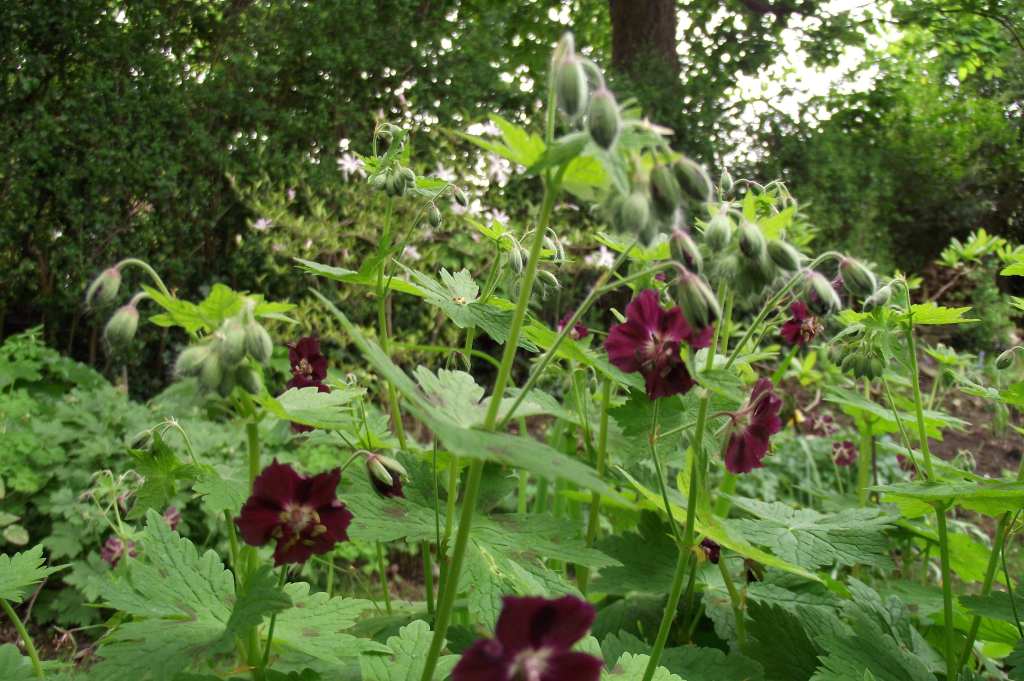
Geranium phaeum is a striking upright perennial which is useful in a woodland setting as ground-cover as it will grow in shade. The deep purple flowers of ‘Samobor’ are particularly attractive but there is a white form which shows up well in a shady spot.
Geranium pratense
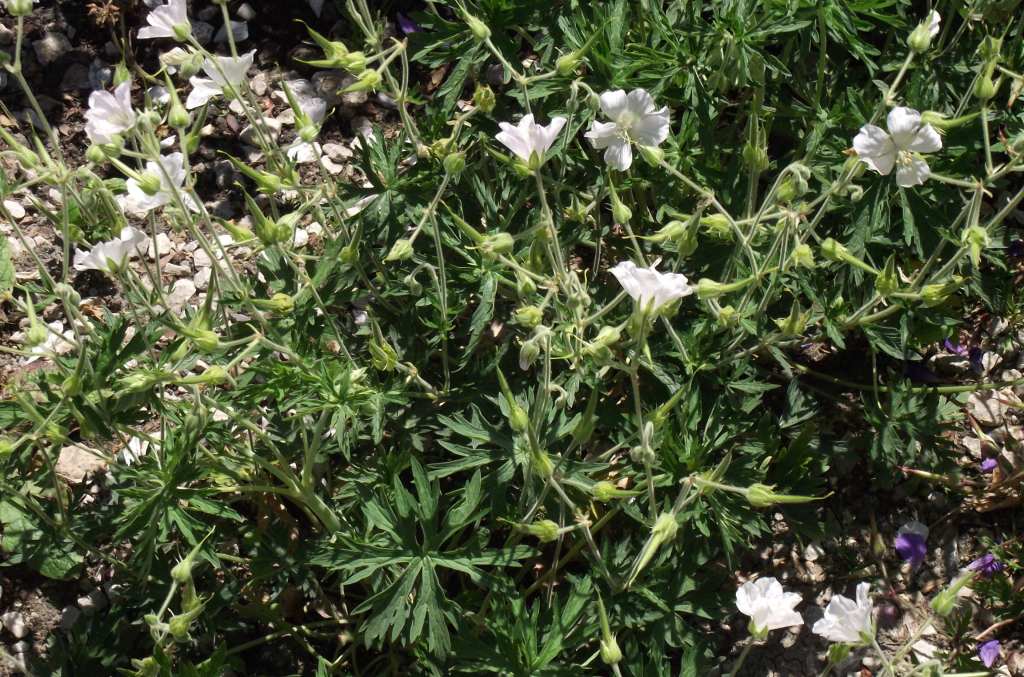


Geranium pratense the Meadow Cranesbill is an important contributor to the geranium gene pool and crops up as a parent of many modern hybrids, its upright habit and extreme hardiness are desirable attributes. Along with its roll as a specie to cross with, many cultivars have also been developed from selective breeding.
Geranium pyrenaicum


The Hedgerow or sometimes Mountain Cranesbill has flowers which are distinctly different from most geraniums with deeply indented petals giving the illusion of a higher number than normal. It has naturalised itself in the UK where it can be found growing mainly in hedgerows. I have seen it described as coarse but I feel that does this lovely little flowering plant an injustice, it is a prolific seeder and crops up everywhere which, to me, only adds to its charm, probably not so much if you like a nice orderly garden.
Geranium renardii
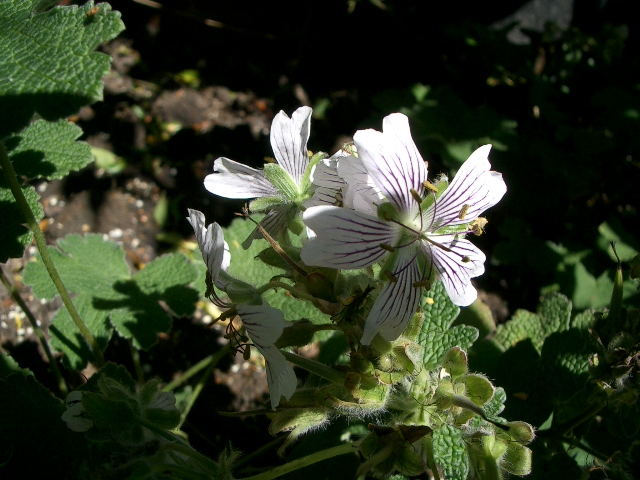
The Caucasian Cranesbill is a little unusual, it forms clumps of velvety, wrinkled, scalloped leaves which change colour as they age, topped by heavily veined flowers. Needs a bit more care than most, a sheltered well-drained sunny site is best.
Geranium sylvaticum
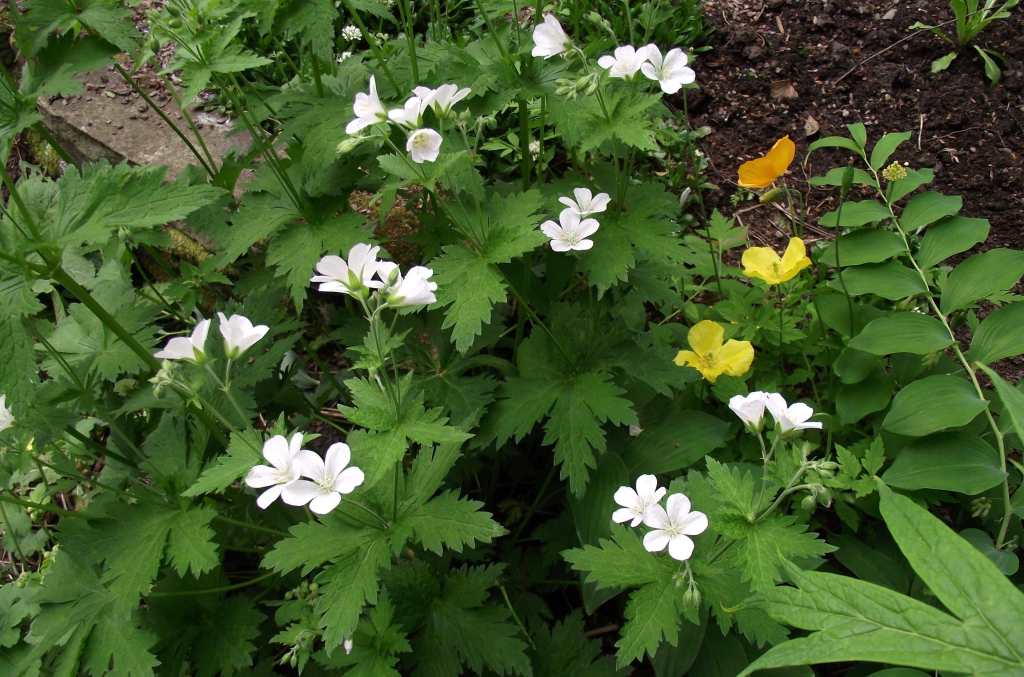

The Woodland Cranesbill is a beautiful little plant ideal for under-planting trees and shrubs, tolerates shade but prefers a moist soil. Found in damp meadows and open woodland in its native habitat, it is also found growing wild in the UK. The name really says it all when it comes to the plant’s growing requirements, the Latin sylvaticum actually means of woodland.
Geranium versicolor

The Pencilled Geranium gets its name from the veined flowers and is one of the parents of the x oxonianum hybrids. This beautiful little plant is semi-evergreen and can tolerate some dryness and shade although it thrives in good moist border soil in a sunny position. Ideal cottage garden plant.
Geranium wlassovianum
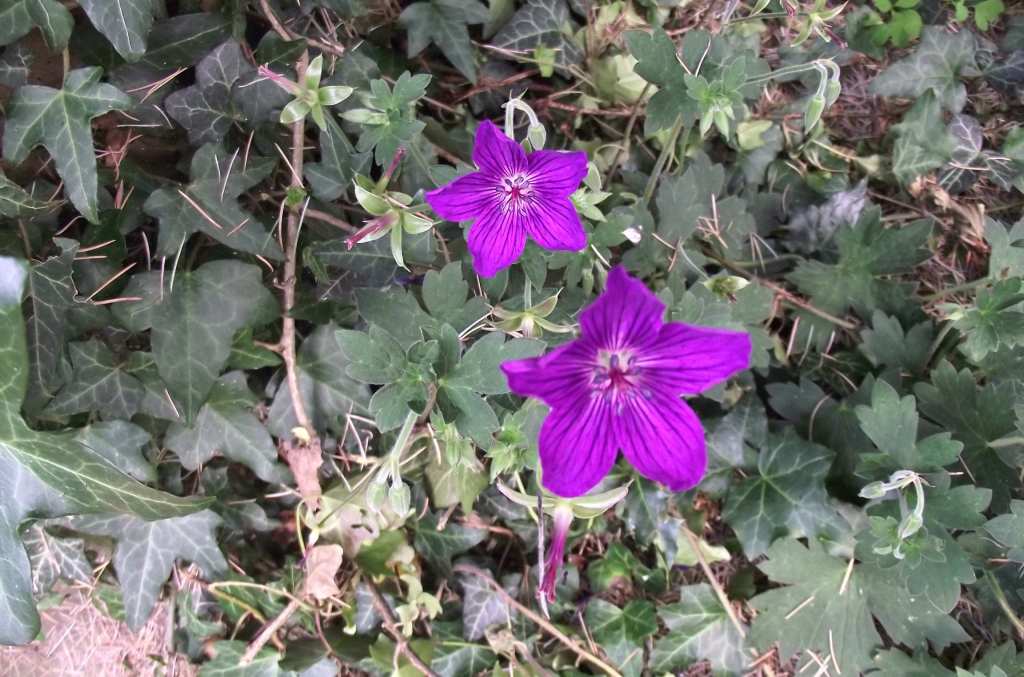
Geranium wlassovianum has a long flowering period which in addition has sprawling foliage which changes colour through the year, unfortunately this can’t be seen in the picture. Found in damp grasslands in its native habitat, it grows well in any good loam and can tolerate some shade.
Hardy Geraniums Culture
With such a large genus it is impossible to be specific, however in general terms many are semi-evergreen and have either a clump forming, trailing or creeping habit. The single flush types can be cut down after flowering which hopefully will induce a second flush. With the others I tend to leave the old foliage on over winter and cut down in the spring but this can be done after flowering, in autumn, if one prefers. Pretty much all geraniums are happy in a good moist but well drained loam in a sunny position although some are more shade and slightly arid tolerant than others. Propagation is by seed for those which come true, by cuttings, or more usually division, in the garden. For those plants which have to be vegetatively propagated to come true best to buy online from a specialist nursery unless you are lucky enough to have one near you.
Geraniums for Glass

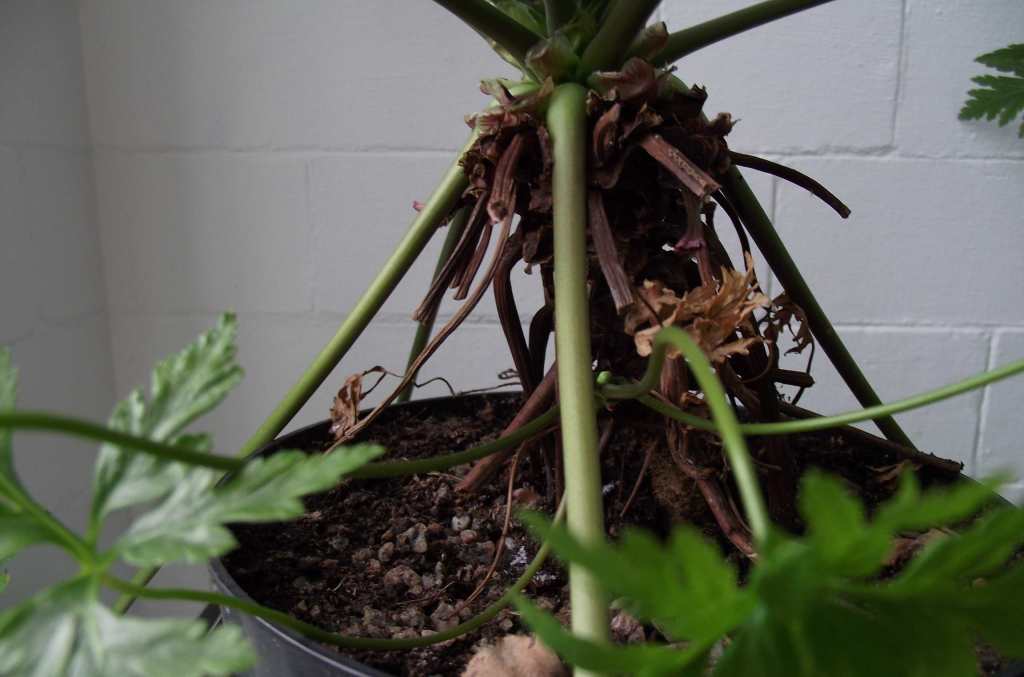

Why bother you might ask, this plant was from a packet of seed I inadvertently bought. The Maderian Cranesbill is the largest of the geraniums, it is biennial and can reach 5′ before flowering in its second year. It may survive in the warmest of gardens but there was absolutely no chance of that happening in the North of England. The plant threw out ariel roots from the crown down the outside of the pot forming a support some of which I, in my ignorance, cut off, however the plant survived and flowered.
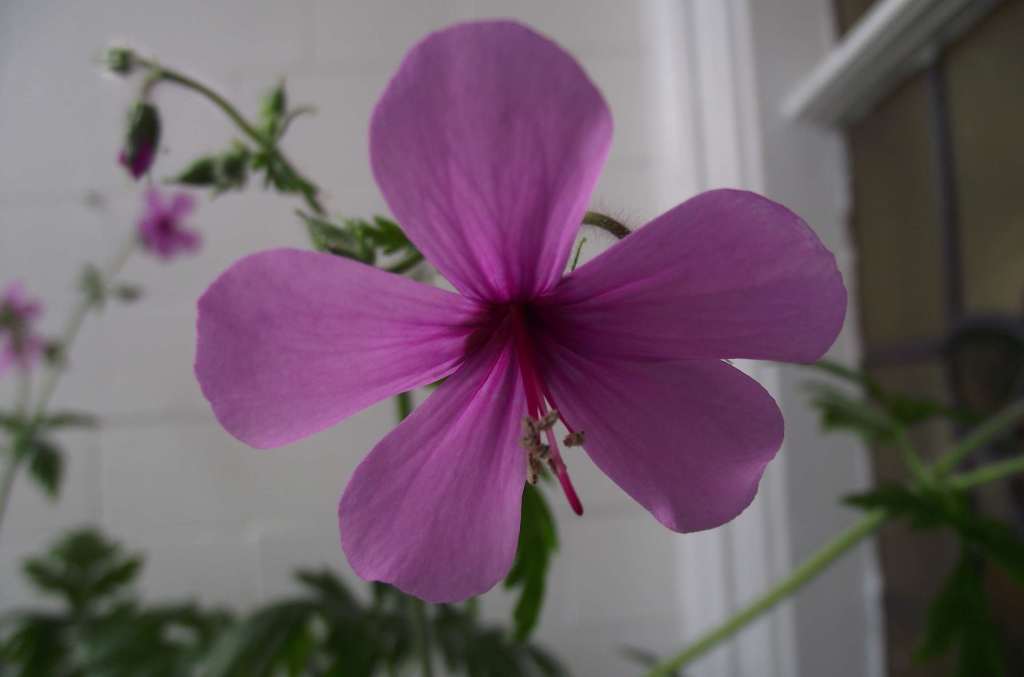
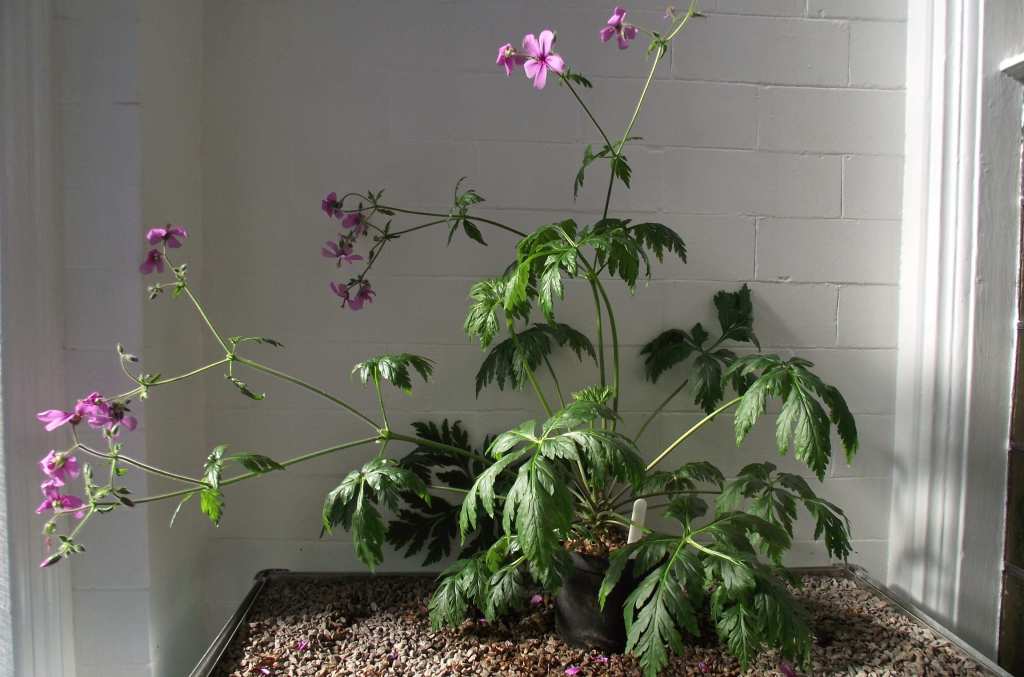
The Canary Island Cranesbill is an evergreen perennial which needs a warm garden to survive in the UK. Very similar to G.maderense which, at one time, was thought to be a form of G.palmatum until it was identified as a separate species.
 A Plantsman's World