Six on Saturday 16/8/2025

The weather is holding steady, temperatures as high as 30°C, although 20-25°C is more the norm. The few showers we have experienced have barely dampened the ground. Typically for this time of the year colour is sparse, so the lilies are welcome. Although they do not hold their blooms well in the heat. One thing I have noticed is the lack of butterflies. We were inundated with them earlier, particularly with the Peacocks. Although the eupatorium, now Eutrochium purpureum, is in flower, a tremendous bee and butterfly magnate, there are hardly any to be seen. This is the exact opposite of what happened last year so I am putting it down to the warm spring. For anyone who is interested I have taken the liberty to include a few links to some of my previous posts devoted to lilies that I have grown, with many more pictures.

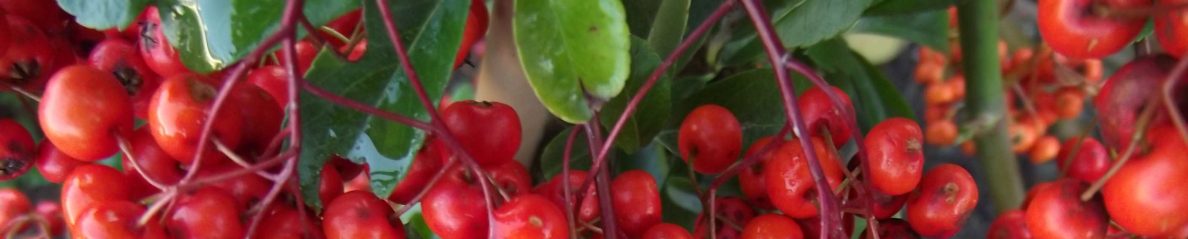
The ever popular Lilium ‘Stargazer’. This is one of the first lilies that I ever grew and remains a favourite even now. I took this picture a couple of days ago but it is already looking worse for ware in the heat. Another Oriental, Lilium ‘Hachi’, which I featured a couple of weeks ago, is very similar with its upturned blooms but the flowers are notably much larger than those of ‘Stargazer’. Here is a link to Lilies Part 1 – Updated for more lily pictures.
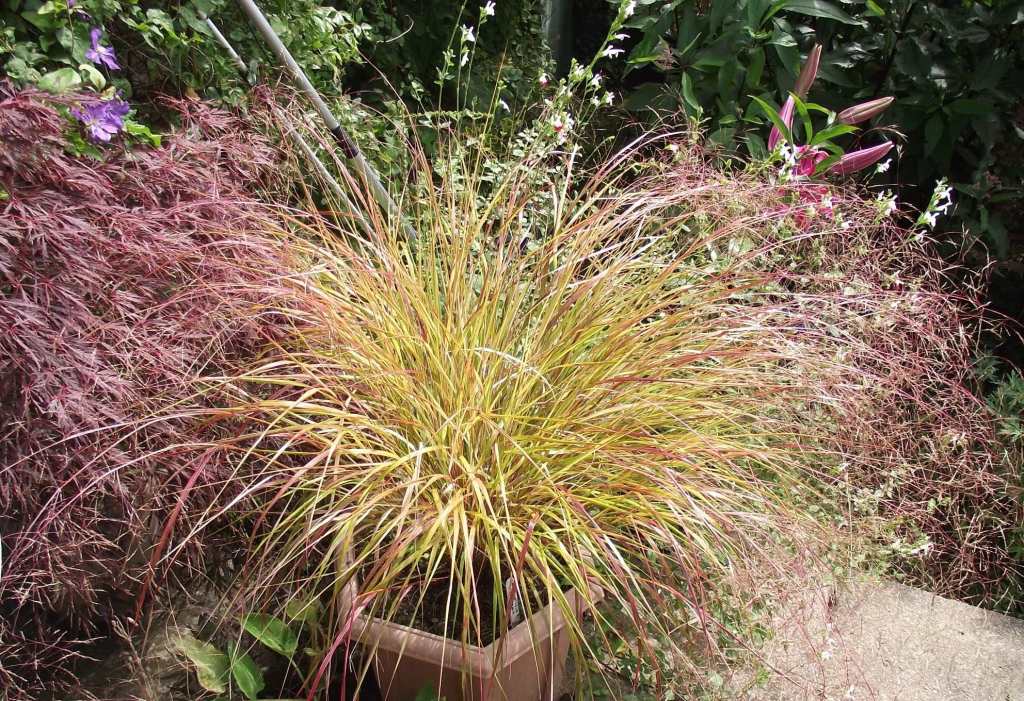
I have shown Anemanthele lessoniana, pheasant tail grass, before but is now at its best. The leaves are taking on some red splashes which are complemented by the airy inflorescences floating in the breeze. I’ll be quoting poetry next!
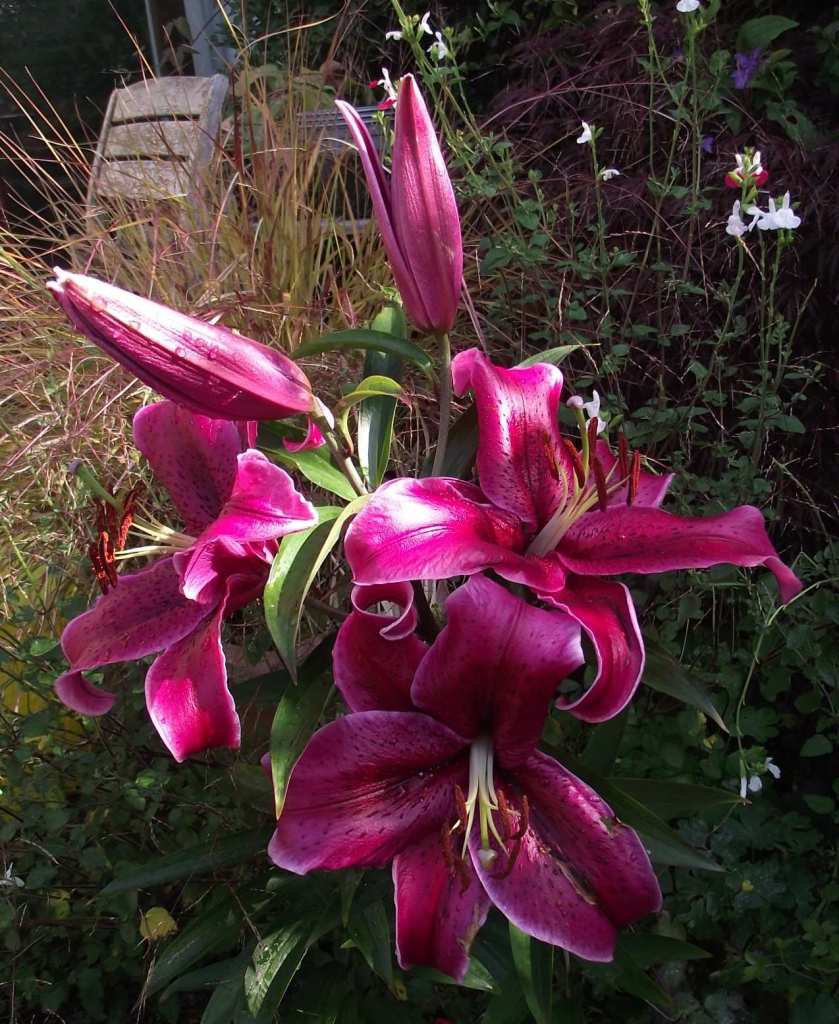
I have never grown Lilium ‘Red Flash’ before and I am rather enamoured with the strong colour. Unfortunately the bottom bloom is past its best. For even more pictures of lilies that I have grown Lilies Part2 -Updated

A good old standby for late summer/autumn colour Rudbekia fulgida ‘Goldsturm’. I don’t think you can beat these simple “cone-flowers” to add a splash of colour, at this time of the year. I did have some echinaceas but they have decided not to come out to play this year. The splash of blue in the lower right-hand corner is Geranium ‘Johnson’s Blue’ which, in my small garden, is becoming far too invasive. I intend to remove it altogether shortly. Even though I reduced it by half last winter. It is taking up far too much space for one plant, and I have plenty of stuff stuck in pots which can take its place.
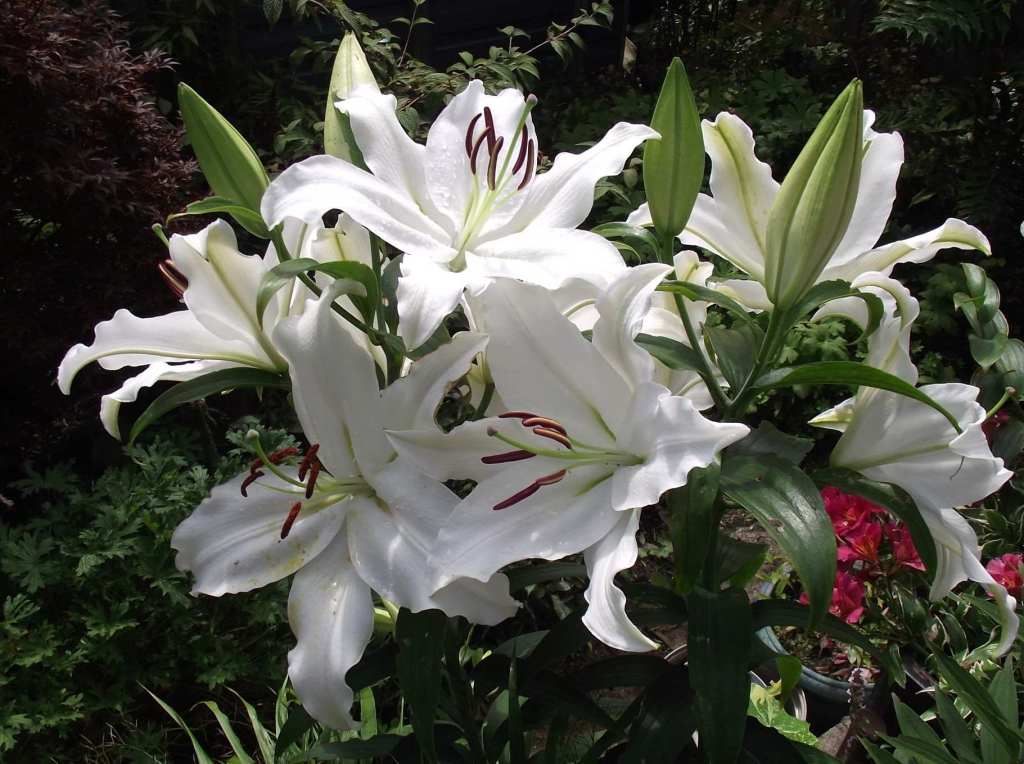
Another strongly scented Oriental. Lilium ‘Casa Blanca’ is another old favourite of mine. I have to admit that I had forgotten it was there until I checked the label before it came into bloom. It is a true pure white and all the better for it. I am in a bit of a quandary at the moment. I have no room to plant the lilies out, so do I keep the pots overwinter and chance that they will come good again next year, which they should do. Or do I buy in some more to guarantee a good show next year. I will probably do both! Here is some more about lilies including Cardiocrinum giganteum. Lilies Part 3-Updated
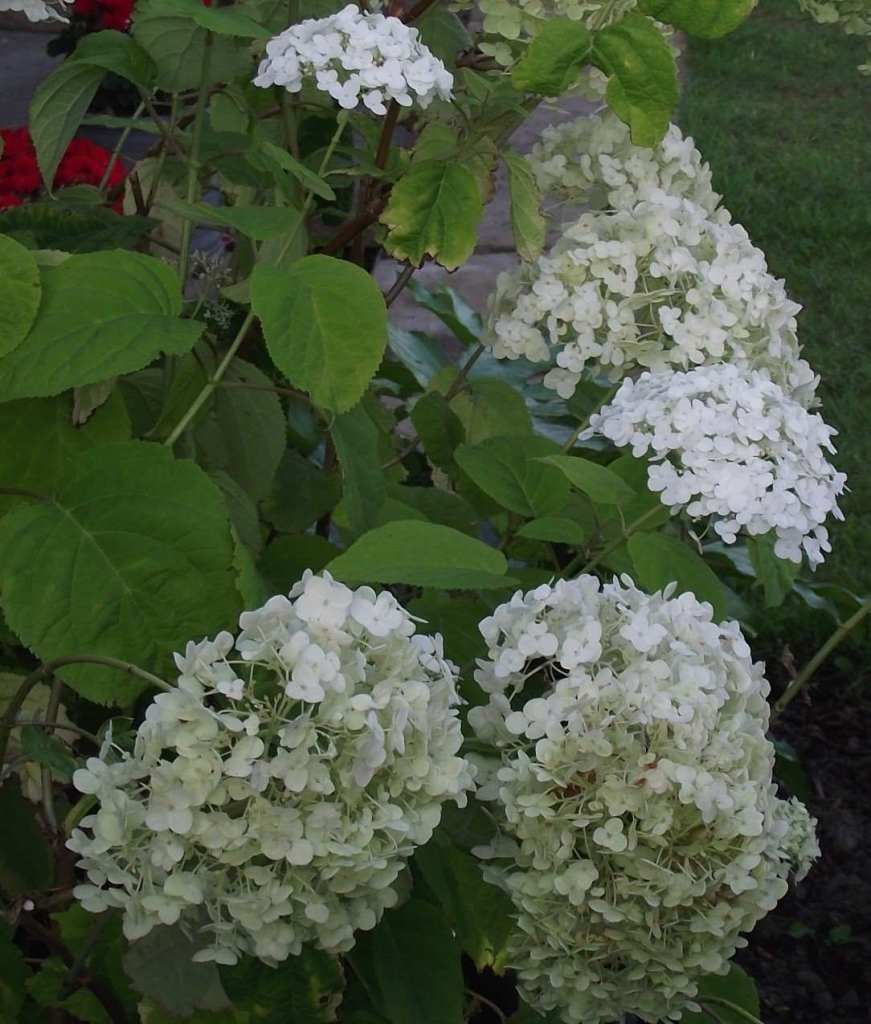
I bought this hydrangea from Thompson and Morgan at least eight years ago when they were selling it as Hydrangea ‘Incrediball’. I think it is now better known as, and is certainly synonymous with, Hydrangea arborescens ‘Strong Annabelle’. My plant is still in a container, and although the blooms aren’t the size that they should be, it still puts on a fairly good display every year. I intended to cut it back hard last winter but forgot. I need to remedy that this year, and put it on a high potash diet to see if I can improve it. Re-potting would be ideal but it is in a very large container so I will continue to nurture it where it is for as long as I can.

This meme is hosted by Jim Stevens who is to be found with all the details and links to plenty of other blogs to enjoy at Garden Ruminations.

Hardy Perennials (Part 8)

Rheum

Rheum tanguticum (syn. R. palmatum var. tanguticum) is a fairly uncommon form of Giant Rhubarb, I have included several pictures of it in various stages of growth because it is definitely one of my favourites. This spectacular plant is at home in the bog garden and mine was planted next to a bird bath which frequently overflowed providing an ideal spot for it.

Rodgersia

Rodgersias are another moisture loving plant suited to the pond or stream side. Unfortunately the plant pictured, although in moist soil, did not give of its best as the soil was probably not wet enough. The young leaves have a reddish tint and become quite shiny as they age dying back in the early winter. The flower stems can be left on for winter interest.

Rudbekia

Rudbekias particularly R.fulgida often known as Black-eyed Susan are a staple of the cottage garden border however there are many beautiful varieties, particularly from R.hirta which are used as annual bedding, biennials or short-lived perennials. Native to N.America and Canada they all prefer a moist but well drained soil and will flower best in full sun.

Sanguisorba

Burnets are members of the rose family that range over the Northern Hemisphere, S.menziesii comes from Alaska. A useful border plant they will tolerate most soil types and grow equally well in sun or part-shade.

Saxifraga

I used to grow many mossy and encrusted saxifrages back in my “alpine days” my favourite being the spectacular S.longifolia, S. fortunei is however a different animal altogether. Introduced from woodland in China it is not widely grown but is an ideal subject for the shaded garden. It looks very different from what many people would think to be a saxifrage but the clue is in the flower if you look closely. Despite it being rare in the UK there are many varieties in cultivation as a result of plant breeders in the far east selecting them for leaf colour rather in the same way as heucheras. One of this lovely plant’s greatest assets is that it flowers from autumn until the frost eventually shuts it down.

Scabiosa

Plants in the genus Scabiosa come in all forms and sizes, annuals, biennials and perennials both evergreen and semi evergreen. There are quite a few cultivars grown in the herbaceous border and cottage garden in colours varying from the most common blue through to deep magenta and white. S.drakensbergensis, as its name suggests comes from the Drakensberg mountains in S.Africa and is a white flowered, clump forming hardy perennial which makes a useful subject for the more informal garden. The specimen shown was grown from seed.

Schizostylis

Schizostylis coccinea or Kaffir Lily is a semi-evergreen rhizomatous member of the Iris family of which there are several cultivars generally ranging through shades of pink. They are fairly easy to grow in a well drained sunny spot and have the added advantage of flowering through autumn and into winter, sometimes still being in flower at Christmas in a mild winter.

Sedum

Sedum is a large genus of plants having both succulent leaves and stems commonly known as stonecrops. They come in many forms from the more familiar creeping plants, border plants such as those shown above, and even shrubs, which to be honest I have never seen. Easy to grow given a well drained soil and sunny position, it goes without saying that they are drought resistant, and are ideal border subjects for autumn colour. The cultivar S. ‘Jose Aubergine’ is remarkable as it has dark leaves similar to the flower colour rather than the more usual silvery grey/green. I swear that the scientists who are studying DNA are there just to make the gardener’s life difficult, Sedum is now reclassified as Hylotelephium and I have just read that our nice and simple Sedum ‘Autumn Joy’ is now Hylotelephium x mottramianum ‘Herbstfreude’ !

Silene

Another massive genus, up to 1000 species, Silene or Campions come in all shapes and forms and are widely distributed as can be seen from the names of the plants illustrated. Really too diverse to delve into here it is sufficient to say that the garden varieties are easy to grow in a well drained soil in a sunny spot, think of them as meadow plants. One drawback worth mentioning is that they are not generally long-lived but on the plus side set copious amounts of seed.